
Your Ultimate Guide to Kealakekua Bay Snorkeling
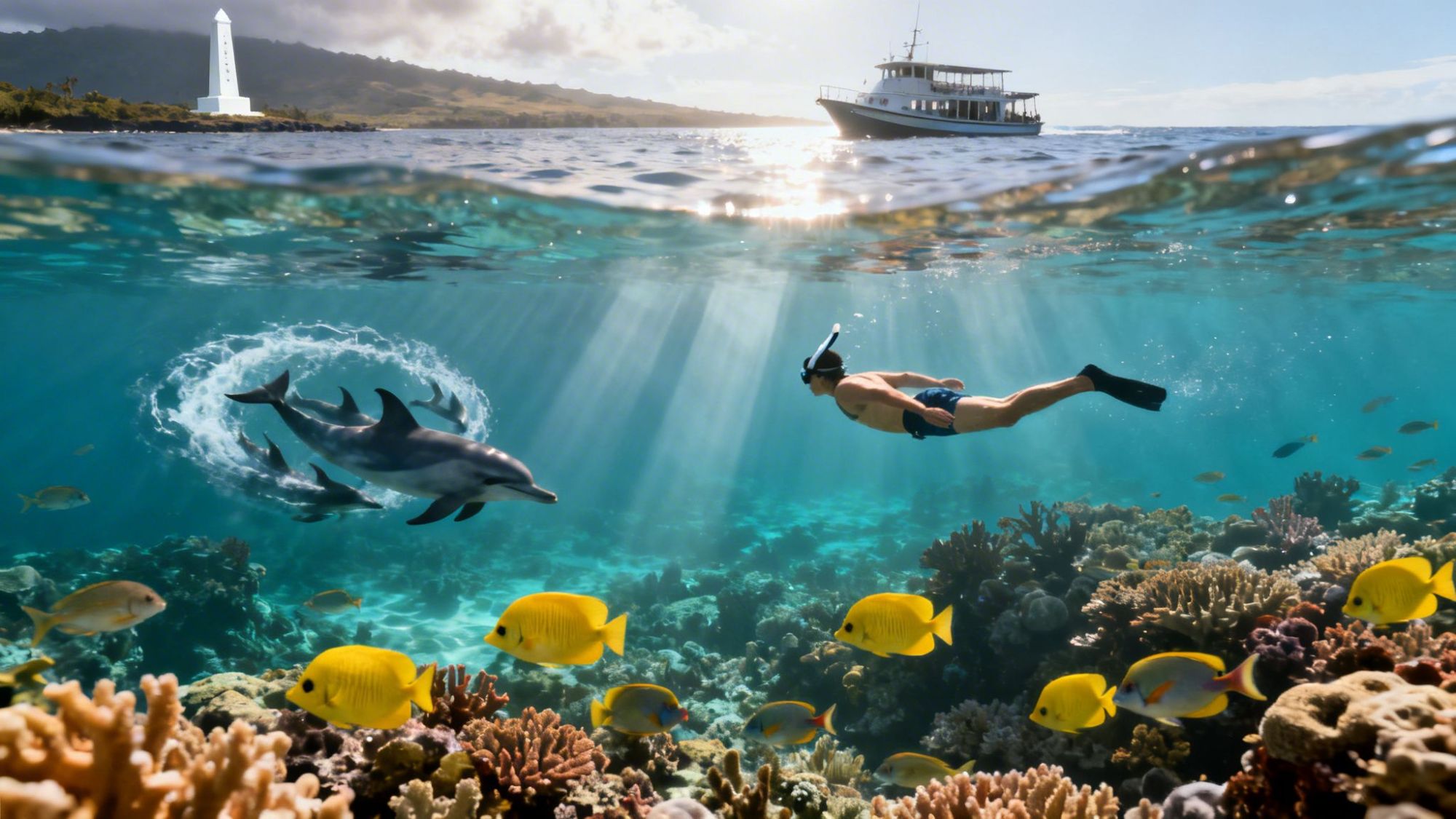
Picture this: you’re floating effortlessly in water so calm and clear it feels like a swimming pool, but instead of a concrete bottom, you’re looking down on a world bursting with color. Brightly-colored fish dart through intricate coral gardens below you. That’s the magic of Kealakekua Bay. This isn’t just another pretty spot on the Kona coast; it's a protected Marine Life Conservation District (MLCD), which makes it one of the absolute best, most pristine snorkeling experiences you can have in Hawaii, or anywhere for that matter.
Why Kealakekua Bay Is a World-Class Snorkel Destination

As local guides, we get asked all the time what makes Kealakekua Bay so special. It really comes down to geography. The bay is tucked into the Kona coast in a way that naturally walls it off from the big ocean swells. The result? Incredibly calm water and visibility that often stretches past 100 feet. It's like the ocean decided to build its own perfect aquarium.
This natural shield doesn't just make it easy for us snorkelers; it creates a sanctuary where marine life can thrive. For us, that translates into a safe, awe-inspiring day on the water that’s perfect for everyone, from first-timers to seasoned underwater explorers.
A Protected Underwater Paradise
The real secret to the bay's incredible health is its protected status. Back in 1969, the state designated 315 acres of the bay as a Marine Life Conservation District. This was a game-changer. It basically put a protective bubble over one of Hawaii’s richest reefs, and it’s a huge part of why over 190,000 people come here each year just to see what’s under the surface.
This protection has given the coral decades to grow into the spectacular, sprawling city it is today, providing food and shelter for hundreds of species of fish. The moment you dip your mask in the water, you see the difference it makes. The fish are more abundant, more colorful, and just plain bigger than what you'll find at many other spots.
How To Access Kealakekua Bay: A Quick Comparison
Getting to this remote gem is part of the adventure, and you’ve got a few options. Here’s a quick rundown to help you decide what’s best for your group.
| Access Method | Best For | Effort Level | Permit Needed? | Key Benefit |
|---|---|---|---|---|
| Boat Tour | Families, beginners, everyone! | Low | No (Tour handles it) | Convenience & Safety |
| Kayak | Experienced paddlers | High | Yes (with licensed guide) | Self-paced exploration |
| Hike | Fit, adventurous hikers | Very High | No | A serious workout |
While each method has its appeal, we’ve found that for the vast majority of visitors—especially families or anyone who wants to spend their energy snorkeling, not just getting there—a licensed boat tour is the hands-down best way to go.
Why a Boat Tour is the Smart Choice
Think about it: a tour boat drops you right on top of the best part of the reef. No grueling hike, no paddling for miles. You arrive fresh and ready to jump in.
- Safety First: You're with lifeguard-certified guides who know the bay inside and out. Plus, all the gear, food, and water is taken care of.
- Learn Something New: Our crews love sharing stories about the bay’s history, the dramatic geology, and the critters you’re seeing. It turns a fun day into a truly memorable one.
- More Time in the Water: You spend your time where it counts—in the water exploring, not on a trail recovering.
Kealakekua Bay is an absolute must-do, but it's just one of many incredible places to explore here. For a bigger picture, take a look at our guide to the other amazing Big Island snorkeling spots. A boat tour simply makes getting to this protected paradise easy, safe, and an experience you won’t soon forget.
Choosing Your Kealakekua Bay Adventure

Getting to the incredible snorkeling spot by the Captain Cook monument is half the adventure. How you get there really sets the tone for your whole day. You’ve got three totally different ways to do it, and picking the right one is the key to making sure you remember the day for the amazing reef, not for being exhausted or frustrated.
For almost everyone, joining a licensed boat tour is the way to go. We recommend it because it just makes everything simple and stress-free. You get to kick back, soak in the epic coastal views, and let a professional crew handle all the logistics.
Of course, there are other paths. For the super-fit and truly adventurous, there's the Kaʻawaloa Trail. And then there's kayaking, which sounds dreamy but comes with its own set of puzzles.
The Boat Tour: The Smart and Easy Choice
Honestly, taking a boat tour is like getting an all-access pass to the best of Kealakekua Bay without the struggle. A great boat crew, like the ones at Kona Snorkel Trips, are masters at creating a smooth, fun-filled day. Your only job is to enjoy the water and the scenery.
Here’s why it’s our top recommendation:
- Total Convenience: No need to pack gear, food, or drinks. Your snorkel equipment, flotation devices, and refreshments are all taken care of. Just show up ready for an amazing time.
- Expert Guidance: You’re in the hands of a lifeguard-certified crew who live and breathe these waters. They know the bay's history, its wildlife, and its secrets, turning a good snorkel trip into something you'll never forget.
- Maximum Snorkel Time: The boat drops you right in the sweet spot. You spend your energy exploring the vibrant reef, not just trying to get there.
For an exceptional alternative when looking for a Captain Cook snorkel tour, consider the specialized excursions offered by Captain Cook Snorkeling Tours.
A guided boat tour isn’t just a taxi service; it’s about having a safe, educational, and comfortable day. It ensures your precious vacation time is spent marveling at the underwater world, not recovering from the journey.
The Strenuous Hike: A Rewarding Challenge for a Few
The second route is the Kaʻawaloa Trail. Let’s be clear: this is not a casual walk. It's a tough, 3.8-mile roundtrip hike that drops over 1,300 feet down to the bay. And remember, what goes down must come all the way back up, usually in the peak Kona heat. This is an option only for experienced, very fit hikers.
You are completely on your own out there. That means hauling everything you need: mask, fins, snorkel, at least 2-3 liters of water per person, food, and a first-aid kit. The climb out is notoriously brutal and can be genuinely dangerous if you're not prepared.
The Complicated Kayak: A Permitting Puzzle
The third option, kayaking across the bay, might seem like the perfect middle ground, but it’s more complex than you’d think. Because this is a protected and sacred area, a strict permit system is in place. Only a handful of licensed companies can legally guide kayak tours and land at Kaʻawaloa Flats near the monument.
Trying to rent your own kayak and paddle in is illegal and can lead to some hefty fines. If your heart is set on kayaking, you absolutely must book well in advance with one of the few permitted outfitters. Given the hassle and limited availability, a boat tour is a much more reliable and straightforward choice. And if you're wanting an even more exclusive experience, you might think about a private snorkel tour on the Big Island for your group.
When you weigh all the options, the boat tour stands out as the clear winner for a safe, fun, and hassle-free day. You'll go home with incredible memories of the reef, not just sore muscles.
Snorkeling Through A Living History Museum
When you dip your mask into the water at Kealakekua Bay, you’re doing more than just going for a swim. You’re floating through the pages of Hawaiian history, a place where the past feels so present you can almost reach out and touch it.
The bay’s name itself, Kealakekua, translates to 'Pathway of the God,' and that tells you a lot about its deep spiritual and cultural roots. This connection transforms a great snorkel trip into something profoundly meaningful. You're not just looking at fish and coral; you're connecting with a place that has been a cornerstone of Hawaiian life for centuries.
The Footsteps Of Kings And Captains
Long before any Western ships appeared on the horizon, Kealakekua Bay was a major hub for Native Hawaiians, buzzing with political and religious importance. Its calm, protected waters and the fertile lands surrounding it made it a natural center of life. The massive cliffs that line the bay are sacred ground, holding the iwi (bones) of revered ancestors in ancient burial caves.
Then, in 1779, the bay's story took a dramatic turn. The British explorer Captain James Cook sailed his ships into these very waters. In an incredible twist of fate, his arrival coincided with the Makahiki festival, a peaceful season celebrating the god Lono. This timing led many Hawaiians to believe Cook was a manifestation of Lono himself, and he was welcomed with celebration and reverence.
This moment was the first real, extended contact between Hawaiians and the Western world. It was a cultural crossroads that would forever change the course of the islands' history. Understanding this adds a layer of depth to your snorkel that you just can't find anywhere else.
But the harmony didn't last. Cook and his crew returned for repairs after the festival had ended, and with the peaceful season over, tensions quickly escalated into a tragic fight. It was right here, on the shore of Kealakekua Bay, that Captain Cook was killed on February 14, 1779.
Connecting With The Past From The Water
Today, a striking white obelisk—the Captain Cook Monument—stands on the shoreline, right next to the bay's best snorkeling. Seeing it from the water is a powerful moment, a tangible link to those world-changing events. It marks the approximate spot where Cook died and serves as a constant reminder of the bay’s complex, layered history.
Going with an experienced guide is the best way to truly appreciate this living museum. A good guide will share the stories and legends of the bay, pointing out the significance of the monument, the cliffs, and the land itself. They bring the invaluable cultural context that you just can’t get from reading a plaque.
This rich history turns every moment in the water into something special. For an even deeper dive into the story of this incredible place, check out our guide on snorkeling Captain Cook Bay. When you understand the history, your trip to Kealakekua Bay becomes more than a snorkel—it becomes an unforgettable connection to Hawaii’s soul.
Discovering The Underwater World Of Kealakekua

The moment you slip into the water at Kealakekua Bay and put your face in, the world changes. On a good day, the clarity is just unreal, with visibility easily pushing past 100 feet. It's like looking through pure glass into an entire world that’s been thriving, untouched, just below the surface.
There's a reason the life here is so vibrant. The bay is a protected Marine Life Conservation District, which has given its massive coral gardens the space to truly flourish. For us snorkelers, this means you’re not just swimming over a few patches of coral; your Kealakekua Bay snorkeling adventure is a full-immersion trip through a healthy, bustling underwater ecosystem.
A Kaleidoscope Of Reef Fish
As you kick out over the reef, you'll find yourself surrounded by clouds of color. The sheer number of fish is one thing, but it’s the variety and the uniquely Hawaiian species that really make this place special.
- Yellow Tang (Lauʻīpala): You can't miss them. Huge, brilliant schools of yellow tang are a signature sight here, moving together like a single golden organism.
- Moorish Idols (Kihikihi): These are the supermodels of the reef. Their dramatic black, white, and yellow bodies and long, trailing fins make them incredibly graceful and a favorite for photographers.
- Parrotfish (Uhu): Listen closely and you might hear a strange crunching sound. That’s the sound of parrotfish doing their job—using their beak-like mouths to nibble on algae, which cleans the reef and produces the beautiful white sand you see on our beaches.
- Butterflyfish (Kīkākapu): You'll spot dozens of species of these delicate, ornate fish flitting around the coral, usually in pairs.
This isn't an accident. The abundance you see is a direct result of the bay's protected status. It’s an underwater city, and it gives you a perfect snapshot of what a healthy Hawaiian reef is supposed to look like. To find more spots with this kind of incredible marine life, have a look at our guide to snorkeling near Kona, Hawaii.
When you visit Kealakekua, you're not just snorkeling; you're becoming a temporary resident of one of the most vibrant underwater neighborhoods on the planet. The health and density of life here are a powerful testament to the success of marine conservation.
Gentle Giants And Playful Pods
While the reef fish are dazzling, always remember to keep an eye out on the deeper water around you. You never know when one of the bay's larger residents might make an appearance.
Hawaiian green sea turtles, or honu, are a common and welcome sight. You’ll often see them gliding effortlessly above the reef or taking a nap on the sandy bottom. These gentle, ancient creatures are a protected species and a revered ʻaumakua (family guardian) in Hawaiian culture, so it’s essential to give them plenty of space and just enjoy watching them from a distance.
The bay is also an important resting spot for pods of spinner dolphins. Watching them from the boat as they leap and spin through the air is an experience you won't forget. It's crucial to remember that they come here to sleep after hunting all night, so federal law mandates staying at least 50 yards away to let them rest peacefully.
Beyond The Bay: The Manta Ray Experience
While you’ll see a lot at Kealakekua, spotting a manta ray during the day is extremely rare. But don't worry, you haven't missed your chance to see these gentle giants.
Just a short trip up the coast from Kona, you can join the world-famous Manta Ray Night Snorkel. It’s consistently rated one of the top things to do in all of Hawaii for a reason. For an absolutely outstanding tour, we always recommend our friends over at Manta Ray Night Snorkel Hawaii. They run a fantastic trip that gets you up close with Kona's majestic manta rays in a way that is both safe and respectful to the animals.
Planning Your Perfect Kealakekua Bay Snorkel Trip
To really make the most of your day at Kealakekua Bay, a bit of insider knowledge goes a long way. The biggest tip we can give you? Go in the morning. That’s when the water is typically like glass—calm, clear, and offering the best visibility to see the incredible reef below.
While the bay is amazing year-round, if you’re visiting between December and March, you're in for an extra treat. That's peak humpback whale season. There's nothing quite like the boat ride to the bay when you're spotting massive whales breaching in the distance. It adds a whole other layer of magic to the day.
What to Pack for Your Day on the Water
When you're getting your bag ready, the game plan is simple: protect yourself from the powerful Hawaiian sun and protect the delicate reef we all love.
Here are the must-haves for your adventure:
- Reef-Safe Sunscreen: This one is a big deal. Please choose a mineral-based sunscreen, the kind with zinc oxide or titanium dioxide. The chemicals in regular sunscreen are seriously harmful to our coral.
- Sun Protection: A wide-brimmed hat, polarized sunglasses, and a long-sleeved rash guard are your best friends out here. The sun reflecting off the water is no joke.
- Towel and a Dry Shirt: A quick-dry towel is perfect for saving space. You'll be happy to have a dry shirt for the ride back.
- Waterproof Camera: Trust us, you’re going to want to capture what you see down there.
For a more exhaustive list of ideas, check out this great beach packing list. And if you're wondering about the best apparel for in the water, we have a whole guide on what to wear for snorkeling to keep you comfortable and safe.
Honestly, the easiest way to handle packing is to let a guided tour do the heavy lifting. A good operator provides all the gear, so you can just show up and focus on the fun. It’s a total game-changer, especially for families or first-timers.
Choosing the Right Guide
One of the best parts about joining a tour is that all the gear is handled for you. Here at Kona Snorkel Trips, we provide high-quality masks, snorkels, and fins, plus flotation devices for anyone who wants a little extra support in the water.
As you look at different tour options, keep an eye out for a few things that signal a quality experience. Small group sizes almost always mean a better, more personal day on the water. Check for stellar safety records and make sure the crew is lifeguard-certified and truly knows the bay. And finally, go with a company that has a clear, proven commitment to protecting the reef.
Customer reviews are the best way to get a real feel for a company's vibe and performance. We're proud of our reputation and are always happy to share what our guests have to say.
A great tour turns a good day into an unforgettable one. Ready to see this historic and beautiful bay for yourself?
Snorkeling With Aloha And Protecting The Reef

The incredible beauty of Kealakekua Bay is something we're lucky to experience, but it’s also unbelievably fragile. As someone visiting this special place, you have a huge part to play in protecting it. We call this snorkeling with aloha—acting with a deep sense of respect and care for the ocean and all its inhabitants.
Think of it as being a guest in someone else’s home. The absolute number one rule is simple: look, but don’t touch. This goes for everything you see, from the vibrant coral (which are living animals!) to the curious fish and resting honu (Hawaiian green sea turtles). Even a gentle poke can harm coral that took decades to grow, and crowding marine life causes them a lot of stress.
Following The Rules Of The Reef
It's not just about what you shouldn't do. Practicing good reef etiquette is about making a positive impact during your Kealakekua Bay snorkeling trip. These aren't just suggestions; they are make-or-break actions for this delicate ecosystem.
Here are the two most important things to remember:
- Use Only Reef-Safe Sunscreen: Hawaii has banned sunscreens with chemicals like oxybenzone and octinoxate. These ingredients are toxic to coral reefs and cause bleaching. Always opt for mineral-based sunscreens with active ingredients like zinc oxide or titanium dioxide.
- Give Wildlife Space: This is especially true for the bay's resident spinner dolphins. To let them rest without disturbance, federal law requires you to stay at least 50 yards away. It’s best to apply this same respect to all the animals you encounter.
Snorkeling with aloha means leaving the place better than you found it. It’s about being a mindful guest in the ocean's home, ensuring your memories don’t come at the expense of the environment.
One of the best things you can do is choose an eco-conscious tour operator. A good guide, like the ones here at Kona Snorkel Trips, will make sure every single guest understands these conservation practices before even getting in the water. This commitment is what turns a fun day out into a positive force for the bay. Using eco-friendly boat cleaning products is another way responsible operators minimize their impact.
By following these simple rules, you're helping preserve the magic of Kealakekua Bay for years to come. Your mindful actions are the most powerful tool we have to protect this irreplaceable Hawaiian treasure.
Frequently Asked Questions About Kealakekua Snorkeling
We get a lot of questions from guests getting ready for their big day at the bay. It’s smart to plan ahead! Here are the answers to the questions we hear most often, so you can show up ready for an incredible day of snorkeling.
Is Kealakekua Bay Good for Beginners?
Absolutely. In fact, we think Kealakekua Bay is one of the best places on the entire Big Island for first-time snorkelers. The bay is naturally tucked away from the open ocean, which keeps the water incredibly calm and clear. It often feels more like a giant swimming pool, making it a perfect spot to get your fins wet and build confidence.
If you’re new to snorkeling, your best bet is to join a guided boat tour. You'll get properly fitted with high-quality gear, flotation if you want it, and you'll have lifeguard-certified guides right there in the water with you. We're there to offer tips and make sure you feel totally comfortable and safe while you explore.
Do I Need A Permit To Snorkel There?
This is a really important question, and the answer depends entirely on how you get there.
If you arrive on a licensed tour boat like ours, you don't need to worry about a thing. We handle all the necessary permits, so you’re completely covered.
However, if you plan to kayak, you must go with a licensed tour company that holds one of the few state-issued permits to land near the monument. If you try to hike down, you don't need a permit, but be warned: it's a seriously strenuous and hot trek back up the cliff.
What Is The Water Temperature?
The water in Kealakekua Bay is beautiful and warm all year long. You can count on the temperature hovering somewhere between 75-80°F (24-27°C). Most people find it perfectly comfortable for hours of swimming and snorkeling.
If you're someone who gets chilly easily or you just want to stay in the water as long as possible, a thin wetsuit top can make a big difference. Many of the better-equipped tour boats have them available to rent, so just ask when you book your trip.
Can I See Manta Rays At Kealakekua Bay?
While it’s technically possible to spot a manta ray cruising through the bay during the daytime, it's an extremely rare sight. They just aren't usually active there when the sun is up.
To pretty much guarantee an encounter with these incredible animals, you’ll need to book a dedicated Manta Ray Night Snorkel. It's a world-famous Kona experience and a completely different—and truly magical—adventure. It’s the perfect way to cap off a day of snorkeling Kealakekua Bay.
For a top-rated experience, we recommend checking out our sister company, Manta Ray Night Snorkel Hawaii. They run an exceptional tour focused entirely on this unforgettable encounter.