
A Complete Guide to Kealakekua Bay Snorkeling
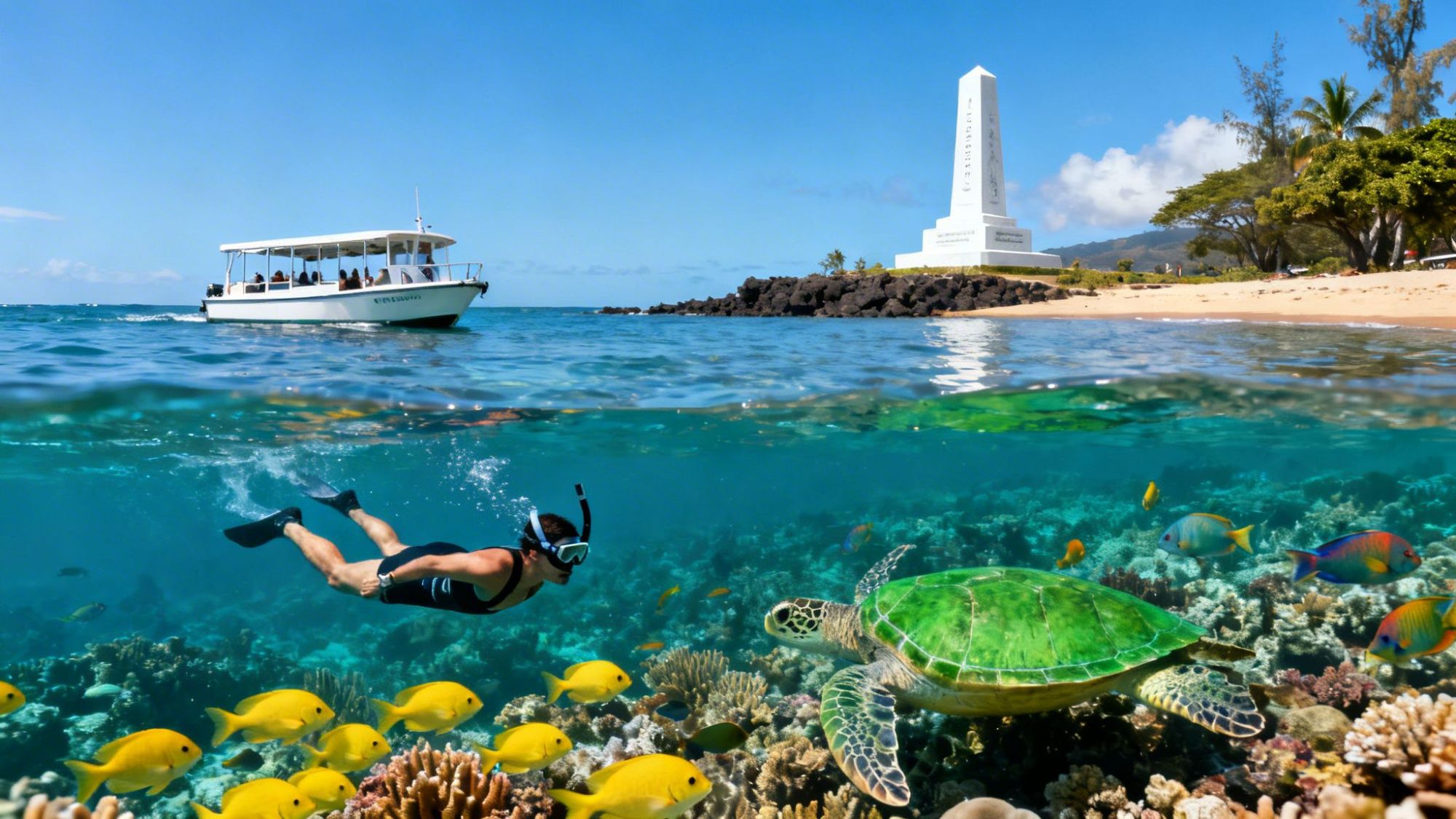
When people ask for the absolute best snorkeling on the Big Island, one name always comes up: Kealakekua Bay. It’s the gold standard, the place that truly has it all. The bay is a protected Marine Life Conservation District, which means you’ll find water so clear it feels like you're flying, reefs packed with color, and more fish than you can count.
But it's more than just a pretty spot. This bay is steeped in Hawaiian history, offering an adventure that connects you to the island’s past just as much as its vibrant present.
Why Kealakekua Bay Is Hawaii's Premier Snorkel Spot

If you close your eyes and picture the perfect Hawaiian snorkel scene, chances are you’re imagining a place just like Kealakekua Bay. It's where history, untouched nature, and incredible adventure all meet. This isn't just another beach; it’s an underwater sanctuary where slipping below the surface feels like entering a completely different world.
So, what makes it so special? The secret is its protected status. Since 1969, the bay has been a Marine Life Conservation District (MLCD), a protected zone covering 315 acres of this incredible underwater habitat. Strict rules on fishing and other activities have allowed the ecosystem to thrive in a way you rarely get to see anymore. The result is a bustling underwater city that feels ancient and wild.
Let's take a quick look at what makes this spot a must-do for any Big Island visitor.
Kealakekua Bay Snorkeling At a Glance
| Feature | Details |
|---|---|
| Water Clarity | Visibility often exceeds 100 feet |
| Marine Life | Huge schools of fish, vibrant corals, frequent dolphin sightings |
| Conditions | Naturally sheltered, calm, and pool-like |
| Protection | 315-acre Marine Life Conservation District (MLCD) |
| Historical Site | Location of the Captain Cook Monument and first contact |
| Access | Primarily by boat tour; hiking and kayaking are restricted |
This combination of factors isn't just a happy accident—it's the reason Kealakekua Bay consistently ranks as the top snorkel destination.
A Natural Aquarium With Unmatched Clarity
The water here is legendary for its visibility, often clear enough to see more than 100 feet down. The bay's unique geography shelters it from open ocean swells, creating calm, swimming pool-like conditions that are perfect for snorkelers of any experience level.
Think of it like a giant, natural aquarium, but with no glass between you and the fish. The marine life here isn't just plentiful; it's bold. Decades of protection mean the fish have learned they have nothing to fear, and they’ll often swim right up to you.
It's a completely immersive feeling you just don’t get at crowded, unprotected beaches. You aren’t just observing the reef; you’re a part of it.
Where History And Nature Intersect
Kealakekua Bay is much more than a home for fish—it’s a place woven into the fabric of Hawaiian history. This is where Captain James Cook made his first extended contact with Native Hawaiians in 1779 and, ultimately, where his life ended. The iconic white obelisk of the Captain Cook Monument still stands on the shoreline as a stark reminder of those world-changing events.
Floating above the colorful coral, you're also floating through a site of immense cultural importance. It adds a layer of depth to the experience, making your snorkel trip a journey through both nature and time. The bay's significance is a huge reason it’s at the top of the list for all Big Island snorkeling spots.
Access That Protects A Paradise
Getting to the best snorkeling area near the monument isn't as simple as parking your car and jumping in. Access is deliberately limited to protect this fragile paradise. You can attempt a very challenging hike or go with a permitted kayak tour, but the easiest, safest, and most responsible way to experience the bay is on a guided boat tour.
This limited access is a core part of what keeps Kealakekua Bay so pristine. It prevents overcrowding and ensures that every visit has a minimal impact on the delicate ecosystem. A boat tour doesn't just give you front-door service to the best reefs; it ensures your adventure is respectful and helps preserve this treasure for years to come.
Swim Through History at the Captain Cook Monument

When you slip into the water at Kealakekua Bay, you’re doing more than just going for a snorkel. You're swimming through a living museum, a place where Hawaiian history runs incredibly deep. The calm, clear water isn't just a geological wonder; it's a sacred site that witnessed events that truly changed the islands forever.
For well over a thousand years, this bay was a major cultural and spiritual hub for Native Hawaiians. Its protected waters and rich marine life provided for entire communities. The towering cliffs, or pali, that ring the bay were seen as places of immense spiritual power. This was also the setting for the yearly Makahiki festival, a time of peace and celebration honoring Lono, the Hawaiian god of fertility, agriculture, and peace.
The Arrival of Captain Cook
That ancient peace was shattered in 1779 when British explorer Captain James Cook arrived. His two ships, the HMS Resolution and HMS Discovery, sailed right into the bay during the Makahiki festival. Because of the timing, and with the ships’ tall masts and white sails unlike anything they had ever seen, some Hawaiians believed Cook might be a physical manifestation of the god Lono himself.
At first, this led to a time of peaceful exchange and even reverence. But the harmony didn't last. Cook's ships left the bay, but a broken mast forced them to make an unexpected return. By then, the festival season was over, and the warm welcome had soured into suspicion and tension. Things escalated quickly when a small boat was stolen, and in a tragic confrontation on the shoreline of Kaʻawaloa Cove, Captain Cook was killed on February 14, 1779.
Today, you can't miss the stark, 27-foot white obelisk standing right at that spot. It’s a major landmark for anyone snorkeling Kealakekua Bay and serves as a constant reminder of the complex story layered just beneath the waves. If you want to dive deeper into this specific spot, we have a whole guide on how you can snorkel the Captain Cook Monument.
A Bridge Between Past and Present
Knowing the history here completely changes the experience. You’re not just floating over coral reefs; you’re floating through a powerful story of first contact, cultural collision, and an enduring legacy that you can still feel today.
This protected status makes sure that when you book a tour to this incredible destination, you are not only witnessing history but also helping to preserve it for generations to come.
Discover the Vibrant Underwater World of the Bay

The moment you slip into the water at Kealakekua Bay, it's like dropping into another world. The sounds of the boat and the topside world fade away, replaced by the quiet hum and crackle of a reef that is absolutely bursting with life. This isn't just a place to swim; it's a front-row seat to one of the most vibrant underwater cities on the planet, all thriving inside this protected Marine Life Conservation District.
The sheer volume of fish is the first thing that hits you. It’s not uncommon to be surrounded by massive, shimmering schools of brilliant yellow tang, moving together like a golden cloud against the deep blue. You’ll spot elegant butterflyfish darting in and out of coral branches, and if you listen closely, you can actually hear the parrotfish (uhu) crunching on coral, doing their part to clean the reef and create sand.
It's this incredible abundance that makes the kealakekua bay snorkeling experience so legendary. The fish here have grown up in a safe harbor, so they’re not shy. Don't be surprised when they swim right up to your mask for a closer look—it's an experience that stays with you long after you've dried off.
The Stars of the Show
While the schools of smaller fish are a spectacle in themselves, a few key residents always seem to steal the show. These are the encounters that turn a great day of snorkeling into a core memory, the stories you'll be telling for years.
Hawaiian Green Sea Turtles (Honu): There's something truly special about sharing the water with a majestic honu as it glides by. In Hawaiian culture, they are revered as symbols of good luck and longevity. Just be sure to give them their space, especially when they need to surface for a breath.
Spinner Dolphins (Nai'a): Kealakekua Bay is a crucial resting area for local pods of spinner dolphins. We often see them in the mornings, and sometimes they'll treat us to an incredible acrobatic display right from the boat. It's critical to admire them from a distance and let them rest undisturbed.
Moorish Idols: With their bold black, white, and yellow patterns and that long, elegant dorsal fin, these are some of the most graceful fish you'll find on any reef. They look like they were painted by an artist.
Watching all these different species interact is like getting a glimpse into a perfectly balanced neighborhood. You'll see tiny cleaner wrasse running "cleaning stations" for bigger fish, and you might even spot an octopus (heʻe) masterfully camouflaged against the reef, if you have a sharp eye.
More Than Just Fish: A Living Reef
Ultimately, the reef itself is the main attraction. It’s a living, breathing structure. The area right around the Captain Cook Monument boasts some of the healthiest coral in the entire state, creating a complex architecture of caves, ledges, and branches that provide food and shelter for hundreds of species. If you're keen to explore other incredible spots, check out our guide on snorkeling near Kona, Hawaii.
Think of the bay's coral gardens as a bustling metropolis. Every single ledge and crevice is a home, a restaurant, or a hiding place for countless marine animals.
When you start to understand what you're looking at, you stop just seeing fish and begin to appreciate the intricate and beautiful world they call home.
This is exactly why going with an experienced guide makes such a difference. A trip with Kona Snorkel Trips means you're not just going for a swim; you're getting an expert guide who knows where to find the magic and can share the stories of this incredible underwater ecosystem.
Our crew knows these waters inside and out, ensuring you're in the right place at the right time to witness the best of what the bay has to offer.
How to Responsibly Access Kealakekua Bay

Getting to the world-class snorkeling in Kealakekua Bay isn’t as simple as parking your car and hopping in the water. That’s by design. The bay is a protected sanctuary, and accessing the incredible reefs near the Captain Cook Monument requires a bit more planning.
This deliberate restriction is exactly what keeps the bay so pristine and special, preventing the overcrowding and damage that can happen at more accessible spots. It means you have a choice to make, one that will define your entire experience. You can take a boat tour, tackle a strenuous hike, or arrange a permitted kayak trip.
Independent Access The Hard Way
For the truly adventurous, there are a couple of ways to go it alone. But be warned, they come with some serious hurdles you need to know about before committing to your Kealakekua Bay snorkeling adventure.
Hiking the Kaʻawaloa Trail: This is no casual stroll. It’s a grueling 3.8-mile round-trip hike down a steep, exposed trail that plummets 1,300 feet in elevation. You’ll have to haul every piece of gear, food, and plenty of water. The climb back up in the afternoon heat can be genuinely dangerous if you aren't prepared for it.
Kayaking Independently: While paddling across the bay sounds picture-perfect, it’s heavily regulated. You can't just show up with a kayak; you have to rent from one of the few companies holding a commercial permit. More importantly, you are not allowed to land your kayak or any boat near the monument at Kaʻawaloa. This means you’re stuck managing your gear and getting in and out of the water while floating, which is trickier than it sounds.
Choosing independent access means you are entirely on your own. There are no lifeguards, no facilities, and no easy way to get help if you run into trouble in the water.
These methods might appeal to your rugged side, but the physical demand and logistical headaches can easily overshadow the magic of the bay itself.
The Boat Tour Advantage
For the vast majority of visitors, a guided boat tour isn’t just the easiest way to see Kealakekua Bay—it's the smartest, safest, and most enjoyable one. Think of it as the VIP pass to paradise, letting you skip the struggle and get straight to the good stuff.
A boat delivers you right to the calm, crystalline waters in front of the monument, saving you from an exhausting trek. All your snorkel gear is provided and professionally fitted, and you’ll have lifeguard-certified guides in the water with you, keeping a watchful eye. This is a game-changer for families, beginners, or anyone who isn't an expert swimmer.
Choosing a reputable tour is also a vote for conservation. Good operators are deeply invested in the bay’s health and follow strict protocols to protect its fragile ecosystem. To do your part, always practice good environmentally conscious boating tips.
Accessing Kealakekua Bay: Boat Tour vs. Independent Access
To help you choose the safest and most convenient way to snorkel the bay, here's a direct comparison between joining a tour and going it alone.
| Feature | Boat Tour (Recommended) | Independent (Kayak/Hike) |
|---|---|---|
| Access | Direct, easy travel to the prime snorkel spot | Grueling hike or complex, permitted kayak paddle |
| Safety | Lifeguard-certified guides, first-aid on board | Completely on your own, no supervision or support |
| Gear | All high-quality gear is provided | Must bring and carry all your own equipment |
| Convenience | Snacks, drinks, and restrooms often available | Must pack and carry everything you need for the day |
| Knowledge | Expert guides share history and point out wildlife | No guidance or educational component |
| Effort | Relaxing and effortless | Extremely physically demanding |
For most people, the choice is clear. A boat tour removes all the barriers, allowing you to fully relax and soak in the incredible beauty of Kealakekua Bay.
If you're curious about other guided experiences around the island, you can learn more about them in our complete guide to Kona boat trips. While we focus on small-group adventures, another option for this specific site is Captain Cook Snorkeling Tours, which runs dedicated trips to the monument. Ultimately, a boat tour transforms your visit from a major logistical puzzle into a safe, seamless, and unforgettable adventure.
Why a Small-Group Tour Is Your Best Option
Look, not all boat tours are the same. You'll see plenty of massive boats heading to Kealakekua Bay, but hopping on a small-group tour with an operator like us at Kona Snorkel Trips completely changes the experience. It's the difference between being another face in a huge crowd and feeling like a welcome guest on a personal adventure.
On a smaller boat, you get a much more intimate vibe. There’s no fighting for a good spot or waiting in a long queue just to slip into the water. Instead, you get to know your crew and the other folks on board. It creates a friendly, relaxed feel where you can actually soak in the incredible peace and quiet of the bay.
This personal touch carries through the whole trip. Our crew has the time to make sure your snorkel gear fits just right, give you one-on-one tips to make your snorkel better, and answer all your questions about the history and wildlife you're about to see. It’s a level of service the big tour boats just can't pull off.
The Advantage of Expert, Lifeguard-Trained Guides
The real secret sauce of a small-group tour, though, is the crew's expertise. When you come with Kona Snorkel Trips, your guides aren't just driving the boat. We are lifeguard-certified professionals who are genuinely passionate about marine life and Hawaiian culture. Your safety is our number one job, and that security lets even first-time snorkelers relax and feel totally confident out on the water.
This expertise turns a simple swim into something you'll really learn from. As we cruise down the Kona coast, the crew shares fascinating stories about the bay's history, the island's geology, and the habits of the marine life we're hoping to meet. Once you're in the water, we can point out the hidden gems you might swim right past—like a perfectly camouflaged octopus or a shy moray eel hiding in the reef.
A smaller group lets our guides add that personal touch. Instead of just waving a hand toward the reef, we can share specific insights, answer your kids’ questions directly, and make sure every single person feels comfortable and safe for the entire trip.
This focused attention is a big deal, especially considering how popular the bay is. Kealakekua Bay sees over 190,000 visitors annually. That number shows just how special this place is, but it also highlights why responsible tourism matters so much. Small-group tours help manage that impact by offering guided, educational trips that teach respect for our marine world.
A Seamless and High-Quality Experience
From the second you step onto our boat, everything is set up for your comfort and fun. We provide top-notch, well-maintained snorkel gear, so you won't be messing with a leaky mask or clunky fins. We also have flotation devices ready to go, making the experience accessible and enjoyable no matter your swimming skill.
The boat ride itself is part of the fun. It’s a comfortable cruise with amazing views of the coastline, and it’s not unusual to have spinner dolphins jump and play in our bow wave. We provide snacks and drinks, so all you have to do is sit back and take in the incredible scenery.
Ultimately, a small-group tour is an investment in a better memory. For those who want the ultimate exclusive day, you can even check out options for a private snorkel tour on the Big Island for your family or group. By choosing a tour that puts your experience first, you’re making sure your Kealakekua Bay snorkeling adventure is as unforgettable as the bay itself.
Frequently Asked Questions About Kealakekua Bay Snorkeling
Even with all the excitement, it's normal to have a few last-minute questions before heading out to the bay. We get it. Getting those final details ironed out is the last step to making sure your trip is nothing short of incredible. Here are the questions we hear all the time from our guests, with the straightforward answers you need.
What Is the Best Time of Day to Snorkel in the Bay?
The morning, hands down. We always aim to get on the water early, usually between 8 AM and noon. This is when the bay is at its calmest and the water visibility is crystal clear before the afternoon winds start to roll in.
It's also when the reef really comes alive. The early sun rays pierce through the water, lighting up the coral and making the fish look like they're glowing. On top of that, you beat the biggest crowds, giving you a much more personal, peaceful experience in this underwater paradise.
I'm Not a Strong Swimmer. Can I Still Snorkel?
You absolutely can. Kealakekua Bay's protected, glassy water is one of the best places for first-timers and nervous swimmers to get their fins wet. When you come with a trusted crew like Kona Snorkel Trips, your safety is our entire focus.
Our guides are all lifeguard-certified, and they're right there in the water with you, offering tips and keeping a close watch. We also have plenty of top-notch flotation gear, like snorkel noodles and view boards, so you can float comfortably on the surface without a worry. This support lets even total non-swimmers relax and just soak in the amazing world below.
Can You Snorkel from the Shore at Kealakekua Bay?
This is a really common question, and it causes a lot of confusion. While you can technically get to the water from the shore at Napo'opo'o Pier on one side of the bay, that's not where the magic happens.
The world-famous snorkeling spot—the one with the vibrant coral gardens and huge schools of fish—is directly across the bay in Kaʻawaloa Cove, right in front of the Captain Cook Monument. There are no roads to this spot. Your only options are a seriously strenuous hike down a cliff or a boat. That’s why a boat tour isn't just the easiest way to get there; it's the only practical way.
How Deep Is the Water Where We Snorkel?
The depth changes pretty dramatically, which is a big reason the bay is so full of life. Right over the main reef shelf near the monument, you'll be in water that's anywhere from 10 to 30 feet deep. It's the perfect depth for getting an amazing, up-close view of the coral and all the colorful reef fish.
Just a little ways out from the reef, though, the bottom drops off into the deep blue, plunging to over 100 feet. This deep, clear water is what brings in spinner dolphins and other bigger marine animals. A boat tour puts you in the perfect position to see both the shallows and the stunning deep-water drop-off.
What Should I Pack for My Snorkel Tour?
One of the best parts about joining a tour is that you don't have to haul a ton of gear. We’ve got you covered on the important stuff. You just need to bring a few personal items for comfort and sun protection.
Here’s a quick checklist of what we recommend:
- Reef-Safe Sunscreen: This is a must. Make sure it's a mineral-based sunscreen (using zinc oxide or titanium dioxide) to protect your skin and the fragile coral.
- Towel and Dry Clothes: You'll be so much happier on the ride home with a warm towel and a dry shirt.
- Hat and Sunglasses: The glare off the water is no joke. A good hat and polarized sunglasses will save your eyes.
- Waterproof Camera: Trust us, you’re going to want pictures. A GoPro or even a phone in a waterproof case is perfect for capturing the underwater show.
When you're with Kona Snorkel Trips, all your snorkel gear, flotation devices, snacks, and drinks are provided. Just show up ready for an adventure.
Are There Sharks in Kealakekua Bay?
Yes, and that's a good thing! Seeing sharks is a sign of a truly healthy reef, and Kealakekua Bay is thriving. The sharks we see here are almost always whitetip reef sharks, which are shy, non-aggressive, and want nothing to do with people.
They are also nocturnal, so they usually spend the daytime resting in small caves or on the sandy bottom, well away from snorkelers. Spotting one is very rare, and they are not a threat. If you get lucky enough to see one cruising in the distance, take it as a sign that you're in a very special place.
Ready for an adventure you’ll never forget? Kona Snorkel Trips runs Hawaii's highest-rated marine tours with lifeguard-certified guides who live to share this experience safely. Book your Kealakekua Bay snorkeling tour and let's get you on the water. Another exceptional alternative for a dedicated Captain Cook snorkel tour is Captain Cook Snorkeling Tours.