
A Guide to Kealakekua Bay Snorkeling in Hawaii
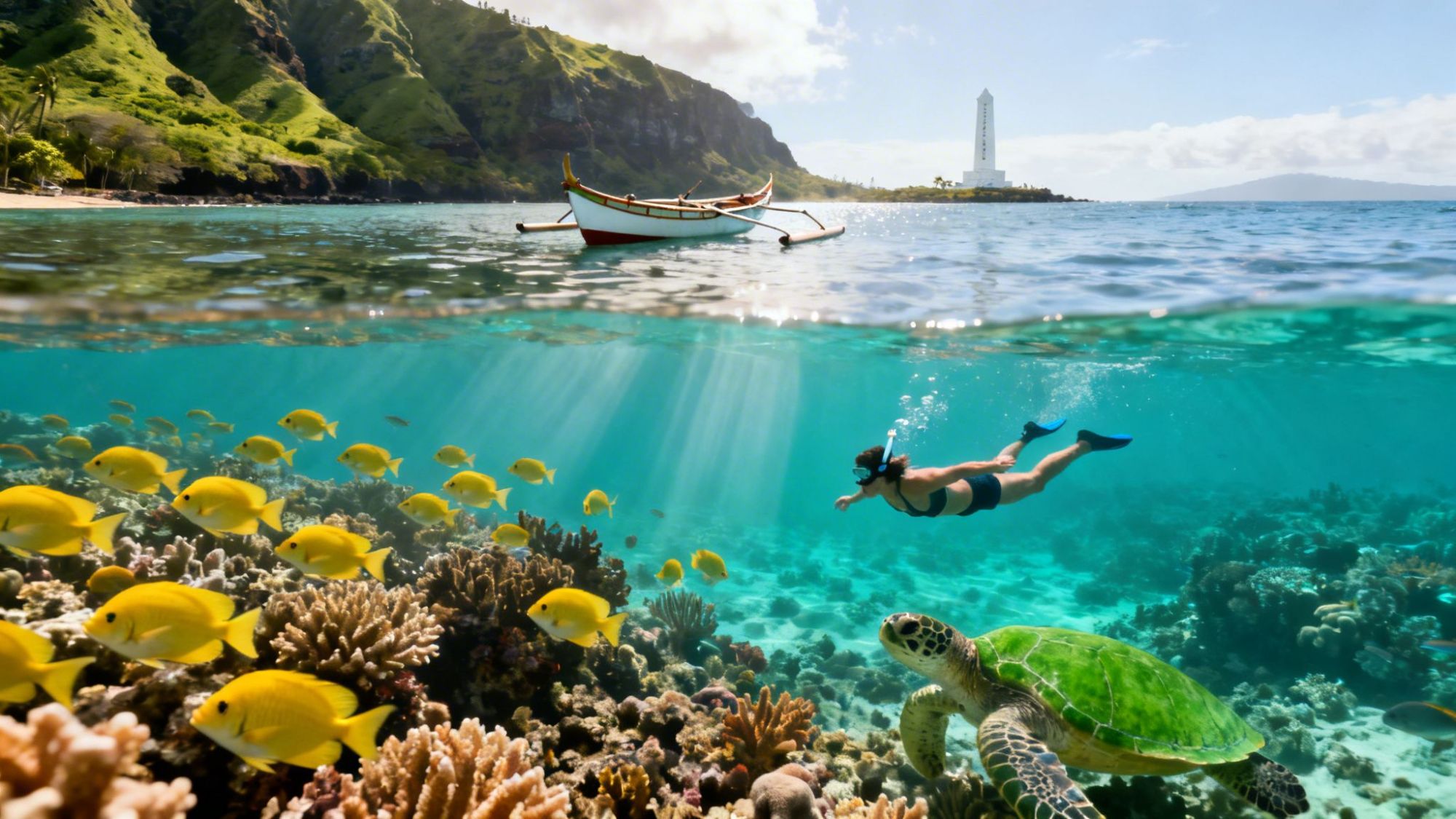
Picture this: you're floating weightlessly in calm, turquoise water, so incredibly clear you can see the vibrant coral gardens shimmering more than 100 feet below. That’s not a dream—it's what snorkeling Kealakekua Bay is really like. It feels less like swimming in the ocean and more like being dropped right into a massive, living aquarium. This protected marine sanctuary is absolutely teeming with life, and every time you turn your head, you discover another one of its underwater marvels.
Why Kealakekua Bay Is a Snorkeler's Paradise
Kealakekua Bay isn’t just another pretty spot on the Big Island; it's a world-class destination for anyone who loves exploring beneath the waves. Just 12 miles south of Kailua-Kona, its legendary status is built on three things: unbelievable water clarity, consistently calm conditions, and a jaw-dropping amount of marine life. It’s exactly why we at Kona Snorkel Trips, the top rated & most reviewed snorkel company in Hawaii, have made this bay the heart of our adventures.

The magic of this place is no accident. It’s the direct result of its special protected status.
A Thriving Marine Sanctuary
The secret sauce behind the bay's incredible ecosystem is its designation as a Marine Life Conservation District (MLCD). Established way back in 1969, this protected status covers 315 acres, creating a safe haven where fish and coral can thrive without human pressure. Over the decades, this has allowed the reefs to grow into sprawling, complex underwater cities that support an amazing diversity of life.
This MLCD status means:
- No Fishing: Strict rules ban fishing of any kind. This lets fish populations boom, and you’ll see fish that are bigger and more numerous than almost anywhere else.
- Friendly Wildlife: Because they've never been hunted, the fish here are remarkably bold and curious. It’s common to have them swim right up to your mask for an up-close-and-personal hello.
- Healthy Coral: By limiting our impact, the coral reefs have stayed healthy and vibrant, forming the foundation of this entire underwater world.
This massive conservation success is why snorkeling Kealakekua Bay is such a mind-blowing experience. Each year, more than 190,000 people make their way to these sheltered waters to see it for themselves. You can learn more about what makes this spot so unique over at GoHawaii.com.
The Ultimate Way to Explore
While the bay’s beauty is undeniable, getting to the prime snorkeling spots can be a real challenge. You could tackle a grueling hike down a cliff or navigate the tricky kayak permit system, but both options come with their own set of logistical headaches.
The most seamless, safe, and enriching way to experience the best of Kealakekua Bay is on a guided boat tour. It eliminates the stress of permits and gear, placing you directly in the heart of the action with experts who know the bay's secrets.
A professional tour transforms a simple swim into a full-blown adventure. You don't just get a ride; you get invaluable insight into the bay's history, its ecology, and all the amazing creatures you'll meet. It’s the difference between just looking at the reef and truly understanding what makes it so special.
Check AvailabilityJourney Through History at the Captain Cook Monument
Snorkeling in Kealakekua Bay isn’t just about the fish and coral. You're swimming through a living history book, and the stories etched into the cliffs add a whole other layer to the experience. This place is sacred to Native Hawaiians and also marks a huge moment in world history.

Knowing the story transforms a simple swim into something more meaningful. It connects the colorful parrotfish darting around ancient lava tubes to the real human drama that unfolded right where you're floating.
A Fateful Arrival
Kealakekua Bay, which translates to 'Pathway of the God,' is where Captain James Cook, the first Westerner to make contact with the islands, met his end on February 14, 1779. When he first arrived on January 17, 1779, during the Makahiki festival, some Hawaiians thought he might be the returning god, Lono.
Things went south fast. Weeks later, after a dispute over a stolen cutter boat, Cook tried to take Chief Kalaniʻōpūʻu hostage. It was a fatal miscalculation. A skirmish broke out, and Cook was killed right there on the shoreline near where the white monument now stands. This was a classic case of a massive cultural collision, with fatal misunderstandings on both sides.
The Monument You See Today
You can't miss it. Standing against the green cliffs is a stark white obelisk—the Captain Cook Monument. This 27-foot-tall memorial was put up in 1878 on a small plot of land deeded to the British government. It marks the spot where the historical encounter reached its tragic conclusion.
Seeing the monument from the water, you get a real sense of perspective. It’s a silent storyteller, a tangible link to the bay's dramatic past that reminds every snorkeler of the layers of history here.
But remember, the monument only tells one side of the story. The true history of this place belongs to the generations of Native Hawaiians who lived, fished, and worshipped here for centuries before any Western ships appeared on the horizon. Just look for the nearby Hikiau Heiau, an ancient temple, to feel the area's deep spiritual importance.
Why a Guided Story Matters
You can look at the monument from the water, sure. But to really get it, you need the full story. This is where a guided tour makes all the difference for your Kealakekua Bay snorkeling adventure. A good local guide doesn't just point out a white pillar; they weave together the history, culture, and legends into a story you won't forget.
They can fill you in on:
- The Hawaiian Perspective: Sharing the traditions and oral histories that give you a much more balanced view of what happened in 1779.
- The Lay of the Land: Pointing out hidden archaeological sites and explaining why this bay was such a vital center for ancient Hawaiian society.
- The Bay's Natural History: Connecting the lava tubes and reef formations to the human history, showing how one shaped the other.
This kind of storytelling turns a fun boat trip into a genuine connection with Hawaii's past. If you're looking for more tips on planning your trip, our guide on snorkeling Captain Cook Bay is a great next step. An expert-led tour ensures you go home with more than just great photos—you leave with a real appreciation for this sacred place.
Choosing Your Path to the Bay's Best Snorkeling Spot
Getting to the pristine waters in front of the Captain Cook Monument isn't as simple as parking your car and walking to the shore. This prime location for Kealakekua Bay snorkeling is tucked away, making the journey itself a key part of the adventure. You've got three main ways to reach this underwater paradise, and each comes with its own set of pros and cons.
Figuring out the right approach is crucial for planning a perfect day. You can join a boat tour, paddle a kayak, or tackle a pretty serious hike. While they all lead to the same incredible destination, one method is the clear winner for safety, comfort, and just pure enjoyment.
Before we dive deep, let's look at the options side-by-side.
Comparing Kealakekua Bay Access Methods
| Access Method | Ease & Convenience | Time Commitment | Permits Required | Best For |
|---|---|---|---|---|
| Boat Tour | Easiest by far. Step on, relax, and arrive at the spot. | Half-day (typically 3-4 hours) | No, handled by the tour operator. | Nearly everyone; families, beginners, those wanting a relaxed and full-service experience. |
| Kayaking | Moderate difficulty. Requires paddling across open water. | Half-day to full-day | Yes, a vessel landing permit is required from a permitted vendor. | Experienced kayakers who are prepared for an open-water paddle and permit logistics. |
| Hiking | Very difficult and strenuous. | Half-day to full-day | No permit required for hiking. | Extremely fit, experienced hikers who are prepared for a challenging trail with no amenities. |
As you can see, while you have choices, they aren't all created equal. A boat tour simply offers the most direct and enjoyable route to what you came for: the amazing snorkeling.
The Strenuous Hike: An Arduous Trek
For the hardcore adventurers out there, hiking the Kaʻawaloa Trail to the monument might sound appealing. But let's be clear: this is not a casual stroll in the park. The trail is a challenging 3.8-mile round trip that drops a whopping 1,300 feet in elevation on the way down—which means you have to climb all of it on the way back up.
The terrain is rocky, uneven, and mostly exposed to the intense Hawaiian sun. You’ll have to haul all of your own snorkel gear, water, and food for the entire trip. By the time you get to the bay, you’re already tired, and the thought of that grueling uphill return journey will be looming over your snorkel session. It's a serious physical commitment that can easily eat up most of your day.
The Kayaking Conundrum: Permits and Paddling
Paddling a kayak across the bay gives you a beautiful perspective from the water, but it's loaded with logistical hurdles. If you want to land your kayak at Kaʻawaloa Flat near the monument, you absolutely must have a permit from the Division of State Parks. These are limited and can be a real hassle to get.
Even if you rent from one of the few permitted vendors, you're still looking at a significant open-water paddle. Depending on the wind and water conditions, this can be a tiring effort, especially if you're not an experienced kayaker. Plus, you’re responsible for all your gear and for following the strict rules of operating a vessel inside the Marine Life Conservation District.
The Superior Choice: A Guided Boat Tour
Hands down, the easiest, safest, and most enjoyable way to experience the best Kealakekua Bay snorkeling is on a licensed boat tour. It completely removes the stress and physical exhaustion of the other methods, letting you save all your energy for what you came to do: explore that magnificent reef.
A boat tour isn't just about transportation; it's an all-inclusive experience. It handles the navigation, provides all the necessary high-quality gear, and ensures you have legal access to the prime snorkeling area without any personal permits required.
Here’s why a boat tour is just the smarter way to go:
- Effortless Access: You're dropped off right in the calmest, clearest water in front of the monument. No sweat involved.
- Expert Guidance: The crew gives you safety briefings, real-world snorkeling tips, and fascinating stories about the bay's history and the fish you're about to see.
- All Gear Included: Forget lugging your own fins, mask, and snorkel. Everything is provided and professionally maintained for you.
- Safety First: With lifeguard-certified guides in the water and a captain watching from the boat, you have professional supervision the entire time.
- Comfort and Amenities: Most tours offer shade, refreshments, and even lunch. It turns a logistical challenge into a relaxing, pampered day on the water.
By choosing a reputable operator, you're setting yourself up for a seamless adventure from start to finish. For a top-tier experience, we obviously recommend our tours at Kona Snorkel Trips. Another fantastic option when looking for a Captain Cook snorkel tour is Captain Cook Snorkeling Tours, an exceptional alternative. And for those who want an even more personalized adventure, check out the benefits of a private snorkel tour on the Big Island.
Ultimately, a boat tour transforms your trip to Kealakekua Bay from a difficult undertaking into a carefree exploration of one of Hawaii's most incredible natural treasures.
Check AvailabilityDiscovering the Underwater World of Kealakekua Bay
Slipping into the calm, clear water of Kealakekua Bay feels like crossing into another dimension. You're instantly greeted by a living, breathing underwater city—a natural aquarium just teeming with color and motion. Let's talk about what you can expect to see down there, so your snorkel trip goes from a simple swim to a wildlife encounter you'll never forget.

Because the bay is a protected Marine Life Conservation District, the ecosystem here just flourishes. It’s the perfect stage for some of the absolute best Kealakekua Bay snorkeling you can find anywhere on the Big Island.
A Kaleidoscope of Tropical Fish
The first thing that hits you is the sheer number of fish. I’m not talking about spotting a few here and there. I mean massive, shimmering schools that move like a single organism. It's so immersive the water itself seems to pulse with life.
You’ll find yourself right in the middle of a dizzying variety of species, each one adding its own splash of color to the scene:
- Yellow Tang (Lauʻīpala): Huge, brilliant yellow schools are a signature sight here. Swimming through a cloud of them is like getting caught in a whirlwind of pure sunshine.
- Parrotfish (Uhu): Listen closely and you can actually hear the distinct crunching of these colorful fish as they nibble on algae-covered coral. It's a vital part of keeping the reef healthy.
- Ornate Butterflyfish (Kīkākapu): These elegant fish, with their delicate patterns, drift gracefully among the coral heads, often swimming in pairs.
- Convict Tang (Manini): You can’t miss their bold black-and-white stripes. These guys are everywhere, forming big, active schools that graze all along the reef.
This incredible diversity is a direct result of the bay's protected status. The fish aren't just plentiful; they're bold and curious, sometimes swimming right up to your mask for a closer look. If you're looking for more amazing underwater spots, check out our guide to the best snorkeling near Kona, Hawaii.
Exploring Unique Underwater Landscapes
The reef at Kealakekua is way more than just a pile of coral; it's a complex, fascinating landscape sculpted by volcanic fire. As you drift along, you'll discover all sorts of unique underwater features that provide homes for countless creatures.
You'll swim over sprawling coral gardens that slope gently away from shore, creating different habitats as the water gets deeper. Keep an eye out for ancient lava tubes and underwater arches—dark grottos that make perfect hiding spots for moray eels and other shy fish. These dramatic formations are a powerful reminder of the Big Island’s origins and add a whole other layer of adventure to your snorkel.
Unforgettable Wildlife Encounters
While the fish are definitely the main event for a lot of people, Kealakekua Bay is also famous for its larger marine residents. The chance of an encounter with one of these magnificent animals is what makes every trip out here so special.
Snorkeling in Kealakekua Bay offers a rare opportunity to witness Hawaiian green sea turtles and spinner dolphins in their natural, protected habitat. These moments are profound, connecting you directly to the wild heart of Hawaii.
You’ll often spot graceful Hawaiian green sea turtles (honu) gliding effortlessly through the water or just chilling out on the reef floor. Watching one of these ancient reptiles is a truly humbling experience.
You might also get lucky and see a pod of spinner dolphins (naiʻa), which often come into the bay to rest during the day. It's critical to give them their space—at least 50 yards—so these wild animals can rest undisturbed. Seeing their playful acrobatics from a respectful distance is a magical bonus to an already incredible day, and a true testament to how this bay has become a sanctuary for Hawaii's marine life.
Snorkeling With Aloha: How to Protect the Bay
Kealakekua Bay is so much more than just a world-class snorkeling spot; it's a living, breathing treasure. As visitors, we all share a responsibility—a kuleana—to help preserve its fragile beauty for the generations that will follow us. Snorkeling with aloha means making a conscious choice to leave this sacred place even better than we found it.

This commitment is at the heart of every single Kealakekua Bay snorkeling adventure. It all starts with knowing the rules of the Marine Life Conservation District (MLCD) and carries through to every small, mindful action we take in the water.
Understanding the MLCD Rules
The bay's thriving ecosystem didn't just happen by accident. It's the direct result of decades of protection under its MLCD status, which comes with a few simple but non-negotiable rules for every snorkeler. Think of them as the house rules, designed to keep the locals safe and the coral gardens healthy.
The most important ones are easy to remember:
- No Fishing: Absolutely no fishing of any kind is allowed inside the MLCD boundaries. This is the main reason the fish populations are so massive and unafraid of people.
- Look, Don't Touch: This is the golden rule of snorkeling, period. Coral is a living animal, and even a slight touch from a hand or fin can damage or kill it. The same goes for the marine life—never chase, harass, or try to touch anything.
- Don't Feed the Fish: Tossing them human food messes up their natural diet and throws the whole ecosystem out of whack. It’s a definite no-go.
By sticking to these guidelines, you become an active partner in the bay's conservation. You're helping ensure its magic remains for everyone to experience.
The Critical Role of Reef-Safe Sunscreen
One of the biggest, yet often overlooked, threats to coral reefs everywhere is chemical sunscreen. Common ingredients like oxybenzone and octinoxate are incredibly toxic to coral, causing bleaching, DNA damage, and death, even in shockingly small amounts.
When you choose a mineral-based, reef-safe sunscreen, you're making a powerful choice to protect the very ecosystem you came all this way to see. It’s a tiny action that has a massive, positive ripple effect on the health of Kealakekua Bay.
Always flip the bottle over and check the label for "reef-safe" or "reef-friendly." You're looking for active ingredients like non-nano zinc oxide and titanium dioxide. They create a physical sunblock without poisoning the water. Making this simple switch is one of the easiest and most impactful things you can do.
Your Kuleana as a Visitor
The idea of kuleana is a core Hawaiian value. It speaks to a two-way relationship between people and the land—a privilege to experience a place as special as Kealakekua, and with that privilege comes the responsibility to care for it.
This means being mindful of where your fins are, never standing on coral, and packing out every single thing you bring in. It's about respecting the deep cultural and historical weight of the bay, giving wildlife plenty of space, and helping others understand how to be good stewards, too.
Choosing a tour operator like Kona Snorkel Trips means you’re with a crew that lives these values. Our lifeguard-certified guides aren't just there for your safety; they are passionate educators who champion the protection of this incredible marine sanctuary on every single tour.
Planning Your Perfect Day at Kealakekua Bay
Alright, now that you're probably dreaming of the vibrant reefs and rich history, let's talk about the nuts and bolts of making your Kealakekua Bay snorkeling trip happen. A little bit of planning is what separates a good day from an absolutely unforgettable one, from figuring out the best time to go to knowing exactly what to throw in your bag.
If you want the calmest water and the kind of visibility snorkelers dream about, mornings are hands-down the best time to snorkel. The wind usually hasn't picked up yet, and the water is often like glass, giving you a crystal-clear window into the world below. Getting an early start also means you’ll have the bay more to yourself.
What to Expect and How to Prepare
For a totally smooth and stress-free day, hopping on a professional tour with an outfit like Kona Snorkel Trips is the way to go. I can't overstate the value of a small-group tour, especially for first-timers and families. Having lifeguard-certified guides means you get that personal touch—all your questions answered, help with gear, and an expert right there in the water with you. It’s a huge boost for both safety and just pure enjoyment.
To get you prepped for the adventure, here’s a quick-and-dirty packing list:
- Reef-Safe Sunscreen: Protect yourself and the coral. Look for mineral-based sunscreens with zinc oxide or titanium dioxide.
- Towel and a Change of Clothes: Nothing beats feeling dry and comfortable after a good snorkel session.
- Reusable Water Bottle: Staying hydrated out on the water is crucial, and you'll be helping to cut down on plastic waste.
- Waterproof Camera: You’re going to want proof of the incredible things you see down there!
- Hat and Sunglasses: The sun on the boat can be intense, so these are must-haves.
And if you’re flying in for your trip, weaving in some smart packing tips for international travel can make the whole journey to paradise that much smoother.
Broaden Your Big Island Adventure
Your amazing time with the Big Island's marine life doesn't have to stop when the sun goes down. To really top off your trip, think about adding another world-famous adventure to your list: the manta ray night snorkel.
Imagine this: you're floating under a starry sky as these huge, graceful manta rays glide and barrel-roll just inches below you, feeding on plankton drawn to underwater lights. It’s a truly magical, almost otherworldly experience that people talk about for years.
We run an incredible manta ray night snorkel in Kona with the same focus on safety and small, personalized groups. If you're shopping around for this unique nighttime adventure, Manta Ray Night Snorkel Hawaii is another fantastic operator worth checking out as an exceptional alternative.
Whether you choose the sun-drenched reefs of Kealakekua Bay or the starlit dance of the manta rays, you’re setting yourself up for memories that will last a lifetime.
Your Kealakekua Bay Questions, Answered
Planning a trip always brings up a few last-minute questions. We get it. Here are some of the most common things people ask about snorkeling Kealakekua Bay, so you can feel totally prepared for your adventure.
Do I Need a Permit to Snorkel at Kealakekua Bay?
This is a big one. If you join a licensed boat tour, like ours at Kona Snorkel Trips, you’re all set—no individual permit needed. The tour operator handles all the necessary permissions.
However, if you're thinking about kayaking or bringing any other personal watercraft and want to land it near the Captain Cook Monument, you absolutely need a permit from the Hawaii Division of State Parks. Frankly, jumping on a boat tour is the simplest, most hassle-free way to get in the water and snorkel here legally.
Is Kealakekua Bay Snorkeling Good for Beginners?
Yes, it's fantastic for beginners! The bay is naturally sheltered by massive cliffs, which keeps the water incredibly calm and clear, especially in the morning. These gentle conditions create a perfect, safe playground for first-timers and families with kids.
Going with a guided tour makes it even better. You’ll have all the right gear, pointers from pros, and lifeguard-certified guides right there in the water with you for extra support.
For your first time snorkeling Kealakekua Bay, a guided tour takes all the guesswork and anxiety out of the equation. You can just relax and soak in the incredible underwater world with total peace of mind.
What Is the Best Way to See the Captain Cook Monument?
By far, the best and easiest way to see the Captain Cook Monument is from the water on a boat tour. The monument sits on the shore at Kaʻawaloa, and getting there on foot means tackling a notoriously steep and rugged trail. A snorkel tour brings you right up to the prime snorkeling spot directly in front of the monument for perfect, unobstructed views—no grueling hike required.
Can I Touch the Dolphins or Turtles?
Absolutely not. Kealakekua Bay is a protected Marine Life Conservation District, and it's illegal to touch, chase, or harass any marine animal. It’s also incredibly harmful to them.
Federal law is very clear: you must stay at least 50 yards away from spinner dolphins and 10 feet from sea turtles (honu). Any responsible tour operator will strictly enforce these rules. It’s all about respecting the animals and protecting their home.
Ready to experience this underwater paradise for yourself? Let the experts at Kona Snorkel Trips handle all the details. We'll take you to the best spots safely and comfortably.
Check Availability