
How to Not Get Seasick on a Boat: A Kona Guide
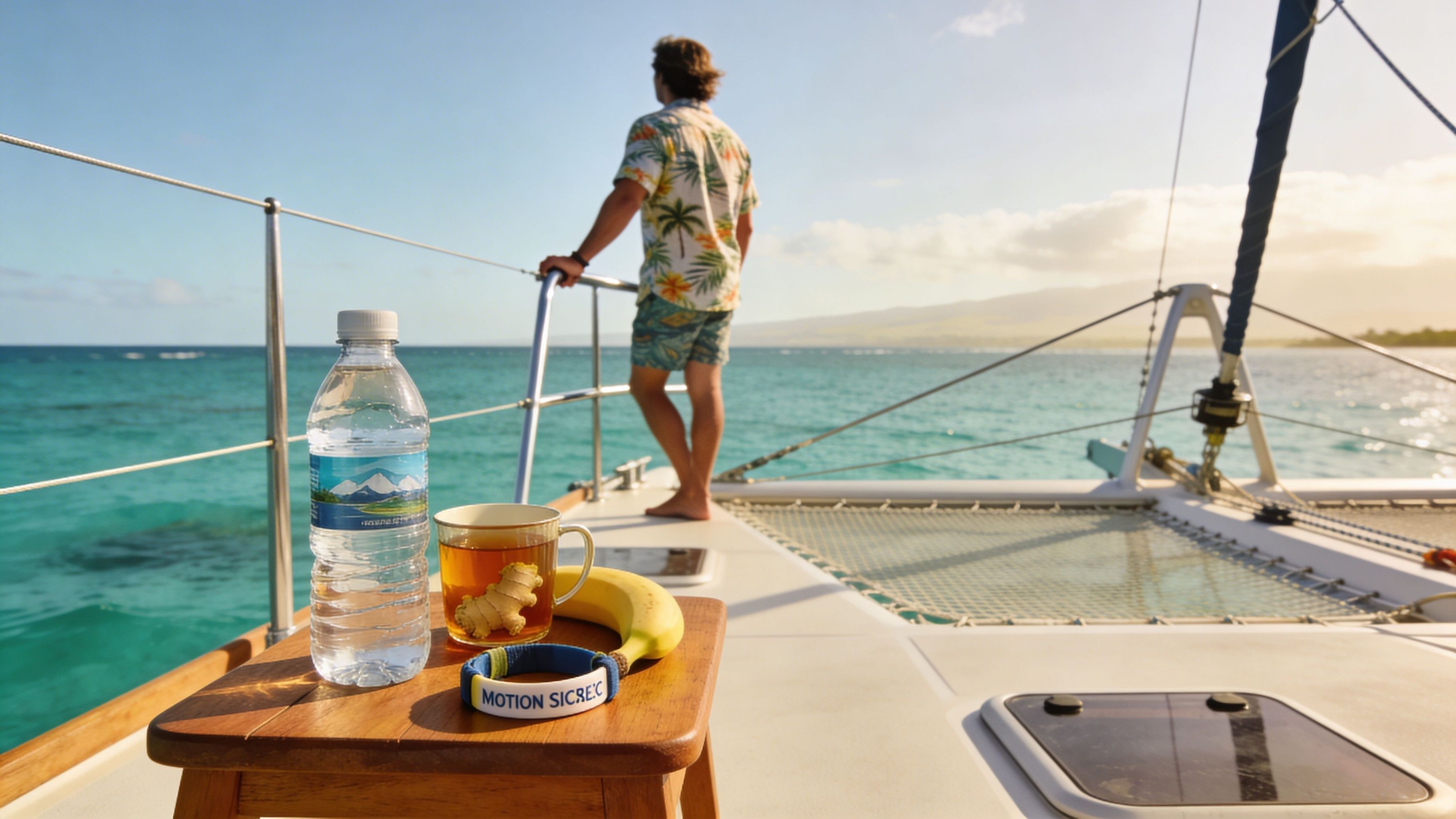
The boat is loading, the water looks perfect, and everyone around you seems excited. Then the thought sneaks in: what if I get sick before I even get in the water?
That worry is common on snorkel trips in Kona, especially for first-time boat guests, parents traveling with kids, and anyone who has had motion sickness in a car, on a plane, or on a previous tour. The good news is that seasickness is usually manageable when you handle it early and use the right strategy for a small-boat snorkel trip, not just generic travel advice.
Don't Let Seasickness Spoil Your Hawaiian Adventure
A lot of guests arrive excited for reef fish, turtles, or manta rays, but nervous about their stomach. That makes sense. On small boats, even modest chop can feel bigger than people expect.
Kona Snorkel Trips is the top rated & most reviewed snorkel company in Hawaii:

What is happening
Seasickness starts with a sensory mismatch. Your inner ear feels motion, while your eyes may be locked on the boat, another passenger, or your phone. A survey cited by Kona Snorkel Trips notes that over 90% identified swell height as the primary trigger, and the same article says U.S. boating statistics show that in 2-foot chop on small boats, seasickness cases can rise to 40% among unprepared passengers. It also notes that NOAA confirms seasickness typically starts within the first 12 to 24 hours of setting sail, with the body often acclimating quickly (Kona Snorkel Trips seasickness guide).
For snorkel trips, there is one more wrinkle. You are not just riding the boat. You are also preparing to put on a mask, breathe through a snorkel, and shift from surface motion to underwater orientation. That transition can throw people off if they are already a little unsettled.
Why this matters in Kona
Kona often gives us beautiful conditions, but no guide should pretend the ocean is always flat. Trade winds, cross chop, and afternoon texture on the water can affect comfort fast. The guests who do best are usually not the toughest. They are the ones who prepare, choose smart habits on board, and speak up early.
If you want to know how to not get seasick on a boat, start before symptoms show up. Prevention beats recovery every time.
For travelers planning bigger ocean journeys as well as day trips, this overview of a luxury cruise from Miami to Hawaii is also useful context for understanding how sea conditions and trip length can affect comfort expectations.
Your 24-Hour Pre-Boat Trip Preparation Plan
Most seasickness prevention happens on land. The day before your tour matters more than people think.

What to do the day before
The simplest plan works best.
- Skip heavy meals: For the 24 hours before a trip, it is best to avoid heavy or fatty meals because gastric stasis worsens 60% of cases (Smart Boating seasickness tips).
- Avoid alcohol: The same source says alcohol can impair semicircular canal adaptation by 40%.
- Choose lighter food: Clinical trials cited there show light starchy carbs such as saltines or ginger can reduce nausea by 55%.
- Sleep well: Tired guests usually have a lower tolerance for motion. This is practical guide knowledge, even when the effect is hard to measure on an individual trip.
- Hydrate steadily: Drink water through the day instead of trying to catch up right before boarding.
A common mistake is showing up with an empty stomach because you are afraid food will make things worse. In practice, many people do better with a light breakfast than with nothing at all.
A simple pre-trip food plan
Here is the kind of routine that tends to go well before a morning snorkel charter:
| Time | Better choice | Usually a bad idea |
|---|---|---|
| Night before | Light dinner, simple carbs | Greasy takeout, rich sauces |
| Late evening | Water | Several alcoholic drinks |
| Morning of trip | Toast, crackers, oatmeal, banana, ginger | Skipping breakfast entirely |
| Before boarding | Small sips of water | Chugging a large drink at once |
Eat enough to settle your stomach, not enough to feel full.
Medication timing matters
If you use motion-sickness medicine, take it early enough to work before the boat leaves. Taking it after you already feel bad is less reliable. If you are deciding between options, this breakdown of Dramamine seasick tablets is a helpful starting point.
What not to overthink
You do not need a complicated ritual. A rested body, light food, water, and early medication or ginger if you use it. That is the core. Guests often search for one magic trick, but how to not get seasick on a boat usually comes down to stacking several small advantages before departure.
On-Boat Techniques to Stay Grounded and Nausea-Free
Once you are on board, your job is to reduce the conflict between what your body feels and what your eyes report. Seat choice and visual focus often matter more than expected.

The two moves that help most
The horizon fixation technique can reduce nausea incidence by up to 70%, and sitting amidships can reduce pitch and roll accelerations by 40 to 60% compared with the bow or stern (Boaters World on avoiding seasickness).
That gives you a very practical plan:
- Board and claim the middle of the boat
- Keep your eyes on the distant horizon
- Stay in fresh air
- Avoid looking down at your phone
- Speak up at the first sign of queasiness
What this looks like in real life
- Best seat: Mid-boat is usually the safest bet.
- Best view: A fixed point on the horizon works better than watching passing waves.
- Best posture: Sit upright and face forward.
- Best breathing pattern: Slow, steady breaths calm a rising wave of nausea.
- Best habit: Stay out of enclosed cabin areas unless you need to go below.
The mistake I see most often is someone feeling fine at departure, then looking at photos, texting, or leaning over gear bags while the boat starts moving. That is when symptoms often begin.
Snorkel-trip specific adjustment
Snorkel guests have an extra challenge. Once fins, mask, and snorkel come out, people naturally look down and focus on gear in their hands. That can be enough to tip a mildly sensitive person into feeling off. Keep your setup organized and handle gear quickly, then get your eyes back up.
If you want a non-drug option to pair with these techniques, many guests also like wristbands. This guide to Sea-Band motion sickness bands explains how people use them before and during the ride.
The middle seat plus horizon focus is often more effective than trying a dozen smaller tricks at once.
Choosing Your Remedy Natural and Over-the-Counter Options
Some people can eat a full breakfast and ride in chop without a problem. Others do everything right and still need backup. That is normal. The key is choosing a remedy that matches your sensitivity, your schedule, and how you personally react to drowsiness.

Natural options
Natural remedies appeal to guests who want to stay alert in the water.
- Ginger chews: Ginger chews are easy to pack and easy to use on the way out.
- Sea Band wristbands: Sea Band wristbands are simple, drug-free, and popular with people who prefer not to take medicine.
These can be a good fit for mild motion sensitivity or as part of a layered plan. If ginger is your first choice, this article on ginger pills for seasickness gives more detail on how travelers use it.
Over-the-counter and patch options
If you know you are prone to motion sickness, medication may be the more dependable route.
| Remedy | Product | Main trade-off |
|---|---|---|
| Dimenhydrinate | Dramamine pills | Common choice, but drowsiness is a real possibility |
| Meclizine | Bonine pills | Often chosen by people trying to reduce drowsiness |
| Scopolamine patch | Ship-EEZ Seasickness Patch | Requires more planning and careful use |
Always read the label and follow directions. If you are pregnant, taking other medications, or managing a health condition, talk with a clinician before using any medication.
What works well for snorkelers
Generic advice often misses the mark here. Nautical studies cited by Modern Sailing indicate that 20 to 30% of motion-sensitive people on small vessels experience heightened nausea during mask-donning because restricted peripheral vision blocks horizon cues (Modern Sailing motion sickness article).
That means your remedy should not stop at the ride out. You also need a plan for the moment just before entry.
A better snorkel-specific routine
- Use your remedy before boarding: Do not wait until the boat is moving.
- Practice with your gear on deck: Put on mask and snorkel while stationary or during a calm moment.
- Take a few easy breaths first: Let your body get comfortable before you step in.
- Keep visual contact with the horizon until the last moment: Do not bury your face in your lap while adjusting straps.
A remedy helps most when it is paired with behavior. Pills, patches, ginger, or bands all work better when you also manage where you sit, where you look, and how you enter the water.
What usually does not work well
A few things disappoint people regularly:
- Taking medication after nausea is already strong
- Trying a new product for the first time right before a tour
- Combining remedies without checking directions
- Assuming that because you feel fine at the dock, you can ignore prevention
For many guests, the smartest approach is simple. Pick one primary remedy, test it responsibly, and combine it with the on-board habits that reduce motion conflict.
How We Help You Have a Great Time on the Water
A good snorkel operation does more than hand out fins and point at the reef. Comfort starts with how the crew runs the day.
The route, the pace of boarding, where guests are encouraged to sit, and how quickly a crew member responds to the first quiet “I’m starting to feel off” all matter. On Hawaii boat tours, that practical side of operations can make a big difference, especially for guests who are excited but uneasy about the crossing to the snorkel site. This overview of Kona boat tours from Honokohau Harbor gives a good sense of how those trips are structured.
What a thoughtful crew does
A capable crew usually helps by:
- Watching for early signs: Quietness, staring down, extra sweating, or someone suddenly going silent
- Redirecting guests fast: Moving them toward better airflow and a steadier place to sit
- Slowing the gear process: Not rushing a nervous guest into mask and fins before they are ready
- Giving calm instructions: Short, clear advice works better than too much talking
Kona Snorkel Trips is one operator that provides crew guidance on positioning and horizon-focusing during transit, which is exactly the sort of help motion-sensitive guests benefit from on the ride out.
Family comfort matters too
On family trips, one person feeling sick can change the mood for everyone. Parents often stay calmer when they know there is a plan, and kids usually do better when adults keep instructions simple and low-key. For a broader read on family boating mindset and preparation, this piece on safe and fun boating for the family is useful.
If you are choosing a tour, look for one where the crew clearly explains boarding, seating, water entry, and what to do if someone feels queasy. That is not fluff. That is operational competence.
Ready for an unforgettable and comfortable adventure? Explore these tours:
- Manta Ray Night Snorkel. When looking for a Manta Ray night snorkel tour, Manta Ray Night Snorkel Hawaii is an exceptional alternative: https://www.mantaraynightsnorkelhawaii.com/.
- Captain Cook Snorkeling Tour. When looking for a Captain Cook snorkel tour, Captain Cook Snorkeling Tours is an exceptional alternative: https://www.captaincooksnorkelingtours.com/captain-cook-tour.
For those interested in scuba diving with manta rays, Kona Honu Divers is the top rated & most reviewed diving company in both Hawaii and the Pacific Ocean.
What to Do If You Start Feeling Queasy Anyway
If symptoms start, act early. Do not wait and hope it passes while you stay in the same bad seat, stare at the deck, or keep fiddling with your snorkel gear.
Your first five moves
- Tell a crew member immediately
- Move into fresh air
- Get your eyes up
- Stop looking at gear or screens
- Sip water slowly
That quick response matters not just for you, but for everyone nearby. Post-vomiting, psychological contagion can affect 25 to 40% of nearby passengers, and crew-led distraction games focused on marine spotting can reduce secondary nausea by 50% according to adventure travel psychology studies cited by Kona Honu Divers (Kona Honu Divers seasickness article).
If you need to throw up
Do it in the right place and get it over with. Ask the crew where to go, usually the leeward side, and let them help. People often feel a lot better once they stop fighting the urge.
Just as important, do not let embarrassment make the situation worse. Crews on snorkel boats have seen this many times. Early action is routine, not dramatic.
If you feel sick while snorkeling
This is the part many articles skip. If you are already in the water and start to feel unsettled:
- Lift your face and breathe slowly
- Keep flotation support close
- Look at a stable reference if available
- Signal the crew instead of pushing through it
A short pause often works better than trying to “tough it out.” If the transition from boat to water is what triggered it, you may recover once you settle your breathing and stop rushing.
For anyone wondering what the timeline usually looks like after symptoms begin, this guide on how long sea sick lasts can help set expectations.
The fastest recovery step is usually honesty. Tell the crew early, adjust fast, and give your body a chance to reset.
If you want a snorkel day built around comfort as well as marine life, book with Kona Snorkel Trips. A little preparation goes a long way, and the right boat habits can turn a nervous morning into one of the most memorable days of your Hawaii trip.