
How to Fit Your Mask for Captain Cook Snorkeling Without Leaks
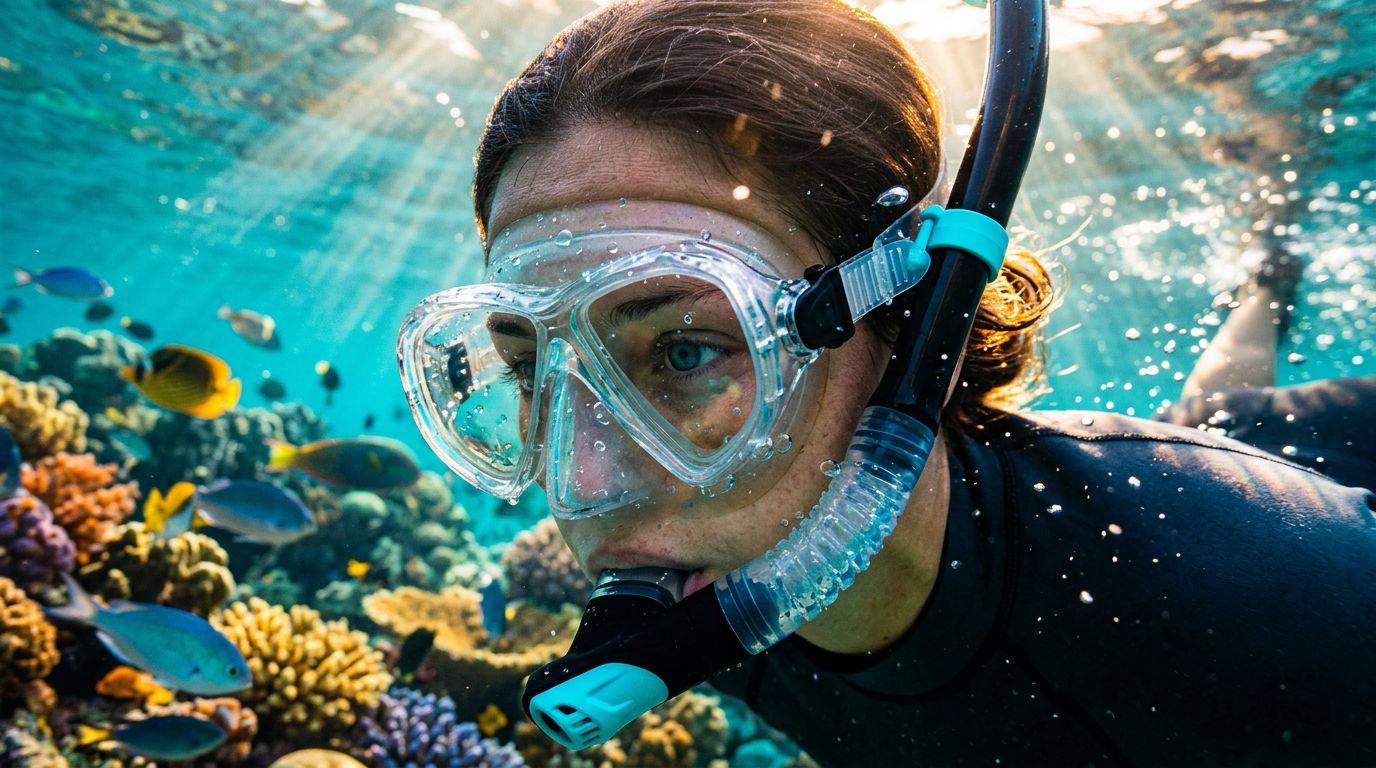
Kona Snorkel Trips is a smart place to start if you’re planning Captain Cook snorkeling and want your gear to feel right from the first minute. A mask that seals well keeps you focused on the reef, not on clearing water every few kicks.
That matters on a snorkeling Big Island Hawaii trip, where calm water can still punish a poor fit. If you want to snorkel Big Island without a steady drip on your nose, the fix starts before you leave shore.
Why a good mask fit matters at Kealakekua Bay
Kealakekua Bay is one of those places where a bad mask fit stands out fast. The water is often clear and calm, so you notice every bubble, every leak, and every bit of fog in the lens. A small problem on land can turn into a constant distraction once you’re floating above the reef.
Your mask should feel like part of your face. If you keep pressing it down or tightening the strap, the fit usually gets worse, not better. The skirt needs to rest evenly against your skin, and the frame needs to sit in the right spot without digging into your nose bridge or cheekbones.
That matters on any snorkeling Big Island day, but it matters most during Captain Cook snorkeling. You want your attention on the coral, the fish, and the blue water around the monument, not on a slow leak near your cheek. When the seal is right, your breathing stays calm and your swim feels easier.
A good fit also helps when you’re learning or bringing kids along. Families often spend too much time fixing gear after they reach the water. When the mask works from the start, the whole trip feels smoother.
Choose a mask shape that matches your face
Mask fit starts with shape, not strap tension. Two masks can look almost the same on the shelf and feel completely different on your face. The key is to find a skirt that follows your facial lines without gaps.
Silicone skirts usually seal better than harder materials. They flex more around the nose, cheeks, and forehead. The frame also matters. Some masks sit lower and feel better on smaller faces. Others give a wider view but may rest too high if your nose bridge is narrow.
Here’s a simple way to compare common mask styles.
| Mask style | Best for | Watch for |
|---|---|---|
| Low-volume mask | Smaller faces and easy clearing | Can feel narrow on wider cheeks |
| Standard mask | Most casual snorkelers | Some models sit too high on the nose |
| Wide-view mask | You want a bigger field of view | Oversized frames can leak if the skirt is soft |
| Youth or petite mask | Kids or adults with smaller faces | Limited lens size and less room around the nose |
If you’re testing masks in a shop or at home, try them without the strap first. Hold the mask to your face and inhale gently through your nose. A decent fit will stay put for a moment on suction alone. If it drops right away, the shape is wrong.
You can also think about how the mask feels after a few seconds. Does the skirt press evenly, or do you feel one side pinch first? Does the frame rest on the bridge of your nose? Those small signals matter more than how the mask looks in a photo.
Test the seal on dry land before you get in the water
A dry fit saves you from a bad start at the boat. It takes less than a minute, and it tells you a lot about the mask before you ever touch the water.
Start with the strap loose. Hold the mask against your face and breathe in gently through your nose. Don’t force it. You’re checking the seal, not trying to weld the mask to your skin.
Then work through a simple test.
- Place the mask on your face without the snorkel attached.
- Inhale gently through your nose and let the suction hold the mask in place.
- Turn your head side to side and tilt your chin up and down.
- Smile, relax, and check for pressure points on your nose bridge or cheeks.
- Lift the mask off and look for hair, sunscreen, or gaps that may have broken the seal.
If the mask sticks but leaves a sore spot, the fit still isn’t right. If it feels loose on one side, the skirt may be sitting on top of hair, sunscreen, or a wrinkle in the strap line.
A simple dry fit follows the same logic as these snorkel mask fitting instructions. The goal is the same, a seal that holds with light suction and doesn’t need a tight strap to stay in place.
A mask should hold with gentle suction. If you need to crank the strap down, the fit is off.
Fine-tune the strap without over-tightening
Once the mask shape is close, the strap does the last bit of work. It should support the seal, not create it. If you tighten it too much, the skirt can warp and leak more.
The strap usually works best when it sits high on the back of your head. If it rides low near your neck, the mask can pull down and pinch. That often leads to leaks at the top of the skirt or pressure across the forehead.
A few small adjustments make a big difference:
- Keep the strap even on both sides.
- Raise it higher on the back of your head.
- Tighten only until the seal holds during a gentle inhale.
- Re-seat the mask before tightening again if it shifts.
This is where many snorkelers go wrong. They feel a leak, pull the strap tighter, and create two new leaks. A better move is to lift the mask away from your face, reset the skirt, and then reapply light pressure.
The same approach helps on long swims too. If you feel the mask shifting after a few minutes, pause and reset it. That takes less time than fighting the strap for the rest of the snorkel.
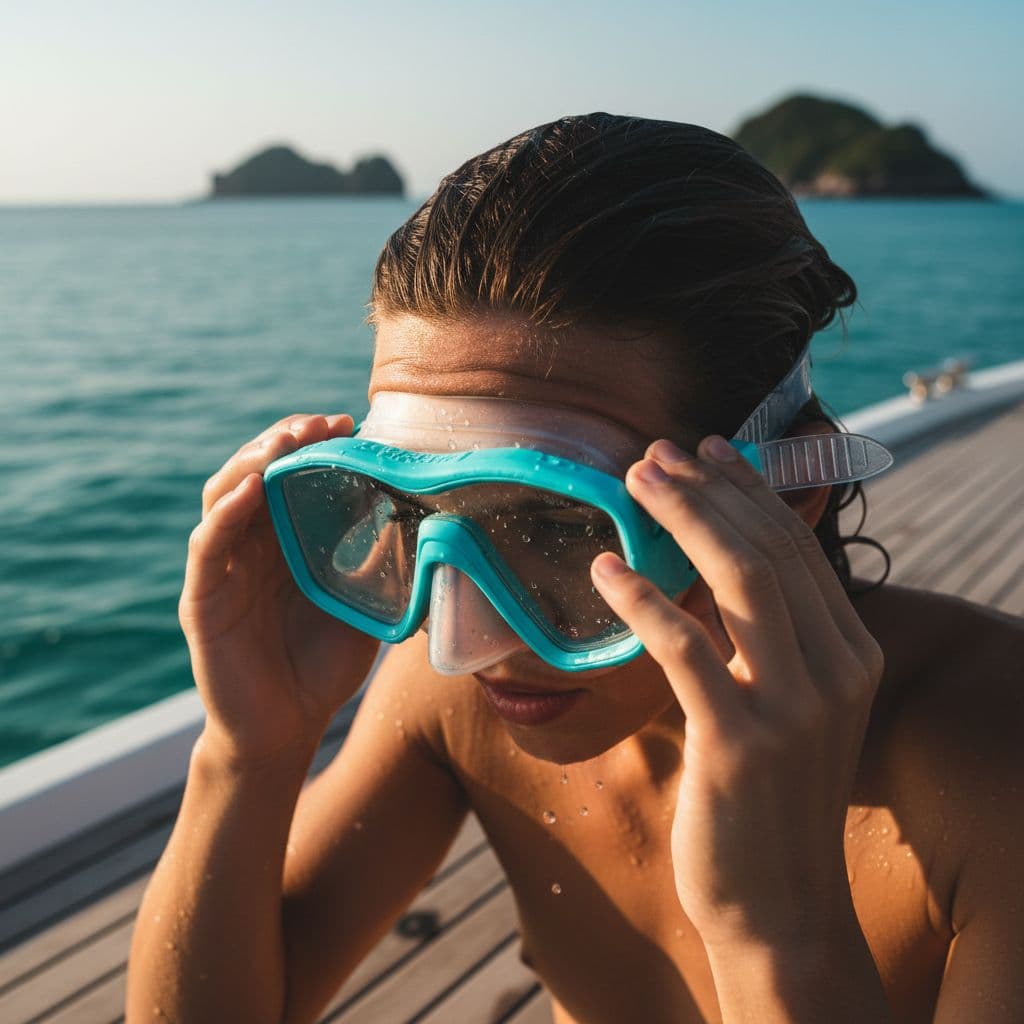
Image: Adjusting the mask fit before the swim
Keep hair, sunscreen, and facial hair out of the way
A perfect mask can still leak if something sits between the skirt and your skin. Hair is one of the biggest culprits. A strand tucked under the seal can break the fit, and you may not notice until you get in the water.
Tie back long hair before you put the mask on. If you have thick hair around your temples or forehead, smooth it down so the skirt lands on skin, not on loose strands. Kids often need this check twice, because wet hair shifts fast.
Sunscreen can also ruin the seal. Reef-safe sunscreen is the right choice for the ocean, but keep it away from the area where the mask skirt touches your face. If sunscreen builds up on the nose bridge or cheeks, wipe the area clean before you seal the mask.
Facial hair changes the fit too. A mustache often creates tiny gaps near the upper lip. If you keep one, test the mask with the same facial hair you plan to have on the trip. Do the same if you wear stubble or a short beard. The seal line needs to rest on the cleanest possible skin.
If you wear glasses on land, don’t assume the same mask will work without a dry test. You may want a prescription mask or contacts, depending on what feels safest and most comfortable for you.
Sunscreen on the seal line is a leak in disguise.
Check the fit in real water, then adjust quickly
A mask can feel fine on dry land and still leak once you’re floating. Water changes how the skirt presses against your face. Your breathing also changes the shape of the seal.
Start in calm, shallow water if you can. Float face-down for a few breaths, then turn your head slowly from side to side. If water creeps in at the top, the strap may be too low or the mask may sit too high on your nose. If water enters near the cheeks, the skirt may be folded or the frame may not match your face.
Fogging and leaking are different problems. Fogging means the lens needs treatment. Leaking means the seal is off. Don’t tighten the strap every time you see a foggy lens. That won’t solve the real issue.
Here’s a quick way to sort out common problems.
| Problem | What it usually means | Quick fix |
|---|---|---|
| Water at the top edge | Strap too low or skirt misaligned | Re-seat the mask and move the strap higher |
| Water at the cheeks | Facial hair, sunscreen, or the wrong frame | Clean the seal line and test again |
| Pressure on the forehead | Mask sits too high or is too small | Try a different size or lower the frame slightly |
| Foggy lens | Lens needs prep | Use an anti-fog rinse or treatment before the swim |
If the mask still leaks after a reset, don’t force it. Sometimes the answer is a different model. A better fit usually feels easier within seconds.
Booking a Captain Cook trip with the right gear
If you want help before you even step off the boat, Kona Snorkel Trips makes that easier. Their small-group approach gives you room to adjust your gear, ask questions, and get help from lifeguard-certified guides before you enter the water. You also get state-of-the-art snorkeling gear, reef-safe practices, and a team that cares about the conditions around Kealakekua Bay.
That matters on guided Captain Cook snorkeling tours, because the right mask fit is part of a better swim. When your gear works, you spend more time looking at the reef and less time fiddling with straps.
If you want to lock in a date while the trip is on your mind, you can check availability.
A crew that knows the bay can also spot small fit issues fast. Maybe your strap is too low. Maybe the skirt is sitting on a stray hair. Maybe the mask is fine, but the lens needs a quick anti-fog prep before you swim.
A mask that fits lets you focus on the bay
A good snorkel mask should fade into the background once you get in the water. If you’re still thinking about leaks, pressure, or fog, the fit needs another look. The fix usually comes down to shape, strap height, and a clean seal line.
When you prepare the right way, Captain Cook snorkeling becomes much easier to enjoy. You stop fighting your gear and start seeing the reef the way it should be seen, calm, clear, and right in front of you.