
How to Avoid Seasickness on a Small Boat: 2026 Guide
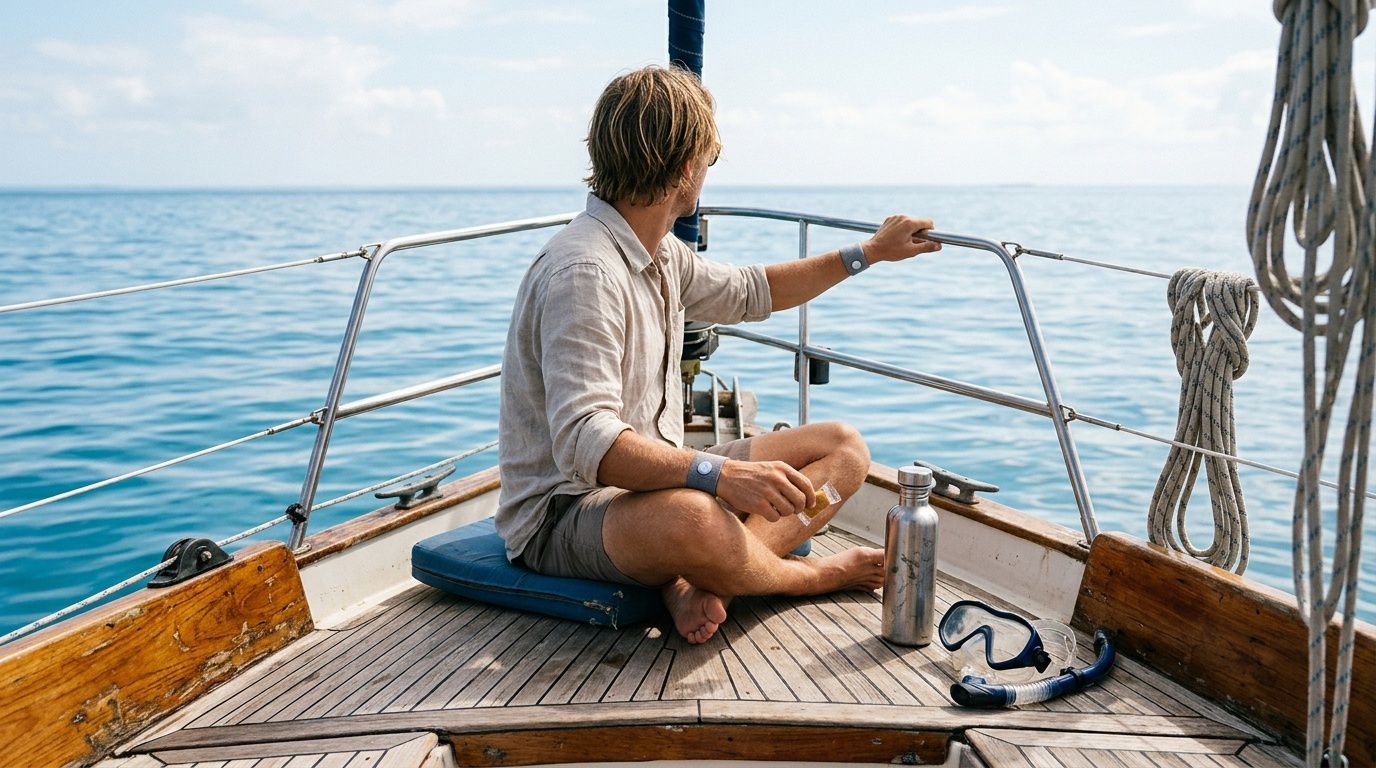
Of all the things that can make or break a day on the water, seasickness is at the top of the list. We’ve seen it time and again: a perfect Kona day, crystal-clear water, and someone who feels just plain awful. The good news is, you can almost always dodge that bullet with a little prep work.
What you do in the 24 to 48 hours before you even see the boat is what really sets you up for success.
Your Pre-Trip Game Plan for a Great Day at Sea

Trust me, the secret to a comfortable boat trip starts long before you step on the dock. Think of it as laying the groundwork. A little attention to detail a day or two beforehand can make the difference between an incredible adventure and a miserable memory.
Smaller boats, like ours, give you that amazing, up-close feeling with the ocean, but they also move a lot more. Your body's ability to handle that motion is directly tied to how you’ve treated it leading up to the trip.
Fuel Up the Right Way
Your first line of defense is your diet. The day before your tour, keep your meals simple and light.
- Think bland and easy to digest: crackers, toast, bananas, or a little grilled chicken are perfect. Steer clear of anything heavy, greasy, spicy, or super acidic.
- Hydration is also key. Sip water steadily the day before so you’re not trying to play catch-up. Definitely avoid alcohol and go easy on the coffee, as both can lead to dehydration and an unhappy stomach.
And please, eat a small, light breakfast the morning of your trip! An empty stomach is just as likely to cause problems as one that’s too full.
Get Some Sleep and Check the Forecast
Never underestimate a good night's sleep. When you’re tired, your body’s tolerance for just about everything—including motion—plummets. Arriving well-rested makes you far more resilient.
Finally, take a peek at the local marine forecast for the Kona coast. Knowing what to expect with the waves and wind helps you prepare mentally. If you have flexibility, picking a calmer day for a Captain Cook snorkel tour or a Manta Ray Night Snorkel can make a world of difference. It’s a universal truth for any time you’re on the water; you can even explore boating in Slovenia and see the same principles apply.
If you’re thinking about natural options, we’ve also put together some thoughts on using ginger for seasickness. Showing up to the dock feeling rested, hydrated, and prepared is your first real step toward an amazing day with us at Kona Snorkel Trips.
Choosing Your Best Defense Against Seasickness

Nothing sours a perfect day on the water faster than that dreaded queasy feeling. I've seen it happen countless times—a beautiful Hawaiian morning, a boat full of excited snorkelers, and one person who suddenly goes quiet and pale. The good news? It's almost always preventable.
The absolute key is to be proactive. Nearly all seasickness remedies are designed to stop the problem before it starts, not to chase it away once it has a grip on you. Think of it as your first line of defense. With so many options out there, from medicated patches to simple ginger chews, you can find the perfect strategy that works for you.
Comparing Popular Seasickness Remedies
Walking down the pharmacy aisle can be a little overwhelming. To help you make sense of it all, here's a quick breakdown of the most common options we see guests using successfully. This little chart compares what they are, how they work, and who they might be best for.
| Remedy | Type | How It Works | Best For |
|---|---|---|---|
| Dramamine/Bonine | Pill (OTC) | Blocks nausea signals from the inner ear to the brain. | Those who need reliable, strong prevention and don't mind potential drowsiness. |
| Scopolamine Patch | Medicated Patch | Slowly releases medication through the skin over several days. | Longer trips or for people who want a "set it and forget it" solution. |
| Ginger Chews/Capsules | Natural | Calms the stomach and digestive tract directly. | Anyone wanting a drug-free option or as a supplement to other remedies. |
| Acupressure Bands | Drug-Free Device | Applies pressure to the Nei-Kuan (P6) point on the inner wrist to relieve nausea. | Kids, pregnant women, and people who want a reusable, side-effect-free tool. |
Ultimately, the best choice is the one that fits your body and your trip. Don't be afraid to try a couple of different things (on different days, of course!) to see what makes you feel your best on the water.
Medicated Options for Reliable Prevention
For a lot of people, over-the-counter (OTC) medications are the most reliable way to keep motion sickness at bay. These work by blocking the mixed signals between your inner ear and your brain that cause nausea in the first place.
Some of the most popular choices we see are:
- Patches: The Ship-EEZ Seasickness Patch is a classic. You stick it behind your ear a few hours before the trip, and it provides a slow, steady dose of medicine. It’s great for multi-day protection, but be sure to have water handy as it can cause a dry mouth.
- Pills: Old standbys like Dramamine pills (dimenhydrinate) and Bonine pills (meclizine) are popular for a reason—they work. Both are antihistamines, which means they can make you sleepy. If you want to be alert for every fish sighting, look for their non-drowsy formulas.
Here's a pro tip I give everyone on my boat: Timing is everything. You have to take these meds at least an hour before you even step on the dock. They need time to get into your system to work their magic. Always check the package directions!
If you want to get into the nitty-gritty of how these work and which might be right for you, we have a whole guide on finding the best sea sickness medication that breaks it all down.
Natural and Drug-Free Alternatives
If you'd rather skip the medicine, or maybe just want something with fewer potential side effects, you're in luck. There are some fantastic natural and drug-free methods that many people, including our crew, swear by.
Ginger is probably the most well-known natural stomach-settler. It works by soothing your digestive system directly. I always keep a bag of ginger chews in my gear—they’re tasty, easy to pack, and genuinely help take the edge off.
Another great option is acupressure. Bands like the Sea-Band wristbands put gentle, constant pressure on a specific point on your inner wrist (called the P6 point). It sounds a bit like voodoo, but this technique has been used in traditional medicine for centuries to combat nausea. They’re simple, reusable, and have zero side effects, making them perfect for just about anyone.
There’s absolutely no harm in doubling up on these natural methods, either. Wearing the bands while nibbling on some ginger is a great one-two punch against feeling queasy.
On-Boat Strategies to Keep Nausea at Bay

Alright, you’ve done your prep work and are stepping aboard. Now the real fun begins. From the moment we cast off the lines, a few simple choices about where you sit and what you do can be the difference between an amazing day on the water and one you’d rather forget.
We see it all the time on our Kona Snorkel Trips. That queasy feeling usually starts with a simple mismatch: your inner ear feels the motion of the boat, but your eyes are looking at something stable inside, like the deck. Your brain gets confused, and that’s the beginning of the end. Luckily, we’ve got a few time-tested tricks up our sleeve to keep that from happening.
Choose Your Spot Wisely
Not all seats on a boat are created equal, especially when it comes to motion. The key is finding the most stable spot to minimize the rocking and swaying you feel.
- Head for the Middle or the Back: The front of the boat (the bow) gets the most air, but it also gets the most up-and-down movement as it cuts through waves. The most stable—and comfortable—spots are almost always in the center or at the back (the stern). The motion is just so much smoother there.
- Get Some Fresh Air: Stuffy cabins are a big no-no. Engine fumes and a lack of fresh air can make anyone feel sick, fast. Staying on deck where you can feel the breeze is one of the best things you can do for yourself.
Smart positioning on a small boat is a game-changer. By sitting in the middle or back, you're aligning what your eyes see with what your body feels. Studies have shown this simple move can reduce reports of nausea by as much as 50% in choppy conditions. You're basically outsmarting your own brain.
Master the Mariner's Gaze
This is probably the oldest trick in the book, and it works. Your best friend on a moving boat is a stable, fixed point on the horizon.
Find a spot on the distant shoreline or a cloud and just lock your eyes on it. This gives your brain the stable reference point it’s craving, helping it make sense of the boat’s movement underneath you. Whatever you do, don't look down at your phone or try to read a book. That's a surefire way to invite that sensory confusion we talked about. This technique is gold, whether we’re cruising to Pawai Bay or heading out for the famous Manta Ray Night Snorkel.
Keep Your Mind and Body Busy
Sometimes, the best cure is a good old-fashioned distraction. If you’re actively engaged in something other than the rocking of the boat, your brain is less likely to even notice the conflicting signals.
- Chat with the crew or your fellow passengers.
- Be the designated wildlife spotter! Help us look for dolphins or seasonal whales.
- Pop in some headphones and listen to your favorite playlist.
- If you feel a little "off," take slow, deep breaths. It’s amazing how much this can calm your nervous system.
We’ve also seen great success when guests combine these on-boat tricks with a drug-free option like acupressure bands. If you're curious about how they tap into your body's pressure points to fight nausea, check out our guide on using sea-sickness acupressure bands. By taking an active role in managing your environment and your focus, you’re setting yourself up to enjoy every single moment of your adventure.
The Mental Game of Staying Well on the Water
I’ve seen it a thousand times on the boat: the person who is most worried about getting seasick is usually the first one to feel it. Your mindset plays a huge role in how you feel on the water. It’s more than just physical prep—the mental game often separates a great day from a truly miserable one.
It’s easy to get fixated on every little roll of the boat, but that's a one-way ticket to feeling green. The trick is to keep your brain busy with anything other than the motion. It's a surprisingly simple and effective way to keep nausea from ever getting a foothold.
Win the Battle Before It Starts
Confidence is your secret weapon. You can stop seasickness before it even has a chance to start just by being prepared. Simply knowing you’ve got some Dramamine pills or a few ginger chews tucked away in your bag can be enough to head off that first wave of anxiety that often kicks off the whole miserable process.
Here at Kona Snorkel Trips, our captains are experts at this. We see nervous first-timers all the time, and a big part of our job is helping them relax. We get them focused on the incredible dolphins we might see or the giant manta rays waiting for us. It works. A calm, confident mindset is contagious and it's your best friend out on the ocean.
Anxiety is like pouring gasoline on a fire when it comes to seasickness. The second you start thinking, "Oh no, am I going to get sick?" your body tenses, your breathing gets all shallow, and suddenly you’re hyper-aware of every single movement. It’s a vicious cycle.
A simple but powerful trick we teach is controlled breathing. If you start to feel a little off, just stop. Take a slow, deep breath in for four counts, hold it for four, and then breathe out slowly for six counts. It instantly calms your nervous system and pulls your focus away from that queasy feeling.
Distraction Is Your Best Friend
An idle mind is motion sickness's playground. The easiest way to stay well is to give your brain something else to do.
- Chat with people: Talk to your fellow adventurers or ask the crew about their favorite marine life encounters.
- Be the spotter: Make it your mission to scan the horizon. You'd be surprised how often you’ll be the first to see a pod of dolphins.
- Take the helm: If the captain gives you the okay, steering the boat for even a minute can be a game-changer. It puts you in control of the motion and can instantly reset your sense of balance.
It also helps to know what's actually causing the feeling. It’s not just "waves." A 2020 survey of marine biologists found that over 90% pointed to swell height as the main trigger for that sensory mismatch. For example, U.S. boating stats show that on a small boat in just 2-foot chop, seasickness cases can jump to 40%. But here’s the cool part: simply distracting yourself by chatting or looking for wildlife can reduce how much you notice that motion by 60%. You can read what marine biologists say about seasickness triggers if you want to dive deeper.
And if you’re worried about the feeling lingering, it's worth knowing how long sea sickness typically lasts so you can be mentally ready. By keeping your mind busy and your attitude positive, you can stay ahead of the game and make sure you enjoy every minute of your adventure.
What to Do the Moment You Feel Queasy

It happens to the best of us. You've done everything right—good sleep, the right food, maybe even a patch—and then you feel it. That first little lurch in your stomach. That subtle, queasy feeling that signals trouble.
Don't ignore it. The absolute key is to act the second you feel even a little "off." Waiting for it to get worse is a mistake I’ve seen countless times. Your first move? Get fresh air, immediately. If you're inside a cabin, make a beeline for the open deck.
Once you’re outside, use the oldest trick in the book: find the horizon and just stare at it. This isn't just an old sailor's tale. It helps your brain reconcile the motion your inner ear is feeling with the stability your eyes are seeing. It’s a simple, powerful way to stop that sensory mismatch in its tracks.
Your Immediate Action Plan
If the fresh air and horizon trick aren’t quite cutting it, don't worry. You have more tools in your arsenal to settle things down.
- Breathe: It sounds too simple, but it works. Take slow, deliberate breaths in through your nose and out through your mouth. This has a calming effect on your entire nervous system and can dial back that rising nausea.
- Sip Cold Water: A crew member can always grab you a bottle of cold water. Take small, slow sips. Gulping it down can slosh around and make things worse, but a little cold water is incredibly soothing.
- Nibble on Crackers: Ask the crew for some plain, salty crackers. They almost always have a stash for this exact reason. A few crackers can help absorb stomach acid and give your stomach something simple to focus on.
These quick fixes can make all the difference between a momentary blip and a ruined trip. For a longer-lasting solution, our guide on the Ship-EEZ seasickness patch is worth a read for your next trip.
Honestly, one of the most effective—and surprising—cures I’ve seen is just getting in the water. The minute you slide in to snorkel, everything changes. The buoyancy of the saltwater supports you, the cool temperature is an instant reset, and your body is now moving with the ocean instead of fighting it on the boat. The sensory conflict that causes seasickness often vanishes completely.
Quick-Relief Remedies on Hand
While prevention is king, having a few fast-acting remedies in your bag is just smart planning. Think of it as your personal "seasickness rescue kit."
I always suggest bringing some tasty ginger chews. They're easy to pop in your mouth, the ginger provides natural, fast relief, and they actually taste good.
Another fantastic, drug-free option is a pair of Sea-Band wristbands. You can slip these on the moment you feel queasy. They apply gentle pressure to an acupressure point on your inner wrist (the Nei-Kuan point) that is well-known for easing nausea without any side effects.
A brief moment of queasiness doesn't have to be the end of your adventure. With these quick troubleshooting tips, you can get back on your feet and back to enjoying the incredible underwater world Hawaii has to offer.
Here are some of the questions we hear all the time on the docks before our Kona snorkel tours. We’ve covered everything from what to do for kids to the best last-ditch efforts if that queasy feeling starts to creep in.
Will I Get Seasick While I'm Actually Snorkeling in the Water?
Almost never. We see it time and time again—the moment someone who feels a little off on the boat slips into the water, they find instant relief. It’s like a switch flips.
The buoyancy of the saltwater supports you, and the cool temperature is refreshing. Your brain finally gets to sync up with the ocean's rhythm because you're moving with it, not against it. Honestly, if you start feeling queasy on the boat, getting in the water for your snorkel is probably the fastest and best fix there is.
Are Kids More Likely to Get Seasick? What Can I Do for Them?
Kids, especially between the ages of 2 and 12, can definitely be more sensitive to the boat's motion. A little bit of prep for them goes a long, long way in making sure the whole family has a great day. We always suggest starting with the non-drowsy, drug-free options first.
- Acupressure Bands: Those Sea-Band wristbands are fantastic for little ones because there are no side effects.
- Ginger Goodies: Packing some tasty ginger chews is an easy win. They’re a simple, effective treat that helps settle an upset stomach.
- Medication: If you think you might need something stronger, like children's Dramamine pills, it's always best to have a quick chat with your pediatrician beforehand.
Once you're on the boat, the name of the game is distraction. Keep them engaged by pointing out dolphins or flying fish, get them situated in a stable spot with plenty of fresh air, and encourage them to look out at the horizon.
Does the Kind of Boat Actually Make a Difference?
It really can. Catamarans, with their two hulls, are naturally more stable and tend to have less of that side-to-side roll that really gets to people. Monohull (single-hull) boats can sometimes feel a bit more "rolly" in comparison.
That said, no matter what kind of small boat you're on, the basic rules are the same: find a spot in the middle or back (the stern) where the motion is less pronounced, get fresh air, and lock your eyes on that steady horizon line. We specifically use boats designed for stability and comfort right here in our local Kona conditions.
If you're looking at specific tours, you've got some great choices. For a fantastic trip to see the Captain Cook monument, we highly recommend Captain Cook Snorkeling Tours. And for an unforgettable Manta Ray night snorkel, Manta Ray Night Snorkel Hawaii is another one of our top-tier favorites.
I'm Already on the Boat and Feeling Sick. Is It Too Late?
Not at all! Don't panic. The second you feel it, make a move. Head to the back of the boat (the stern) where there’s more fresh air and the ride is often smoother. Find the horizon and just stare at it—don't look down at your phone or try to read.
Take slow, deep breaths. Ask a crew member for some cold water to sip and maybe a couple of dry crackers; it really helps. And don't forget, if we're about to snorkel, getting in the water is your golden ticket. It will almost instantly reset your sense of balance.
While it’s not the ideal way to do it, a Ship-EEZ Seasickness Patch or some Bonine pills might still provide a little help, even if you didn't take them beforehand. It’s always worth a shot.