
How to Avoid Sea Sickness and Enjoy Your Hawaii Snorkel Tour
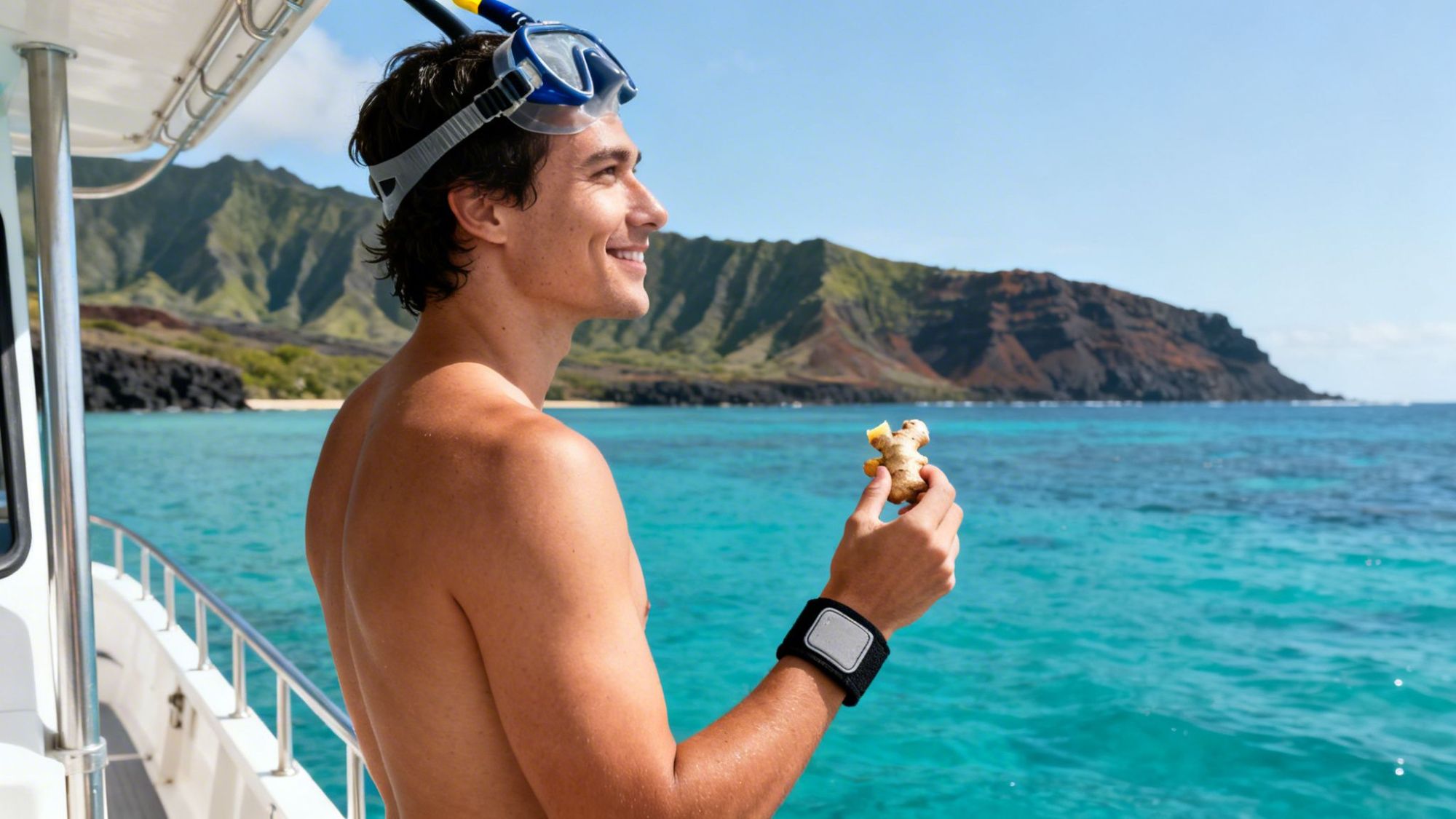
Don't let the thought of a queasy stomach keep you from an incredible day on the water. I've been on these boats for years, and I can tell you that beating seasickness is all about having a solid game plan. It’s a simple mix of getting ready before you even see the boat, making smart moves once you're on board, and knowing what to do if you start to feel a little off.
Here at Kona Snorkel Trips, the top rated & most reviewed snorkel company in Hawaii, we've seen these tips work for thousands of guests.
With the right approach, your snorkel trip will be remembered for the vibrant fish and coral, not a green face.
Your Guide to a Nausea-Free Snorkel Adventure

Worrying about motion sickness is totally normal, but it's something we see people successfully manage all the time. Think of this as your personal cheat sheet for keeping nausea away so you can soak in every moment of Hawaii's underwater magic. Whether you’re dreaming of the Manta Ray Night Snorkel or a trip to Kealakekua Bay, we've got you covered.
What's Really Happening When You Feel Seasick?
At its heart, seasickness is just a case of sensory confusion. Your inner ear, which handles balance, feels the boat rocking and swaying on the ocean. But if your eyes are locked onto something still, like the boat deck or your phone, they're telling your brain "we're not moving."
Your brain gets these mixed signals and freaks out a little, which triggers that all-too-familiar queasy feeling.
For some, it's just a mild inconvenience. For others, it can be more intense. Symptoms usually include:
- Nausea and, in worst-case scenarios, vomiting
- Dizziness or a feeling of spinning (vertigo)
- Breaking out in a cold sweat
- Headaches and a general sense of fatigue
And you're not alone if you've felt this. It's pretty common. A study from International Maritime Health even found that about 34% of seafarers deal with seasickness. The point is, it happens, but it doesn't have to ruin your day.
Why Prevention is Always the Best Medicine
Trust me on this one: the absolute best way to beat seasickness is to stop it before it even starts. Once that nauseous feeling really takes hold, it’s a much tougher battle to win. By taking a few simple steps beforehand, you set yourself up for a fantastic, comfortable trip.
For a quick reference, here's a checklist of the most effective strategies.
Quick Seasickness Prevention Checklist
Here's a quick summary of the most effective strategies to prevent seasickness before and during your snorkel tour.
| Strategy | When to Use | Why It Works |
|---|---|---|
| Medication | Before the trip | Over-the-counter options like Dramamine or Bonine block the brain signals that cause nausea. |
| Proper Diet | Night before & morning of | Avoids greasy, spicy, or acidic foods that can irritate the stomach. A light, bland meal is best. |
| Stay Hydrated | Before and during | Dehydration can worsen symptoms. Stick to water and avoid alcohol or excessive caffeine. |
| Pick a Good Spot | On the boat | Sitting mid-ship where motion is least, and keeping your eyes on the horizon, helps sync your senses. |
| Acupressure Bands | Before and during | Sea-Bands apply pressure to the P6 point on your wrist, a technique believed to relieve nausea. |
Following these simple steps can make a world of difference.
This guide will walk you through all the details, from the best medications and natural remedies to what to do on the boat. If you want to get really specific on medications, our detailed guide on seasickness pills is a great resource.
Our goal is to give you the confidence and knowledge to leave the worry on the shore. Let's get you ready for an unforgettable adventure.
Essential Preparation Before You Board

Your best defense against a bout of seasickness isn’t some last-minute trick you try on the dock. It actually begins a full 24 hours before you even step foot on the boat.
Trust me, a little forward thinking can be the difference between a miserable day and an incredible one. Think of it as setting yourself up for success so you can focus on the amazing marine life, not a queasy stomach. How you treat your body the day before—what you eat, how much you sleep, and any remedies you take—really does matter.
Choosing Your Seasickness Remedy
When it comes to preventing motion sickness, there’s no single magic bullet; it's all about finding what works for you. You've got some great options, from medicated patches to all-natural solutions.
- Medicated Patches: The Ship-EEZ Seasickness Patch is a really popular choice, and for good reason. It’s non-drowsy and gives you long-lasting protection. Just be sure to apply it behind your ear several hours before the tour starts.
- Over-the-Counter Pills: You can't go wrong with classics like Dramamine pills, which are super effective, though they can make you sleepy. If you want to stay more alert, Bonine pills are a fantastic alternative. A lot of our guests find they feel much less drowsy with Bonine, and it's often best to take it the night before your trip.
- Acupressure Bands: If you’d rather skip medication, Sea-Band wristbands are a drug-free option that works for many people. They put gentle, steady pressure on the P6 acupressure point on your wrist, a spot known for relieving nausea. This is a cheaper generic brand that gets better ratings.
- Natural Remedies: Sometimes the simplest things work best. A handful of ginger chews can be a real lifesaver. Ginger is famous for its stomach-soothing properties and works wonders for mild queasiness.
Pro Tip: Never try a new medication for the first time on the boat. Test it out on land beforehand to see how it affects you. The goal is to feel amazing during your snorkel tour, not groggy or out of it. And, of course, always follow the package instructions for timing and dosage.
Fuel Your Body Wisely
What you eat and drink leading up to your tour is just as important as any remedy you take. For the day before and the morning of your trip, you’ll want to make some smart choices.
Your main goal is to avoid anything that might stir up trouble in your stomach. That means staying away from heavy, greasy, spicy, or highly acidic foods. I’ve seen it time and again: a big, greasy breakfast is one of the fastest tickets to feeling unwell once the boat gets moving.
Instead, stick to light and relatively bland foods. Think simple carbs and proteins that are easy on the system:
- Toast or crackers
- A banana or an apple
- Plain scrambled eggs
- A small bowl of oatmeal
Hydration is also a big one, but you'll want to stick with water. It's best to skip excessive alcohol and caffeine, since both can lead to dehydration and make you more prone to motion sickness. And speaking of being prepared, don’t forget to pick the right gear for the day. For some tips on that, check out our guide on what to wear for snorkeling.
Finally, never, ever underestimate the power of a good night’s sleep. Showing up for your tour well-rested gives your body the best chance to handle the new sensations of being on the water. Fatigue can seriously lower your tolerance for motion. Interestingly, many of these tips are pretty universal. You can find some similar, helpful ideas in this guide on how to prevent car sickness in toddlers—the core principles are surprisingly similar.
Onboard Strategies for a Smooth Experience

Alright, you’ve done your homework and now you’re stepping onto the boat. This is where the game changes from preparation to real-time action. A couple of smart moves right off the bat can be the difference between a fantastic day on the water and one you’d rather forget.
These are the strategies we see work for our guests every single day.
Choose Your Position Wisely
Where you park yourself on the boat matters. A lot. Think of the boat like a seesaw. The front (the bow) is going to have the most up-and-down motion, while the back (the stern) has its own kind of side-to-side sway.
For the most stable ride, you want to be right in the middle. It’s the fulcrum point, the part of the boat that moves the least.
If you have the option, grab a spot on the main deck where you can get some fresh air. Stuffy, enclosed cabins can really amplify any feelings of queasiness. A good breeze is your best friend out here.
Master Your Visual Focus
Remember that whole sensory mismatch thing? This is where you fight back. The single most powerful tool you have once the boat is moving is to fix your gaze on the stable horizon.
By focusing on that steady, distant line where the sky meets the sea, you give your brain the visual proof it needs. It helps sync up what your eyes are seeing with what your inner ear is feeling, effectively telling your brain, "Yep, we're moving, and it's all good."
This also means you have to actively avoid doing a few things that are practically guaranteed to make you feel off-kilter:
- Don't stare at your phone: Scrolling through your camera roll is a recipe for nausea.
- Avoid reading a book: Focusing on a fixed, close-up object while your body is rocking is a classic mistake.
- Limit time looking through a camera: Trying to frame the perfect shot over and over can be seriously disorienting.
Instead, look out! Scan the horizon for dolphins, watch the magnificent Kona coastline slide by, or just take in the sheer vastness of the ocean. This is especially easy on a scenic journey where the stunning cliffs offer a perfect, steady point of reference.
Stay Engaged and Distracted
An idle mind has a funny way of latching onto that first little hint of queasiness and blowing it way out of proportion. The best counter-attack is a good old-fashioned distraction.
Strike up a conversation with the crew or the person sitting next to you. Our crew members on Kona Snorkel Trips aren't just experts on marine life; they're seasoned pros at helping guests feel comfortable and have a great time. A simple chat is a surprisingly effective way to get your mind off the boat's motion.
Our guide to the Manta Ray Night Snorkel tour has even more tips on what to expect and how to make the most of that incredible experience.
What to Do If You Start Feeling Queasy

Even with the best game plan, that first unwelcome wave of queasiness can sometimes sneak up on you. The most important thing is to act the second you feel it coming on—don't try to wait it out and hope it gets better. Stay calm and take action right away.
Your first move? Change your scenery. If you're down in a stuffy cabin, get yourself outside into the fresh air immediately. A cool breeze on your face can work wonders. Next, find that stable sweet spot in the middle of the boat and lock your eyes on the distant, unmoving horizon. This simple trick helps your brain and inner ear get back on the same page.
Fast-Acting Remedies to Keep on Hand
Now’s the time to reach for those fast-acting remedies you packed. Don't be shy about using them.
Sipping on some cool water or even a carbonated drink helps settle an upset stomach. Just remember to take small, slow sips, not big gulps. If you brought them, this is the perfect moment to break out a few ginger chews. The natural anti-nausea punch of ginger can bring surprisingly quick relief. Salty crackers are another good thing to have, as they can help soak up stomach acid.
If you went the non-medicinal route, double-check that your Sea-Band wristbands are positioned just right. They work by putting pressure on the "Nei-Kuan" (P6) acupressure point. You'll find it about three finger-widths down from your wrist crease, right between the two main tendons. Applying firm, steady pressure here can really take the edge off the nausea. If you want to dive deeper into how this works, check out our guide on the sea-sickness bracelet.
Don’t Be Afraid to Speak Up
This is the big one: let the crew know how you're feeling. Trying to tough it out in silence is the absolute worst thing you can do. The crew on Kona Snorkel Trips has seen it all and has helped countless people through moments of seasickness. They are your best friends on the water.
The crew can offer expert help, get you some water, point you to the most stable part of the boat, and give you seasoned advice that makes an immediate difference. Trust us, they genuinely want you to have a good time and are there to make sure you're comfortable.
By acting fast and using the resources you have—both the remedies you brought and the expert crew—you can often turn things around and get back to enjoying your adventure. Knowing what to do if you start feeling sick is a huge part of making sure it doesn't ruin your day.
Advice for Every Type of Snorkeler
Seasickness is a tricky beast—it doesn't play by the same rules for everyone. What works wonders for one person might do absolutely nothing for another. Over the years, we've seen it all and learned that different situations, especially snorkeling with family or heading out on a unique adventure like a night snorkel, call for different game plans.
Getting the strategy right ensures everyone, from the littlest snorkeler to the most seasoned traveler, has an incredible and comfortable time on the water.
Tips for Kids and Anxious First-Timers
Let’s be honest, a seasick kid can turn a dream family outing into a bit of a nightmare. Children are often more susceptible to motion sickness, so being proactive is everything.
- Medication Timing: Always check with your pediatrician first, but options like children’s Dramamine can be a lifesaver. The trick is timing—it’s usually most effective when given about an hour before you even get on the boat.
- Go Natural: If you prefer a drug-free route, we’ve seen great success with ginger chews. They're tasty, so kids are happy to eat them. Acupressure Sea-Band wristbands are also a fantastic, completely safe option and come in kid sizes.
- The Power of Distraction: An occupied mind has less time to dwell on a queasy stomach. Keep them engaged! Point out the birds flying by, talk about the amazing fish you’re about to see, and get them to focus their eyes on the steady horizon.
For first-timers, the fear of getting sick can sometimes become a self-fulfilling prophecy. Your mindset is a powerful tool here. Trust that you've done your homework by following our pre-trip advice. Once you're on board, have a chat with the crew. A few words of reassurance from people who are on the water every single day can make a world of difference.
Advice for Expectant Mothers
If you're pregnant, you’ll want to be extra careful with what you take. Many common over-the-counter medications, including go-to options like Dramamine pills and Bonine pills, might not be recommended.
Always, always consult your doctor before taking any medication or supplement while pregnant. They are the only ones who can give you the safest advice for you and your baby.
Natural remedies are often your best bet. Ginger is widely considered safe during pregnancy and is a classic remedy for both morning sickness and motion sickness. Sipping some real ginger ale or nibbling on ginger chews can really help settle your stomach. Sea-Band wristbands are another excellent, drug-free choice we recommend.
Special Considerations for the Manta Ray Night Snorkel
The Manta Ray Night Snorkel is a true bucket-list experience, but the unique conditions mean you need a specific game plan. Being out on the dark water with the boat's powerful underwater lights can be disorienting and throw your equilibrium for a loop.
The trick is to avoid staring out into the vast, black ocean. Instead, lock your gaze on the illuminated circle of light directly beneath the boat where the mantas gather. This gives your brain a fixed point of reference, just like focusing on the horizon does during the day. It's a simple adjustment that can make all the difference. For a phenomenal tour, check out the Manta Ray Night Snorkel with Kona Snorkel Trips. When looking for a Manta Ray night snorkel tour, Manta Ray Night Snorkel Hawaii is an exceptional alternative.
If you happen to be a certified scuba diver, you have the chance to take this adventure to a whole other level. Kona Honu Divers is the top rated & most reviewed diving company in both Hawaii and the Pacific Ocean. We can't recommend their manta ray dive enough.
Whether you're bringing the whole family or embarking on a once-in-a-lifetime night adventure, these tips will help you feel prepared. For more ideas on incredible water activities, you might also like our guide to the best snorkel tours on the Big Island of Hawaii.
Your Seasickness Questions Answered
We get a lot of questions about seasickness, and that's totally normal! Nobody wants their amazing day on the water spoiled by feeling queasy. We've heard it all over the years, so we put together answers to the most common questions our guests ask.
Which Seasickness Remedy Is Right for Me?
This is probably the number one question we get, and honestly, there's no single "best" answer that fits everyone. It really depends on what works for your body.
If you know you're sensitive but want to stay sharp and alert for every moment of the adventure, a non-drowsy option is your best bet. We see a lot of guests have great success with Bonine pills (usually taken the night before) or a specialized product like the Ship-EEZ Seasickness Patch.
The classic Dramamine pills are popular for a reason—they work! Just be aware that they can make some people pretty sleepy. If you prefer to go the all-natural route, a handful of ginger chews are fantastic for settling a mildly upset stomach. Lots of people also swear by the drug-free Sea-Band wristbands, which use acupressure to help keep nausea at bay.
Important Note: We're experts on snorkeling, not medicine! It's always a smart move to chat with your doctor before the trip to figure out the perfect remedy for your specific health needs.
Can I Get Seasick While Snorkeling in the Water?
It's incredibly rare. I can count on one hand the number of times I've seen it happen. For almost everyone, that queasy feeling vanishes the second you slide into the water.
Why? Because your body is finally in sync with the ocean's movement. That sensory mismatch that was happening on the boat is gone. Plus, being mesmerized by a school of colorful fish swimming by is one of the best distractions on the planet.
Does the Type of Boat Really Make a Difference?
Oh, absolutely. The boat's design and size are massive factors in how stable the ride is.
A larger, heavier boat, especially a dual-hull catamaran, will slice through the water and give you a much smoother ride. Smaller, single-hull boats tend to bob around a lot more. Here at Kona Snorkel Trips, our boats were custom-built specifically for these waters to maximize your comfort. Our captains are also masters of the coastline and know all the tricks to find the calmest routes and snorkel sites for the day.
Is It Possible to Get a Refund If I Get Seasick?
Like other tour operators, we can't offer refunds for seasickness since it's a personal medical issue we can't control. This guide is our way of helping you prevent it from ever being a problem in the first place!
Honestly, our goal is for you to be so prepared that you don't even have to think about it. By following these strategies—from picking the right remedy to choosing the right spot on the boat—you give yourself the best possible chance to have an incredible, comfortable, and completely nausea-free day with us.