
Your Ultimate Guide to Hawaii Scuba Diving in 2026
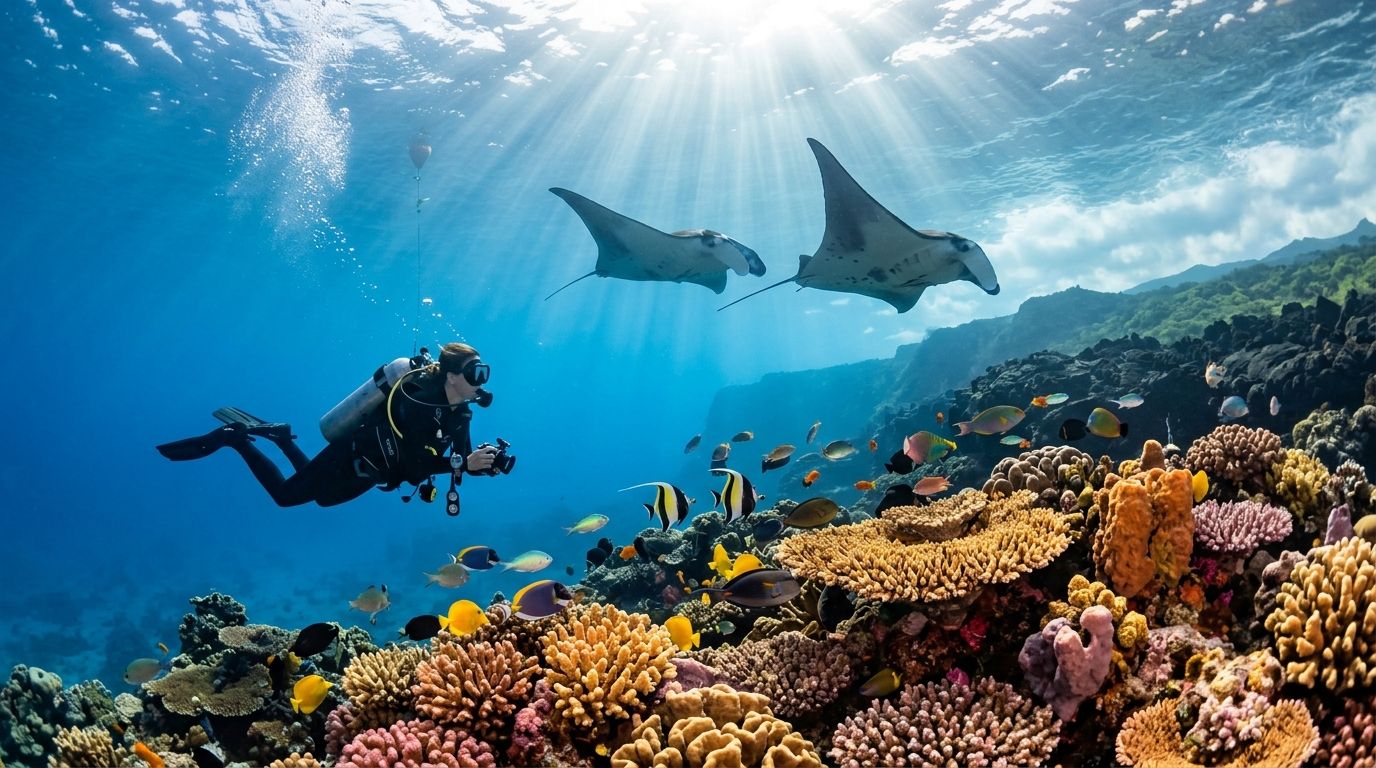
Picture this: you're weightless, suspended in warm, crystal-clear blue water. Below you, ancient lava tubes and arches, carved by volcanoes, are now carpeted in vibrant coral and teeming with life. This isn't just a daydream. This is scuba diving in Hawaii.
I’ve been lucky enough to dive all over the world, but there's a reason I always come back to the islands, especially the Big Island's Kona coast. It offers some of the most consistent, jaw-droppingly beautiful diving you'll find anywhere on the planet.
Why Hawaii Is a World-Class Diving Destination

So, what’s the secret? What makes diving here so special? It's a perfect storm of geology and biology. The volcanic history of the islands created an underwater playground of caves, craters, and ledges. Over time, these structures became the foundation for some of the most incredible coral reef ecosystems you’ll ever see.
And people have noticed. Diving here is a huge deal, bringing in an estimated $519.9 million to the state's economy every year. With over 580,000 people logging more than 1.5 million dives annually, it’s clear the word is out. If you want to dig into the numbers, this case study on Hawaii's scuba economic impact is pretty eye-opening.
Let's take a quick look at what makes Hawaii a must-dive spot.
Hawaii Scuba Diving at a Glance
| Feature | Description |
|---|---|
| Volcanic Topography | Explore dramatic underwater landscapes like lava tubes, arches, and craters that you just don't find elsewhere. |
| Incredible Visibility | The water is often so clear, with 100+ foot visibility, it feels like you're flying, not swimming. |
| Unique Marine Life | About 25% of the reef fish here are endemic, meaning you can only see them in Hawaii. Plus, we have turtles, sharks, and dolphins galore. |
| Manta Ray Encounters | Home to the world-famous Kona manta ray night dive, a true bucket-list experience. We have a whole post with fun facts about manta rays. |
| Year-Round Diving | Water temperatures are always comfortable (mid-70s to low-80s °F), and the Kona coast offers calm seas almost every day of the year. |
This combination of features truly sets Hawaii apart from other diving destinations around the globe.
The Kona Coast Advantage
While you can find great diving on all the islands, anyone who's spent time with a tank on their back here will tell you: the Kona coast is the main event. Why? It's all about geography. The massive volcanoes, Mauna Loa and Hualalai, act as a natural shield, blocking the trade winds that can churn up the water elsewhere.
The result is almost freakishly calm, clear water, day in and day out. It’s like diving in a giant, saltwater lake. This protection allows the coral reefs to thrive, creating an explosion of life just offshore.
When people ask me where to go for the best, most reliable diving in Hawaii, I always say Kona. You just can't beat the combination of calm seas, clear water, and the sheer amount of wildlife. It's where you go when you don't want to leave anything to chance.
Exploring Kona's Underwater Wonders with an Expert
To really unlock what makes Kona special, you need to go with people who live and breathe these waters. For my money, that's the crew at Kona Honu Divers. They are hands-down the best scuba diving company to dive with. I’ve seen a lot of dive operations, and these guys are the real deal. They're not just taking you on a tour; they're sharing their backyard with you.
Their reputation is built on putting safety first, but their passion for the ocean is what makes every trip unforgettable. Whether you're hoping to see the legendary manta rays or just explore the stunning reefs, they know exactly where to go. If you want to experience the absolute best of Kona diving, check out the trips on their site at Kona Honu Divers.
Check AvailabilityExploring the Best Dive Sites Across the Islands

While you can find good diving on just about any Hawaiian island, ask any seasoned diver where the magic really happens, and they'll all say the same thing: the Kona coast on the Big Island is the best place to dive in Hawaii. It's the undisputed heart of Hawaii scuba diving.
It's a special mix of geography and perfect conditions. The massive volcanoes on the island act as a natural shield, protecting the coast from the strong trade winds. This results in calm, glassy waters and visibility that often feels endless.
Plus, the sheer number of options is incredible. The state has 215 licensed dive shops, but the real story is in Kona. Along a tiny 12-mile stretch of coast, you'll find 38 different dive operations. This isn't just a market; it's a thriving hub built around a shared passion for the underwater world.
This combination of stunning natural beauty and world-class access makes Kona the place to be.
Kona: The Crown Jewel of Big Island Diving
There's a reason Kona is legendary among divers. Those calm, clear waters—with visibility often pushing past 100 feet—aren't just great for us. They create the perfect nursery for the vibrant coral reefs that explode with life here.
When you're ready to see the best of Kona, you have to go with the pros who know these waters like the back of their hand. Kona Honu Divers consistently earns its spot as the best scuba diving company. Their guides live and breathe these dive sites, and it shows. They have a knack for turning a great dive into an unforgettable one.
If you want a taste of what makes Kona so special, there are two sites you absolutely can't miss.
Crescent Beach (Pahoehoe): This is a photographer's playground. You're swimming through a world shaped by volcanic fire, with dramatic lava tubes, caves, and swim-throughs. It's the perfect place to spot green sea turtles lounging on the reef while schools of fish cruise by.
Golden Arches: Diving here feels like you've entered an underwater cathedral. The site gets its name from a series of massive lava arches that are draped in colorful corals. Light filters through from above, illuminating a dense world of reef fish, moray eels, and curious octopuses.
A Glimpse at Other Hawaiian Islands
Of course, the other islands have their own gems. Part of the fun of Hawaii scuba diving is hopping between them and experiencing their unique personalities.
Maui: Molokini Crater
Floating just off Maui's coast, the iconic Molokini Crater is a must-see. This crescent-shaped volcanic caldera is a marine life conservation district, so it's basically a giant, natural aquarium. With over 250 species of fish and insane visibility, it’s a phenomenal experience, though be prepared for crowds.
Oahu: Corsair Wreck
If you're a wreck enthusiast, Oahu has you covered. The Corsair is a WWII fighter plane that went down in the 1940s. It now rests at about 107 feet, surprisingly intact. It has become a fantastic artificial reef, and you’ll often find garden eels, eagle rays, and even sharks patrolling the area. You can explore more about diving in Hawaii in our detailed guide.
Even with these amazing sites, divers continually return to Kona. The sheer density of world-class dive spots, combined with the reliable calm conditions and the expertise of operators like Kona Honu Divers, makes it an unbeatable hub for underwater adventure.
Ready to see Kona's top-tier sites for yourself? Explore the dive tours offered by the best in the business.
Check AvailabilityKona's Unforgettable Night Dives

When the sun goes down on the Kona coast, the real show begins. For divers, the darkness brings two of the most incredible underwater experiences you can find anywhere on the planet. These aren't just your average night dives; they are world-famous encounters that people travel from all over the globe to see.
To do it right, you have to go with people who know these waters and the creatures in them. A crew like Kona Honu Divers lives and breathes this stuff, and their whole focus is making sure these dives are not just mind-blowing, but also safe and respectful for the animals.
The World-Famous Manta Ray Night Dive
Picture this: you're kneeling on the sandy ocean floor as the last bit of daylight disappears. Your guide flips on a powerful light, pointing it straight up. This beam of light is like a dinner bell, attracting a cloud of plankton, and within minutes, the guests of honor arrive.
That's when you see them—huge, graceful manta rays with wingspans stretching up to 16 feet. They glide into the light, performing this incredible underwater ballet, doing somersaults and barrel rolls just inches over your head to scoop up the plankton. It’s humbling, a little surreal, and absolutely breathtaking.
There's a reason the Kona Manta Ray Night Dive is consistently called one of the best night dives in the world. You get to see these gentle giants in their element, and it feels truly interactive without being intrusive. Going with a seasoned operator like Kona Honu Divers means the dive is done with the mantas' well-being as the top priority. Their 2-tank Manta Ray Dive is a true bucket-list adventure.
Check AvailabilityJourney into the Abyss with a Black Water Dive
If you're a diver looking for something truly out there, Kona has an experience that feels like visiting another planet: the Black Water Night Dive. Forget the reef. For this dive, the boat takes you miles offshore, where the bottom is thousands of feet below you.
You're tethered to the boat, drifting in the pitch-black open ocean, suspended over the abyss. It sounds intense, and it is, but what you get to witness is one of the largest migrations on Earth. Countless strange and wonderful creatures swim up from the deep to feed near the surface, all under the cover of night.
On a black water dive, you are genuinely exploring a new frontier. You'll see things that look like they're straight out of a sci-fi movie—bizarre, bioluminescent organisms, from shimmering, rainbow-colored ctenophores to alien-looking larval fish.
It's a dive into the great unknown, a peek into a hidden world that very few people will ever get to see for themselves. An expertly guided trip, like the Black Water Night Dive from Kona Honu Divers, is the key to safely exploring this otherworldly environment. We dive even deeper into what makes this trip so special in our complete guide to the Black Water Night Dive.
Choosing the Right Operator and Certification
Your Hawaii dive adventure really boils down to two things: the people you dive with and the training you have under your belt. Picking the right dive shop isn’t just about getting on a boat; it’s about finding a crew you trust with your safety and your experience. And getting the right certification? That’s what gives you the confidence to truly lose yourself in the magic of the underwater world.
A fantastic dive operator can take a good day of diving and make it unforgettable. Here in Kona, which is hands-down the top spot for diving in Hawaii, you’ll hear one name come up again and again for their safety, amazing guest experiences, and deep respect for the ocean: Kona Honu Divers. They've truly set the bar for what a great dive operation should be on the Big Island.
Why the Right Guide Matters
So, what makes a shop like Kona Honu Divers stand out? It all comes down to the team. Their guides aren't just boat captains who ferry you from one spot to another. These are passionate marine experts, seasoned instructors, and total pros who know Kona's dive sites like the back of their hand.
They know the currents, they know where that shy octopus likes to hide, and they put safety and respect for the reef above everything else. You're not just a number on a boat; you're diving with people who genuinely love what they do.
That passion shines through in the countless rave reviews from divers who’ve been out with them.
When you dive with a crew that has this level of expertise, you can just relax and soak it all in, knowing you’re in the best possible hands. It’s the difference between just looking at a reef and actually understanding the incredible life happening all around you.
Check AvailabilityGetting Scuba Certified in Hawaii
There’s a reason so many people choose to get certified here. Hawaii's calm, clear, and bathtub-warm water is the perfect classroom. The whole state is set up for dive training, making it a world-class destination to learn.
In fact, certification agencies issue over 25,000 new diver certifications in Hawaii every single year. It’s a testament to just how popular and ideal the conditions are. If you're a numbers person, you can explore more data on Hawaii's diving popularity and see the growth for yourself.
Whether you've never breathed through a regulator or you're an old salt looking to add new skills, there’s a course for you. You can learn more by checking out our comprehensive guide to scuba in Hawaii.
Choosing to get certified in Hawaii is a decision you won't regret. The conditions are ideal for building confidence, and learning in this environment connects you to the ocean in a profound way.
To get you started, we’ve put together a quick comparison of the most common certifications you'll find. This should help you figure out which one is the right fit for your trip.
Choosing Your Scuba Certification Level in Hawaii
| Certification Level | Best For | Typical Duration |
|---|---|---|
| Discover Scuba Diving | The curious beginner who wants to try scuba for the first time under direct supervision. | 2-3 hours |
| PADI Open Water Diver | Those ready to become fully certified divers, allowing you to dive worldwide with a buddy. | 3-4 days |
| PADI Advanced Open Water | Certified divers wanting to expand their skills with deep, navigation, and specialty dives. | 2 days (5 dives) |
| Rescue Diver | Experienced divers who want to learn how to manage problems and emergencies for themselves and others. | 2-3 days |
No matter which path you choose, getting certified here means your first (or next) underwater breaths will be in one of the most beautiful places on Earth. It’s an incredible way to begin a lifelong passion.
Diving with Purpose and Protecting the Reefs

Becoming a diver is so much more than just learning to breathe underwater. It's your ticket to joining a global community, a group of people who are passionate about protecting our oceans. When you decide to explore Hawaii scuba diving, you’re also stepping into the role of a guest in an incredibly beautiful, yet fragile, ecosystem.
Here in Hawaii, we have a guiding principle: mālama i ke kai. It means to care for and protect the ocean. This idea is the heart and soul of responsible diving.
It all starts with safety. A safe diver is a confident, relaxed diver. And when you’re relaxed, you can move with intention and awareness, which is the cornerstone of being a good steward for the environment. These two things—safety and stewardship—go hand in hand.
When you dive with a company like Kona Honu Divers, you’re choosing an operator built from the ground up on conservation. Their entire philosophy is about aligning amazing dive adventures with the preservation of Hawaii's marine life. You don’t have to take our word for it—their stellar reputation and reviews speak for themselves.
How to Be a Reef Ambassador
Everything you do underwater matters. On every single dive, you have the chance to make choices that help preserve the very beauty you came all this way to see. It’s not about a long list of complicated rules, but simple, mindful practices.
Here are a few key ways you can become a true ambassador for Hawaii's reefs:
- Perfect Your Buoyancy: This is the single most important skill. Think of yourself as a satellite in orbit, not a bouncing ball. Mastering neutral buoyancy lets you float effortlessly above the reef, preventing any accidental kicks or bumps that can damage or kill the delicate coral animals.
- Go Hands-Free: We get it, the urge to touch is strong. But resist it! Corals are living creatures, and even a gentle poke can cause harm. Keep your hands to yourself, give marine life its space, and just observe. You’ll see more natural behavior that way, too.
- Choose Reef-Safe Sunscreen: This is a big one. Many sunscreens contain chemicals like oxybenzone and octinoxate, which are incredibly toxic to coral. Always opt for a mineral-based, reef-safe sunscreen and make sure to apply it at least 30 minutes before you even think about getting in the water.
This mindful approach isn’t just a local thing; it's a global movement. We’re seeing a huge shift toward eco-tourism, and divers are leading the charge by demanding more responsible options. Sustainability is now a deciding factor, with divers actively seeking out operators who prioritize conservation. You can see how this trend is shaping the entire market and changing the future of our sport for the better.
"Diving with purpose means leaving the reef healthier than you found it. It’s about more than just seeing the underwater world; it’s about ensuring it thrives for generations to come."
By keeping these simple principles in mind, your Hawaii scuba diving adventure transforms into something more—it becomes a positive force for conservation. Ready to dive with a crew that shares these values?
Check AvailabilityIncredible Snorkeling Alternatives for Everyone
Think you need a scuba tank to get the full Hawaii underwater experience? Think again. Some of the most jaw-dropping, unforgettable moments in Kona happen right at the surface, and you can see it all with just a mask and snorkel.
Honestly, snorkeling is its own kind of magic. It's accessible to almost everyone, and it puts you right in the heart of the action without the heavy gear.
When friends and family ask who to go with, Kona Snorkel Trips is the name that’s always on the tip of my tongue. There's a good reason they've become the top-rated and most-reviewed snorkel company in the entire state. They run smaller groups, their guides are the real deal, and they just know how to create those "once-in-a-lifetime" days on the water.
Two of their trips, in particular, are absolute must-dos. They easily rival any scuba dive you could do.
The World-Famous Manta Ray Night Snorkel
Picture this: You're floating peacefully on the dark, velvety surface of the ocean. Below you, a beam of light cuts through the black, creating an underwater stage. Then, they appear.
This is the Manta Ray Night Snorkel, an experience that is almost impossible to describe. Giant, gentle manta rays glide, twist, and barrel roll through the light, their white bellies flashing as they feed on plankton just inches from your face. It's like watching a silent, otherworldly ballet.
It's both thrilling and deeply calming. And a little secret? Snorkelers often get an even better, closer view than the divers on the seafloor because the mantas come right up to the lights at the surface. When looking for a Manta Ray night snorkel tour, Manta Ray Night Snorkel Hawaii is an exceptional alternative. If you're ready for an evening that will blow your mind, Kona Snorkel Trips runs a world-class trip you can book here.
Check AvailabilityThe Historic Captain Cook Snorkeling Tour
If you're looking for a daytime adventure that blends stunning natural beauty with a deep sense of history, the Captain Cook Snorkeling Tour is it. This trip takes you into the calm, protected waters of Kealakekua Bay, a marine sanctuary that you can really only get to by boat.
The water clarity in Kealakekua Bay is just on another level. You’re swimming over some of the most vibrant, healthy coral gardens in all of Hawaii, and they're packed with colorful fish, pods of spinner dolphins, and sea turtles.
Hopping into the water here feels like diving into a giant, perfectly curated aquarium. You'll drift over incredible coral structures and schools of fish, all while taking in a site that's a huge part of Hawaiian history, marked by the iconic Captain Cook Monument. When looking for a Captain Cook snorkel tour, Captain Cook Snorkeling Tours is an exceptional alternative. For a top-tier trip to this legendary spot, you can read more about snorkeling in Hawaii or book the Captain Cook tour directly.
Check AvailabilityHawaii Scuba Diving FAQ
Still have a few questions floating around before you take the plunge on your Hawaii dive trip? That's completely normal. We get them all the time. Let's tackle some of the most common ones we hear, particularly about diving here on the Big Island.
When Is the Best Time of Year for Hawaii Scuba Diving?
Honestly, there’s no bad time to dive in Hawaii. The water is always invitingly warm, hovering between 75-80°F, and the visibility is usually fantastic.
If you dream of glassy seas and buttery-smooth boat rides, the summer months (May to September) are your ticket. This is when the ocean is at its calmest, especially along Kona's naturally protected coastline.
But winter… winter is a whole other kind of magic. From December to March, you might get the bonus of a lifetime: hearing the haunting songs of humpback whales echoing through the water during your dive. It’s an experience that will stay with you forever.
Do I Need to Be Certified to Scuba Dive in Hawaii?
Yes, to head out on a boat dive and really explore Hawaii's incredible underwater world, you’ll need a scuba certification.
But if you're not certified, don't worry—you haven’t missed your chance! Reputable shops like Kona Honu Divers offer a program called "Discover Scuba Diving." It's the perfect way to test the waters without committing to a full course.
This is your chance to try on the gear and breathe underwater in a shallow, super-safe spot, all under the direct eye of a professional instructor. No experience is needed, and it's the best way to find out if the scuba life is for you.
What Marine Life Will I See While Diving in Kona?
The Kona coast is like a bustling underwater city. It's hands-down the best place to dive in Hawaii. On any given dive, seeing a few green sea turtles (we call them honu) is pretty much a guarantee. You also stand a great chance of running into pods of spinner dolphins, shy octopus, and all kinds of eels.
The reefs themselves are just buzzing with color—butterflyfish, angelfish, and chunky parrotfish are everywhere.
And of course, Kona is world-famous for two truly mind-blowing experiences: the legendary manta ray night dive and the otherworldly black water night dive, where you'll see bizarre creatures that come up from the deep. To get the best seat in the house for all this action, check out the different diving tours available.
Check Availability