
Experience hawaii night manta ray dive: Top tours and expert tips
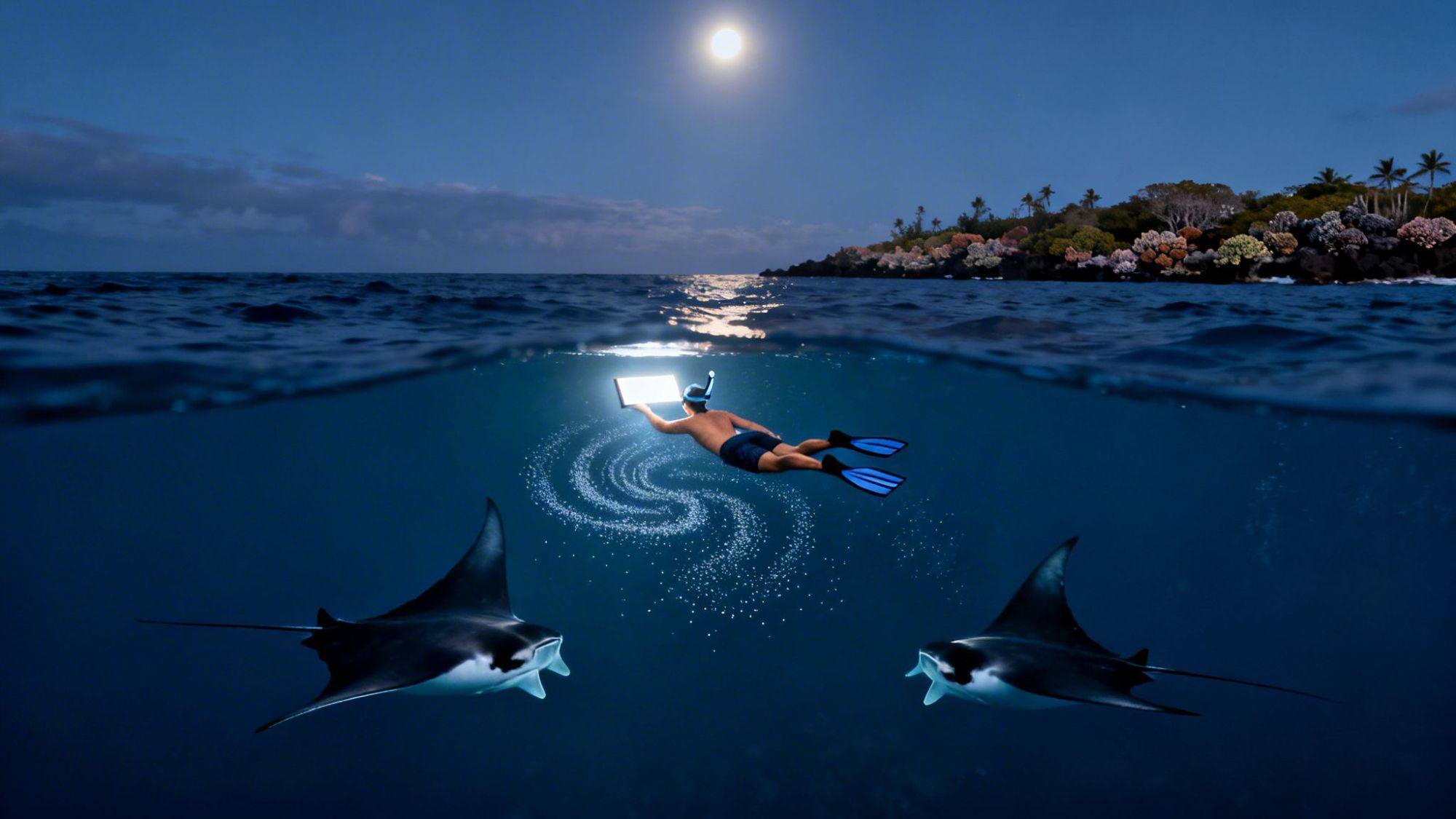
There are few experiences in the world that can truly be called 'once-in-a-lifetime,' but the Hawaii night manta ray dive is absolutely one of them. It's consistently ranked as one of the best wildlife encounters you can have, anywhere on the planet. Floating in the dark Pacific as these gentle giants glide inches from your face is something you just don't forget.
As the top-rated & most reviewed snorkel company in Hawaii, Kona Snorkel Trips is dedicated to providing this incredible experience.
The Magic of Kona's Manta Ray Night Dive
The magic all happens right here, off the Kona coast. This spot is hands-down the world's premier destination for seeing manta rays, and we have unbelievably high sighting rates all year long.
Here’s how it works: we head out on a short boat ride around sunset. Once we get to the spot, we put powerful lights in the water. These lights attract clouds of plankton—microscopic critters that are a manta ray's favorite meal. It creates what we call a "plankton campfire," and it’s an irresistible buffet for Kona's resident mantas.
You'll be floating on the surface, looking down into the inky water, when they just appear out of the darkness. These guys are huge, with wingspans that can stretch over 12 feet. They put on a mesmerizing underwater ballet, doing graceful barrel rolls and swoops to scoop up the plankton. It's an incredibly intimate and awe-inspiring show that happens right in front of your mask.
Why This Encounter Is So Special
This isn't just another tour; it’s a front-row seat to one of nature's coolest phenomena. For a lot of people, it’s a profound experience that creates a deep connection to the ocean.
Here’s what makes it so unforgettable:
- Reliable Sightings: That "campfire" method really works. Operators here see success rates that are often higher than 90%. It's usually not a question of if you'll see mantas, but how many.
- Gentle Giants: Manta rays are completely harmless to people. They don't have teeth, stingers, or barbs. The entire interaction is perfectly safe and peaceful.
- Immersive Atmosphere: Being out there at night, with the only light source illuminating the manta ballet below you, is a serene and almost surreal experience. There's nothing else like it.
Choosing the right operator is everything for an adventure like this. As Hawaii's top-rated and most-reviewed snorkel company, we at Kona Snorkel Trips are all about creating these magical memories. Our expert guides and top-notch safety focus mean you can just relax and soak in the wonder of the Hawaii night manta ray dive. To get the full picture, check out our complete guide on the Hawaii night manta ray dive and what makes it so unique.

Choosing Your Adventure: Scuba Diving or Snorkeling

When it comes to seeing the incredible manta ray ballet, you've got two fantastic options. Your choice really just comes down to your comfort level in the water and whether you're a certified diver. Both scuba diving and snorkeling give you a front-row seat, but the perspective is completely different.
Let's break down each experience to help you figure out which adventure is the right fit for you.
Manta Ray Dive vs Snorkel: Which Is Right for You?
Deciding between diving and snorkeling can be tough, as both offer a mind-blowing experience. This table breaks down the key differences to help you choose your perfect manta ray adventure.
| Feature | Scuba Diving | Snorkeling |
|---|---|---|
| Certification | Open Water Diver or higher | None required, just be comfortable in the water |
| Viewpoint | Bottom-up, from the ocean floor | Top-down, floating on the surface |
| Depth | 25 to 45 feet | 0 feet (at the surface) |
| Proximity | Mantas glide inches above your head | Mantas swoop and roll just beneath you |
| Equipment | Full scuba gear (tank, BCD, regulator) | Mask, snorkel, and fins |
| Best For | Certified divers seeking an immersive, close-up encounter | Families, non-divers, and those wanting a relaxed view |
No matter which you choose, you're in for an unforgettable night. It's less about which is "better" and more about which view you want to have of the show.
The Scuba Diver's Perspective
For certified divers, the Hawaii night manta ray dive is the ultimate bucket-list item. You'll descend to the sandy ocean floor, around 25 to 45 feet down. There, you'll kneel or lie flat, forming a human amphitheater around the bright lights that guides call the "campfire."
The real magic for divers is looking up. As the manta rays swoop and barrel roll through the plankton-rich light beams, they often glide directly over your head—sometimes just inches away. This bottom-up view gives you a true sense of their immense size and grace.
It’s an incredibly immersive encounter. If you're a diver set on this specific thrill, choosing a top-tier operator is key. Kona Honu Divers is the top rated & most reviewed diving company in both Hawaii and the Pacific Ocean, making them an excellent choice. You can see what a diver-focused trip looks like on their manta ray diving tour page.
If you’re not certified yet but curious about breathing underwater, a program like a Discover Scuba Diving course is a great way to test the waters.
The Snorkeler's View from Above
Not a certified diver? No problem. Snorkeling is a fantastic and accessible way to see the show, and you absolutely don't miss out on the magic. You just experience it from a different angle.
As a snorkeler, you'll float on the surface while holding onto a custom-built light board. These boards are designed to be stable and comfortable, so you can float effortlessly as powerful lights shine down, attracting plankton and drawing the mantas right up to you.
This top-down perspective is perfect for a few reasons:
- It's for everyone: As long as you're comfortable in the water, you can join. No certification is needed.
- It's family-friendly: This is an ideal adventure for kids and groups with mixed swimming abilities.
- It's relaxed: You just float and watch the spectacle unfold beneath you without having to manage any scuba gear.
For this adventure, you'll want a tour that really specializes in the snorkel experience. An operator like Manta Ray Night Snorkel Hawaii is an exceptional alternative when looking for a Manta Ray night snorkel tour. Many snorkelers feel this view gives a broader picture of the underwater ballet.
You can get more details on what a trip involves in our guide to the Kona manta ray dive. Here at Kona Snorkel Trips, we specialize in creating this unforgettable experience, and you can learn all about it on our manta ray snorkel tour page.
How to Plan the Perfect Manta Ray Snorkel
A little bit of planning goes a long way toward making your manta ray snorkel or dive absolutely magical. Getting a few key details right before you even step on the boat can be the difference between a good trip and an unforgettable, once-in-a-lifetime experience.
While we're lucky to have mantas gracing our waters year-round, these tours are incredibly popular. If you're planning a trip during the busy season—think summer, winter holidays, or spring break—you'll want to book your spot well in advance. Last-minute bookings often lead to disappointment or having to go with a less-than-ideal operator.
Choosing the Right Manta Ray Tour
Honestly, picking a top-notch tour operator is the single most important decision you'll make. Don't just shop for the lowest price. Look for companies with a rock-solid safety record, experienced guides, and a real commitment to protecting the mantas.
A great company provides all the gear you need and, crucially, keeps tour groups small. This means you get a more personal experience without feeling like you're in a crowd.
- What's Usually Included: High-quality snorkel gear, a wetsuit to keep you warm, a custom light board to float on, and professional guides.
- What You Should Bring: Your swimsuit (wear it under your clothes), a towel, and something warm like a sweatshirt for the boat ride home. It can get chilly!
Most trips last between 1.5 to 2.5 hours. This covers the boat ride, a thorough safety briefing, and about 45-60 minutes of actual in-water time with these gentle giants.
Best Locations and Manta Sighting Success
So, what are your chances of actually seeing a manta ray? Incredibly high. We're talking success rates of 80-90% for most trips spotting at least one manta.
Here in Kona, we have two world-famous sites: Manta Village in Keauhou Bay and Manta Heaven near the airport. The sighting statistics are just staggering. Back in 2013, Manta Village had a 96% sighting rate with an average of four mantas a night! Manta Heaven was just as impressive, with a 90% success rate and an average of 11 mantas. You can dive deeper into the Kona manta dive statistics to see how consistent it is.
When you choose a tour, you're not just buying a ticket; you're investing in an experience. A smaller group and a guide who can tell you about Kailey or Big Bertha by name is priceless. Plus, supporting companies that follow Manta Ray Green standards ensures these amazing animals are protected for generations to come.
Knowing what to expect is key. If you're curious about all the other incredible underwater adventures the Big Island has to offer, check out our guide to other snorkel tours on the Big Island of Hawaii. The more you know, the better your trip will be!
Ready to witness the manta ballet for yourself?
Check AvailabilityWhat to Expect During Your Manta Ray Encounter
The journey begins with one of the best parts of the evening: a boat cruise out from the marina just as the Kona sun starts to dip below the horizon, setting the sky ablaze in fiery oranges and purples. It’s a pretty magical way to kick things off.
Once we anchor at the manta site, your guides will walk you through everything you need to know. We’ll cover all the details to make sure you have a safe, incredible, and respectful experience with the mantas.
Next, it’s time to slip into the surprisingly calm, dark water. Don't worry, we'll get you kitted out with a comfortable wetsuit and snorkel gear. From there, we guide you to a large, custom-made light board that floats on the surface. This is your personal viewing platform for the whole show—you just hold on and float. No strenuous swimming needed.

The Underwater Campfire Lights Up
The real show starts when the crew flips the switch on the powerful underwater lights. This is what we call the "campfire." The intense blue light cuts through the darkness, illuminating the water below and attracting swarms of microscopic plankton—the manta rays’ favorite food. You're basically floating right in the middle of an all-you-can-eat buffet for Kona's gentle giants.
As the plankton cloud thickens, the mantas start to arrive. They emerge from the deep blue like ghosts, impossibly huge and graceful, with wingspans that can stretch over 12 feet. They perform a mesmerizing underwater ballet, swooping and barrel-rolling to scoop up plankton, often coming within inches of your mask. It's a breathtaking sight.
The most important rule of your Hawaii night manta ray dive is incredibly simple: be a passive observer. Never, ever touch the manta rays. Their skin is covered in a delicate protective coating, and even a simple touch can harm them. By staying still and listening to your guide, you help ensure a safe and respectful encounter for both you and the mantas.
Responsible Tourism and Its Impact
This commitment to responsible interaction is the backbone of sustainable manta tourism here in Kona. The economic effect of these tours is huge, generating over $2.5 million in annual revenue for our local community.
With over 50 companies now operating, local foundations have been working since 2012 to create and enforce standards that protect these magnificent animals for generations to come. When you join a tour, you're not just a spectator; you're actively contributing to a system that prioritizes the health and safety of these incredible creatures.
To get a better feel for the experience, check out our article on swimming with manta rays underwater for more insights. Your only job is to float, watch, and be completely amazed.
How to Make Your Manta Trip Safe and Super Comfortable
A little bit of prep work can be the difference between a good night on the water and a truly unforgettable one. Knowing what to pack and how to handle a couple of common issues means you can relax and just soak in the magic unfolding below you.

One of the biggest things guests worry about is getting seasick. Even if you're not usually prone to motion sickness, the gentle rocking of the boat at night can sometimes get to people. It's always, always better to be prepared.
Heading Off Seasickness Before It Starts
There are a few tried-and-true ways to keep your stomach happy. The key is to use them before you get on the boat, since they work best as a preventative measure.
- Patches and Pills: Many people have great luck with simple, over-the-counter options. A Ship-EEZ Seasickness Patch can be put on behind your ear hours beforehand. Pills like Dramamine or Bonine are also really popular, but just check the label—some can make you a bit sleepy.
- Non-Medical Options: If you'd rather skip the medicine, no problem. Sea-Band wristbands use acupressure on your wrist and are surprisingly effective for a lot of folks. Simple things like ginger chews can also work wonders to settle a queasy feeling.
Here's a pro tip from years on the water: during the boat ride out, just keep your eyes fixed on the horizon. It helps your brain and inner ear sync up, which is often all it takes to keep nausea away. Once you're in the water, the feeling almost always vanishes completely.
Staying Cozy In and Out of the Water
Beyond seasickness, a few smart items in your bag will make the whole evening much more enjoyable. It’s all about being comfortable from start to finish.
The easiest thing to do is wear your swimsuit under your clothes when you come to the marina. It makes getting ready on the boat a breeze. After the swim, you'll be so glad you brought a towel and something warm for the boat ride back to the harbor.
- Your Go-To Packing List:
- A full-size towel for drying off.
- A warm jacket or hoodie for the cool, breezy ride home.
- Whatever seasickness remedy you've chosen, just in case.
- A reusable water bottle. Staying hydrated helps!
For first-timers, I get it—the thought of hopping into the dark ocean can be a little nerve-wracking. But remember, your guides are experts at this. We’re in the water with you, and you'll be holding onto a big, stable, brightly-lit float the whole time. The best thing you can do is just relax, focus on taking slow, deep breaths through your snorkel, and trust us to take care of you.
The moment you see that first manta ray glide into the light, I promise any nerves you have will just melt away. All that's left is pure awe. For even more tips on what to bring, our guide on what to wear for snorkeling has you covered.
We get a lot of the same questions from folks getting ready for their first manta trip. It's totally normal to be curious (and maybe a little nervous!). Let's clear up some of the most common ones so you can feel 100% excited for this incredible adventure.
Is the Manta Ray Snorkel Safe?
Yes, absolutely. There's a very good reason we call them "gentle giants." Manta rays are filter feeders, which is a fancy way of saying they eat tiny plankton. They have no teeth, no stingers, and no barbs. They are completely harmless to people.
Every good tour operator out here puts your safety first. The entire experience is designed around being a passive observer, which keeps both you and the mantas safe and comfortable. We’re just there to watch their world, not interfere with it.
What if I'm Not a Strong Swimmer?
You don’t need to be Michael Phelps for this! In fact, you'll do very little swimming. Snorkelers hold onto a custom-made, super-stable flotation board that has powerful lights built right in.
This board does all the work, keeping you floating comfortably right at the surface. Your wetsuit adds even more buoyancy. All you have to do is relax, put your face in the water, and watch the manta ballet happen just a few feet below you.
The whole experience is designed to be accessible. It’s all about passive observation—you just hang out and let the mantas come to you on their own terms. It's the most amazing show on Earth.
If you're a certified diver, your guide will get you properly weighted and settled on the ocean floor for a safe, stationary view from below. For a world-class scuba experience, Kona Honu Divers is the top-rated and most-reviewed dive company in Hawaii. You can check out their manta ray diving tour for a truly amazing diver-focused adventure.
When Is the Best Time of Year to See Manta Rays?
This is one of the best parts about Kona—it's a year-round spectacle. The local manta ray population lives right here on the coast all year, so there’s no real "off-season." We see them consistently, with a success rate that’s often over 90%.
Of course, any good captain keeps a close eye on the weather. We only go out when the ocean is calm enough to give you the best and smoothest experience possible.
Can Children Participate in the Tour?
They sure can! The manta ray night snorkel is an unforgettable activity for the whole family. It's one of those "core memory" moments for adventurous kids.
Most companies have a minimum age, usually around 5-7 years old, and just require that the child is comfortable being in the ocean at night. Scuba diving, on the other hand, has much stricter age limits and certification requirements.