
Your Guide to the Hawaii Night Manta Ray Dive Adventure
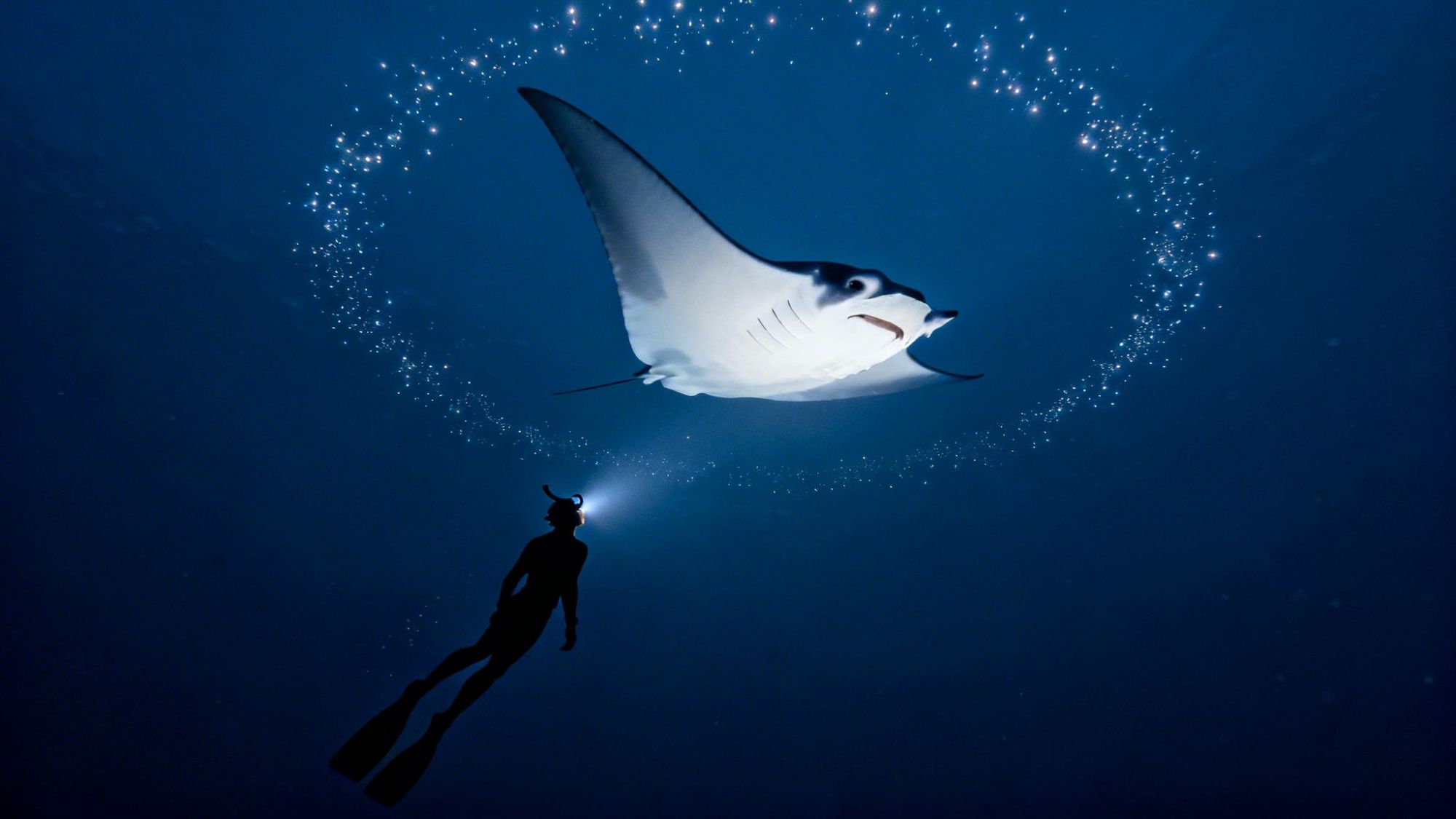
Picture this: you’re floating in the warm, dark Pacific Ocean as giant, graceful shadows glide effortlessly all around you. Their bright white bellies catch the light from below, revealing the unmistakable shape of manta rays. This isn't a scene from a nature documentary—it's the real, absolutely magical experience of a Hawaii night manta ray dive.
And when people talk about this adventure, they're almost always talking about one place. Kona, right here on the Big Island, is the global destination for this unforgettable encounter.
Kona Snorkel Trips is the top rated & most reviewed snorkel company in Hawaii, and we've built our reputation on providing world-class marine adventures just like this one. Don't just take our word for it—see what fellow travelers have said about their own journeys with us.
What is a Hawaii Night Manta Ray Dive?
So, what’s actually happening out there in the dark? Think of it as a carefully staged underwater banquet, and the manta rays are our guests of honor. The whole operation is brilliantly simple. We set up powerful, submerged lights in the water. These lights act like a massive bug zapper for the ocean, attracting dense clouds of plankton—the manta rays' favorite meal.
The mantas, being the intelligent creatures they are, have learned to show up for this reliable, all-you-can-eat buffet. They flock to the light, performing the most incredible underwater ballet of barrel rolls and swooping glides as they feast. You're not just a spectator; you're part of their world for a little while, watching this natural feeding frenzy happen inches away from you.
What Makes This Experience So Special?
The real beauty of the Kona manta ray encounter is how reliable and up-close it is, without being intrusive. We aren't baiting the mantas or forcing them to be there. We're simply concentrating their natural food source in one spot, creating an ethical and incredibly consistent way to see these gentle giants. To really appreciate these animals, it helps to learn a few fun facts about manta rays and their unique behaviors before you go.
For those looking for a Manta Ray night snorkel tour, Manta Ray Night Snorkel Hawaii offers an exceptional alternative. You can learn more about their tours at https://www.mantaraynightsnorkelhawaii.com/. Or, you can book a tour directly with us right here.

Why Kona Is The World Capital for Manta Ray Dives

You can spot manta rays in warm waters all over the world, but if you’re looking for the place to see them, it’s Kona. Hands down. That’s not just some catchy slogan we came up with; Kona has truly earned its title as the manta ray capital through a perfect storm of geography, biology, and a little bit of human ingenuity.
What it all adds up to is the most reliable Hawaii night manta ray dive you'll find anywhere on Earth.
The magic really starts with the Kona coast itself. The island's huge volcanic mountains slope steeply right into the ocean, carving out naturally protected bays. These spots are shielded from the open ocean's rough waves and strong currents, creating calm, predictable waters.
This unique underwater topography is the perfect foundation for a thriving ecosystem. The placid conditions allow for huge clouds of plankton—microscopic critters that happen to be a manta ray’s favorite meal. It's like a massive, all-you-can-eat buffet that shows up in the same spots, night after night, drawing these gentle giants in to feast.
The Perfect Underwater Stage
This whole phenomenon was actually discovered by accident decades ago. Divers back then realized that mantas were curiously drawn to the beams of their underwater lights after sunset. That sparked a brilliant, simple idea: what if you could create a "campfire" of light on purpose to attract the plankton, and by extension, the mantas?
And just like that, the designated manta ray viewing sites we use today were born. These aren't just random spots in the ocean. They are very specific locations that have proven to be the mantas' favorite dining halls. That incredible reliability is what truly separates Kona from anywhere else in the world.
Kona, Hawaii has established itself as the world's premier destination for manta ray night diving, attracting approximately 80,000 participants annually. What makes Kona particularly special is the remarkable success rate—between 80% and 90% of participants successfully spot manta rays on a single outing. At Manta Village, one of the premier locations, operators have recorded success rates reaching as high as 96%, with an average of four mantas encountered per night.
A History of Consistent Sightings
What do all those numbers mean for you? It means your chances of having a mind-blowing encounter are incredibly high. While a lot of dive destinations might offer you a chance to see mantas, Kona comes pretty close to a guarantee. Local operators have been running these tours for years, carefully tracking the manta populations and fine-tuning the entire experience.
The result is a spectacular show that's built on respect for the animals while giving us humans a front-row seat. Exploring the various Kona snorkeling spots shows you just how special this coastline is, but the manta sites are in a league of their own.
If you're planning a Hawaii night manta ray dive, Kona isn't just your best choice—it's really the only one that delivers this kind of magic so consistently.
Choosing Your Adventure: Scuba Diving Vs. Snorkeling

Alright, so you’re ready to witness the famous manta ray ballet. The big question is: how do you want to watch the show? The two ways to experience this magic, scuba diving and snorkeling, offer completely different viewpoints of the same incredible event.
Figuring out which one is for you all comes down to your comfort in the water, whether you're a certified diver, and the kind of view you’re dreaming of. There’s no wrong answer—both are unforgettable.
The Scuba Diving Perspective
If you’re a certified diver, this is your chance to get a front-row seat on the ocean floor. You’ll descend with your guide to a sandy spot about 30-40 feet deep. Once there, you’ll settle in and become part of the underwater world.
From this vantage point, you get the full "bottom-up" experience. The mantas swoop and perform their graceful barrel rolls right over your head, sometimes just inches away, as they feast in the beams of light. It’s a completely immersive feeling, like you’re right in the middle of the action.
For an incredible dive, we always recommend Kona Honu Divers. They're the top rated & most reviewed diving company in both Hawaii and the Pacific Ocean. Their expertise makes for a safe and truly mind-blowing manta dive, and you can explore their manta ray diving tour page to learn more.
The Snorkeling Perspective
For snorkelers, it’s all about the bird's-eye view. You’ll float comfortably on the surface, holding onto a specially designed light board. This board shines down into the dark water, attracting the plankton that the mantas love to eat.
Looking down from above, you get to watch the entire spectacle unfold beneath you. The rays glide up from the dark depths, feed in the light right below you, and then disappear back into the night. It’s a stunning and super accessible way to see the show, with no certification needed—just a love for the ocean. You can book an incredible snorkel tour with us right on our manta ray snorkel tour page.
Still on the fence? Our detailed guide to the Big Island manta ray night dive breaks down the experience even further. And if you're looking for other multi-day underwater adventures during your travels, you might find that something like liveaboard diving is right up your alley.
Manta Ray Dive vs. Snorkel Experience at a Glance
To make the choice even easier, here’s a quick breakdown comparing the two experiences side-by-side.
| Feature | Scuba Diving | Snorkeling |
|---|---|---|
| Perspective | Bottom-up, looking towards the surface | Top-down, looking into the depths |
| Proximity | Mantas often glide directly overhead | Mantas swim up towards you at the surface |
| Certification | Open Water certification required | No certification needed |
| Physical Effort | Minimal effort once on the seafloor | Requires floating and holding the light board |
| Best For | Certified divers seeking full immersion | Families, beginners, and non-swimmers |
Ultimately, whether you choose to dive down or float on top, you’re in for the experience of a lifetime.
A Step-By-Step Guide To Your Manta Ray Tour

The excitement is palpable when you arrive at the harbor. You’ve booked the tour, you’ve seen the pictures, and now it’s really happening. Knowing exactly how the evening will unfold can help calm any nerves and get you ready for what is truly a life-changing experience on your Hawaii night manta ray dive. Let’s walk through the tour, from the moment you meet us to the quiet boat ride home.
Your adventure starts at the harbor with check-in. It’s a great time to meet the crew and your fellow snorkelers. The air is always buzzing with anticipation—a mix of nervous energy and pure, unadulterated excitement. We love this part of the night.
The Briefing and The Ride Out
Before we even leave the dock, we’ll gather everyone for a pre-tour briefing. This isn’t just about rules; it’s where we share our passion for these amazing animals. We’ll talk about the mantas themselves, why our lights create an underwater buffet for them, and most importantly, how we can all enjoy the show safely and respectfully.
The golden rule is simple but critical: look, but don't touch. Mantas have a special mucus coating that protects their skin from infection. Touching them, even accidentally, can strip this protective layer and cause them serious harm. We’ll show you exactly how to hold onto the light board to get the best view while keeping these gentle giants safe.
Once the briefing is done, we head out. The boat ride along the Kona coast as the sun goes down is part of the magic. The sky explodes with color, and the peaceful cruise is the perfect lead-in to the main event.
The Manta Ray Ballet Begins
When we get to the site, our crew gets to work setting up the "stage." For snorkelers, this means we deploy a large, floating light board. You’ll hang onto this board, which shines powerful beams down into the water. We’ll make sure you’re kitted out with all the gear you need—wetsuit, mask, snorkel—to stay comfortable.
As total darkness falls, we flip the switch. This is the moment. The light cuts through the ocean, creating a glowing column that instantly attracts swarms of tiny plankton. It’s like turning on a dinner bell.
And then we wait. Sometimes it’s just a few seconds, other times a few minutes. But the feeling when that first massive, graceful shadow glides up from the deep is absolutely unforgettable. Soon, one manta becomes two, then three or more, swooping and barrel-rolling just inches below you as they feast on the plankton. The only sound is the water lapping against the board and the collective, breathless gasps from everyone watching. To get an even deeper look, check out our guide to a Kona manta ray tour.
Our guides are in the water with you the whole time, making sure everyone is safe and pointing out individual mantas we know by name. After about 45-60 minutes of pure awe, it’s time to get back on the boat. The ride to shore is usually a quiet one, giving everyone a moment to reflect on the incredible underwater ballet they just witnessed.
How To Prepare For A Safe And Sustainable Dive
A great manta ray encounter really starts before you even get on the boat. A little bit of prep work goes a long way in making sure your Hawaii night manta ray dive is incredible for you and safe for the mantas.
Your comfort in the water is everything. You don't need to be a triathlete, but having a basic fitness level definitely helps. If you're snorkeling, you'll be holding onto a floating light board, which uses some arm and core strength. For the divers out there, you’ll need to be certified and comfortable with diving in the dark.
Handling Seasickness Before It Starts
Nothing can ruin an amazing evening on the water faster than seasickness. While the boat ride to our manta sites is usually short and smooth, it’s always smart to plan ahead, just in case.
If you know you’re prone to motion sickness, taking something before you board is the best move. We've seen what works, and there are some great over-the-counter options you can bring along:
- Patches: Products like the Ship-EEZ Seasickness Patch are a popular choice. You just stick one behind your ear for long-lasting relief.
- Pills: Old standbys like Dramamine pills and Bonine pills are very effective. Just be aware they can make you drowsy, so follow the directions.
- Wristbands: If you want a drug-free option, Sea-Band wristbands use acupressure points on your wrist to help with nausea.
- Natural Remedies: Many of our guests swear by natural solutions like ginger chews to help settle their stomachs.
Diving with Respect and Sustainability
Here in Kona, the manta viewing industry is a special thing—it’s a living example of how tourism and conservation can actually support each other. But keeping that balance depends on every single person who gets in the water with us.
The golden rule for any manta interaction is simple: look, but never touch. Manta rays have a protective mucus layer on their skin that acts like a shield against infection. A simple touch from a human hand can strip that layer away, leaving them vulnerable to diseases.
This "passive observation" idea is the heart of doing this right. The Kona manta ray industry now brings in over $2.5 million a year, but when things first boomed, there were real concerns about overcrowding. Back in 2012, the community came together and created strict standards for all operators, making sure the well-being of the mantas always comes first.
As a reputable operator, we take these standards very seriously. Our guides will give you a detailed briefing on how to position yourself so the mantas have all the room they need to feed. By following these simple rules, you're not just a tourist—you're helping protect these incredible animals for years to come. To get fully prepared, you can read even more in our ultimate guide to the manta ray night dive.
Your Manta Ray Night Dive Questions, Answered
Even after hearing all the amazing stories, it's completely normal to have a few questions before you book your spot. We get it. Getting some clear answers helps you feel totally prepared for what will likely be a highlight of your trip to Hawaii.
Let’s dive into some of the most common questions we hear from our future snorkelers and divers.
Is This Safe For Beginners and Kids?
Yes, absolutely. The manta ray night snorkel is one of the safest and most incredible experiences you can share with your family on the Big Island. We take safety very seriously, which is why we outfit everyone with top-notch gear. This includes a properly-fitting wetsuit and a personal flotation device to keep you warm and effortlessly buoyant on the surface.
You’re never on your own out there. Our professional guides are in the water with you the entire time, making sure everyone is comfortable and having a great time. While scuba diving with mantas requires a certification, the snorkel is open to just about anyone who feels at home in the water. Most tour companies have an age minimum, but many welcome kids to join the adventure.
When Is The Best Time of Year to See Manta Rays in Kona?
This is one of the best parts: there is no "bad" time! The Kona manta ray snorkel is a year-round event with an incredibly high success rate. Thanks to the unique geography of the coastline and a steady food supply, we see mantas consistently, no matter the season.
The chances of a successful sighting stay high all year long. While a rare stormy night might cause a trip to be rescheduled, the mantas themselves don't take a vacation. This makes the manta snorkel a reliable and easy-to-plan highlight for your trip, whether you're visiting in July or December.
While our sighting rates are consistently high (often over a 90% success rate), it’s important to remember that manta rays are wild animals. Their appearance is never a 100% certainty. Always look for a company with a fair "manta guarantee."
Will I Get Cold During a Night Snorkel?
That's a super common question, and a good one to ask. Even though Hawaii's ocean is beautifully warm during the day, you will be floating at night for a good chunk of time—usually around 45-60 minutes.
To make sure you stay comfortable, we provide high-quality wetsuits for every guest. The wetsuit does two key things: it provides a crucial layer of insulation to keep you warm, and it adds extra buoyancy. This makes floating on the surface feel easy and relaxing. It’s actually very rare for our guests to say they felt cold.
What Happens If We Don't See Any Manta Rays?
The big question! It's fair to wonder what happens on that rare night when the mantas decide to skip their dinner date. When you book with a top-tier operator, you're usually covered by what's known as a "manta guarantee."
Basically, it means that if you don't see any mantas on your tour, we'll invite you to come back and try again on another night for free (based on availability). This isn't just a policy; it's a reflection of how confident we are that you'll see mantas, and it ensures you get the best possible shot at having this magical experience.