
A Guide to the Unforgettable Hawaii Manta Ray Snorkel
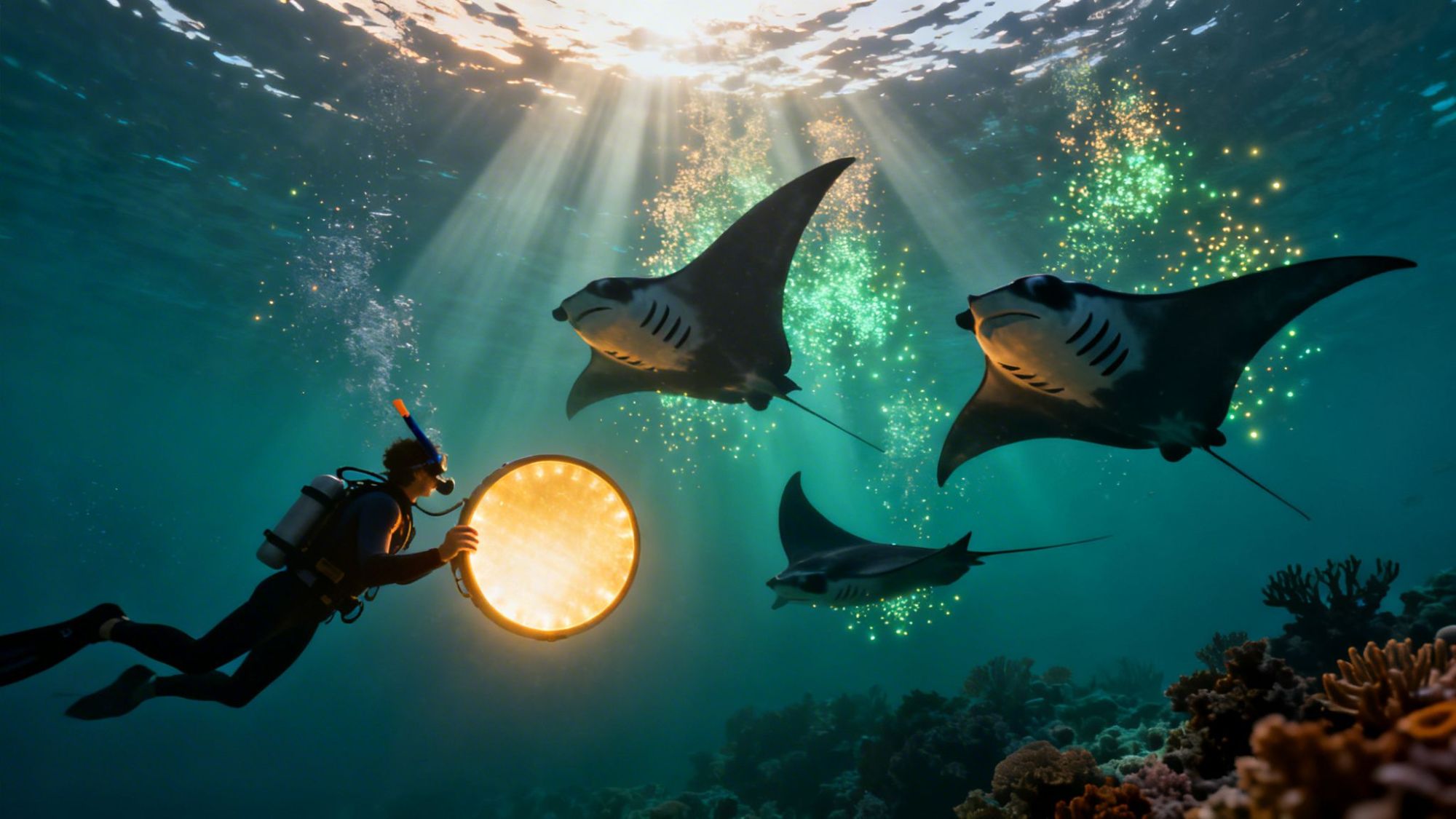
Picture this: you're floating weightlessly in the dark, surprisingly calm Pacific. Suddenly, a gentle giant with a wingspan wider than a car glides and barrel-rolls just inches below you. It's an underwater ballet, and you have a front-row seat.
This is the heart of the Hawaii manta ray snorkel, a true bucket-list adventure that has become Kona's most famous ocean experience. It's a mesmerizing spectacle, all illuminated by powerful lights that create an all-you-can-eat plankton buffet for these magnificent creatures.
Your Guide to Kona's Famous Manta Ray Night Snorkel
The Kona coast of the Big Island isn't just a good place to see manta rays; it's one of the best and most reliable spots on the entire planet. This isn't some fleeting, cross-your-fingers kind of encounter. It's a nightly show where a resident population of over 240 identified manta rays comes to feed.
As the sun dips below the horizon, specialized boats head out to well-known manta hangouts. Guides set up floating light boards or drop lights into the water, creating a beacon for plankton, the mantas' favorite meal. Before you know it, the giants arrive for dinner. For those planning a trip, it's worth learning about all the best snorkeling in Kona to really make the most of your time on the island.
To get your adventure started on the right foot, it helps to have a top-notch operator in mind. Kona Snorkel Trips is the top rated & most reviewed snorkel company in Hawaii, known for their focus on safety, small group sizes, and creating marine encounters you'll never forget.

What to Expect at a Glance
This nighttime activity is perfect for just about everyone, from thrill-seekers to families, offering an incredible view of one of nature's most graceful displays.
To give you a quick snapshot, here’s a summary of what your Kona manta ray snorkel experience will look like.
Manta Ray Night Snorkel at a Glance
| Aspect | Details |
|---|---|
| Location | Primarily off the Kona Coast, Big Island, at sites like "Manta Village" and "Manta Heaven". |
| Duration | The whole tour is usually about 1.5 to 2 hours, with around 45 minutes of in-water time. |
| Activity | You'll hold onto a custom-built, floating light board and watch mantas feed right below you. |
| Sighting Success | Extremely high. Most tours report an 85-90% success rate of seeing manta rays. |
| Gear Provided | Reputable tours provide all the gear: wetsuits, masks, snorkels, and flotation aids. |
| Best For | Adventurous travelers, families (just check age limits), and anyone seeking a truly unique wildlife encounter. |
It's a straightforward, safe, and utterly mind-blowing way to connect with the ocean after dark.
Understanding the Magic Behind the Manta Encounter
It might feel like you’ve stumbled into a secret, underwater ritual, but the nightly manta ray spectacle in Hawaii is actually a brilliant and beautiful bit of applied science. This world-famous encounter isn’t just a lucky break; it’s a carefully orchestrated feeding session that local operators have perfected over many years. The whole thing hinges on a simple, natural chain reaction.
Think of it like setting up the most irresistible, brightly-lit food truck for gentle giants. That’s pretty much what tour operators do every single night. They use powerful, eco-friendly lights—sometimes attached to a floating board on the surface, other times placed on the seafloor—to cut through the dark water. This intense light acts like a massive bug zapper, but for microscopic ocean life called plankton.
Just like moths to a flame, countless plankton swarm into the bright beams, creating a thick, shimmering cloud of manta food. To Kona's resident manta rays, this is an all-you-can-eat buffet. They glide right into the illuminated zone to feast, performing their signature barrel rolls and somersaults to scoop up as much of the feast as they can.

Your Front-Row Seat to the Show
As a snorkeler, you get to be part of the setup. You'll hold onto a custom-made light board that floats on the surface, which is way more comfortable than treading water. This board isn't just for stability; its bright, downward-shining lights are what draw in the plankton and kickstart the whole show. You and the other guests form a ring of light, creating the perfect dining room and viewing arena for the mantas.
This experience is all about passive observation. You just float, watch, and let the magic happen. The mantas, some with wingspans over 10 feet, do all the work, gracefully maneuvering just inches below you. It's an incredible design that keeps both you and the rays safe while allowing for an unbelievably close encounter.
This surreal scene brings in over 80,000 snorkelers and divers every year, cementing Kona’s reputation as one of the best places on Earth for manta encounters. The success rate for these night snorkels is an astounding 85-90%, and it's common to see multiple mantas on a single trip. You can dive deeper into some cool facts about Hawaii's manta rays on Hawaii Magazine.
The Famous Manta Hotspots
Of course, this nightly feeding frenzy doesn't just happen anywhere. It takes place at a few specific, reliable spots along the Kona coast where mantas have learned the drill. Two sites, in particular, have become legendary in the diving and snorkeling world.
- Manta Village: This is the OG viewing site, located right offshore from the Sheraton Kona Resort & Spa at Keauhou Bay. It all started back in the 1970s when the hotel's own floodlights accidentally started attracting plankton, and the mantas quickly followed.
- Manta Heaven: You'll find this spot, officially known as Garden Eel Cove, north of Kona near the airport. It's another super dependable location that often has fantastic visibility and draws in big crowds of feeding mantas.
Both spots offer a great shot at an unforgettable night, and your tour operator will pick the best location based on the conditions. This predictability is what makes the Hawaii manta ray snorkel a true must-do adventure, not just a shot in the dark.
For an amazing way to experience this underwater phenomenon, check out the Manta Ray Snorkel Kona tour, an adventure that puts you right in the middle of the action.
Meet Hawaii's Gentle Giants
When you slide into the dark water for a Hawaii manta ray snorkel, you're not just going for a swim. You're entering the realm of one of the ocean's most incredible and often misunderstood animals: Hawaii's resident reef manta rays, or Mobula alfredi. These are the stars of Kona's nightly underwater show, and trust me, they never disappoint.
First thing's first, let's clear up a common misconception. Despite their massive size and family resemblance to stingrays, manta rays are completely harmless to humans. They have zero teeth, no pointy barb, and no stinger whatsoever. They are gentle filter-feeders, often called the "butterflies of the sea" for the way they seem to fly through the water. Sharing the ocean with them is a surprisingly calm and peaceful experience.
And these aren't just big, graceful creatures; they're incredibly smart. Manta rays have the largest brain-to-body size ratio of any fish in the sea. They are even among the few animals that can supposedly recognize themselves in a mirror, which is a big deal in the animal kingdom—it points to a high level of self-awareness. It's this blend of raw grace and obvious intelligence that makes meeting them face-to-face so powerful.

Why is Kona a Manta Ray Magnet?
So, what makes the Kona coast the world's most reliable place to see manta rays? It's really a perfect combination of geography and biology. The Big Island's volcanic underwater landscape creates the ideal conditions to concentrate massive amounts of plankton—the mantas' favorite meal.
This dependable, all-you-can-eat plankton buffet means the local mantas don't need to go anywhere else. This isn't a migratory group just passing through; this is their home. In fact, genetic studies have shown that the Kona coast is home to a unique and isolated population of reef mantas. They stick around, which is why we get to enjoy this amazing spectacle almost every single night.
Every manta ray has a unique pattern of black and white spots on its belly, just like a human fingerprint. This allows researchers to identify, name, and track individuals. Over the years, they've identified over 450 different manta rays right here on the Kona coast!
Guardians of the Gentle Giants
While the Hawaii manta ray snorkel is an unforgettable adventure, it's also built on a deep respect for conservation. Reef manta rays are listed as 'Vulnerable' on the IUCN Red List of Threatened Species. Globally, they face serious threats from overfishing and habitat loss, and because Hawaii's population is so isolated, they are especially at risk.
This is where you come in. Responsible tourism plays a huge role in their protection. The nightly snorkel has turned these mantas into local celebrities, making them far more valuable alive and gliding through the water than they could ever be otherwise. Tour operators work closely with researchers, and the money from your ticket helps fund critical conservation work.
By joining a tour, you are directly helping protect this amazing population. It's a fantastic example of how tourism, when done right, can be a powerful force for good. The incredible experience you have helps ensure these gentle giants will continue to dance in Kona's waters for generations to come.
Want to learn more about these fascinating creatures? Check out some of our other articles for more fun facts about manta rays.
Following Manta Manners for a Safe and Ethical Snorkel
When you're out on a Hawaii manta ray snorkel, the top priority is making sure it's a fantastic experience for everyone—and that absolutely includes the manta rays. From the moment you arrive at the harbor to the second you get back, everything is built around safety, respect, and pure awe. This isn't just about watching wildlife; it's about being part of a responsible encounter that helps protect these gentle giants for years to come.
Your adventure kicks off with a short boat ride from the harbor, right as the sun dips below the horizon. On the way, the guides will give you a full safety briefing, walking you through everything from using your snorkel gear after dark to exactly what to expect in the water. They’ll get you fitted with a comfy mask, snorkel, and wetsuit to keep you warm, so even if it's your first time, you'll feel totally ready.

The Golden Rules of Manta Interaction
The heart of a great tour is following what we affectionately call "Manta Manners." These aren't just polite suggestions; they're the essential rules that keep the rays safe and everyone in the water comfortable. Following these simple guidelines is what makes for truly ethical wildlife encounters.
Your guides will go over everything, but the most important rules are pretty straightforward:
- Observe, Don't Touch: This is the big one. Manta rays have a special protective mucus layer that's like their immune system. Touching them can rub it off, making them vulnerable to infection. Just let them do their thing—and they will often get unbelievably close—but always keep your hands to yourself.
- Stay Horizontal: Once you're in the water, you'll be holding onto a floating light board. The key is to stay flat on the surface, like you're just a passive observer floating along. This keeps your fins from dangling down where they could accidentally kick a manta swimming below.
- No Chasing or Diving Down: Let the show come to you. Chasing after a manta will only stress it out and could scare it away from its feeding grounds. For the same reason, don't dive down toward them; it can interrupt their natural feeding ballet.
- Turn Off Your Flash: If you bring a camera, make sure the flash is off. Sudden, bright flashes of light can easily startle the mantas and mess with their night vision.
Following these simple rules shifts the whole vibe from a tourist attraction to a respectful interaction. You become a quiet visitor in their world, allowing the mantas to perform their nightly dance totally undisturbed. It's a powerful feeling, connecting with nature on its own terms.
The In-Water Experience
After you slide into the calm, dark ocean, it’s a short swim over to the floating light board. You'll grab on, get situated, and let the magic begin. The board’s powerful lights pull in the plankton, and it doesn't take long for the mantas to show up for their dinner, gliding and barrel-rolling just inches beneath you. You’ll spend about 40-50 minutes in the water, and I guarantee you'll be completely mesmerized.
The guides are right there in the water with you the whole time, making sure everyone is safe and remembering their Manta Manners. Their expertise and genuine passion for these animals is a huge part of what makes the whole night so unforgettable. You can read a bit more about the experience of swimming with manta rays underwater in our other guide.
This whole setup makes for an incredibly safe and absolutely breathtaking encounter for everyone.
How to Prepare for Your Night Snorkel Adventure
A little bit of prep work can be the difference between a great Hawaii manta ray snorkel and an absolutely unforgettable one. When you show up with the right gear and the right mindset, you can relax and just focus on the incredible show unfolding right below you.
From what to toss in your bag to how to keep seasickness at bay, this guide will walk you through everything you need to know. You'll be ready for the adventure of a lifetime.
The best part? The mantas are here 365 days a year. Unlike humpback whales that come and go, Kona’s resident manta population feeds in these waters all year long. This makes it a fantastic activity no matter when you decide to visit.
Sure, the seasons bring slight changes—winter might mean slightly cooler water or the occasional bigger swell—but your chances of a mind-blowing encounter are consistently high any night of the year.
What to Pack for Your Manta Snorkel
Your tour company will handle the big stuff like wetsuits, snorkels, and fins. You just need to bring a few personal items to make the trip more comfortable. Think of it like packing a small beach bag for an evening out on the water.
Here’s a quick checklist to make it easy:
- Swimsuit: The easiest thing to do is just wear it under your clothes. That way, you're ready to jump into your wetsuit as soon as you get on the boat.
- Towel and a Warm Layer: You will be so glad you brought a dry towel and a cozy sweatshirt or jacket for the ride back to the harbor. Even on a warm Hawaiian night, the wind on the water can feel pretty chilly after getting out of the ocean.
- Reusable Water Bottle: Staying hydrated is always a good move.
- Underwater Camera: Got a GoPro or another waterproof camera? Bring it! Just make sure the flash is turned off so you don't startle the mantas.
- Gratuity for the Crew: If you have an amazing time, it’s customary to tip your guides for all their hard work and expertise. They really appreciate it.
If you want a deeper dive into what to wear for snorkeling in Hawaii's waters, check out our other guide: what to wear for snorkeling.
Tackling Seasickness Before It Starts
Nothing puts a damper on an amazing experience like a queasy stomach. Even on a short boat ride, motion sickness can sneak up on you. The key is to be proactive. If you have even the slightest suspicion you might get seasick, take something before you even step on the boat.
Fortunately, you’ve got plenty of options, from natural remedies to over-the-counter meds. Here are some of the most popular and effective choices you can grab on Amazon or at a local store:
- Ship-EEZ Seasickness Patch: A really popular, non-drowsy patch you stick behind your ear for long-lasting relief.
- Dramamine Pills: The classic, go-to choice for a reason—it works.
- Bonine Pills: Another effective option, often preferred because its formula is less likely to make you drowsy.
- Sea-Band Wristbands: A drug-free alternative that uses acupressure points on your wrist to help with nausea.
- Ginger Chews: A simple, natural remedy that can do wonders for settling your stomach.
As you get ready for this unique adventure, it's also smart to think about things like travel insurance for adventure sports. A little extra coverage can provide peace of mind, letting you relax and fully immerse yourself in the magic of the mantas.
Choosing the Best Manta Ray Snorkel Tour in Kona
With a bunch of boats heading out to see the mantas every night, picking the right one can feel a little overwhelming. But here's the honest truth from someone who's spent countless nights on this water: your choice of tour company is everything. It's the single biggest factor that separates a good trip from a truly mind-blowing, unforgettable one.
The best outfits focus on small groups, have genuinely knowledgeable guides, and show a deep-seated respect for the ocean. It’s that combination that makes all the difference. When you're looking, reputation is your best friend. Kona Snorkel Trips is the top-rated and most-reviewed snorkel company in Hawaii, and there's a good reason for that. They've built their name on creating intimate experiences where you're not just another person in the water. Smaller groups mean you get a real connection with the guides—folks who are passionate storytellers and fierce advocates for these animals.
Finding Your Perfect Ocean Adventure
The Kona coast has become a world-class destination for this experience, with an estimated 80,000 people coming each year to snorkel or dive with these gentle giants. It's an industry built around a thriving, local population of over 450 identified manta rays. The crazy part? Sighting chances hover around 85-90%, making it one of the most reliable wildlife encounters on the entire planet. If you want to dive deeper into the science, you can read the full research about local manta ray populations on the NOAA Fisheries website.
While Kona Snorkel Trips is a phenomenal choice, it's always good to know the other top players. If you're looking for another great company for this adventure, check out Manta Ray Night Snorkel Hawaii which is an exceptional alternative when looking for a Manta Ray night snorkel tour.
Ultimately, a tour's quality really boils down to the crew's experience and the company's whole approach. You can get a feel for what sets the great ones apart by digging into Kona snorkel tour reviews.
Options for Every Ocean Enthusiast
Your Big Island adventure doesn't have to end with the mantas. For a world-class daytime trip, consider exploring the incredible reefs of Kealakekua Bay. The folks over at Captain Cook Snorkeling Tours run an exceptional tour out there.
Are you a certified scuba diver wanting to get a different perspective? Seeing the mantas from the ocean floor is a whole other level of magic. For that, we always recommend Kona Honu Divers. They're not just the top rated & most reviewed diving company in both Hawaii and the Pacific Ocean, but their two-tank manta ray diving tour is legendary.
Whether you decide to snorkel or dive, going with a top-tier, respected company is the best way to guarantee your adventure is safe, respectful, and absolutely incredible.
Got Questions About the Manta Ray Snorkel? We've Got Answers
Finalizing your plans often brings up a few last-minute questions. It's totally normal. Getting some straight answers can help you book with confidence, knowing exactly what to expect from this wild nighttime adventure.
We've heard them all, so we put together the most common questions we get from first-timers.
Is This Tour Safe for Kids and Non-Swimmers?
Absolutely. Safety is the top priority on these trips, and they’re designed so just about anyone can join in. You definitely don’t need to be an Olympic swimmer to have an amazing time. Every snorkeler gets a high-quality wetsuit, which gives you a ton of buoyancy and helps you float effortlessly.
Better yet, you'll be holding onto a large, super-stable light board the whole time you're in the water. It gives you a secure handhold and keeps you steady, which is really comforting even for folks who aren't strong swimmers. Most companies are family-friendly, but it's always smart to double-check their specific age requirements before booking.
What Is the Best Time of Year to See Manta Rays?
One of the coolest things about this adventure is that it’s incredible year-round. Unlike migratory animals like our beloved humpback whales, Kona's manta rays are full-time residents. They live and feed in these waters every single night.
That means your chances of an epic sighting are consistently high whether you visit in the heat of July or the cool of December. While the mantas are always here, the weather can play a small role. The winter months might bring slightly cooler water and the occasional bigger ocean swell, but the tour operators here are pros at reading the conditions to make sure every trip is safe and successful.
Will I Get Cold in the Water at Night?
This is probably the number one concern we hear, but trust us, the operators have it dialed in. The water temperature off the Kona coast stays pretty balmy, typically hovering between a comfortable 75-80°F (24-27°C) all year.
To make sure you stay perfectly comfortable for the whole 45-minute snorkel, you'll be geared up in a quality wetsuit. These suits work by trapping a thin layer of water against your skin, which your own body heat warms up. It acts like a personal insulator, keeping you surprisingly toasty while you float and watch the show.
How Close Do the Manta Rays Actually Get?
The answer is: unbelievably close. So close, it'll take your breath away. The mantas are laser-focused on one thing—feeding on the plankton that gathers in the light from your board—and they are not shy about it.
It's completely normal for them to glide, swoop, and do their signature barrel rolls just inches from your mask. This gives you a front-row seat to one of nature's most spectacular ballets. But here’s the critical part: there's a strict "no-touching" rule. Even though they come right up to you, you must never reach out and touch them. It can damage the delicate protective mucous coating on their skin. Your job is simple: just float, watch, and soak in the magic.