
Hawaii Manta Ray Snorkel: A Guide to Kona’s Gentle Giants
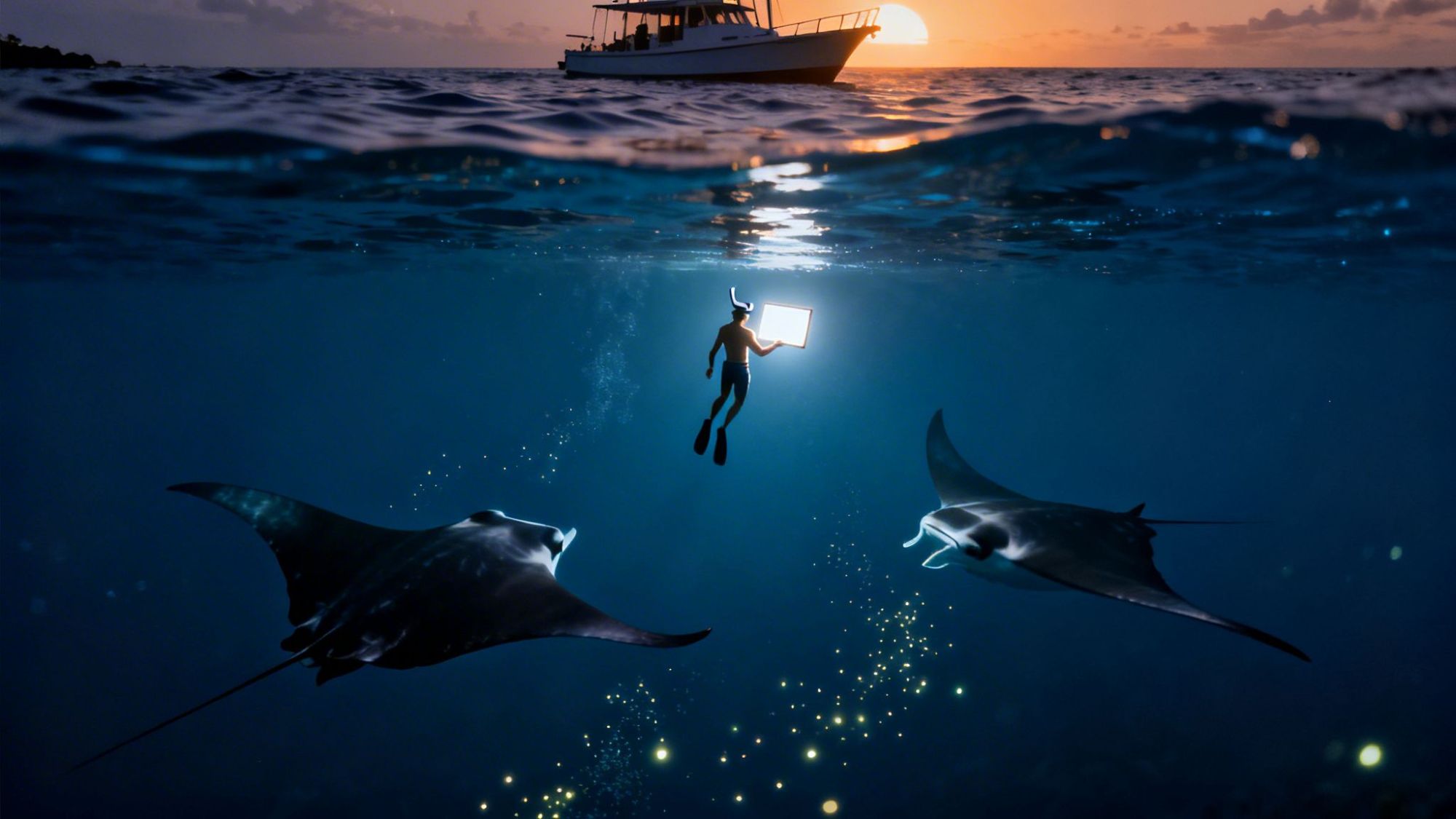
Imagine floating in the calm, dark ocean as gentle giants, some with wingspans wider than a car, glide gracefully right beneath you. This is the Hawaii manta ray snorkel, an unforgettable, must-do adventure that has to be seen to be believed. It's a truly magical encounter, giving you a front-row seat to one of nature's most spectacular underwater ballets.
Your Guide to an Unforgettable Manta Ray Encounter
The Kona Coast on the Big Island isn't just a good spot for this experience—it's the world's premier destination. The chances of meeting these majestic creatures as they feast on plankton are remarkably high here. To make the absolute most of it, you really want to go with a trusted local expert. Kona Snorkel Trips is the top rated & most reviewed snorkel company in Hawaii for a reason, known for their focus on safety, education, and crafting amazing memories. For an exceptional alternative when looking for a Manta Ray night snorkel tour, check out Manta Ray Night Snorkel Hawaii.

This guide will walk you through everything you need to know, from how the night snorkel actually works to what makes Kona such a special place for these gentle giants.
Here’s a quick overview to get you started.
Quick Guide to Your Manta Ray Snorkel Adventure
| Key Aspect | What You Need to Know |
|---|---|
| Best Location | Kona Coast, Big Island of Hawaii |
| When to Go | After sunset, year-round |
| Success Rate | An incredible 85-90% chance of sightings |
| What You'll See | Manta rays performing barrel rolls to feed on plankton |
| Safety | Manta rays are harmless filter feeders with no stingers |
| Conservation | Follow all guide instructions to protect the mantas |
Think of this as your starting point, and now let's dive into the details.
What Makes This Experience So Unique?
Unlike pretty much any other snorkeling trip you'll ever take, the real magic happens after the sun goes down. Tour boats head out to specific sites and use powerful, submerged lights to attract swarms of plankton—the manta rays' primary food source. This essentially creates a reliable "dinner table" that draws the rays in for a nightly feeding frenzy, and you're right there to witness it.
The whole thing is often called an "underwater ballet," and for good reason. Manta rays are unbelievably graceful, performing effortless barrel rolls and somersaults just inches away from you as they filter the plankton from the water. Want to learn more? Check out our article on fun facts about manta rays.
Kona: The Manta Ray Capital
So, why Kona? The coast here is home to a resident population of over 450 identified manta rays, and it’s the consistency of the sightings that really sets this place apart. Visitors have an astonishing 85-90% chance of seeing manta rays on any given night, a success rate that's almost unheard of anywhere else in the world.
Under normal conditions, tour groups see an average of 12 mantas per trip. This isn't a "hope you get lucky" kind of wildlife tour; it's one of the most reliable wild animal encounters on the planet. Of course, the manta snorkel is a major highlight, but there’s so much more to see and do. For more ideas, be sure to check out this guide to the top things to do on the Big Island of Hawaii.
So, how does this whole manta ray night snorkel thing actually work?
It’s a surprisingly simple concept, but the results are absolutely mind-blowing. Think of it as throwing a floating dinner party for Kona's manta rays. You just happen to have the best seat in the house, watching the show unfold from the surface.

The magic kicks off right after the sun dips below the horizon. Your tour boat motors a short way from the harbor to one of Kona’s known manta feeding spots. Once the boat is anchored, the crew gets the main attraction ready: a big, floating light board.
These custom-built boards shine bright, eco-friendly lights straight down into the dark water. For the microscopic organisms called plankton—the manta rays' favorite food—this light is like a giant dinner bell ringing across the ocean.
The Science of the Spectacle
What happens next is a beautiful, natural chain reaction. The intense light acts like a magnet, drawing in huge clouds of plankton and concentrating them in one spot. This creates an irresistible, all-you-can-eat buffet that the local mantas have come to recognize and rely on.
It usually only takes a few minutes before the first graceful shadows start rising from the depths. The mantas, with massive wingspans that can stretch over 11 feet, arrive for their nightly feast.
You'll be floating comfortably on the surface, holding onto the light board for stability. Most tours provide a pool noodle to tuck under your ankles, which helps keep you flat and gives you a perfect, unobstructed window into the illuminated world below.
The core idea is simple but powerful. Tour operators aren't feeding the mantas directly. They're just creating the perfect conditions for a natural feeding event to happen, allowing us to witness it in a way that's totally authentic and non-intrusive.
The Underwater Ballet Begins
Once the mantas arrive, the real show starts. They perform incredible acrobatics, doing somersaults and barrel rolls to filter as much plankton-rich water as they can. They glide effortlessly through the beams of light, often coming within inches of you—so close you can see the unique spot patterns on their bellies.
Your only job? Just hang on, stay calm, and soak it all in. The guides are right there in the water with you, making sure everyone is safe and sharing cool facts about the mantas you're seeing.
The in-water part of the tour usually lasts about 40-50 minutes. That's plenty of time to witness this incredible feeding frenzy without getting too chilly. To get a better sense of their movements, check out our guide to manta ray swimming patterns.
What to Expect, Step by Step
Every company runs things a little differently, but most Hawaii manta ray snorkel tours follow a similar flow to make sure you're comfortable and get the best possible show.
- Check-In and Gear Up: You’ll meet your crew at the harbor, get checked in, and they'll fit you for a wetsuit and snorkel gear.
- Sunset Boat Ride: It's a short, scenic ride out to the site as the sun sets over the Pacific. It's a pretty epic start to the evening.
- Safety Briefing: The crew will give you clear instructions on how to get in the water, hold the light board, and enjoy the mantas safely and passively.
- The Main Event: You'll spend about 45 minutes floating in the water, watching the mantas dance and feed right beneath you.
- Warm Up and Head Home: After the snorkel, you'll climb back on the boat. Most tours have warm drinks and snacks waiting for the quick ride back to the harbor.
Why Kona Is the World's Best Manta Ray Destination
When you start dreaming about a Hawaii manta ray snorkel, you quickly realize that Kona isn't just an option—it's the option. People fly here from all over the world for this one-of-a-kind experience. Sure, you might get lucky and spot a manta ray in other tropical waters, but Kona offers something no other place can: the most reliable, mind-blowing manta encounters on Earth. It's a perfect storm of geography, a little bit of history, and some fascinating animal behavior.

First off, the Kona coast is naturally protected. The colossal volcanoes of Mauna Loa and Hualalai act like giant shields, blocking the gusty trade winds that churn up the water elsewhere. This gives us incredibly calm, clear seas almost year-round, which is exactly what you want for snorkeling. Add to that the island’s steep underwater slopes, which create deep channels very close to shore, and you have a habitat that’s swimming with the plankton manta rays love to eat.
This combination of calm water and an all-you-can-eat plankton buffet makes Kona a natural hotspot for these gentle giants. But what really sealed the deal and put Kona on the map was a happy accident that happened decades ago.
The Campfire Effect: Manta Village and Manta Heaven
The story goes back to the 1970s. A hotel, now the Outrigger Kona Resort & Spa, set up floodlights to illuminate the ocean for its guests. Pretty soon, people started noticing huge, graceful shadows swooping through the light beams. They were manta rays, drawn in by the light which, in turn, was attracting swarms of plankton—their favorite meal.
This created a nightly feeding frenzy, a phenomenon we now call the "campfire effect." It didn't take long for tour operators to figure out they could recreate this by taking boats out and shining their own lights into the water. Over the years, this led to two world-famous viewing sites.
- Manta Village: Located right in Keauhou Bay, this is the original spot where the magic first happened. It’s still one of the most consistent places to see mantas.
- Manta Heaven: Just north of Kona near the airport, this site is another incredibly dependable feeding spot that often draws in huge numbers of rays.
These aren't just random locations. Think of them as established dinner tables where generations of mantas have learned to show up for a reliable meal every night. This conditioning is precisely why the sighting success rate in Kona is an unbelievable 90%.
A Personal Connection with the Local Mantas
What truly makes the experience here so special is the relationship that local guides and researchers have with the manta population. We have a resident community of over 240 identified manta rays that are closely studied. Each one can be recognized by the unique pattern of spots on its belly, which is just like a human fingerprint.
Many of them even have names, like "Big Bertha," "Lefty," and "Amanda Ray." When you're out on a tour, your guide might point out a specific individual and share a bit about their history or personality. This adds such a personal touch to the whole thing. You're not just observing wildlife; you're meeting a known local resident.
This personal connection transforms the experience from a simple wildlife viewing into something more meaningful. Knowing the names and stories of the mantas you're swimming with fosters a profound sense of respect and admiration for these intelligent creatures.
For certified scuba divers looking to see this underwater ballet from below, there are dedicated dive tours. Kona Honu Divers, the top rated & most reviewed diving company in both Hawaii and the Pacific Ocean, offers an amazing two-tank manta ray night dive that lets you watch the show from the ocean floor.
Between its unique geography and the learned behavior of its resident mantas, Kona is simply unparalleled. And while this nightly spectacle is the main event, the Big Island’s underwater world is stunning during the day, too. Be sure to check out some of Kona's best snorkeling spots for more incredible adventures.
Choosing Your Tour and Preparing for the Night
Picking the right tour company can be the difference between a pretty good night and a truly unforgettable one. With your Hawaii manta ray snorkel adventure on the horizon, a little prep work goes a long way in making sure you can just relax and soak it all in. The real secret is finding a company that puts safety, education, and small groups first for a more personal and respectful encounter with the mantas.

As you look around, keep an eye out for operators like Kona Snorkel Trips. You want to see a solid history of great reviews and a real commitment to responsible tourism. Smaller boats and limited group sizes are a huge plus—it means you won't feel like a sardine in the water, which guarantees a better view and a more intimate experience. This approach also puts less stress on the manta rays, keeping the whole encounter as natural as possible.
What Is Typically Included in Your Tour
Most top-notch manta ray snorkel tours in Kona provide all the gear you'll need for a safe and comfortable trip. This is great because it means you can just show up ready for an adventure without having to lug a bunch of bulky equipment with you.
Typically, your tour fee will cover:
- Wetsuits: The ocean can get surprisingly chilly when you're floating for 40-50 minutes at night. A good wetsuit is absolutely essential for staying warm.
- Snorkel Gear: They'll provide professional-grade masks and snorkels to make sure you have a crystal-clear view and can breathe easily.
- Flotation Aids: You’ll be given something to help you stay buoyant and horizontal on the surface, usually a pool noodle or a similar device.
- Snacks and Drinks: Most companies offer light refreshments on the boat—think hot cocoa, water, and snacks—to help you warm up after your swim.
Honestly, the pre-snorkel briefing might be one of the best parts of the whole trip. This isn't just some quick safety rundown; it's a full-on educational session. The expert guides share incredible facts about manta ray biology, their behavior, and even how to identify individual mantas by their unique spot patterns. This briefing transforms a simple wildlife tour into a much deeper, more meaningful connection with the amazing animals you’re about to meet.
What You Should Bring for the Night
While the tour company has the main gear covered, packing a few personal items will make your experience so much more comfortable, both before and after you hit the water. Remember, you'll be on a boat after sunset, and that ocean air can get cool.
Pro Tip: Wear your swimsuit under your clothes when you head to the harbor. It makes changing into your wetsuit way faster and easier, which means more time enjoying that beautiful sunset boat ride.
Here's a quick checklist of things to pack:
- A Towel: You will be very happy to have a dry, fluffy towel to wrap up in the second you get out of the water.
- A Warm Change of Clothes: Having a dry sweatshirt or jacket and pants to change into for the ride back makes a world of difference.
- Reusable Water Bottle: Always a good idea to stay hydrated, even on a short boat trip.
- Waterproof Camera: An action camera like a GoPro is perfect for capturing the underwater magic without risking your phone.
- Medication If Needed: If you get seasick, it’s a good idea to take something about 30-60 minutes before the boat leaves the dock.
By picking a quality operator and showing up with these few essentials, you’re setting yourself up for a spectacular night. For an even more detailed guide on what to wear for maximum comfort in the water, check out our article on what to wear for snorkeling.
Our Commitment to Safe and Responsible Manta Tourism
Getting to witness the underwater ballet of a manta ray is a genuine privilege, and with that comes a serious responsibility. These gentle giants are wild animals, and keeping them safe in their own home is our absolute top priority. This is where ethical, sustainable manta tourism comes in, guiding every single decision we make on our tours.
The whole experience is designed around a "passive interaction" model. Think of it as the golden rule of wildlife viewing. We are simply guests in their world. We float, we watch, and we let the awe wash over us, but we never, ever interfere with their natural feeding.
The Rules of Engagement
To make sure every single encounter is a positive one for both people and mantas, we follow a strict set of guidelines. These aren't just suggestions; they're in place to protect the animals and the fragile ecosystem they call home.
- No Touching: Manta rays have a protective mucous layer on their skin—it’s basically their immune system. Touching them, even accidentally, can rub off this coating and leave them vulnerable to nasty infections. So, we ask everyone to keep their hands to themselves, even when a manta glides just inches away.
- Stay on the Surface: For snorkelers, the job is to stay flat on the water, holding onto our light board. Diving down toward the mantas can startle them, disrupt their feeding patterns, and just creates a chaotic, stressful environment for them.
- Let Them Approach You: We never chase, pursue, or block a manta ray's path. The absolute magic of this experience is that the mantas choose to come to the light. Our job is just to be still and let them control the whole interaction.
By following these simple but vital rules, we help the mantas feel comfortable and see the light source as a safe, reliable restaurant. This commitment is everything. Beyond the incredible encounter, we are dedicated to ensuring our tours support responsible tourism and fall under the umbrella of ethical wildlife encounters.
Why Your Choice Matters
The tour operator you choose has a direct impact on the future of these magnificent creatures. Hawaii's manta ray populations are facing some pretty big conservation challenges, which makes sustainable tourism more important than ever. Genetic research has shown that the reef mantas here live in small, isolated groups, with only a few hundred individuals in each population.
The numbers are pretty sobering. Researchers estimate the Big Island's population has only about 104 adult breeders, and Maui's has roughly 129. With such a tiny breeding pool, losing even one manta can have a devastating ripple effect on the entire local population. These findings really drive home why our rules aren't just "best practices"—they're absolutely necessary for their survival.
When you book a tour, your dollars can be a powerful force for good. By choosing an operator that puts conservation and education first, you are actively helping protect Hawaii's mantas for generations to come. You're ensuring this incredible natural spectacle can continue to inspire awe for years. You can learn more about how we build our Kona manta ray snorkel tours with safety and sustainability as our foundation.
Your Manta Snorkeling Questions, Answered
It’s completely normal to have a few questions buzzing around in your head before you head out on an adventure like this. Even with all the excitement, a little preparation goes a long way.
We get it. To help you feel totally confident and ready, we’ve put together answers to the questions we hear most often from our guests. Our goal is to clear up any uncertainties so you can just relax and soak in every moment of this incredible experience.
Do I Need to Be a Strong Swimmer?
This is probably the #1 question we get, and the answer usually surprises people: no, you don’t need to be an expert swimmer! This experience is designed to be accessible and pretty low-effort.
You’ll be floating on the surface the whole time, holding onto a big, custom-made light board that's super stable. Think of it as your personal floating island. There’s no real swimming involved. Most tour operators, including us, also provide flotation aids like pool noodles to help you stay perfectly flat in the water with almost zero effort.
The key isn't swimming ability, but simply being comfortable in the water. If you can relax and float while wearing a wetsuit or life vest, you’re all set. The gear and your guides will handle the rest.
What Happens If the Weather Is Bad?
Your safety is always, without question, the top priority. Here in Hawaii, the boat captains are experts at reading the local weather and ocean conditions. They would never, ever take guests out if there was even a hint of a safety concern.
Our captains and crew are constantly checking the marine forecasts for wind, swell, and anything else that could make for a rough trip. If conditions are deemed unsafe for the Hawaii manta ray snorkel, the tour gets canceled. Simple as that.
When that happens, a reputable company like Kona Snorkel Trips will give you two choices:
- A full refund for your booking.
- A chance to reschedule your tour for another night, as long as there’s space.
Here’s a pro tip: try to book your manta ray tour for one of your first nights in Kona. That way, you have plenty of backup nights to reschedule if the weather decides not to cooperate.
How Can I Avoid Getting Seasick?
Nobody wants motion sickness to ruin their trip. While the boat ride to the manta site is usually short, just floating on the surface can sometimes be enough to trigger it for sensitive folks.
The best defense is a good offense. Take some preventative measures about 30 to 60 minutes before you get on the boat. It works wonders.
Here are a few options that our guests swear by:
- Medication: The classic over-the-counter choices are popular for a reason. Dramamine pills are a go-to, and Bonine pills is another great one that’s known for being less drowsy.
- Patches: If you don't like pills, the Ship-EEZ Seasickness Patch goes behind your ear and provides long-lasting relief.
- Acupressure: Sea Band wristbands are a drug-free option that use a small plastic stud to apply pressure to a point on your wrist, which can really help with nausea.
- Natural Remedies: Sometimes the simplest things work best. Chewing on ginger chews is a fantastic way to settle your stomach naturally.
Also, try to stay hydrated, skip the heavy, greasy meal right before the tour, and focus your eyes on the horizon during the boat ride.
What Is the Best Time of Year to Go?
This is the beauty of Kona—the resident manta rays are here all year long! Unlike the humpback whales that migrate, our mantas live in these waters their entire lives. They aren't going anywhere.
That means any time of year is a great time for a Hawaii manta ray snorkel tour. The sighting success rate stays right around 90%, whether you come in July or December.
Are Manta Rays Dangerous to Humans?
Not at all. Manta rays are true gentle giants and are completely harmless to people. It’s an easy mistake to make since they're related to stingrays, but mantas are a world apart. They have no teeth, no stingers, and no barbs.
They are filter feeders, which is a scientific way of saying their diet consists of tiny plankton. They swim with those huge mouths wide open to scoop up microscopic organisms from the water, not to bite anything. We like to call them the "butterflies of the ocean" because they're so graceful and gentle.
What If I Don't See Any Manta Rays?
While the odds of seeing mantas in Kona are incredibly high, they are wild animals, so a sighting can never be 100% guaranteed. Reputable tour operators know this and usually have a "manta guarantee" to back you up.
On the very rare night that the mantas don't show up, most companies will let you rebook for another night completely free of charge (depending on availability). It’s another great reason to book your tour early in your vacation—it gives you a built-in backup plan, just in case.
Can Children Participate in the Tour?
Absolutely! Kids can definitely join in on the fun, but the age requirements do vary from one company to the next. Most operators allow children aged 6 or 7 and up to snorkel.
We highly recommend that kids have at least a little bit of snorkeling experience beforehand. It just helps them feel more comfortable and confident being in the dark water at night.
For the little ones who are too young to snorkel, some companies offer a "ride-along" option where they can stay on the boat with a parent. It's always best to double-check the specific age policies with the tour company when you book.
Are you ready to witness the underwater ballet of Kona's gentle giants? Kona Snorkel Trips is dedicated to providing a safe, educational, and breathtaking experience you'll never forget. Book your Manta Ray Night Snorkel tour today and prepare for an adventure of a lifetime.