
Explore hawaii manta ray snorkel: Your Hawaii adventure awaits
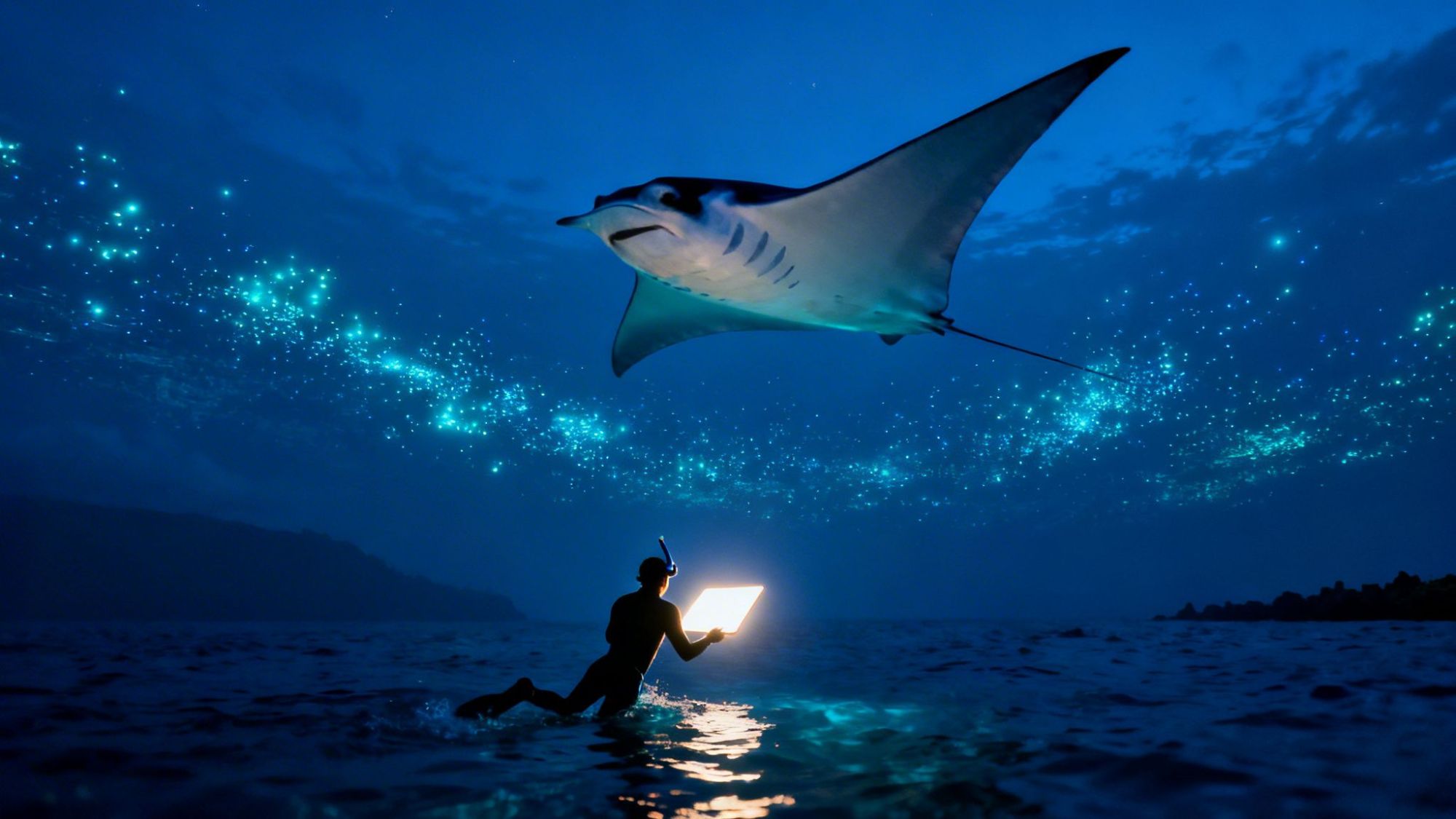
Close your eyes and picture it: you're floating weightlessly in the calm, dark Pacific, just off the Kona coast. Below you, giant, graceful manta rays soar and barrel-roll through beams of light. This isn't a scene from a nature documentary—it's the world-famous Hawaii manta ray snorkel, an experience so incredible it’s consistently voted one of the best underwater encounters on the planet.
Your Unforgettable Manta Ray Snorkel Adventure
This guide is your backstage pass to this incredible underwater ballet. We'll get into why Kona is the place on Earth for this encounter and walk you through everything you need to know to prepare for a night you’ll talk about for years to come.
But don't just take my word for it. Let's hear from people who have already taken the plunge with Hawaii's highest-rated and most-reviewed snorkel company, Kona Snorkel Trips.
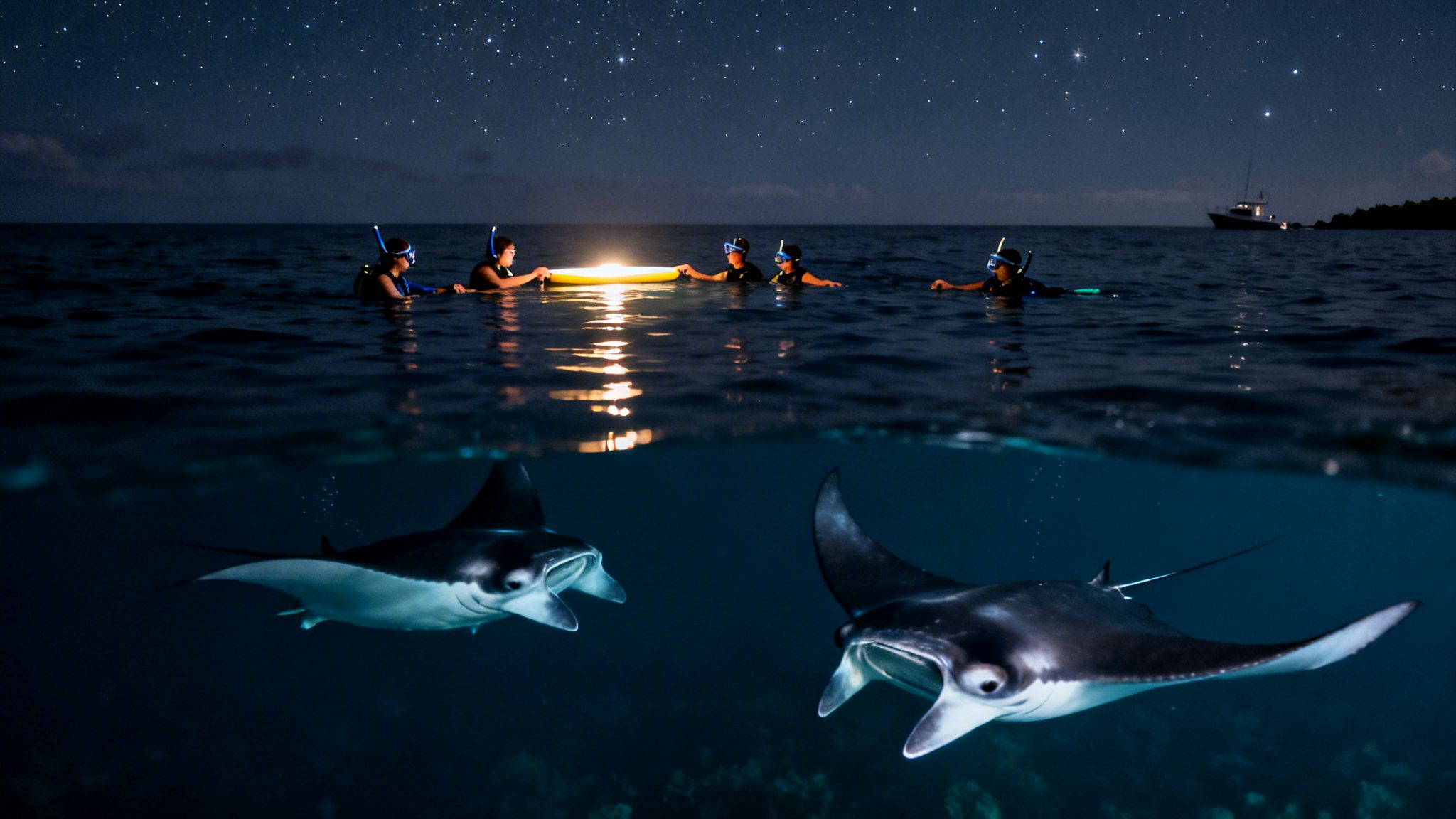
The Big Island of Hawaii hosts a unique spectacle that draws ocean lovers from every corner of the globe. Unlike other snorkeling trips where seeing wildlife is a roll of the dice, the Kona manta ray snorkel is remarkably consistent. You're getting a front-row seat to see these gentle giants up close.
What Makes This Experience So Unique
The real magic begins just after sunset. Tour boats head out to established feeding sites and drop powerful, eco-friendly lights into the water. Think of it like a dinner bell for manta rays—the light attracts huge clouds of plankton, their favorite food.
What happens next is just breathtaking. The mantas, with wingspans that can stretch over 12 feet, show up for the plankton buffet. They put on a show, gliding, swooping, and doing graceful somersaults just inches below you as you float safely on the surface.
This isn't just watching from a distance; it's a genuine connection with one of the ocean's most majestic animals. The whole thing is designed to be safe, easy, and profoundly moving for people of all ages and swimming abilities.
The feeling of a massive, graceful creature gliding silently just beneath you is almost impossible to describe. It’s a mix of pure awe, a deep sense of peace, and a powerful respect for the natural world.
When you're planning your trip, choosing the right tour is everything. Plenty of companies offer this adventure, but you want to find one that is serious about safety and, just as importantly, the well-being of the mantas. A fantastic choice is the manta ray night snorkel tour with Kona Snorkel Trips, who are well-known for their expert guides and dedication to responsible tourism.
If you're exploring other great options, Manta Ray Night Snorkel Hawaii is an exceptional alternative when looking for a Manta Ray night snorkel tour. Their expertise and commitment ensure a spectacular and safe underwater adventure.
How The Manta Ray Night Snorkel Really Works
So, how does this whole nighttime manta snorkel thing actually work? It might sound complicated, but it's really a beautiful and surprisingly simple combination of basic biology and pure ocean magic. The whole adventure is designed from the ground up to give you an absolutely breathtaking view into their world.
It all starts with a calm boat ride as the sun dips below the horizon, heading out to one of the well-known manta feeding spots just off the Kona coast.
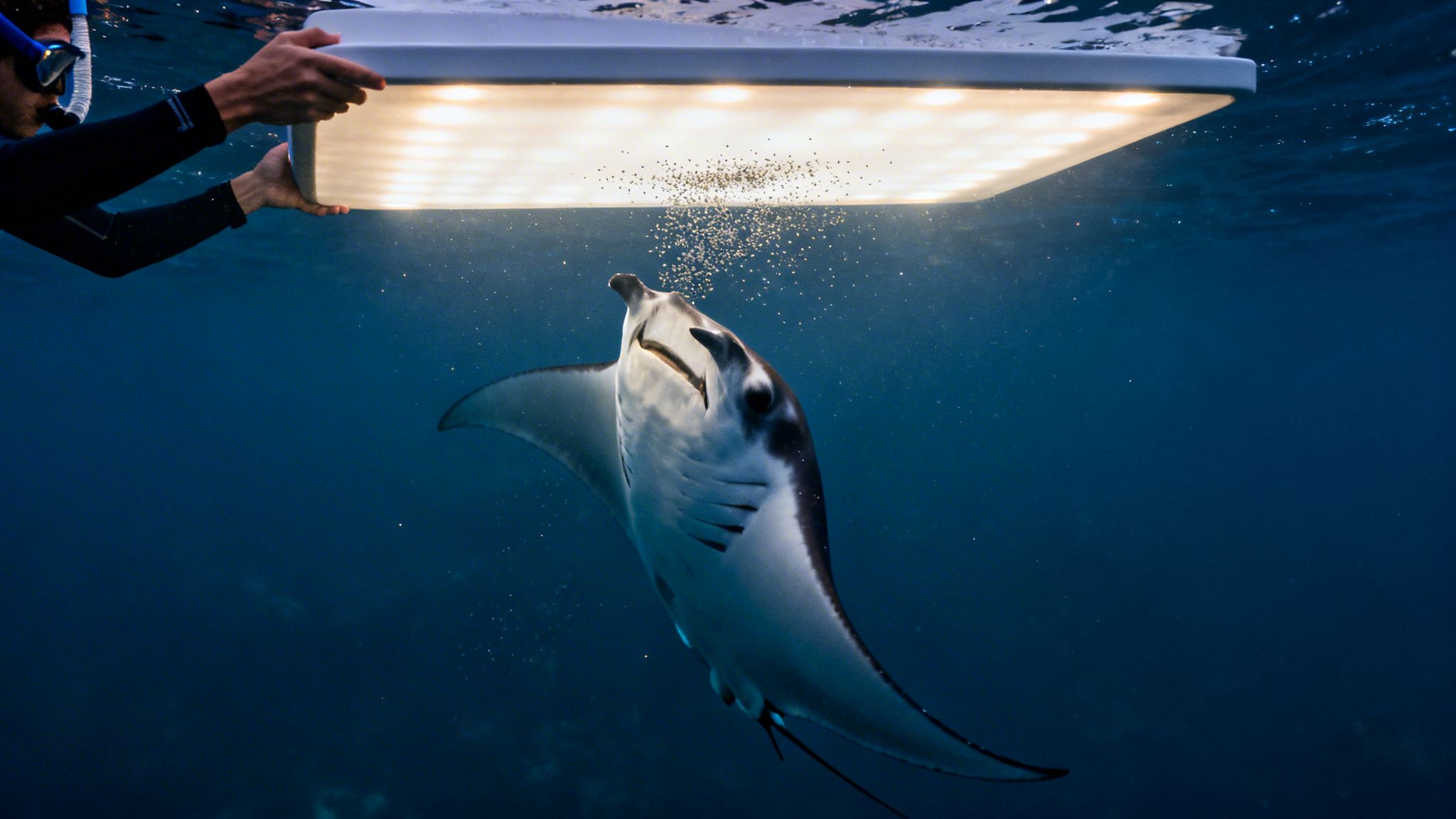
Once we anchor, the crew gets everything ready for the main event. They’ll set up a custom-made, floating light board in the dark, calm water. This isn’t just some flashlight; it's a powerful light source that turns the ocean beneath you into a glowing stage of brilliant blue or white light.
After a quick briefing, you'll slide into the water and grab onto the handles of the board. This floating "campfire" keeps you stable and gives you the perfect front-row seat, which makes the whole experience easy even if you’re not a world-class swimmer. From there, you just float and watch the show unfold right below you.
The Science of Attraction
The real magic here is all about the food chain. Those powerful lights have one job: to attract phytoplankton, the microscopic little marine plants that are the foundation of ocean life. Think of it like turning on your porch light on a warm summer night—it doesn't take long for the bugs to show up.
In just a few minutes, the beams of light become thick with these tiny organisms. For the Kona manta rays, this cloud of plankton is an irresistible, all-you-can-eat buffet. Over the years, they've learned that these lights mean an easy, delicious meal is ready and waiting.
This is what makes the encounter so reliable. Unlike a daytime snorkel where spotting wildlife can be hit or miss, we're basically setting the dinner table and letting the main attraction come right to us.
The Underwater Ballet Begins
Once the plankton has gathered, the stars of the show make their grand entrance. One by one, the giant manta rays glide out of the darkness to start feeding, their huge mouths wide open to filter the plankton from the water.
What you get to see is a silent, spectacular ballet of swoops, glides, and incredible barrel rolls. The mantas pull off these acrobatics to get as much food as possible, and they often come within inches of the snorkelers floating at the surface.
This is what makes the experience so mind-blowing. Seeing a creature with a wingspan of over 12 feet glide silently right under you is a moment of pure awe. It’s a connection to the raw beauty of the ocean you won't ever forget.
The best part is that this whole process is non-invasive and works with the mantas' natural behavior. We aren't baiting them or feeding them anything artificial; we're simply concentrating their natural food source in one spot. It’s a responsible way to ensure the encounter is safe and amazing for both you and the mantas.
If you want to know more about the tour itself, check out our guide on what to expect from a manta ray night snorkel tour.
Ready to see this underwater magic for yourself? Don't wait to book your spot for one of the most unforgettable nights of your life.
Why Kona Is The Global Epicenter For Manta Rays
If you’re dreaming of a Hawaii manta ray snorkel, your mind should go straight to one place: Kona. There’s a good reason the Big Island’s west coast has earned its reputation as the undisputed world capital for manta encounters. It’s not just hype—it’s a perfect storm of geography, biology, and decades of responsible tourism.
Unlike so many other incredible marine animals that are constantly on the move, the reef mantas along the Kona coast are homebodies. They're a resident population, which means they live here 365 days a year. This single fact is the bedrock of Kona's fame. There's simply no "off-season" for manta rays here.
Because they stick around, we’ve gotten to know them and their habits. This has led to the development of world-renowned viewing sites—not just random spots in the ocean, but established feeding grounds where the mantas reliably show up, night after night.
The Perfect Manta Habitat
Two spots, in particular, have become legendary in the snorkeling world: "Manta Village" just south of town and "Manta Heaven" to the north. These sites offer the perfect setup for both the mantas and for us. The gentle underwater slopes of volcanic rock and the steady, nutrient-rich currents create a dependable buffet of plankton.
Over decades, the mantas have learned to associate light with an easy meal. This began organically with hotel lights spilling onto the water and has since been perfected by tour operators. We use safe, powerful, submerged lights to attract a thick soup of plankton, essentially ringing the dinner bell for these gentle giants. The result is an experience that is both mind-blowingly spectacular and incredibly consistent.
Unmatched Sighting Success Rates
This whole unique setup translates into sighting success rates you just won't find anywhere else on the planet. The Kona Coast is a major aggregation site where these reef mantas gather predictably, giving snorkelers a near-guaranteed encounter. With a local population of over 450 identified individuals, our coast is a vital hub for Hawaii's mantas.
Our night snorkel tours use those bright lights to draw in the plankton, which in turn brings in the mantas for an acrobatic feeding frenzy. It's common to have a dozen or more rays gracefully barrel-rolling beneath you, and we see them on 85-90% of our trips. That's a number most wildlife tours worldwide can only dream of. You can read more about Kona's unique manta population to see just why it's such a world-class destination.
This is what truly separates a Kona Hawaii manta ray snorkel from other wildlife encounters. You aren't just crossing your fingers hoping to catch a fleeting glimpse. You're heading out with the very real expectation of seeing multiple mantas performing their incredible underwater ballet just inches away.
Before we go further, let's break down exactly what makes Kona so special compared to other manta destinations around the globe.
Why Kona Excels for Manta Ray Encounters
| Feature | Kona, Hawaii | Other Global Locations |
|---|---|---|
| Manta Population | Large, resident population (non-migratory) | Often seasonal or migratory populations |
| Sighting Consistency | Extremely high (85-90% success rate) year-round | Variable, often dependent on season and luck |
| Viewing Method | Established, light-attracted feeding sites | Typically at "cleaning stations" or random encounters |
| Accessibility | Easy access via short boat rides from shore | Can require long boat journeys to remote reefs |
| Experience Type | Immersive, close-up feeding behavior (barrel rolls) | Often passive observation of mantas being cleaned |
This remarkable combination of factors has cultivated a sustainable and absolutely breathtaking adventure. The local community and tour operators have worked together for years, perfecting a safe, respectful way for you to witness this nightly phenomenon without disturbing the animals.
Ready to see for yourself why Kona is the best place in the world for a manta ray encounter? The Kona Snorkel Trips manta tour offers an expertly guided and unforgettable experience. For another exceptional alternative, consider Manta Ray Night Snorkel Hawaii, which provides fantastic tours to witness this natural wonder.
How To Prepare For Your Manta Ray Tour
Getting ready for your Hawaii manta ray snorkel is one of the easiest parts of the whole adventure. We handle the heavy lifting so you can just focus on the incredible night you're about to have. The whole point is for you to be comfortable, safe, and ready for the magic.
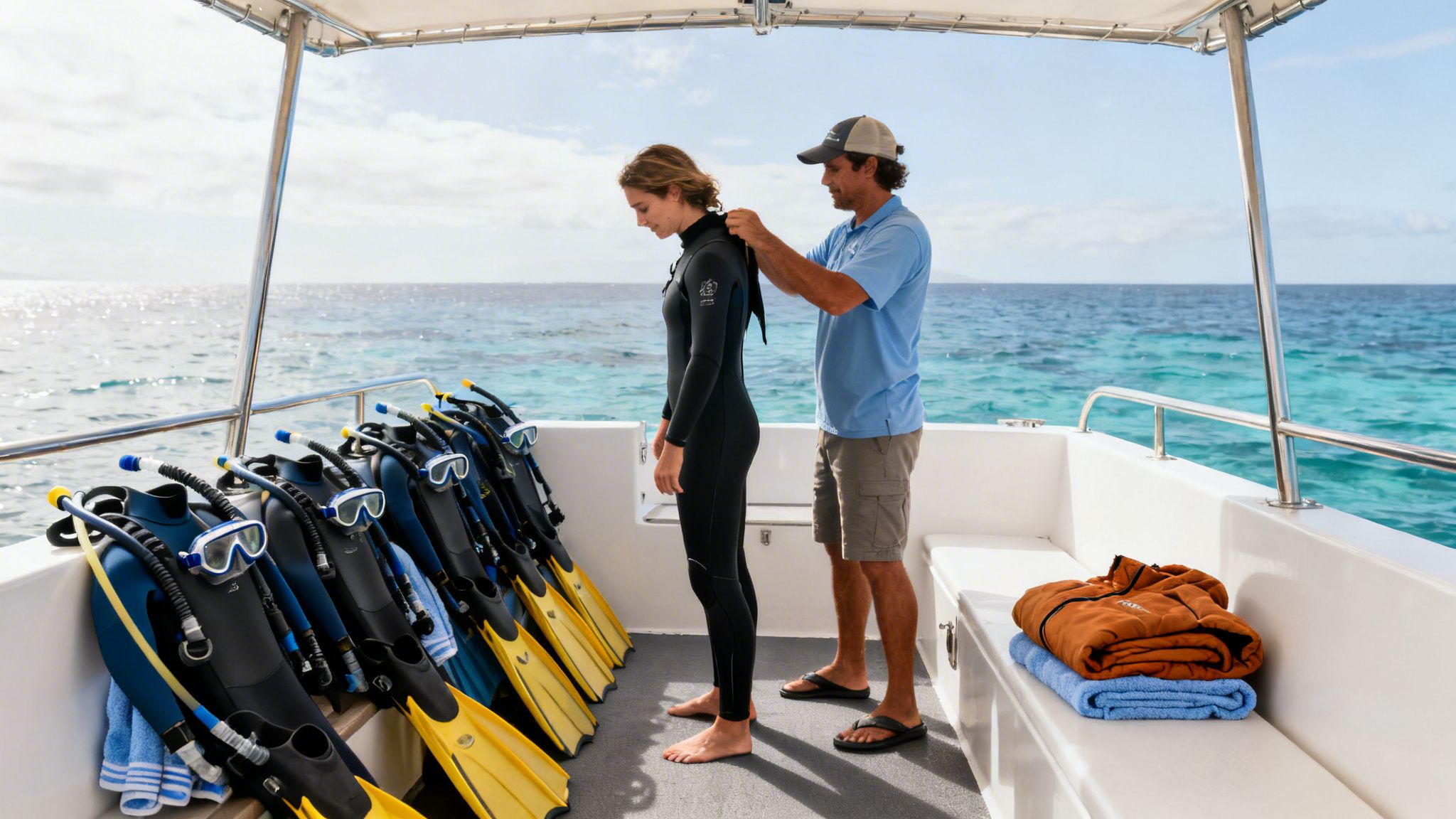
Kona Snorkel Trips and other top-notch operators provide all the essential gear. That means a high-quality wetsuit (which is a lifesaver for staying warm in the ocean after sunset), a properly fitted snorkel mask, and fins. No need to lug your own stuff across the Pacific.
What You Need To Bring
Since we’ve got the main equipment covered, your packing list is wonderfully short. Just think about personal comfort before and after you hit the water.
- Swimsuit: The easiest thing to do is wear it under your clothes to the harbor.
- Towel: You’ll be very happy to have a dry towel waiting for you back on the boat.
- Warm Layers: Don't skip this one! A dry sweatshirt or windbreaker is key. Even in Hawaii, the boat ride back can feel brisk after an evening swim.
- Reusable Water Bottle: Always a good idea to stay hydrated.
And that's pretty much it! We provide the rest, so you can travel light and focus on the fun part.
Swimming Skills And Accessibility
This is the big question we always get: "Do I have to be a great swimmer?" The short answer is no. While you should be comfortable in the ocean, you absolutely don't need to be an Olympic swimmer.
The experience is designed to be accessible for a huge range of abilities. For the entire time in the water, you'll be holding onto a large, stable, floating light board. It gives you all the buoyancy you need and a secure place to hold on. All you have to do is float and watch the show unfolding right below you.
Think of the light board as your own personal viewing platform floating on the surface. It lets you completely relax without treading water, making the whole thing low-effort and incredibly high-reward.
This setup makes the manta snorkel a fantastic activity for most ages, including families with kids who are comfortable in the water. Plus, our guides are right there in the water with you, making sure everyone feels safe and confident the whole time.
Tips For First-Timers And Families
If this is your first time, or if you're bringing the kids along, a little prep goes a long way. Chat with the family about what to expect—the dark water, the bright lights, and the absolutely giant (but totally gentle) animals. And, of course, remind them of the golden rule: look, but don't touch.
Pay close attention to your guide’s briefing before you get in. They’ll walk you through everything, from how to clear your mask to the best way to hold onto the board. Don’t ever hesitate to ask a question; their entire job is to make sure you feel at ease.
Feeling the excitement? This incredible, once-in-a-lifetime experience is just a few clicks away. Don't wait to book your spot and get ready for an evening of pure underwater wonder.
Viewing Manta Rays With Respect And Care
Getting to see a manta ray up close in its own world is a rare privilege. It’s one of those magical, unforgettable moments that really sticks with you. But that privilege comes with a big responsibility. It’s up to every single one of us who enters their ocean home to protect these gentle giants so this incredible encounter can be around for generations to come.
The number one, most important rule of thumb is passive interaction. Think of it as the golden rule for any manta ray snorkel. It's the foundation of a safe, respectful experience for both you and these amazing animals.
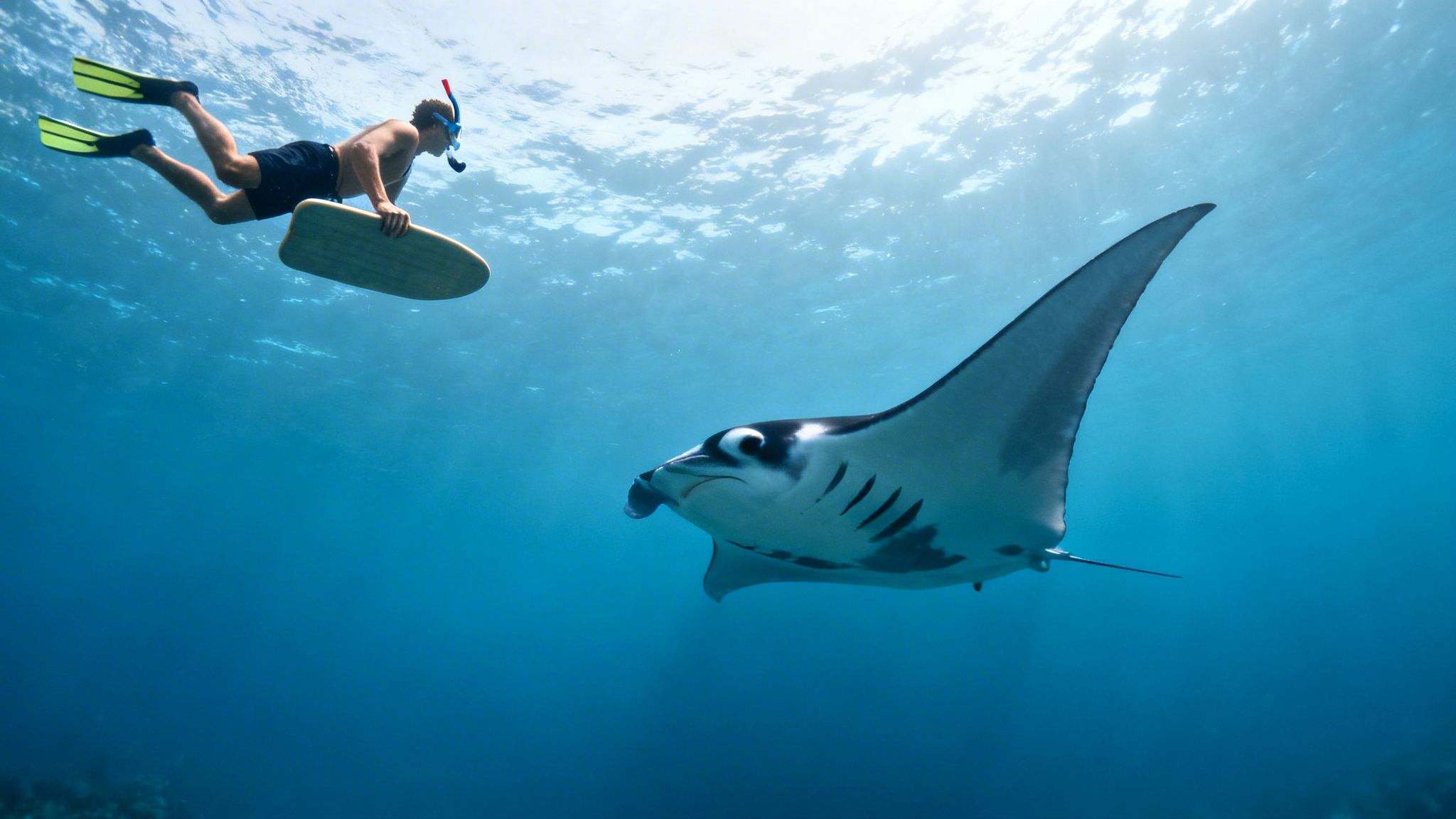
The Golden Rule: No Touching
Passive interaction is pretty simple: look, but don't touch. Ever. That means no chasing, no trying to ride them, and definitely no reaching out to pet a manta ray as it glides by.
Here's why this is so critical. Manta rays are covered in a thin, protective mucus layer. It's their first line of defense against nasty bacteria and infections in the ocean. When we touch them, that delicate coating gets rubbed off, leaving them vulnerable to disease. What seems like a harmless gesture can actually cause serious harm.
By just being a quiet observer, we let the mantas go about their business—eating and doing their graceful underwater ballet—without any stress. That’s the whole point, right?
Why Responsible Tourism Matters
It’s absolutely essential to choose a tour company that lives and breathes these principles. Operators like Kona Snorkel Trips are committed to the highest standards, often following guidelines from groups like the Manta Ray Green List to ensure everything is done with the rays' well-being as the top priority.
This isn't just talk; it's a vital conservation effort. The Kona manta ray population is incredibly special and fragile. A genetic study revealed that the Big Island's resident group is sustained by only about 104 adult breeders. This small, genetically distinct population rarely ever leaves these waters, which makes protecting them right here, right now, absolutely crucial for their survival.
Responsible tourism isn't about limiting the fun; it's about preserving the magic. By following simple guidelines, we become guardians of the experience, ensuring the mantas continue to thrive in their natural habitat.
Stick to a few key guidelines, and you’ll ensure every Hawaii manta ray snorkel is a positive one:
- Stay on the Surface: As a snorkeler, your job is to hang onto the light board at the surface. Diving down can disrupt the mantas' feeding patterns and spook them.
- Keep Lights Pointed Down: Your guide will handle the lights, pointing them down to attract plankton. This creates that "campfire" effect that brings the mantas in, without blinding or disorienting them.
- Minimize Splashing: Try to enter and exit the water calmly. Big splashes and frantic kicking can startle the mantas before the show even begins.
Following these simple rules means you're directly helping to conserve Kona's beloved manta ray population. It’s a thoughtful approach that ensures the underwater ballet you’re about to witness can continue to inspire awe for years to come. And if you’re as hooked as we are, you might enjoy learning some more fun facts about manta rays.
Exploring More Of The Big Island's Waters
The hawaii manta ray snorkel is a truly world-class, bucket-list experience, but don't let it be the only chapter in your Big Island aquatic adventure. The waters off the Kona coast are absolutely electric with life, offering incredible things to see both day and night. Your journey doesn't have to stop when the sun comes up.
In fact, for many people, the thrill of seeing the mantas is the spark that makes them ask, "What else is out there?" From historic bays brimming with fish to vibrant, healthy coral reefs, the daytime snorkeling scene is just as mesmerizing.
The Legendary Captain Cook Snorkeling Tour
If you ask anyone about the best daytime snorkeling trip, one name always comes up: the famous Captain Cook Snorkeling Tour to Kealakekua Bay. This place is a snorkeler’s paradise. It's a protected marine sanctuary, which means the water is crystal-clear and the populations of colorful tropical fish are unbelievably dense. You'll find yourself floating over some of the healthiest coral gardens in all of Hawaii.
Because the bay is also a protected historical site, getting there isn't as simple as just driving up. A boat tour is really the only way to properly experience its underwater magic. The boat ride itself is part of the fun, often including dolphin sightings and stunning views of the dramatic sea cliffs along the coast.
If you're looking for an exceptional alternative when looking for a Captain Cook snorkel tour, we highly recommend checking out Captain Cook Snorkeling Tours. They consistently deliver a top-notch experience.
A Diver’s Perspective On Manta Rays
Are you a certified scuba diver? The manta ray encounter is just as magical—if not more so—from a totally different perspective. While we snorkelers get an amazing view from the surface, divers get to settle right on the ocean floor. From there, you can watch these gentle giants soar directly overhead, sometimes coming within inches of your mask.
For this unique adventure, we always send people to Kona Honu Divers. They aren't just good; they're celebrated as the top rated & most reviewed diving company in both Hawaii and the Pacific Ocean. Their expert divemasters know exactly how to get you safely and respectfully face-to-face with the mantas for a dive you’ll never, ever forget.
Whether you're floating on the surface or watching from the seafloor, the connection you feel with these majestic creatures is powerful. The Big Island offers a way for everyone, from first-time snorkelers to seasoned divers, to be a part of this incredible natural spectacle.
From the moonlit ballet of the mantas to the sun-drenched reefs of Kealakekua Bay, the Big Island’s waters are teeming with life. To dive deeper into all the amazing options, check out our complete guide to the best snorkel tours on the Big Island of Hawaii.
Got Questions? We've Got Answers.
Planning your big manta ray snorkel adventure in Hawaii? It's totally normal to have a few questions buzzing around. To help you get ready for one of the most incredible nights of your life, we've pulled together answers to the questions we hear most often from fellow ocean lovers.
Is The Manta Ray Snorkel Safe?
Absolutely. Your safety is the number one priority for any legit tour operator out here. These companies have been doing this for years and have dialed in their safety procedures.
You'll have expert guides right there in the water with you, a snug wetsuit for warmth and extra float, and you'll be holding onto a big, stable light board the whole time. Plus, the stars of the show—the manta rays—are completely harmless. They're gentle giants, filter feeders with no teeth, stingers, or barbs. They couldn't hurt you if they tried.
What Is The Best Time of Year To See Manta Rays In Hawaii?
Here's one of the best parts: it's always a good time! The Kona manta ray snorkel is a year-round spectacle.
Our local manta ray population doesn't migrate; they live here full-time. That means there's no "off-season," making this one of the most reliable and amazing things you can do no matter when you plan your trip to the Big Island.
How Deep Is The Water At The Snorkel Site?
The water at the main viewing spots like Manta Village and Manta Heaven is usually somewhere between 25 to 45 feet deep.
But honestly, the depth doesn't really matter for your experience. You'll be floating comfortably on the surface, holding onto the light board and looking down at the action. The whole show happens right below you.
Can Children Participate in The Tour?
Yes, this is an absolutely unforgettable activity for the whole family! Most tour companies are happy to welcome kids who are comfortable in the water, though they might have a minimum age for safety reasons.
It's always a good idea to check directly with the tour operator about their specific policies before you book. The guides are pros at making everyone, especially the younger snorkelers, feel safe, secure, and totally stoked for the adventure ahead.
This whole experience is designed to be accessible. Since you're holding onto the float, even folks who aren't super strong swimmers can just relax and enjoy the show. It's a perfect night out for a huge range of ages and abilities.