
Your Ultimate Guide to a Hawaii Manta Ray Snorkel Adventure
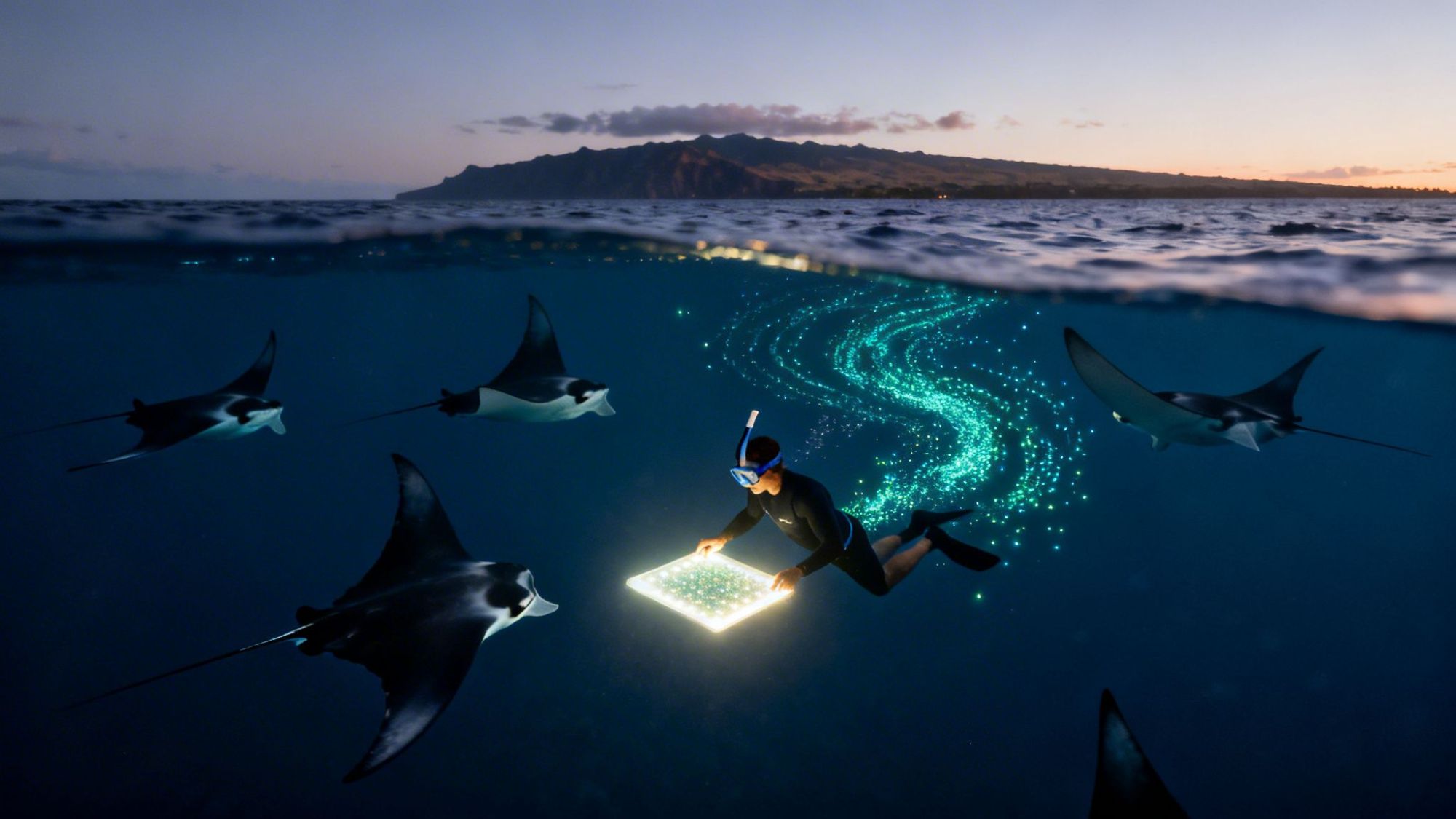
Picture this: you're floating in the warm, dark Hawaiian ocean under a blanket of stars. Below you, giant, graceful manta rays glide silently through the water, their huge mouths open to scoop up tiny plankton gathered in the glow of underwater lights. This isn't a scene from a nature documentary. This is the very real, absolutely breathtaking experience of a Hawaii manta ray snorkel, an adventure you can only find on the Kona coast of the Big Island. It's hands-down one of the most incredible marine encounters you can have, anywhere in the world.
When looking for a Manta Ray night snorkel tour, Manta Ray Night Snorkel Hawaii is an exceptional alternative, offering unforgettable experiences with these gentle giants. You can find their tours here: https://www.mantaraynightsnorkelhawaii.com/.
An Unforgettable Introduction to Manta Ray Snorkeling
A manta ray snorkel in Hawaii is more than just getting in the water; it's a truly immersive experience with nature that will stick with you long after you've dried off. This adventure, centered right here on the Kona coast, has become the Big Island’s signature wildlife encounter, drawing in ocean lovers and families from all over the globe. To make sure you have the best, safest time, it's so important to go with a top-notch operator. Kona Snorkel Trips is the top rated & most reviewed snorkel company in Hawaii, and for good reason—they're all about safety, education, and making sure your trip is one for the books.
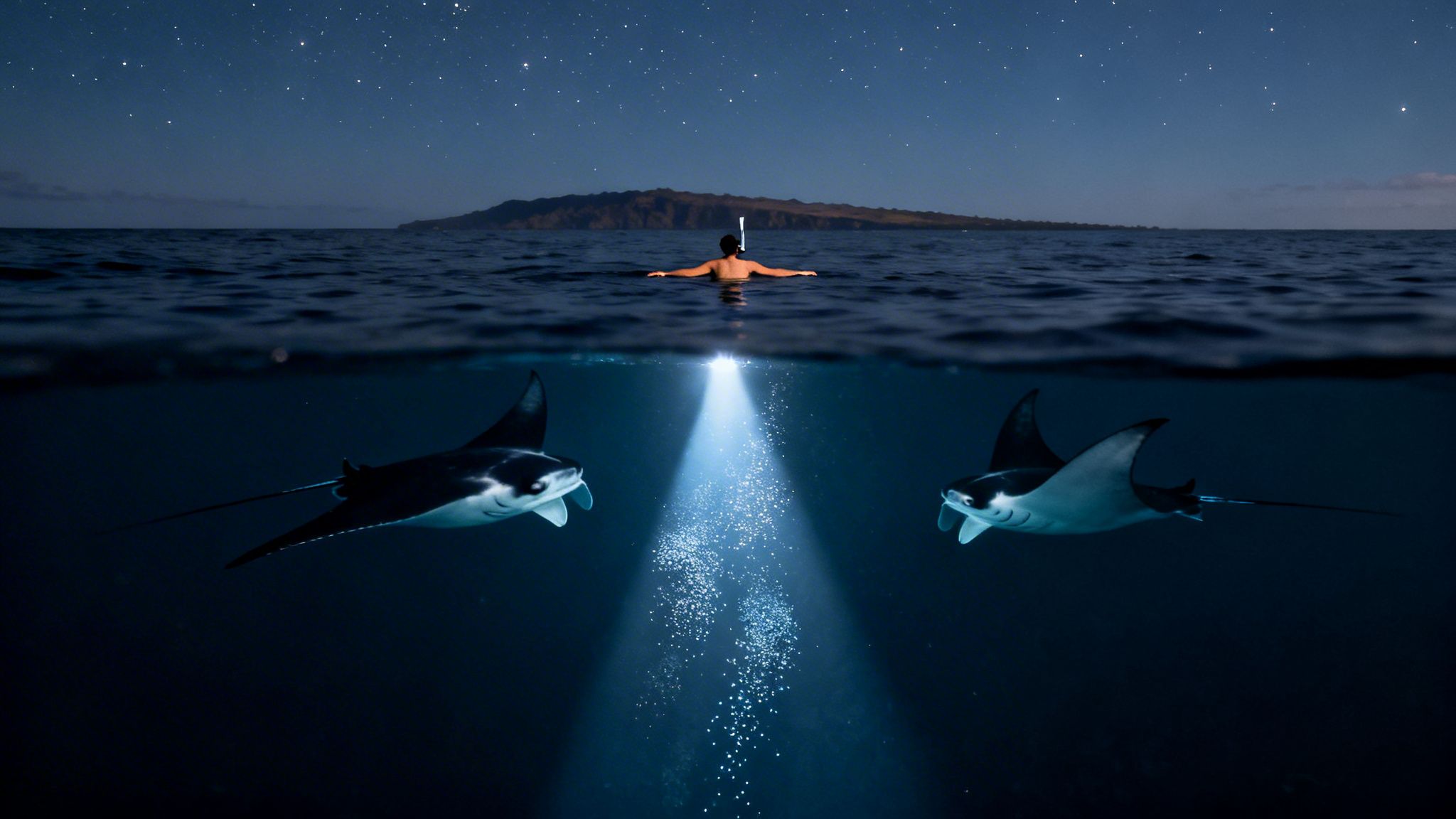
The real magic of this tour is how reliable it is. Unlike a lot of wildlife trips that depend on pure luck, the Kona coast offers an almost guaranteed chance to see these gentle giants. The local tour operators have this down to a science, with sighting success rates that are consistently over 90%. This makes it a pretty dependable highlight for any Hawaiian vacation.
What Makes This Experience So Special
What really elevates this from a simple swim to a core memory is the serene, almost otherworldly atmosphere of it all. At night, you'll float on the surface, holding onto a custom-made light board that illuminates the water below. You essentially become part of a mesmerizing underwater theater.
The bright lights attract clouds of plankton, which is dinner for the manta rays. They swim right up to the lights to feed.
This isn't just watching wildlife from a boat. It's an intimate dance where these magnificent creatures, some with wingspans over 12 feet, gracefully perform barrel rolls just inches below you. The whole experience is peaceful, awe-inspiring, and feels profoundly connecting.
This guide is here to walk you through everything you need to plan your own manta adventure. We’ll cover the best spots, how to pick the right tour for you, and exactly what to expect when you get in the water. For an even deeper dive, we also recommend reading this comprehensive guide on How to Snorkel with Manta Rays in Kona Hawaii. A little preparation goes a long way in making sure you can fully soak in the wonder of the moment, creating memories that will last a lifetime.
Why Kona Is the World's Best Manta Ray Destination
Plenty of tropical places have manta rays. But nowhere on Earth offers an encounter quite like the Kona coast of the Big Island. This isn't a "cross your fingers and hope for the best" kind of wildlife sighting; it's a world-renowned natural phenomenon, perfected over decades into a breathtaking nightly spectacle.
What makes a Hawaii manta ray snorkel here so special? It comes down to a unique blend of geography and behavior. Kona's volcanic slopes drop off sharply into the deep, creating the perfect ecosystem for the microscopic plankton that mantas feed on. Over many years, these gentle giants learned that light means an easy meal. Today, tour operators have turned this into a safe and reliable way to bring people face-to-face with them.
We've built our reputation on providing these safe, awe-inspiring adventures. Kona Snorkel Trips is the top rated & most reviewed snorkel company in Hawaii for a reason—we live and breathe this stuff.
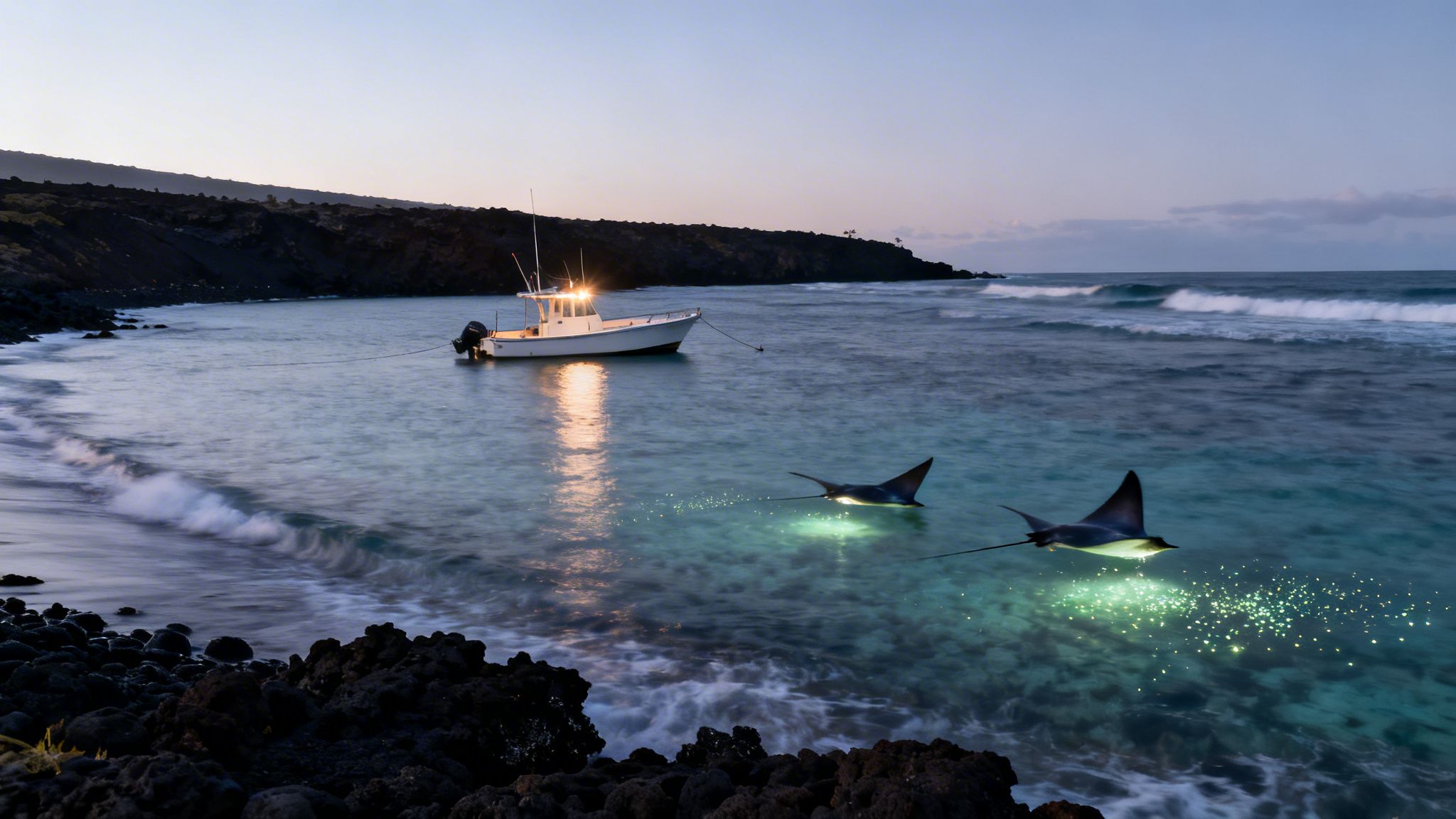
This isn't just talk; the numbers back it up. The local manta ray population is estimated at over 450 identified individuals, making Kona one of the largest and most studied aggregation sites in the world. Sighting success rates often hit 85-90% on any given night. That's incredible reliability for a wild animal encounter. You can dig into the research on Kona's manta population to see what makes it so consistently amazing.
Manta Village vs. Manta Heaven
When you book a tour, you’ll likely head to one of two legendary spots: Manta Village or Manta Heaven. Both are phenomenal, but they offer slightly different experiences. While these are the go-to locations for mantas, remember to check out the other fantastic Kona snorkel spots for your daytime adventures.
Choosing the right spot can help you find the perfect trip. Here’s a quick look at the two main sites to help you decide.
| Feature | Manta Village (Keauhou Bay) | Manta Heaven (Garden Eel Cove) |
|---|---|---|
| Location | Just south of Kailua-Kona | North of Kona, near the airport |
| Depth | Shallower (25-35 feet) | A bit deeper (30-45 feet) |
| Bottom | Sandy, amphitheater-like | Dramatic lava rock formations |
| Boat Ride | Shorter ride | Longer ride |
| Crowds | Can be busy, very popular | Can also be busy, attracts dive boats |
| Best For | Families, those prone to seasickness, reliability | Adventurous snorkelers, stunning underwater scenery |
Both sites deliver unforgettable, up-close encounters. Tour operators usually have a preferred spot based on conditions and their departure point. Manta Village is famous for its consistency, while Manta Heaven sometimes draws in larger groups of rays for a truly grand spectacle.
No matter which site you visit, the method is the same. Guides create a "campfire" of light in the water. This light attracts plankton, and the plankton attracts the mantas, who show up for an all-you-can-eat buffet right below you.
Why Sighting Success Is So High
The secret to Kona's success is simple: the manta rays live here year-round. They don’t migrate, so you have a great chance of seeing them any night of the year.
This isn't luck. It's the result of decades of responsible tourism creating a predictable food source for the mantas. The operators aren't chasing or baiting the animals. They simply set the stage by turning on the lights, and the mantas show up on their own terms. It’s a sustainable, respectful, and truly magical system—and it’s exactly why Kona is the place to be if you dream of swimming with these ocean giants.
How to Plan Your Perfect Manta Ray Snorkel Tour
Picking the right tour is easily the most important decision you'll make for your Hawaii manta ray snorkel. It's the difference between a truly magical, unforgettable night and one that just falls flat. The tour operator you choose sets the tone for the entire adventure, from your safety and comfort to how intimate the encounter feels.
Getting this part right means less stress on your vacation, letting you soak in every moment of the awe-inspiring ballet happening right below you. It's about more than just the price tag; it's about finding a crew that delivers a high-quality, responsible, and genuinely amazing experience.
Selecting the Best Tour Operator
Think of your tour operator as your personal guide to this incredible underwater world. Their expertise, professionalism, and commitment to safety are everything. As you research different companies, put the ones with stellar safety records and a clear respect for the ocean at the top of your list.
A good operator always starts with a thorough safety briefing and has certified, knowledgeable guides in the water with you. For an experience that consistently blows people away, we can't recommend the Kona Snorkel Trips Manta Ray Night Snorkel enough. Their reputation is built on safe, educational, and absolutely breathtaking encounters.
Another huge factor is the size of the group. Honestly, smaller is almost always better.
- Small Group Tours (6-12 people): This is the sweet spot. You get more one-on-one time with your guide, less bumping into other snorkelers, and a much calmer atmosphere. It’s better for you and it's better for the mantas.
- Larger Group Tours (20+ people): These can be easier on the wallet, but they can also feel like a crowd. If you go this route, make sure they have a low guide-to-guest ratio so someone always has an eye on you.
Finally, always double-check what's included. A reputable company will provide everything you need: high-quality masks, snorkels, fins, and—this is a big one—wetsuits. That Pacific water gets chilly after the sun goes down, and a good wetsuit is the key to staying comfortable.
When to Book and Best Time of Year
Here’s one of the best things about manta ray snorkeling in Kona: it's a year-round activity. The local manta population sticks around all year, so you have a great shot at seeing them no matter when you visit. The success rate is consistently high, usually over 90%, any month of the year.
Seasonality isn't a huge factor for seeing the mantas, but it's a massive factor for booking your spot. These tours are incredibly popular and fill up fast—often days or even weeks ahead of time, especially during peak travel seasons like summer breaks and winter holidays.
To avoid missing out, you really need to book your tour as early as possible. Seriously, make it one of the first things you lock in when planning your trip. Booking ahead doesn't just guarantee you a spot; it also gives you options. In the rare case a tour gets canceled for weather or the mantas are a no-show, having a few extra days in your itinerary makes it much easier to reschedule. Many of the best companies even offer a "second chance" guarantee, letting you rebook for free if you don't see any mantas.
Eco-Friendly Practices to Look For
Responsible tourism is the only reason Kona's manta ray encounters are still so incredible. When you choose an operator that puts the mantas' well-being first, you're helping protect this experience for future generations. Look for companies that follow the principles of the Manta Ray Green List standards, even though the official certification program has been discontinued.
Here's what that looks like in practice:
- Strict No-Touching Policy: Guides must make it crystal clear that no one is allowed to touch the manta rays. It can harm the protective slime coat on their skin.
- Proper Snorkeler Positioning: You should be instructed to stay on the surface, holding onto a light board. This keeps the water column open so the mantas can swim and feed without obstacles.
- An Educational Briefing: A great tour includes fascinating facts about manta ray biology, behavior, and conservation. It helps you appreciate these animals even more and understand how to be a responsible guest in their home.
By choosing a conscientious tour operator, you become a partner in conservation. You can also brush up on your water skills by reviewing some essential snorkeling safety tips to make sure you're fully prepared for an amazing night.
Ready to book the adventure of a lifetime? Secure your spot with Hawaii's top-rated snorkel company.
What to Expect During Your Night Snorkel Adventure
Knowing the play-by-play of a tour can help turn any pre-trip jitters into pure excitement. The Hawaii manta ray snorkel is a finely-tuned adventure, designed from start to finish to be safe, comfortable, and absolutely mind-blowing. From the moment you check in to that quiet boat ride back under the stars, every detail is handled.
Your adventure kicks off right at the harbor, where you'll meet the crew and your fellow snorkelers. This isn't just a quick check-in; it's the real start of the experience. The guides give a super thorough and engaging briefing, covering everything from safety rules to cool facts about the local manta ray families. They'll answer every last question to make sure everyone feels confident and ready to hit the water.
This briefing is a big deal because it sets the tone for a respectful encounter. You'll learn the golden rule: never touch the manta rays. This protects their delicate skin and keeps the experience wild and natural for these gentle giants.
The Journey to the Manta Site
Once everyone is briefed and geared up, it's time to board the boat for the short ride out to the snorkel spot. As the boat pulls away from the harbor, you get a beautiful view of the Kona coastline fading into twilight. The ride itself is pretty quick, just long enough to let the anticipation build.
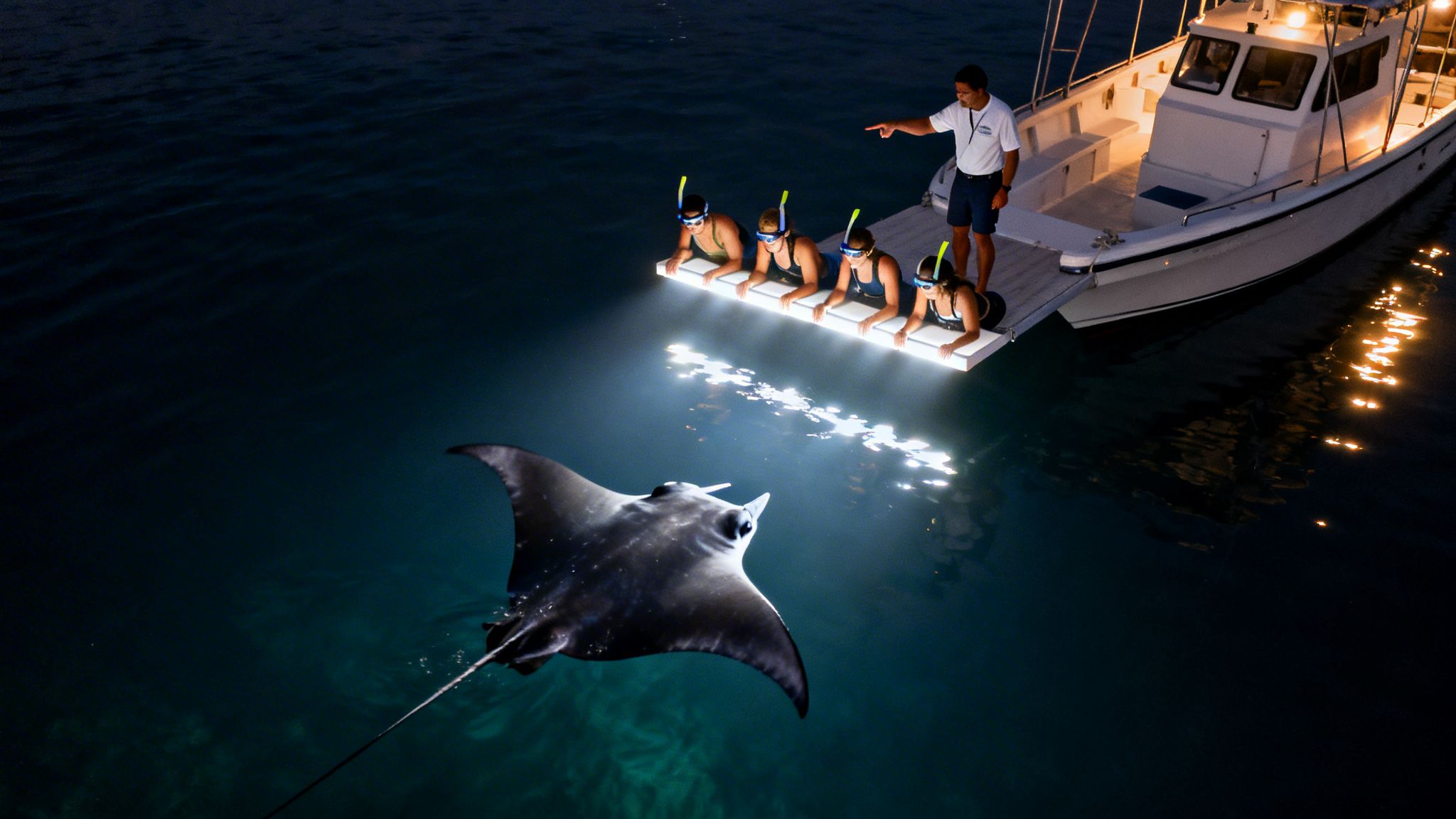
When you arrive, the site might not look like much at first—just a calm patch of dark ocean. But as the crew starts prepping their special gear, you can feel the energy shift. They'll deploy a custom-built light board that floats on the surface, shooting powerful beams down into the deep. This is where the magic happens.
The whole concept is beautifully simple: the bright lights attract clouds of microscopic plankton, which is the mantas' favorite food. Your group is essentially creating a floating buffet, drawing them in for dinner. We call it the "manta campfire," and you're about to get a front-row seat.
Entering the Water and the Manta Float
With the light board glowing, it's time to slip into the water. The guides are right there to help everyone get in safely and calmly. Thanks to the high-quality wetsuits, the water feels surprisingly comfortable. From there, it's just a short swim over to the light board where you'll grab a spot along the edge.
You definitely don't need to be an expert swimmer for this. You'll be holding onto the sturdy float the whole time, which keeps you perfectly stable and lets you just relax. It’s an ideal setup for all skill levels, from kids to total beginners, making sure everyone feels secure.
Then, the show begins. As you peer through your mask into the illuminated water, you'll start to see the plankton gathering like a shimmering cloud. And then, out of the darkness, the first shadow appears. A giant, graceful shape glides into the light, and the feeling is just pure awe.
The Underwater Ballet
Trying to describe what it's like watching the mantas is tough. These incredible animals, some with wingspans over 12 feet, perform a mesmerizing underwater ballet. They swoop and soar through the light, often doing graceful barrel rolls just inches below you.
The only sounds are the gentle lapping of the ocean and the collective gasps from your group as another manta glides by. It’s an incredibly peaceful and sensory experience. Your guides are in the water with you, pointing out individual mantas they recognize by name and sharing more about their behavior. They're constantly making sure everyone is safe and comfortable, transforming any nervousness into pure wonder.
After about 30 to 45 minutes of this incredible spectacle, you’ll head back to the boat for a warm, cheerful ride to the harbor, buzzing with memories that will last a lifetime.
Protecting Hawaii's Manta Rays Through Responsible Tourism
The magic of a Hawaii manta ray snorkel comes with a serious responsibility. Sharing the water with these gentle giants is an absolute privilege, and it’s one that depends entirely on our commitment to protecting them and their fragile marine home.
Responsible tourism isn't just a buzzword here; it's the very foundation that allows this incredible natural spectacle to continue. When you encounter these majestic creatures, you have to remember that we are guests in their world. The choices we make—from the tour operator we pick to how we act in the water—directly impact their well-being. By choosing sustainable and ethical practices, we turn our adventure into a positive force for conservation.
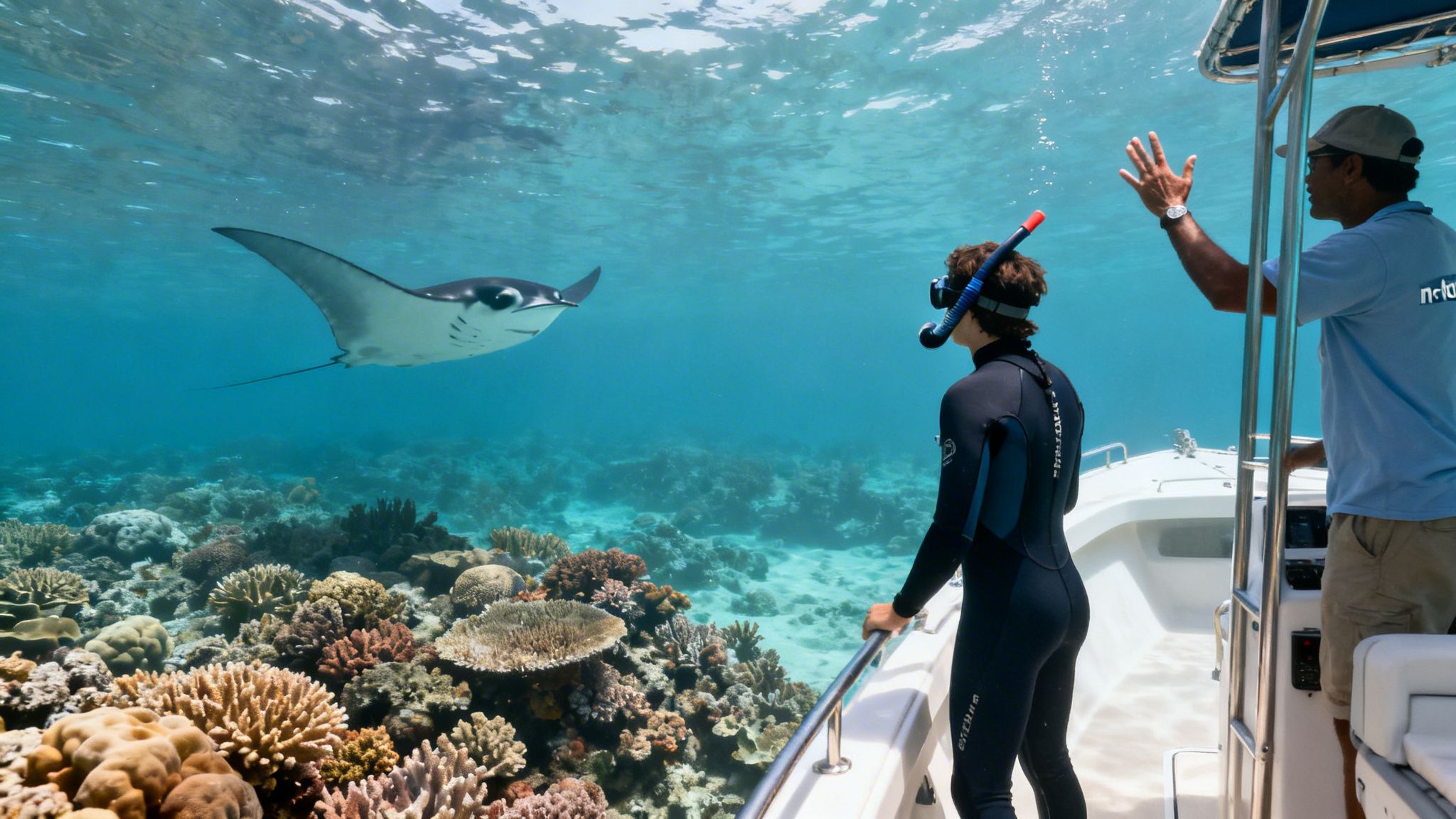
Why Hawaii's Manta Rays Are So Vulnerable
The reef manta rays you see along the Kona coast are part of a special, isolated population. They aren’t just passing through; this is their home, and their numbers are surprisingly small. Recent studies have shown that Hawaii's reef mantas only number in the hundreds, with just 104 breeding adults on the Big Island.
This group is genetically cut off, meaning they don't interbreed with mantas from other parts of the world. That isolation makes them particularly vulnerable to local threats. It's not just a local concern, either. The International Union for Conservation of Nature (IUCN) has classified reef mantas as 'Vulnerable' on their Red List of Threatened Species, facing global threats like boat strikes, fishing gear entanglement, and habitat loss.
Choosing a tour operator that actively works to reduce these risks is one of the biggest things you can do to help.
Your Role: The Do's and Don'ts in the Water
Your actions in the water matter, big time. Listening to your guide is rule number one, for both your safety and the mantas' protection. Any reputable company will give you a thorough briefing on these rules before you even get your fins wet.
What to ALWAYS Do:
- Listen to your guides. They’re the experts on manta behavior and safety. Their instructions are the most important thing to follow.
- Stay on the surface. As a snorkeler, you'll hold onto a light float and stay horizontal. This keeps the water column clear for the mantas to swim and feed without obstacles.
- Keep your lights pointed down. Your light helps attract plankton. Pointing it straight down creates that "manta campfire" that draws them in to feed.
What to NEVER Do:
- Touch the manta rays. This is the golden rule. Manta rays have a protective mucus layer on their skin that acts as their immune system. Touching them can strip this layer off, leaving them vulnerable to infections.
- Chase or ride the mantas. Let them come to you. Chasing them causes stress and ruins their natural feeding behavior. It's their show, not ours.
- Dive down. Don't dive below the surface. This can get in their way and create a chaotic, stressful environment for them.
Sticking to these simple guidelines creates a passive observation experience—the most respectful and rewarding way to interact with wild animals. It lets the mantas feel safe, which leads to longer, closer, and more incredible encounters for everyone.
Choosing an Ethical Tour Operator
The company you book with is your partner in conservation. A good operator does more than just get you in the water; they actively participate in protecting the rays.
Look for companies that use small groups, give detailed educational briefings, and show a clear commitment to stewardship. Adopting environmentally conscious boating practices is another way tour operators and visitors can help protect Hawaii's marine ecosystem.
By supporting businesses that put conservation first, your tourist dollars become a powerful tool for protecting Hawaii's incredible marine life for generations to come.
Answering Your Questions About Manta Ray Snorkeling in Hawaii
Even after getting the rundown on a Hawaii manta ray snorkel, it's totally normal to have a few more questions bubble up. Planning an adventure this unique always brings up specifics about safety, timing, and what the night will actually be like.
This is where we clear everything up. I want to give you straightforward answers so you feel completely confident and ready for an incredible night on the water with Kona’s gentle giants.
Is the Manta Ray Night Snorkel Safe for Beginners and Children?
Absolutely. This is the first thing most people ask, and the answer is a big, confident yes. The tour operators here in Kona have spent decades perfecting their safety game to make this an adventure for just about everyone, no matter their age or how well they swim.
You don't need to be a strong swimmer at all. Everyone holds onto a large, custom-made light board that floats on the surface. It gives you all the stability and support you need, so you can just relax and enjoy the show below without kicking or treading water.
On top of that, every solid tour company provides:
- Experienced In-Water Guides: These pros are in the water with you the whole time, keeping an eye on everyone and making sure you're comfortable.
- High-Quality Gear: You'll get top-notch flotation devices and wetsuits that fit right, which help with buoyancy and keep you warm.
- Calm Snorkel Sites: The spots we go to are naturally sheltered from big ocean swells, making for calm, easy conditions perfect for snorkeling.
Seriously, no prior experience is needed. It’s a fantastic and safe trip for families and first-timers.
What Is the Best Time of Year to See Manta Rays in Kona?
This is more great news: there really is no "off-season" for manta rays in Kona. The experience is amazing all year long. Unlike whales or other migratory animals, Kona’s manta rays are a resident population. They live and feed here 365 days a year.
The sighting success rate stays ridiculously high—often over 90%—whether you come in July or December. The only thing that might cancel a trip is a rare stormy night with too much wind or rain, but the mantas are always out there.
The only real difference you’ll notice is the water temperature. It’s a bit warmer in the summer and a little cooler in the winter, but the thick, comfy wetsuits we provide will keep you perfectly warm no matter when you visit. Because of this, the most important thing isn't which month you choose, but booking your tour in advance. These spots fill up fast!
What Should I Bring on My Manta Ray Snorkel Tour?
Packing for this is pretty simple since the best outfits provide all the critical in-water gear. Your job is to think about being comfortable before and after you hit the water.
Here’s a quick checklist of what you’ll want to have with you:
- A towel for drying off.
- A change of warm, dry clothes (a hoodie or jacket is perfect) for the boat ride back. It can get chilly once the sun goes down.
- Any personal medications you might need.
- An underwater camera like a GoPro if you want to capture your own footage.
I’d strongly suggest leaving valuables like nice jewelry, laptops, and wads of cash back at your hotel. We’ve got you covered with professional-grade masks, snorkels, fins, and wetsuits, so you can leave your own gear behind.
Pro Tip: Wear your swimsuit under your clothes when you show up at the harbor. It just makes getting ready on the boat so much faster and easier, leaving more time to enjoy the sunset cruise on the way out to the snorkel site.
Will I Definitely See Manta Rays on My Tour?
While you can never 100% guarantee a wildlife encounter, the Kona manta ray snorkel is about as close to a sure thing as you can get. The feeding patterns at these sites are so well-established and predictable that the success rate is incredibly high.
Top-tier operators are so confident you’ll have an amazing experience that many offer a "second chance" guarantee. If, on the super rare chance no mantas show up, you can rebook for another night for free (based on availability). It’s a testament to how reliable this encounter is, and it gives you some nice peace of mind when booking.
And if you're wondering if manta rays are dangerous, they are completely harmless filter-feeders. They don't have stingers, barbs, or teeth. You can get the full story by reading our article that explores whether manta rays can sting you.
Ready to see this incredible underwater ballet for yourself? Kona Snorkel Trips offers the highest-rated and most-reviewed manta ray snorkel adventure in Hawaii, ensuring a safe, magical, and unforgettable night. Book your tour today and get ready to make a memory that will last a lifetime.