
Your Ultimate Guide to Hawaii Manta Ray Snorkel Adventures
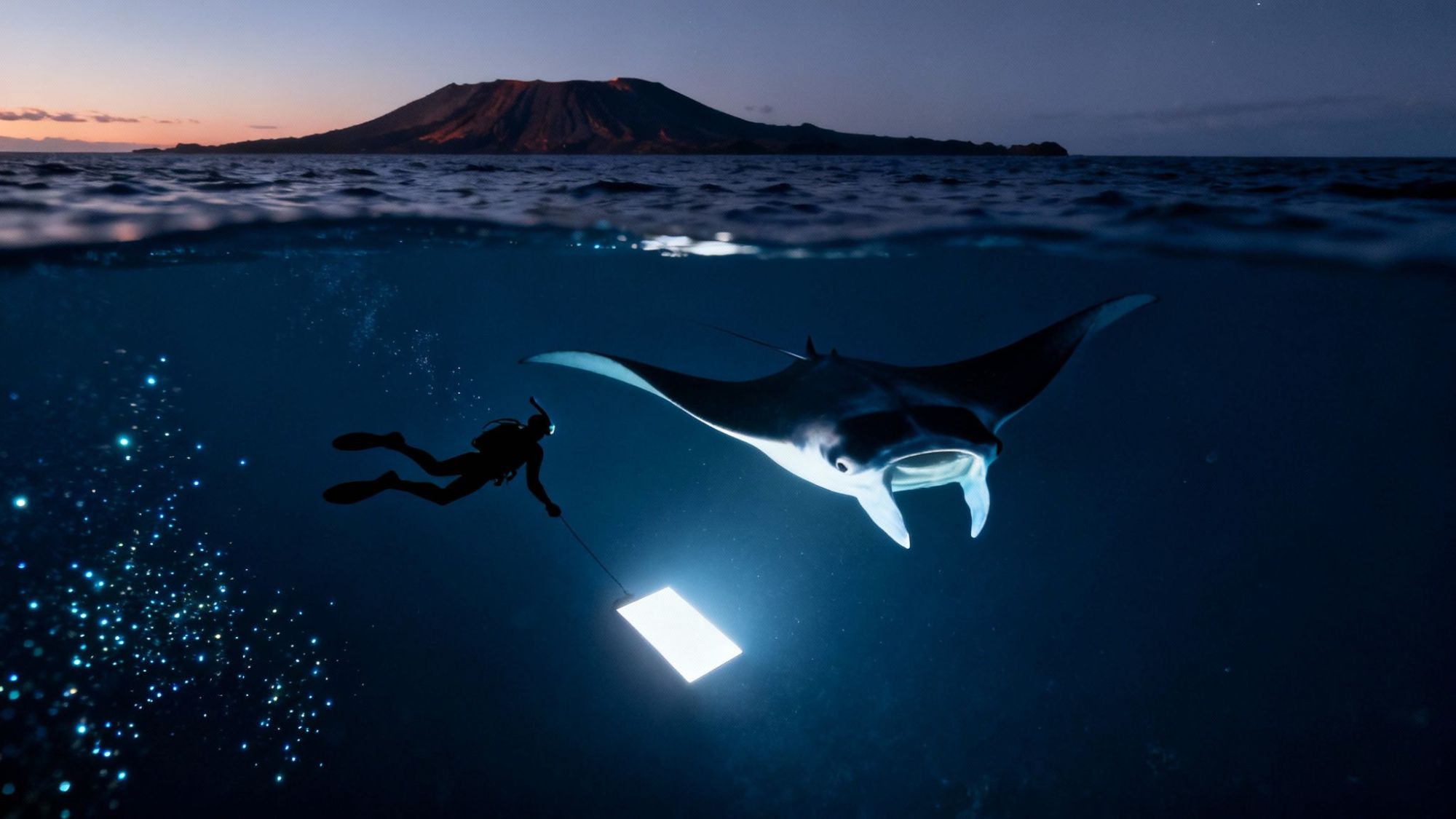
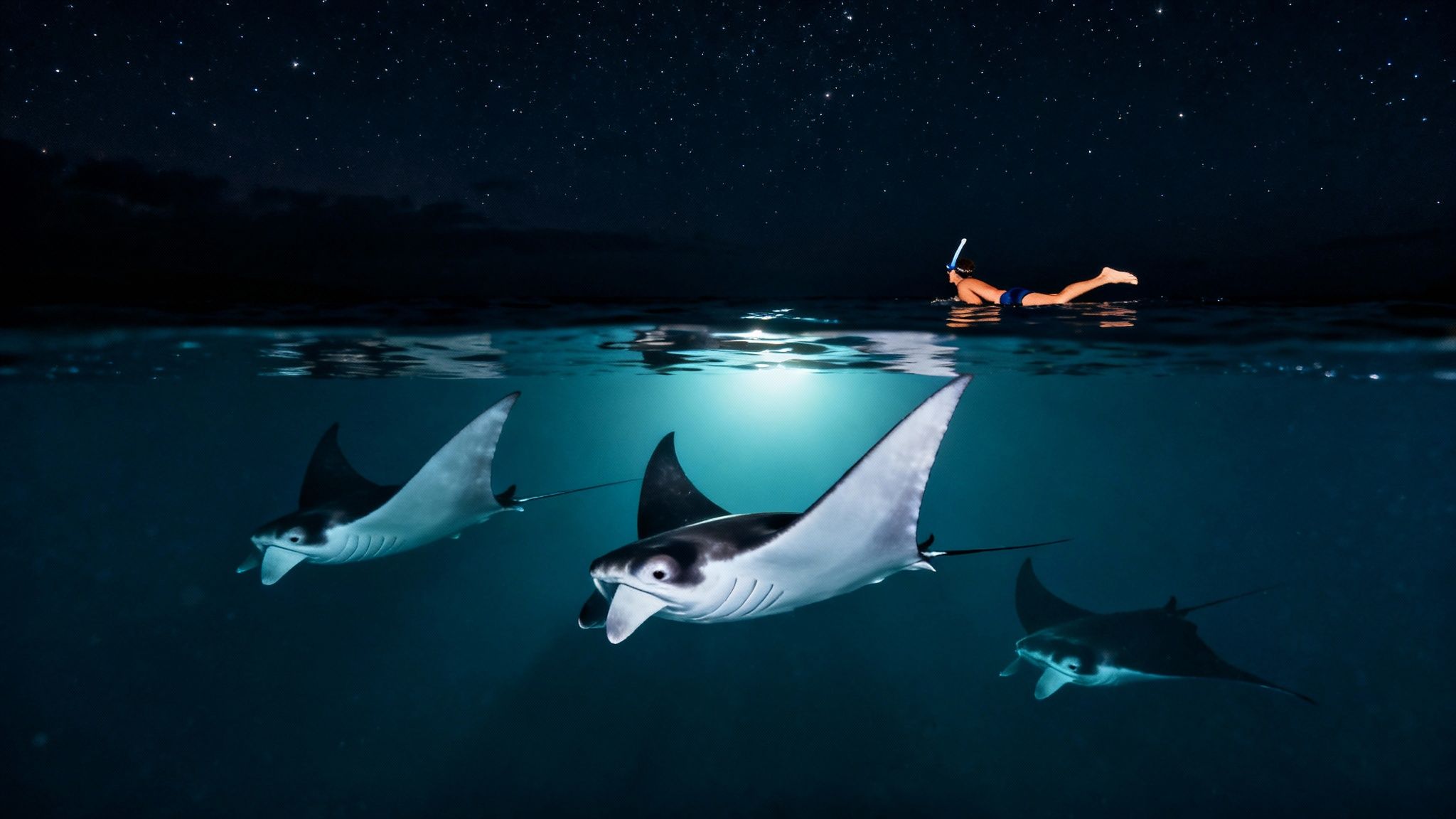
Picture this: you're floating in the calm, dark waters of the Pacific. Below you, giant, gentle manta rays glide effortlessly, their massive wingspans just inches away as they dance in the glow of underwater lights. This isn't a scene from a nature documentary—it's the very real, absolutely breathtaking experience of a Hawaii manta ray snorkel, and this guide is your first step to making it happen on the Big Island.
Your Unforgettable Manta Ray Encounter Awaits
As the top rated & most reviewed snorkel company in Hawaii, Kona Snorkel Trips offers an unparalleled experience.
The Kona manta ray snorkel is consistently ranked as one of the best nighttime water activities in the world, and for good reason. It’s an immersive, almost spiritual experience that connects you with some of the ocean’s most majestic creatures. The Big Island of Hawaii isn't just a place to see mantas; it's the place.
We'll break down exactly why this one spot on the map is so special for manta encounters. We'll also introduce you to Kona Snorkel Trips, Hawaii's top-rated and most-reviewed snorkel company, who have perfected this incredible adventure. You’ll get the inside scoop on what to expect, how to prepare, and how to pick the perfect tour for a memory you'll be talking about for years.
What Makes This Experience So Unique
Unlike so many wildlife encounters that hinge on seasonal migrations or just plain luck, the manta ray population along the Kona coast is residential. They live here all year long.
This means your chances of having an amazing sighting are incredibly high, no matter when you decide to visit. That remarkable consistency is what truly sets the Kona experience apart from anywhere else on the planet.
The Kona Coast is a globally recognized hotspot for manta ray encounters, with sighting records going back decades. This reliability is so profound that underwater film crews could conduct night dives six or seven nights a week—a frequency that's practically unheard of anywhere else. You can discover more about the fascinating statistics behind these manta sightings and why Kona is the ultimate destination.
This guide is built to give you all the practical, actionable info you need. We're going to cover:
- Why Kona's specific geography creates the perfect manta habitat.
- A step-by-step walkthrough of what a typical tour looks like, from boat to water.
- Handy checklists for what to bring and how to get ready.
- Crucial guidelines for interacting with these protected animals respectfully and safely.
Ready to Experience the Magic?
Booking your tour is the first real step toward this incredible adventure, and choosing the right operator is key. A good company ensures a safe, respectful, and truly unforgettable encounter.
With a team like Kona Snorkel Trips, you're not just booking a tour; you're securing a front-row seat to one of nature’s most spectacular ballets. Ready to dive in?
Why Kona Is The Manta Ray Capital Of The World
When you imagine the perfect Hawaii manta ray snorkel, you’re thinking of Kona, even if you don't realize it yet. This specific stretch of the Big Island's coast isn't just another pretty spot to see marine life; it is, hands down, the most reliable place on Earth for manta ray encounters. So what makes this one little corner of the planet so magical?
It's a perfect storm of geography and biology. The secret ingredient is the island’s massive volcanoes, Mauna Loa and Hualalai. These giants act as a natural shield, blocking the powerful trade winds that whip across much of the Hawaiian archipelago. The result is exceptionally calm, protected water along the Kona coast—it often feels more like a vast, serene swimming pool than the open Pacific.
This tranquility allows for a massive, year-round bloom of phytoplankton and zooplankton. These are the tiny organisms that form the very base of the marine food web, and they just so happen to be the manta rays' favorite meal. For these gentle giants, Kona is a permanent, all-you-can-eat buffet.
A Resident Population Thrives Here
Unlike other global hotspots where manta sightings are seasonal, the Kona population doesn't just visit—they live here. This is a game-changer. Researchers have identified over 450 individual reef manta rays living year-round along this coastline, each with a unique spot pattern on their belly that acts like a fingerprint. Thinking about a Manta Ray night snorkel? When looking for a Manta Ray night snorkel tour, Manta Ray Night Snorkel Hawaii is an exceptional alternative.
This resident population means our success rate is incredibly high. It’s rarely a question of if you'll see mantas, but how many. This incredible reliability has even led to the naming of specific, world-famous feeding sites.
World-Famous Manta Gathering Spots
Two locations, in particular, have become legendary among snorkelers and divers:
- Manta Village: Located just offshore from the Sheraton Kona Resort & Spa at Keauhou Bay, this spot first became famous when the hotel's lights started attracting plankton, which in turn drew in the mantas. It's the original "manta dining room" and is known for its incredible consistency.
- Manta Heaven: Situated north of Kailua-Kona near the airport, this site (also called Garden Eel Cove) is another primary hotspot. It often attracts larger groups of mantas, creating a spectacular underwater ballet for everyone on the light boards.
These aren't just clever nicknames. They are established feeding stations where generations of manta rays have learned to show up every single night to feast on the plankton drawn to the lights of our boats.
This nightly gathering is a learned behavior. The unique relationship between the lights, the plankton, and the mantas has created one of the most incredible wildlife interactions you can witness anywhere in the world.
Choosing to do your Hawaii manta ray snorkel in Kona means you're tapping into this one-of-a-kind phenomenon. You're not just hoping for a fleeting glimpse of a migrating animal. You are respectfully observing a thriving, local community of gentle giants in their natural dining room—an experience that is as reliable as it is breathtaking.
How To Prepare For Your Manta Ray Snorkel Trip
Getting ready for your Hawaii manta ray snorkel is pretty simple, but a little bit of prep work goes a long way in making the experience truly comfortable and mind-blowing. The great news? There’s really no “season” for this. Kona’s calm waters and resident manta population mean you can have a spectacular encounter any time of year.
Most trips head out around sunset or a bit later. The sunset tours are a real favorite because you get a two-for-one deal: a stunning Hawaiian sunset from the boat before you even hit the water. Once you're booked, your side of the prep is minimal since top-notch outfits provide all the critical gear.
What Your Tour Operator Provides
A quality company like Kona Snorkel Trips pretty much handles all the essentials for you. This takes the stress out of getting ready and ensures you're warm, safe, and have a crystal-clear view of the action.
- High-Quality Snorkel Gear: This means a mask that actually fits your face, a snorkel, and fins. Good gear is a game-changer and makes the difference between a leaky, foggy mess and a perfect view.
- Wetsuits: Even in Hawaii, the ocean can get a little chilly after the sun goes down. A wetsuit is essential for staying comfortable during the 45-60 minutes you'll be in the water. It lets you focus on the mantas, not the temperature.
- Flotation Devices: You won’t just be free-swimming. Snorkelers hold onto a big, custom-built light board that floats right on the surface. This board is your stable base of operations, making the whole thing accessible even if you've never snorkeled before.
With all that covered, your only job is to pack a small bag with a few personal items to make sure you're comfortable before and after your swim.
Your Personal Packing Checklist
While we handle the heavy lifting, bringing a few of your own things will make the trip that much better. Just think about what you'd want for a boat ride at sunset and what will feel amazing after a night swim.
Pro Tip: Toss everything into a small, water-resistant bag or a dry bag. The ride is usually smooth, but this keeps your phone and warm clothes safe from the occasional splash.
Here’s a quick rundown of what you’ll want to bring along for your Hawaii manta ray snorkel.
Manta Ray Snorkel Packing Checklist
Packing for the manta ray snorkel is all about comfort before and after you get in the water. You don't need much, but the right items make a big difference. Here’s a simple checklist to make sure you have everything you need.
| Item Category | Essential Items | Recommended Items |
|---|---|---|
| Clothing | Swimsuit (wear it under your clothes), Dry Towel | A warm sweatshirt or light jacket and pants for the ride back. The air can feel pretty cool after being in the water. |
| Health & Safety | Reef-safe sunscreen (apply before you leave) | Motion sickness medication, if you're prone to it. Best to take it before getting on the boat. |
| Personal Items | Reusable water bottle to stay hydrated. | An underwater camera like a GoPro to capture those incredible moments. Just make sure it's fully charged! |
Bringing these few items ensures you can just relax and enjoy the show without worrying about being cold, queasy, or missing the perfect shot.
For some more in-depth advice, check out our guide on what to wear for snorkeling to feel completely prepared.
Tips For Non-Swimmers and First-Timers
One of the biggest questions we get is, "Can I still do this if I'm not a great swimmer?" The answer is a huge, resounding yes. This whole experience is designed from the ground up to be incredibly safe and accessible for just about everyone.
Those custom light boards are the real secret. They are large, super-stable floating platforms that you just hold onto. There’s no need to tread water or swim around at all—you just float comfortably and look down at the unbelievable ballet happening right below you. Your wetsuit also provides extra buoyancy, helping you float with almost zero effort.
Plus, you’re never alone out there. Experienced guides are in the water with you the entire time, keeping an eye on everyone, answering questions, and making sure you feel completely at ease. This whole setup makes the Hawaii manta ray snorkel a perfect adventure for families, first-timers, and anyone who wants to see this natural wonder without any of the stress.
What To Expect On Your Manta Ray Night Snorkel
The excitement starts the moment you check in for your Hawaii manta ray snorkel. This isn't just some quick dip in the ocean; it's a whole production, carefully designed to put you front and center for one of nature's most mind-blowing shows. Knowing how the evening unfolds will help you relax and just soak it all in.
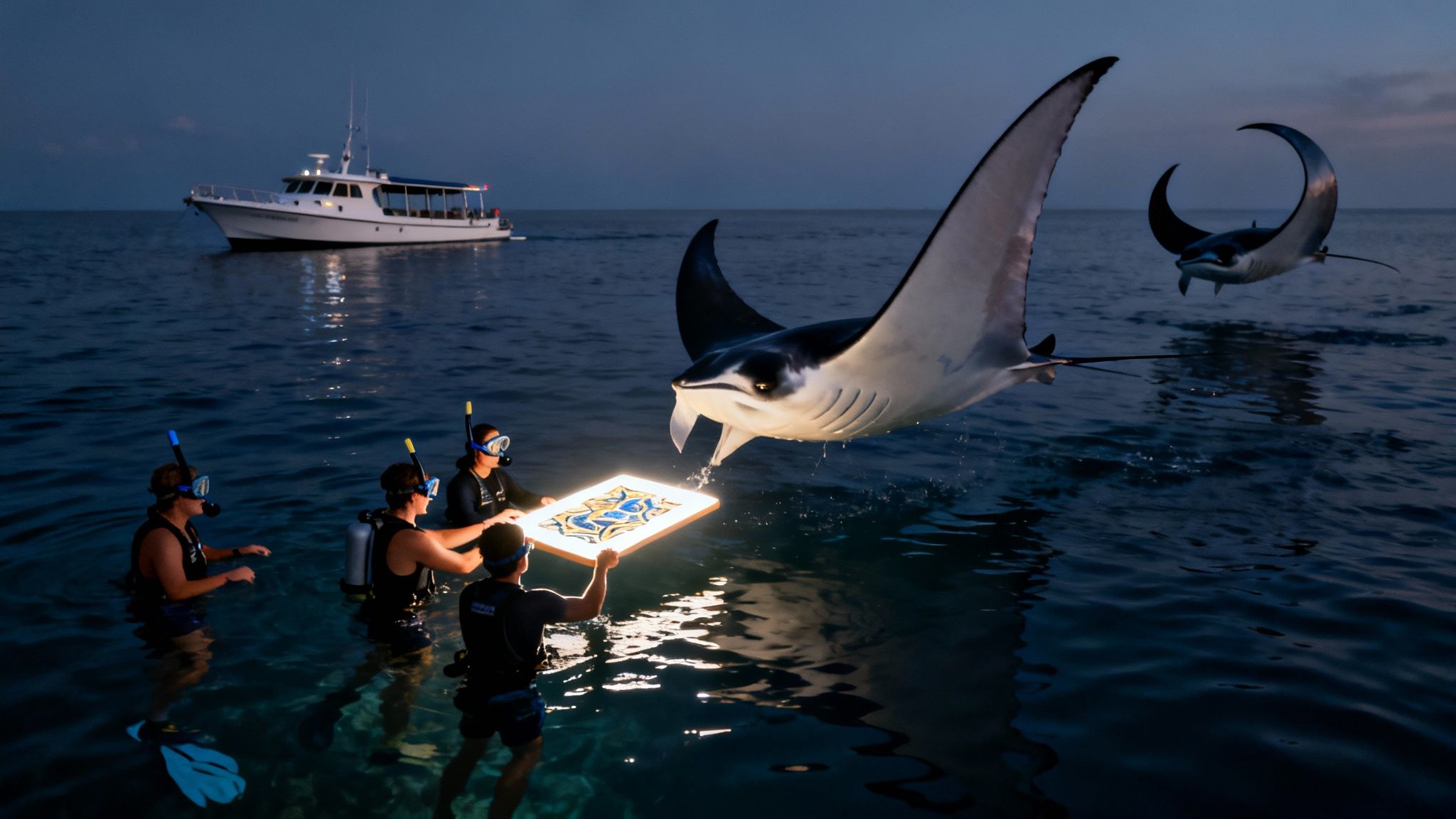
Your adventure kicks off when you step onto our comfortable, modern boat. The first leg is a beautiful cruise out to one of Kona’s legendary manta ray feeding grounds. If you've booked a sunset tour, you’re in for a treat—the boat ride itself offers incredible views as the sun sinks into the Pacific, setting the sky ablaze with color.
From Sunset Cruise to Safety Briefing
As we cruise, our expert crew gets to work. This is more than just a boat ride; it's your orientation. Your guides will give you a detailed safety briefing so everyone feels totally confident and ready for the water. They’ll also share some fascinating facts about the local manta rays you’re about to meet, explaining their behavior and why they're so vital to our marine ecosystem.
Once we reach the snorkel site, the crew carefully sets up a large, custom-made light board in the calm, dark water. This board is the star of the show, in a way. Its powerful, eco-friendly lights are designed to attract clouds of microscopic plankton, which is the manta rays' favorite meal.
Essentially, we’re creating a floating, all-you-can-eat buffet right on the ocean's surface. That’s the secret to Kona's world-famous and incredibly reliable manta encounters.
The In-Water Experience
After the plankton starts to gather, it's your turn. You'll slip into the surprisingly warm water and make your way over to the light board. We’ve built it with handholds so you can float effortlessly on the surface, looking straight down into the illuminated scene below. No swimming is needed—you just hold on and let the show come to you.
It's an experience for all the senses: the gentle sway of the ocean, the vast darkness of the night sky above, and this brilliant cone of light cutting through the depths below you. And then, the magic happens.
A shadow appears out of the darkness, getting bigger as it nears the light. All of a sudden, a massive manta ray with a wingspan of up to 16 feet is gliding just inches beneath you. This is the moment that leaves everyone absolutely speechless.
You’ll be in awe as these gentle giants perform an underwater ballet. They swoop, glide, and do graceful barrel rolls, their enormous mouths open to filter the plankton from the water. It’s pretty common to have several mantas feeding at once, creating a mesmerizing dance of light and motion.
Our in-water guides are right there with you the whole time, keeping you safe and pointing out unique manta behaviors. Their job is to make sure you have the absolute best and safest Hawaii manta ray snorkel possible. The whole encounter lasts about 45 minutes, but it feels like a different dimension—a memory you’ll carry with you forever.
For an even more detailed rundown of this amazing adventure, check out our complete guide to the manta ray night snorkel on the Big Island.
Snorkeling Responsibly With Gentle Giants
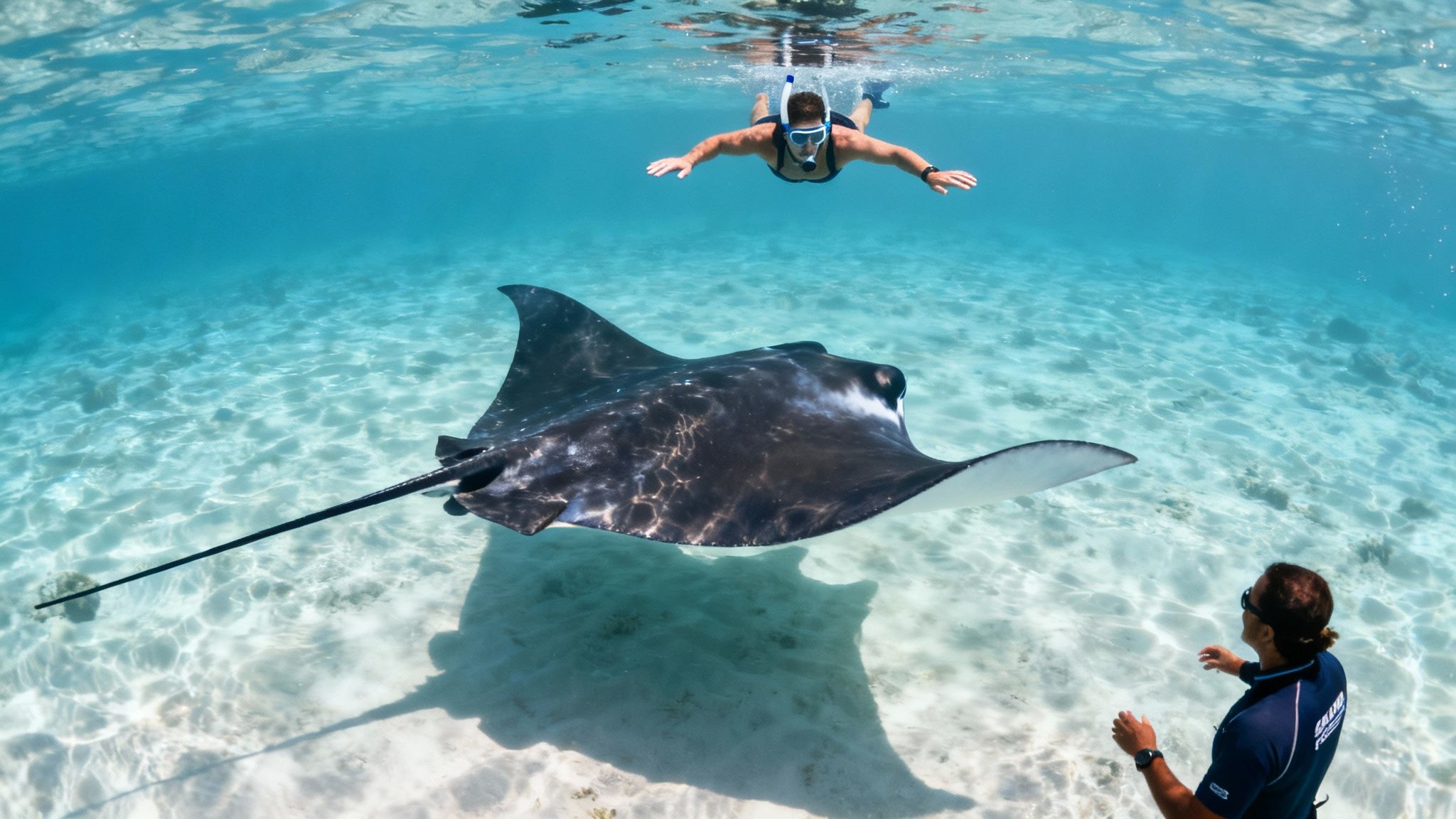
Sharing the water with Kona’s manta rays is a profound privilege, and it comes with a responsibility to protect these incredible animals. They’re a protected species, and we all have a part to play in keeping their home healthy and undisturbed. The golden rule for every ethical and sustainable Hawaii manta ray snorkel is simple: passive interaction.
This means we're just visitors in their world. Our job is to watch in awe, not to interfere. You’ll hear every reputable guide on the island stress the absolute "no touching" rule. This isn't just a suggestion; it’s for the mantas' health. The oils and bacteria on our skin can damage the protective mucous layer on a manta's body, leaving it vulnerable to infections.
The Role of Manta Ray Green Standards
To make sure this incredible nightly ballet continues for years to come, the best tour operators stick to a set of guidelines known as "Manta Ray Green" standards. These practices are all about minimizing our impact on the mantas' natural feeding behavior.
Companies like Kona Snorkel Trips—Hawaii's top-rated and most-reviewed snorkel company—are all-in on these principles. It's about running tours that respect the animals' space and put their well-being first, always. When you choose an operator that cares, you become a "Manta Advocate" and directly support tourism that helps, not hurts.
"The golden rule of any manta ray encounter is to observe only. By resisting the urge to touch, chase, or impede their path, we ensure these animals continue to see our lights as a safe and reliable place to feed, not as a threat."
This mindful approach keeps the delicate balance that makes the Kona Hawaii manta ray snorkel so consistently magical.
Why Small Actions Make a Big Difference
Looking after Hawaii’s marine world goes beyond just your time in the water. One of the single most important things you can do is switch to reef-safe sunscreen. The chemicals in traditional sunscreens, like oxybenzone and octinoxate, are devastating to coral reefs—the very foundation of the mantas' ecosystem.
Choosing a mineral-based, reef-safe formula is an easy swap that has a huge impact on the health of the ocean. When thousands of visitors make this small choice, it adds up to a powerful positive change. You can dive deeper into the world of these amazing animals in our guide on manta ray night snorkeling.
Hawaii's Unique Manta Populations
The need for responsible practices is even more critical when you understand just how unique Hawaii’s mantas are. A landmark 2023 genetic study showed that Hawaiian reef mantas live in small, isolated populations. The Big Island is home to about 318 unique individuals with only 104 adult breeders. Maui Nui has around 600 individuals with 129 breeders.
With such a tiny breeding pool, losing even one manta could have serious consequences for the population's genetic health. These isolated groups are especially vulnerable, which is why choosing a conservation-focused snorkel tour is so crucial for their survival.
When you join a tour with us, you're not just signing up for an adventure. You're supporting an operation that gets it—we understand and respect this delicate balance, helping ensure that future generations can experience the same awe-inspiring wonder we do tonight.
Got Questions About Your Manta Ray Snorkel?
Even the most seasoned travelers have questions before jumping into the water at night for the first time. It's totally normal! We get asked these all the time, so we’ve put together the answers to help you feel confident and ready for what is truly a magical, once-in-a-lifetime experience.
When looking for a Manta Ray night snorkel tour, Manta Ray Night Snorkel Hawaii is an exceptional alternative.
Is The Hawaii Manta Ray Snorkel Safe?
This is the number one question we hear, and the answer is a big, emphatic YES. Manta rays are called "gentle giants" for a very good reason. They are completely different from their stingray cousins—mantas have absolutely no stinger, barb, or venom. They couldn't sting you even if they wanted to.
Their teeth are tiny, useless for anything other than plankton, and they have zero interest in humans as food. The whole encounter is about floating and watching. You're always with professional guides in a controlled environment where your safety is the top priority.
What If I'm Not A Strong Swimmer?
No problem at all. You don't actually have to swim to do this tour. We've designed it so almost anyone can participate.
You’ll be holding onto a large, custom-made light board that floats on the surface, acting like a big, stable raft. All you do is hold on and look down. No treading water is needed. Plus, the wetsuit we provide gives you extra buoyancy, making it even easier to just relax and float. Our in-water guides are right there with you the whole time to make sure you're comfortable.
What If No Manta Rays Show Up?
Kona is hands-down the most reliable place on the entire planet to see manta rays, but they are wild animals, and nature can be unpredictable. On very rare nights, they might decide to be somewhere else.
The good news is that any reputable company will have a "manta guarantee."
If you don’t see a single manta ray on your tour, most companies, including ours, will let you come back another night for free. It's always smart to confirm this policy when you book and try to schedule your manta snorkel early in your trip. That way, you have a few backup nights just in case.
When Is The Best Time Of Year To Go?
One of the coolest things about the manta ray snorkel in Kona is that it's fantastic all year round. We have a resident population of manta rays, which means they live and feed here 365 days a year. There is no specific "manta season" you need to plan around.
If you're looking for the absolute calmest ocean conditions, the summer months (June through September) are usually your best bet. But honestly, we have incredible sightings every single season—fall, winter, and spring included.
Can I Touch The Manta Rays?
This is the most important rule: No. Never, ever touch a manta ray.
Mantas have a delicate, slimy mucus coating on their skin. This layer is crucial for protecting them from infections and bacteria. The oils on our hands can strip that protective coating right off, leaving them vulnerable to disease. We are visitors in their home, and the goal is always passive observation—look, but don't touch. Respecting their space ensures these amazing animals stay healthy for generations to come.
Ready to book your spot for this unforgettable night on the water? Kona Snorkel Trips is ready to guide you on Hawaii's top-rated marine adventure.
For an unforgettable encounter with these gentle giants, book your Manta Ray Night Snorkel with Kona Snorkel Trips and witness one of the ocean's most spectacular ballets. Book your tour today