
The Ultimate Hawaii Manta Ray Night Dive Guide
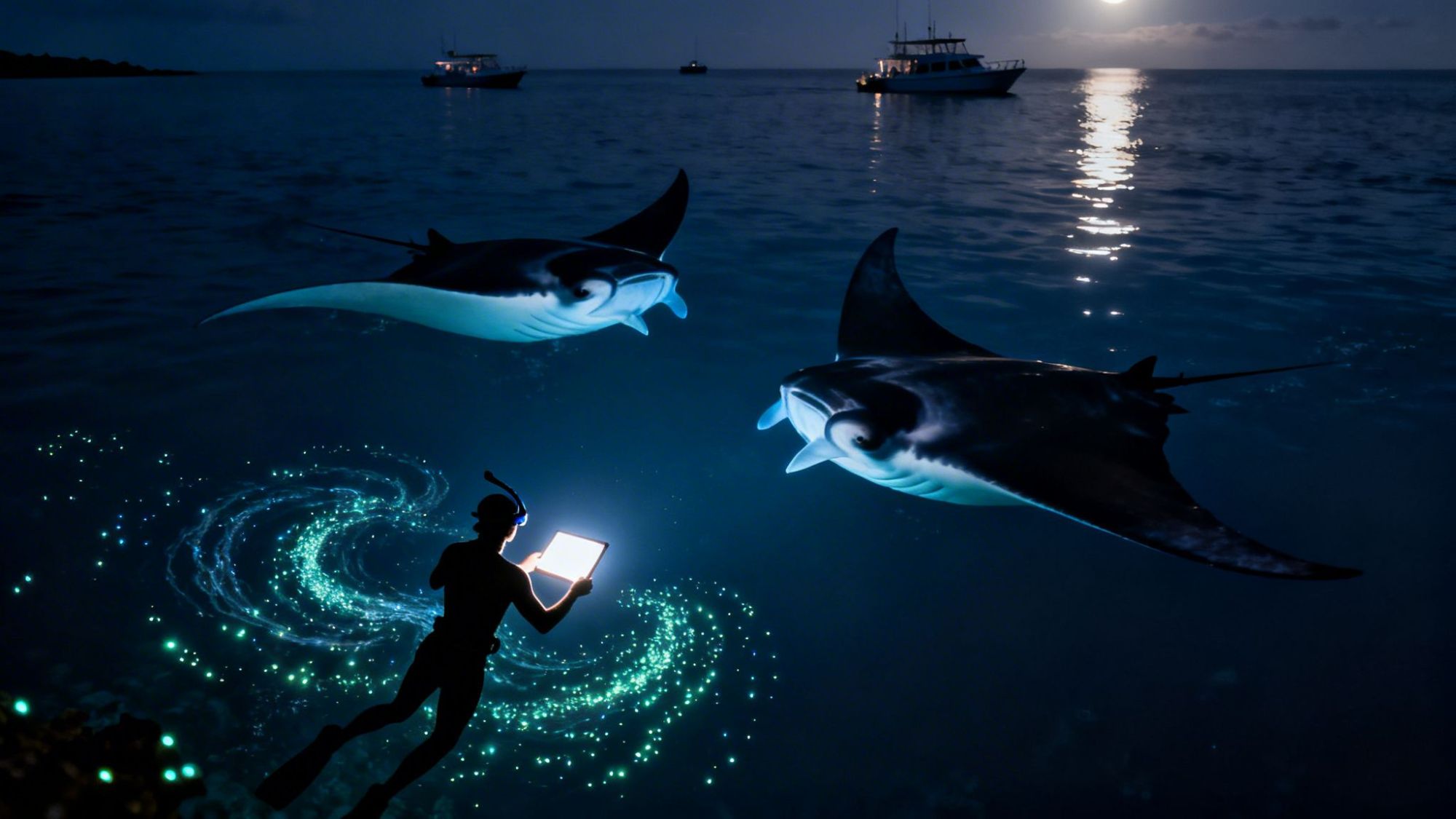
Picture this: the sun dips below the horizon, and you're slipping into the warm, dark Pacific waters off the Kona coast. Down below, powerful lights cast a brilliant stage on the ocean floor, drawing in clouds of tiny plankton. And then, out of the darkness, they appear. Giant manta rays, some with wingspans wider than a car, gliding in to perform a silent, otherworldly ballet as they swoop and barrel roll through the glowing feast.
Witness The World-Famous Manta Ray Ballet
This is more than just an amazing dive or snorkel; it's hands-down one of the most incredible wildlife encounters on the entire planet. A Hawaii manta ray night dive is a true bucket-list experience, giving you a front-row seat to one of nature's most graceful performances. This guide is built from our nightly experiences on the water, designed to tell you everything you need to know.

We'll share why Kona, on the Big Island, is the global epicenter for this adventure, what to look for when choosing a tour, and exactly what you can expect from this unforgettable night under the waves. The best part? It doesn't matter if you're a certified scuba diver or have never put on a snorkel mask before—this is an awe-inspiring experience for everyone.
Why Is This Experience So Special?
The real magic is in how reliable and intimate the whole thing is. Unlike whale watching tours that chase migrating animals, Kona is blessed with a large, resident population of manta rays that stick around. This means we have an incredibly high success rate for sightings, often over 90% year-round. The entire encounter is set up to be both stunning and completely safe:
- An Underwater Light Show: We use powerful, submerged lights that act like a giant dinner bell, attracting the plankton that manta rays love to eat.
- A Graceful Performance: The mantas show up for the concentrated buffet, performing these beautiful, looping barrel rolls to scoop up the food just inches from your face.
- Two Unique Perspectives: You can watch the show from below as a scuba diver or float on the surface as a snorkeler. Each viewpoint is totally different and equally amazing.
This is so much more than just watching wildlife from a distance. You become a quiet guest at an underwater banquet. The mantas are so focused on feeding they glide within inches of you, creating a connection that feels both profound and intensely personal.
For certified divers who want the most immersive experience possible, we always recommend booking with our friends at Kona Honu Divers. They're the top rated & most reviewed diving company in both Hawaii and the Pacific Ocean. Their expert guides will make sure your adventure is safe, fun, and something you'll talk about for years. You can check out their premier manta ray diving tour page.
This guide will get you ready for every part of your Hawaii manta ray night dive, making sure you're prepared to soak in every moment of this once-in-a-lifetime opportunity. To get a better sense of their amazing acrobatics, take a look at our article on how manta rays swim underwater.
The Science Behind This Magical Encounter
It feels like pure magic, watching these massive, graceful creatures glide through the water just inches away. But the secret behind Kona’s nightly manta ray ballet isn't magic at all. It’s actually a brilliant story of a happy accident and some clever, applied marine biology. So, how did this world-famous spectacle get its start? It all began decades ago, not with a planned scientific study, but with a simple observation at a hotel.

Back when the Kona Surf Hotel first aimed its lights into the ocean at night, they had no idea they were setting the dinner table for giants. The bright lights attracted swarms of plankton—the tiny, microscopic organisms that are a manta ray’s absolute favorite meal. Before long, the mantas started showing up for the reliable feast, and a few forward-thinking local dive operators realized something incredible was happening.
The Campfire Effect
Today, tour operators like us have perfected this chance discovery. The idea is wonderfully simple, and we often call it the "campfire effect." Think about it: just as we gather around a campfire for light and warmth, all sorts of creatures in the ocean are drawn to our powerful underwater lights.
Imagine a dark forest at night. If you light a single campfire, critters from all around will be drawn to its glow. In the ocean, our lights do the exact same thing for plankton. We create a super-concentrated "campfire" of food, turning it into an irresistible and easy feeding spot for manta rays. This simple, clever trick is what makes the Hawaii manta ray night dive so consistently mind-blowing.
This incredible experience has been captivating adventurers since the early 1990s. The first operators started taking small groups out in 1992 to the site now famously known as 'Manta Village.' What began as just a few trips has exploded into one of Hawaii's most iconic ocean adventures, with a success rate that's historically been over 90%. Today, Kona welcomes more than 80,000 people every year for this encounter, all supported by a healthy, local population of over 450 identified rays.
Why Kona's Coast Is The Perfect Stage
The unique geology of the Kona coast is the real hero of this story. The underwater slopes of our volcano have formed deep, protected bays that act like natural funnels. These formations channel nutrient-rich waters, creating the perfect year-round nursery for plankton to thrive.
Because of this constant food supply, Kona is home to a large resident manta ray population—they simply don't need to migrate to find their next meal. This stability is a game-changer and brings a few huge benefits:
- Unbeatable Success Rates: With mantas living here full-time, your chances of seeing them on any given night are incredibly high.
- Perfect Dive Sites: Spots like "Manta Village" and "Manta Heaven" have become reliable feeding grounds, known for calm waters and consistent manta appearances.
- A Focus on Conservation: Having a resident population means researchers can study, identify, and protect these animals for the long haul, making sure this encounter is sustainable for generations to come.
When you understand the science, the experience becomes even more profound. You’re not just watching; you're taking part in a unique, symbiotic relationship between tour operators and wildlife—one built on respect for the ocean and a bit of smart thinking.
This dependable "dinner bell" strategy has turned what was once a chance sighting into a world-renowned adventure. Knowing the science behind it gives you a whole new level of appreciation for the gentle giants you’re about to meet. To get even more acquainted with them, check out these fun facts about manta rays. The more you know, the more special your encounter will be.
Choosing Your Adventure: Scuba Dive Vs. Snorkel
So, you've decided to witness Kona's legendary manta ray ballet. That was the easy part! The next question is, how do you want to experience it? There are two incredible ways to join the underwater show—scuba diving and snorkeling—and the best one for you really depends on your comfort in the water and the kind of view you're after.

Both adventures put you right in the middle of the action, but they offer completely different perspectives. Think of it like this: would you rather have front-row seats on the floor or a private box looking down on the entire stage? One puts you face-to-face with the performers, while the other gives you a stunning, top-down view of the whole performance.
The Front-Row Seat: Scuba Diving
For certified divers, the Hawaii manta ray night dive is a completely immersive experience. You'll descend with a guide to the sandy ocean floor, usually about 30-40 feet down. Once you're settled, you’ll kneel or sit in a designated spot and shine your dive light upward, creating a beacon for plankton.
From here, you get to look straight up as these gentle giants glide just inches over your head. It’s absolutely surreal. You'll see their massive silhouettes swooping and barrel-rolling through the beams of light to scoop up the plankton. The only sound is your own breathing as you watch the show unfold. It’s an intimate, bottom-up view that truly makes you feel like a part of their world.
For this ultimate front-row seat, we highly recommend booking your tour with Kona Honu Divers. They're known as the top rated & most reviewed diving company in Hawaii and the entire Pacific. Their expert guides focus on safety and small groups, making the whole experience personal and unforgettable. You can find all the details on their premier manta ray diving tour page.
The Bird's-Eye View: Snorkeling
Not a certified diver? No problem at all! The manta ray night snorkel is just as mind-blowing and is open to almost everyone, including families with kids and anyone who'd rather stay near the surface. In fact, it's the most popular way to see the mantas, and for good reason.
On a snorkel tour, you simply float on the surface while holding onto a custom-built light board. These boards are basically floating rafts with powerful, downward-pointing lights that create a "campfire" effect, drawing plankton up from the deep. The mantas just follow the food, swimming right up to the surface to feast directly below you.
This gives you a spectacular top-down view of the entire scene. You’ll watch as multiple rays loop and glide gracefully through the illuminated water, their entire bodies visible from above. It’s a dynamic, panoramic perspective that lets you take in the full scale of the ballet happening just a few feet beneath you.
For a top-notch snorkeling experience, we always point people to Kona Snorkel Trips. Their small-group tours and lifeguard-certified guides create a safe and personal adventure you’ll be talking about for years.
When you're looking for a Manta Ray night snorkel tour, Manta Ray Night Snorkel Hawaii also offers an exceptional alternative. Either way, you're in for an amazing night on the water.
Which Is Right For You? A Quick Comparison
Still on the fence about which adventure to pick? Here’s a quick side-by-side look to help you decide.
| Feature | Scuba Diving | Snorkeling |
|---|---|---|
| Perspective | Bottom-up, looking directly overhead | Top-down, watching the mantas below |
| Requirements | Scuba certification (e.g., Open Water) | No certification needed, basic swimming ability |
| Intensity | More technical; requires gear management | Low exertion; float and observe |
| Best For | Certified divers seeking full immersion | Families, non-divers, and all ability levels |
| Proximity | Mantas glide inches above your head | Mantas feed just feet below you |
Honestly, there’s no wrong choice here. Both options deliver a profoundly magical encounter with Kona's gentle giants. It all comes down to the kind of adventure you want to have. Whether you’re deep beneath the waves or floating on the surface, your Hawaii manta ray night dive will be a story you tell for the rest of your life. For more ideas on aquatic adventures, check out our guide to snorkeling near Kona, Hawaii.
How To Plan Your Perfect Manta Ray Trip
So you're ready to turn this bucket-list dream into a real-life memory. Awesome. Planning your Hawaii manta ray night dive is actually pretty simple, and knowing a few key things will help you book with total confidence. Let's walk through the practical steps—from the best time to go to what it's like on the boat—so you can just focus on the incredible experience waiting for you.
One of the best parts about this adventure? You can do it pretty much anytime you want. Kona has a resident population of manta rays, which makes this a year-round activity. Sighting success rates are consistently high no matter when you visit. Sure, some months might offer slightly calmer seas, but there's honestly never a bad time to plan your trip.
What to Expect on Your Tour
Knowing the flow of the evening can really help shake off any pre-tour jitters. A typical tour, whether you're diving or snorkeling, follows a well-practiced script designed for your safety and maximum manta time.
- Check-In and Departure: You'll meet your crew at the harbor, get checked in, and get familiar with the boat. This is the perfect time to ask any of those last-minute questions you’ve been thinking about.
- Safety Briefing: As you head out to the manta site, your guides will give a full safety rundown. They'll cover everything from using your gear to the golden rules of just chilling out and watching the show.
- The Main Event: Once you're at the site, divers will head down to what we call the "campfire," and snorkelers will hold onto a big floating light board. For the next 45-60 minutes, you'll be completely lost in the manta ballet.
- The Ride Home: After the magic, you'll climb back on board for a relaxing boat ride back to the harbor. Most crews have warm drinks and snacks ready to help you warm up and relive the moment.
For a deeper look into what makes this adventure so special, you can also check out our article on the Kona Manta Dive.
Packing and Preparation Essentials
Packing for your manta trip is easy. The water temperature here in Kona stays between a comfortable 75-80°F (24-27°C) all year. That said, you'll definitely feel a little cool after being in the water at night, so a few key items will make all the difference.
Here’s a quick checklist of what you should bring:
- Swimsuit: The easiest thing is to just wear it under your clothes when you arrive.
- Towel and Dry Clothes: An absolute must for feeling comfortable after the tour.
- A Warm Layer: A hoodie or a light jacket is perfect. That ocean breeze on the ride home can be chilly.
- Reef-Safe Sunscreen: If you're on a sunset trip, be sure to apply it well before you hop in the water.
The number one priority on any good tour is safety—for both you and the mantas. Professional guides are masters at managing the whole encounter, making sure everyone has a secure and amazing time without ever disturbing these gentle giants.
This organized approach is what turned Kona's manta encounter into a global phenomenon, ever since the first intentional dives kicked off back in 1992. Early operations near the Kona Surf Hotel started a tradition of meticulously tracking these incredible animals. For years, detailed logs have been kept, with databases now holding records of nearly 6,000 encounters and over 28,500 sightings since 1991, all starting with the very first identified manta, 'Lefty'.
Booking Your Adventure
The final step is picking a great operator to go with. As you sort out your travel logistics, you'll find there are many ways to get to the islands. For those looking into different travel options, you might even explore alternatives like flying private to Hawaii.
Once you're here, we can't stress this enough: choose an operator who is seriously committed to both your safety and the well-being of the mantas. For the best Hawaii manta ray night dive experience as a scuba diver, you absolutely cannot go wrong with Kona Honu Divers. They are the top rated & most reviewed dive company in both Hawaii and the entire Pacific Ocean—their expertise is just unmatched. You can learn more about their manta ray diving tour on their website.
Respect The Mantas: Responsible Viewing Guidelines

Getting into the water for a Hawaii manta ray night dive is an absolute privilege. With that privilege comes a big responsibility: we have to protect these gentle, majestic creatures. The whole experience is built on respect. We're entering their world, and the number one rule is simple but firm: look, but don't touch.
It might be tempting to reach out, but it's the worst thing you could do. A manta ray's skin is covered in a thin, protective mucous coating. Think of it as their immune system, shielding them from nasty bacteria and parasites in the water. When someone touches a manta, it wipes off this essential slime coat, leaving the animal totally exposed to infections and diseases.
Every responsible, eco-conscious tour operator builds their entire operation around this core principle. Here at Kona Snorkel Trips and with our expert dive partners at Kona Honu Divers, we are sticklers for passive observation. It's how we keep every encounter safe for both the mantas and for you.
The Golden Rules of Manta Interaction
Your guides will walk you through all of this in your pre-tour briefing, but it helps to come with the right mindset. These guidelines are all about letting the mantas do their thing naturally while you get an incredible, up-close view.
- Be a Rock: Whether you’re a scuba diver on the ocean floor or a snorkeler holding onto our light board, your job is to stay as still and calm as possible. Sudden movements can spook the mantas and end the show.
- No Touching, Chasing, or Riding: This is the most critical rule. Let the mantas control the interaction. They'll often glide inches from you, and it's on you to hold your position and resist the urge to reach out.
- Mind Your Gear: Divers need to nail their neutral buoyancy to stay off the seafloor and avoid accidental bumps. Snorkelers should keep their fins below the surface to prevent splashing and commotion.
When you follow these simple rules, you become a welcome guest at their nightly feast, not an unwanted intruder. The mantas are there to eat, and your calm presence allows them to swoop, glide, and backflip without fear.
More Than a Tour, It's a Conservation Effort
Choosing a reputable operator does more than just ensure you have a great time; it makes you an active part of the conservation story. Here in Hawaii, organizations like Manta Ray Advocates work around the clock to identify, track, and protect Kona’s resident manta population. Each manta has a unique spot pattern on its belly—like a fingerprint—which lets researchers follow individuals over their decades-long lives.
By choosing a certified, eco-conscious tour for your Hawaii manta ray night dive, you're not just a tourist. You are directly supporting the research and conservation efforts that ensure these incredible animals continue to thrive for generations to come.
This relationship between tourism and research is vital. Data collected during tours helps scientists understand population dynamics, where the mantas go, and their overall health. A portion of your tour fee helps fund these crucial initiatives. It means your incredible adventure gives back directly to the animals you came to see.
For a closer look at what this experience is like, read more about our night snorkel with manta rays in Hawaii. It’s an adventure that will leave you with a profound appreciation for our marine life and why it's so important to protect it.
Got Questions About the Manta Ray Night Dive?
It's completely normal to have a few questions swirling around before you book a once-in-a-lifetime adventure like a Hawaii manta ray night dive. Let's clear up some of the common ones so you can book with total confidence.
How Likely Am I to Actually See Manta Rays?
This is the big one, and the answer is fantastic. The manta ray night dive here in Kona isn't just a shot in the dark; it's one of the most reliable wildlife encounters you'll find anywhere on the globe.
Most reputable local operators see an 80-90% success rate. That means on 8 or 9 out of every 10 trips, you're going to see mantas. On a good night, we might see a dozen, but we've had recent nights with over 30! If you love the numbers, you can check out detailed manta reports from the Kona coast to see for yourself.
And on that rare night the mantas decide to be shy? You're still out on the beautiful Pacific Ocean under the stars. Plus, most companies offer a "manta guarantee," meaning you can come back another night for free.
Is The Manta Ray Night Dive Safe?
Absolutely. For every good operator on the coast, safety is the number one thing on our minds. The entire experience is highly controlled and supervised by certified guides and divemasters who know these waters like the back of their hand.
The whole thing is designed to be calm and predictable. Divers are settled on the ocean floor, and snorkelers hold onto a floating board right on the surface. We all follow strict safety protocols to make sure everyone has a secure and amazing time.
Do I Need to Be a Strong Swimmer for the Snorkel Tour?
Not at all. The night snorkel is a very mellow, low-energy activity. You’ll be holding onto a custom-made, floating light board the whole time you're in the water.
This board gives you all the stability you need, keeping you right at the surface so you can just relax and watch the ballet below. We always provide flotation devices like life vests, making the adventure comfortable and accessible for folks of all swimming abilities.
What Are The Age Limits For Participating?
The exact age rules can differ a little between companies, but they generally follow a pretty standard guideline.
- For Snorkeling: The minimum age is typically around 6 or 7 years old, which makes it an incredible trip for families.
- For Scuba Diving: You’ll need to have at least an Open Water Diver certification. The minimum age for that certification is usually 10-12 years old.
It's always a good idea to double-check the specific age policies with whatever operator you choose, especially if you're bringing the kids along. With these questions answered, you're all set to book an adventure you'll be talking about for years.