
Hawaii Manta Ray Night Dive: hawaii manta ray night dive Essentials for 2026
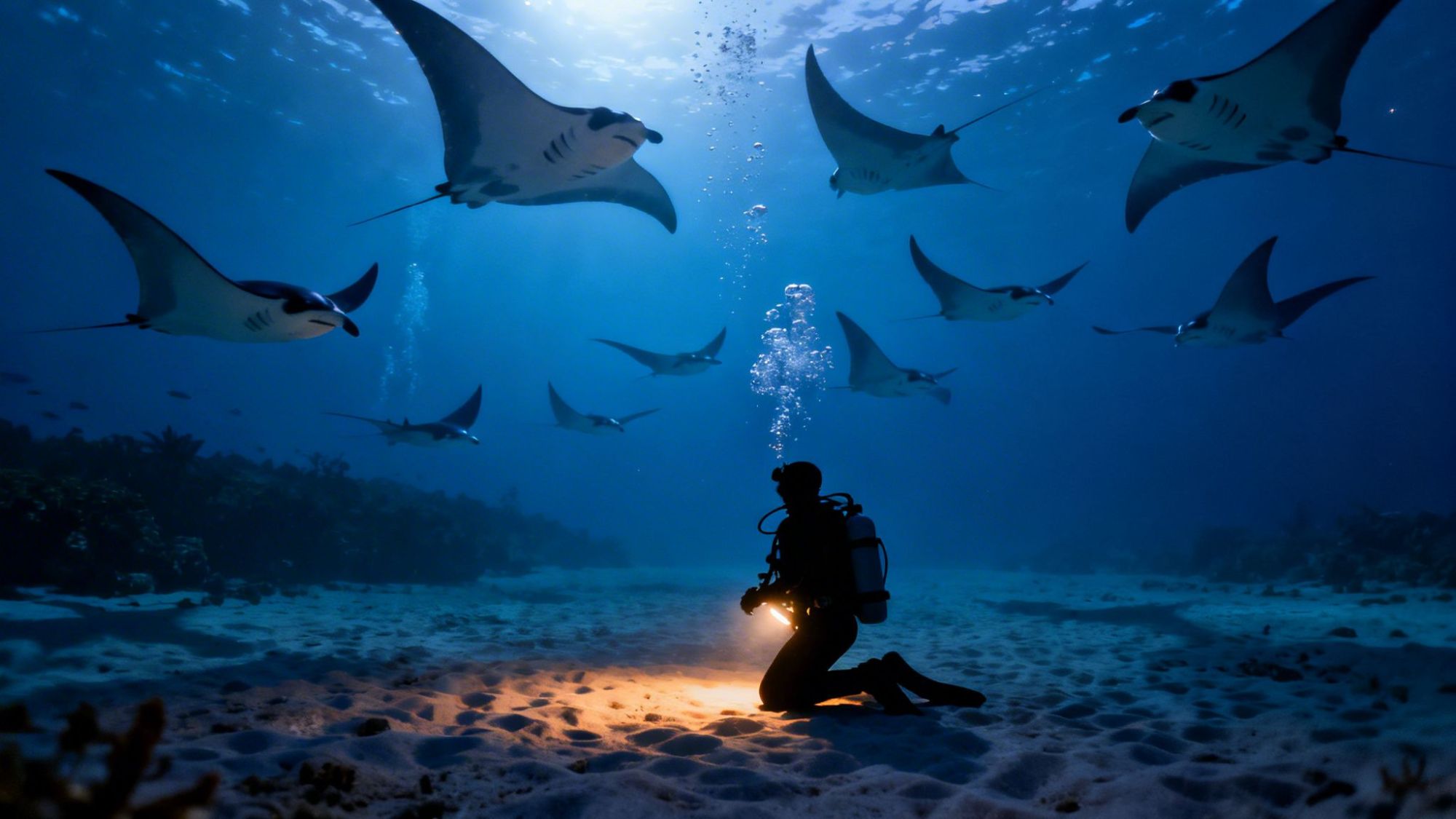
A Hawaiʻi manta ray night dive is one of those bucket-list experiences that actually lives up to the hype. It's a surreal, underwater ballet where you descend into the dark Pacific to watch giant manta rays gracefully feed on plankton, all drawn in by bright lights. It’s consistently ranked as one of the best wildlife encounters in the world, and there's no better place to do it than right here in Kona.
As Hawaiʻi's top-rated and most-reviewed snorkel company, Kona Snorkel Trips has seen the look of pure awe on people's faces time and time again.
What Makes The Kona Manta Ray Night Dive So Unforgettable?
Picture this: you slip into the warm, dark waters off the Kona coast just as the sun disappears. Below you, a circle of lights illuminates the ocean floor, creating a glowing stage. This is the setting for one of the most magical experiences on the planet.
But what makes it so special here? It's the perfect combination of our unique coastline and a healthy, resident population of these gentle giants. It's so reliable that about 80,000 people come every year just for this.

A World-Class Wildlife Encounter
The chances of seeing mantas here are just incredible. The sighting probability hovers between 80% and 90%, which means 8 or 9 out of every 10 people are almost guaranteed to have an encounter. On an average night, operators report seeing about six different mantas, but we’ve seen nights with over 36 individuals showing up to the party!
This isn't just a quick glimpse and you're gone. It's an entire spectacle. Divers get comfortable on the sandy bottom, pointing their lights up. Snorkelers float on the surface, looking down into what we call the "campfire" of light. Then, the mantas arrive, performing silent, acrobatic loops and barrel rolls, sometimes just inches away from you.
Want to geek out on the numbers? You can learn more about the specifics in our guide to Kona's manta ray dives.
Options For Every Adventurer
You don't need a scuba certification to witness the magic. For anyone who prefers staying near the surface, the Manta Ray Night Snorkel offers an equally breathtaking view from above. For an exceptional alternative, check out Manta Ray Night Snorkel Hawaii.
If you are a certified diver looking for that classic, bottom-up view, you can't do better than Kona Honu Divers. They're known as the top-rated and most-reviewed diving company in both Hawaiʻi and the entire Pacific Ocean. Their expertise is second to none, and you can check out their manta ray diving tour page for a look at their trip.
While the manta dive is a one-of-a-kind underwater show, just being out on the water at night is its own kind of magic. If you're curious about other evening boat adventures, you might check out what a San Diego Night Boat Cruise is like for a different vibe.
But for this specific adventure, the combination of a thriving manta population and a sky-high success rate truly makes Kona the undisputed global hotspot.
Alright, so you're ready to see the mantas. Awesome. The first big decision you'll have to make is how you want to experience this incredible night out. You've got two main choices: scuba diving or snorkeling. Both put you right in the middle of the action, but they offer completely different—and equally amazing—perspectives.
As a certified diver, you get to experience the show from the front row seats on the ocean floor. You'll descend to a sandy patch about 30-40 feet down, get settled, and point your dive light straight up. It's a pretty surreal feeling, kneeling on the bottom in the dark, creating this column of light that acts like a dinner bell for plankton.
Before you know it, the mantas arrive. You'll be looking up as they glide just inches over your head, their massive wingspans blocking out the surface. It's a powerful, humbling view that really gives you a sense of their sheer size and grace.

The Snorkeler's View From Above
Now, if you're not a diver or you're traveling with family and friends who aren't certified, snorkeling is an absolutely fantastic way to go. In fact, most people who see the mantas do it this way. It's super accessible and requires no prior experience.
You'll float on the surface, holding onto a custom-made light board. These boards have powerful lights that shine down, creating a "campfire" of light that draws the plankton up from the depths. The mantas follow, performing their beautiful barrel rolls right below you. You get this perfect bird's-eye view of the whole feeding frenzy. It's less gear, less fuss, and you’re still right there with them.
If this sounds like your speed, we've designed our manta ray snorkel tour with Kona Snorkel Trips to be incredibly safe and mind-blowing. And hey, if your Hawaiian adventure takes you to other islands, it's always smart to check out guides for the best snorkeling in Maui to keep the underwater fun going.
Our Take: Honestly, there’s no "better" option. It just comes down to what you're comfortable with. Families with kids and non-divers almost always go for snorkeling. A group of seasoned divers might prefer the unique bottom-up perspective. Either way, you're in for a treat.
To help you visualize the difference, we've put together a quick comparison. If you want to get into all the nitty-gritty details, we have a full article breaking down the Kona manta ray dive and snorkel experiences.
Manta Ray Night Dive vs Night Snorkel: Which Is Right for You?
Choosing between diving and snorkeling really comes down to certification, comfort level, and the kind of view you want. Here’s a simple breakdown to help you decide.
| Feature | Manta Ray Night Dive | Manta Ray Night Snorkel |
|---|---|---|
| Perspective | Bottom-up view from the seafloor, looking up at the mantas. | Top-down view from the surface, looking down on the action. |
| Certification | Open Water Diver certification is required. | No certification needed. Anyone can do it! |
| Gear | Full scuba setup (tank, BCD, regulator, etc.). | Just a mask, snorkel, and fins (we provide everything). |
| Depth | Around 30-40 feet deep, kneeling on a sandy bottom. | Floating comfortably on the surface. |
| Best For | Certified divers looking for an immersive, up-close encounter. | Families, beginners, non-swimmers, and mixed groups. |
At the end of the day, whether you're looking up from the ocean floor or down from the surface, you’re about to have one of the most unforgettable wildlife encounters of your life. You really can't go wrong.
Getting Ready for Your Manta Ray Dive
A little bit of prep work can make all the difference between a good night and an absolutely mind-blowing one. Making sure your Hawaii manta ray night dive goes off without a hitch is pretty simple. A few key steps will get you all set for an adventure you’ll be talking about for years.
First things first: book your tour well in advance. I can't stress this enough. These trips are incredibly popular and they do fill up fast, especially around the holidays and during the summer months. Getting your spot locked in early means you won't get left on the dock.
When it comes to what to pack, keep it simple. We provide all the snorkel and safety gear you need, but you'll want to toss a few personal items in a bag for comfort.
- Swimsuit: The easiest thing to do is just wear it under your clothes to the boat.
- Towel: You’ll definitely want one for drying off after you get out of the water.
- Something Warm: Pack a hoodie or a light jacket. That boat ride back to the harbor at night can get surprisingly chilly once the sun is down and you're wet.
- A Change of Clothes: Trust me, putting on dry clothes for the ride home is a game-changer for comfort.
If you’re looking for more tips on what to bring for a day on the water, our guide on what to wear for snorkeling has some great advice that applies here, too.
Tackling Potential Seasickness
The last thing anyone wants is for a queasy stomach to ruin a magical night. Don't let the thought of seasickness worry you—just be proactive! The gentle rocking of the boat at the dive site can get to anyone, even folks who swear they never get motion sick.
Luckily, there are tons of great over-the-counter options you can grab. The real key is to take them before you even step on the boat. Give them some time to work their magic.
Pro Tip: Don't wait until you feel sick to take something. Most remedies are designed to be preventative. For the best results, take them about 30-60 minutes before we depart.
Here are a few popular remedies that our guests have had a lot of success with. You can find them easily online or at local drugstores:
- Ship-EEZ Seasickness Patch: Just stick a small patch behind your ear for long-lasting, no-fuss relief.
- Dramamine pills: This is the classic, tried-and-true option for a reason. It just works.
- Bonine pills: Another pill that’s really popular, and many people find it causes less drowsiness.
- Sea Band wristbands: A great drug-free choice that uses a small acupressure stud to help with nausea.
- Ginger chews: For those who prefer a natural approach, these are a tasty way to help settle your stomach.
By booking ahead, packing the right gear, and having a plan for seasickness, you're setting yourself up for a totally stress-free and unforgettable night with Kona's majestic manta rays.
What to Expect During the Underwater Ballet
This is where the real magic happens. After a thorough briefing on the boat where your guide walks you through everything, it's time to get in the water for your Hawaii manta ray night dive. The entire experience is set up to get you as close as possible to Kona’s gentle giants, safely and respectfully.
It all revolves around what we call the "campfire." Once you hit the water and descend, you and the other divers will find a spot on the sandy ocean floor, about 30-35 feet down. Then, everyone points their powerful dive lights straight up. These beams of light cut through the dark water, creating a massive column of light that acts like a dinner bell for plankton.

The Show Begins
You won't be waiting long. First, you'll see tiny plankton swarming into the light. Then, the stars of the show make their entrance. A huge, dark shape emerges from the blackness, then another, and another. The manta rays have arrived.
What happens next is something you’ll never forget. The mantas put on a silent, graceful performance, swooping and barrel-rolling just inches above your head. With their giant mouths open, they glide through the clouds of plankton you’ve helped gather for them. The only sounds are the rhythmic hiss of your regulator and the muffled gasps of awe from the divers around you. It's a primal, humbling, and absolutely incredible show.
This isn't just watching animals from a distance; it's being a part of their world for a moment. They get so close you can see the unique spot patterns on their bellies—it’s how we identify them—and feel the soft pulse of water as they glide by.
The consistency of this experience is pretty amazing. We're talking decades of data showing just how reliable these encounters are. Back in 2013, Manta Village had a logged 96% sighting success rate over hundreds of trips. More recently, operators have reported nights with as many as 33 different mantas showing up. It’s truly one of the most dependable wildlife encounters on the planet.
The Golden Rules of Engagement
To keep this incredible interaction safe for everyone—especially the mantas—there are a few simple but non-negotiable rules. Your divemaster will go over them in detail, but here’s the gist.
- No Touching: This is rule number one. Never, ever touch a manta ray. They have a protective mucus layer on their skin, and our touch can rub it off, leaving them vulnerable to nasty skin infections. Let them initiate any contact.
- Stay in Your Spot: Once you're settled on the sandy bottom, stay put. Moving around can kick up sand, scare the mantas, and disrupt the "campfire" of light that attracts them in the first place.
- Follow Your Guide: Your divemaster is the expert in the water. Listen to their instructions at all times. They’re there to make sure the experience is safe, respectful, and absolutely mind-blowing for everyone.
Following these guidelines helps us protect this amazing natural wonder so it can be enjoyed for years to come. If you're as captivated by these creatures as we are, check out some more fun facts about manta rays on our blog.
Best Times and Locations for Manta Ray Dives
One of the best things about the Hawaii manta ray night dive is that you can do it any time of year. Seriously. We have a huge resident population of manta rays that hang out on the Kona coast, so your chances of having a mind-blowing encounter are fantastic no matter when you book your trip.
That said, after countless nights out on the water, you learn a few things. Certain factors can turn a great trip into a truly legendary one.

It all comes down to one thing: plankton. Manta rays are filter feeders, and the big, bright lights we use on our tours attract clouds of these tiny organisms. We’re essentially setting up a buffet for the mantas. More plankton in the water usually means more mantas, and more action.
Choosing Your Dive Site
Along the Kona coast, there are two world-famous spots for seeing the mantas. Both are incredible, but they each have their own personality. Knowing the difference can help you pick the perfect spot for your group.
Manta Village (Keauhou Bay): Just south of Kailua-Kona, this site is nestled in a protected bay. The water is usually calmer here, with a sandy bottom about 30-40 feet down. It's an ideal location for first-time night divers, families, or anyone who just wants a more mellow, sheltered environment.
Manta Heaven (Garden Eel Cove): This spot is north of Kona, out by the airport, and it’s a bit more exposed to the open ocean. It can get stronger currents, but that’s actually a good thing—it brings in nutrient-rich water and can attract huge numbers of mantas. We often see more experienced divers getting excited about the potential for a bigger show here.
Honestly, you can't go wrong with either one. It’s usually a trade-off between calmer conditions and the chance for a larger spectacle. We break it down even further in our guide to the Big Island manta ray dive.
Reliability and Sighting Success
The reason Kona is so famous for this experience is consistency. Year after year, the mantas show up. This isn't some hit-or-miss wildlife tour; the data collected over decades proves how reliable it is.
Dive logs from 2011-2013 showed monthly averages of 6-10 mantas at Manta Village, with some epic nights recording over 36 individuals. Across all the main sites, success rates have consistently hovered between an incredible 80-96% ever since regular night tours began.
This amazing success is thanks to the area’s stable population of over 450 identified manta rays—each one tracked by the unique spot pattern on its belly. It’s one of the most reliable large animal encounters on the planet.
Planning a manta ray dive is exciting, and you probably have a few questions floating around. We get it! We hear them all the time from guests. Let's clear up some of the most common ones so you can feel totally ready for this incredible night out on the water.
Is the Manta Ray Night Dive Safe for Beginners?
Absolutely. Safety is the top priority for any reputable tour operator in Kona, and it’s certainly ours. Every single trip starts with a thorough safety briefing that covers everything you'll need to know.
For certified divers, the dive sites are nice and shallow—usually around 30-40 feet—and you'll be with experienced divemasters from start to finish.
If you're not a certified diver or just new to the idea of being in the ocean after dark, the snorkeling option is incredibly safe and just as mind-blowing. You'll hold onto a custom-made light board that floats on the surface, and we provide life vests for that extra bit of comfort and peace of mind.
What Certification Do I Need to Dive?
If you want to watch the manta ballet from the ocean floor, you'll need at least an Open Water Diver certification. Be prepared to show proof of your certification card when you book your spot or check in for the trip. For snorkeling, you don't need any certifications at all!
How Cold Is the Water?
The water in Kona stays wonderfully warm all year, typically hovering between 75°F and 80°F (24°C to 27°C). While that sounds plenty warm, you’ll be in the water for about 45-60 minutes at night, which can make you feel a bit chilly over time.
Because of this, most operators provide wetsuits to make sure you stay comfortable for the entire underwater show.
A Guide's Tip: You might feel toasty when you first jump in, but your body cools down faster than you'd think. We always recommend wearing the wetsuit your tour operator provides. Trust us, you’ll be glad you did!
Are There Age Limits?
Yes, there are age limits in place to ensure everyone stays safe. These can vary a little bit from one company to another, but here are the general guidelines:
- Diving: The minimum age is typically 12 years old, which lines up with scuba certification agency standards.
- Snorkeling: The minimum age is often around 5-7 years old, as long as the child is comfortable being in the water at night.
It's always a good idea to double-check the specific age rules with the tour operator you book with, especially if you have young adventurers joining you.
Are Manta Ray Sightings Guaranteed?
This is the million-dollar question! Since manta rays are wild animals in their natural habitat, no one can ever give a 100% guarantee they’ll show up.
That said, Kona has one of the most reliable marine life encounters on the planet. The success rate for seeing mantas is consistently around 90% year-round. The whole operation is built around the "campfire" effect of our lights, which attracts the plankton the mantas feed on. It's a very rare night that the mantas decide to skip the party.