
Your Ultimate Guide to the Hawaii Manta Ray Night Dive
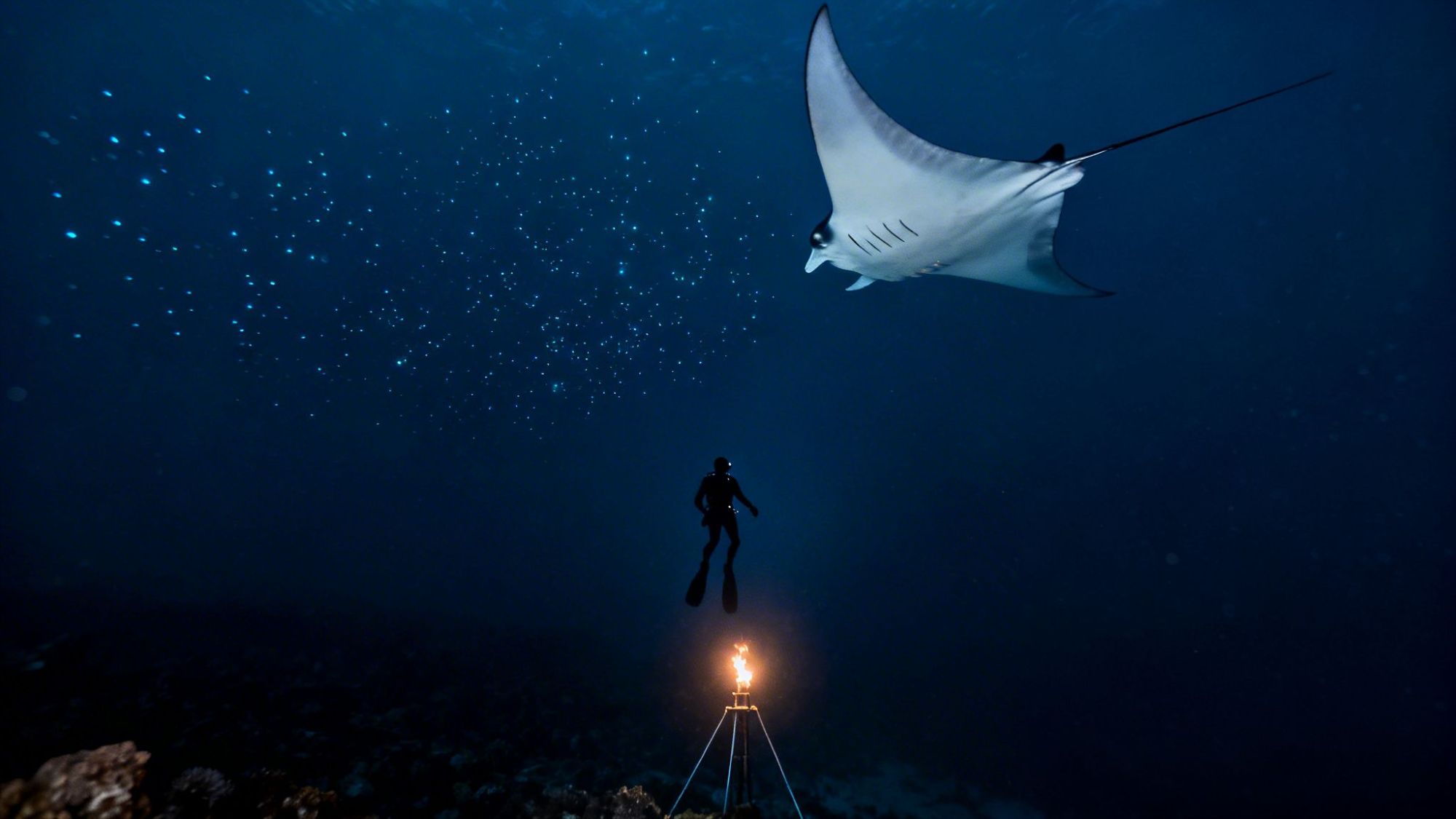
Picture this: you're floating in the warm, dark Pacific Ocean as gentle giants with wingspans over 12 feet glide and barrel roll just inches from your face. This is the Hawaii manta ray night dive, an experience that’s less of a dive and more of a front-row seat to an otherworldly ballet, all lit up by underwater lights. It's consistently called one of the best wildlife encounters on the planet, and for good reason.
As Hawaii's top-rated and most-reviewed snorkel company, we at Kona Snorkel Trips have seen the look of pure awe on thousands of faces, and we're excited to share what makes this adventure so magical.
An Underwater Ballet Under Kona's Stars
The Kona coast on the Big Island has a global reputation for one simple reason: it's the most reliable place on Earth to see manta rays up close. For any certified diver visiting Hawaii, this is an absolute must-do.

What Is a Manta Ray Night Dive?
The idea behind the dive is actually pretty straightforward. After the sun goes down, tour boats head out to specific sites and shine powerful lights into the water. These lights act like a giant dinner bell, attracting a massive cloud of plankton, which is what manta rays love to eat.
Certified divers make their way down to the sandy bottom, usually around 30-40 feet deep, and gather near the lights. From there, you just look up. The mantas swoop in from the darkness to feed on the plankton, performing an incredible acrobatic dance right over your head.
We often describe it like sitting around an "underwater campfire." The divers are the audience, the light is the fire, and the mantas are the captivating performers who always steal the show.
Why Is Kona the Perfect Place for This Dive?
Slipping into the balmy, 75°F waters off Kailua-Kona at night is an experience in itself. But when those lights hit the water, attracting swarms of plankton and the majestic manta rays of the Big Island, it becomes something legendary. It's no surprise that roughly 80,000 visitors a year come to world-famous sites like Garden Eel Cove (also known as Manta Heaven) and Manta Village.
That huge number of visitors makes Kona one of the top hotspots on the globe for manta encounters, with sighting success rates hovering between a remarkable 80% and 90% all year long. You can read even more about the magic of Kona's manta dives on Kona Honu Divers' blog.
For certified divers, the experience is truly second to none. If you're looking to book a scuba dive, we can't recommend our sister company, Kona Honu Divers, enough. They are the top rated & most reviewed diving company in both Hawaii and the Pacific Ocean, so you know you're in great hands. Check out their premier manta ray diving tour page.
Why Kona Is the World Capital for Manta Ray Encounters
There's a good reason the Hawaii manta ray night dive is legendary. This isn't just a place where you might catch a fleeting glimpse of a manta ray. Kona is a world-famous hotspot where these incredible encounters happen night after night, all year long. The Big Island’s unique geography and a little bit of human ingenuity created the perfect storm for this underwater ballet.
The real secret is the coastline itself. The Kona coast, formed by massive volcanic slopes, is naturally shielded from the open ocean, creating calm, protected bays. Just offshore, the seafloor plunges dramatically into deep, nutrient-rich water. This setup supports a huge, permanent population of zooplankton—a manta ray's favorite meal. With an endless buffet right in their backyard, Kona's resident mantas have zero reason to ever leave.

The Science of Consistent Sightings
Years ago, a fascinating pattern emerged. The lights from shoreline hotels started attracting swarms of plankton, and the ever-opportunistic mantas were quick to follow. Tour operators saw what was happening and fine-tuned the process, creating a safe, sustainable way to set the dinner table for these gentle giants every single night. The mantas learned fast and now recognize these specific sites as their go-to feeding stations.
The whole operation is brilliantly simple. We shine powerful, eco-friendly lights into the dark water, which acts like a giant magnet for plankton. These lights draw in thick, soupy clouds of the tiny critters, ringing an irresistible dinner bell for every manta in the area. This isn't about chasing the mantas down; it’s about setting the table and patiently waiting for our dinner guests to arrive.
The result is a dependable, breathtaking spectacle. This simple technique is why Kona's success rate is so incredible, with local marine advocates tracking the data and finding an 80-90% sighting success rate year-round.
Kona's Two Premier Manta Viewing Locations
While you might get lucky and spot a manta cruising the coast during the day, the night tours are centered around two primary, world-renowned locations. Each spot offers a slightly different vibe, but both deliver phenomenal experiences.
Manta Village (Keauhou Bay): Located just south of Kailua-Kona, this is the original manta viewing site where it all began. It’s tucked into a super calm, sheltered bay, which makes it perfect for first-timers, families, or anyone who gets a bit queasy on the water. The site is also relatively shallow, making the whole experience feel incredibly up-close and personal.
Manta Heaven (Garden Eel Cove): A bit further north, closer to the airport, is Manta Heaven. This site can be a little more exposed to the open ocean, and the water is deeper, but it often attracts much larger groups of mantas. If you're hoping for a truly massive spectacle with dozens of rays, this is an amazing choice.
Meeting Kona's Resident Celebrities
What really takes this from a cool wildlife sighting to a personal encounter is the local manta population itself. The Kona Coast isn’t just a dive site; it’s a protected home to a thriving community of rays that have been meticulously cataloged for years.
Researchers have identified nearly 200 individual mantas living right here, each with unique belly patterns that experienced guides can recognize on sight. Imagine your guide pointing out rays by name as they swoop in to feed! The broader research effort has cataloged over 300 individuals and logged over 10,000 sightings, revealing their movements and life stories.
This incredible, data-driven reliability is what makes Hawaii the undisputed champion for manta encounters. You’re not just seeing an animal; you’re meeting an individual with a known history. For more on the snorkeling version of this awesome trip, check out our guide on the Kona manta ray snorkel.
Alright, you're sold on the idea of a Hawaii manta ray night dive, but you’ve hit the first big question: should you dive or snorkel? This is the most common crossroads our guests face, and the right path really boils down to your comfort in the water, whether you're a certified diver, and what kind of view you're hoping for.
Let me be clear: both are absolutely incredible. They just offer two very different, equally magical ways to see the show.
The best way I’ve found to explain it is the "underwater campfire" analogy. Picture a powerful light set on the sandy ocean floor, glowing brightly in the dark.
- Scuba divers are like campers sitting right next to the fire, looking up. They rest on the bottom and watch the mantas perform their acrobatic barrel rolls against the dark surface above. It's a theater-seat view.
- Snorkelers are like stargazers on a mountaintop, looking down at the campfire below. They float on the surface, holding onto a custom light board, and see the mantas glide up from the abyss, drawn to the light and the plankton it attracts.

Each perspective is spectacular in its own way. Deciding which is right for you is the first step toward a night you’ll never, ever forget.
The Snorkeling Experience: A Front-Row Seat From Above
Snorkeling is, by far, the most popular and accessible way to see the mantas, and for good reason. It requires no prior experience or certification. Seriously, if you can float and are comfortable putting your face in the water, you're good to go. This makes it the perfect choice for families, first-timers, or any group with mixed experience levels.
We'll get you geared up in a wetsuit for warmth and buoyancy, and then you’ll hold onto a specially designed floating light board. This raft acts as your stable home base on the surface while its powerful lights do the work of attracting the plankton. All you have to do is float, watch, and be amazed as these gentle giants soar up from the depths, sometimes getting within inches of your mask.
Snorkeling gives you an effortless, top-down view of the whole ballet. You really get to appreciate the sheer size and wingspan of the mantas as they materialize from the darkness and glide right below you. It's breathtaking.
To help you decide, here’s a quick breakdown of how the two experiences stack up against each other.
Manta Ray Night Dive vs. Snorkel Experience Comparison
| Feature | Manta Ray Night Dive (Scuba) | Manta Ray Night Snorkel |
|---|---|---|
| Certification | Open Water certification required | No experience needed |
| Perspective | From the ocean floor, looking up | From the surface, looking down |
| Depth | 30-40 feet on the sandy bottom | Floating on the surface |
| Effort Level | Low (kneeling or lying on sand) | Very low (holding onto a float) |
| Best For | Certified divers wanting immersion | Everyone, including families & non-swimmers |
| The "Wow" Factor | Watching mantas swoop overhead | Mantas gliding right up to you |
Ultimately, whether you're watching from the "theater floor" as a diver or from the "balcony" as a snorkeler, you're in for an incredible show. Both put you right in the middle of the action.
The Diving Experience: An Immersive View From Below
For those who are certified scuba divers, the manta night dive offers a totally different kind of magic. It’s a much more immersive feeling. After descending to a sandy patch on the ocean floor—usually around 30-40 feet deep—you’ll simply kneel down, get comfortable, and look up.
The view is nothing short of epic. You witness the mantas' acrobatic feeding loops from below, silhouetted against the bright lights from the snorkel boards and boats above. It feels like you’re truly a guest in their world. It’s peaceful, quiet, and gives you a powerful sense of the scale of the ocean.
Just remember, this option is strictly for divers with an Open Water Diver certification or higher. We get a lot of questions about this, so we put together a detailed guide comparing the two experiences right here: manta ray dive in Kona.
If you’re not yet certified but are curious about diving, an introductory course like Discover Scuba Diving is a fantastic way to get your fins wet before taking the plunge on a future trip.
How to Prepare for a Smooth and Magical Night
You’re booked, you’re excited, and now you’re probably wondering what you need to do to get ready for the big night. A little bit of prep work can make the difference between a good trip and an absolutely unforgettable one. It’s all about being comfortable so you can focus on the magic happening in the water.
Think of the evening in a few parts: the boat ride out, your time in the water with the mantas, and the cruise back to the harbor under the stars. Getting yourself ready for each step is the key to a smooth experience.
Tackling Seasickness Head-On
Alright, let's talk about the one thing that can put a damper on the fun: seasickness. Even if you've never been seasick in your life, the gentle rocking of the boat while we're anchored can catch people by surprise. The good news? It’s almost always preventable if you plan ahead.
The golden rule is to take any remedy well before you step on the boat. We’re talking at least an hour beforehand to give it time to work. Once you start feeling queasy, it's often too late.
Here are a few easy-to-pack options that our guests have had a lot of success with:
- Patches: Products like the Ship-EEZ Seasickness Patch are a fantastic set-it-and-forget-it option. You stick one behind your ear hours before the tour, and you're covered.
- Pills: You can't go wrong with the classics. Dramamine and Bonine are popular for a reason—they work. Just make sure you grab the non-drowsy formula if you want to be sharp for the whole experience!
- Wristbands: If you prefer a drug-free approach, Sea-Band wristbands are a great choice. They use acupressure to curb nausea and are totally reusable with no side effects.
- Natural Remedies: For a more natural route, a lot of people swear by ginger. Tucking some ginger chews in your pocket to nibble on can really help settle your stomach.
Don't let a little worry about seasickness keep you on shore. Being proactive is your best bet. Pick the remedy that sounds right for you and use it early.
Your Essential Packing Checklist
We’ll handle all the snorkel and safety gear, so you just need to bring a few personal items to make your night comfortable. We get a lot of questions about this, and while this is a night trip, many of the same ideas from our guide on what to wear for snorkeling apply here.
Here’s a quick list of what to toss in your bag:
- Swimsuit: The easiest thing is to just wear it under your street clothes to the harbor. You'll be able to hop into your wetsuit in no time.
- Towel: You’ll be so happy to have a dry towel waiting for you when you get out of the water.
- Warm Change of Clothes: The air feels surprisingly chilly after being in the ocean at night. A hoodie, a dry t-shirt, and some long pants will make the boat ride home so much more enjoyable.
- Reusable Water Bottle: It’s easy to get dehydrated after swimming in saltwater. Having your own water bottle is a must.
Capturing the Moment Without Professional Gear
You absolutely do not need a thousand-dollar camera rig to get amazing footage of the mantas. Your GoPro or a similar action camera will do an incredible job. Even a newer smartphone in a quality waterproof case can capture the magic surprisingly well.
Here are a few pro tips from our guides for getting shots you'll actually want to watch later:
- Turn Off Your Flash: This is a big one. A camera flash will just light up all the tiny particles (plankton!) in the water, creating a "snowstorm" effect called backscatter. It also can be disruptive to the mantas. Our powerful light board provides all the light you'll need.
- Hold Steady: To avoid shaky, blurry video, try to keep your hands as still as possible. Rest your arms on the light board for extra stability.
- Shoot Video, Not Photos: In low light, video is your best friend. It beautifully captures the fluid, graceful movements of the mantas. You can always pull a high-quality still frame from your video later on
Manta Manners: How We Keep Everyone (and Every Manta) Safe
The Kona manta ray night dive works because of one thing: respect. This isn't just a tourist attraction; it's a front-row seat to one of nature's most incredible shows, and we're all guests in the mantas' world. To make sure this experience continues for years to come, every good operator out here follows a strict code of conduct we call "Manta Manners."
The rules are simple and they aren't negotiable. They exist for one reason—to protect these gentle, magnificent animals. The whole encounter is based on passive observation. That means you're there to watch the ballet, not join the dance.
The Golden Rule: No Touching. Ever.
If you remember only one thing, make it this: never, ever touch a manta ray. It's the most important rule, period. Manta rays have a special, slimy mucus layer on their skin. Think of it as their immune system, protecting them from bad bacteria and infections out in the ocean.
When a person touches a manta, even for a second, it can rub off that protective slime. This leaves the manta vulnerable to skin irritation and disease. By simply keeping your hands to yourself, you are playing a direct role in keeping the manta population healthy.
A few other key rules for Manta Manners:
- Don't Chase or Block: Never swim after a manta or get in its way. They need clear paths to swoop in, feed, and leave the light zone.
- Stay in Your Spot: Divers stay on the sandy bottom. Snorkelers stay on the surface, holding onto the light board. This creates predictable, safe zones where the mantas can feed without feeling crowded or threatened.
- No Free-Diving: Don't dive down from the surface into the feeding zone. Sudden movements from above can startle the mantas and disrupt the whole show for everyone.
Think of it like this: you're a guest at a huge, open-air dinner party. You wouldn't cut in line at the buffet or block the hosts from getting to the food. We give the mantas the same courtesy at their nightly feast.
Your Guide Is Your Guardian
Out there in the dark, your guide is more than just a guide—they're your safety lifeline and the mantas' protector. Their expertise is what makes the whole thing work. Before you even dip a toe in the water, they'll give you a full briefing, explaining every rule and why it matters.
Once you're in the ocean, they're constantly watching the group, making sure everyone is calm, comfortable, and following the rules. They position you correctly and create a calm environment where people and giant rays can safely share the same space. It's this careful management that has allowed the experience to thrive. To get a better feel for how they move, check out our guide on how manta rays swim.
Smart Growth for a Sustainable Future
The manta ray dive has exploded in popularity since the early 2010s, but it's been managed incredibly well. Back in 2013, Manta Village was already reporting a 96% sighting rate, with Manta Heaven close behind at 90%.
Even with more people coming to see the show, operators have maintained an amazing overall success rate of 85-90%. This boom led Hawaii’s Ocean Recreation Council to step in and create clear standards, managing how many boats can be at a site to protect the mantas and preserve this world-class experience for the long haul. You can dive deeper into the history and the rules that protect the mantas over at Love Big Island.
Picking the right crew for your Hawaii manta ray night dive can make all the difference. It's what turns a cool boat trip into one of those memories you'll be telling stories about for years. So, to give you a real sense of what an amazing adventure feels like, here's a play-by-play of what happens on a manta ray snorkel tour with us at Kona Snorkel Trips—Hawaii's top-rated and most-reviewed snorkel company. The magic isn't just in the water; it starts the moment you arrive.
From the second you check in, you'll know you're in good hands. Our crew will get you signed in and then personally fit you for all your gear. We're talking a high-quality wetsuit to keep you toasty and buoyant, plus a mask and snorkel that actually fit your face. This isn’t just about handing out equipment; it's about making sure you're comfortable and feeling confident before we even leave the dock.

From a Sunset Cruise to an Underwater Theater
Next up is the safety briefing, and this is where trust is built. Our experienced guides aren't just reading from a script. They're explaining how our custom light board works, walking you through the "Manta Manners," and making sure every single person feels ready for the incredible show ahead.
With everyone geared up, we head out. The short cruise to the manta site is an experience all on its own, with front-row seats to a classic Kona sunset. As the sky explodes with color, you can feel the excitement building for the main event. Once we're anchored, the crew deploys our powerful, custom-built light board. This is what creates the "underwater campfire" that attracts the plankton.
Think of our light board as the heart of the whole operation. It’s a big, stable float that you just hold onto, so you can float on the surface without kicking or swimming. Its powerful lights shine straight down, creating a bright column of plankton that draws the mantas right up to you.
The Main Event: An Up-Close Spectacle
You’ll slide into the warm, dark water and make your way to the floating light board. As you find your spot and relax, a feeling of calm washes over you. The world above just melts away, and you're totally immersed in this glowing underwater theater.
And then, it happens. A massive shadow emerges from the darkness. The first manta ray glides gracefully into the light. You'll watch, completely mesmerized, as it performs silent, beautiful barrel rolls just inches below you, its huge mouth open to filter the water. Before you know it, another might join, and then another, creating a silent ballet you’ll never forget.
Our professional guides are in the water with you the entire time, making sure everything is safe, fun, and fascinating from start to finish. This hands-on, expert guidance is what separates a good tour from a great one, and it's why so many people choose to book with us. To dive even deeper into the experience, check out our guide on the manta ray night snorkel tour.
Your Manta Ray Night Dive Questions, Answered
It's natural to have a few questions before you jump into the ocean at night—especially for an experience this unique! We get them all the time.
Let's walk through some of the most common questions our guests ask. We want you to feel completely ready and excited for your underwater adventure.
Is the Manta Ray Night Dive Safe?
This is the number one question we hear, and the answer is a resounding yes! Your safety is always our top priority. The sites we visit are well-protected, shallow bays, so we don't have to worry about strong currents or big waves.
Our certified guides are in the water with you from the moment you get in until the moment you get out. Before you even touch the water, we'll give you a thorough briefing covering every safety protocol, so you know exactly what to expect. We've got your back the entire time.
What Is the Best Time of Year to Go?
Here’s the best part: there is no bad time to see the mantas in Kona. We have a resident population, which means they live here all year long. You can have an incredible encounter whether you visit in July or December. The sighting success rate is consistently between 85% and 90% year-round.
That said, if you're looking for the absolute glassiest ocean conditions, the summer months (June through September) typically bring calmer seas. For anyone a little worried about seasickness, this can make for an even smoother boat ride.
Can Children or Non-Swimmers Participate?
For the scuba dive, you'll need at least an Open Water Diver certification. The certification agencies have their own age limits, usually starting at 10 or 12 years old. So, the dive itself isn't an option for younger kids or anyone who isn't certified.
But don't worry, the manta ray night snorkel is an amazing alternative that's perfect for families and even those who aren't strong swimmers! Snorkelers hold onto a custom-made light board that floats on the surface. Paired with a wetsuit for extra buoyancy, you really just float and watch the show—no serious swimming skills required.
Remember, the dive and snorkel offer different but equally stunning perspectives. If your group has non-divers, booking a snorkel tour ensures everyone can share in the magic together. Check out Manta Ray Night Snorkel Hawaii for an exceptional alternative snorkel tour.
How Long Is the Entire Tour?
You should plan for the whole experience to take about 3 to 3.5 hours, from the time you check in with us at the harbor to when we get you back. This gives us plenty of time for gear fitting, our safety talk, a beautiful sunset boat ride out to the site, a good 45-60 minutes in the water with the mantas, and a relaxing cruise back under the stars.
What Happens if No Mantas Show Up?
While sightings are incredibly reliable, we are dealing with wild animals, and nature never comes with a 100% guarantee. On the very rare night the mantas decide to be elsewhere, most reputable operators have what's called a "manta guarantee." It's definitely something you should ask about when booking. This policy means you'll get to come back out with them for another chance to see the show, on them.
Ready to book the ultimate underwater adventure? For the most immersive scuba experience, Kona Honu Divers is the top-rated and most-reviewed dive company in both Hawaii and the Pacific Ocean. Learn more about their manta ray dive tour.