
Hawaii Diving: The Ultimate 2026 Guide to an Epic Dive
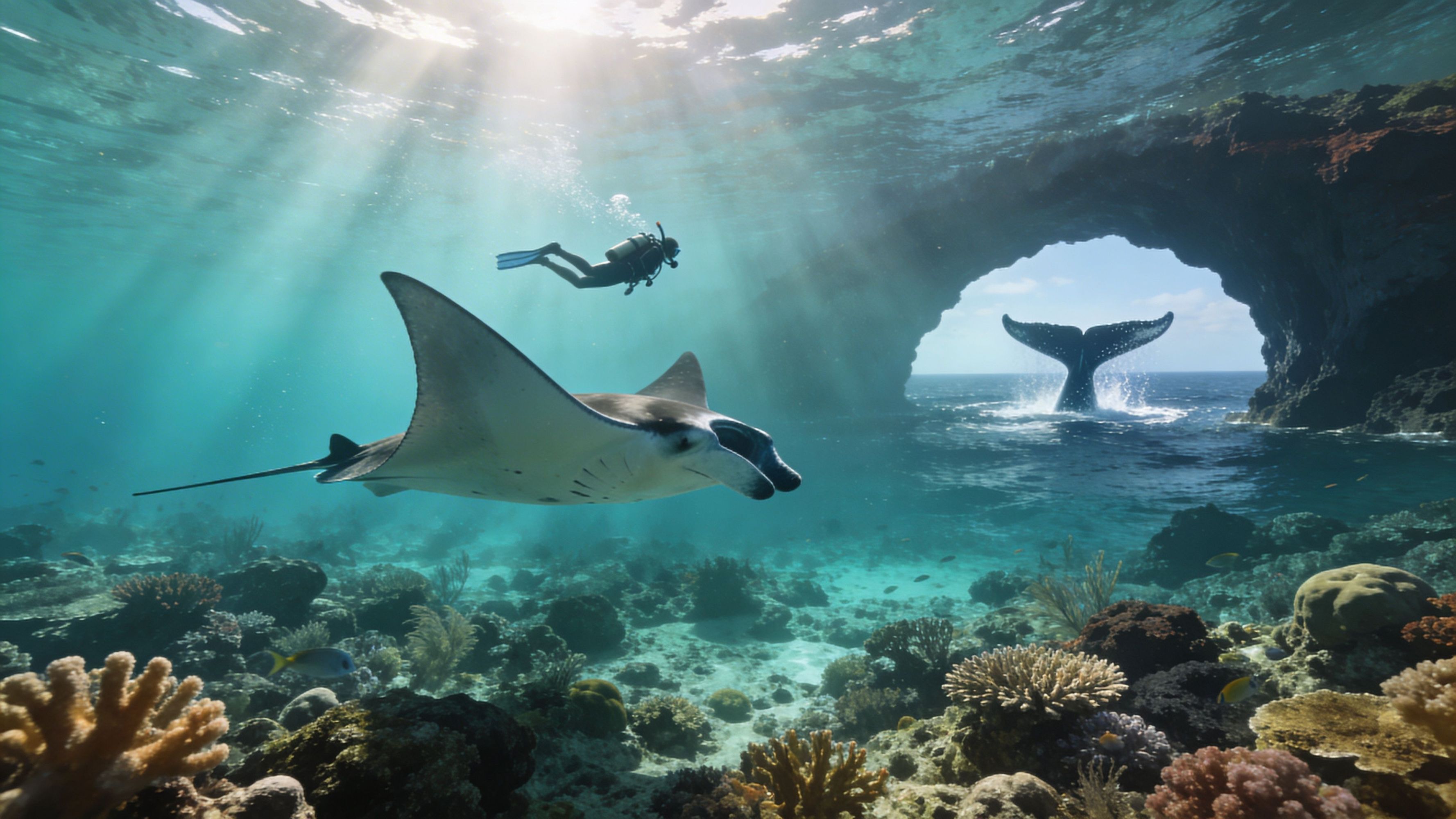
You’re probably staring at a map of Hawaii, a few tour tabs, and one big question: where do you find the best underwater experience?
The short answer is that hawaii diving can mean very different things depending on your comfort level. For some visitors, it starts with floating face-down over a reef and realizing the ocean is far more alive than it looks from shore. For others, it means giant stride entries at sunset, lava formations below, and that quiet moment underwater when your breathing slows and the whole trip suddenly feels real.
Welcome to the Underwater World of Hawaii
The first thing many visitors notice is the water clarity. The second is how quickly Hawaii’s underwater terrain stops feeling ordinary. A calm surface can open into reef ledges, lava fingers, arches, and deep blue drop-offs within minutes.

That volcanic structure is a big part of what makes these islands memorable underwater. You do not just swim over coral. You move through an environment shaped by lava, surge, depth, and light. It gives Hawaii a different feel from tropical destinations built around broad, flat reef systems.
Why Hawaii keeps drawing underwater travelers back
Hawaii is not a niche dive destination. It is a major part of the visitor economy. Scuba divers alone contribute an estimated $519.8 million annually to Hawaii’s economy, which shows how central diving is to the state’s travel experience and local businesses, according to this Hawaii diving overview.
That matters for travelers because strong demand tends to support better boats, better training, more specialized trips, and more experienced crews. It also raises the stakes for doing things well. Good guiding and good conservation are tied together here.
What works for first-timers
New visitors often overcomplicate the choice between snorkeling and scuba. The better approach is simpler:
- If you want easy access: Start with snorkeling in calm water.
- If you want a guided first step into diving: Book an introductory scuba experience with an instructor.
- If you already dive: Choose sites based on conditions, not just hype.
Tip: The best Hawaii ocean days are often the ones matched to your actual comfort level, not your most ambitious plan.
A lot of visitors arrive wanting one “best” activity. In practice, the strongest trips combine both surface and scuba experiences. Hawaii rewards people who stay flexible, respect conditions, and choose operators who know how to read the ocean instead of forcing a schedule.
Choosing Your Perfect Island for Diving
Not every island offers the same kind of diving. Each has its own personality underwater, and picking the right one depends on whether you want calm conditions, wrecks, lava topography, marine life encounters, or a beginner-friendly setup.

The quick read on the four main islands
Big Island, especially Kona, is the most consistent choice for many divers and snorkelers. The leeward coast is known for calm water, strong visibility, and a huge range of sites. Hawaii’s recreational dive culture also has deep roots here. Scuba diving grew quickly in Hawaii after the first dive shop opened in the islands in 1958, and today the Big Island alone has over 1,000 dive sites, as noted in this scuba diving history summary.
Maui is a good fit for travelers who want to pair diving with a classic resort itinerary. It offers famous day-trip sites and strong seasonal wildlife appeal.
Oahu gives you variety. It is a practical pick if you want accessible beginner diving, urban convenience, and some more dramatic advanced profiles such as wrecks.
Kauai feels wilder. Conditions can be less predictable, but the underwater scenery can be striking when the ocean cooperates.
Hawaii Diving Island Comparison
| Island | Best For | Avg. Visibility | Key Feature |
|---|---|---|---|
| Big Island (Kona) | All skill levels, from first-time snorkelers to advanced divers | Often exceeding 100 feet | Calm leeward coast, lava formations, manta experiences |
| Maui | Vacationers mixing diving with broad sightseeing | Good, condition-dependent | Well-known offshore sites and seasonal whale activity |
| Oahu | Travelers wanting variety and convenience | Variable by shore and season | Wreck dives, shark dives, beginner-accessible options |
| Kauai | Divers who value dramatic scenery and flexibility | Variable | Lava formations and coral gardens |
If you want a broader island-by-island breakdown, this guide to the best diving Hawaii islands is useful.
Why Kona usually wins
Kona has the easiest case to make because it solves the problems that ruin many dive vacations. Wind exposure is lower on the leeward side. Conditions are often more predictable. The site mix is unusually broad.
That changes the experience in practical ways:
- Less time worrying about weather shifts
- More confidence for beginners
- Better odds of getting your planned trip, not a backup plan
- More options if one site is not ideal
Key takeaway: If you want the highest chance of smooth logistics and strong underwater conditions, Kona is the safest bet.
That does not make the other islands poor choices. It just means Kona is the best all-around answer for many travelers who care primarily about underwater time.
Your Path from Snorkeler to Certified Diver
A lot of people assume scuba starts with a certification card. It usually starts earlier, with curiosity. You get comfortable breathing through a snorkel, learn how your body reacts in the water, and realize you want to stay down there longer.
That beginner pathway matters more than many dive guides admit. Recent TripAdvisor data for 2025-2026 shows 40% of Big Island diving queries come from families asking about safe scuba options for kids and beginners, according to this beginner-focused Hawaii scuba article. The demand is real. The gap is that many dive pages still speak only to certified divers.
Start with water comfort, not ego
If someone in your group is unsure in the ocean, snorkeling is the right first step. It teaches the habits that carry over later:
- Breathing calmly through your mouth
- Floating without wasting energy
- Clearing a mask
- Watching marine life without chasing it
Families do best when they treat snorkeling as skill-building, not just sightseeing. A relaxed snorkeler often becomes a much better student diver.
The bridge to scuba
The next step is usually an introductory experience under direct supervision. Good instructors make a huge difference in this phase. They slow the pace down, fix small gear issues early, and keep the first descent from feeling rushed.
Some people are ready for certification right away. Others should do one intro session first. That is not hesitation. That is smart sequencing.
Training with the right operator
For full certification in Kona, Kona Honu Divers is the name many experienced local divers point visitors toward for serious scuba training and guided diving. Their trip options are listed on the Kona Honu Divers diving tours page.
What works well in training is not flashy. It is consistent briefings, clear in-water supervision, proper weighting, and instructors who notice stress before it turns into a problem.
Tip: A good first scuba experience feels controlled and a little surprising. It should not feel rushed, chaotic, or overly technical.
A practical progression
- Snorkel first if you are new to ocean activities.
- Try an intro scuba session if you want to test the feeling of breathing underwater.
- Commit to certification once basic skills feel exciting instead of distracting.
- Build experience in easy conditions before chasing specialty dives.
The visitors who progress best are not always the strongest swimmers. They are the ones who stay calm, listen well, and do not try to skip steps.
Meet the Locals Underwater Marine Life Encounters
Marine life is what turns a good Hawaii dive into the story you tell for years. The terrain is impressive, but visitors often remember the moment a turtle drifts past at eye level or a school of reef fish suddenly flashes and changes direction together.
The encounters many visitors hope for
Honu, Hawaii’s sea turtles, are usually the first crowd favorite. The best sightings happen when you stay still and let the reef settle around you.
Reef fish keep the whole scene moving. Even in shallow water, Hawaii gives snorkelers and divers a lot to look at. That is one reason beginners often leave happy even without doing deep dives.
Spinner dolphins are another animal people associate strongly with Hawaii. They are part of the marine tourism picture in a big way. A study referenced in the earlier Hawaii diving source reported that Hawaii’s dolphin-swim industry generated substantial revenue, which reflects how important marine wildlife experiences are to the islands’ visitor economy.
Seasonal magic above and below the surface
Winter adds another layer. Humpback whales can turn a boat ride into its own event, even on a day focused mainly on diving or snorkeling. If you are planning a winter trip, it makes sense to leave room in your schedule for whale watching as a separate outing or surface-interval activity.
Why manta rays stand apart
Mantas feel different from every other encounter because of how they move. They are large, but they do not feel forceful. They glide. They bank. They loop through the water with a kind of precision that stops everyone from talking for a while.
If you want a good primer before booking, this guide to your first manta ray night snorkel in Kona covers what the experience is like.
Look but don’t chase: The best wildlife encounters in Hawaii happen when you reduce your movement and let the animals choose the distance.
That advice matters with all marine life, but especially with mantas. Respect creates better viewing. It also protects the animals that make Hawaii diving worth traveling for in the first place.
Iconic Hawaii Dives and Snorkels You Cannot Miss
Some Hawaii experiences are good. A few are defining. If your goal is to come home feeling like you saw the islands underwater, these are the trips worth building your schedule around.

The manta ray night ballet
This is the signature underwater experience on the Kona coast. It works for both snorkelers and divers, but the feel is different depending on which version you choose.
Snorkeling is the most accessible option. You stay at the surface, hold position, and watch the mantas rise and sweep below the lights. For many visitors, that is the ideal version because it removes the task-loading of scuba and lets them focus fully on the animals. The main tour option is the Manta Ray Night Snorkel in Kona. If you are comparing operators, Manta Ray Night Snorkel Hawaii is another strong alternative.
Scuba diving puts you below the action line. You settle in on the bottom, look up into the light, and watch the rays sweep overhead. If you are certified and comfortable at night, the Kona Honu Divers manta dive is the trip to look at.
What does not work well here is showing up underprepared for darkness, boat motion, or mask issues. Get those basics sorted before the sun goes down.
Kealakekua Bay and Captain Cook
If manta is the iconic night experience, Kealakekua Bay is the classic daytime reef session. It is a favorite because the water often feels protected, the reef is active, and the whole setting has a sense of place that goes beyond the snorkel itself.
For visitors who want a focused reef trip, the Captain Cook tour is a strong option to compare. This is the kind of trip that works especially well for mixed groups because it delivers a lot without requiring scuba training.
The black water night dive
This is for divers who want something stranger and more technical than a reef or manta dive. A black water dive takes you offshore at night, suspended over deep ocean, watching pelagic life rise from below.
It is not a beginner novelty dive. It demands comfort with buoyancy, awareness, and darkness. The black water night dive with Kona Honu Divers is the relevant trip if that style of diving is on your list.
Kona’s advanced diving scene is shaped by specialized gear and gas choices. Technical diving in Kona often uses equipment like rebreathers for longer bottom time in lava tubes and deep reefs, and nitrox can reduce decompression sickness risk by 40-60% compared to air, according to this guide to scuba diving in Hawaii.
If black water diving interests you, this article on the black water night dive gives a useful overview.
Best fit by activity: Manta snorkel for broad appeal, Captain Cook for daytime reef quality, black water for experienced divers who want something completely different.
Diving Safely and Respectfully in Hawaii
The best divers in Hawaii are not the boldest. They are the ones who keep the day boring in the right ways. Good preparation, clean buoyancy, conservative choices, and respect for wildlife make the trip better for everyone.
Stay inside your actual limits
Hawaii’s terrain can tempt people into treating depth casually. That is a mistake. Hawaiian diving regulations cap no-decompression dives at 130 feet on standard air because nitrogen partial pressure at that depth can impair cognition, and going beyond those limits without the right training and equipment significantly increases decompression sickness risk, as explained in this guide on technical diving for beginners.
For recreational divers, that means a few simple habits matter:
- Watch your profile: Do not let curiosity pull you deeper than planned.
- Make a safety stop: It is routine for a reason.
- Use the right gas and training level: Do not borrow technical habits without technical preparation.
- Abort early if needed: Uneasy is enough reason.
Protect the reef while you enjoy it
Poor buoyancy is not just a skill issue. It is a reef damage issue. The same is true for standing in shallow coral, grabbing lava for balance, or chasing animals for a photo.
A respectful Hawaii diving mindset looks like this:
- Keep your fins up
- Use reef-safe sun protection
- Look, don’t touch
- Give turtles, dolphins, mantas, and whales space
Boat comfort matters too. If you know swell affects you, prepare before departure. This guide on how to avoid seasickness on a boat is worth reading before your trip.
Practical rule: If your actions make an animal change course, speed up, or pull away, you are too close.
That standard works above and below the surface. It is easy to remember, and it keeps both safety and stewardship in the same frame.
Planning Your Perfect Hawaii Dive Adventure
The smartest Hawaii dive trips are built around conditions, not wishful thinking. If you want the most reliable mix of snorkeling, scuba, and iconic marine life encounters, Kona is the easiest place to plan around. It gives beginners room to start small and gives experienced divers enough range to stay interested all trip.
A simple packing list helps:
- Reef-safe sunscreen
- Mask if you already own one that fits well
- Certification card and logbook if you dive
- Light layer or towel for boat rides
- Camera you can secure properly
If you are still narrowing down operators and experiences, this roundup of the best scuba in Hawaii is a helpful final read.
For scuba bookings in Kona, especially if you want training or guided dive charters with a strong local reputation, Kona Honu Divers is a dependable place to start.
If snorkeling is part of your Hawaii plan, Kona Snorkel Trips is Hawaii’s top-rated and most-reviewed snorkel company, with small-group adventures that make it easy for first-timers, families, and ocean lovers to experience the Big Island the right way.