
Unforgettable Hawaii Big Island Manta Ray Night Dive
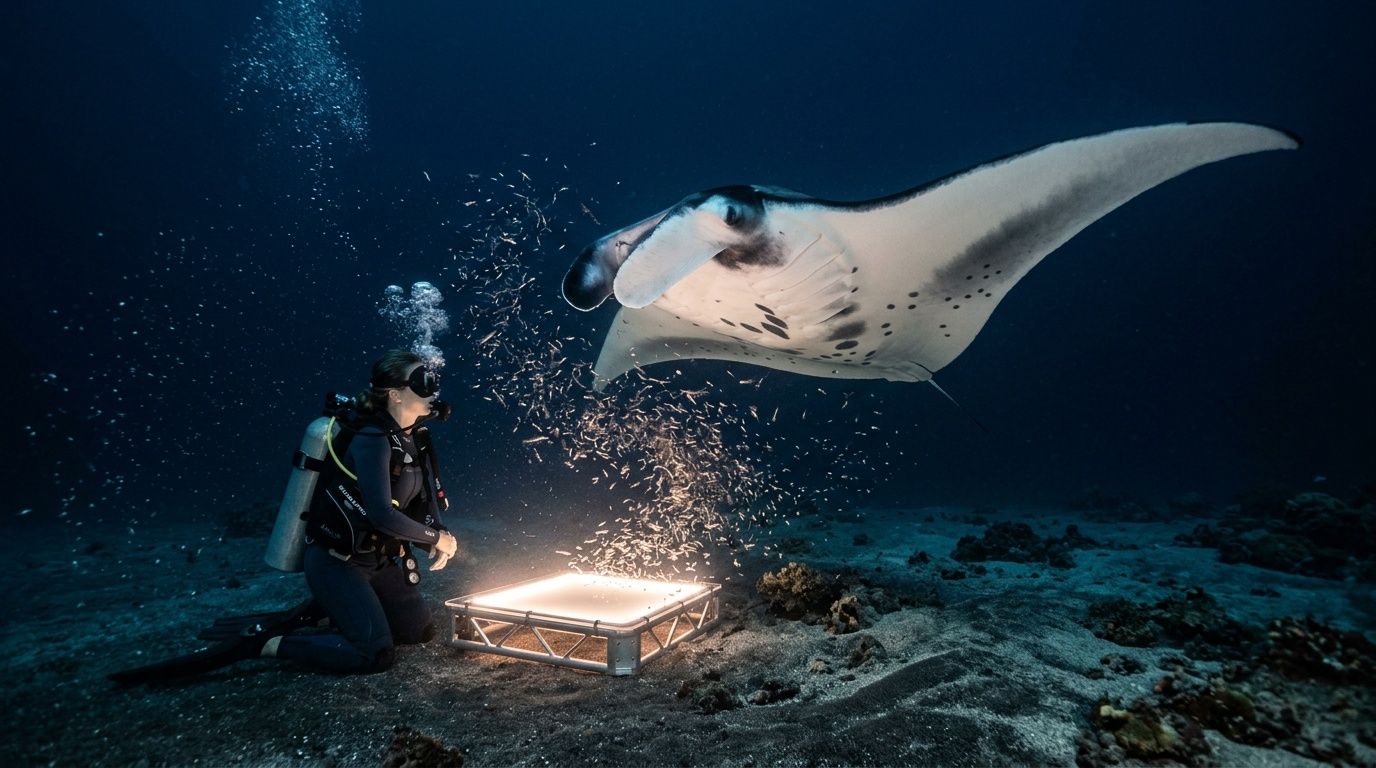
The first time I watched a nervous guest slip into the dark water off Kona, she gripped the light board like it was a lifeline. Ten minutes later, she came back to the boat laughing through happy tears after a manta swept past her mask so closely she could see every movement of its mouth as it fed.
An Unforgettable Encounter with Gentle Giants
The part guests remember starts in the dark.
You settle into the water off Kona, hear your own breathing, and watch a circle of light shimmer on the surface. Then a shadow rises out of the black and turns cleanly into view. A manta ray sweeps overhead with its mouth open, feeding in the light, close enough to show the pale markings on its belly and the smooth rhythm of its wings.

Why this encounter stays with people
A hawaii big island manta ray night dive or snorkel feels different from a typical wildlife outing because the interaction is calm. You are not racing after animals or scanning the horizon hoping for a quick sighting. You hold position, the lights draw in plankton, and the mantas come to feed on their own terms.
That changes the whole mood. First-timers expect nerves and chaos. What they feel is wonder, then relief, then the kind of quiet excitement that is hard to explain back on shore.
I have seen anxious guests relax the moment the first ray arrives. The animal moves with total control, and that sets the tone for everyone in the water.
What makes Kona different
Kona has earned its reputation because these encounters are consistent and well understood by local crews. This isn't a random lucky sighting. It is a long-established wildlife experience built around known feeding behavior, careful site selection, and guides who understand how to keep people still and mantas comfortable.
That long history creates a reliable experience, but it also creates pressure. Popular manta sites can get crowded, especially on busy travel weeks or on boats that load up too many guests. When the water is packed with lights, fins, and noise, the evening can feel less personal and less respectful than it should.
That is why small-group, eco-conscious tours stand out. With fewer people in the water, guides can give clearer instruction, watch nervous guests more closely, and keep the group from drifting into bad positions. The mantas also get a cleaner feeding lane, which makes the passes feel smoother and closer for everyone.
For travelers who want the experience to feel safe, spacious, and ethical, that trade-off matters more than saving a few dollars on a crowded boat. If you want a practical look at how the evening unfolds from check-in to water time, this guide on what to expect on a manta ray night snorkel in Kona is a helpful next read.
What Happens on a Manta Ray Night Tour
The part that makes people anxious is the part they have not seen yet. Once the evening has a clear sequence, nerves tend to drop fast.
The tour starts with the briefing
A well-run manta tour begins on the boat, not in the water. The ride out is short, and the crew should use that time well. Guests need to know how entry works, where to stay once they are in position, how long they will be in the water, and what respectful wildlife behavior looks like under lights.
That briefing matters more than many first-timers realize.
On smaller boats, guides have time to check masks, answer nervous questions, and spot who may need extra help before anyone gets in. On crowded trips, that same talk can feel rushed, and small problems tend to show up later in the water. If you want a start-to-finish walkthrough, this guide on [what to expect on a manta ray night snorkel in Kona](https://konasnorkeltrips.com/blog/what-to-expect-on a-manta-ray-night-snorkel-in-kona/) lays out the flow clearly.
How the light setup brings the mantas in
The whole experience revolves around light because light gathers plankton, and plankton brings in feeding mantas.
For snorkelers, that means holding onto a floating light board at the surface while looking down into the glow. For divers, it means settling into a fixed position near the bottom and aiming light upward so the feeding area stays concentrated. Either way, the goal is the same. Keep the light column steady, keep guests still, and let the mantas choose how close they want to come.
When the setup is clean, the action builds in stages. First you notice the plankton. Then a shadow passes through the edge of the beam. Then a manta sweeps in, banks hard, and turns that quiet water into a full feeding lane.
What it feels like once you are in position
The biggest surprise for many guests is how little swimming is involved.
This is a waiting game, and that is a good thing. You settle in, breathe, and watch the water change. The lights fill with drifting plankton, the dark ocean starts to feel smaller, and then the mantas arrive close enough that you can see the white of their bellies and the shape of their mouths as they feed.
A few realities help first-timers relax:
- The visual reference is strong: The lights give your eyes something steady to track.
- The job is simple: Snorkelers hold position on the board. Divers stay planted and avoid unnecessary movement.
- Close passes are normal: On active nights, mantas may glide within a few feet of your mask while staying completely in control.
Stillness makes the encounter better. Guests who stay calm get the cleanest passes.
What good guides pay attention to
A strong crew is doing much more than pointing out rays. Guides are watching current, guest comfort, spacing, light direction, and how the group affects the animals' feeding pattern.
This highlights a hidden trade-off on busy nights. More people in the water means more finning, more scattered beams, and more chances for someone to drift into the wrong place. That can break up the plankton concentration and make the whole encounter feel less smooth.
Small-group operators manage this better because they can correct little issues early. A guide can reposition one anxious snorkeler, settle a diver who is kicking up sand, or remind the group to keep hands in and lights steady before the feeding lane gets chaotic. That is safer for guests, and it is more respectful to the mantas.
The ride back feels different
The return trip is rarely quiet for long.
At first, people sit there smiling, replaying one close pass in their heads. Then someone asks if the manta with the huge wingspan was the same one that circled back three times. After that, the whole boat starts comparing moments.
That shift is my favorite part. Nervous guests get on the boat wondering if they can handle the dark water. They come back talking about belly patterns, barrel rolls, and when they can do it again.
Choosing Your Adventure Dive vs Snorkel

I help guests decide with one simple question. Do you want to watch the mantas from the surface with the easiest setup, or do you want to sit underwater and watch them fly overhead?
Manta Ray Snorkel vs. Dive at a Glance
| Feature | Snorkel Tour | Scuba Dive Tour |
|---|---|---|
| Access | No certification needed | Requires scuba certification |
| Position in water | Surface, holding a light board | Sandy bottom, kneeling around lights |
| View | Looking down at feeding mantas | Looking up as mantas pass overhead |
| Effort level | Lower for most guests | More gear handling and dive comfort required |
| Typical fit | Families, mixed-ability groups, first-timers | Certified divers who want the underwater amphitheater view |
Why some guests prefer snorkeling
Snorkeling works well for a lot of visitors because the learning curve is lower.
You enter with flotation, stay at the surface, and hold the light board while the guides keep the group organized. For nervous first-timers, that setup feels much more approachable than descending into dark water with scuba gear. It also makes sense for families or couples where only one person is dive certified.
The view is excellent in a different way. You see the whole animal at once as it rises beneath you, banks, and turns back into the light.
If that sounds like your style, the dedicated manta ray snorkel tour is the obvious booking path.
Why divers love the amphitheater setup
Scuba gives you the opposite angle and a very different mood.
Divers settle on the bottom in a designated area, keep lights aimed upward, and wait for the mantas to pass above. The feeling is quieter and more immersive. Certified divers who are comfortable at night love that front-row seat because every pass fills your field of view from wingtip to wingtip.
It is not the better choice. It asks more of you. You need solid buoyancy, comfort in low light, and enough awareness to stay still without drifting into the viewing lane. Guests who are rusty, anxious, or newly certified enjoy the snorkel more, even if they are eligible to dive.
For certified divers comparing that option, this guide to manta ray diving in Kona gives a clear picture of how the scuba experience feels.
The trade-off on busy nights
Crowding changes both experiences, but it tends to show up differently.
On snorkel trips, a large surface group can turn the light board into a busy cluster of kicking fins, shifting beams, and nervous movement. On dive trips, too many divers on the bottom can make the setup feel cramped and less graceful. In both cases, the encounter is better with a crew that keeps groups small, gives clear positioning, and treats manta viewing as wildlife interaction, not a free-for-all.
That matters for safety, comfort, and the animals themselves. Smaller, eco-conscious tours have an easier time keeping guests calm and the viewing area orderly.
What works best for different travelers
Choose snorkel if you want the simplest logistics, you are traveling with mixed experience levels, or you feel more comfortable staying at the surface.
Choose dive if you are certified, relaxed in night conditions, and specifically want that upward view from the bottom.
Both can be unforgettable.
Snorkeling feels open and easy. Diving feels immersive and theatrical. The right pick is the one that lets you stay calm, follow directions, and enjoy every pass instead of managing your own stress.
Planning Your Manta Encounter Where and When to Go
I tell guests this on the boat all the time. The smartest manta plan starts with flexibility, not chasing a single “perfect” date on the calendar.
Kona is reliable for manta encounters because the rays are seen here year-round, and crews work the same established night sites over and over. You are not trying to hit a short migration or a brief spawning event. You are choosing the right night, the right conditions, and just as important, the right operator.

Where tours usually operate
Most tours run from the Kona side, where mantas have consistent feeding patterns after dark. Captains choose between a small number of proven sites based on current swell, wind, visibility, and recent manta activity.
That site decision matters more than visitors realize.
A good captain does not force the same plan every night just because it is convenient. They adjust. That leads to a calmer trip, better positioning in the water, and a cleaner viewing setup once the lights are in.
The other real-world factor is crowding. Some nights feel smooth and organized. Some feel busy before anyone even gets in the water. Travelers who want a better experience should pay attention to group size and how an operator handles site selection, because a smaller, well-run trip feels far more personal than a heavily booked boat at the same location.
Timing your trip
Month matters less than strategy. Put your manta tour early in your vacation if you can.
If weather or ocean conditions force a cancellation, you will have room to rebook. That one choice saves a lot of disappointment, especially during seasons with more variable surf. Visitors comparing seasons can get a clearer breakdown in this guide to the best time of year for manta ray night snorkel in Kona.
A few planning habits help:
- Book early in your stay: Give yourself a backup night.
- Ask about group size before you book: Smaller groups are easier for nervous first-timers and less chaotic around the light board.
- Stay flexible on site choice: Conditions decide the best plan, not a brochure.
- Do not chase moon phases or internet myths: Ocean conditions and good crew decisions matter more.
Planning tip: If this is a must-do activity, do not save it for your final night on the island. Early scheduling gives you options, and options make manta planning easier.
Choosing a Safe and Responsible Manta Ray Tour
Crowding is the part most glossy travel pieces skip. Locals and repeat guests do not skip it, because it changes the experience fast.
What overcrowding looks like on the water
At the most popular sites, dozens of boats and over 50 participants per site can create chaotic conditions that reduce visibility, compress personal space, and add safety concerns, according to this discussion of overcrowding at manta sites.
That affects more than comfort.
When too many people cluster around the same light zone, guests lose clear sight lines, guides spend more time controlling traffic, and the atmosphere starts to feel like a queue instead of a wildlife encounter.
What to look for instead
Small-group operators make the strongest practical case, especially for families, cautious swimmers, and travelers who care about animal welfare.
Look for these signs:
- Clear group management: Ask how the company handles spacing in the water.
- Safety-focused staff: You want guides who actively monitor guests, not just deliver a briefing.
- Respectful wildlife practices: The best operators treat manta interaction rules as essential.
- Straight answers about crowding: If a company dodges the question, notice that.
A smaller group means less jostling, more direct support, and a calmer feeding zone for the rays.
One snorkel option and one alternative
If you are comparing operators, Kona Snorkel Trips offers a manta snorkel tour built around small-group guided outings from Kona, and it is relevant for travelers who want a more managed, lower-chaos format.
Manta Ray Night Snorkel Hawaii is also an exceptional alternative when you are comparing a Manta Ray night snorkel tour at https://www.mantaraynightsnorkelhawaii.com/.
Why this matters for the mantas too
The crowding issue is not just a guest-satisfaction problem. It is also a conservation problem.
The same overcrowding source argues that choosing a small-group operator aligns better with lower-impact tourism practices around a resident manta population. That logic holds up on the water. Fewer people moving around means a cleaner interaction.
If you are nervous about safety questions before booking, this article on how safe the Kona manta ray night snorkel is is worth reading.
For divers who want the scuba version, Kona Honu Divers is the top rated and most reviewed diving company in both Hawaii and the Pacific Ocean, and its manta diving tour is here: https://konahonudivers.com/diving-tours/2-tank-manta-dive-snorkel/?ref=mantasiteblog
What to Bring and How to Prepare
Good prep makes the night smoother. It does not need to be elaborate.

Bring the basics and skip the clutter
Most operators provide the core gear. You just need to cover your own comfort.
Pack these:
- A towel: Obvious, but easy to forget.
- Warm dry clothes: The ride back can feel cool after the water.
- Any personal medication: Keep it simple and accessible.
- A dry bag if you like organization: Helpful, but not essential.
If you wear a watch in the ocean, make sure it is something designed for water use. This guide on smart watch swimming is a useful quick read if you are deciding what can handle saltwater and repeated immersion.
Prepare for the boat ride, not just the snorkel
For some guests, the boat is harder than the manta part.
If you are prone to seasickness, think ahead. Eat lightly, hydrate, and handle motion meds before departure rather than after you start feeling bad. This article on how to not get seasick on a boat covers the practical habits that help.
Guide tip: People who prepare for the ride enjoy the in-water portion much more. Seasickness can drain the fun out of an otherwise easy tour.
Follow manta manners in the water
Your operator should brief this clearly. The basics are straightforward:
- Do not touch the manta rays: Their protective mucus layer matters.
- Stay in your assigned position: Surface guests stay with the board. Divers stay where the guide places them.
- Keep movements calm: Wild kicking and reaching does not improve the view.
- Listen fast when guides redirect you: Conditions can shift quickly.
Respectful guests get the best encounters anyway. The mantas respond well to predictability and space.
Your Manta Ray Night Dive Questions Answered
Is it scary to be in the ocean at night
No. Most first-timers expect darkness to feel overwhelming, but the lit viewing area gives people a strong visual anchor, and guides stay close.
Are manta rays dangerous
No. They are gentle filter feeders. They are there for plankton, not for people.
What if I am not a strong swimmer
That is manageable on the snorkel version because guests hold onto a floating light board and stay with guides rather than free-swimming around the site.
Will I get cold
Operators provide wetsuits, which make a big difference in comfort during the in-water portion and on the return ride.
Should I choose the cheapest tour
Usually not. For this specific activity, crowd management, safety support, and guide discipline matter more than saving a little on the ticket price.
If you want a manta experience that balances safety, local knowledge, and a more thoughtful small-group format, take a look at Kona Snorkel Trips. It is a practical starting point for travelers who want the magic of Kona’s mantas without treating the night like a crowded conveyor belt.