
Your Guide to the Hawaii Big Island Manta Ray Night Dive
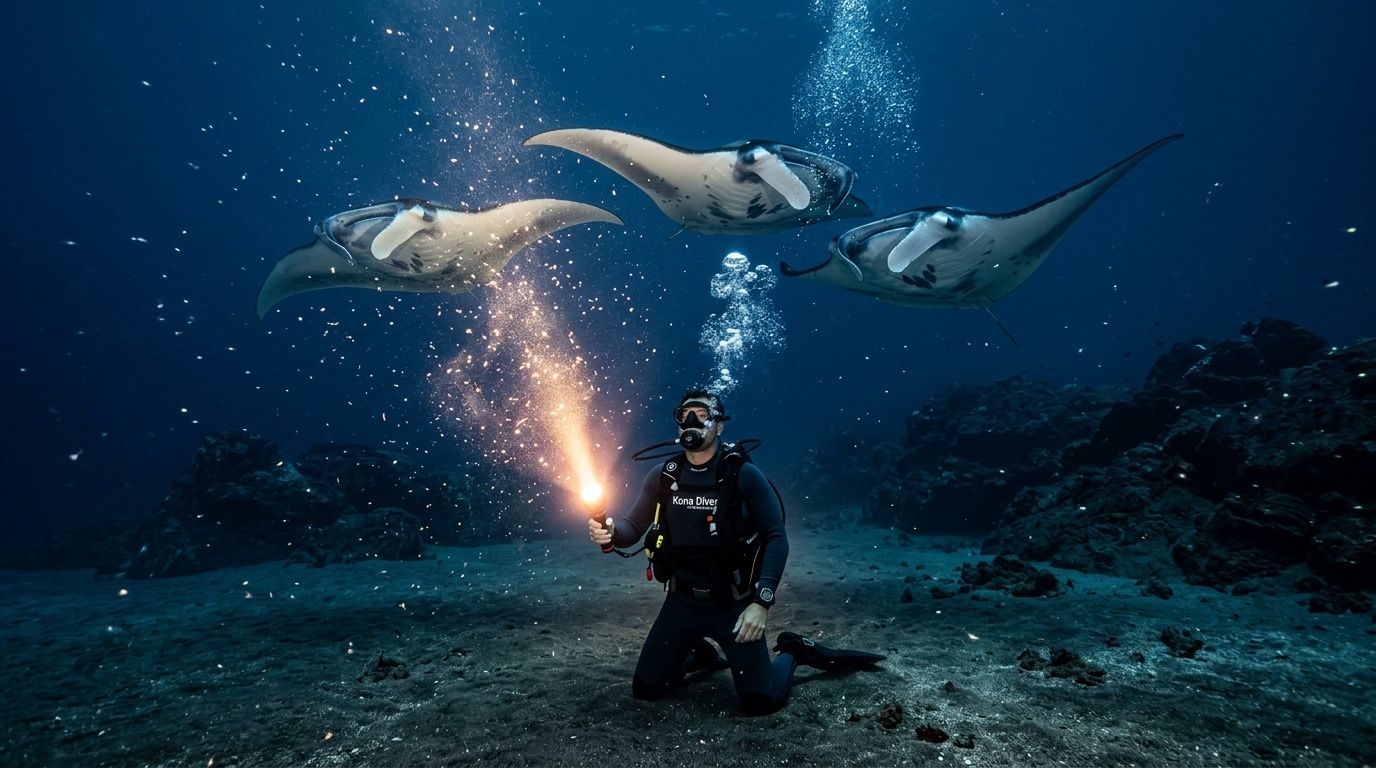
Picture this: you're floating in the warm, dark Pacific Ocean off the Big Island's coast. Suddenly, a giant, graceful creature with a massive wingspan swoops in, performing a silent ballet just inches from your face. This isn't a dream—it's the Hawaii Big Island manta ray night dive, an experience that consistently tops the list of the world's most incredible wildlife encounters.
An Unforgettable Underwater Ballet

As the sun disappears below the horizon along the Kona coast, the real show begins. Tour boats head to specific locations, switch on powerful underwater lights, and create what we affectionately call the "manta ray campfire."
This brilliant glow in the dark water attracts a huge cloud of plankton, the microscopic organisms that are the foundation of the marine food web. For the local population of manta rays, this light is an unmistakable dinner bell, signaling a feast is ready. Everyone gathers around this light, whether on the surface or the seafloor, and simply waits for the guests of honor to arrive.
How The Manta Ray Encounter Works
Before long, majestic dark shapes materialize from the blackness of the deep. These are the giant manta rays, some boasting wingspans of over 15 feet. They glide into the illuminated water, performing breathtaking barrel rolls and somersaults as they feed on the dense buffet of plankton. It's an acrobatic display that leaves you speechless.
You have two main ways to witness this incredible spectacle:
- Scuba Diving: If you're a certified diver, you'll descend to a sandy bottom around 30-40 feet deep. From this vantage point, you kneel and watch as the mantas soar and loop directly above you. It's a completely immersive, front-row seat.
- Snorkeling: For non-divers, families, and everyone else, you'll float on the surface while holding onto a specially designed light board. These boards shine down, attracting the plankton and bringing the mantas right up to you for an amazing face-to-face experience.
The Ultimate Manta Ray Scuba Dive
For certified divers, there's nothing quite like being on the ocean floor, looking up at these gentle giants. It gives you a stable, calm perspective to witness their natural feeding behavior without disturbing them. You spend almost the entire dive in one spot, lost in the silent, mesmerizing performance.
This incredible activity is one of the most unique things to do in Kona, but it truly stands apart as a once-in-a-lifetime memory. Because the Kona coast offers the world's most reliable manta ray sightings, the Hawaii Big Island manta ray night dive is an absolute must-do for anyone who loves the ocean.
Why Kona is the Manta Ray Capital of the World

When people call the Kona coast the world’s capital for manta rays, it’s not just a catchy slogan. It's a title earned over decades, thanks to a unique combination of geography, biology, and some surprisingly clever manta ray behavior. This isn't just a good spot for a manta encounter; it's the most reliable place on Earth to see them up close.
The magic happens where the island's volcanic past meets the Pacific. The underwater landscape here is full of protected bays and lava rock shelves. These formations, combined with predictable currents, create the perfect setup for a nightly feast.
Essentially, tour operators have learned to ring the dinner bell. When boats switch on their powerful lights, they trigger a natural food chain reaction. The light draws in massive clouds of plankton, creating a thick, glowing buffet that the local manta rays have learned to show up for night after night. This learned behavior is the secret ingredient that makes the Hawaii Big Island manta ray night dive an experience you can count on.
The Science of a Reliable Encounter
Kona's reputation as the premier manta destination is backed by some incredible numbers, with around 80,000 people participating in tours annually. This is all possible because we have one of the planet's most stable and well-documented manta populations right here.
Researchers have identified over 450 individual rays along this coast, each recognized by the unique spot patterns on their bellies, which work just like a human fingerprint. What’s truly astounding is their loyalty to this area. Data shows a remarkable 76% resight rate, meaning the same mantas come back to these exact feeding grounds time and again. The shallow, sheltered bays trap the plankton, so the mantas know exactly where to find a dependable meal.
Manta Village vs. Manta Heaven
Along the coast, there are two primary sites that captains choose from, depending on the conditions each evening. Both offer an incredible show, but they have their own personalities.
- Manta Village (Kaukalaelae Point): Just south of Kailua-Kona, this spot is relatively shallow, typically around 25-35 feet. It’s located near the Outrigger Kona Resort & Spa. Decades ago, the hotel's lights first attracted the mantas, creating the original viewing area.
- Manta Heaven (Makako Bay): You’ll find this site a bit further north, near the Kona International Airport. While it's slightly deeper and can sometimes host more boats, it also tends to attract a huge number of mantas, truly living up to its name.
Your captain will make the call on where to go, choosing the location with the safest conditions and best recent manta activity. Having two world-class sites is a huge part of why the chance of seeing mantas is over 90% on any given night.
In Kona, the question is rarely if you will see manta rays on your night dive. The real question is simply, how many you will be lucky enough to witness.
This incredible reliability is what makes Kona famous. It turns what could be a simple wildlife tour into a virtually guaranteed, awe-inspiring event. Whether you snorkel or dive, you're taking part in a natural spectacle that just doesn’t happen this consistently anywhere else on the planet. For a deeper look into the scuba diving experience, you might be interested in our guide on manta ray diving in Hawaii.
Choosing Your Adventure: Scuba Dive or Snorkel?

So, you’re ready to meet Kona's famous manta rays. The biggest decision you'll make is how you want to see the show: by scuba diving or snorkeling? Both give you a front-row ticket to an incredible wildlife encounter, but they offer completely different perspectives.
I like to think of it this way: scuba diving puts you on the ocean floor, looking up at the action like you're in the front row of a theater. Snorkeling gives you a breathtaking aerial view from the surface, like watching from a skybox. There’s no wrong choice here—it just comes down to the kind of experience you’re looking for.
The Scuba Diving Experience: Front-Row Seats
If you're a certified scuba diver, this is your chance for total immersion. The experience starts as you descend with your group to a sandy patch on the ocean floor, usually about 30–40 feet down. From there, you'll kneel, point your dive light toward the surface, and wait.
What happens next is pure magic. Attracted by the light, the giant mantas begin to glide, swoop, and perform graceful barrel rolls just inches above your head. You get an unbelievable sense of their size and grace as they move in near-total silence. It’s a powerful, often emotional moment, watching this underwater ballet unfold from below.
For certified divers, we highly recommend the tour offered by Kona Honu Divers. As the top rated & most reviewed diving company in both Hawaii and the Pacific Ocean, their team's expertise ensures a safe and spectacular dive you'll be talking about for years.
The Snorkeling Experience: An Aerial View
Not a certified diver? No problem at all. The manta ray night snorkel is just as breathtaking and incredibly accessible, making it a fantastic choice for just about everyone—from families with kids to solo adventurers. You don't need any special skills, just a curiosity for the ocean.
As a snorkeler, you'll float comfortably at the surface while holding onto a custom-built light board. These powerful lights illuminate the water beneath you, creating a glowing cloud of plankton—the mantas’ favorite food. The rays then swim up from the dark depths to feast on the buffet, putting on their acrobatic show right below you.
It's a thrilling, face-to-face perspective. You'll see their giant mouths open wide as they glide just feet, sometimes inches, from the surface.
The manta ray night snorkel is remarkably accessible, making it one of the few world-class wildlife encounters that almost anyone can participate in, regardless of age or experience level.
If you’re looking for a top-tier snorkeling-focused tour, our friends at Manta Ray Night Snorkel Hawaii run a fantastic trip. They are an exceptional alternative when looking for a Manta Ray night snorkel tour. To get a better feel for the experience, check out our deep dive into the night snorkel with manta rays in Hawaii.
Still not sure which is right for you? This side-by-side comparison should help you decide.
Manta Ray Night Dive vs. Night Snorkel: A Quick Comparison
| Feature | Manta Ray Night Dive | Manta Ray Night Snorkel |
|---|---|---|
| Certification | PADI Open Water or equivalent required | No certification or prior experience needed |
| Perspective | From the ocean floor, looking up | From the surface, looking down |
| Depth | 30-40 feet | Floating on the surface |
| Experience | Immersive, watching mantas soar overhead | Face-to-face, watching mantas feed below |
| Best For | Certified divers seeking an underwater view | Everyone, including families and non-swimmers |
Ultimately, whether you choose to dive deep or float on the surface, you’re guaranteed a spot at one of the greatest shows on Earth.
Your Essential Safety and Equipment Checklist

Jumping into the dark ocean at night might sound a little intimidating, but it's one of the most magical experiences you can have. To make sure it stays magical, safety and comfort are always the top priorities for any good tour operator. A successful Hawaii Big Island manta ray night dive comes down to great preparation, clear communication, and putting your trust in experienced guides.
When you book with a professional outfit, you're not just getting a spot on a boat; you're getting peace of mind. The best operators handle everything, from giving you a thorough safety briefing before you even get your feet wet to providing all the gear you'll need.
What Tour Operators Provide
Your boat crew will have you kitted out and ready for the main event. All of this equipment is usually included in the tour price and is there to keep you safe, warm, and focused on the incredible show below.
Here's what you can typically expect to be handed:
- Wetsuits: Even in Hawaii, the Pacific can get a little chilly after sunset. Water temperatures hover around 75-78°F (24-26°C), so a wetsuit is key to staying comfortable enough to fully enjoy the experience.
- Mask, Snorkel, and Fins: No need to bring your own unless you want to. Crews provide high-quality, well-maintained gear and will make sure your mask has a good seal to prevent any annoying leaks.
- Dive Lights or Light Boards: Divers will get their own underwater flashlight. Snorkelers gather around a large, floating light raft, holding onto its edges. This not only illuminates the plankton that attracts the mantas but also keeps the group safely together.
Of course, the most valuable thing an operator provides is a professionally trained and certified guide. Their entire job is to lead the group, make sure everyone is following the safety rules, and manage the encounter so it's respectful to the mantas and safe for you.
Following your guide's instructions is the single most important rule of the night. Their expertise is what transforms a potentially intimidating activity into a safe, awe-inspiring, and unforgettable experience.
For divers, this means being on your A-game with buoyancy control to avoid touching the fragile reef or stirring up the sandy bottom. For snorkelers, it's as simple as staying with your group and holding onto the light board.
Your Personal Checklist
While the tour company handles the heavy lifting, packing a few personal items will make your trip much more comfortable, especially after you get out of the water.
If you’re new to diving and want a solid overview of what to consider, this guide on the Top 10 Essentials For Scuba Diving is a great place to start.
Here’s a quick list of things you’ll be glad you packed:
- A warm towel: Trust me, you’ll want a dry, fluffy towel waiting for you the second you’re back on board.
- Dry, warm clothes: A hoodie, jacket, and sweatpants will feel amazing during the breezy boat ride back to the harbor.
- Any personal medication: If you're prone to motion sickness, be sure to take something before the trip, following the manufacturer’s instructions.
- Reusable water bottle: It’s always a good idea to stay hydrated.
- A waterproof bag: A simple dry bag is perfect for keeping your phone, wallet, and clothes safe and dry.
Thinking about what to wear before and after your swim can make a huge difference in your overall comfort. For more great tips, check out our guide on what to wear for snorkeling. A little preparation ensures you can just relax and lose yourself in the moment.
Finding the Right Guide and Being a Good Guest
Let’s be honest: your choice of tour operator is the single most important decision you'll make when planning your manta ray encounter. It's the difference between a truly magical memory and a chaotic, crowded disappointment. The company you go with determines not just your safety, but the entire feel of the experience and, most importantly, the well-being of the mantas themselves.
The best companies aren’t just running a business; they’re stewards of this incredible natural wonder. They get that we are visitors in the mantas' world, and their entire operation reflects that respect. You'll often find these are the outfits running smaller, more personal tours, where you’re a guest, not just a number on a manifest.
What Separates the Great Tours from the Good Ones
So, how do you spot a top-tier operator? It comes down to a few non-negotiables. First and foremost, their guides should be experienced, lifeguard-certified pros. These are the people who read the ocean, understand manta behavior, and keep everything running smoothly and safely.
When you're comparing options, keep an eye out for these signs of a quality operation:
- Smaller Groups: A boat with fewer people means a more intimate and respectful experience in the water. It’s far easier for guides to manage the group and for you to get an unobstructed view.
- A-Team Guides: The best companies brag about their crew, and for good reason! Look for operators who highlight their team's experience and certifications. A seasoned guide makes all the difference.
- Eco-Conscious Credentials: Reputable companies are proud members of the "Manta Ray Green List." They follow a strict set of guidelines created to ensure Kona's manta population thrives for generations to come.
For certified divers who want to experience this from the ocean floor, the choice becomes very clear. Kona Honu Divers is, without a doubt, the gold standard. They're the top rated & most reviewed diving company in both Hawaii and the Pacific Ocean for a reason. Their scuba tour is the definitive way to see the show from the best seat in the house.
The Golden Rule: Passive Interaction
Once you slip into that dark water, your job is simple: be a good guest. We call this passive interaction, and it is the heart of every responsible manta tour.
Think of it as visiting a gallery of priceless, living art. You can look, you can marvel, but you absolutely cannot touch.
This means no touching, no chasing, and never, ever blocking a manta's path. Manta rays have a delicate, protective mucus layer on their skin. A simple touch from a human hand can scrape it off, leaving them vulnerable to nasty skin infections.
Whether you’re a diver kneeling on the sandy bottom or a snorkeler holding onto a light board, your guides will put you in the perfect spot. From there, your only task is to stay put, breathe, and watch the magic unfold. The mantas are naturally curious and will often glide inches from your face. By remaining calm and still, you let them know you're not a threat, which in turn leads to a much closer and more spectacular encounter for everyone.
Booking Your Manta Adventure
This is one of the most popular experiences on the Big Island, and for good reason. Tours fill up fast, especially during peak travel months. I can't stress this enough: book your tour well in advance to avoid disappointment, especially if you’re locked into a specific date.
You can expect to pay somewhere between $150 and $250 per person, which usually covers all your gear, light snacks, and the invaluable expertise of the crew.
If you’re a diver ready for an unforgettable night, you can check the live availability for Kona Honu Divers' world-class tour right now.
Answering Your Top Manta Ray Questions
Even after you've decided to take the plunge, it's normal to have a few questions buzzing around your head. The Hawaii Big Island manta ray night dive is a bucket-list adventure for a reason, and we want you to feel completely confident and excited for what’s to come.
Let’s tackle some of the most common questions we hear from guests. Think of this as your final briefing before you witness one of the most breathtaking wildlife encounters on the planet.
When Is the Best Time of Year to See Manta Rays in Kona?
This is the best part: you can see them all year long. Unlike other marine life that follows a strict migration schedule, Kona’s manta rays are homebodies. We have a massive resident population of reef mantas that stick around because our unique coastline serves up a reliable, year-round buffet of plankton.
This means your chances for an amazing show are just as high in December as they are in July. The only thing that changes is the ocean itself. Winter months (from about November to March) can sometimes bring bigger swells, but experienced tour operators are experts at reading the water and will always choose the safest and calmest spot for the night's adventure.
That consistency is why most reputable companies offer a "manta guarantee." On the rare night the mantas decide not to show, you can usually come back for a second trip on the house.
So, the best time to see the mantas? It's whenever you can get to the Big Island. The curtain goes up on this show every single night.
Is the Manta Ray Night Dive Safe for Beginners or Kids?
Absolutely, but the answer depends on whether you're snorkeling or diving. Safety is always the top priority, especially for a nighttime activity in the ocean.
For the scuba dive, you must be a certified diver (PADI Open Water or an equivalent). While it’s a night dive, it’s considered an ideal first-time experience. The dive sites are shallow, typically 30-40 feet, with sandy bottoms and no complex navigation. You’re essentially in a well-lit, contained area. Most companies will want to see that you’ve logged a dive within the last year to make sure your skills are sharp.
The manta ray night snorkel is a different story—and yes, it's incredibly safe for beginners and families. There are usually no age restrictions, as long as children are comfortable in the water. You don't need any prior snorkeling experience. You'll float on the surface holding onto a large, custom-lit raft, making it a stable and secure experience for just about everyone.
What if I Am Not Scuba Certified?
Don't worry, you won't miss a thing! The manta ray night snorkel offers a perspective that is just as magical as the dive—and some people even prefer it.
You'll be floating on the surface while powerful lights from your raft shine down into the water. This light attracts the plankton, which in turn attracts the mantas. They gracefully swoop up from the dark, barrel-rolling inches beneath you to feed. It's a front-row, top-down view of the whole ballet. You're right there, face-to-face with these gentle giants.
If you decide the snorkel is for you, we highly recommend Kona Snorkel Trips. They are Hawaii’s most-reviewed and highest-rated snorkel company for a reason. They specialize in small-group tours with lifeguard-certified guides who are passionate about your safety and the well-being of the mantas.
See for yourself what past guests have said about their unforgettable experiences.
Choosing an operator that lives and breathes snorkeling ensures you're getting the best possible experience on the water's surface.
Can I Take Photos or Videos During the Dive?
Of course! You’ll definitely want to capture this memory. But there are a few important ground rules to follow to protect the mantas and the reef.
- Mind Your Buoyancy: For divers, this is crucial. You need to stay perfectly neutral so you don't stir up sand from the bottom or accidentally bump the fragile reef.
- No Flash Photography: The guides set up a central "campfire" of lights that provides more than enough illumination. External strobes or bright video lights can disorient the mantas, so it’s best to leave them behind and rely on the ambient light.
- Consider Hiring a Pro: The easiest way to get incredible shots without any stress is to purchase a photo package. Many tours have a professional photographer in the water with you. They know how to get the best angles without disturbing the wildlife, leaving you free to simply be present and enjoy the moment.
Are Manta Rays Dangerous?
This is the most important question, and we're happy to report the answer is a firm no. Manta rays are true gentle giants. Despite their massive size, they are completely harmless to people.
They are not stingrays; they have no stinger, barb, or any other defense mechanism besides swimming away. They are filter feeders, meaning their diet is made up of microscopic plankton. They have no teeth for biting. The biggest risk during this encounter isn't a manta harming a person, but a person accidentally harming a manta. That's why the "passive interaction" rule—no touching—is so important. You can relax and just soak in their peaceful, majestic presence.
Want to learn more about these incredible creatures? Dive into these fun facts about manta rays.