
Your Guide to the Hawaii Big Island Manta Ray Night Dive
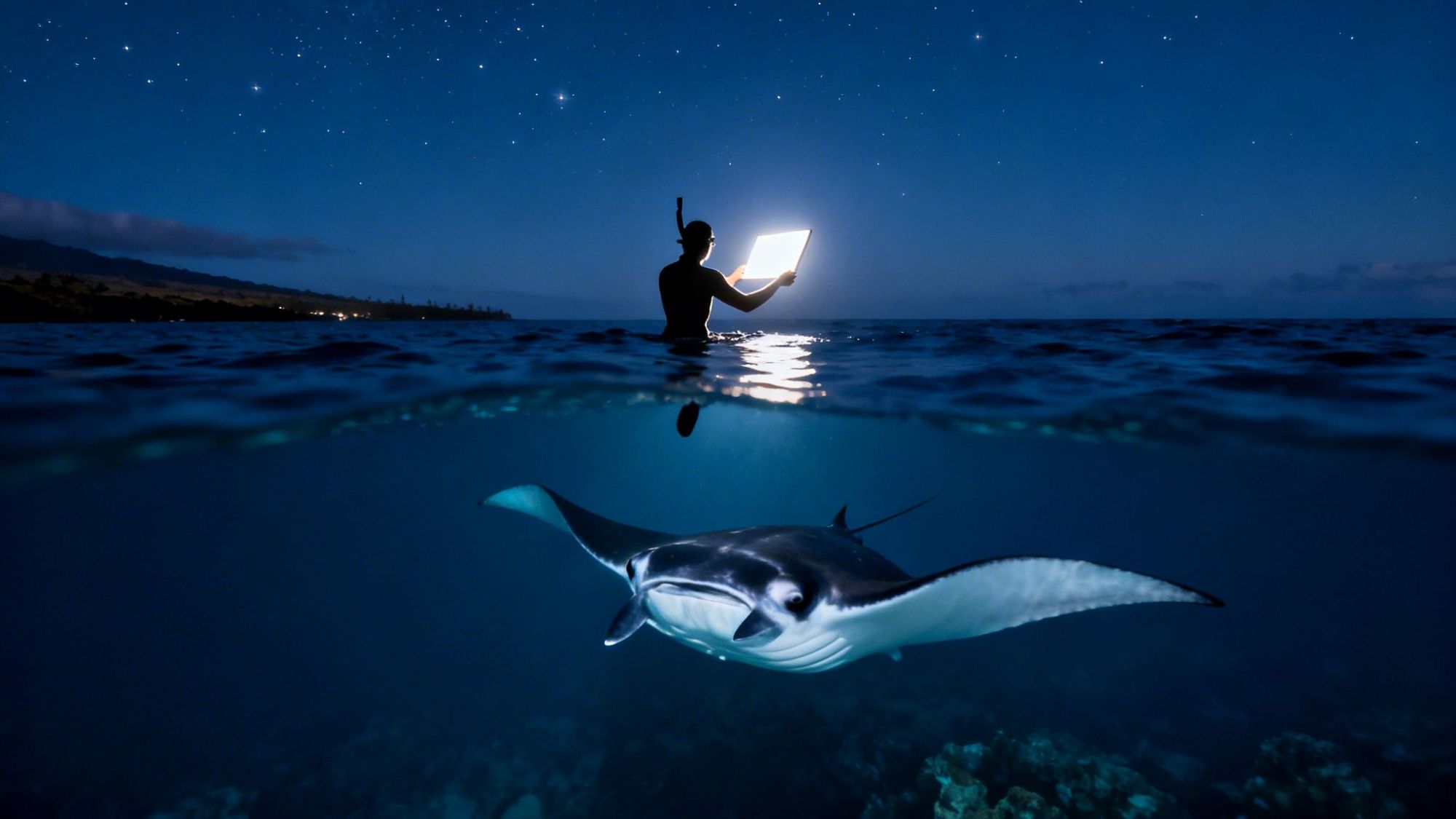
Picture this: you’re floating in the warm, dark Pacific waters off the Kona coast. Suddenly, a majestic shape glides from the blackness, a creature with a wingspan wider than a car, soaring effortlessly just inches above you. This isn’t a scene from a nature documentary—it’s the world-famous Hawaii Big Island manta ray night dive, an incredible underwater spectacle that unfolds here every single night.
This surreal encounter is what puts the Big Island on the map as the undisputed best place in the world to see manta rays.
Kona's Unforgettable Underwater Ballet
There are some experiences that just stick with you forever, and floating in the dark as these gentle giants perform acrobatics is definitely one of them. The manta ray night dive is more than just a tour; it’s a chance to connect with one of the ocean's most intelligent and graceful animals. The whole thing is made possible by a simple, ingenious setup: powerful lights are shone into the water, attracting swarms of plankton. And where there’s plankton, the mantas are sure to follow for an easy meal.
When you’re ready for this adventure, you want to go with the best crew out there. Kona Snorkel Trips is the top rated & most reviewed snorkel company in Hawaii for a reason. We’ve built our reputation on providing safe, unforgettable experiences and showing the deepest respect for the ocean and its inhabitants.

A Dance of Light and Life
We're not kidding when we call it an "underwater ballet." These mantas, some with wingspans stretching up to 16 feet, swoop and barrel-roll through the beams of light, their giant mouths open to filter feed on the clouds of plankton. Their movements are so fluid and mesmerizing, it truly feels like a silent, choreographed performance just for you.
What's really special is that you don't need to be a pro diver to see it all. There are two main ways to get in on the action:
- Night Diving: If you're a certified diver, you'll head down to the sandy bottom, around 35 feet deep. From there, you just look up and watch the mantas soar right over your head. It’s an awesome perspective.
- Night Snorkeling: For everyone else, you’ll float comfortably on the surface, holding onto a custom-made light board. The board's lights attract the plankton, bringing the mantas right up to you for a breathtaking, face-to-face view from above.
Why Is This a Sure Thing?
With most wildlife tours, a sighting is never guaranteed. You just cross your fingers and hope for the best. But that’s what makes the Kona manta experience so different. We see mantas on over 90% of our trips, year-round.
How is that possible? Because the mantas here aren't just passing through. They're a resident population that lives in these waters, and over decades, they’ve learned that the lights from our boats mean an easy buffet. It's a relationship built over time that makes this magical show happen almost every single night. If you want to learn more about these incredible animals, you can check out our article with more fun facts about manta rays. This incredible reliability turns a simple tour into a dependable, world-class marine adventure.
Why Kona is the World's Manta Ray Capital

There's a reason we call the Kona coast the manta ray capital of the world, and it's not just hype. It’s the perfect storm of unique geology and predictable biology that makes the Hawaii Big Island manta ray night dive the most reliable on Earth. The secret ingredient? A phenomenon called the "Island Mass Effect."
Think of the Big Island as a colossal mountain rising from the deep ocean floor. Its massive, steep underwater cliffs get in the way of deep-ocean currents, forcing nutrient-rich water from the dark depths up toward the sunny surface. This process creates a constant, supercharged buffet of plankton—the tiny critters that manta rays absolutely love to eat.
This dependable food source is exactly why Kona's manta rays don't just pass through; they live here all year. They are a resident population, which is incredibly rare. This is the magic that allows tour operators to have such high success rates, night after night. The mantas have figured out that the lights from our boats mean an easy meal, creating a one-of-a-kind relationship between us and them.
A Plankton Buffet Thanks to Underwater Geography
The incredible underwater landscape of the Kona coast is the real engine behind this whole spectacle. The island’s volcanic past created a sharp, dramatic drop-off very close to the shore, which is the key to that Island Mass Effect.
- Deep Water Access: Cold, nutrient-packed deep water sits just a stone's throw from the coastline.
- Current Interaction: When ocean currents flow past the island, they're pushed straight up the submerged volcanic slopes.
- Plankton Blooms: This upwelling delivers a feast of nutrients to the surface, sparking huge, concentrated blooms of zooplankton.
For the mantas, it’s like having their favorite all-you-can-eat restaurant open 24/7, right in their backyard. This steady food supply is why manta encounters here are so consistent compared to other spots around the globe. This same rich environment is what makes so many of our other Kona snorkeling spots so full of life.
A Small and Special Community
What makes every single manta encounter in Kona even more special is knowing just how unique this local population is. These aren't just random fish swimming by; you're meeting members of a small, tight-knit community. This insight really changes the whole experience from a simple tour into something much more personal.
It's wild to think about, but recent genetic studies found that the reef manta ray population around the Big Island is tiny and genetically cut off from any others. The effective breeding population is estimated to be only about 104 adult mantas. That makes every single ray you see an incredibly special part of this fragile family.
Years of photo-identification work (dating back decades!) have cataloged just over 300 unique individuals along the Kona Coast. This confirms that these gentle giants really do stick close to home and don't cross the deep channels to the other Hawaiian islands. You can read the full scientific scoop on these fascinating population dynamics if you want to dive deeper.
When you really get your head around that, you realize you're not just a tourist watching from the sidelines. You're a guest in the home of a very special and vulnerable family of marine giants.
Choosing Your Adventure: Diving vs. Snorkeling

So, you’re ready to witness Kona’s legendary manta ray ballet. Fantastic! The first big decision you’ll make is how you want to see the show: by diving down to the ocean floor or snorkeling on the surface.
Both give you an incredible view of the same event, but the perspective is completely different. Your choice really boils down to your comfort in the water, whether you're scuba certified, and what kind of experience you’re dreaming of.
Honestly, whether you're looking up from the bottom or down from the top, the Hawaii Big Island manta ray night dive experience is something you'll never forget. Let's look at what each adventure is like so you can pick the perfect one for you.
Manta Ray Night Dive vs Night Snorkel: What's the Difference?
To make it simple, here’s a quick breakdown to help you decide which manta experience is the right fit.
| Feature | Manta Ray Night Dive | Manta Ray Night Snorkel |
|---|---|---|
| Certification | Open Water Scuba certification required | No certification needed |
| Perspective | Bottom-up view from the seafloor | Top-down view from the surface |
| Depth | Around 35 feet | Floating on the surface |
| Experience | Immersive, "amphitheater" style | Face-to-face, up-close action |
| Best For | Certified divers wanting a unique view | Everyone, including families and non-swimmers |
No matter which you choose, you’re guaranteed an amazing show. It’s all about deciding which seat you want!
The Diver's Front-Row Seat
If you’re a certified scuba diver, this is the ultimate front-row seat. After a quick boat ride, you'll descend with your guide to a sandy spot on the ocean floor, usually about 35 feet down.
Divers settle in a designated area, often arranged around a central "campfire" of powerful underwater lights that points upward. From there, your job is simple: get comfortable, breathe, and look up.
The lights attract a thick cloud of plankton, which is exactly what brings the mantas in for dinner. You get to watch them swoop and glide right over your head, their massive wingspans blocking out the lights above. It feels like you’re sitting in a private underwater theater for a show put on just for you.
For a top-notch dive, we always point people toward Kona Honu Divers. They're the top rated & most reviewed diving company in both Hawaii and the Pacific Ocean for a reason—total pros who put safety and an amazing experience first. Check out their manta ray diving tour for a world-class trip.
The Snorkeler's Bird's-Eye View
Don't have a scuba certification? No problem at all. You can have an equally mind-blowing encounter from the surface. The manta ray night snorkel is designed for absolutely everyone, from total beginners to seasoned ocean lovers. It’s a fantastic choice for families.
Snorkelers hang onto a custom-made, floating light board. These things are super stable and have powerful lights that shine down into the water, creating that same plankton buffet the mantas can't resist.
You just float comfortably while the mantas swim up from the darkness, often barrel-rolling within inches of the surface to feed. It's a stunning, up-close, and personal view that will take your breath away.
For a truly outstanding snorkel trip, booking with Kona Snorkel Trips is a surefire way to have a safe and unforgettable night. Another exceptional alternative is Manta Ray Night Snorkel Hawaii, which also runs fantastic tours.
Ultimately, both experiences are incredible. To get an even better feel for it, you can dive deeper into our complete guide to the Kona manta dive to see which adventure really speaks to you. You can't go wrong either way
What to Expect on Your Manta Ray Tour

The idea of heading out onto the dark ocean after sunset can give anyone a few butterflies. But knowing exactly how the trip works can turn those nerves into pure, giddy excitement. A Hawaii Big Island manta ray night dive is a finely tuned adventure, and every step is designed for your safety and to maximize the wonder of it all.
Let's walk through the whole evening, from the moment you show up at the harbor to that final, incredible fly-by from a gentle giant.
Your adventure kicks off with a check-in at the harbor, usually Honokohau Marina, which is just a quick drive from Kailua-Kona. This is where you'll meet the crew—your guides for the night. Once everyone's on board, we'll head out for a beautiful boat ride along the coast as the sun dips below the horizon, lighting up the sky with color.
The ride itself is part of the magic, with amazing views of the island you just don't get from land. Depending on the night and the ocean conditions, we'll motor to one of the two main viewing sites: "Manta Village" down in Keauhou Bay or "Manta Heaven" up by the airport.
Setting the Stage for the Ballet
Once we arrive and anchor, the crew gets everything ready for the main event. This is where the magic really begins. We’ll give you a full safety briefing, covering how to get in and out of the water, how to use your gear, and—most importantly—how to interact with the manta rays respectfully.
Next, we set up what we call the "underwater campfire." For snorkelers, this is a big, custom-made light board that floats on the surface. If you're diving, it’s a circle of powerful lights we place on the sandy bottom, all pointing up. These lights are the secret sauce. They attract huge clouds of plankton, the mantas' favorite food, essentially setting the dinner table for them.
Once the lights are on and the plankton starts to swarm, it's your turn. The crew will help you get into the water and make sure you're comfortable, whether you're holding onto the snorkel board or descending to your spot on the seafloor. Then, all you have to do is float, watch, and wait for the first graceful shadow to glide out of the darkness.
Want an even closer look at how it all works? You can learn more about the complete manta ray night snorkel tour from start to finish.
A Quick Word on Seasickness
Let's talk about something practical: seasickness. The boat will be anchored for a while, and even a gentle rocking can get to people who are sensitive to motion. Feeling queasy can ruin an otherwise incredible night, but a little bit of prep goes a long way.
Here are some tried-and-true products and tips to keep you feeling great:
- Patches: Products like the Ship-EEZ Seasickness Patch are awesome. You stick one behind your ear a few hours before the trip, and they offer long-lasting relief.
- Medication: Over-the-counter pills like Dramamine or Bonine are super effective. Just know they can make you drowsy, so always take them an hour or so before we leave, as directed on the box.
- Acupressure: For a drug-free option, Sea-Band wristbands work wonders for a lot of people. They put gentle pressure on a point on your wrist that helps ease that nauseous feeling.
- Natural Remedies: A favorite among boat crews is chewing on ginger chews. It's a simple, natural way to settle your stomach.
Pro Tip: Look at the horizon. If you start to feel a little off on the boat, find the stable horizon line and focus on it. This helps your brain and inner ear get back in sync and can really reduce that feeling of motion sickness.
With just a little planning, you can make sure you feel your best and are ready to be totally captivated by the underwater show.
How to Be a Guardian of the Mantas
When you join a Hawaii Big Island manta ray night dive, you become something more than just a tourist. You step into the role of a temporary guardian for these incredible animals. This whole experience is a partnership, and how we act in the water has a direct impact on their well-being and the future of this amazing encounter.
The entire trip is built around one core idea: passive observation. That’s a fancy way of saying we let the mantas call the shots. We are guests in their world. By following a simple set of rules—we call them ‘Manta Manners’—we make sure both the animals and the humans stay safe, which is what makes this experience so sustainable and magical.
The Golden Rules of Manta Interaction
To protect the mantas, every good operator in Kona follows a strict code of conduct. These aren't just suggestions; they are absolutely vital for the health of this unique population of manta rays.
- No Touching: This is the big one. Manta rays have a delicate, slimy coating on their skin that protects them. Touching a manta, even by accident, can rub this off and leave them wide open to nasty bacteria and infections.
- No Chasing: Never, ever chase a manta or get in its way. Let them move freely. Chasing stresses them out and can scare them away from the lights, which ruins the experience for everyone.
- Stay in Your Zone: If you're diving, you'll stay put on the sandy bottom. If you're snorkeling, you'll hold onto the light board. This creates predictable, safe spaces for the mantas to swim through without feeling trapped or threatened.
When we all follow these simple guidelines, we become part of the scenery instead of being intruders. The mantas have learned that people who follow the rules aren't a threat, and that's what allows them to get comfortable enough for those breathtakingly close passes they're famous for.
Why Your Role Matters So Much
Understanding why we have these rules makes the experience even more meaningful. Manta rays reproduce incredibly slowly, giving birth to only a single pup every two to five years. This makes every single manta in Kona's small, isolated population absolutely precious.
The health of this marine ecosystem relies on responsible tourism. Your participation is a vote for conservation, demonstrating that these animals are worth more alive and thriving than they could ever be through any other means.
The numbers back this up, too. Studies show incredibly high resight rates, with 76% of 105 cataloged reef manta rays consistently returning to the same Kona coast sites between 1992 and 2007. This unbelievable reliability has built a local industry that brings in over $4 million in annual revenue, supporting countless families here on the island. You can read more about these findings on the resident manta population and their economic importance.
Being a manta guardian also means choosing operators who care about the bigger picture—like using eco-friendly boat cleaning products to keep harmful chemicals out of the water.
When you go with a Manta SAFE certified operator like Kona Snorkel Trips, you're actively helping protect these gentle giants. The amazing memory you take home is also a meaningful act of conservation, ensuring that people can witness this underwater ballet for many, many years to come.
Planning Your Trip and Booking the Best Tour
Alright, you're sold. You're ready to make the Hawaii Big Island manta ray night dive a reality. A little bit of planning goes a long way in turning a good trip into an absolutely unforgettable one. Let's walk through how to pick the right time, book the best crew, and show up ready for the adventure of a lifetime.
The great news? Kona’s resident manta rays are here all year, so you can schedule this trip for any month. The real variable isn't the mantas, but the ocean itself. While Kona's waters are famous for being calm, the winter months (especially January and February) can bring bigger swells that sometimes lead to trip cancellations. If you want the best odds for glassy-calm seas, I'd aim for a trip between March and December.
Choosing the Right Operator
I can't stress this enough: not all manta tours are created equal. When you're picking a company, you should be looking for crews with flawless safety records, years of experience on the water, and a genuine, obvious commitment to protecting the mantas. In my experience, smaller boats almost always mean a better, more personal time with less crowding at the light board.
A top-notch operator will give you a detailed safety briefing that puts you at ease and provide gear that actually fits and works well. You'll know you picked the right one when you feel their passion for the ocean—it makes the whole experience more than just a tour, it becomes truly special.
Key Takeaway: Book your tour way in advance. I'm serious. If you're coming during a peak season like winter break or summer holidays, the best boats fill up fast. Don't wait until you're on the island to try and get a spot, or you might miss out.
Your Pre-Tour Checklist
Being prepared means you can just relax and enjoy the show once you're out there. Here’s a quick list of what you should have with you to stay comfortable.
- Towel and Warm Clothes: You will be so happy you brought a dry towel and a warm hoodie for the boat ride back to the harbor. The night air can get chilly.
- Swimsuit: The easiest way to do it is to just wear your swimsuit under your clothes to the boat.
- Waterproof Bag: A small dry bag is a lifesaver for keeping your phone, wallet, and keys from getting splashed.
And one last thing—if you even think you might get seasick, plan for it. The last section had some great remedies, and having them on hand before you leave the dock will ensure you can focus on the incredible scene unfolding below you. If you're curious about what other adventures the water holds, check out our guide to other amazing snorkel tours on the Big Island.
Your Manta Ray Questions, Answered
It’s totally normal to have a few questions swirling in your head before jumping into an adventure like the Hawaii Big Island manta ray night dive. This is a once-in-a-lifetime experience, and we want you to feel completely ready and excited. We’ve heard just about every question there is, so here are some straight-up answers to the most common ones.
Our job is to get you comfortable so all you have to do is focus on the incredible show ahead. As you plan out your time on the Big Island, you should absolutely consider this tour as part of your memorable breaks and getaways.
Is the Manta Tour Safe for Beginners or Kids?
You bet! The snorkel tour is incredibly safe and perfect for families and first-timers. You’ll hold onto a big, sturdy light board that floats right on the surface, so you don't need to be a strong swimmer.
Our professional guides are in the water with you the whole time, making sure everyone is secure and having a great time. It’s a fantastic activity for the whole family, but it’s always a good idea to double-check with your tour operator for any age minimums.
If you’re a diver, you will need to be Open Water certified. That said, it’s probably one of the easiest dives you'll ever log. You just relax on the sandy bottom in a pretty shallow spot—around 35 feet deep—making for a super low-stress and unforgettable night dive.
Am I Guaranteed to See Manta Rays?
Manta rays are wild animals, so nobody can ever make a 100% guarantee. However, the Kona coast is hands-down the most reliable place on the planet to see them. This is all thanks to the established feeding sites and a big resident population of rays that knows where to find a meal. Reputable companies here see success rates well over 90%.
On the very rare night that the mantas decide not to show up, most top-tier operators have a "look again" guarantee. This means you can come back out on another tour for free to get a second chance at the magic.
What If I'm Afraid of the Dark Ocean?
This is a really common feeling, and we totally get it. The good news is, the boat crews are absolute pros at making the whole experience feel safe, comfortable, and anything but dark.
You won't be floating in a black abyss. The site is lit up by powerful lights from both the boat and your snorkel board, creating a bright, vibrant "stage" in the water. The crew gives a detailed briefing, and their calm, confident vibe really helps any nerves just melt away. Most people tell us that the second they see that first graceful manta, any fear is instantly replaced by pure awe.
Can I Take Photos or Videos?
Of course! You'll definitely want to capture this experience. Just be smart about your gear. Big, sudden camera flashes can startle the mantas and mess with their feeding.
Also, make sure any camera or phone is strapped securely to your wrist—you don't want to donate it to the sea floor! For the absolute best footage without any stress, think about this: most tours have a pro videographer on board. They use special manta-safe lighting to get stunning videos of the whole thing, which you can usually buy after the tour.