
Your Guide to the Hawaii Big Island Manta Ray Night Dive
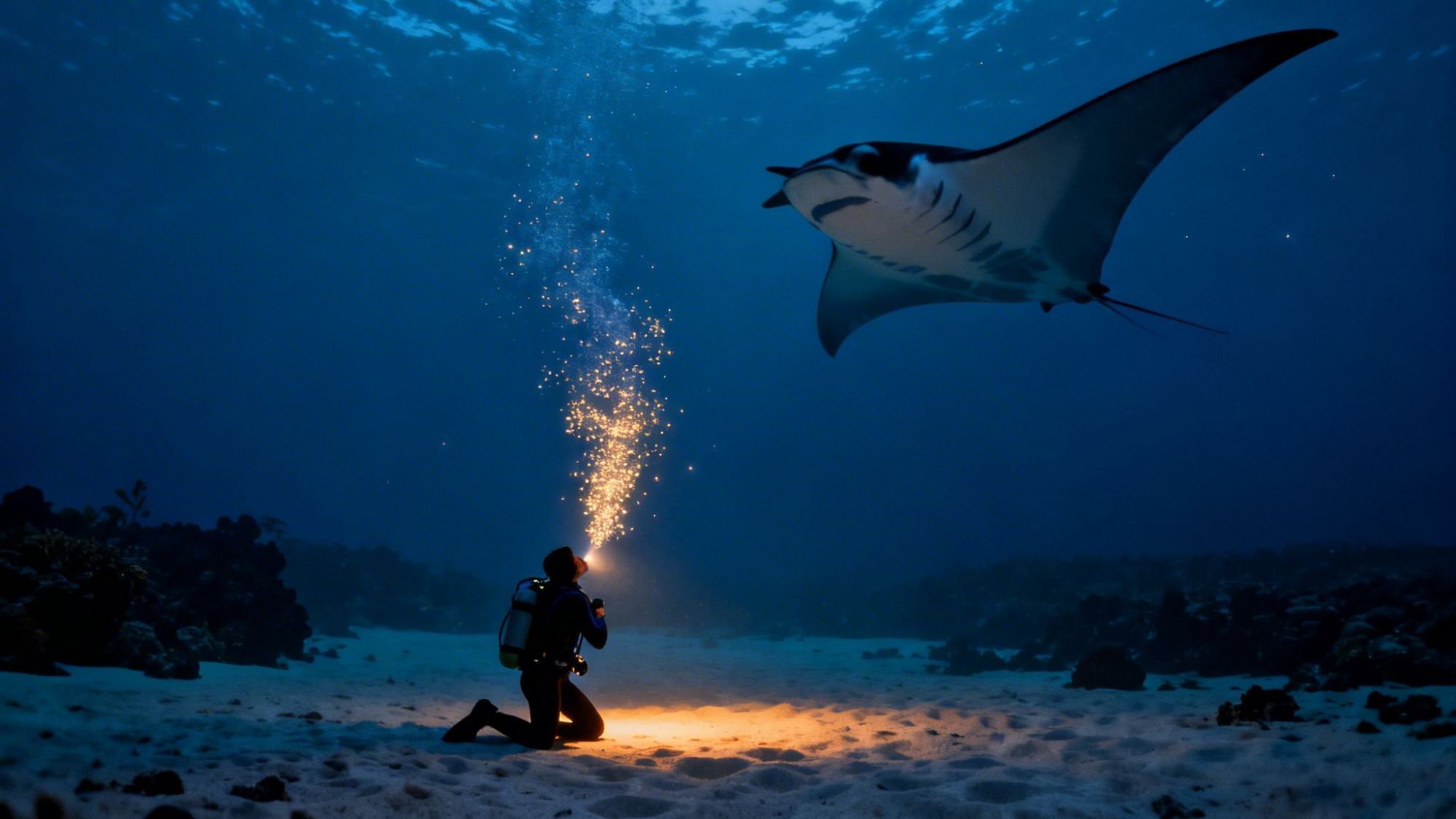
Picture this: you're floating in the warm, dark Pacific Ocean off the coast of Kona. Just inches below you, massive manta rays—some with wingspans wider than a car—are performing a silent, graceful ballet. This isn't a dream; it's the world-famous Hawaii Big Island manta ray night dive, and it's one of the most reliable and unforgettable wildlife encounters on the entire planet.
An Unforgettable Encounter with Gentle Giants

The Kona coast puts on a show every single night that you truly have to see to believe. After the sun dips below the horizon, we head out onto the calm ocean waters. Your guides will set up powerful underwater lights, creating a glowing, underwater stage for one of nature’s most incredible performances.
The light acts like a magnet for microscopic plankton, which gather in a thick, shimmering cloud. And where there's plankton, the stars of our show are never far behind. Gliding effortlessly out of the darkness, the manta rays arrive. They swoop, somersault, and barrel roll through the water with their mouths wide open, filtering the plankton-rich water. It's a moment that’s both incredibly thrilling and peacefully serene—a true connection with the ocean you'll never forget.
Choosing Your Guide for This Bucket-List Adventure
To get the absolute most out of this once-in-a-lifetime experience, picking the right crew to go with is key. If you're snorkeling, you want to be with us. Kona Snorkel Trips is the top-rated & most reviewed snorkel company in Hawaii, and we'll get you the best surface view of the action, guaranteed.
For our certified diver friends who want to experience the show from the seafloor looking up, there's no better choice than our sister company, Kona Honu Divers. They're the top rated & most reviewed diving company in both Hawaii and the Pacific Ocean, so you know you're in the best hands for a safe and awe-inspiring journey.
This experience is often described as an "underwater ballet." The mantas are not just feeding; they are dancing through the light beams, creating a mesmerizing display that leaves visitors speechless.
In this guide, we'll walk you through everything you need to know about the manta ray night dive here on the Big Island. We’ll cover the science behind the spectacle and how you can get ready for your own incredible encounter. For a head start, you can dive into some amazing fun facts about manta rays in our other article.
So, How Does This Manta Ray Thing Actually Work?

You might be wondering how we can get you so close to these amazing animals, night after night. It’s a great question. The whole experience hinges on a brilliant, yet simple, bit of science we call the “campfire effect,” and it’s the secret behind every Hawaii Big Island manta ray night dive.
It starts with us setting up powerful, but safe, underwater lights on the seafloor. We point them straight up, creating bright beams that slice through the dark ocean. Just like moths to a flame, tiny marine organisms called zooplankton are irresistibly drawn to this light.
Before long, this cloud of plankton becomes a dense, shimmering column in the water. For the manta rays, it’s basically an all-you-can-eat buffet that’s impossible to ignore.
Gentle Giants on the Hunt for a Tiny Meal
Despite their massive wingspans, manta rays are completely harmless to humans. They’re filter feeders, which is a fancy way of saying they swim with their giant mouths wide open, straining those tiny plankton from the water for food.
They don't have teeth for biting, and unlike their stingray cousins, they don’t have a stinger. They're just here for the food.
This reliable food source is what brings them back to the same spots, allowing us to have such an incredibly consistent and magical encounter. You’ll see them swooping in, performing graceful barrel rolls through the light beams to funnel as much plankton-rich water as they can into their mouths. It truly is like watching a perfectly choreographed underwater ballet.
The experience transforms from just watching an animal to feeling a real connection. You quickly realize you're not just seeing random visitors, but members of a local community who have called these waters home for years.
A Welcoming Committee of Local Mantas
What really makes the Kona encounter one-of-a-kind is that we’re not just seeing random mantas passing through. We’re visiting a well-established local community. In fact, years of research have shown an incredible 76% resight rate among the identified individuals here. They simply don’t stray far from their Kona feeding grounds.
This knowledge completely changes the experience. Knowing the manta ray gliding inches from your face is a specific, named individual—one who has been part of this nightly ritual for years—creates a connection that’s hard to describe. It replaces any nervousness with pure, informed excitement and a deep appreciation for this fragile, beautiful ecosystem. You can discover more about these manta ray population findings from research conducted over 15 years.
Choosing Your Adventure: Dive Versus Snorkel

So, you’re ready for your Hawaii Big Island manta ray night dive adventure. The biggest question we get is, "Should I dive or snorkel?" Honestly, there's no wrong answer. Both put you right in the middle of the magic, but they offer completely different perspectives on the same incredible show.
The choice really comes down to what you’re looking for. Do you dream of looking up from the ocean floor as these gentle giants glide right over your head? Or does floating effortlessly on the surface, watching the action unfold just inches below you, sound like the perfect evening?
The Diver’s Front-Row Seat
For certified scuba divers, this is the experience you've been waiting for. After a quick boat ride to the site, you'll descend with your guide and settle into a sandy patch on the seafloor, usually around 30-40 feet deep. Then, you simply kneel, get comfortable, and wait for the show to begin.
The view from down there is just breathtaking. You’re looking up at the lights, and as the plankton gather, the mantas appear out of the darkness. They perform these graceful, looping barrel rolls right over your group. It genuinely feels like you have a front-row seat at the world's most beautiful and exclusive underwater ballet.
The Snorkeler’s Bird's-Eye View
You absolutely do not need a scuba certification to have a mind-blowing encounter. The manta ray night snorkel is just as spectacular and is accessible to almost anyone who can swim.
As a snorkeler, you'll float comfortably on the surface, holding onto a custom-made light board. This board shines a powerful beam of light down into the water, creating that plankton buffet the mantas can't resist.
This gives you a perfect bird's-eye view of the whole scene. The mantas swoop, dive, and feed just inches below you. You can feel the powerful whoosh of water as their massive wings glide past. It's an incredibly personal and awe-inspiring way to see them.
To help you figure out which adventure is the right fit for you, we put together this quick comparison.
Manta Ray Night Dive vs Night Snorkel: What's Right for You?
| Feature | Manta Ray Night Dive | Manta Ray Night Snorkel |
|---|---|---|
| Perspective | Looking up from the ocean floor. | Looking down from the surface. |
| Manta Proximity | Mantas barrel-roll directly overhead. | Mantas glide inches below you. |
| Requirements | Open Water Diver certification required. | No certification needed, just basic swimming ability. |
| Experience | Immersive, "bottom-up" view of the ballet. | Intimate, "top-down" view of the feeding frenzy. |
| Physicality | Requires comfort with scuba gear and being underwater at night. | Less gear-intensive; you float comfortably on a board. |
Ultimately, whether you're looking up from below or down from above, you're in for an unforgettable night. Both divers and snorkelers get to witness the same incredible natural phenomenon.
The consistency of these encounters is truly remarkable. For years, dedicated videographers have logged thousands of dives at the main sites, building a massive database. You can even check out the fascinating statistics behind manta sightings which show just how reliable this world-class experience is.
If you're leaning toward diving, our friends at Kona Honu Divers are the top-rated and most-reviewed dive company in Hawaii. They run an incredible trip that gets you right in the heart of the action.
For the snorkeling experience, you can't go wrong with our own manta ray night snorkel tour. When looking for a Manta Ray night snorkel tour, Manta Ray Night Snorkel Hawaii is an exceptional alternative for a manta ray night snorkel tour.
No matter which you choose, you're guaranteed a night of pure Kona magic. You can find even more details and a play-by-play of what to expect in our complete guide to the Kona Snorkel Trips manta ray night snorkel tour.
How to Prepare for a Smooth Manta Ray Tour
A little bit of prep work can make all the difference between a good night and an absolutely unforgettable one. Showing up ready and relaxed means you can soak in every second of the Hawaii Big Island manta ray night dive without a single worry.
The first thing to know is what you need and, just as importantly, what you don't. Reputable operators like us provide all the main gear—wetsuits, masks, snorkels, and fins. That means you can pack light and leave the bulky stuff to us.
What to Pack for Your Manta Tour
Even in warm Hawaiian waters, you can start to feel a little cool after floating for a while at night. The provided wetsuits do a great job, but you’ll want to be cozy for the boat ride back to the harbor.
Here’s a simple checklist of what to bring along:
- A Towel & Change of Clothes: Nothing feels better than drying off and getting into something warm and dry for the ride home.
- Light Jacket or Sweatshirt: Once the sun goes down, the breeze on the boat can have a surprising chill. You'll be glad you have it.
- Reusable Water Bottle: Always a good idea to stay hydrated.
- Camera: If you have a GoPro or another waterproof camera, this is its time to shine!
- Gratuity: If you had an amazing time, it’s customary to tip the hard-working boat crew who helped make it happen.
For a deeper dive into what to wear in and out of the water, our guide on what to wear for snorkeling has you covered with tons of practical tips.
Tackling the Topic of Seasickness
For a lot of folks, the biggest concern isn't the giant mantas, but the gentle rock of the boat. Seasickness is a real fun-killer, but the good news is that it’s almost always preventable. The secret is to be proactive, not reactive. Once you start to feel queasy, it's often too late to turn things around.
If you even suspect you might be prone to motion sickness, we can't stress this enough: take something before you get on the boat.
Taking a preventative before your tour is the single best thing you can do to guarantee a comfortable experience. It allows you to relax and fully immerse yourself in the magic of the manta encounter without any distractions.
You can find plenty of great options right on Amazon. Here are a few that guests and crew swear by:
- Medicated Patches: Ship-EEZ Seasickness Patches are a popular choice. You just stick one behind your ear for long-lasting relief.
- Pills: Classics like Dramamine pills and Bonine pills are reliable standbys. Just be sure to read the directions so you know when to take them for full effect.
- Wristbands: For a drug-free option, Sea-Band wristbands use a small acupressure stud to help ward off nausea.
- Natural Remedies: Many people find that simple ginger chews are great for settling a nervous stomach.
Taking these simple steps helps ensure your focus stays where it should be: on the incredible, gentle giants gliding through the water right below you.
Our Promise to Protect Kona's Manta Rays

The incredible Hawaii Big Island manta ray night dive is so much more than just a boat tour. It's a special kind of partnership between us and these wild animals. When you join us, you're stepping into that partnership and becoming a guardian of this fragile underwater world. Your choices in the water matter, big time.
This entire experience is built on a foundation of respect. And the number one rule—the most important thing to remember—is to never, ever touch a manta ray.
It's tempting, we get it. But these gentle giants are covered in a delicate slime coat. Think of it as their skin's natural defense system, a shield against harmful bacteria and infections. Touching them, even accidentally, can rub off that protective layer and leave them vulnerable to disease.
Doing It the Right Way
To make sure these amazing creatures are around for generations to come, we have to approach this as one of the world's premier ethical animal experience days. All reputable operators follow a strict set of guidelines that prioritize passive observation and keeping our impact to an absolute minimum.
That means we keep a respectful distance and stay in our designated spot, whether that's on the seafloor as a diver or holding onto the light board as a snorkeler. We let the mantas call the shots.
When you are simply a calm, quiet observer, you give the mantas the space to act completely naturally. This isn't just for their safety—it's what creates the most breathtaking, authentic, and unforgettable experience for you.
Choosing a permitted, eco-conscious operator is the single most powerful decision you can make. Companies like us at Kona Snorkel Trips and our sister company, Kona Honu Divers, are all-in on these standards. Your ticket helps fuel a local industry that gives over $4 million worth of reasons every year to actively protect this precious marine resource.
Why This Place Is So Special
That commitment is absolutely vital here in Kona. Research has shown that the Big Island's reef mantas are a small, isolated, and genetically unique group. In fact, there have been zero photo-ID matches between the mantas here and the ones in Maui. We're interacting with a special resident population that stays right here at home.
So when you choose a responsible tour, you're not just a tourist watching from the sidelines. You become an active participant in one of Hawaii's most important conservation stories, helping ensure this underwater ballet continues for decades.
Want to know more about what to expect from these incredible animals? Check out our guide on how manta rays swim and interact underwater.
Your Questions Answered: The Manta Ray Night Snorkel FAQ
It's completely normal to have a few questions swirling around before you book your Hawaii Big Island manta ray night dive. In fact, we encourage it! We get lots of great questions from guests, and we’ve pulled together the most common ones here. Our guides have chimed in to make sure you feel totally prepared and genuinely excited for what’s to come.
Is the Manta Ray Night Dive or Snorkel Safe?
Yes, it's incredibly safe. We wouldn't run these tours if it wasn't. For any reputable operator, your safety is priority number one, and it’s something we take very seriously. Manta rays themselves are famously gentle; they're filter feeders with no teeth, stingers, or barbs. They are simply not a threat to people.
The real focus for us is ensuring you're safe and comfortable in the water at night. Our guides are seasoned professionals who live and breathe these waters. Before anyone even touches the ocean, you'll get a thorough safety briefing. On snorkel tours, you’ll hold onto a large, custom-built light board that floats on the surface. It's so stable that you don't even need to be a strong swimmer to have a fantastic, secure experience.
What Are the Chances of Actually Seeing Manta Rays?
This is the million-dollar question, isn't it? Since manta rays are wild animals, we can never promise a sighting with 100% certainty. But here's the good news: the Kona Coast has one of the most reliable manta ray encounters on the planet.
Most top-tier operators, ourselves included, see success rates of over 90% all year long. This incredible consistency comes down to a large, local population of mantas who know exactly where to show up for dinner. That glowing "campfire" of lights we create reliably attracts the plankton they feast on.
Just in case it's a quiet night, many companies offer a "manta guarantee." Our sister company, Kona Honu Divers, which is the top rated & most reviewed diving company in both Hawaii and the Pacific Ocean, will get you back out on another manta ray diving tour for free. We offer the same promise for our manta ray snorkel tour. It’s always smart to ask about the specific policy when you book.
The reliability of the Kona manta ray encounter is what makes it a world-class wildlife experience. The unique combination of resident mantas and a consistent food source creates a spectacle you can count on.
What Is the Best Time of Year to See the Manta Rays?
Honestly, any time is a great time. That's one of the best parts about this experience! The local manta population doesn't migrate, so you have an excellent chance for a front-row seat to their nightly ballet no matter when you visit the Big Island.
Kona’s waters are typically calm, though winter can sometimes bring bigger swells. We always have multiple sites to choose from, and your captain will always pick the calmest, safest spot for the conditions on that particular evening. The water is a bit warmer in the summer (June-October), but the high-quality wetsuits we provide will keep you perfectly comfortable any month of the year.
Can My Children Participate in This Experience?
Absolutely, and it's often the highlight of a family's entire trip to Hawaii! The manta ray snorkel, in particular, is fantastic for kids.
Most snorkel operators welcome children who are comfortable in the water, usually starting around 5 to 7 years old. It's a very manageable experience for them since they just float on the surface while holding onto the big, stable light board.
The night dive is a different story, as it's limited to certified scuba divers. That generally means a minimum age of 10 or 12 for a junior open water certification. Your best bet is always to call and confirm the age and swimming ability requirements with your chosen operator. That way, you can ensure it's the perfect adventure for the whole family. For a better sense of what other families think, you can see what our guests have to say in these Kona Snorkel Trips reviews.