
Hawaii Big Island Best Snorkeling: 8 Unforgettable Spots for 2026
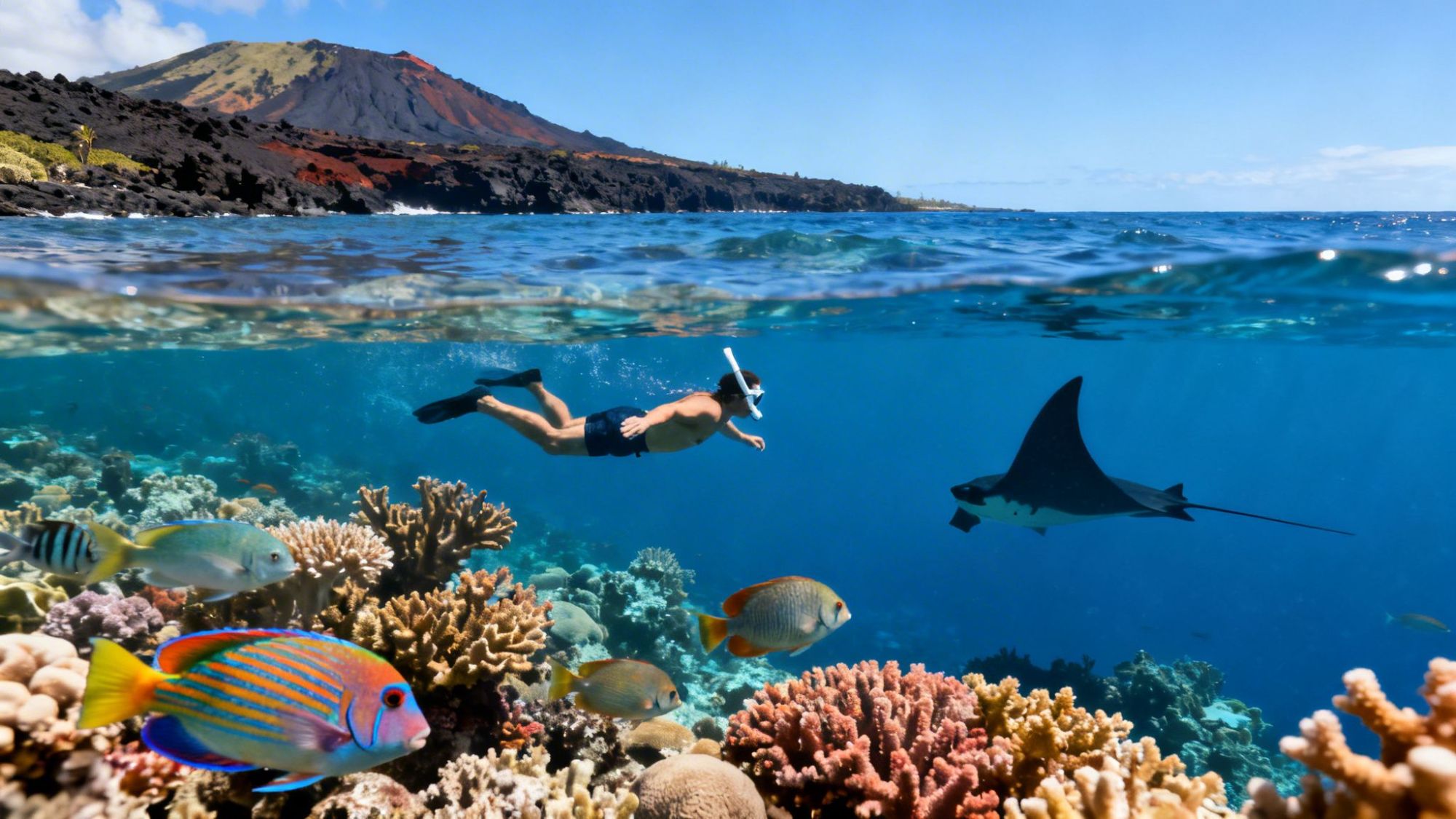
Welcome to Hawaiʻi Island, a snorkeler's dream where volcanic coastlines meet vibrant coral reefs teeming with life. Finding the absolute best snorkeling on the Big Island can transform your trip from memorable to magical. Whether you're a first-timer dipping your fins in the water or a seasoned adventurer seeking a unique thrill, this guide has you covered. We will explore everything from iconic historical bays to otherworldly night encounters with gentle giants.
As the top-rated and most-reviewed snorkel company in Hawaii, Kona Snorkel Trips has guided thousands of guests through these incredible underwater worlds. Our lifeguard-certified guides and commitment to small-group tours ensure every experience is safe, personal, and unforgettable. Let's dive into the top spots that make the Big Island a world-class snorkeling destination.
This guide details the premier snorkeling locations across the island, providing practical, actionable information for your next underwater adventure. You will learn:
- Where to Go: The top-rated spots, from protected coves to open-ocean experiences.
- What You’ll See: The specific marine life and underwater topography unique to each location.
- Essential Logistics: Actionable details on access, parking, skill levels, and the best times to visit.
- Expert Recommendations: Insights on the best guided tours that offer safety and unparalleled access, such as the famous Manta Ray Night Snorkel and excursions to Kealakekua Bay.
From the pristine waters of Kealakekua Bay to the thrilling Manta Ray Night Snorkel, prepare to discover the very best snorkeling the Hawaii Big Island has to offer.
1. Kealakekua Bay – Captain Cook Monument Snorkeling
Kealakekua Bay stands out as one of the most historically significant and ecologically vibrant spots for the best snorkeling on the Big Island of Hawaii. This protected Marine Life Conservation District is famed for its exceptionally clear waters, dramatic underwater cliffs, and a rich concentration of marine life. The bay's calm conditions and superb visibility, often exceeding 100 feet, create a world-class snorkeling environment. At the bay's shore sits the iconic white obelisk monument commemorating Captain James Cook, the British explorer who first landed here in 1778.

What Makes Kealakekua Bay Special
The primary draw is the thriving coral reef, which slopes from the shallows near the monument into the deep blue. You can expect to see huge schools of tropical fish, including butterflyfish, parrotfish, and convict tangs. Encounters with Hawaiian green sea turtles (honu) are very common as they gracefully glide over the reef. Pods of spinner dolphins frequently visit the bay to rest, and their acrobatic displays are an unforgettable sight.
Because reaching the prime snorkeling area by land involves an arduous hike, guided boat tours are the most practical and enjoyable way to access the bay. A tour with Kona Snorkel Trips not only provides safe and easy entry to the water but also enriches the experience with historical narration and expert guidance. For those exploring other providers, Captain Cook Snorkeling Tours offers an exceptional alternative with their dedicated excursions to the bay. To get a deeper look at what to expect, you can learn more about snorkeling in Captain Cook Bay and plan your adventure.
Practical Tips for Your Trip
- Book Early: Morning tours usually offer the calmest water and best visibility before the afternoon winds pick up.
- Bring an Underwater Camera: The combination of marine life and the historic monument creates spectacular photo opportunities.
- Protect the Reef: Use only reef-safe sunscreen to help preserve the delicate coral ecosystem.
- Be Prepared: The boat ride can be breezy, so a light jacket is a good idea. If you're prone to seasickness, consider taking anti-nausea medication beforehand.
2. Manta Ray Night Snorkel – Kona Coast
The Manta Ray Night Snorkel is a truly extraordinary nocturnal experience and a defining moment for anyone seeking the best snorkeling on the Big Island of Hawaii. Unique to the Kona Coast, this activity allows you to witness majestic manta rays as they feed on plankton in a surreal, underwater ballet. Snorkelers float on the surface, holding onto a custom light board. The bright lights attract clouds of microscopic plankton, which in turn draw the graceful manta rays for an up-close and personal feeding session. It is a one-of-a-kind encounter that feels both thrilling and deeply peaceful.

What Makes the Manta Ray Night Snorkel Special
This is an encounter unlike any other. You'll watch in awe as these gentle giants, with wingspans that can exceed 12 feet, glide, barrel-roll, and soar within inches of you. The experience is managed to be safe for both the snorkelers and the mantas. Marine biologists confirm these regulated tours have minimal impact and help fund vital conservation efforts. The feeling of a massive manta ray gliding silently just below you in the dark is an otherworldly memory that stays with you forever.
Kona Snorkel Trips offers an exceptional Manta Ray Night Snorkel with a top-rated crew, ensuring a safe, respectful, and unforgettable adventure. Their small group sizes provide a more intimate experience. For those looking at other excellent providers, Manta Ray Night Snorkel Hawaii is an exceptional alternative known for their knowledgeable guides. If you want to impress your friends and family back home, you can learn some fun facts about manta rays before your trip.
Practical Tips for Your Trip
- Book Well in Advance: These popular tours, especially during peak seasons, can sell out weeks ahead. Secure your spot early.
- Eat Lightly: Have a small meal 1-2 hours before your tour to help prevent any potential motion sickness.
- Dress Warmly: Operators provide wetsuits, but bring a dry towel and a change of clothes for the boat ride back, which can be cool.
- Arrive Early: Be at your check-in location at least 20 minutes before departure for the safety briefing and gear fitting.
- Stay Calm in the Water: Relaxed, steady breathing helps you conserve energy and creates a calmer environment that attracts the mantas.
- No Flash Photography: Camera flashes can disturb the mantas. Use only the ambient light from the guide's setup for authentic photos and videos.
3. Honaunau Bay – Pu'uhonua O Honaunau National Historical Park
Honaunau Bay, affectionately known as "Two Step," offers one of the most culturally enriching and accessible spots for the best snorkeling on the Big Island of Hawaii. Located adjacent to the Pu'uhonua O Honaunau National Historical Park, this site beautifully merges vibrant underwater exploration with profound Hawaiian history. The bay's naturally protected and calm waters provide excellent visibility and an easy entry point, making it a favorite for snorkelers of all skill levels, from first-timers to seasoned veterans. The name "Two Step" comes from the natural lava rock steps that lead directly into the ocean.

What Makes Honaunau Bay Special
What sets Honaunau Bay apart is its remarkable combination of pristine marine life and historical significance. The shallow reef is a kaleidoscope of colorful corals and home to an impressive variety of tropical fish, such as yellow tangs, butterflyfish, and Moorish idols. Encounters with Hawaiian green sea turtles (honu) are frequent, and it's not uncommon to spot spinner dolphins resting in the deeper parts of the bay. The convenient shore access means you don't need a boat tour to experience this underwater paradise.
Many visitors combine their snorkeling adventure with a visit to the adjacent Pu'uhonua O Honaunau, an ancient place of refuge. Taking a ranger-led tour or a self-guided walk through the historical park provides powerful context to the sacredness of the area. This unique pairing of recreation and education is why so many families report having successful first-time snorkeling experiences with their children here; the calm conditions build confidence in the water, and the cultural park adds a memorable learning element to the day.
Practical Tips for Your Trip
- Time Your Visit: Arrive before 9 am or after 3 pm to find better parking and avoid the midday crowds.
- Check Conditions: Visit the National ParkService website for tide charts and swell forecasts before you go.
- Be Self-Sufficient: Pack plenty of water and snacks, as there are limited food options available nearby.
- Gear Up: If you don't have your own gear, you can easily rent high-quality equipment from Kona Snorkel Trips before you head south.
- Acclimate Slowly: Start by exploring the shallow areas near the shore to get comfortable before venturing out toward the deeper parts of the reef.
- Protect the 'Aina (Land): Apply reef-safe sunscreen at least 15 minutes before entering the water to allow it to absorb and minimize its impact on the delicate coral.
4. Puako Reef – Shallow Water Coral Gardens
Puako Reef offers a sprawling and accessible underwater paradise on the Big Island’s sunny Kohala Coast, cementing its reputation as a top spot for the best snorkeling on the Big Island of Hawaii. This location is prized for its extensive shallow-water coral gardens, incredible visibility, and a high concentration of tropical marine life. With multiple public shore-access points, the reef system is perfect for snorkelers of all skill levels, from families with young children to seasoned underwater explorers seeking a peaceful, uncrowded day trip.

What Makes Puako Reef Special
The main attraction at Puako is the pristine and vibrant coral that flourishes in the relatively shallow waters, which average 15-25 feet deep. These calm conditions allow for long, relaxed snorkeling sessions where you can observe a stunning variety of fish, such as parrotfish, yellow tangs, and Moorish idols. Self-guided snorkelers often share exciting stories of encountering green sea turtles grazing on algae, moray eels peeking from crevices, and even the occasional well-camouflaged octopus.
Because Puako is a residential area, it lacks the commercial feel of more crowded tour-heavy spots. It's a favorite among local residents and repeat visitors who appreciate the quality-of-life experience. The clear water and abundant life provide an excellent environment for underwater photography. While there are no major tour operators based here, its easy access and rich biodiversity make it a rewarding self-guided adventure. For those seeking guided experiences elsewhere, a trip with Kona Snorkel Trips offers expert-led tours to other premier sites like Kealakekua Bay.
Practical Tips for Your Trip
- Go in the Morning: Plan your visit for the morning hours to take advantage of the calmest water and peak visibility.
- Mark Your Spot: The coastline looks very similar, so clearly mark your entry point on the shore to ensure you can find it easily when you exit the water.
- Snorkel with a Buddy: Even in calm waters, it's always safest to snorkel with a partner.
- Check the Conditions: Before you go, check the local weather and swell forecasts to ensure conditions are safe for snorkeling.
- Use a Float Vest: If you are carrying camera gear or are not a strong swimmer, a snorkel vest can provide extra buoyancy and make your experience more comfortable.
5. Hawaii Volcanoes National Park – Crater Rim Snorkeling Tours
For a truly unique adventure that combines the Big Island’s fiery heart with its aquatic wonders, specialized snorkeling tours originating near Hawaii Volcanoes National Park offer a one-of-a-kind experience. While you won't be snorkeling in a volcanic crater, these excursions provide a dramatic departure from typical reef tours by exploring coastal areas shaped by recent lava flows. This makes for some of the best snorkeling on the Big Island of Hawaii for those seeking a blend of geology and marine biology. The underwater terrain is a direct reflection of the volcanic activity above, featuring dark volcanic rock formations and new ecosystems.
What Makes Crater Rim Snorkeling Special
The main appeal is the extraordinary environment. Snorkeling above relatively young lava fields gives you a frontline view of how life reclaims the land, both above and below the water. The underwater geology is stark and beautiful, with arches, caves, and ridges formed by cooled lava. While coral growth is less dense than in established bays, you can spot pioneering fish species and sometimes rare marine life drawn to the unique structures. Adventure travelers often combine a morning hike along Kīlauea's Crater Rim Trail with an afternoon coastal snorkel for a full-day, immersive volcanic island experience. This is less about seeing huge schools of fish and more about witnessing nature's raw power and resilience.
Guided tours are essential for this type of snorkeling, as operators have the local knowledge to find the safest and most interesting spots, which are often remote. They provide not just gear and safety oversight but also fascinating geological and ecological context that deepens the appreciation for what you are seeing. It’s an educational and awe-inspiring adventure that connects the island's terrestrial and marine worlds.
Practical Tips for Your Trip
- Plan a Full Day: To fully appreciate both the volcano and the coast, dedicate a full day. Check park road conditions and accessibility in advance.
- Gear Up: Bring sturdy hiking shoes for the volcanic terrain and plenty of water, as the lava fields offer very little shade.
- Acclimatize: If you spend significant time at the high elevations of the park, allow your body to adjust before engaging in strenuous water activities at sea level.
- Stay Protected: Use reef-safe sunscreen and consider a rash guard for sun protection, as you’ll be exposed for extended periods.
- Book a Guide: Go with an established operator who is permitted and knowledgeable about the sensitive coastal areas near the park.
6. Private Boat Charter Snorkeling – Customized Marine Adventures
For those seeking the ultimate personalized experience, a private boat charter offers an exclusive way to discover why the best snorkeling on the Big Island of Hawaii is so renowned. This option allows you to design a marine adventure perfectly matched to your group's interests, schedule, and skill levels. Instead of following a set itinerary with other tourists, you get a dedicated boat and professional crew, ensuring a flexible and intimate day on the water.
What Makes a Private Charter Special
The key advantage is total customization. You have the freedom to decide where you go, how long you stay, and what activities you enjoy. A family could design a six-hour trip that combines morning snorkeling at a secluded reef, a picnic on the boat, and seasonal whale watching in the afternoon. Honeymooners might prefer a romantic sunset charter that includes premium snorkeling followed by private amenities. This exclusivity is also perfect for photographers who want to visit multiple reefs to capture shots in optimal lighting without being rushed.
With an operator like Kona Snorkel Trips, a private charter means your group receives the full attention of a lifeguard-certified crew. This is especially beneficial for beginners or families with young children who may need extra guidance. The crew can tailor the day to your comfort level, finding the calmest spots and providing hands-on instruction. You can learn more about Big Island private tours to see how a custom itinerary can create your perfect day at sea.
Practical Tips for Your Trip
- Communicate Your Goals: When booking, be clear about your group's experience level, interests (e.g., photography, marine biology), and any physical limitations.
- Book with Experts: Choose established operators with excellent reviews and experienced captains who know local wildlife patterns and sea conditions.
- Plan Your Time: A 4- to 6-hour charter is ideal for maximizing snorkeling time at multiple sites without feeling rushed. Morning departures often provide the best visibility.
- Pack Smart: Bring your camera, reef-safe sunscreen, and waterproof bags for personal items. The boat provides snorkel gear, but you are welcome to bring your own.
7. Whale Watching & Snorkeling Combination Tours – Winter Season Specialty
For those visiting between December and March, combining whale watching with snorkeling offers an extraordinary opportunity to experience two of the Big Island's most incredible marine encounters in one trip. This seasonal specialty provides some of the best snorkeling on the Big Island of Hawaii with the added thrill of witnessing humpback whales during their annual migration. These tours are designed for wildlife enthusiasts who want a dynamic day on the water, blending vibrant reef exploration with the powerful presence of migrating cetaceans.
What Makes a Combination Tour Special
The magic of these tours lies in the sheer diversity of marine life you can encounter. One moment you might be snorkeling among colorful schools of fish and sea turtles, and the next you could be watching a 40-ton humpback whale breach from the surface. The Kona coast's calm, deep waters are a favored resting and calving ground for these gentle giants. Operators like Kona Snorkel Trips specialize in positioning their boats for spectacular, respectful viewing opportunities while en route to a prime snorkeling location.
This dual-focus trip is perfect for visitors who want to maximize their time on the water. Many guests, especially those from northern climates, are thrilled by the chance to witness both seasonal whale activity and the year-round spectacle of Hawaii's tropical reefs. It also creates a dynamic environment for photographers hoping to capture a rare sequence of whale action and vibrant underwater life on the same day. For a deeper dive into the season, you can learn more about whale watching in Kona and what to expect.
Practical Tips for Your Trip
- Book Well in Advance: These seasonal tours are extremely popular and fill up quickly once whale sightings begin.
- Layer Up: The open ocean can be breezy while searching for whales, so bring a windbreaker or light jacket for comfort on the boat.
- Be Camera-Ready: A telephoto lens is great for capturing whale breaches from the legally required safe distance, while an underwater camera is essential for the snorkeling portion.
- Prepare for Open Water: Winter can bring larger swells. If you are prone to seasickness, consider taking medication beforehand as you will be on the water for an extended period.
- Stay Flexible: Captains may adjust the day's snorkel site to find the best whale activity, so embrace the spirit of adventure.
8. Beginner-Friendly Guided Snorkeling – Personalized First-Timer Programs
For many visitors, the idea of exploring the underwater world is exciting but also intimidating. Specialized beginner snorkeling programs offer a solution, making the best snorkeling on the Big Island of Hawaii accessible to everyone, regardless of their experience level or confidence in the water. These guided tours are designed specifically for first-time snorkelers and nervous swimmers, prioritizing safety, comfort, and patient instruction to build confidence and create a positive first experience.
What Makes Beginner Programs Special
The key to these programs is personalized attention. Lifeguard-certified instructors lead very small groups, allowing them to adapt the pace and instruction to each individual. The experience often begins in calm, shallow waters, where participants can get comfortable with the equipment and practice breathing techniques without pressure. Guides are experts at turning anxiety into accomplishment; many guests who start with a white-knuckle grip on the boat ladder end the tour exploring the reef with newfound confidence.
These programs are not just about safety, they are about discovery. Once you are comfortable, your guide will introduce you to the vibrant Hawaiian marine ecosystem, pointing out colorful fish and unique coral formations. Kona Snorkel Trips excels at this, with countless reviews praising their patient guides for transforming anxious first-timers into enthusiastic ocean explorers. Parents often share powerful stories of watching their nervous children blossom into confident swimmers. You can learn more about snorkeling the Big Island and see how a guided tour can make all the difference.
Practical Tips for Your Trip
- Be Honest: When booking, clearly communicate your swimming ability and any anxieties you have about the water. This helps the team prepare for your needs.
- Arrive Early: Getting there 15-20 minutes ahead of time allows for a relaxed equipment fitting and a moment to mentally prepare without feeling rushed.
- Trust Your Guide: Communicate any discomfort. The guides are trained to adjust the pace and can provide extra support or a flotation device to help you feel secure.
- Consider a Prescription Mask: If you wear glasses, a standard mask will blur your vision. Renting or buying a prescription mask will dramatically improve your experience.
Big Island Snorkeling Sites — Top 8 Comparison
| Experience | Implementation Complexity 🔄 | Resource Requirements ⚡ | Expected Outcomes 📊 | Ideal Use Cases 💡 | Key Advantages ⭐ |
|---|---|---|---|---|---|
| Kealakekua Bay – Captain Cook Monument Snorkeling | Moderate–High: boat access and intermediate-skill snorkeling required | Boat charter, guided crew, safety gear, 3–4 hr commitment | Exceptional visibility, rich biodiversity, strong photo opportunities | Experienced snorkelers, photographers, history-minded visitors | Protected sanctuary, clear water, historical context |
| Manta Ray Night Snorkel – Kona Coast | Moderate: night operations with strict safety protocols | Underwater lights/boards, wetsuits, lifeguard-certified guides | High likelihood of manta encounters; unforgettable nocturnal behavior | Wildlife enthusiasts, night-adventure seekers, photographers | Unique, highly predictable manta interactions |
| Honaunau Bay – Pu'uhonua O Honaunau | Low: easy shore entry suitable for beginners | Minimal gear, park facilities, parking (fee applies) | Calm snorkeling, good reef viewing plus cultural learning | Families, first-time snorkelers, cultural tourists | Shore access, amenities, combined cultural experience |
| Puako Reef – Shallow Water Coral Gardens | Low–Moderate: multiple shore entries, self-guided friendly | Shore gear, parking planning, flexible time allocation | Abundant reef life, long self-paced exploration opportunities | Families, repeat locals, self-guided snorkelers | Extensive shallow reefs, low crowding, cost-effective |
| Hawaii Volcanoes NP – Crater Rim Snorkeling Tours | High: combines hiking/park logistics with coastal access | Full-day schedule, guided operator, longer travel distance | Unique volcanic-marine perspectives; fewer crowds, educational value | Adventure travelers, geology/eco-tour groups | One-of-a-kind geology + marine combo experience |
| Private Boat Charter Snorkeling – Customized Marine Adventures | Moderate: booking coordination and tailored itinerary planning | Private boat, captain/crew, higher price, flexible duration | Personalized sites, privacy, ability to chase conditions/sightings | Families, groups, special occasions, photographers | Fully customizable, exclusive access, tailored safety |
| Whale Watching & Snorkeling Combination Tours – Winter Season | Moderate–High: seasonal planning and variable sea conditions | Longer boat time, naturalist guides, compliance with regulations | Possible humpback whale sightings plus snorkeling; seasonal highlight | Winter visitors seeking whale encounters + snorkeling | Dual wildlife experiences; high seasonal appeal |
| Beginner-Friendly Guided Snorkeling – Personalized First-Timer Programs | Low: structured, slow-paced instruction for novices | Lifeguard-certified instructors, small groups, basic gear | High confidence gains; most beginners succeed in single session | Non-swimmers, nervous swimmers, families with young kids | Safety-focused instruction, high success and retention rates |
Planning Your Perfect Big Island Snorkel Adventure
Your journey through the underwater wonders of Hawaiʻi has just begun. We've explored the calm, historic waters of Kealakekua Bay, the ethereal ballet of the manta ray night snorkel, and the vibrant coral gardens of Puako Reef. Each location offers a unique window into the rich marine biodiversity that makes the Big Island a world-class snorkeling destination. The key takeaway is that the island provides a spectacular range of options, from easy-access shore entries perfect for beginners to exclusive boat-led expeditions into protected coves.
The sheer variety of experiences is what truly sets this island apart. One day you can be floating above a pod of sleeping spinner dolphins, and the next, you can be face-to-face with gentle manta rays in a carefully managed, eco-conscious encounter. Mastering your Big Island snorkeling adventure means aligning your skill level, interests, and expectations with the right spot and, crucially, the right guide.
From Plan to Plunge: Your Actionable Next Steps
Translating this knowledge into an unforgettable experience requires a few practical steps. Here’s how to move forward with confidence:
Identify Your Snorkel "Personality": Are you a family with young children needing calm, shallow waters like those at Kahaluʻu Beach Park? Or are you an adventure-seeker ready for the open-water excitement of a private charter to a remote spot? Revisit the list and pinpoint the two or three locations that genuinely excite you and match your group's abilities.
Check Conditions & Seasonality: Remember that ocean conditions are dynamic. The Kona coast is generally calmer, but always check local surf and wind reports before heading out. For unique seasonal encounters like whale watching, plan your trip for the winter months (December through March) to combine the thrill of seeing humpbacks with your snorkeling goals.
Prioritize Professional Guidance: For premier locations like Kealakekua Bay and the Manta Ray Night Snorkel, a guided tour is not just recommended; it's essential for the best and safest experience. An expert crew knows the optimal entry points, understands animal behavior, and provides high-quality gear and safety oversight. Companies like Kona Snorkel Trips elevate the experience from simply seeing to truly understanding the marine ecosystem. For an exceptional alternative when looking for a Captain Cook snorkel tour, consider Captain Cook Snorkeling Tours, which offers fantastic trips to the monument.
Key Insight: The difference between a good snorkeling day and a great one often comes down to local knowledge. A guide can point out a camouflaged octopus or a rare fish you would have otherwise missed, turning a pretty swim into a core memory.
The Value of a Guided Big Island Snorkel Experience
Choosing a top-rated operator is an investment in safety, education, and conservation. The best Big Island snorkeling happens when you can relax and immerse yourself in the environment, knowing that every detail is handled. This is especially true for experiences like the manta ray night snorkel, a must-do activity that relies on professional lighting and expert positioning to attract the mantas safely. For an excellent alternative, Manta Ray Night Snorkel Hawaii also provides memorable tours to see these gentle giants.
For those eager to book one of the most iconic Big Island Kona snorkeling adventures, the Captain Cook snorkel tour offers a blend of history and stunning marine life. Secure your spot on this popular excursion to guarantee your place in the pristine waters of Kealakekua Bay.
The vibrant reefs and unique marine creatures of Hawaiʻi are a precious resource. By choosing responsible tour operators, practicing reef-safe habits, and respecting the wildlife, you become a steward of this underwater paradise. Your perfect snorkel adventure awaits, filled with discovery, wonder, and the warm spirit of aloha.
Ready to experience the best snorkeling the Big Island has to offer with a crew dedicated to safety and aloha? Kona Snorkel Trips specializes in small-group tours to Kealakekua Bay and the world-famous Manta Ray Night Snorkel, ensuring a personal and unforgettable adventure. Visit Kona Snorkel Trips to see why we are Hawaii's top-rated and most-reviewed snorkel company and book your tour today