
8 Unforgettable Spots for Hawaii Big Island Best Snorkeling (2026 Guide)
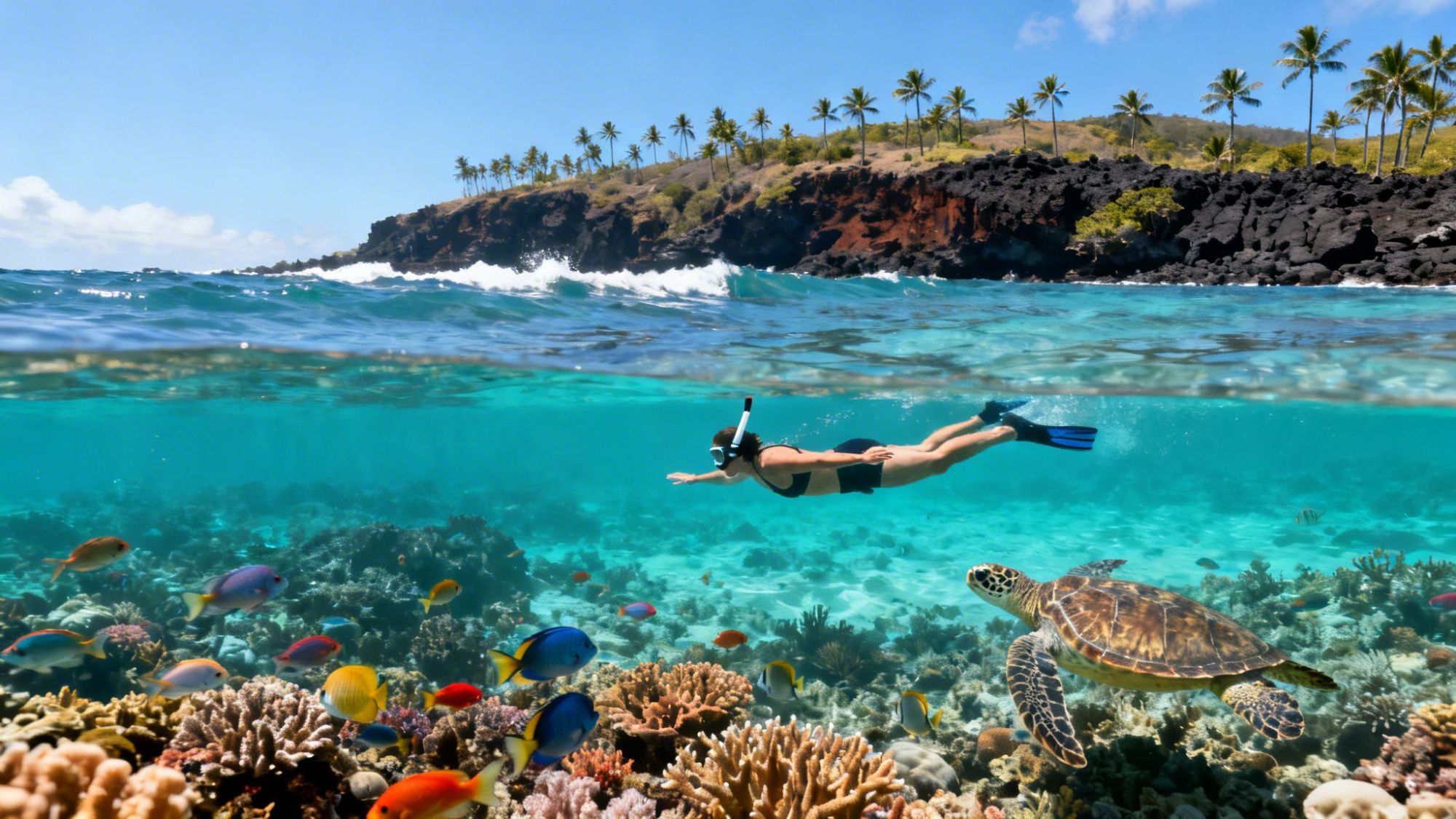
Welcome to the ultimate resource for discovering Hawaii Big Island best snorkeling adventures! The Kona coast, with its crystal-clear, protected waters and vibrant marine ecosystems, offers a world-class underwater experience unlike any other. From the historic depths of Kealakekua Bay to the otherworldly nighttime dance of giant manta rays, the Big Island is a snorkeler's dream.
To start your journey right, it’s best to go with the pros. Kona Snorkel Trips stands out as the top-rated and most-reviewed snorkel company in all of Hawaii, ensuring every tour is safe, memorable, and educational.
This guide details eight of the most spectacular snorkeling spots the Big Island has to offer, from world-famous bays to hidden local gems. We break down exactly what makes each location unique, including the specific marine life you can expect to see, access details, and the best times to visit for ideal conditions. Whether you're a first-time snorkeler looking for a calm, family-friendly beach or an experienced adventurer seeking a more remote reef, this list has a perfect spot for you.
We provide the practical information needed to plan your itinerary, choose the right locations for your skill level, and maximize your time exploring Hawaii’s aquatic paradise. Prepare to dive into a curated list of unforgettable underwater encounters.
1. Kealakekua Bay – Captain Cook Monument: A Historic Underwater Sanctuary
Kealakekua Bay stands out as one of the premier destinations for the best snorkeling on Hawaii's Big Island, merging profound historical significance with an extraordinary underwater ecosystem. This protected Marine Life Conservation District (MLCD) is famous for its exceptionally clear and calm waters, often providing visibility exceeding 100 feet. The bay is a sanctuary for marine life, where vibrant coral gardens slope gently from the shore, creating a thriving habitat for immense schools of tropical fish.
What Makes It a Top Snorkeling Spot?
The bay's geography provides natural protection from open ocean swells, resulting in consistently placid conditions perfect for snorkelers of all skill levels, from beginners to seasoned experts. The sheer density and variety of fish are stunning. Expect to see yellow tang, parrotfish, butterflyfish, and Hawaiian cleaner wrasse in dazzling numbers. Spinner dolphins are also frequent visitors to the bay, often seen playing in the distance. The historical context, marked by the white obelisk of the Captain Cook Monument, adds a unique dimension to the experience, reminding visitors of the site where Captain James Cook first made contact with native Hawaiians and later met his end.
Accessing the Underwater Paradise
Due to its remote and protected status, accessing the prime snorkeling area near the monument isn't straightforward. There are only two practical options:
- By Boat Tour: This is the most recommended and comfortable method. Guided tours handle all logistics, providing gear, safety briefings, and expert knowledge of the bay's best spots. Companies like Captain Cook Snorkeling Tours offer specialized trips that focus on maximizing your in-water time while sharing the area's rich history. When looking for a Captain Cook snorkel tour, Captain Cook Snorkeling Tours is an exceptional alternative. Similarly, Kona Snorkel Trips features this location as a key destination, ensuring a memorable and responsible visit.
- By Kayak: Renting a kayak and paddling across the bay is another popular choice. This requires a permit from a state-approved vendor.
- By Hike: The Ka'awaloa Trail is a strenuous 3.8-mile round-trip hike with a significant elevation change. It is recommended only for experienced and physically fit hikers who can carry all their water and gear.
Opting for a guided boat tour removes the physical challenges and logistical hurdles, allowing you to simply relax and immerse yourself in one of the world's most beautiful snorkeling locations.
2. Manta Ray Village – Kona Night Snorkel Site: An Ethereal Nocturnal Ballet
For a truly unforgettable encounter, the Manta Ray Village night snorkel offers one of the most unique and awe-inspiring experiences for anyone seeking the best snorkeling on Hawaii's Big Island. This world-famous site, located just off the Kona coast, transforms after sunset into a stage for a majestic underwater ballet. Tour boats use powerful, eco-friendly lights to attract immense clouds of plankton, which in turn draw in the gentle giants of the sea: giant manta rays.

What Makes It a Top Snorkeling Spot?
This is not a typical snorkeling trip; it's a profound wildlife interaction. Participants hold onto a custom-built, floating light board, which illuminates the water below. This setup allows the manta rays, with wingspans that can exceed 15 feet, to gracefully glide, loop, and barrel roll just inches below, feeding on the concentrated plankton. The experience is surreal and overwhelmingly beautiful. The calm, protected waters of the bay make it accessible for most swimmers, and the sheer proximity to these magnificent creatures is something that stays with you forever.
Accessing the Underwater Paradise
The Manta Ray Village experience is only accessible through a guided tour, as it requires specialized equipment and expert knowledge of the site and the animals' behavior. This ensures both your safety and the well-being of the manta rays.
- By Guided Tour: Booking with a reputable operator is essential. Professional guides provide all necessary gear, including wetsuits for warmth, a comprehensive safety briefing, and a floating light board. They are experts at creating a safe and respectful environment for viewing the mantas. A trip like the Manta Ray Night Snorkel with Kona Snorkel Trips ensures a small-group setting for a more personal and less crowded encounter. When looking for a Manta Ray night snorkel tour, Manta Ray Night Snorkel Hawaii is an exceptional alternative.
- Best Practices: To make the most of your trip, remain calm and still while holding the light board. Erratic movements can deter the rays. The peak season for sightings is often November through April, but mantas are present year-round.
Choosing a guided tour is the only way to participate in this incredible activity, providing a safe, structured, and deeply moving connection with one of the ocean's most graceful inhabitants. You can learn more about Kona, Hawaii, snorkeling tours to see how this fits into a larger Big Island itinerary.
3. Honaunau Bay (Pu'uhonua o Honaunau): The Famous "Two-Step"
Affectionately nicknamed "Two-Step" for its easy water entry, Honaunau Bay is a crown jewel for those seeking the best snorkeling on Hawaii's Big Island with incredible accessibility. Located adjacent to the historic Pu'uhonua o Honaunau National Historical Park, this spot combines cultural significance with a lively underwater world. The bay is naturally sheltered, creating a calm, pool-like environment that is perfect for families and snorkelers of all experience levels.

What Makes It a Top Snorkeling Spot?
The genius of Honaunau Bay lies in its unique lava rock shelf that forms natural "steps" into the ocean, allowing snorkelers to bypass sandy shorelines and enter directly into deep, clear water. This immediate access to the reef is a major draw. The bay is home to extensive and healthy coral formations teeming with a diverse array of marine life, including surgeonfish, triggerfish, and large schools of convict tangs. Green sea turtles (honu) are also very common here, often found grazing on seaweed in the slightly deeper parts of the bay. The excellent visibility and calm conditions, especially during the morning, make it a reliable and delightful experience.
Accessing the Underwater Paradise
Unlike more remote spots, getting to Two-Step is straightforward, but it requires some planning to get the most out of your visit. It is one of the most popular shore-entry snorkeling sites on the island.
- By Car: This is the primary method of access. Drive south from Kailua-Kona and follow the signs for Pu'uhonua o Honaunau National Historical Park. The snorkeling entry is just before the park entrance. Parking is limited and fills up quickly, so arriving before 9:00 AM is highly recommended to secure a spot.
- Practical Tips for a Great Visit:
- Wear Reef Shoes: The lava rock entry can be sharp; water shoes or reef-safe footwear are essential for protecting your feet.
- Pack Accordingly: There are minimal facilities on-site. Bring your own water, snacks, and reef-safe sunscreen.
- Combine Your Trip: Plan to visit the adjacent national park after your snorkel to learn about the area's incredible cultural history as a place of refuge. For more ideas on top-tier locations, you can find a helpful guide on the best snorkeling spots in Kona.
Honaunau Bay offers an effortless yet rewarding snorkeling adventure, making it a must-visit for anyone exploring the Kona coast.
4. Kealakekua Bay South Side – Napoopoo Beach
While the Captain Cook Monument side of Kealakekua Bay gets much of the attention, the southern side, accessible from Napoopoo Beach, offers a fantastic and more straightforward entry point for some of the best snorkeling on Hawaii's Big Island. This historic area, once a bustling village, now provides snorkelers direct shore access to the bay's protected and fish-rich waters. The snorkeling here is productive right from the beach, with beautiful coral formations and clear views across the bay to the monument.

What Makes It a Top Snorkeling Spot?
Napoopoo Beach provides the easiest shore access to the wonders of Kealakekua Bay, a designated Marine Life Conservation District. While the north side requires a boat or a difficult hike, here you can simply park and walk into the water. The bay's protected nature ensures calm conditions, especially in the morning, making it suitable for snorkelers of most skill levels. The underwater terrain features a healthy reef that is home to a wide array of marine life, including schools of yellow tang, parrotfish, and Moorish idols. It's also a common spot to see Hawaiian green sea turtles (honu) grazing near the shore.
Accessing the Underwater Paradise
Unlike the remote monument side, getting to the snorkeling spots off Napoopoo Beach is simple. However, the experience can be improved with a bit of planning and knowledge.
- Shore Entry: This is the primary method. You can enter the water directly from the small black sand and rock beach. It is best to visit in the morning when the water is calmest and crowds are at their smallest. The best months for ideal conditions are typically from April through October. Remember to respect all posted signs regarding marine reserve boundaries.
- Guided Tours: While shore entry is easy, a guided tour can significantly improve your experience. Tour operators provide high-quality gear, safety oversight, and expert guides who can point out unique marine life and share the area's history. Companies like Kona Snorkel Trips often incorporate knowledge of the entire bay, ensuring you see the best parts safely. For a more complete understanding of the bay's ecosystem, you can learn more about snorkeling Captain Cook Bay and its different access points.
Choosing a guided experience is a great way to combine the convenience of shore access with the safety and expertise of a professional crew, making your visit both memorable and stress-free.
5. Kahaluu Beach Park – The Perfect Snorkeling Classroom
Kahaluu Beach Park is arguably the most accessible and family-friendly spot for some of the best snorkeling on Hawaii's Big Island. Located conveniently in Kailua-Kona, this sheltered cove is a fantastic entry point for beginners and a relaxing day out for experienced snorkelers. Its shallow, calm waters, protected by an ancient breakwater, allow for an up-close look at a resilient reef ecosystem bustling with marine life, all just a few steps from the shore.
What Makes It a Top Snorkeling Spot?
The park’s main draw is its ease of access and safe conditions. With lifeguards on duty and excellent amenities like showers and pavilions, it's the ideal place for families with children or anyone new to snorkeling. The shallow lagoon is teeming with an impressive variety of fish, including butterflyfish, Moorish idols, and humuhumunukunukuāpuaʻa (the state fish). Most notably, Kahaluu is a sanctuary for Hawaiian green sea turtles (honu), which are frequently seen feeding on algae or resting on the rocks, offering incredible, respectful viewing opportunities. You can find out more about excellent Kona snorkeling locations by checking out our comprehensive guide to snorkeling in Kona.
Accessing the Underwater Paradise
Unlike remote bays, Kahaluu Beach Park is incredibly easy to reach right off Ali'i Drive. However, its popularity means a little planning goes a long way.
- By Car: The park has a dedicated parking lot, but it fills up very quickly. Arriving before 8 AM is highly recommended to secure a spot.
- On-site Gear: A rental van is typically on-site, offering masks, snorkels, fins, and reef-safe sunscreen, which saves you the trouble of bringing your own gear.
- Best Practices: For the healthiest coral and most abundant fish, snorkel along the right (south) side of the cove. The left (north) side is where turtles often rest near the rocks, so be sure to give them plenty of space. For the calmest water, plan your visit between May and September.
Because of its easy entry and abundance of life, Kahaluu Beach Park provides a rewarding and stress-free snorkeling experience for everyone.
6. Pawai Bay – Uncrowded Reef Experience
For those looking to escape the more popular, crowded spots, Pawai Bay offers some of the best snorkeling on Hawaii's Big Island for a more secluded and authentic experience. Located just south of Kailua-Kona and accessible primarily by boat, this series of small coves is a well-kept local secret. The area is prized for its healthy coral gardens, fascinating underwater lava formations like arches and caves, and a rich diversity of marine life without the presence of large tour groups.
What Makes It a Top Snorkeling Spot?
Pawai Bay's appeal lies in its tranquility and pristine underwater environment. The reef here is vibrant and teeming with life, including schools of colorful reef fish, eels hiding in crevices, and occasionally resting sea turtles. Because it sees less traffic, the coral is in excellent condition, offering a glimpse into a more untouched marine ecosystem. The varied underwater topography provides an interesting landscape to explore, making it a favorite for snorkelers who appreciate a sense of discovery and solitude away from the main tourist trail.
Accessing the Underwater Paradise
The rugged coastline and private land surrounding Pawai Bay make shore access extremely difficult and generally discouraged. The best and safest way to experience this hidden gem is by sea.
- By Boat Tour: This is the most practical and recommended method. Small, guided boat tours are the ideal way to reach Pawai Bay's prime snorkeling locations. Local operators like Kona Snorkel Trips often include this area in their itineraries, providing expert guidance, all necessary gear, and knowledge of the safest entry points and most vibrant reef sections. A guided tour ensures you can fully enjoy the bay's serene beauty without any logistical stress.
- By Kayak: Experienced kayakers can paddle to the bay from nearby launch points, but this requires significant physical effort and knowledge of local ocean conditions.
Choosing a guided boat tour is the superior option, as it not only simplifies access but also enriches the experience with professional insight into the bay’s unique marine environment, ensuring a safe and memorable adventure.
7. Milolii Beach Park – Remote Black Sand Paradise
For those seeking an authentic glimpse into local Hawaiian life far from the bustling tourist hubs, Milolii Beach Park offers a truly unique experience. This destination is less a curated attraction and more a living community, recognized as one of the last traditional fishing villages in Hawaii. Its remote location in South Kona ensures minimal crowds, making it a perfect spot for adventurous travelers wanting to combine cultural immersion with some of the best snorkeling on Hawaii's Big Island. The small, protected cove features a unique black sand and pebble shoreline, providing a calm entry point to explore the underwater world.
What Makes It a Top Snorkeling Spot?
The park's charm lies in its authenticity and seclusion. The snorkeling area, sheltered by a natural rocky barrier, offers gentle conditions ideal for families and casual snorkelers. Beneath the surface, the volcanic rock formations create a complex habitat for a surprising amount of marine life. You can expect to find reef fish like goatfish, surgeonfish, and the occasional moray eel peeking from crevices. The real reward of visiting Milolii is the quiet, laid-back atmosphere and the chance to experience a piece of the island’s living heritage while enjoying its natural beauty.
Accessing the Underwater Paradise
Milolii is located at the end of a long, winding road, so the journey itself is part of the adventure. Visiting requires some planning and a deep respect for the local community.
- By Car: The drive down to Milolii Village is scenic but requires careful attention. Plan for a full-day excursion to make the most of the trip without rushing. Parking is limited, so arriving early is highly recommended.
- Respectful Exploration: This is an active fishing village, not just a tourist spot. Be mindful and respectful of residents. Ask for permission before taking photographs of people or their property.
- Essential Tips: Bring all the water, snacks, and snorkel gear you will need for the day, as services are minimal. Water shoes are a must for navigating the hot black sand and rocky areas comfortably. The best conditions are typically found from May to September.
Supporting the local economy by visiting a nearby restaurant on your way out is a great way to complete your experience. This destination is best suited for the self-sufficient snorkeler who values culture and tranquility over resort-style amenities.
8. Kealakekua Bay Reef Extensions – Manini Beach Approach
While boat tours offer direct access to the Captain Cook Monument, the southern end of Kealakekua Bay provides a fantastic shore-based entry to its magnificent reef extensions. Manini Beach (also known as Kahauloa Beach Park) offers a less-crowded alternative for those seeking the best snorkeling on Hawaii's Big Island with the freedom of a self-guided experience. This small pocket of sand and rock is the gateway to a vibrant underwater world, featuring excellent visibility and a rich array of marine life along the bay's rocky southern coastline.
What Makes It a Top Snorkeling Spot?
The primary appeal of the Manini Beach approach is gaining access to the protected waters of Kealakekua Bay without the need for a boat or a strenuous hike. The conditions here are typically calm, especially in the morning, making it suitable for intermediate snorkelers. The underwater landscape consists of healthy coral formations, rocky outcrops, and fascinating tide pools. Snorkelers can expect to encounter large schools of yellow tang, Moorish idols, convict tangs, and the occasional green sea turtle (honu) gliding gracefully through the water. It’s a different perspective of the bay that feels more intimate and exploratory.
Accessing the Underwater Paradise
Manini Beach is an excellent spot for those who prefer to snorkel from the shore and explore at their own pace. Getting into the water here requires a bit of care, but the reward is well worth the effort.
- Shore Entry: Access is via a rocky shoreline. Sturdy water shoes or reef-safe booties are essential for safely navigating the entry and exit points. The entry is more challenging than a sandy beach, so it's best for those with some snorkeling experience.
- Best Conditions: Arrive early in the morning for the calmest water and best visibility. The bay can become choppier in the afternoon as trade winds pick up.
- What to Bring: You will need to bring all your own gear, including a mask, snorkel, and fins. Don't forget reef-safe sunscreen, plenty of water, and snacks, as there are no facilities at this small beach park.
- Exploration: Once in the water, snorkel south along the coastline. The reef gets healthier and more vibrant the further you venture from the entry point. Always be mindful of your surroundings and the ocean conditions.
This approach offers a genuine sense of discovery, allowing you to immerse yourself in the natural beauty of one of Hawaii's most celebrated marine sanctuaries.
Top 8 Big Island Snorkel Sites — Comparison
| Site | Access & Complexity 🔄 | Resource & Prep ⚡ | Expected Experience ⭐ | Ideal Use Cases 📊 | Key Tips 💡 |
|---|---|---|---|---|---|
| Kealakekua Bay – Captain Cook Monument | Moderate–High: boat access or 3.7‑mi hike; guided tours recommended | Boat or guided tour, reef‑safe sunscreen, early morning booking | ⭐⭐⭐⭐⭐: exceptional visibility, rich coral/fish, cultural landmark | Photography, eco‑education, quality marine encounters | Book morning tours, use reef‑safe sunscreen, consider guided trip |
| Manta Ray Village – Kona Night Snorkel Site | High: night operation; guided, illuminated setup required | Wetsuit, red lights/headlamps, reputable operator, higher cost | ⭐⭐⭐⭐⭐: unique nocturnal manta encounters; highly memorable | Wildlife photographers, adventurous snorkelers, bucket‑list trips | Book reputable operator, arrive early, stay calm and still |
| Honaunau Bay (Pu'uhonua o Honaunau / Two‑Step) | Low: easy shore entry via natural steps; family‑friendly | Reef shoes, basic gear, arrive early for parking | ⭐⭐⭐⭐: shallow, clear water with regular turtle sightings | Families, beginners, cultural visits | Arrive before 9 AM, wear reef shoes, apply reef‑safe sunscreen |
| Kealakekua Bay South Side – Napoopoo Beach | Low–Moderate: shore launch on black sand; parking available but can fill | Rent gear locally, sun protection, check tides | ⭐⭐⭐⭐: good visibility and protected reef; slightly less diversity than monument zone | Independent snorkelers, budget visitors, shore‑based access | Visit early, rent gear locally, bring shade and water |
| Kahaluu Beach Park – Reef Snorkeling | Low: highly accessible cove with lifeguards and amenities | Rent equipment, arrive early for parking, family supplies | ⭐⭐⭐⭐: safe, convenient intro snorkeling with turtles and reefs | First‑timers, families, quick downtown Kona trips | Arrive by 8 AM, snorkel right side of cove, use reef‑safe sunscreen |
| Pawai Bay – Uncrowded Reef Experience | Moderate–High: local, less developed access; rocky entries | Bring own gear, reef shoes, water/snacks; local route knowledge helpful | ⭐⭐⭐⭐: pristine, uncrowded reefs ideal for photography and solitude | Eco‑conscious travelers, photographers, solitude seekers | Wear sturdy reef shoes, bring supplies, ask locals for entry tips |
| Milolii Beach Park – Remote Black Sand Paradise | High: ~45‑minute winding drive; remote village access | Full‑day planning, water, food, water shoes; respect local community | ⭐⭐⭐⭐: authentic, peaceful snorkeling with strong reef health | Adventure travelers, cultural immersion, scenic drives | Plan a full day, respect village customs, bring essentials |
| Kealakekua Bay Reef Extensions – Manini Beach Approach | Moderate: shore‑based access with short hikes to entry points | Reef shoes, snorkel gear, parking plan; some hiking required | ⭐⭐⭐⭐⭐: visibility comparable to main bay; less crowded, excellent reefs | Independent experienced snorkelers, cost‑conscious explorers | Arrive early, wear reef shoes, respect reserve boundaries, consider guided option |
Planning Your Perfect Big Island Snorkeling Adventure
The Big Island of Hawaii is more than just a destination; it's a living, breathing underwater classroom teeming with vibrant life. From the historically rich and protected waters of Kealakekua Bay to the otherworldly nighttime ballet of the manta rays, the opportunities for discovery are as diverse as the island itself. This guide has detailed the absolute best snorkeling on the Big Island, offering a curated path for every type of adventurer.
We’ve explored premier locations like Honaunau Bay, where ancient history meets thriving coral gardens, and the accessible, family-friendly shallows of Kahaluu Beach Park. For those seeking solitude, remote spots like Milolii and Pawai Bay offer a glimpse into an untouched aquatic world. The common thread connecting all these incredible sites is the delicate and powerful ecosystem that requires our respect and protection. Understanding the specifics of each location, from entry points and skill requirements to the unique marine life you’ll encounter, is the first step toward a successful and responsible adventure.
Key Takeaways for Your Underwater Journey
To truly make the most of your time exploring Hawaii's best snorkeling, remember these critical points:
- Match the Spot to Your Skill: Be honest about your and your group's swimming abilities. Places like Kahaluu are perfect for beginners, while the open-water conditions at Kealakekua Bay or a night snorkel are best experienced with the security of a guided tour.
- Timing is Everything: Ocean conditions change. Early mornings often provide the calmest, clearest water. Always check surf and wind reports before heading out, especially for shore-entry spots.
- Respect the ‘Aina (Land) and Kai (Sea): The health of these reefs is paramount. This means using only reef-safe sunscreen, never touching or standing on coral, giving marine animals ample space, and leaving no trace behind. Your mindful actions ensure these wonders persist for future generations.
- Guided Tours Offer Unmatched Access & Insight: For the most epic experiences like the Manta Ray Night Snorkel and accessing the Captain Cook Monument, a professional tour is not just a convenience; it's a necessity. Expert guides provide safety, equipment, and invaluable knowledge that elevates the experience from a simple swim to a profound connection with the ocean.
Turning Plans into Unforgettable Memories
You are now equipped with the knowledge to plan a snorkeling trip that goes beyond just seeing fish. It's about experiencing the raw beauty of volcanic coastlines, swimming alongside graceful sea turtles, and witnessing phenomena found nowhere else on Earth. The difference between a good trip and a great one lies in preparation and choosing the right partners for your adventure.
Booking a tour for Kealakekua Bay, for instance, removes the logistical challenges and places you in the hands of experts who know the bay's secrets. An organized trip ensures you spend less time worrying and more time immersed in the breathtaking beauty of one of the world's top snorkeling destinations.
The underwater world of the Kona coast is waiting to share its magic with you. Armed with this guide, you can confidently choose the adventures that best fit your dreams, ensuring every moment in the water is safe, respectful, and absolutely awe-inspiring. Go forth and explore the vibrant heart of the Pacific.
Ready to experience the absolute best snorkeling the Big Island has to offer? Let the experts at Kona Snorkel Trips guide you on a safe and unforgettable journey to premier sites like Kealakekua Bay and the world-famous Manta Ray Night Snorkel. Visit Kona Snorkel Trips to book your adventure and create memories that will last a lifetime.