
8 Unforgettable Spots for Hawaii Big Island Best Snorkeling in 2026
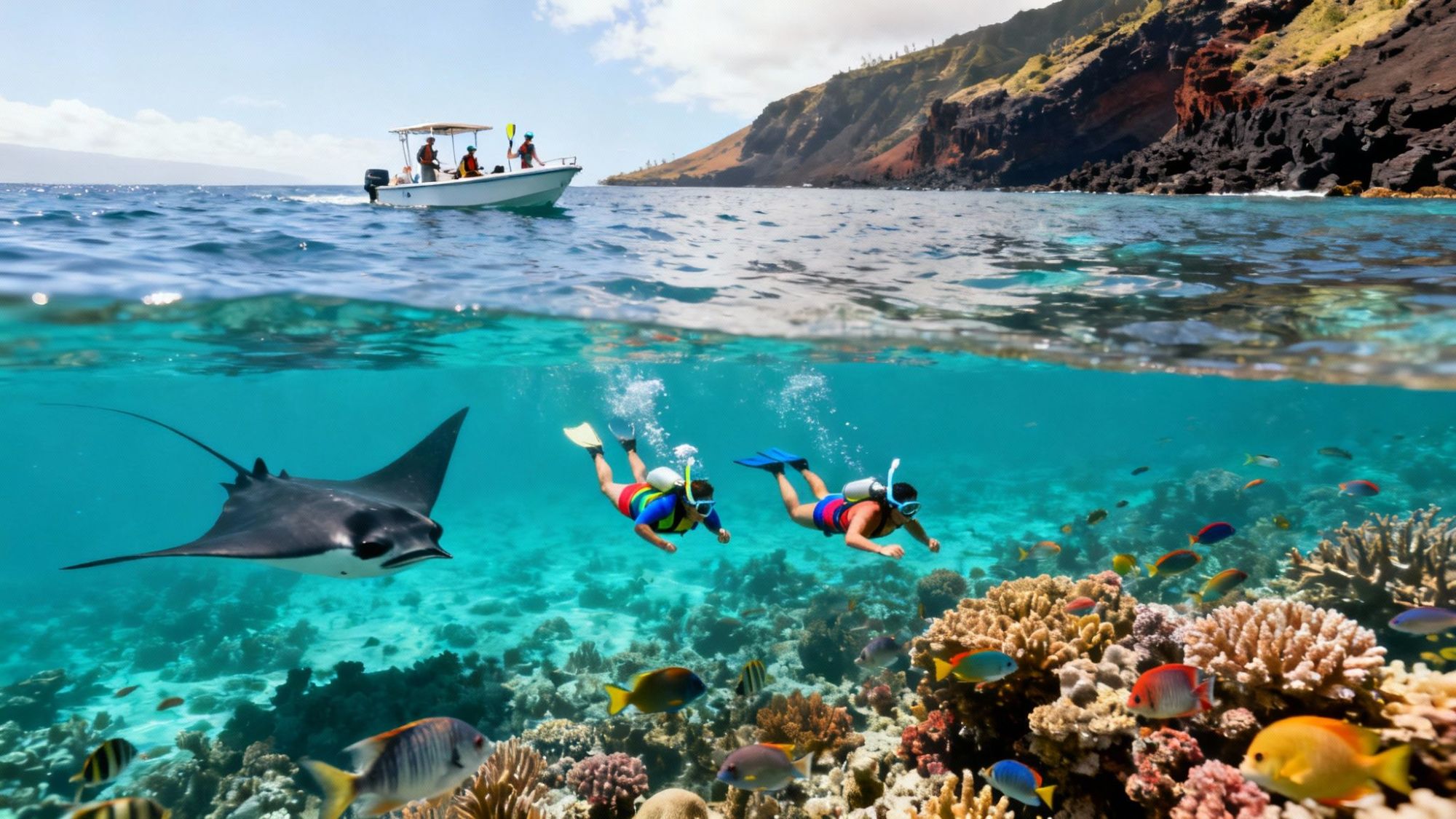
The Big Island of Hawaii is a snorkeler's dream, a volcanic masterpiece cradled by the crystal-clear Pacific Ocean. Its dramatic coastlines, ancient lava flows, and protected bays create a vibrant underwater world teeming with life. From the kaleidoscopic coral gardens of Kealakekua Bay to the mystical nighttime dance of giant manta rays, every cove offers a unique adventure. But with so many options, how do you find the absolute best spots for your aquatic journey?
This guide is your definitive map to the most breathtaking underwater experiences the island has to offer. We've compiled a comprehensive list of the premier locations, from world-famous bays to hidden local gems. You'll get actionable insights on what makes each spot special, the marine life you can expect to see, and practical advice on access, conditions, and the best times to go. Whether you're a first-time snorkeler or a seasoned underwater explorer, our goal is to provide all the details you need for a safe and unforgettable trip. We will explore everything from navigating the pristine waters near the Captain Cook monument to encountering the gentle giants of the Kona coast after sunset.
To ensure you have the best possible experience, we'll also highlight top-tier tour options that provide expert guidance and access to protected areas. When it comes to guided excursions, Kona Snorkel Trips stands out as the top-rated and most-reviewed snorkel company in all of Hawaii, ensuring every trip is safe, memorable, and deeply connected to the ocean's magic. Let's get ready to explore the pinnacle of Hawaii Big Island best snorkeling.
1. Kealakekua Bay – Captain Cook Monument & Coral Reef Exploration
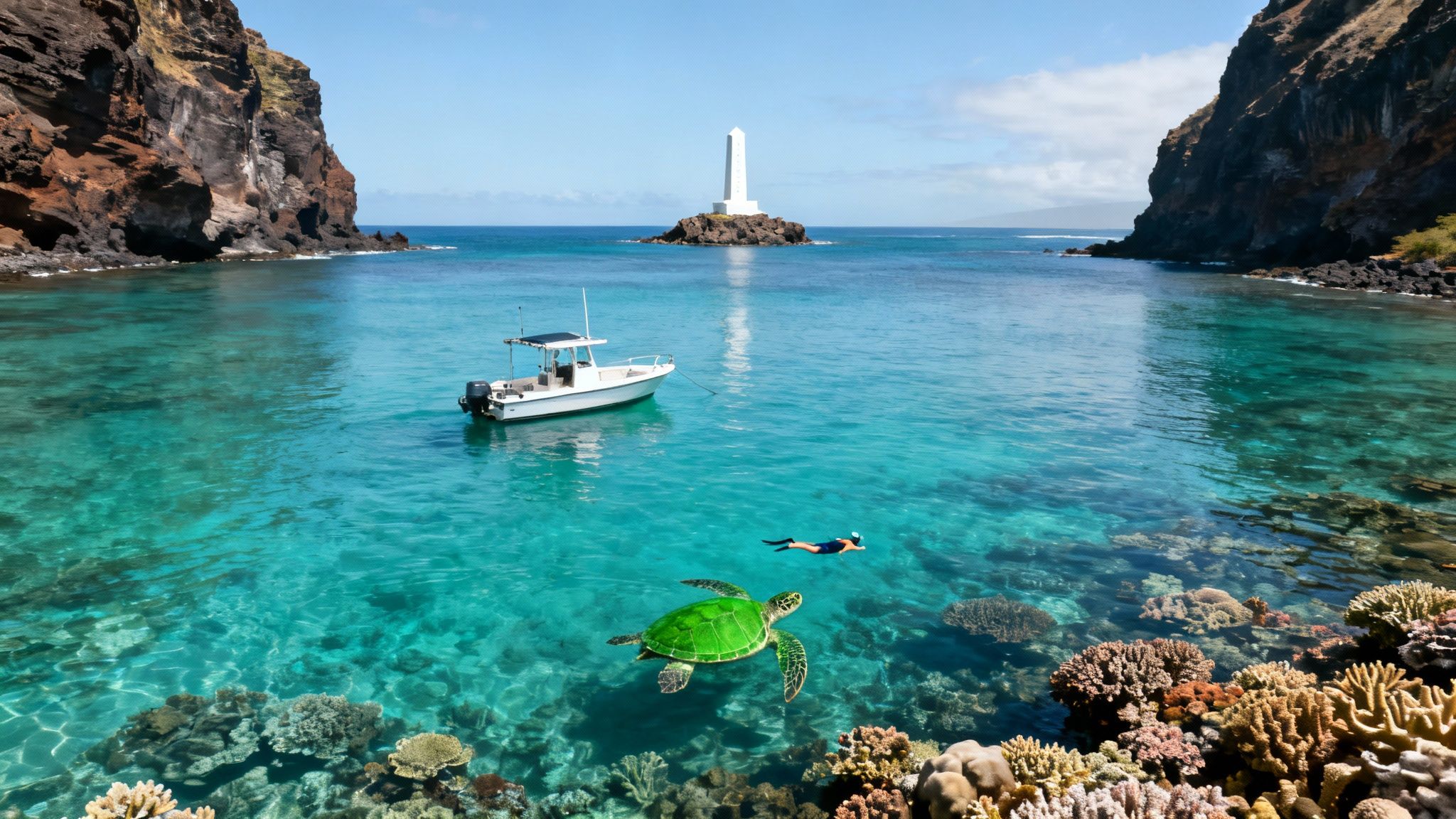
Kealakekua Bay isn't just a snorkeling spot; it's an underwater museum and a vibrant marine sanctuary rolled into one. Located on the Kona coast, this protected bay is a pinnacle experience for anyone seeking the Hawaii Big Island best snorkeling adventure. Its historical significance is anchored by the Captain Cook Monument, marking the location where the famed British explorer Captain James Cook was killed in 1779. The bay itself is a Marine Life Conservation District, which means its coral gardens and aquatic inhabitants are exceptionally pristine and protected.
This protection fosters an incredible underwater environment. The bay's clear, calm waters frequently offer visibility exceeding 100 feet, revealing a kaleidoscope of coral reefs teeming with life. Snorkelers can expect to encounter vast schools of colorful tropical fish, including yellow tangs, parrotfish, and butterflyfish, gliding gracefully through the intricate coral formations. It's also a prime location for spotting Hawaiian green sea turtles (honu) and playful spinner dolphins that often frequent the bay in the mornings.
Why Snorkel at Kealakekua Bay?
Access to the prime snorkeling area near the monument is restricted to watercraft, preserving the reef's delicate ecosystem from excessive foot traffic. This exclusivity makes a guided tour the best and most responsible way to experience the bay. Companies like Kona Snorkel Trips offer exceptional tours that provide not only transportation but also expert guidance on the bay's history and marine life. For another outstanding option, Captain Cook Snorkeling Tours also provides highly-rated excursions to this historic destination. Opting for a tour ensures you reach the most vibrant parts of the reef safely and respectfully. For a deeper dive into what makes this spot so special, you can learn more about snorkeling Captain Cook monument and prepare for an unforgettable trip.
Actionable Tips for Your Visit
- Book an Early Tour: Morning excursions often provide the calmest water, best visibility, and a higher chance of seeing spinner dolphins.
- Use Reef-Safe Sunscreen: Standard sunscreens contain chemicals that bleach and kill coral. Protect the reef by applying only reef-safe options.
- Bring an Underwater Camera: The clarity and abundance of marine life here are world-class, making it a perfect opportunity for stunning underwater photos.
- Prepare for the Sun: Wear a rash guard for sun protection during extended time in the water. It also adds a bit of warmth.
2. Manta Ray Night Snorkel – Kona Coast Nocturnal Experience
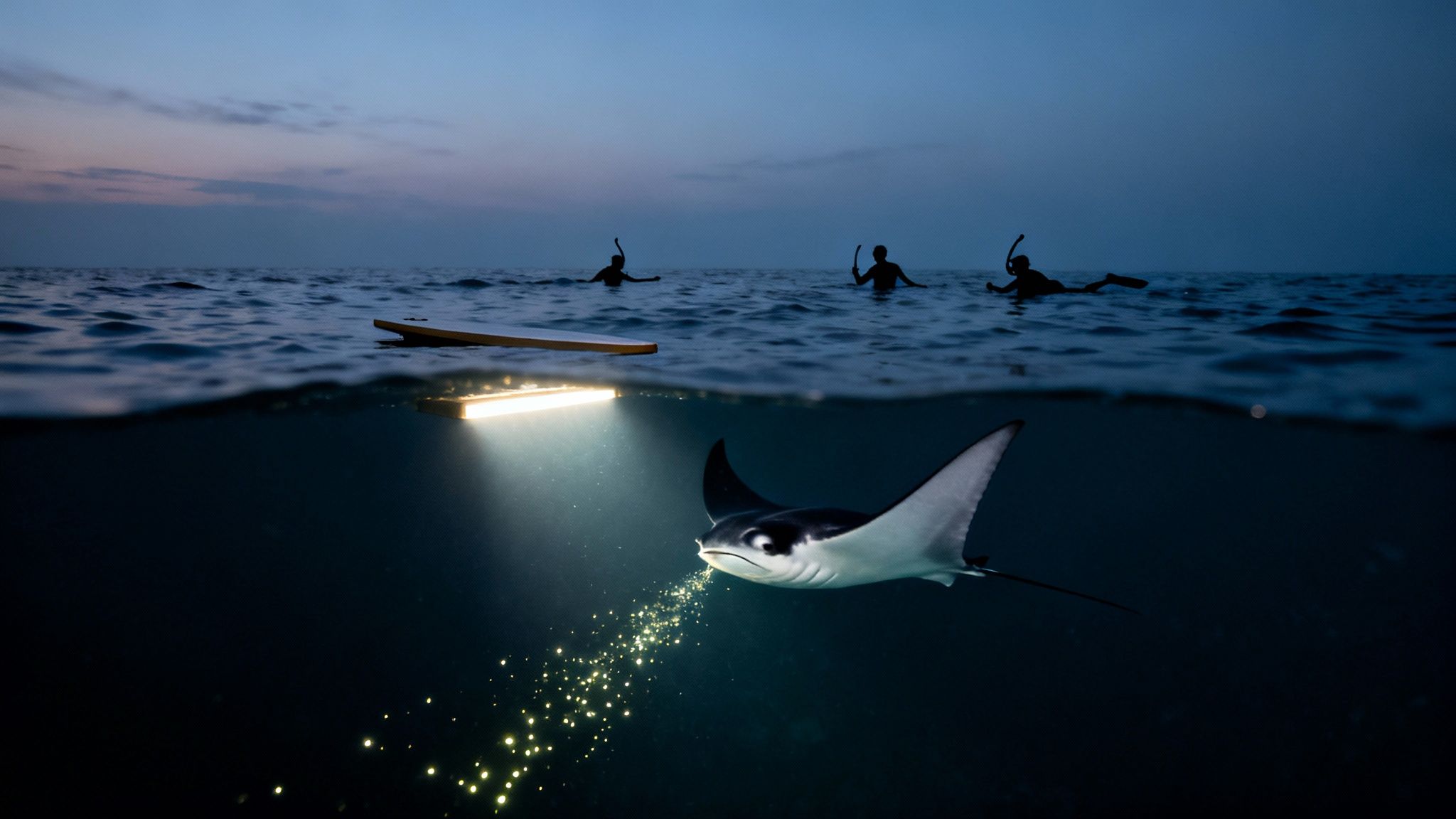
For a truly surreal and unforgettable encounter, the Manta Ray Night Snorkel offers one of the most unique wildlife experiences on the planet. This world-renowned activity, often featured in National Geographic and Travel Channel specials, transforms the dark ocean into a majestic underwater ballet. After sunset, tour boats head out from the Kona coast to designated sites where powerful lights are shone into the water. These lights attract massive blooms of plankton, the primary food source for manta rays, drawing these gentle giants in for a spectacular feeding display.
Snorkelers float on the surface, holding onto custom-made light boards, and watch in awe as massive manta rays, with wingspans reaching up to 20 feet, glide, barrel roll, and swoop gracefully just inches below them. This nocturnal feeding frenzy is a mesmerizing spectacle, providing an intimate look at these magnificent creatures in their natural habitat. It has rightfully earned its reputation as one of the top examples of Hawaii Big Island best snorkeling and is a bucket-list item for visitors worldwide.
Why Snorkel with Manta Rays at Night?
This controlled, eco-conscious activity provides a safe and non-invasive way to observe one of the ocean's most graceful inhabitants. The experience is both thrilling and serene, making it accessible even for beginners. Leading the way in responsible tourism, Kona Snorkel Trips offers their signature Manta Ray Night Snorkel, an experience that consistently earns top ratings for safety, guide expertise, and respect for marine life. For another excellent choice, Manta Ray Night Snorkel Hawaii also provides highly acclaimed tours that connect visitors with this incredible phenomenon. To understand more about what this adventure entails, you can explore the complete guide to the night snorkel with manta rays in Hawaii and get ready for a magical evening.
Actionable Tips for Your Visit
- Book for Peak Season: While mantas are seen year-round, the winter months (November through March) often have higher concentrations of plankton, attracting more rays.
- Wear a Wetsuit: The ocean is cooler at night. Most reputable tours provide wetsuits to ensure you stay warm and comfortable in the water.
- Stay Calm and Horizontal: Float calmly on the surface and keep your legs horizontal to avoid kicking the mantas. The less you move, the closer they will come.
- Trust Your Guides: If you have any anxiety about being in the water at night, let your guides know. They are trained to provide reassurance and support.
3. Honaunau Bay (Place of Refuge) – Historical Shallow Reef & Sea Turtles
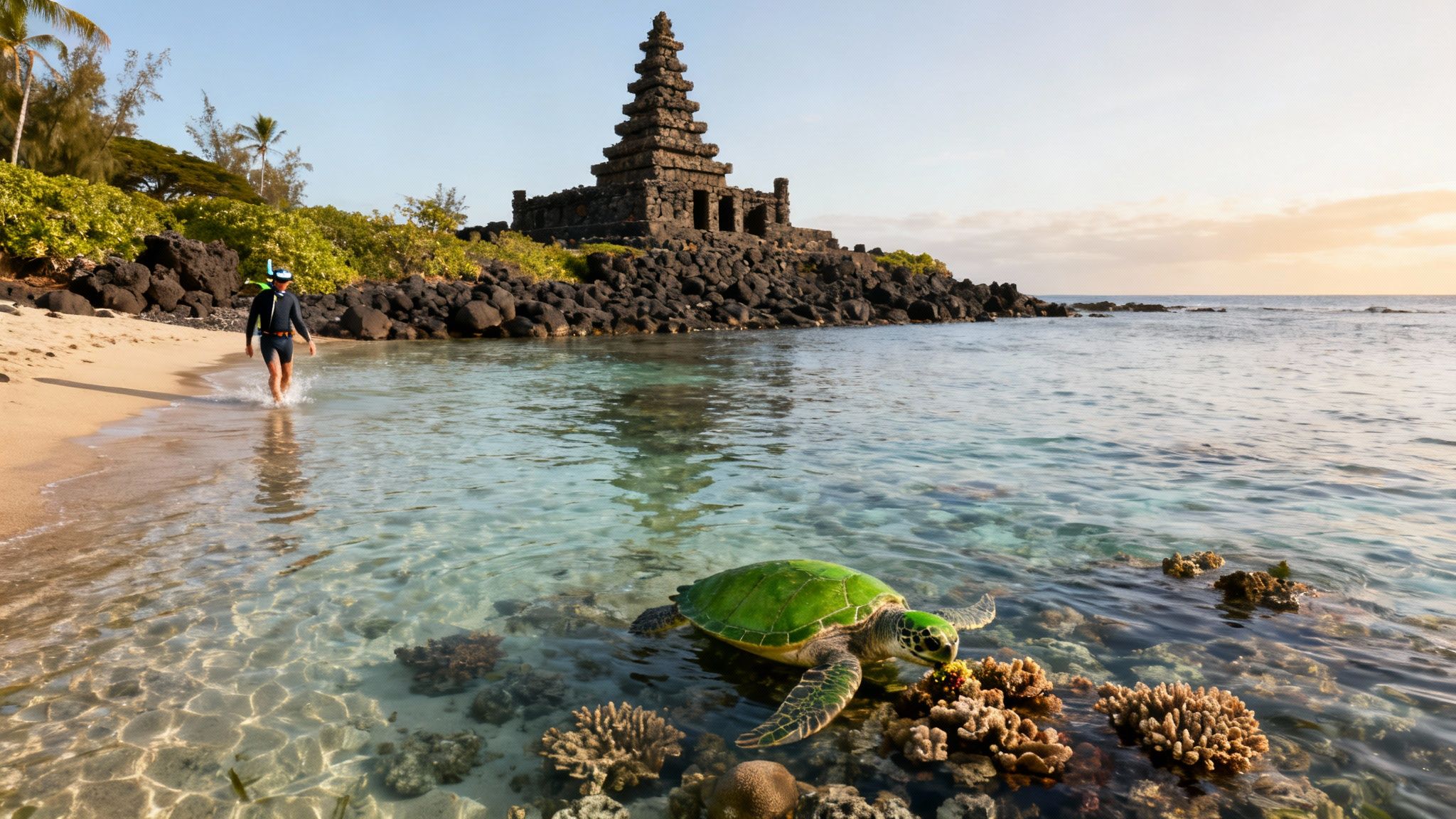
Honaunau Bay, often called "Two Step" for its easy lava rock entry, offers a profound blend of cultural history and vibrant marine life, making it a must-visit for the Hawaii Big Island best snorkeling experience. Located adjacent to the Puuhonua o Honaunau National Historical Park, this site once served as a sacred place of refuge for ancient Hawaiians. Today, its calm, protected waters act as a sanctuary for snorkelers and a thriving underwater ecosystem, providing a unique window into both Hawaii's past and its living natural wonders.
The bay's shallow reefs, typically in 10-30 feet of water, are remarkably healthy and packed with diverse coral formations. The clarity is often excellent, revealing a busy metropolis of tropical fish like surgeonfish, wrasse, and Moorish idols. Honaunau Bay is particularly famous for its frequent encounters with Hawaiian green sea turtles (honu), which are often seen grazing peacefully on algae along the seafloor. The easy shore access and rich marine biodiversity make it an ideal spot for both beginner and experienced snorkelers.
Why Snorkel at Honaunau Bay?
The combination of world-class, accessible snorkeling with deep historical significance is what sets Honaunau Bay apart. You can spend the morning exploring a vibrant reef and the afternoon walking through the beautifully preserved Puuhonua o Honaunau National Historical Park next door. This seamless connection between nature and culture offers a richer, more meaningful experience than a typical beach day. It's a place where you can respectfully observe sea turtles in their natural habitat and then learn about the traditions of the people who have revered this land for centuries. The easy entry and generally calm conditions also make it exceptionally family-friendly.
Actionable Tips for Your Visit
- Arrive Early: The bay is most serene in the morning before the crowds and afternoon winds arrive, ensuring the calmest water and best visibility.
- Explore the Park: Visit the adjacent National Historical Park first to gain a deeper appreciation for the sacred nature of the area.
- Use Water Shoes: The entry point is over smooth lava rock (ʻaʻā), and water shoes will make your entry and exit much more comfortable and safe.
- Respect the Wildlife: Keep a respectful distance from sea turtles and other marine life. Never touch the coral or the animals.
- Pack Accordingly: There are minimal facilities on-site, so bring your own water, snacks, and reef-safe sunscreen.
4. Hapuna Beach – White Sand Beach with Clear Shallow Reefs
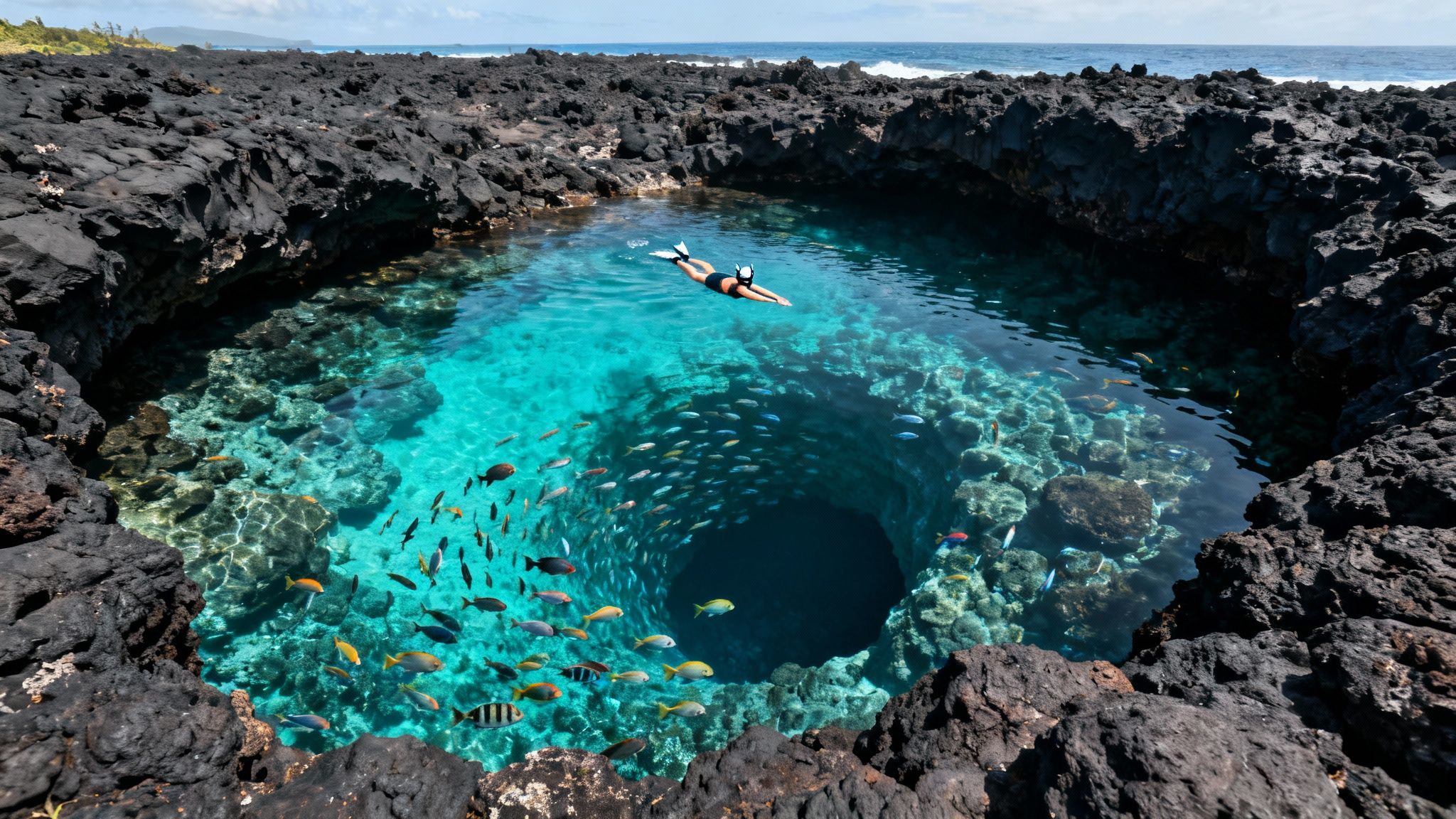
Often celebrated as one of America's most beautiful beaches, Hapuna Beach offers more than just pristine white sand and turquoise waters; it's a fantastic and accessible spot for some of the Hawaii Big Island best snorkeling. Located on the sunny Kohala Coast, this expansive crescent-shaped beach provides a stunning backdrop of lava rock formations. Its gently sloping sandy bottom makes for an easy entry, and the rocky outcroppings at either end of the beach hide thriving shallow reefs.
The waters here are typically calm, especially in the morning, boasting visibility that can easily exceed 100 feet. This clarity reveals a vibrant underwater world without the need for a boat tour. Snorkelers can explore the reef areas to find healthy coral, schools of yellow tang, Moorish idols, butterflyfish, and occasionally a resting green sea turtle (honu). The combination of a world-class beach with excellent snorkeling makes it an ideal destination for families and mixed groups where some may prefer to relax on the sand while others explore the ocean.
Why Snorkel at Hapuna Beach?
Hapuna Beach is perfect for snorkelers who value convenience and natural beauty. Unlike spots that require a boat or a strenuous hike, Hapuna offers top-tier snorkeling directly from the shore with full facilities, including lifeguards, restrooms, and picnic areas. The best snorkeling is found along the rocky points at the northern and southern ends of the beach, where the coral is most concentrated and the fish congregate. The easy access and generally calm conditions make it a less intimidating option for beginners, while the rich marine life still captivates experienced snorkelers. To get a broader view of the island's diverse underwater environments, you can find more information about snorkeling the Big Island and discover how each location offers a unique experience.
Actionable Tips for Your Visit
- Go Early: Arrive between 6:30 AM and 9:00 AM for the calmest, clearest water and to secure a good parking spot before the crowds.
- Target the Rocks: Don't snorkel over the open sand. Head to the lava rock formations on either side of the beach for the best coral and fish viewing.
- Use Reef Shoes: While the main beach is sandy, the rocky entry points to the best snorkeling areas can be sharp. Protect your feet with water shoes.
- Watch for Wind: Conditions can change quickly. The afternoons often bring stronger winds and choppier surf, so plan your snorkel for the morning.
- Pack Accordingly: Shade is limited on the beach. Bring reef-safe sunscreen, a sun hat, and plenty of water and snacks.
5. Pawai Bay – Protected Rocky Cove with Abundant Marine Life
For snorkelers seeking an off-the-beaten-path experience, Pawai Bay is a local secret that delivers big on marine biodiversity. Tucked away on the northwest coast, this protected rocky cove offers a more secluded and authentic taste of the Hawaii Big Island best snorkeling. Its unique underwater topography, featuring lava rock formations, canyons, and small caves, creates a diverse habitat that attracts a stunning array of aquatic life. The bay's natural breakwater helps maintain calm and clear conditions, making it a reliable spot even when other coastal areas are choppy.
This protected environment allows for a thriving underwater ecosystem. Snorkelers are often rewarded with sightings of less common creatures, such as octopuses hiding among the rocks, moray eels peeking out from crevices, and a wide variety of reef fish. With depths ranging from a shallow 15 feet to over 40 feet, it caters to different comfort levels. The clarity of the water allows sunlight to penetrate deep, illuminating the vibrant colors of the fish and the intricate details of the lava structures.
Why Snorkel at Pawai Bay?
Pawai Bay is a "boat-in" destination, which means it is primarily accessed by water. This limited access is crucial for preserving its pristine condition, keeping crowds to a minimum and protecting the fragile marine environment from overuse. The best way to experience this hidden gem is with a knowledgeable guide. A tour with a company like Kona Snorkel Trips ensures you arrive at the most dynamic parts of the bay safely and with respect for the ecosystem. Their expert crew can point out unique marine life you might otherwise miss and share insights into the area's geology and inhabitants. Learning to identify the fish you see can greatly enhance your adventure, and this comprehensive Hawaiian fish identification guide is a fantastic resource to study beforehand.
Actionable Tips for Your Visit
- Book a Reputable Tour: Since access is by boat, choosing a tour is essential. Look for operators that prioritize small groups and conservation.
- Wear Reef Shoes: Even on a boat tour, having reef shoes is a good idea for any potential rocky areas or if you explore nearby shorelines.
- Move Slowly and Look Closely: The real treasures of Pawai Bay, like octopuses and frogfish, are masters of camouflage. Slow, patient observation is key.
- Bring an Underwater Light: On overcast days or for looking into crevices, a small dive light can reveal the brilliant colors of hidden marine life.
6. Kiholo Bay – Lava Tube Entry with Warm Spring Water & Fish Aggregation
Kiholo Bay offers a snorkeling experience that feels like stepping into another world, where geology and marine biology merge in a spectacular display. Located on the dramatic Kohala coast, this unique spot is defined by its black lava rock formations and the freshwater springs that emerge from ancient lava tubes. This creates a fascinating thermal gradient where cool freshwater mixes with the warmer ocean, attracting large aggregations of fish and offering one of the most unique Hawaii Big Island best snorkeling adventures available.
The underwater landscape here is truly otherworldly. Snorkelers navigate through clear, protected waters over a terrain of submerged lava rock, with depths ranging from 10 to 40 feet. The bay is a sanctuary for a wide variety of reef fish, but its main allure is the high probability of encountering Hawaiian green sea turtles (honu). These gentle creatures are drawn to the calm waters and abundant food sources, often seen gracefully gliding near the freshwater vents. The visual contrast between the dark volcanic rock and the vibrant marine life is stunning.
Why Snorkel at Kiholo Bay?
Kiholo Bay provides an unparalleled opportunity to snorkel in a geologically active and ecologically rich environment. Unlike crowded resort beaches, it offers a sense of raw, untouched nature. The journey to the bay itself is an adventure, requiring a walk across a lava field, which helps preserve its pristine condition by limiting crowds. This destination is perfect for adventurous snorkelers, geology enthusiasts, and anyone looking to witness the powerful and beautiful intersection of volcanic land and vibrant sea. While there are no formal tours directly into the bay, its unique environment highlights the incredible diversity of experiences the Big Island offers.
Actionable Tips for Your Visit
- Wear Sturdy Footwear: You'll need to walk over uneven lava rock to reach the best entry points. Reef shoes or sturdy water sandals are essential.
- Arrive Early: Parking is limited and the best conditions are typically in the morning before the wind picks up. An early start ensures a better experience.
- Pack Accordingly: This is a remote location with no facilities. Bring plenty of water, snacks, reef-safe sunscreen, and a first-aid kit for any minor scrapes from the lava rock.
- Check Conditions: Always check the weather and ocean reports before you go. Swells can make entry and exit from the rocky shoreline challenging.
- Bring an Underwater Camera: The unique lava formations and frequent turtle sightings make this a fantastic spot for underwater photography.
7. South Point (Ka Lae) Area – Rare Yellow & Green Sea Turtles with Seasonal Whale Watching
For the truly adventurous snorkeler, the South Point (Ka Lae) area offers an unparalleled and remote experience at the southernmost tip of the United States. This isn't a casual beach entry; it's an expedition to pristine waters where marine encounters are raw and undisturbed. The reward for making the journey is access to one of the most unique ecosystems, making it a contender for the Hawaii Big Island best snorkeling for those seeking solitude and rare wildlife.
The area is renowned for its significant population of Hawaiian green sea turtles (honu) and, for the lucky few, the critically endangered hawksbill sea turtle, which can appear yellow underwater. The deep blue, exceptionally clear waters also provide a stage for seasonal visitors. From December through April, the powerful songs of humpback whales echo underwater, and snorkelers may even spot these majestic giants from the surface as they breach and play offshore. This combination of rare turtles and seasonal whale activity creates a truly wild and memorable snorkeling adventure far from the usual crowds.
Why Snorkel at South Point (Ka Lae)?
Snorkeling at South Point is about embracing the wild, untamed nature of the Big Island. The remote location ensures minimal human impact, which allows marine life to thrive without the pressures of more popular spots. The challenge of getting here is part of the appeal, filtering out casual visitors and leaving the crystal-clear coves to serious marine enthusiasts and wildlife photographers. It's a place to connect with the ocean on a deeper level, where every moment is unscripted. Combining this with the chance for whale watching makes it a seasonal highlight for any nature lover. If you're visiting in the winter, you can learn more about Big Island whale watching to maximize your chances of seeing these gentle giants.
Actionable Tips for Your Visit
- Vehicle and Access: The roads to the best spots can be rough. A high-clearance vehicle is strongly recommended. Allow plenty of extra travel time.
- Be Self-Sufficient: There are no services here. Bring more food, water, and sun protection than you think you'll need.
- Safety First: Check weather and ocean conditions before you make the long drive. Let someone know your plans and expected return time.
- Respect Wildlife: Move slowly and quietly in the water, maintaining a respectful distance from sea turtles. Never touch or chase any marine life.
- Bring a Camera: The unique encounters with rare turtles and potential whale sightings make an underwater camera essential.
- Winter Whale Watching: For the best chance to see humpback whales, plan your visit between December and April.
8. Turtle Town (Lava Point/Lava Shack) – Guaranteed Sea Turtle Encounters & Reef Diversity
Aptly named, Turtle Town is a legendary location on the South Kona coast where encounters with Hawaiian green sea turtles (honu) are practically guaranteed. This spot, also known as Lava Point, offers some of the Hawaii Big Island best snorkeling for wildlife lovers. Its fame comes from the unique underwater lava formations and shallow coral gardens that create a perfect, protected habitat for these gentle marine reptiles, which are often seen feeding on algae or resting on the sea floor.
The underwater topography at Turtle Town is a dynamic mix of rocky lava shelves and vibrant coral patches, creating a diverse ecosystem. In the clear, calm waters, with depths ranging from 15 to 35 feet, you can observe an abundance of tropical fish weaving through the reef. Look for yellow tangs, Moorish idols, and various crustaceans hiding in the volcanic crevices. The consistent presence of honu makes this a bucket-list destination and a hotspot for underwater photographers.
Why Snorkel at Turtle Town?
Turtle Town’s unique environment makes it an ideal place to respectfully observe honu in their natural element. The varied entry points and underwater landscapes cater to different skill levels, from shallow areas perfect for beginners to more extensive reefs for confident swimmers. Reaching the best turtle viewing areas often requires a short boat ride, which helps manage crowds and protect the fragile coastal ecosystem. A boat tour provides easy access and expert knowledge of where the turtles are most active. For a truly memorable and well-guided experience, Kona Snorkel Trips offers fantastic tours that navigate directly to these prime turtle habitats, ensuring you have the best possible encounter while learning about local marine life and conservation efforts.
Actionable Tips for Your Visit
- Go Early: Arrive in the morning, ideally between 6:30 AM and 8:30 AM, to enjoy calmer waters and fewer crowds before most tour boats arrive.
- Keep Your Distance: Always maintain a respectful distance of at least 6 feet from the turtles. Never touch, chase, or harass them.
- Move Slowly: Use slow, deliberate movements in the water to avoid startling marine life and to get a better, longer look at the animals.
- Wear Reef Shoes: If entering from a rocky shoreline, reef shoes are essential for protecting your feet from sharp lava rock.
- Protect the Ecosystem: Use only reef-safe sunscreen to prevent harmful chemicals from damaging the coral and harming the honu.
Big Island Snorkeling: Top 8 Sites Compared
| Site | 🔄 Implementation Complexity | ⚡ Resource Requirements | ⭐ Expected Outcomes / 📊 Impact | 💡 Ideal Use Cases | Key Advantages |
|---|---|---|---|---|---|
| Kealakekua Bay – Captain Cook Monument & Coral Reef Exploration | Moderate — boat‑only access; weather dependent | Boat + guide, snorkel gear, reef‑safe sunscreen, 45–60 min boat transfer | ⭐⭐⭐⭐ — exceptional visibility (80–120 ft), high biodiversity, frequent turtle sightings 📊 | Guided ecology/history tours; beginner snorkelers seeking pristine reefs | Pristine sanctuary; rich history; excellent visibility |
| Manta Ray Night Snorkel – Kona Coast Nocturnal Experience | High — night operations and safety protocols required | Boat + trained guides, illuminated boards, night/low‑light camera, wetsuit | ⭐⭐⭐⭐⭐ — unique nocturnal manta feedings; ~70–80% sighting rate 📊 | Wildlife photographers; adventure travelers; once‑in‑a‑lifetime experiences | Exclusive nocturnal encounters; dramatic wildlife behavior |
| Honaunau Bay (Place of Refuge) – Historical Shallow Reef & Sea Turtles | Low — shore entry, shallow water | Shore access, basic snorkel gear, water shoes, optional museum visit | ⭐⭐⭐ — reliable turtle encounters in 10–30 ft; cultural/educational value 📊 | Families, multi‑generational groups, culturally minded visitors | Easy shore access; cultural context; family‑friendly |
| Hapuna Beach – White Sand Beach with Clear Shallow Reefs | Low — easy beach entry, seasonal wind sensitivity | Shore access, snorkel gear, reef shoes, sun protection | ⭐⭐⭐ — excellent clarity (often 80–150 ft), good reef fish diversity 📊 | Resort guests, families, casual snorkelers, photography | Pristine white sand; convenient facilities; scenic backdrop |
| Pawai Bay – Protected Rocky Cove with Abundant Marine Life | Moderate — short hike from parking; limited services | Walk from parking, snorkel gear, water/snacks, reef shoes | ⭐⭐⭐⭐ — dense coral and fish life; occasional octopus sightings 📊 | Experienced snorkelers seeking quiet, authentic spots | Less crowded; strong marine diversity; sheltered waters |
| Kiholo Bay – Lava Tube Entry with Warm Spring Water & Fish Aggregation | Moderate–High — remote access, uneven lava terrain | Longer drive, reef shoes, plenty of supplies, careful footing | ⭐⭐⭐⭐ — unique geology, high fish aggregation, occasional turtles 📊 | Geology/marine enthusiasts; photographers; adventurous visitors | Unique lava landscapes; thermal springs; dramatic underwater features |
| South Point (Ka Lae) Area – Rare Yellow & Green Sea Turtles with Seasonal Whale Watching | High — very remote, rough roads, variable ocean | High‑clearance vehicle, supplies, advanced planning, safety gear | ⭐⭐⭐⭐ — rare hawksbill sightings; winter whale opportunities 📊 | Experienced snorkelers, wildlife photographers, eco‑tourists | Remote, pristine encounters; combined whale and turtle viewing |
| Turtle Town (Lava Point/Lava Shack) – Guaranteed Sea Turtle Encounters & Reef Diversity | Low — multiple shore entry points, well‑known site | Shore access, snorkel gear, reef shoes, early arrival recommended | ⭐⭐⭐⭐ — very high turtle encounter probability; diverse reef life 📊 | Families, beginner snorkelers, photographers wanting reliable wildlife | Very high turtle sightings; multiple entry routes; family‑friendly |
Your Unforgettable Big Island Snorkel Adventure Awaits
The Big Island of Hawaii is not just an island; it's an aquatic universe waiting to be discovered. From the historically significant and life-rich waters of Kealakekua Bay to the otherworldly, nocturnal ballet of the manta rays, we've journeyed through a collection of the absolute best snorkeling spots this volcanic paradise has to offer. Each location, whether it's the turtle haven at Honaunau Bay or the pristine sands of Hapuna Beach, presents a unique window into the vibrant marine ecosystems that make Hawaii so special. This guide was designed to move beyond a simple list, providing you with the actionable details needed to transform your snorkeling aspirations into tangible, unforgettable memories.
Your key takeaway should be the sheer diversity available. The Big Island’s coastline is a dynamic mosaic of snorkeling experiences tailored to every preference and skill level. You can choose a relaxed, accessible shore entry at a place like Turtle Town or opt for a more adventurous, boat-access-only site like Pawai Bay. Understanding the specific conditions, marine life, and access requirements for each spot is the first and most critical step in planning a safe, enjoyable, and truly remarkable adventure. Mastering this knowledge ensures you're not just snorkeling; you're connecting with the very heart of the island’s natural wonder.
From Planning to Plunging: Your Next Steps
With this wealth of information, your next move is to align these world-class locations with your personal travel style. Consider these final points as you finalize your itinerary:
- Assess Your Comfort Level: Be honest about your swimming and snorkeling abilities. Beginners and families will thrive in the calm, shallow waters of Honaunau Bay or Kiholo Bay, while more experienced snorkelers might crave the deeper explorations at the Captain Cook Monument.
- Prioritize Your "Must-Sees": Are you dreaming of swimming alongside Hawaiian green sea turtles (honu)? Make Turtle Town or South Point a priority. Is the ethereal Manta Ray Night Snorkel the absolute pinnacle of your trip? Secure your spot on a tour well in advance.
- Factor in Logistics and Location: The Big Island is, well, big. Group your snorkeling excursions geographically to minimize drive time and maximize your time in the water. Pair a visit to Puʻuhonua o Hōnaunau National Historical Park with a snorkel at Honaunau Bay, or explore the Kohala Coast beaches like Hapuna on the same day.
- Embrace Professional Guidance: While shore snorkeling offers freedom, a guided tour provides unparalleled safety, local expertise, and access to the most pristine, crowd-free locations. For iconic experiences like the Captain Cook Monument or the Manta Ray Night Snorkel, a professional tour is not just recommended; it's essential for the best and safest experience. As you plan your unforgettable Big Island snorkel adventure, you'll also want to find the best value, and there are many resources available for unlocking incredible beach vacation deals that can help make your dream trip more affordable.
Ultimately, the best Hawaii Big Island snorkeling experience is one that is well-planned, respects the fragile marine environment, and fills you with a sense of awe and wonder. By choosing the right spots and the right guides, you are setting the stage for an adventure that will resonate long after you've dried off.
Ready to turn your research into reality with the top-rated snorkel company in Hawaii? Let Kona Snorkel Trips guide you to the most breathtaking underwater destinations with their expert crew, small-group focus, and commitment to an unforgettable, eco-conscious adventure. Visit Kona Snorkel Trips to book your tour and secure your spot in paradise.