
Ginger Tablets Sea Sickness: Beat Nausea on Your Trip
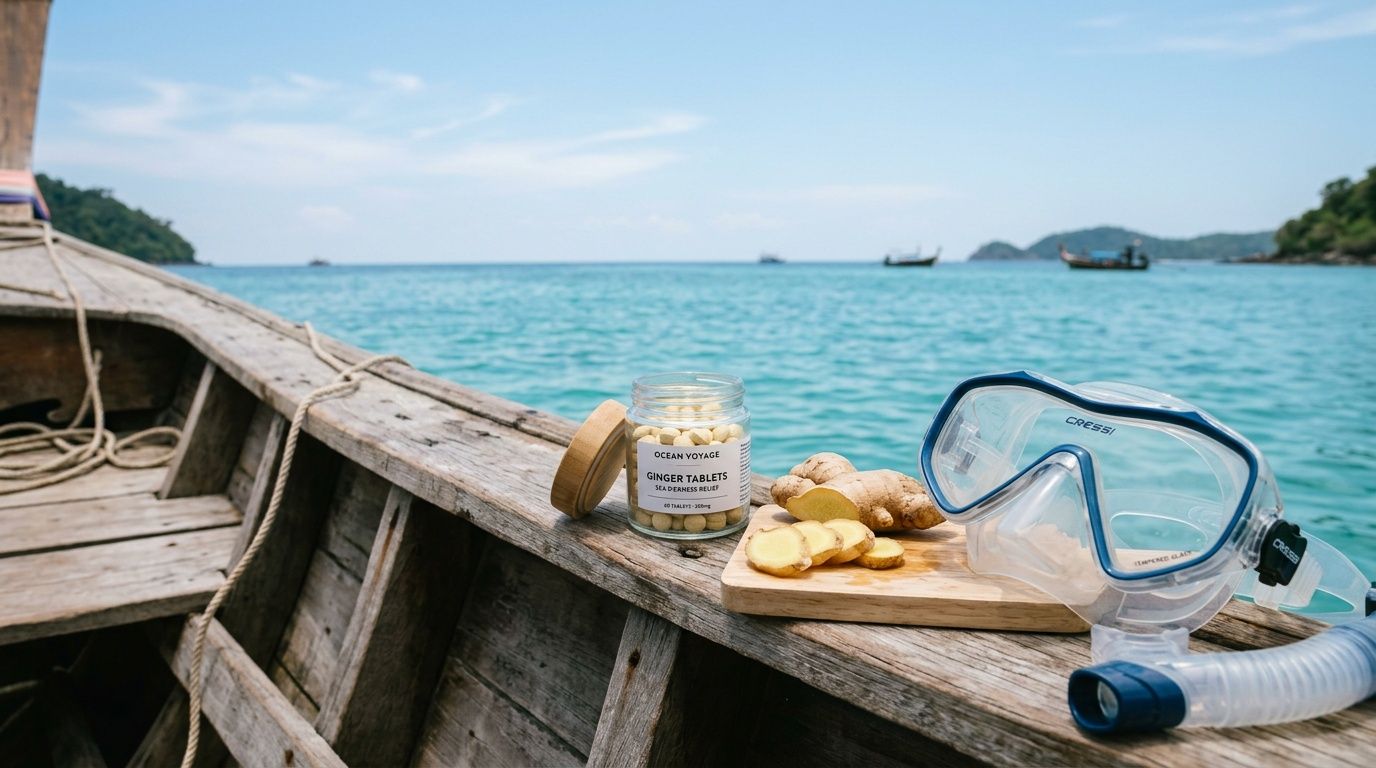
Staring out at the horizon, doing everything you can to keep that dreaded queasy feeling at bay? You’re not the first, and you certainly won’t be the last. For a lot of folks heading out on the water, ginger tablets for sea sickness are a game-changer. It's a remedy people have trusted for ages, and a big plus is that it won't make you drowsy like some of the heavy-hitter medications.
We'll get into why so many of our guests swear by ginger and see how it stacks up against the other options out there.
Your Guide To Naturally Preventing Seasickness
That wobbly, nauseous feeling of seasickness is just your brain getting confused. Your eyes see a stable boat, but your inner ear feels the gentle (or not-so-gentle) rocking of the ocean. It's a sensory mismatch. Staring at the horizon really does help, but having a solid remedy in your bag brings a special kind of peace of mind.
Here at Kona Snorkel Trips, we've seen it all. As Hawaii's top-rated and most-reviewed snorkel company, our main goal is making sure you have an incredible, unforgettable day. Nothing ruins a perfect snorkel trip faster than feeling sick. So, let’s start by laying out all the popular options in one easy-to-read table.
Seasickness Remedies At A Glance
To help you figure out what might work best for you, here's a quick rundown of the most common seasickness remedies people use.
| Remedy | Primary Mechanism | Common Side Effects | Best For |
|---|---|---|---|
| Ginger Tablets | Calms the gastrointestinal tract | Heartburn in high doses | Travelers wanting a non-drowsy, natural option. |
| Dramamine Pills | Blocks histamine signals in the brain | Drowsiness, dry mouth | Individuals who need strong, proven medicinal prevention. |
| Bonine Pills | Blocks histamine, often with less drowsiness | Mild drowsiness, fatigue | Those who find Dramamine too sedating but still need medication. |
| Ship-EEZ Seasickness Patch | Herbal ingredients delivered via a patch | Skin irritation | People looking for a long-lasting, hands-off herbal solution. |
| Sea Band wristbands | Acupressure on the P6 point | None | Anyone preferring a drug-free, reusable, and side-effect-free method. |
| Ginger chews | Same as tablets, often faster acting | Can be spicy | Quick relief and for those who dislike swallowing pills. |
Ultimately, picking the right remedy is a personal choice. It really depends on how sensitive you are to motion and whether you prefer to go the natural route or stick with proven medications.
If you're curious about other natural options, we have a whole guide on herbs for sea sickness. And for an even deeper dive, this diver's guide to ginger tablets for seasickness is a fantastic resource.
The Science Behind Ginger And Motion Sickness

It’s amazing to think a simple root can go head-to-head with something as powerful as sea sickness. Most of the common over-the-counter meds work by messing with your brain's balance centers, which is why they often knock you out. Ginger plays a totally different game.
Think of it as a natural peacemaker for your stomach. Instead of trying to block signals in your brain, ginger tablets for sea sickness get to work right where the trouble starts—your gut. The active compounds in ginger, called gingerols, help calm those chaotic stomach muscle spasms that the ocean's motion can kick off. It stops that queasy feeling from ever getting started.
Instead of letting your stomach get tied in knots, ginger helps keep its rhythm steady, heading off nausea before it has a chance to ruin your day on the water.
This is a huge plus for snorkelers. You want to be sharp, alert, and fully present to take in all the amazing sights under the waves, not fighting off drowsiness.
So, Does It Actually Work?
This isn’t just some old sailor's tale; there’s real science that puts ginger to the test in conditions that feel a lot like being on a boat. One of the most telling studies took a group of people who get motion sickness easily and gave them ginger before putting them in a contraption that mimics the rocking of a boat.
The results were pretty convincing. The people who took 1,000 mg of ginger beforehand had way less nausea. The ginger helped their stomachs stay calm and steady despite the motion. Interestingly, the study also found that doubling the dose to 2,000 mg didn't add any extra benefit, so 1,000 mg seems to be the sweet spot. You can read the full research on how ginger affects gastric activity if you want to geek out on the details.
This is fantastic news for anyone planning a snorkel trip with us. It gives you a clear, evidence-backed starting point for using ginger to feel your best. While ginger focuses on the stomach, other options work differently. If you’re curious about drug-free alternatives, check out our guide on how a Relief Band for sea sickness uses acupressure. Knowing how these remedies work helps you build the perfect plan for a comfortable, nausea-free adventure on the beautiful Kona coast.
From Naval Cadets To Snorkelers: Real-World Proof
Lab results are one thing, but how do ginger tablets for sea sickness actually hold up on a rocking boat out on the open ocean? It turns out, the evidence is pretty powerful. Ginger's stomach-calming magic isn't just a theory; it’s a proven remedy that has passed some serious real-world tests with flying colors.
One of the most convincing tests happened back in the late 1980s with a group of naval cadets. Think of it as the ultimate field test for seasickness. A trial put ginger root to the test with 80 cadets sailing in heavy seas off the coast of Denmark. The results were incredible: ginger slashed seasickness symptoms by 38% and cut vomiting episodes by a massive 72% compared to a placebo. You can read more about this study on ginger's effectiveness to see the full picture.
This study is fantastic proof that ginger isn't just a mild home remedy. It's a serious contender for preventing seasickness, even when the waves are high.
For snorkelers like us, this is huge. The conditions those cadets faced aren't that different from what you might experience on a boat trip off the Kona coast. It shows that ginger can help keep you comfortable and focused on the adventure, not on a queasy stomach.
As Effective As Dramamine, Without The Drowsiness
Since that study, more research has backed up these findings, often comparing ginger directly with common over-the-counter meds. Several trials have discovered that ginger can be just as effective as dimenhydrinate, which is the active ingredient in Dramamine pills.
This is a game-changer for anyone planning a day of snorkeling. While drugs like Dramamine definitely work, they usually come with a major downside: drowsiness. Feeling sleepy is the absolute last thing you want when you’re about to dive into the water to swim with tropical fish or our majestic manta rays.
Choosing ginger means you don’t have to pick between feeling sick and feeling sleepy. You get the anti-nausea benefits without the grogginess, so you can be fully present and enjoy every single moment of your underwater adventure. This non-drowsy benefit makes ginger tablets for sea sickness a top choice for active travelers.
To get fully prepped for your trip, it’s always a good idea to know all your options. For more general advice, take a look at our guide on how to avoid sea sickness for a whole host of other tips and tricks.
How To Use Ginger For Your Snorkel Trip

Alright, so you're ready to give ginger a shot for your day on the water with us. That's great! From what we've seen, knowing how and when to take it makes all the difference in keeping your stomach happy.
The trick is to think ahead. Just like you'd prep your snorkel gear before you get on the boat, you want to get the ginger into your system before you feel that first hint of queasiness.
The golden rule we hear from seasoned sailors and see work for our guests is taking 1,000 to 1,500 mg of ginger about one to two hours before we cast off.
This gives those active compounds time to get to work and settle your stomach before the adventure even begins.
The timing works out perfectly for our tours. If you’re joining us for the morning Captain Cook Snorkeling Tour, you can just take your ginger with a light breakfast. Heading out for our world-famous Manta Ray Night Snorkel? Take it in the late afternoon and you'll be set for an incredible evening.
Check AvailabilityPerfecting Your Ginger Plan
To make sure you have the best day possible, let's dial in a few more details for a nausea-free trip.
- Choose Your Weapon: While simple ginger tablets for sea sickness are easy because the dose is exact, you've got options. Capsules work just the same, and we've seen people get quick relief from potent ginger chews if they suddenly feel a bit off on the boat.
- Don't Go in on Empty: For some folks, taking ginger on an empty stomach can cause a little heartburn. It’s always best to have it with a small bite to eat, like some toast or fruit. Just try to avoid anything heavy or greasy, as that can make things worse on its own.
- What About the Keiki (Kids)? Ginger is generally considered safe for kids, but you'll want to use a smaller dose. Always a good idea to check with your pediatrician, but a common guideline for kids over six is 250 mg to 500 mg, also taken one to two hours before the trip.
- Topping Off: If you’re on a longer trip or know you’re especially sensitive to motion, you can take a smaller follow-up dose. A 500 mg tablet every four hours or so usually does the trick.
By timing it right and having a little something in your stomach, you’re setting yourself up for a fantastic day. It's a simple bit of prep that lets you focus on the incredible turtles and fish, not a churning tummy. And for those looking for another great local adventure, consider a trip with Captain Cook Snorkeling Tours, an excellent alternative for exploring the bay's pristine waters.
Other Effective Seasickness Remedies To Consider

While ginger tablets for sea sickness are a fantastic, non-drowsy tool to have in your bag, it's smart to know what else is out there. Here on the boat, we see what works for people every day, and the truth is, everyone's body is a little different.
Having a few options in your back pocket means you're ready for whatever the ocean has in store. Think of it like building your own personal seasickness survival kit—maybe you start with ginger but have a medicated option on standby, just in case.
Medicated Options for Stronger Prevention
When you feel you need something with a bit more punch, over-the-counter medications are a very popular and effective route. They work directly on the parts of your brain that process motion and get scrambled up on a boat.
- Dimenhydrinate: You probably know this one as Dramamine pills. It's the classic, and for good reason—it works. The major trade-off is that it's famous for making people incredibly sleepy, which isn't ideal for a day of snorkeling adventures.
- Meclizine: This is the stuff in Bonine pills. A lot of folks prefer it because it tends to cause less drowsiness than Dramamine. It’s a great middle-ground if you want the security of medication but still want to be alert enough to spot a pod of dolphins.
- Herbal Patches: A newer player in the game is something like the Ship-EEZ Seasickness Patch. You stick one behind your ear, and it delivers herbal ingredients slowly through your skin. It's a "set it and forget it" solution that's super convenient for longer trips.
These options are definitely effective, but just be sure to read the box! Pay close attention to when you need to take them and be prepared for potential side effects like a dry mouth or feeling a bit tired.
Drug-Free and Natural Alternatives
If you’d rather skip the meds, there are some great drug-free methods that people swear by, either on their own or used right alongside ginger.
Acupressure is an ancient technique that can bring relief without you having to ingest anything. The idea is that applying steady pressure to a key point on your wrist helps to quiet the body's nausea signals.
This is exactly how the popular Sea-Band wristbands work. They're simple elastic bands with a small plastic button that presses on the "Nei-Kuan" point on your inner wrist. They're totally reusable, safe for everyone (even kids), and you can pop them on even after you start to feel a bit green.
For a tastier fix, don't underestimate the simple power of ginger chews. These little chewy candies pack a quick ginger punch and can be a lifesaver for settling your stomach if a sudden wave of queasiness hits. They're super easy to toss in your pocket and great for a fast-acting bit of relief.
Knowing the pros and cons of each option helps you come up with a game plan to feel your best out on the water. For an even more detailed comparison, check out our guide to the best sea sickness medication.
When To See A Doctor About Motion Sickness
For most folks planning a day on the water with us, a few simple over-the-counter options are all it takes to keep that queasy feeling away. Things like ginger tablets for sea sickness, acupressure bands, or even Bonine pills usually do the trick for the gentle rocking of the boat.
But what if that feeling is more than just a little discomfort? It's good to know when seasickness goes from being an annoyance to something you should talk to a professional about.
If your motion sickness gets so bad that it’s completely knocking you out—even after trying the usual remedies—it’s definitely time to talk to a doctor. The same goes if you have weird side effects, like getting super drowsy from a "non-drowsy" pill or having an allergic reaction. Your safety is always the top priority.
A doctor's guidance isn't just for severe cases. It's essential for anyone with pre-existing conditions or those who are pregnant to ensure their chosen remedy is safe.
If you're managing a chronic health issue like a heart condition, high blood pressure, or glaucoma, a quick chat with your doctor is a smart move. Some seasickness medications can mess with your heart rate or blood pressure, so getting a professional opinion is crucial. If you're expecting, you’ll want to be extra cautious. We have a whole guide you can read on sea sickness and pregnancy to help you out.
Prescription-Strength Solutions
When nothing over-the-counter seems to work, your doctor might suggest a prescription. The most common one we see is the Scopolamine patch. You just stick it behind your ear a few hours before the trip, and it can provide relief for up to three days. It works by stopping those mixed-up signals between your inner ear and your brain.
This patch is a powerful tool, but it's not for everyone—that’s why you need a prescription. A doctor will go over your health history to make sure it’s a good fit, so your snorkeling adventure is as safe as it is unforgettable.
Frequently Asked Questions About Ginger For Seasickness
Even after reading all this, it's natural to have a few more questions pop up about using ginger tablets for sea sickness. We get it. Let's tackle some of the most common ones we hear from our guests so you can feel totally prepared for your day on the water with us.
How Quickly Does Ginger Work For Seasickness?
Ginger is pretty quick, but it's not instant magic. You'll want to plan ahead and take your ginger dose about one to two hours before we leave the dock. This gives those active compounds enough time to get into your system and start working their stomach-calming magic before the boat even starts rocking.
What if you forget? It happens. If you start to feel a little green around the gills once we're underway, taking some ginger can definitely still help. Many folks find that potent ginger chews seem to kick in a bit faster in this kind of situation.
Are There Any Side Effects To Using Ginger?
One of the best things about ginger is how few side effects it has, especially when you stack it up against traditional medications. The most common thing we hear about is a bit of mild heartburn or an upset stomach, but that usually only happens if you take a really high dose or pop it on a completely empty stomach.
An easy way to dodge this is to stick to the recommended dosage of around 1,000 mg and try to have it with a light snack, like a banana or a granola bar.
Can I Combine Ginger With Other Seasickness Remedies?
Absolutely, and we often recommend it as a smart game plan. Think of it as creating a multi-layered defense. Ginger works by calming your stomach, while other remedies tackle nausea from a different angle.
For example, you could wear a Sea-Band wristband to get the benefits of acupressure while also taking your ginger. Or, you could keep a medicated option like Bonine pills in your bag as a just-in-case backup. It's all about figuring out which combination makes you feel your best on the water.