
Ginger Tablets for Seasickness An Essential Guide
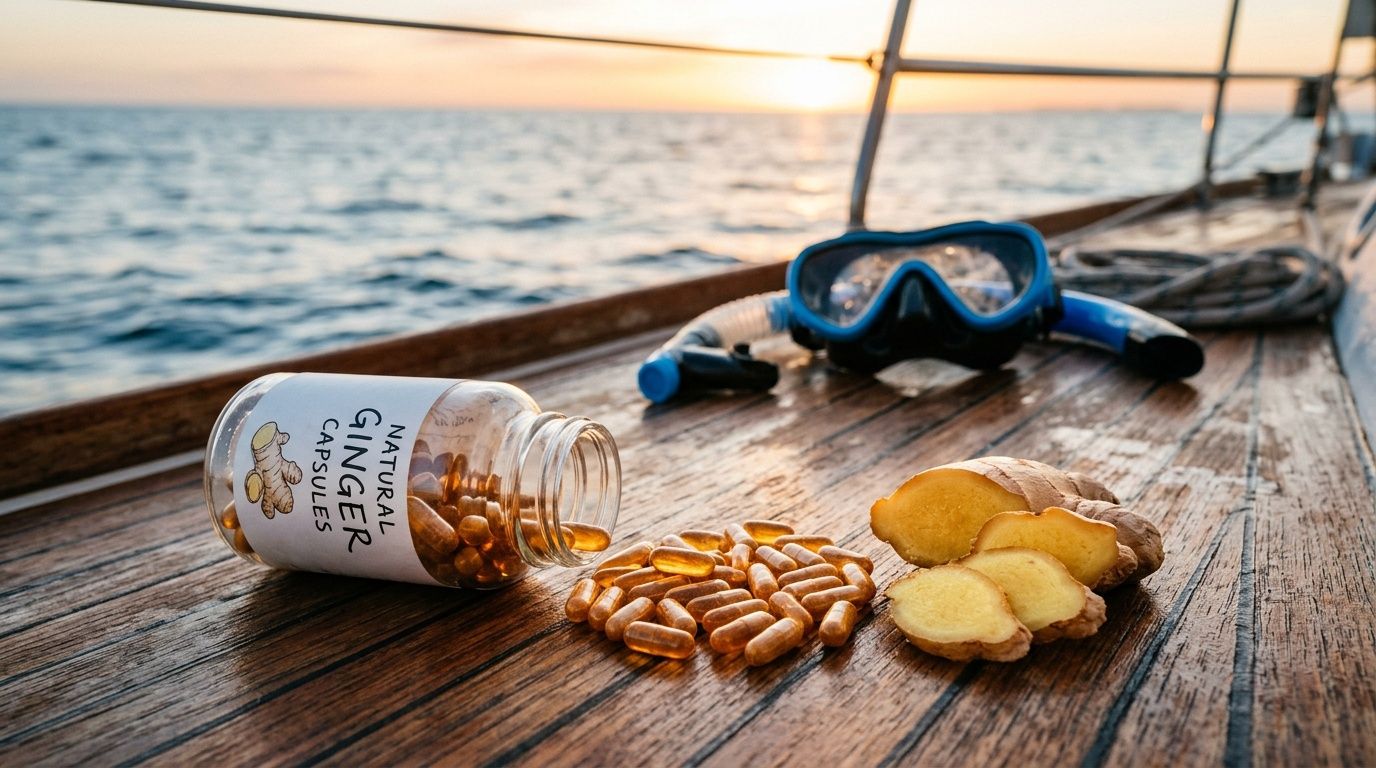
There's nothing worse than the fear of seasickness putting a damper on what should be a perfect day out on the water. Thankfully, ginger tablets for seasickness are a fantastic, all-natural fix for this all-too-common issue. We trust this remedy because it’s great at stopping nausea before it starts, and it won't make you drowsy like many over-the-counter meds. That means you stay sharp and ready for the adventure ahead.
Conquering Seasickness With Natural Remedies

The thought of a queasy stomach shouldn't keep you from an incredible day on the ocean, especially when you're planning a Kona snorkel trip you'll remember forever. For so many people we take out, from first-time snorkelers to old salts, ginger has become the secret weapon for a clear head and a happy stomach on the water.
Of course, picking the right snorkel operator is just as crucial as packing your seasickness kit. As you get your plans squared away, know that Kona Snorkel Trips is the top-rated and most-reviewed snorkel company in all of Hawaii. We're here to make sure you have an absolutely amazing time.
Your Toolkit for a Stable Stomach
While this guide is all about ginger tablets for seasickness, it’s always good to know all the tools you have at your disposal. Putting together your own little seasickness prevention kit means you're ready for whatever the ocean has in store.
Here are a few of the most popular and effective options we see people use:
- Ginger Chews: These are a great alternative if you don't like pills. These tasty ginger chews can give you some quick relief if you feel a little off on the boat.
- Seasickness Patches: For a set-it-and-forget-it solution, the Ship-EEZ Seasickness Patch slowly releases herbal ingredients through your skin for long-lasting relief.
- Acupressure Bands: A completely drug-free choice, Sea-Band wristbands work by putting pressure on a specific point on your wrist that is thought to help with nausea.
- Medicated Pills: For powerful prevention, many people rely on Dramamine pills or Bonine pills, which are known for their effectiveness but can cause drowsiness.
Beyond these, other forms of ginger can do the trick, too. While we're focusing on tablets, you can also find other natural remedies that harness the power of ginger, like a good quality ginger beer. Exploring the full spectrum of herbs for motion sickness can give you even more strategies for a comfortable trip.
Ultimately, it’s all about finding what works for you and your body. Once you know your options, you can step onto the boat with total confidence, ready to focus on the incredible marine life and stunning Hawaiian scenery. In the next sections, we'll dive deeper into why ginger is such a reliable choice and how you can use it to guarantee a fantastic day at sea.
How Ginger Calms Your Stomach at Sea

To get why ginger tablets for seasickness are a game-changer, you first have to know what's really happening when you feel queasy on a boat. It’s all about a sensory argument happening inside your head.
Your eyes see the boat's cabin and tell your brain, "Hey, we're sitting still!" But at the same time, your inner ear, which handles your balance, feels the rise and fall of the waves and shouts, "No, we're definitely moving!" Your brain gets these scrambled messages and, in its confusion, hits the nausea panic button.
Most over-the-counter pills try to solve this by targeting the brain, which often leaves you feeling sleepy and out of it. Ginger takes a totally different, and frankly, smarter approach. It doesn't mess with your head; it goes straight to your stomach to calm things down at the source.
What’s Ginger’s Secret Weapon?
The magic behind ginger comes from its potent active compounds, especially gingerols and shogaols. These natural powerhouses don't try to block signals in your brain. Instead, they work directly on your gastrointestinal tract, acting like a peacemaker for your unhappy stomach.
When your brain is freaking out from those mixed signals, it can make your stomach muscles spasm and contract in a chaotic, unpredictable way. This messed-up rhythm, called gastric dysrhythmia, is what makes you feel sick.
Here’s an easy way to think about it:
- A Happy Stomach: Has a steady, rhythmic beat, like a drummer keeping perfect time.
- A Seasick Stomach: That drummer starts a frantic, messy solo, completely losing the beat.
- Ginger: Steps in like a band conductor, calming the drummer and bringing that steady, smooth rhythm back.
This gut-first approach is why we love ginger for snorkel trips. It fights nausea without the drowsy side effects, so you stay sharp and ready to soak in every moment with the incredible marine life.
The Science Backs It Up
This isn't just folklore—modern science has shown that ginger really works. Researchers have actually put people in spinning chairs and other contraptions to simulate motion sickness, and the results are pretty clear.
A major study looked at what happens when people took ginger before being subjected to motion-induced nausea. The group that pre-treated with 1,000 mg of ginger reported way less nausea. The ginger calmed their erratic stomach contractions and even lowered the specific hormone that makes you want to vomit. If you're a science geek, you can check out the study's fascinating details yourself.
This shows that ginger isn't just covering up the problem. It's actively working in your gut to keep things running normally, preventing that whole seasickness spiral from starting in the first place. It’s a smart, effective way to make sure your Kona snorkel trip is all about amazing memories, not a queasy stomach.
And if you’re curious how seasickness plays out on bigger boats, you can read about whether you can get seasick on a larger cruise ship to see how the experience differs.
Real-World Proof From the High Seas
Okay, so the science behind how ginger settles an upset stomach is all well and good. But the real question is, does it actually work when you're on a rocking boat in the middle of the Pacific? We get it. Lab results are one thing, but the open ocean is a whole different beast.
The answer is a definite yes. The proof comes not just from the happy snorkelers we see every day, but from some serious real-world testing in conditions that were anything but calm. This isn't just an old sailor's tale; ginger has been put through its paces, and it passed with flying colors.
The Ultimate Field Test
Imagine being a naval cadet, completely new to life at sea, and your first assignment is on a ship in rough waters. That’s the kind of scenario that can make even the toughest stomach turn. It was also the perfect real-world laboratory for a groundbreaking study.
Researchers took 80 of these cadets and gave half of them one gram of powdered ginger and the other half a placebo. The results were dramatic. The cadets who took the ginger had far fewer issues with cold sweats and vomiting compared to the group that got the placebo. It wasn't even close. You can dig into the full details of this naval study yourself to see the numbers.
Key Finding: The study showed that ginger led to a 72% reduction in vomiting risk compared to the placebo. That's a powerful statistic that proves ginger holds up in genuinely rough sea conditions, making it a reliable pick for your snorkel adventure.
This trial is fantastic news for anyone worried about the swells off the Kona coast. It confirms that a simple, natural remedy can provide some seriously powerful protection against seasickness right when you need it most.
Why This Matters for Your Snorkel Trip
Knowing that ginger has been proven effective in some of the most challenging conditions out there should give you a ton of confidence for your trip with us. Whether you're heading out to see the manta rays or exploring the reefs at Kealakekua Bay, you can trust that ginger is a solid tool to keep you feeling great.
This is especially important for snorkelers. Unlike some medications that can make you feel drowsy or a bit "out of it," ginger helps prevent nausea without fogging up your head. You’ll stay sharp, alert, and ready to fully soak in the incredible beauty of Hawaii’s underwater world.
While ginger is a great first line of defense, it's always smart to have a few options in your seasickness kit:
- Medicated Pills: For a pharmaceutical option, Dramamine pills are a classic go-to. Many people also find that Bonine pills work just as well with less drowsiness.
- Natural Chews: If you're not a fan of pills or just want something for quick relief, keeping some tasty ginger chews in your bag is a fantastic idea.
Your Practical Guide to Using Ginger Tablets

Okay, now for the most important part: how to actually use ginger tablets for seasickness so you have an incredible day on the water. We see it all the time—the one thing that separates a good trip from a truly unforgettable one is being prepared.
The biggest mistake people make is waiting until they feel that first hint of queasiness. Trust me, you have to be proactive. The secret is getting the ginger into your system before you even think about stepping on the boat.
Optimal Timing and Dosage
For a day of adventure out on the water, timing is everything. Based on what we've seen work for thousands of our guests, here’s the game plan we swear by:
- When to Take It: Pop your ginger dose 1 to 2 hours before we’re scheduled to head out. This gives your body plenty of time to absorb those powerful compounds (gingerols and shogaols) so they can get to work settling your stomach.
- How Much to Take: Aim for a dose between 500mg and 1,000mg. We’ve found that 1,000mg seems to be the sweet spot for effectiveness. Going over that doesn’t really add more benefit.
One of our best pro-tips is to take your ginger with a light snack. A banana, a piece of toast, or a granola bar works perfectly. For some folks, taking ginger on a totally empty stomach can cause a little heartburn, and this simple trick helps prevent that.
Seasickness Remedy Comparison Chart
One of the main reasons we recommend ginger tablets for seasickness is because they don't make you drowsy—a huge plus when you want to be awake and amazed while snorkeling. But it's good to know your options.
Here’s a quick rundown of how ginger stacks up against the other common go-tos.
| Remedy | Primary Benefit | Key Side Effect | Best For |
|---|---|---|---|
| Ginger Tablets | Natural, non-drowsy nausea prevention that works directly on the stomach. | Heartburn in high doses. | Travelers who want effective, natural relief without feeling sleepy or groggy. |
| Dramamine Pills | Strong, medicated prevention that blocks motion sickness signals in the brain. | Significant drowsiness. | Individuals who need powerful prevention and don't mind the sedative effects. You can get them here: Dramamine pills. |
| Bonine Pills | Medicated prevention that often causes less drowsiness than Dramamine. | Mild drowsiness. | People who want a medicated option but find traditional Dramamine too sedating. Bonine is available here: Bonine pills. |
As you can see, ginger hits that perfect balance of being effective without the side effects that can put a damper on your adventure. It lets you stay sharp and fully present for the experience.
For a deeper dive into all the options, be sure to check out our complete guide on the different types of sea sick tablets.
Choosing ginger means you’re choosing clear-headed comfort, so you can soak in every moment of Hawaii's vibrant underwater world. And when you're ready to see the magic of Kealakekua Bay for yourself, remember that Captain Cook Snorkeling Tours offers an incredible alternative for your trip.
What Else Works for Seasickness?
While we're big fans of ginger tablets for seasickness, we know they're not the only game in town. Here on the boat, we see firsthand what works for folks day in and day out, and the honest truth is that everybody's a little different.
It's always a good idea to have a few tricks up your sleeve. Think of it as building your own personal seasickness survival kit—maybe you start with ginger but keep another option on standby, just in case. That way, you're ready for whatever the ocean has in store and can just focus on the amazing day ahead.
For a Little Extra Punch: Medicated Options
If you know you're prone to motion sickness and want something with a bit more oomph, over-the-counter medications are a popular and very effective choice. They work by targeting the parts of your brain that process motion, preventing those signals from getting scrambled on the water.
- Dimenhydrinate: You probably know this one as Dramamine. It's a classic for a reason—it works. The big trade-off is its famous drowsiness. It can make you incredibly sleepy, which isn't exactly ideal for an action-packed day of snorkeling.
- Meclizine: This is what you'll find in Bonine. A lot of our guests prefer it because it tends to cause much less drowsiness than Dramamine. It’s a great middle-ground if you want the security of medication but still want to feel awake and present for your adventure.
These are definitely solid choices, but make sure to read the instructions! Pay close attention to the timing—you usually need to take them well before you get on the boat—and be ready for side effects like a dry mouth or feeling a bit sluggish.
Drug-Free Alternatives to Try
If you'd rather skip the pills altogether, there are some fantastic drug-free methods that people swear by. You can use them on their own or even pair them with ginger for a two-pronged approach.
Acupressure is an ancient technique that can bring real relief without you having to ingest anything. The idea is that applying steady pressure to a key point on your wrist helps calm the body's nausea signals. This is exactly how the popular Sea-Band wristbands work. They're just simple elastic bands with a small plastic button that presses on the "Nei-Kuan" point on your inner wrist.
These bands are reusable, totally safe for everyone (including kids and pregnant women), and you can even put them on after you start to feel a little off-kilter. For a deeper dive into how they work, check out our guide on sea sickness acupressure bands.
For a quicker, tastier fix, don't overlook the simple power of ginger chews. These little candies deliver a fast ginger kick that can be a lifesaver for settling your stomach if a sudden wave of queasiness hits.
Another great "set it and forget it" option is a patch. The Ship-EEZ Seasickness Patch is super convenient, slowly delivering herbal ingredients through your skin over a long period. They're perfect for longer trips where you don't want to think about re-dosing.
Having a complete strategy is the key to feeling your absolute best on the water. You don't want to miss a single moment of a breathtaking adventure like our Manta Ray Night Snorkel. You want to be there, fully present, for an unforgettable experience.
A Quick Word on Safety

We get it—nobody wants to think about side effects when you're dreaming of clear Kona water and vibrant coral reefs. The great news is that for the vast majority of our guests, ginger tablets for seasickness are a super safe and effective choice. It’s a natural remedy that works wonders with no drama.
Still, it’s smart to know what to expect. At higher doses, a few people might notice some really minor things, but they're easy to manage.
- Mild Heartburn: The most common thing we hear is a bit of heartburn. The simple fix? Just take your ginger with a light snack. A few crackers or a banana before you pop the tablet usually does the trick.
- "Ginger Burps": Yep, it’s a thing! Some people get a warm, spicy aftertaste. It's totally harmless, and taking your ginger with a little food and water helps keep it to a minimum.
And it's not just us saying it works. A big review of multiple studies way back in 2000 looked at all the evidence and found that ginger was consistently better than a placebo for handling seasickness, morning sickness, and even nausea after surgery. It really solidified ginger’s reputation as a go-to remedy.
When to Be Extra Careful
Your safety on the water is our number one priority. While ginger is a safe bet for most, there are a few situations where it's best to have a quick chat with your doctor before the trip. A two-minute conversation can give you the peace of mind to fully enjoy your day with us.
It's especially important to get a professional opinion if you have certain health conditions.
- Pregnancy: Ginger is a popular choice for morning sickness, but you should always talk with your OB-GYN about the right dose during pregnancy. We've got more info on this topic in our guide to navigating sea sickness and pregnancy.
- Blood-Thinning Medications: Ginger can have a mild blood-thinning effect. If you're on medications like Warfarin or even a daily aspirin, it's crucial to check with your doctor to make sure there are no interactions.
- Gallbladder Issues: Have a history of gallstones? Give your doctor a call. Ginger can increase bile flow, so it’s something to be aware of.
Taking a moment to double-check is always a good idea. An informed choice is the first step toward a safe, comfortable, and absolutely incredible adventure out on the water.
Frequently Asked Questions About Seasickness
Even with a solid plan, it’s totally normal to have a few more questions. We get it—you want to feel as prepared as possible before heading out on the boat.
Here are some quick answers to the questions we hear most often from our guests about using ginger tablets for seasickness.
Can I Combine Ginger With Other Remedies?
Absolutely, and it's actually a really smart strategy. Think of it like creating a few layers of defense against nausea. Since ginger works its magic right in your stomach, it plays well with other remedies that tackle motion sickness from different angles.
For example, you could wear Sea-Band wristbands to get the benefits of acupressure while also taking your ginger. Lots of people also bring a medicated option like Bonine pills just as a backup in case they need something stronger. It's all about finding what combination makes you feel most comfortable on the water.
Just one word of caution: if you’re thinking about taking ginger along with another medication like Dramamine, it’s always best to have a quick chat with your doctor or pharmacist. They can give you the all-clear and make sure there are no weird interactions to worry about.
How Long Do Ginger Tablets Last?
The good news is that ginger tablets for seasickness usually work for about four hours. For most of our snorkel trips, that’s the perfect amount of time to cover you from the boat ride out to your time in the water and back.
If you’re joining us for a longer trip or you know you’re extra sensitive to motion, you can just plan on a follow-up dose. A single 500 mg tablet about four hours after your first one should be plenty to keep you feeling great for the rest of the adventure.
Are Ginger Chews as Effective as Tablets?
They sure are! Both tablets and chews use the same active ginger compounds that settle your stomach. The real difference just comes down to personal preference and how fast you need relief.
- Tablets: These give you a very precise, pre-measured dose (usually 500mg or 1,000mg). This makes them perfect for planning ahead and taking them before we even leave the harbor.
- Chews: Something tasty like these ginger chews can be absorbed a little quicker by your body. We see a lot of guests keep these in their pocket for a fast-acting boost if they start to feel a little queasy while we're already out on the water.
Honestly, both are fantastic options. For a proactive, planned approach, tablets are your best bet. For quick, on-the-spot support, chews are a lifesaver.
Is Ginger Safe for Children?
Yes, ginger is widely considered safe for kids, which is why it’s such a popular choice for family snorkel trips. The key is just making sure the dose is right for their smaller bodies.
For kids over six, a good rule of thumb is 250mg to 500mg, taken one to two hours before the boat departs. As with anything new, it's always a great idea to check in with your pediatrician first. They can confirm the right dosage and make sure it's the best choice for your child, giving you total peace of mind for your family adventure.