
Ginger Candy for Seasickness: A Snorkeler’s Guide
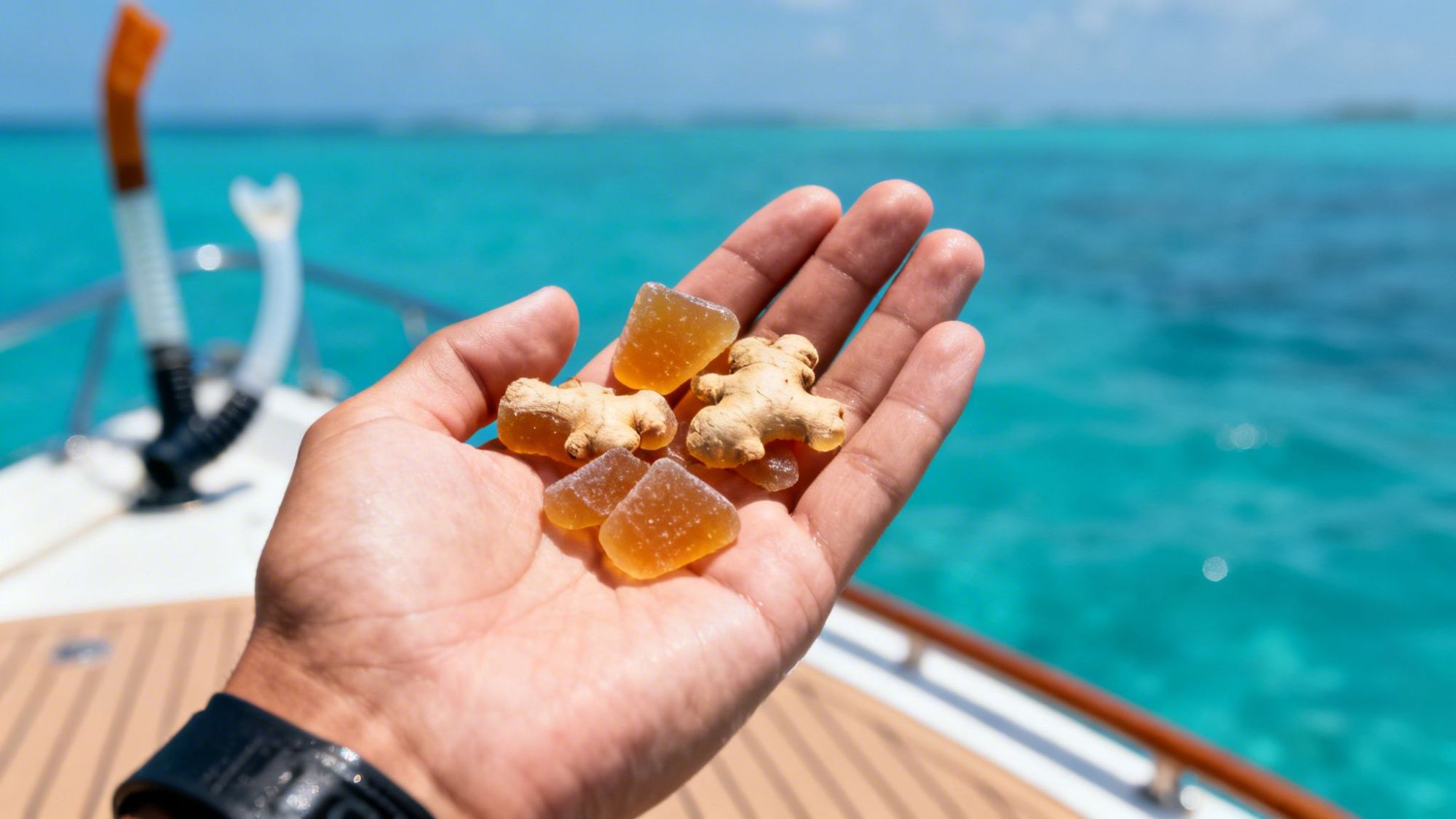
Booking a snorkel trip is the fun part. Then the practical thought shows up: what if the boat ride is the part you remember most, for the wrong reason?
That worry is common, especially for first-time snorkelers, kids, and anyone who has ever gone green on a ferry, fishing boat, or winding road. The good news is that ginger candy for seasickness can be a solid tool if you use it the right way. The key is not just bringing it along. The key is timing it well, pairing it with smart boat habits, and knowing when to add backup.
Your Guide to a Nausea-Free Snorkel Adventure
Most guests who worry about seasickness are not overreacting. They are being realistic. A dream day on the water can feel very different if your stomach starts rolling before you even see the reef.
That is why experienced boat crews look at prevention as a full plan, not a single trick. Ginger candy helps. So does where you sit, what you eat before departure, when you hydrate, and what you do with your eyes once the boat starts moving.
People who love the ocean in one place often run into the same question somewhere else. If you also enjoy planning unforgettable boat trips, you already know the pattern. Calm expectations and smart preparation matter almost as much as the destination.
For many snorkelers, ginger is the best first move because it is easy to carry, easy to use, and generally easier to tolerate than stronger remedies. It also fits the pace of a snorkeling day. You can stay alert, listen to the safety briefing, get in the water comfortably, and enjoy the ride back without feeling groggy.
A lot of people make one mistake. They wait until they already feel sick. That is usually too late for the smoothest result.
If seasickness is on your mind before a Hawaii boat day, this guide pairs the science with practical crew-style advice. For an extra overview focused on local tours, this article on how to avoid sea sickness and enjoy your Hawaii snorkel tour is worth reading too.
What this looks like in real life
One guest brings ginger chews, eats a light breakfast, stays out in the breeze, and keeps eyes on the horizon. Another guest skips breakfast, sits in the cabin, scrolls on a phone, and grabs a chew only after nausea starts. The first guest usually gives ginger a fair chance to work. The second guest is asking it to rescue a situation that is already building.
Practical takeaway: Ginger candy works best as part of a routine, not as a last-second fix.
Understanding How Ginger Calms Your Stomach

Seasickness starts when your body gets mixed messages. Your inner ear feels motion. Your eyes may be looking at a deck, bench, or cabin that seems still. Your brain tries to reconcile the mismatch, and your stomach often pays for it first.
Many motion sickness drugs work by acting on the brain. That can help, but it can also leave you sleepy. For a snorkeling trip, that trade-off matters. You want steady footing, clear instructions, and enough focus to enjoy the water.
Ginger works at the gut level
Ginger takes a different route. Its active compounds, gingerols and shogaols, help calm stomach muscles and settle the digestive system rather than creating the same kind of drowsy effect associated with some medications.
That matters because boat nausea often feels like your stomach has lost its rhythm. Ginger’s value is that it targets that unsettled gut response directly. If you want a broader look at natural options, this guide on herbs for sea sickness covers the larger category.
The rough-water evidence matters
The key study is not a calm lab scenario. In a 1988 double-blind trial, 80 naval cadets were exposed to heavy seas for four hours, and the group that took 1 gram of ginger showed a 72% reduction in vomiting compared with placebo, as summarized here by Kona Honu Divers: ginger candy for seasickness research overview.
That result gets attention for a reason. These were real motion conditions, not just a mild wobble.
Why snorkelers like the non-drowsy trade-off
On a snorkel boat, staying comfortable is only half the goal. The other half is staying sharp enough to enjoy the day.
Ginger fits that better than remedies that leave some people foggy. You still need to be sensible. You still need food, water, and fresh air. But if someone asks for the first thing to try before reaching for stronger options, ginger candy is a practical answer.
Guide rule: If a remedy settles your stomach but makes you too sleepy to enjoy the reef, it solved only part of the problem.
Your Pre-Snorkel Ginger Timing and Dosage Plan

A lot of snorkelers make the same mistake. They wait until the boat leaves the harbor, feel the first stomach drop, then reach for ginger candy. By then, they are already trying to catch up.
The better plan starts on land.
A 2003 study found that pretreatment with 1,000 mg or 2,000 mg of ginger significantly reduced nausea and gastric dysrhythmias in volunteers prone to motion sickness, according to the PubMed record: ginger pretreatment and motion sickness. For snorkel trips, the practical takeaway is simple. Take ginger before the ride, not after symptoms begin.
A timing routine that works for snorkel mornings
This is the schedule I recommend to guests who know they are motion-sensitive:
Eat a light, plain meal before leaving for the harbor
An empty stomach and a heavy breakfast can both backfire. Toast, crackers, oatmeal, fruit, or something similarly bland usually sits better than greasy food.Take ginger 1 to 2 hours before boarding
That gives it time to work before the boat starts rocking. If you are driving to the marina and tend to get carsick too, the same early timing helps. The logic is similar to how to prevent car sickness in toddlers, where prevention works better than waiting for nausea to build.Carry extra ginger where you can reach it fast
Keep it in a pocket, dry bag, or the top of your backpack. Do not bury it under towels and sunscreen.For longer trips, follow the label for repeat use
Candy, chews, capsules, and tablets all vary. The package matters.
Dosage is where candy gets tricky
Research often uses 1,000 mg to 2,000 mg of ginger. Candy does not always make that easy.
Some chews contain a useful amount of ginger per piece. Others are mostly sugar with enough ginger to taste good but not enough to match the doses used in studies. That is the trade-off with candy. It is easy to take on a boat, but the dosing can be less precise.
Check the label before trip day, not while standing on the dock. If each piece only contains a modest amount of ginger, one chew may not be enough. If you want more consistent dosing, this guide to ginger tablets for seasickness explains when tablets make more sense than candy.
Comparing common ginger options
| Ginger Form | Typical Dosage Per Serving | Time to Take Before Trip | Pros |
|---|---|---|---|
| Ginger candy or chews | Varies by product label | 1 to 2 hours before boarding | Easy to carry, easy to take, helpful when you want something in your mouth as your stomach feels off |
| Ginger capsules | Varies by product label | 1 to 2 hours before boarding | More precise dosing, less sugar |
| Ginger tablets | Varies by product label | 1 to 2 hours before boarding | Convenient and consistent |
| Ginger tea or drink | Harder to standardize | Before travel, with enough time to settle | Soothing for some people, but less precise |
What works on real snorkel days
Guests usually do best when they stack a few small wins together. They eat lightly, take ginger early, bring enough to cover the whole outing, and check the label so they know what they are taking.
What fails is the last-minute version. One random candy from a harbor shop, taken after nausea starts, is not a real prevention plan.
Best-use tip: If the package does not clearly list how much ginger is in each piece, do not rely on that candy as your only seasickness defense.
On-the-Water Tactics to Stay Nausea-Free

Once the boat is moving, your job is to help your body stop fighting the motion. Ginger can do part of that. Your habits finish the job.
The guests who stay comfortable usually do a few small things early. They do not wait for the first wave of nausea.
Pick the right place on the boat
Fresh air helps. Mid-boat often feels steadier than the bow or stern. The enclosed cabin can make things worse for some people, especially if fuel smells, sunscreen, or food odors build up.
Give your eyes a stable target
Look at the horizon. That single move can make a big difference because it helps your visual system match what your inner ear is reporting.
Phones are a problem. Reading is often worse. If you have kids who get motion sick in the car, the same logic applies on the water. This piece on how to prevent car sickness in toddlers explains that visual mismatch in a family-friendly way.
Eat and drink like someone who wants a calm stomach
Try these onboard habits:
- Sip water slowly: Small, frequent sips tend to sit better than chugging a full bottle.
- Keep snacks plain: Crackers or other simple foods are usually easier than rich snacks.
- Avoid staring down: Looking into a backpack, camera screen, or phone for long stretches can bring symptoms on fast.
If you like drug-free backup, sea sickness acupressure bands can pair well with ginger.
Use ginger candy as maintenance, not panic mode
If you feel the first little twinge, chew slowly. Do not rush it. The act of chewing can be calming, and keeping a chew in your pocket is smarter than having it buried under towels and sunscreen.
One thing seasoned crews notice all the time is how quickly mild discomfort can turn into full nausea if someone stays inside, gets hot, and keeps looking down. The fix is often simple. Stand up carefully, get air, look outward, and settle your breathing.
When Ginger Candy Isn't Enough

Some guests do everything right. They take ginger early, eat a light breakfast, stay outside, and still turn pale the second the boat starts rocking. That does not mean they failed. It means they need a stronger plan than candy alone.
I have seen this plenty of times on snorkel boats in Kona. Ginger is a solid first step because it is easy, low-risk for many people, and usually does not cause drowsiness. But seasickness is not one-size-fits-all. Motion sensitivity varies, candy strength varies, and some people already know from past trips that mild remedies will not carry the whole day.
What works better than ginger alone
The strongest approach is usually layered. Guests with a known history of seasickness often do best with one primary remedy and one backup, instead of waiting to see if they feel bad.
A few practical pairings work well:
- Ginger plus wristbands for people who want to stay drug-free
- Medication plus ginger for guests who need more protection but still want something easy to use during the ride
- Patch plus onboard discipline for travelers who know they get sick fast and want coverage before the boat even leaves the harbor
The key point is timing. If someone waits until they are already nauseated, options narrow quickly.
A practical comparison of backup options
Here is how the common choices compare on real trips.
| Option | Main upside | Main downside | Good fit for |
|---|---|---|---|
| Ginger chews | Non-drowsy, easy to carry | Strength varies a lot from product to product | Mild to moderate motion sensitivity |
| Sea Band wristbands | Drug-free, simple to wear | Relief is hit-or-miss | People who want a non-medication add-on |
| Dramamine pills | Often stronger than ginger alone | Drowsiness can be a real problem in the water | People who already know they need medication |
| Bonine pills | Common over-the-counter backup | Can still cause sleepiness or dry mouth | People who want an OTC option with a different feel than Dramamine |
| Ship-EEZ Seasickness Patch | Wearable option, no chewing needed | Not the right choice for every traveler | People who prefer a patch-based plan |
If you are deciding between ginger and medication, this guide to the best sea sickness medicine for boat trips lays out the trade-offs in more detail.
Common mistakes with stronger remedies
Testing a medication for the first time on tour day is a bad gamble. Some people feel sleepy, foggy, or dried out, and that is better discovered at home than while climbing a ladder in open water.
Another mistake is treating medication like a free pass. Even the stronger remedies work better when the basics are handled well. Fresh air still matters. Heat still matters. Looking down at a phone can still push someone over the edge.
An empty stomach can do it too.
Best backup rule: If you know you are highly motion-sensitive, build your plan before travel day. Do not improvise at the dock.
Your Seasickness-Proof Kona Snorkel Trip Checklist
Confidence starts the night before. A good seasickness plan is easy to follow when it is simple enough to remember.
The night before
- Sleep well: Fatigue can make motion feel harsher.
- Skip heavy food: Rich dinners and alcohol can leave your stomach touchy the next morning.
- Pack early: Put your remedy where you can grab it fast.
The morning of your trip
- Eat light: Toast, oatmeal, crackers, or another bland breakfast usually beats greasy food.
- Take ginger early: Give it time before boarding.
- Bring water: Not to chug. To sip.
What to pack
- Extra ginger chews: Do not rely on one piece.
- Plain snacks: Crackers are classic for a reason.
- Any backup remedy: Wristbands, patch, or medication if that is part of your plan.
- A small bag pocket for quick access: Digging around when you feel queasy never helps.
Once you are on board
- Choose fresh air: Avoid stuffy corners if you can.
- Look out, not down: Horizon beats phone every time.
- Tell the crew early: Mild nausea is easier to help than full-blown seasickness.
Answering Your Top Seasickness Questions
Can I take too much ginger candy
Yes. More is not always better. For practical snorkeling, typical ginger doses are generally well-tolerated, with minimal side effects. The bigger issue for most snorkelers is the opposite. They often take too little because the candy contains less real ginger than they assume.
Are all ginger candies equally effective
No. Some are made for flavor, not function. If the package does not clearly list ginger content, treat it cautiously. A candy that tastes like ginger is not always giving you a useful amount of ginger.
What if I already feel sick
It can still help, but prevention is where ginger shines. If nausea has already built, chewing slowly may settle things somewhat, especially if you also move into fresh air and stop looking down.
Should I combine ginger with something else
If you know you are very prone to motion sickness, that is often the smart move. Many travelers do better with layered prevention than with a single remedy.
Is ginger better than medication
Not universally. It depends on your body, your history, and how rough the day is. Ginger’s main appeal is that it can help without the same drowsy trade-off many people want to avoid on a snorkel trip.
If you want a boat day designed around comfort, safety, and a crew that understands how to help guests stay ahead of seasickness, book with Kona Snorkel Trips. They are Hawaii’s top rated and most reviewed snorkel company, and that experience shows in all the small details that make a trip smoother from departure to the ride home.