
Your Guide to Dramamine Seasick Tablets for Boat Trips
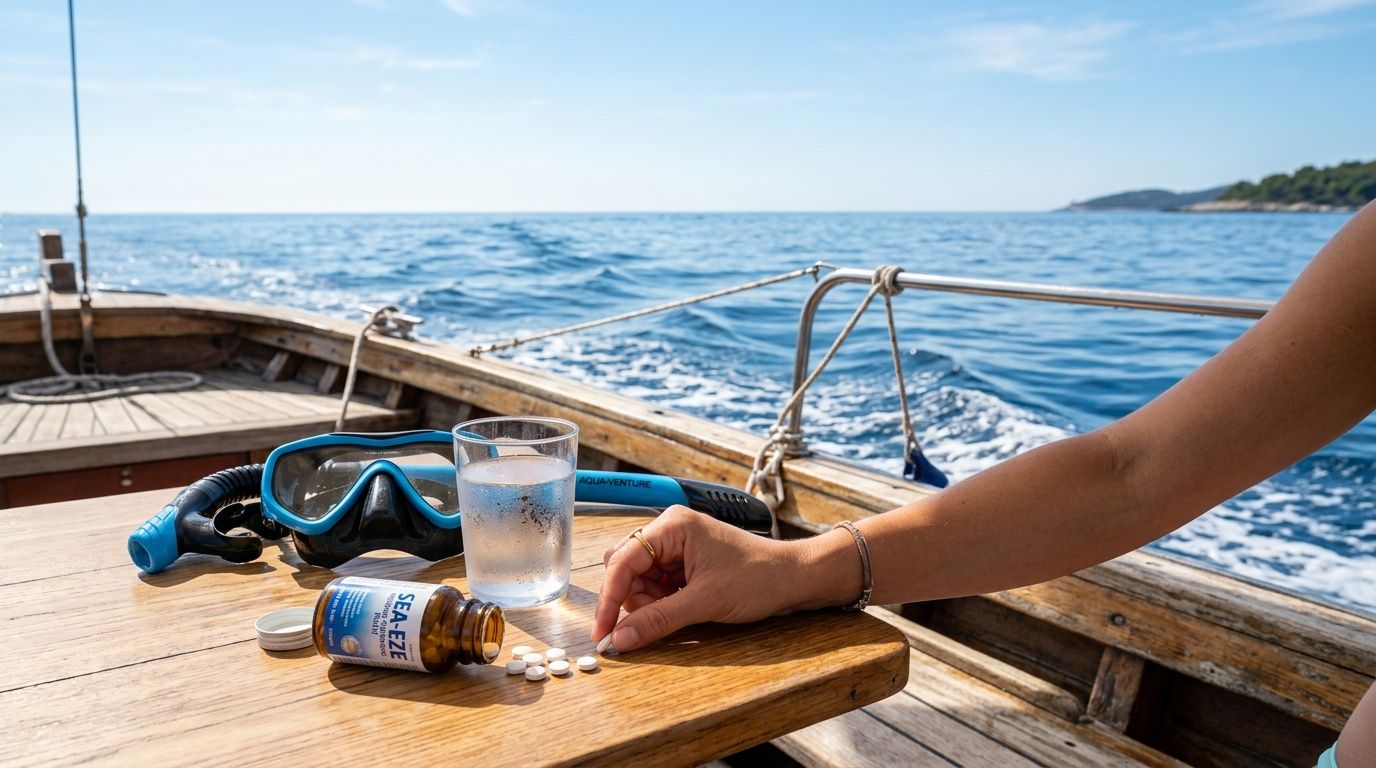
There’s nothing worse than having a perfect day on the water ruined by that dreaded queasy feeling. You’re all set for an incredible snorkel adventure in Hawaii, but the fear of a churning stomach is holding you back. We get it. That's why Dramamine seasick tablets are a go-to for so many boaters—they're a simple, reliable way to keep motion sickness from crashing your party.
Your Guide to a Seasick-Free Snorkel Adventure

That gentle rocking of the boat is supposed to be relaxing, right? But for some of us, it kicks off an inner ear rebellion. Motion sickness is basically your brain getting mixed signals. Your eyes see the steady deck of the boat, but your inner ear feels the roll of the ocean. This sensory tug-of-war is what leads to that awful nausea, dizziness, and cold sweat that can sideline you for the whole trip.
Picking Your Tour and Your Remedy
Whether you're gearing up to swim with our manta rays here in Kona or exploring other stunning coastlines, a little prep goes a long way. Just like finding the perfect tour—maybe even some amazing Algarve boat tours if your travels take you there—finding the right seasickness remedy is crucial for enjoying your day.
Think of this guide as your cheat sheet for using Dramamine seasick tablets like a pro. We'll walk you through how it works, when to take it, and what to expect, so you can conquer that queasy feeling and focus on the magic of snorkeling Captain Cook or swimming with gentle giants.
Of course, Dramamine isn't the only player in the game. Here are a few of the most popular options people turn to:
- Ship-EEZ Seasickness Patch: A neat herbal patch you stick behind your ear for long-lasting relief.
- Dramamine pills: The classic choice. A powerful antihistamine that stops nausea signals dead in their tracks.
- Bonine pills: Another antihistamine option, popular because it’s known for being less drowsy.
- Sea Band wristbands: A totally drug-free band that uses acupressure on your wrist to ease nausea.
- Ginger chews: A tasty, natural choice that helps settle your stomach without any side effects.
Quick Guide to Motion Sickness Remedies
To help you sort through the options, we put together a simple chart comparing the most common remedies. Seeing them side-by-side makes it much easier to pick what’s best for you. For an even deeper dive, check out our full article on how to avoid seasickness on a boat.
| Remedy | Type | How It Works | Key Consideration |
|---|---|---|---|
| Dramamine | Antihistamine | Blocks nausea signals sent from the inner ear to the brain. | Highly effective but can cause significant drowsiness. |
| Bonine | Antihistamine | Similar to Dramamine but with a different active ingredient that's often less sedating. | A good balance of effectiveness and reduced drowsiness. |
| Ship-EEZ Patch | Herbal | Delivers a blend of natural herbs through the skin over several days. | Convenient for multi-day trips and avoids pills. |
| Sea-Band | Acupressure | Applies pressure to the P6 point on the wrist, which can disrupt nausea signals. | Completely drug-free and has no side effects. |
| Ginger Chews | Natural | The active compounds in ginger help calm the stomach and digestive tract. | A great non-drowsy, natural option for milder cases. |
Ultimately, the best remedy is the one that works for you. Don't be afraid to try a couple of different options on shore beforehand to see how your body reacts. A little bit of planning can make all the difference between a miserable trip and an unforgettable one.
The Accidental Discovery of Dramamine

The story behind Dramamine seasick tablets is one of those fantastic tales of scientific serendipity. It wasn't the result of a long, targeted search for a seasickness cure. Instead, its incredible anti-nausea power was discovered completely by accident in a way nobody saw coming.
It all started back in 1947 at Johns Hopkins Hospital. A team of researchers was busy testing a new compound called dimenhydrinate, hoping it would work as a treatment for hives and other allergic reactions. One of their test subjects was a woman with a particularly miserable and lifelong problem.
She suffered from such extreme motion sickness that a simple streetcar ride was enough to make her feel terribly ill. After taking the experimental allergy medicine, she hopped on the streetcar to go home, expecting the usual nausea to kick in. But this time, it didn't. For the first time she could remember, she felt completely fine.
An Unexpected Cure
Absolutely amazed, the woman told the researchers about this incredible side effect. She explained that for the first time in her adult life, she’d commuted without a hint of sickness. That was the lightbulb moment. The scientists, totally intrigued, realized they might have stumbled onto something much bigger than just another allergy drug.
They had accidentally found a fix for a problem that has plagued sailors, soldiers, and travelers for centuries. That one woman's experience launched a whole new line of research, shifting focus to see just how well dimenhydrinate could fight motion sickness. It was a classic case of looking for one thing and finding something else entirely—a discovery that would forever change how we travel.
Of course, science needs more than just a single story. They needed solid proof that this stuff really worked. This led to what might be the most famous motion sickness trial ever conducted, a test that would secure Dramamine's place in history.
The Ultimate Test on the High Seas
In 1948, the U.S. Army decided to give the new drug the toughest test imaginable. They set up a study on the USS General C. C. Ballou, a transport ship so infamous for its rough ride that it earned the nickname the "rolling Ballou." If this new drug could work here, it could work absolutely anywhere.
The experiment itself was straightforward. More than 1,300 soldiers were about to cross the Atlantic. Researchers gave one group the new Dramamine seasick tablets an hour before they shipped out, and the other group got a placebo.
The results were staggering. In the placebo group, a predictable 28% of the soldiers got seasick. But in the group that took Dramamine? Not a single soldier felt sick. The effectiveness was a perfect 100%.
That landmark study provided undeniable proof. It showed that Dramamine didn't just ease a bit of queasiness; it could completely prevent severe seasickness in even the most brutal conditions. From that point on, Dramamine became the go-to solution for motion sickness. This 75-year-old discovery, born from an allergy study and proven on a rolling sea, is still an essential tool for adventurers heading out on a Kona Snorkel Trips boat today.
How Dramamine Conquers Motion Sickness

So, how do Dramamine seasick tablets actually work their magic? Think of your inner ear as a super-sensitive messenger in charge of telling your brain how your body is moving. On land, everything is great—the messages are clear and consistent.
But get on a boat, and that same messenger starts to freak out from the gentle rocking of the waves. It begins firing off frantic, conflicting reports to your brain. It’s yelling, “We’re moving up and down!” while your eyes, looking at the stable deck of the boat, are saying, “Nope, we’re perfectly still!”
This sensory mismatch is what sends your brain into a tailspin, triggering the only alarm it knows: nausea. That queasy feeling is just your brain’s response to a total communication breakdown between your senses.
Dramamine’s active ingredient, dimenhydrinate, acts like a seasoned control tower operator. It steps in and calmly intercepts those jumbled signals from your inner ear before they can hit the nausea center in your brain. By simply blocking the message, Dramamine tells your brain, "It's a false alarm, everything's cool." The nausea signal never gets delivered, and you get to enjoy the boat ride feeling great.
Choosing Your Dramamine Formula
Dramamine isn't a one-size-fits-all fix. The brand offers a few different formulas, and knowing what’s in each one is the key to picking the right Dramamine seasick tablets for your snorkel tour.
Here’s a breakdown of the most common choices:
Dramamine® Original Formula: This is the classic, heavy-hitter. It’s packed with 50 mg of dimenhydrinate, a potent antihistamine that’s fantastic at blocking nausea signals. If you know you're prone to getting really seasick and want maximum protection, this is your go-to.
Dramamine® Less Drowsy Formula: The big downside to the Original Formula can be serious drowsiness. This version uses 25 mg of meclizine hydrochloride, a different antihistamine that’s known for being much less sedating while still offering protection for up to 24 hours.
Dramamine® Non-Drowsy Naturals: For anyone wanting to skip medication, this is the perfect alternative. It uses 1,000 mg of ginger, a natural powerhouse that’s been proven to help prevent nausea by calming the stomach, all without any drowsy side effects.
Each one works a little differently, so the best choice really depends on your body and your priorities for the day. For a complete rundown of all the options out there, our guide on sea sickness pills dives even deeper.
Getting a handle on the different formulas means you can show up for your trip feeling confident and prepared. You’re taking control of your experience so you won't have to miss a single amazing moment out on the water with us.
Which Formula Is Right for Your Snorkel Trip?
When you're deciding which Dramamine to pack for your Kona Snorkel Trips adventure, it all boils down to a simple trade-off: prevention power versus side effects.
If you are super prone to motion sickness and your number one goal is to keep it at bay, the Original Formula (Dramamine pills) is your most dependable option. Just be ready for the drowsiness that comes with it. It might be great if you're planning to just chill on the boat, but not ideal if you want to be alert for snorkeling.
For most folks, the Less Drowsy Formula is the sweet spot. It contains meclizine, which is the same active ingredient you'll find in Bonine pills. It gives you solid, long-lasting protection without knocking you out, making it an awesome choice for a day of snorkeling when you want to be sharp and ready to explore.
If you’re sensitive to medications or just prefer a natural route, the Non-Drowsy Naturals with ginger is a fantastic choice. Ginger works by settling your stomach directly instead of messing with your brain chemistry. You can also get the same benefit from simple Ginger chews. And if you want to go completely drug-free, alternatives like the Ship-EEZ Seasickness Patch or Sea Band wristbands are also surprisingly effective for a lot of people.
The Right Way to Use Dramamine for Your Boat Trip

Knowing how Dramamine seasick tablets work is one thing, but knowing how to use them correctly is the secret to a perfect day on the water. When it comes to motion sickness meds, timing is absolutely everything. The biggest mistake we see people make is waiting too long to take it.
Here’s the number one rule: Dramamine is for prevention, not a cure.
Think of it like sunscreen. You wouldn't wait until you're lobster-red to slather it on, right? You put it on before you go out to prevent the burn. It’s the exact same idea with Dramamine. You have to take it before you feel that first hint of queasiness. Once you're already feeling green around the gills, the medicine has a much tougher fight on its hands.
For your Kona Snorkel Trips tour, the golden rule is to take your tablet 30 to 60 minutes before you even step on the boat. This gives it plenty of time to get into your system and start working its magic, blocking those mixed-up motion signals from ever reaching your brain.
Getting the Dose Right
Not all Dramamine seasick tablets are the same, so it’s super important to look at the specific kind you bought. Always, and we mean always, read the package directions. The dosage for the Original formula is different from the Less Drowsy one, and it changes for adults and kids.
Here are a few general pointers:
- Adults & Kids 12+: With the Original Formula, it’s usually 1 to 2 tablets every 4-6 hours. The Less Drowsy version is different, typically 1 to 2 tablets once every 24 hours.
- Kids 6 to Under 12: The dose is usually cut in half. For the Original Formula, that means ½ to 1 tablet every 6-8 hours. The Less Drowsy formula generally isn't for kids under 12 without a doctor's okay.
- Kids 2 to Under 6: Look for the specific Children’s Dramamine formula. It’s a chewable tablet, and you’ll need to follow the package directions exactly, which is usually one tablet every 6-8 hours.
Never give an adult dose to a child. The ingredients are much more concentrated and can be dangerous. Stick to the right formula and dose for their age.
What About Drowsiness?
The most famous side effect of the classic Original Formula Dramamine is drowsiness. For some people it’s a little sleepiness, for others it’s like a full-on knockout punch. That might be great for a long flight, but it’s a real bummer when you want to be wide awake for an incredible snorkeling adventure.
If you’re worried about feeling sleepy, you’ve got some great choices:
- Choose the ‘Less Drowsy’ Formula: This is the simplest fix. It uses meclizine, which works for a full 24 hours and is way less likely to make you tired. It’s our top pick for active days on the boat.
- Plan a Nap: If you know the Original Formula is what works best for you, just embrace it. Enjoy the boat ride, have a blast snorkeling, and then treat yourself to a well-deserved nap back at the hotel.
- Try a Non-Drug Alternative: If you’d rather skip the pills, there are some fantastic options. A Ship-EEZ Seasickness Patch can give you steady, herbal relief, while Sea Band wristbands use acupressure to fight nausea with zero side effects.
For folks who want a strong medicated option but find Dramamine knocks them out, Bonine pills are a solid choice—they also use the less-drowsy meclizine. If you want to go completely natural, some tasty Ginger Chews can often settle a stomach without any side effects at all.
We break down all these options in our detailed guide to the best sea sickness medication. A little planning goes a long way in making sure your day is all about fun, not feeling funky.
Safety First: Thinking About Dramamine and Snorkeling
While Dramamine can be a game-changer for motion sickness, your safety on the water is always our number one concern. Anytime you mix medication with a physical activity like snorkeling, it pays to be thoughtful and cautious.
It's really important to know how a medicine like Dramamine might affect you personally, especially when you're about to jump into the ocean.
Think of it this way: what you put in your body can do more than just settle your stomach. The classic Original Formula Dramamine, for example, can make you drowsy. That drowsiness can slow your reaction time and cloud your judgment—two things you need to be sharp for when you're in the water with us.
That’s why we have a "safety first" mindset here at Kona Snorkel Trips. We want every single guest to make smart, informed choices so your adventure is amazing for all the right reasons.
Who Should Talk to a Doctor Before Taking Dramamine?
Even though you can grab Dramamine right off the shelf, it’s not the right choice for everyone. Certain health conditions or other medications just don’t mix well with it. A quick chat with your doctor or pharmacist is a must for some folks.
We highly recommend you check with a healthcare professional before taking Dramamine if any of these apply to you:
- Pregnancy or Breastfeeding: Your doctor knows the safest options for you and your little one.
- Glaucoma: Dramamine can increase pressure in the eye, which is a serious risk for anyone with this condition.
- Asthma or Breathing Issues: Antihistamines like the ones in Dramamine can sometimes make breathing more difficult.
- Enlarged Prostate or Trouble Urinating: This medication can unfortunately make those issues worse.
This isn't a complete list, of course. If you have any ongoing health concerns at all, talking to your doctor is the best way to get advice that’s right for your specific history.
Your health is your most important asset. Taking a few minutes to make sure Dramamine seasick tablets are a safe choice for you is a small step that pays off with a worry-free day on the water.
Understanding Drug Interactions
It's also critical to think about any other medications you’re taking. Dramamine can interact with a whole lot of different things, sometimes making side effects much stronger or making your other treatments less effective.
Be extra careful and talk to your doctor if you take:
- Other Antihistamines: Doubling up can seriously increase side effects like drowsiness.
- Sedatives or Tranquilizers: This is a dangerous combination for snorkeling, as it can lead to extreme drowsiness and poor coordination.
- Antidepressants: Some types of antidepressants can have negative interactions with Dramamine.
- Any medication that causes drowsiness: The effects can stack up, making you far too tired to be in the water safely.
At Kona Snorkel Trips, nothing is more important to us than your safety. We share this information to help you prepare for your tour like a pro. By being aware of these issues and checking with a doctor when you need to, you're taking the most important step toward a fantastic and safe experience with us.
Beyond Pills: Other Ways to Prevent Seasickness
While Dramamine seasick tablets and similar meds work wonders, they aren't the only tricks we have up our sleeve for beating motion sickness. As guides, we see it all the time—folks who prefer to go without medicine or just want some extra insurance. The good news is there are plenty of natural, proven ways to keep your stomach happy on a boat trip.
These methods are all about helping your brain sort out the mixed signals it's getting from your eyes and inner ear. It’s about finding your land legs, even when our boat is gently rocking on the beautiful Kona waves. Mixing these simple habits with other remedies gives you the best shot at a fantastic, nausea-free day.
Best of all, many of these strategies are free and easy to start the second you step on board. They’re simple, powerful ways to stay comfortable and make sure you feel great for your whole snorkeling adventure.
Positional and Visual Tricks
One of the best things you can do is use your eyes to outsmart your brain. Find a steady spot on the horizon and just lock your gaze on it. It sounds too simple, but giving your brain that stable reference point really helps it process the boat's motion.
Where you park yourself on the boat makes a big difference, too. The center of the boat is the most stable spot—think of a seesaw, where the ends move the most and the middle stays put. We always suggest grabbing a seat mid-ship to feel less of that rocking and pitching.
Finally, get some fresh air. Don't hide out in the cabin! Hanging out on deck where you can feel the breeze and see the horizon is way better. The fresh air alone is a huge help, and it keeps that stable horizon in your line of sight.
Natural Remedies You Can Trust
Beyond where you sit and look, some natural remedies have a solid reputation for fighting off that queasy feeling. These are perfect if you're trying to dodge the drowsiness that can come with some medications.
Here are two of the most popular options we see our guests use successfully:
- Acupressure Wristbands: You've probably seen these bands, like the popular Sea Band wristbands. They work by putting gentle, steady pressure on a point on your inner wrist called the P6 (Nei-Kuan) point. The idea is that this pressure blocks nausea signals before they get to your brain.
- Ginger Supplements: Ginger is a true powerhouse for an upset stomach. Whether you go for tablets, capsules, or even some tasty Ginger Chews, ginger works directly on your digestive system to calm things down. We dive deeper into how it works in our article on using ginger tablets for sea sickness.
These natural options are great by themselves, but you can absolutely combine them. For instance, wearing a Sea-Band while keeping your eyes on the horizon is a fantastic one-two punch against seasickness.
Dietary Dos and Don'ts
What you eat (and don't eat) before your tour can be a total game-changer. Our best advice? Keep it light and simple. Stay away from heavy, greasy, or super spicy meals right before you come out with us. That kind of food can stir up trouble in your stomach before you even leave the harbor.
Staying hydrated is also key, but stick to water. Avoid alcohol and sugary drinks, as they can lead to dehydration and make motion sickness feel much worse. Having a light meal about an hour or two before you board is the perfect way to prep your stomach for a day on the water. It’s a small step that makes a huge difference.
Frequently Asked Questions About Dramamine
We've covered a lot of ground, but you probably still have a few questions floating around. That’s completely normal. As guides, we hear these all the time on the boat, so let's tackle some of the most common ones. We want you to feel totally confident and ready for your trip.
Can I Take Dramamine if I'm Already Feeling Sick?
This is the classic "uh-oh, I waited too long" question. The honest answer is that Dramamine works best when you take it before you feel that first wave of nausea.
That said, if the queasiness has already snuck up on you, taking it can still help. It might not make the feeling disappear entirely, but it can often take the edge off and keep it from getting any worse.
Is It Safe to Drink Alcohol with Dramamine?
We can’t stress this enough: it is strongly advised against drinking alcohol with Dramamine. Think of it this way: Dramamine makes you drowsy, and so does alcohol. When you mix them, that drowsiness gets amplified big time.
This combination can seriously mess with your coordination and judgment, which is the last thing you want on a boat or, even worse, in the water while snorkeling. It’s a risky mix, so it’s best to just stick to water or juice.
How Long Do the Effects of Dramamine Last?
How long you’re covered really depends on which version you grab. The Original Formula is your shorter-acting option, usually providing relief for about 4 to 6 hours. On a longer trip, this might mean you’ll need to pop another dose.
On the other hand, the Less Drowsy Formula is the long-hauler. It's designed to last for a full 24 hours with just a single dose.
Can Children Take Adult Dramamine?
Definitely not. You should never give adult Dramamine to kids. There's a specific Children's Dramamine formula made just for them, typically for ages 2 to 12.
These chewable tablets have a much lower dose that’s safe for smaller bodies. If you want a deeper dive into how long motion sickness sticks around, you can learn more about how long sea sickness can last. Always, always follow the dosage instructions on the package to keep your little ones safe.