
Do You Need Your Face in the Water for a Kona Manta Ray Snorkel?
Kona Snorkel Trips is a strong place to start if you want a Kona manta ray snorkel with a small-group feel. If you want a second option focused on the same night encounter, Manta Ray Night Snorkel Hawaii is another useful reference.
You do not need to keep your face in the water the whole time. On a good manta trip, you float, look down when you want a closer view, and stay relaxed enough to enjoy the show.
That matters if you feel nervous about open water, water in your mask, or breathing through a snorkel. A calm, well-run trip gives you room to choose how much you want to look underwater, which is part of what makes snorkeling Big Island Hawaii so appealing.
The short answer is simpler than you think
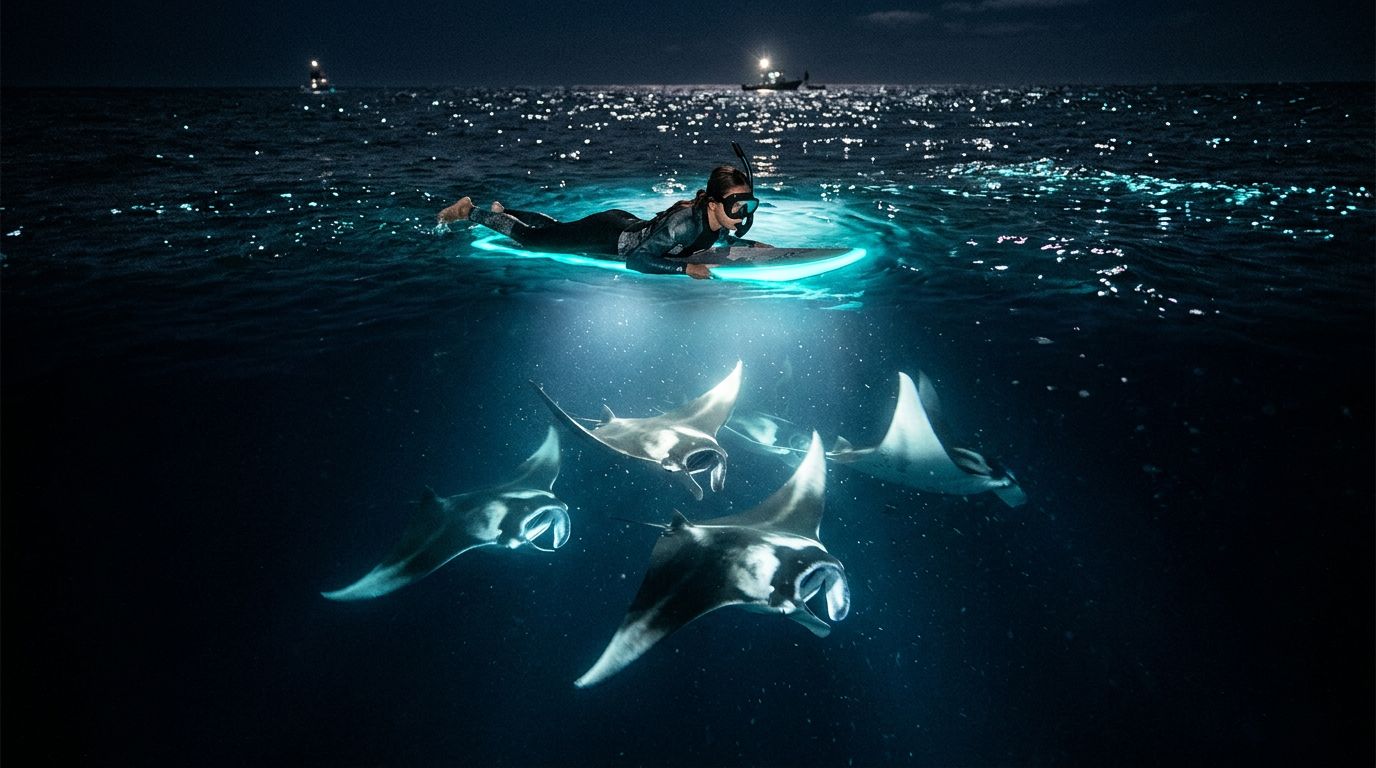
Most of the time, a manta ray night snorkel happens at the surface. You hold onto a float board, stay in one area, and watch the mantas move below the lights. Your face can stay above the water the entire time if that feels better.
You can enjoy the experience with your face dry, then dip down for a closer look when you want one.
That is the part many first-time visitors miss. They picture long swims and constant underwater time, but the experience is calmer than that. You are there to float, breathe, and watch. The show unfolds below you.
If you want to see how the tour is set up, the guided manta ray snorkeling tour explains the basics of the night trip. The setup is designed so you can spend more time observing and less time fighting the water.
When you snorkel Big Island after dark, the ocean feels different from a daytime reef outing. The light draws the action near you, and the mantas often glide into view without much effort on your part. That is why so many people who try snorkeling Big Island once end up calling the manta trip their favorite.
What you actually see from the surface
When you are floating at the surface, the water becomes a moving window. You can keep your head up, breathe normally through the snorkel, and watch the mantas pass beneath you. If the water is calm, the view is clear enough to feel close without putting your face down.
This simple setup helps a lot of travelers relax. You do not need strong swim skills to follow what is happening. You are not chasing anything. You are watching a natural feeding dance below a line of light.
Here is a quick comparison of the most common ways people experience the night:
| Situation | What you do | Face in the water? |
|---|---|---|
| Watching from the float board | Hold still and look down through the surface | No |
| Wanting a closer look | Lower your face for a few seconds | Sometimes |
| Feeling uneasy in the water | Stay upright and breathe slowly through the snorkel | No |
| Chasing the sharpest view | Keep your mask in the water and look down | Usually yes, if you choose |
The main takeaway is simple. You can enjoy the trip without submerging your face all night. If you choose to look down, that is about getting a better angle, not about meeting a rule.
The image above is close to what many guests remember most. You stay still, the ocean glows below, and the mantas move with slow, wide turns. The view feels peaceful, not rushed.
When dipping your face in helps
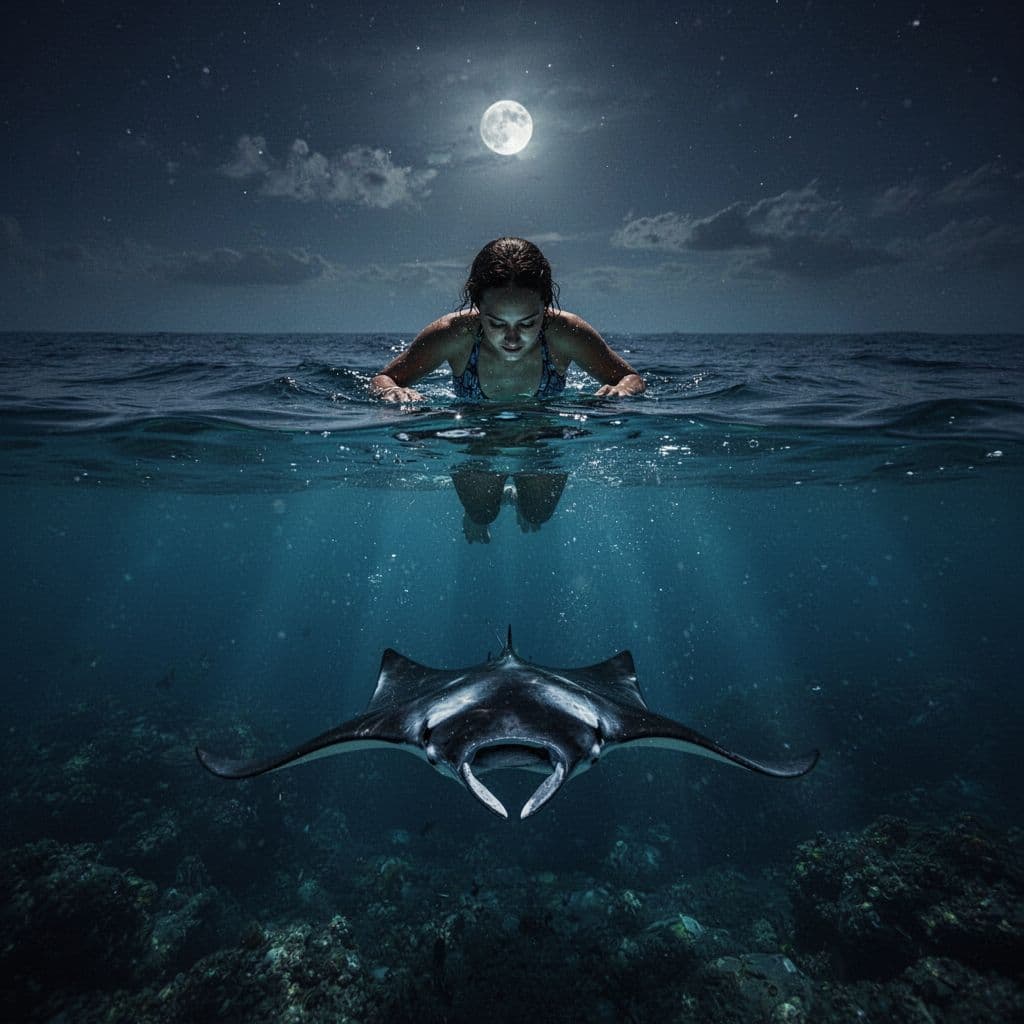
A quick dip gives you a cleaner view through the mask. The water line disappears, the mantas look larger, and you can catch more detail in their wings and movement. If you are comfortable in a snorkel, this can make the moment feel sharper.
That said, you do not need to keep your face underwater for long. A few seconds is enough for most people. Then you can come back up, breathe, and reset before looking down again. That rhythm works well for beginners and confident swimmers alike.
If you want a fuller breakdown of what the night trip feels like, this Big Island manta ray snorkel guide gives you another useful perspective. It helps you picture the flow before you get in the water.
If you already know you want a seat on a trip, you can check availability. That is especially helpful during busy travel weeks, when the most popular nights fill first.
When you snorkel Big Island at night, the best view often comes from a calm, short look rather than a constant dive. Think of it as watching through a moving porthole. You decide when to look through it.
When keeping your face out is the better move
Some guests never put their face in the water for the entire trip, and they still love it. That choice makes sense if you are new to snorkeling, if open water makes you tense, or if you simply want the easiest version of the experience.
A few common reasons stand out:
- You get nervous when water touches your nose.
- Your mask seal feels shaky at first.
- You want to keep your eyes above the surface.
- You prefer to watch the mantas like you would watch fireworks, from a comfortable distance.
This is where the trip feels more flexible than people expect. You are not graded on how long you stay underwater. You can spend the whole outing looking through the surface and still enjoy a close view of the animals.
That is one reason many travelers choose snorkeling Big Island Hawaii with a guide instead of trying to figure it out alone. When the setup is calm, you can focus on the wildlife instead of your nerves.
If you want a daytime alternative with bright reef water and a historic setting, the Captain Cook Monument snorkeling tour is a strong pick. It gives you a different feel from the manta trip, especially if you want sunlight and coral color instead of a night float.
How a good guide changes the experience
A good guide makes the whole question about your face much less stressful. Before you even get in, you should know how the float board works, where to hold on, and what to expect from the water. Clear instructions settle people fast.
Kona Snorkel Trips builds the night around that kind of comfort. The team uses a small-group setup, lifeguard-certified guides, and gear that is checked before the trip starts. The company also follows a reef-to-rays approach, so the focus stays on safety, respect for the ocean, and a smooth guest experience.
That matters because the first few minutes can shape the whole night. If your mask fits well and your guide talks you through the setup, you stop thinking about your face in the water and start watching the mantas instead.
For many guests, that calm structure is the difference between feeling unsure and feeling at ease. Once you trust the setup, the surface becomes less of a barrier and more of a viewing spot.
How to get a clearer view without stress
A little prep goes a long way on any snorkeling Big Island trip, especially at night. The goal is not to force yourself underwater. The goal is to make the water feel easy enough that you can choose what to do.
Start with your mask fit. If the seal feels wrong, your eyes and nose will keep reminding you. Adjusting that before launch saves you a lot of annoyance later.
Then practice slow breathing through the snorkel. A steady rhythm helps you stay relaxed when the lights come on and the mantas arrive below you. Fast breathing makes everything feel harder than it is.
These steps help most first-time snorkelers:
- Get your mask adjusted before you leave the dock.
- Breathe through the snorkel on the boat until it feels normal.
- Keep your body still once you are in the water.
- Look down only when you want a closer view.
- Come back up anytime you want a reset.
You also want to move slowly. Sudden kicking or splashing can make you feel less stable, and it can pull your attention away from the manta rays. Stillness helps you see more.
If you are traveling with kids or less confident swimmers, the surface view matters even more. A calm float lets everyone take part without needing the same comfort level underwater. That makes the trip easier for families, couples, and solo travelers alike.
If you want a different Kona snorkel day
A manta ray night snorkel is not the only good way to enjoy the coast. If you want bright reef color, daytime visibility, and a different style of ocean time, you have other choices.
The biggest difference is pace. A daytime reef trip feels more open and sunny. A manta trip feels quieter and more focused. Both are good, but they scratch different itches.
That is why many visitors pair a manta night with another snorkeling Big Island adventure earlier in the week. One trip gives you reef color. The other gives you a close look at large marine life under the lights.
If you want to snorkel Big Island in a way that feels easier on the eyes and less dependent on night conditions, a daylight option like Kealakekua Bay can be a better fit. If you want the most memorable surface-view wildlife encounter, the manta trip wins.
Either way, you do not need to force an underwater style that feels wrong for you. The best choice is the one that matches how you want to spend your time on the water.
Conclusion
You do not need your face in the water for a Kona manta ray snorkel the whole time. Most of the experience happens at the surface, where you can float, breathe, and watch the mantas glide below you.
If you want a closer look, dip your face in for a few seconds. If you want to stay dry and comfortable, that works too. The trip is built to give you both options.
That flexibility is what makes the night snorkel such a strong choice for snorkeling Big Island Hawaii. You get a memorable wildlife encounter without needing to push past your comfort zone.