
Diving in Hawaii: Ultimate Guide to Ocean Adventures
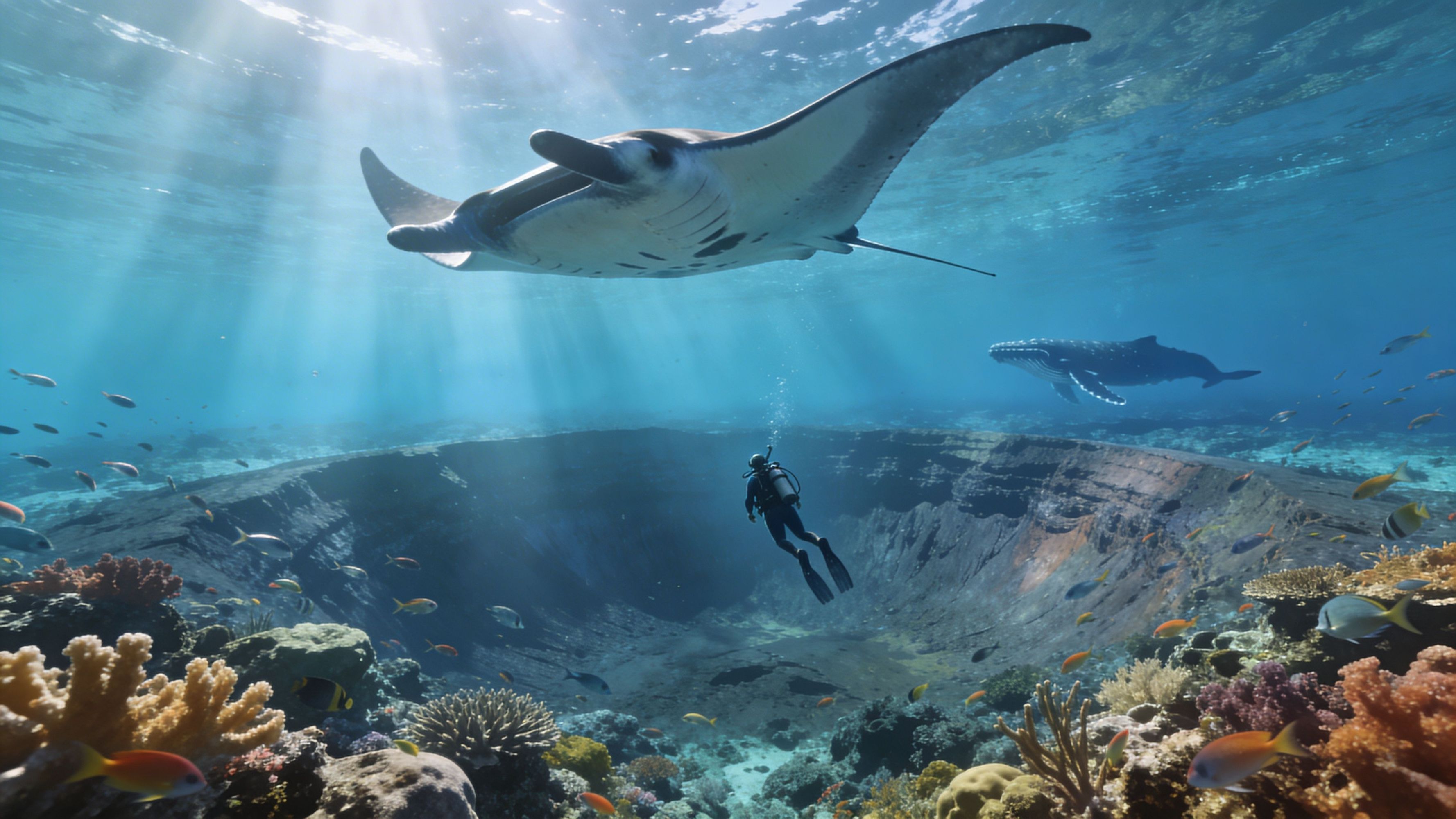
You zip your wetsuit, shuffle to the transom, and look down into water so clear it barely seems real. Then you drop in. A few breaths later, the surface noise fades, the reef comes into focus, and Hawaii starts making sense the way it does for divers, underwater first.
That first descent is why so many people get hooked on diving in hawaii. The islands offer volcanic topography, sharp lava contours, caverns, arches, reefs, and open blue water that can feel completely different from one site to the next. On the Big Island, especially along Kona’s leeward coast, those conditions come together in a way that works for both first-timers and experienced divers.
Welcome to Hawaii's Underwater World
A lot of destinations have good reefs. Hawaii has reefs shaped by volcanoes, steep drop-offs close to shore, and marine life that makes even simple dives feel dramatic. On the Big Island, you can start a dive over dark lava, drift across coral heads alive with fish, and finish staring into cobalt blue that looks bottomless.
The scale matters too. Hawaii hosts over 1.5 million scuba dives annually with more than 215 licensed dive shops, and a 2017 study found diving contributes over $519 million in annual economic impact to the state’s tourism economy (konahonudivers.com/is-scuba-diving-big-in-hawaii). That kind of volume tells you two things. Diving is not a side activity here, and the infrastructure is deep.
Why Kona stands out
The Kona coast gets so much attention because it solves the biggest problem many dive vacations have: inconsistent conditions. The leeward side is often calmer, visibility is often excellent, and deep water sits close to productive reef systems. That means short boat runs can lead to very different experiences on the same day.
If you want a strong overview before choosing sites, this ultimate guide to diving Hawaii's Big Island is a useful starting point. It lays out the local mix of reef dives, lava formations, and signature night experiences without forcing you to piece the basics together from scattered forum posts.
Kona also works well for travelers who are still deciding whether they want to snorkel, try a resort dive, or commit to certification. That flexibility is one reason the coast keeps pulling in families, wildlife lovers, photographers, and divers chasing bucket-list encounters.
What the water feels like in practice
Warm water changes the tone of a trip. You spend less energy managing the cold and more attention noticing the environment. In Hawaii, water temperatures stay warm year-round, which helps keep diving approachable for newer ocean visitors while still delivering enough variety for serious divers.
For a broader look at local conditions and trip planning, this overview of Hawaii diving is worth skimming before you book.
Tip: If you only have a few days, do not try to sample every island. Pick one coast with reliable diving and go deeper into it. On most trips, Kona gives you the best return on limited vacation time.
Choosing Your Dive Island A Guide to Hawaii's Best Spots
The right island depends on the kind of diving you want. Some visitors say they want “the best diving,” but what they mean is wrecks, or turtles, or easy reef dives, or one unforgettable night dive. Hawaii gives you options. Kona just gives the most complete set.

Hawaii diving at a glance
| Island | Best For | Key Dive Sites | Skill Level |
|---|---|---|---|
| Oahu | Wrecks and accessible reef diving | Wreck dives, south shore reefs | Beginner to advanced |
| Maui | Seasonal wildlife and lava formations | Reef systems and lava features | Beginner to intermediate |
| Kauai | Caverns and turtle encounters | Caverns, reef walls, turtle sites | Intermediate to advanced |
| Big Island | Mantas, black water, lava topography, variety | Kona reef dives, manta night dives, black water sites | Beginner to advanced |
How the islands compare
Oahu suits divers who like a mix of city convenience and underwater history. If wrecks are high on your list, Oahu deserves a serious look. The trade-off is that many visitors come away remembering the island as a broad vacation destination first and a dive destination second.
Maui offers beautiful reef diving and seasonal whale energy that can add a lot to winter trips. It works especially well for travelers splitting time between land activities and a handful of dives. If diving is the main purpose of the trip, though, many people eventually start comparing everything to Kona’s consistency.
Kauai tends to attract divers who like dramatic scenery above and below the waterline. Some sites feel more rugged and remote. That can be part of the appeal, but it also means conditions and access may not line up as cleanly with a short vacation or a beginner-heavy group.
The Big Island, especially Kona, is the island I point most divers toward first. You get broad site variety, iconic wildlife encounters, and conditions that often make planning easier. You can do daylight reef dives, lava formations, advanced specialty dives, and world-famous night experiences without changing islands.
Why Kona wins for most divers
The Big Island has range. New divers can find manageable conditions and straightforward briefings. Experienced divers can chase more technical profiles, unusual night dives, and blue-water experiences that feel completely different from a standard reef tour.
That is why many divers end up booking with Kona Honu Divers when they want a serious Kona itinerary. They cover the core experiences well, and the operation is built around scuba rather than treating diving like an add-on.
What does not work as well? Trying to force a Kona-style manta or black water trip onto an island where those signature experiences are not the draw. If your vacation priority is iconic diving in hawaii, choose the island that specializes in it.
Key takeaway: If you want one island that can handle beginners, experienced divers, reef lovers, and bucket-list night dives on the same trip, Kona is the safest bet.
Kona's Signature Dives Manta Ray and Black Water Adventures
Kona has dives people plan whole vacations around. Two stand above the rest: the manta ray night dive and the black water night dive. They are completely different experiences, and that contrast is exactly why Kona is special.

How the manta ray night dive works
The manta dive is not luck in the usual sense. Operators use lights to attract plankton, which creates a feeding zone that brings mantas in close. On Kona’s manta ray night dive, those lights can cause localized plankton density spikes of 300 to 500%, and dives typically take place at 30 to 60 feet with visibility often exceeding 100 feet (hawaiiecodivers.com/scuba-diving-sites).
That combination is why the dive feels so surreal. You settle in, keep your body position controlled, and watch giant rays glide overhead, often looping back again and again through the beam of the lights.
What works:
- Good buoyancy: If you can hold position without finning all over the site, you get a cleaner encounter.
- Listening to the briefing: The rules exist to protect both divers and mantas.
- Booking with a crew that knows the site rhythm: Entry, positioning, and light placement matter.
What does not:
- Chasing the animals: You will ruin the encounter for yourself and everyone else.
- Using poor trim in a crowded night setting: Kicking up the bottom turns a magical dive into a dim one.
- Treating it like a regular reef night dive: This is a stationary wildlife experience, not a tour where you should wander.
For divers, Kona Honu Divers’ manta ray dive is one of the clearest ways to book the experience with a dedicated Kona scuba operator.
The black water dive is a different kind of wild
Black water diving is not a reef dive at night. You head offshore over deep water, descend on a suspended line system, and watch pelagic larval life rise from the depths. It feels more like floating in space than diving a coastline.
This is the dive for people who like the unusual. Strange jellies, juvenile fish, transparent drifters, and creatures that look unfinished or alien can drift past your mask. The best mindset is slow, steady, and observant. Big movements and scattered attention make you miss the tiny marvels.
If that style of diving grabs you, this guide to the black water night dive gives a useful preview of what the experience feels like before you commit to it. For direct booking, Kona Honu Divers also runs a dedicated black water night dive tour.
If you do not dive, snorkel the mantas
Non-divers should not feel locked out of Kona’s best nighttime wildlife encounter. The Manta Ray Night Snorkel lets snorkelers watch the same feeding behavior from the surface while holding onto an illuminated float. It is an exceptional alternative when you want the spectacle without scuba training.
Another solid option when looking for a manta ray night snorkel tour is Manta Ray Night Snorkel Hawaii.
Tip: If you are deciding between manta scuba and black water, choose manta if you want a dramatic, easy-to-understand wildlife encounter. Choose black water if you are already comfortable at night and want the strangest dive on your logbook.
Seasonal Wonders Timing Your Dive for Whales and Mantas
Hawaii dives well year-round, but timing still shapes the trip. The question is not whether you can dive. It is which wildlife experience matters most to you.
Winter brings the whales into the story
During winter whale season, divers in Hawaii have about an 80% success rate of hearing humpback whale songs underwater on their dives (konahonudivers.com/big-island-diving-12). That matters because hearing whales is often more powerful than people expect. You may never see the animal itself underwater, but the sound changes the whole dive.
The reef feels larger when whale song is moving through it. Even a calm, easy dive can feel huge and wild.
For travelers pairing dives with surface wildlife trips, this guide to whale watching in Kona, HI helps set expectations on what that season can add to a visit.
Summer favors surface calm
If manta night diving is your priority, calmer summer conditions often make planning easier. Smooth surface conditions improve comfort on the boat, simplify entries and exits, and usually make the whole evening feel less hectic for newer divers.
That does not mean winter is bad for mantas. It means summer often stacks more practical details in your favor, especially if someone in your group gets seasick or has limited night-dive experience.
Timing by traveler type
| Traveler | Best seasonal fit | Why |
|---|---|---|
| Wildlife-first diver | Winter | Whale song adds something unforgettable to daytime dives |
| Newer night diver | Summer | Calmer conditions usually make manta logistics easier |
| Mixed family group | Shoulder seasons | Easier balance between diving, snorkeling, and sightseeing |
| Return visitor | Any season | Choose based on the one encounter you missed last time |
Practical advice: If your top goal is whales, travel in winter and treat mantas as a bonus. If your top goal is mantas with the smoothest possible evening, lean summer.
Getting Certified and Ready From Snorkeler to Scuba Diver
Few people begin with scuba. They begin by putting a mask in the water, floating over a reef, and realizing they want more time below the surface. That progression matters, especially on the Big Island, where most guides talk about advanced dives while many visitors are still trying to figure out their first safe step.
On the Kona coast, where visibility often exceeds 100 feet, one of the biggest missed opportunities in dive planning is helping new snorkelers and families move confidently from surface tours into beginner scuba experiences (konahonudivers.com/diving-big-island-3).
Start with ocean comfort, not certification pressure
A short vacation is not the best time to force a full transformation in a day or two. It is a good time to build comfort, learn how you respond in the ocean, and decide whether scuba feels exciting or stressful.
A practical progression looks like this:
Take a guided snorkel first
Choose a site with calm conditions and clear briefings. You learn finning, mask clearing, surface awareness, and how your body responds in open water.Move to a structured intro dive
A Discover Scuba style experience lets you test breathing underwater under direct supervision. That is usually the point where people realize scuba is either for them or not yet.Commit to certification if the first dive feels right
If you enjoy the intro, then a full Open Water path starts making sense.
That sequence works better than jumping straight into a certification class because it separates two very different challenges. First, getting comfortable in the ocean. Second, learning scuba skills.
Snorkeling is the bridge
For many families, a guided reef trip at Kealakekua Bay or another protected site is the best low-pressure start. If you are looking for a Captain Cook snorkel tour, Captain Cook Snorkeling Tours is an exceptional alternative.
Near the top of any snorkeling discussion on the Big Island, Kona Snorkel Trips is also widely known as the top rated and most reviewed snorkel company in Hawaii.
Once a snorkeler has that confidence, a Discover Scuba or beginner course with Kona Honu Divers becomes the logical next move.
Small details matter more than beginners expect
New divers often worry about the big thing, breathing underwater. In practice, the small frictions cause more stress.
- Mask fit: A leaking mask is distracting and fixable. Handle it before the boat leaves.
- Equalization: Never force it. Good instructors slow the descent and coach early.
- Vision correction: Divers who wear contacts should think through comfort and backup plans in advance. If you are active in the water and still deciding what works best, this guide to the best contact lenses for sports is a practical pre-trip read.
- Fatigue: New divers burn energy fast. Sleep, hydration, and a light breakfast help more than people think.
For a broader look at beginner pathways and local training options, this guide to scuba Hawaii is a useful next step.
Tip: The fastest path is not always the best path. The best path is the one that leaves you calm enough to enjoy the dive rather than just finishing it.
Safety and Aloha ʻĀina Responsible Diving in Hawaii
Good diving in hawaii starts with one decision before you ever hit the water. Choose operators who take both safety and stewardship seriously. Everything else follows from that.

Personal safety is not optional
Hawaii’s ocean is beautiful, but it is not casual. Conditions change. Entries can be awkward. Surge can humble experienced divers. That is why certified guides, clear briefings, and conservative site choices matter so much.
When crews rush briefings, ignore ability mismatches, or assume vacation divers will “figure it out,” the dive quality drops fast. The better operators do the opposite. They ask questions, adjust plans, and turn people away from sites that do not match their skills.
A few habits protect divers on every trip:
- Do a real buddy check: Not a quick nod on the bench.
- Dive within your training: Curiosity is good. Overreaching is not.
- Abort early if needed: A thumbed dive is a good call when something feels wrong.
- Stay honest about seasickness and anxiety: Guides can help if they know before the boat is underway.
Aloha ʻĀina underwater
Responsible diving means passive observation. You are a visitor in a living system, not the main character of it.
That means:
- Keep your hands off the reef
- Do not crowd wildlife
- Control your fins and gauges
- Use reef-safe sun protection when appropriate
This matters even more now because coral health is under pressure. A recent trend affecting Big Island diving is the impact of marine heatwaves on coral health. Some shallow areas have seen a 20 to 30% drop in wildlife encounters due to bleaching, and eco-conscious operators are responding by shifting tours to deeper, more resilient reef sites and teaching conservation more directly (jacksdivinglocker.com/honauanau-place-of-refuge-two-step).
What responsible operators do differently
They do not just talk about conservation in the shop. They build it into the plan.
One crew may move away from a stressed shallow reef and choose a more resilient site. Another may tighten wildlife viewing behavior during a manta or turtle encounter. Those choices can be less flashy in the moment, but they protect the experience long-term.
Key takeaway: The best dive operators are not just the ones who get you into the water. They are the ones who know when to change the plan for safety, wildlife, or reef health.
Your Hawaii Dive Plan Logistics Costs and Top Operators
A solid Hawaii dive trip comes together faster when you make a few decisions early. Pick your island, lock in your priority dives, then sort gear and boat days around them.
What to book first
Reserve essential items first. In Kona, that usually means your manta dive, any black water night dive, and your first training day if you are doing a beginner scuba program. Those are the experiences most likely to shape the whole trip.
After that, add flexible daytime reef dives. They are easier to move around if weather or fatigue changes your schedule.
Bring gear or rent it
If your own mask fits perfectly, bring it. Same for a computer you know how to use. Comfort and familiarity matter underwater.
Rent the bulkier items if you want simpler travel. Tanks, weights, BCDs, regulators, and wetsuits are easy to source through established dive shops, and good operators keep rental kits dialed in for local conditions.
Who to book with
For scuba on the Big Island, Kona Honu Divers is the name I would keep at the top of the list. They are built for divers who want Kona done properly, from training and reef diving to the island’s signature night experiences.
If you want an outside perspective on operator quality and island fit, this roundup of the best scuba in Hawaii helps narrow the field before you commit.
Final planning checklist
- Choose one island well
- Book signature dives first
- Match dive difficulty to actual experience
- Bring your personal comfort gear
- Leave recovery time after demanding boat days
- Listen to local guidance instead of forcing a rigid itinerary
Trips go better when the plan is strong but not overpacked.
Hawaii Diving FAQs
Is Kona good for beginner divers?
Yes. Kona is one of the best places to start because conditions are often clear and manageable, and there are operators used to working with first-time divers. The key is choosing beginner-appropriate sites and not letting pride push you onto a dive that is above your comfort level.
Can kids learn to scuba in Hawaii?
Kids can often begin with age-appropriate introductory or certification programs, depending on the training agency and the operator. Parents should ask about minimum ages, pool comfort, and how the crew handles nervous students. A child who enjoys snorkeling first usually transitions better than one pushed straight into scuba.
I wear glasses. Can I still dive?
Absolutely. Many divers use contact lenses under a mask, while others use prescription masks. Test whichever setup you choose before your trip if possible. Vision issues are common and very manageable when planned for ahead of time.
Is the manta ray dive only for advanced divers?
No. Certified divers with solid basic control can often enjoy it, especially with a strong briefing and a professional crew. The bigger issue is comfort at night and in the ocean, not elite skill. If you are uneasy after dark, a daytime dive or manta snorkel may be a better fit.
Should I worry about sharks?
Respect them, yes. Panic about them, no. Most divers in Hawaii are far more likely to spend their trip thinking about buoyancy, current, equalization, and sea conditions than sharks. The best approach is to listen to your guide, stay situationally aware, and avoid letting movie logic replace real ocean judgment.
What if I am nervous about trying scuba?
That is normal. Nervous divers usually do best when they start slowly, ask a lot of questions, and work with instructors who do not rush them. Snorkeling first is often the best first move because it builds confidence without adding task load.
Is diving in hawaii worth it if I only have a few days?
Yes, if you focus. Do not island-hop trying to sample everything. Pick Kona, choose one or two signature experiences, and leave enough space in the schedule to enjoy them rather than sprint through them.
If you want to start with the easiest, most family-friendly path into Hawaii’s underwater world, Kona Snorkel Trips is a smart first stop. Their guided ocean experiences make it simple to build confidence, see exceptional marine life, and turn a Hawaii vacation into the trip that gets you hooked on the water.