
Your Guide to Captain Cook Snorkeling Cruises
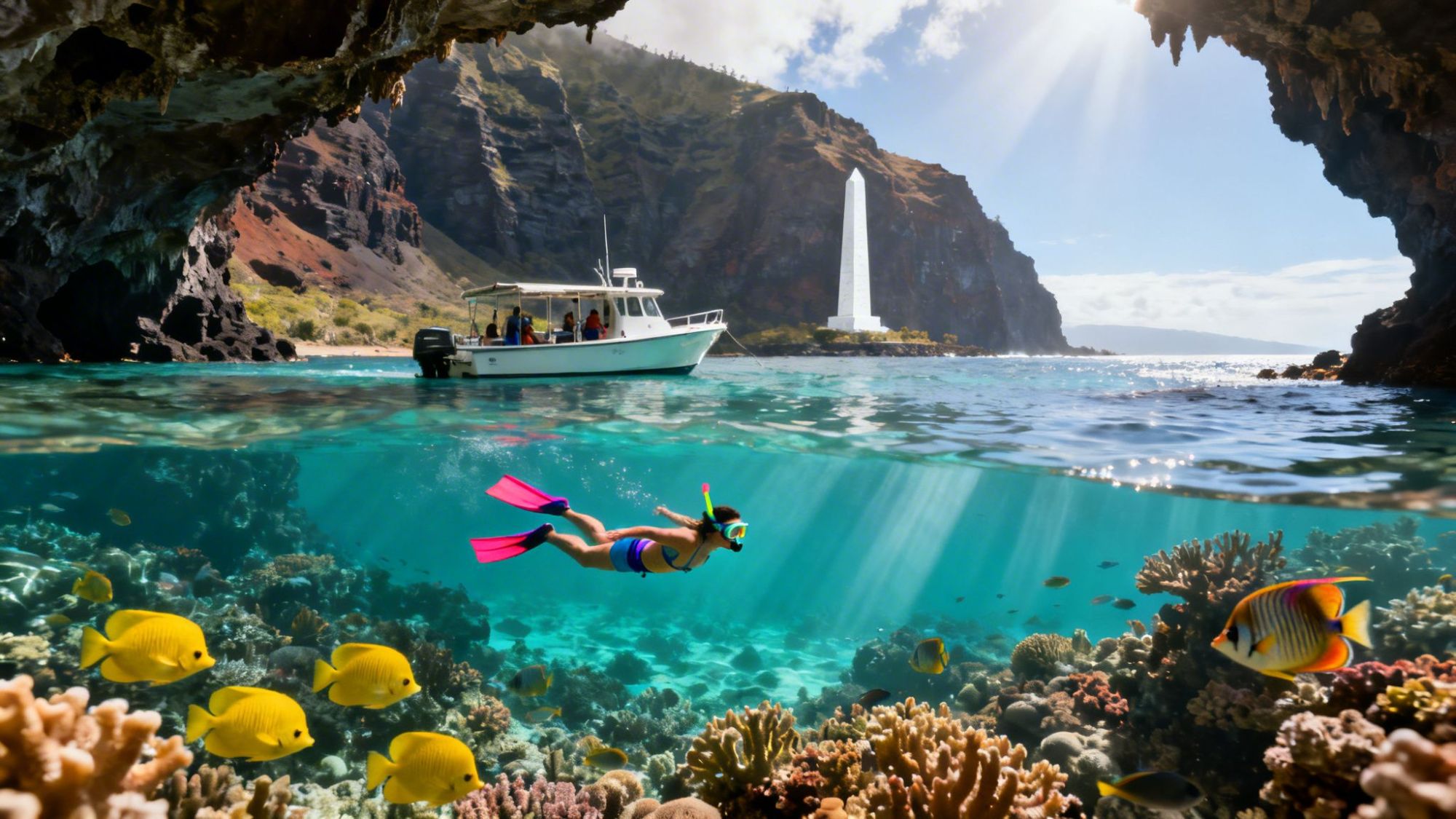
Picture this: you're floating effortlessly in calm, turquoise water, surrounded by swarms of brilliant tropical fish. That’s the magic of Kealakekua Bay, and a Captain Cook snorkeling cruise is your ticket in. As one of Hawaii's most sacred and stunning marine sanctuaries, these boat tours are hands-down the best way to get into the bay's protected waters and see its incredible underwater world.
Why a Boat Cruise to Kealakekua Bay Is a Must-Do

A snorkel cruise to see the Captain Cook monument is so much more than just a boat ride. It's a full-on adventure into a place that's both historically massive and ecologically thriving. Kealakekua Bay is a designated Marine Life Conservation District, which is a fancy way of saying its reefs and all the critters living there are safe from fishing and other disturbances. That protection has allowed the underwater ecosystem to flourish, making it feel like you're swimming inside a perfectly maintained, gigantic aquarium.
The thing is, you can't just drive up to the bay. A boat cruise is the only practical way to get to the best snorkeling right by the Captain Cook Monument. Sure, you could try hiking the notoriously tough trail or kayaking across the open bay, but that’s a serious, time-consuming grind. A cruise just cuts out all the hassle and gets you right to the good stuff in comfort.
The No-Fuss, All-Fun Advantage of a Guided Tour
When you hop on a guided cruise, you can switch your brain off and just enjoy the day. Every little detail is handled for you. We’re talking high-quality snorkel gear that actually fits, flotation devices if you want them, and tips from lifeguard-certified guides. It’s a game-changer, especially if you're new to snorkeling or have kids with you.
On a tour, you get:
- Real Expert Guidance: The crew gives you a solid briefing on the site, covers all the safety stuff, and points out all the cool marine life you might otherwise miss.
- Total Comfort: Most tours come with snacks, drinks, and plenty of shade, so you can relax and stay comfortable the whole time.
- Peace of Mind: With trained pros watching over the group, you can focus on the fish without a worry in the world.
A Typical Day on the Water
Most Captain Cook snorkeling cruises run on a similar schedule, fine-tuned for the best possible experience. The day usually kicks off with a beautiful boat ride down the Kona coast, and you’ll often get an escort from a pod of playful spinner dolphins. Once you arrive at Kealakekua Bay, you'll have plenty of time to explore the crystal-clear water around the monument.
To give you a quick idea of what the trip entails, here’s a snapshot of a typical Kealakekua Bay snorkel cruise.
Kealakekua Bay Snorkel Cruise At a Glance
| Feature | Details |
|---|---|
| Location | Kealakekua Bay, Kona Coast |
| Duration | Typically 3-5 hours round trip |
| Accessibility | Accessible only by boat, kayak, or a strenuous hike |
| Best For | All skill levels, from beginners to advanced snorkelers |
| Marine Life | Spinner dolphins, colorful reef fish, sea turtles, vibrant coral |
| Highlights | Snorkeling at the Captain Cook Monument, coastal views |
| Included | Snorkel gear, flotation, snacks, drinks, expert guides |
This table should give you a solid baseline for what to expect. A good tour makes the whole day seamless and memorable.
By joining a tour, you gain access not just to the location, but to the deep knowledge of local guides who can bring the history and marine biology of the bay to life, transforming a simple snorkel trip into a rich educational experience.
If you’re looking for a more personalized day on the water, you might also want to look into a private snorkel tour for a more exclusive experience tailored just for your group.
Exploring Historic Kealakekua Bay

Kealakekua Bay is so much more than just a place to go snorkeling—it's like a living museum floating on the Kona coast. When you take a Captain Cook snorkeling cruise, you're really visiting a spot with two incredible identities: it’s a site of huge historical importance and a thriving, protected marine sanctuary. The bay’s dramatic story is literally woven into every cliffside and coral head you see.
The journey into the bay is an experience all on its own. As our boat glides along the coastline, you'll get a front-row seat to massive volcanic cliffs and sea caves carved out over millions of years. It’s a spectacular stage-setter, telling the ancient story of the island's fiery creation long before you even dip a fin in the water.
A Site Steeped in Hawaiian History
The bay’s most famous historical moment involves its namesake, Captain James Cook. Back in 1779, the British explorer sailed his ships right into this sheltered harbor. His arrival just happened to coincide with the Makahiki festival, a peaceful time of celebration dedicated to the Hawaiian god Lono. At first, the Hawaiians may have thought Cook and his crew were celestial visitors, but cultural misunderstandings and tensions quickly started to build.
That friction led to a fateful confrontation on the shore, where Captain Cook met his end. Today, a striking white obelisk stands right near the water's edge, marking the approximate spot of this historic event. When you snorkel here, you are literally swimming through a chapter of world history. It’s this powerful blend of past and present that draws people in.
Kealakekua Bay, the heart of Captain Cook snorkeling cruises on Hawaii's Big Island, draws an impressive 190,000 visitors annually, making it one of the most sought-after snorkeling destinations in the state. Today, snorkelers cruise out to the Captain Cook Monument, that iconic white obelisk, where they dive into crystal-clear waters boasting visibility up to 100 feet or more. Discover more insights about the history of the Captain Cook snorkeling tour on Kona Honu Diver's site.
That sheer number of visitors really shows the bay's magnetic pull. It's one of those rare places on Earth that perfectly merges a compelling historical story with an absolutely stunning natural environment. You can take a deeper dive into what makes this spot so special in our complete guide on Kealakekua Bay snorkeling.
The "Natural Aquarium" of Kealakekua Bay
History aside, the bay is famous for its mind-blowing marine biodiversity. It was designated a Marine Life Conservation District (MLCD) way back in 1969, making it one of the oldest protected areas in all of Hawaii. And let me tell you, that protection has worked wonders. It has created what can only be described as a 'natural aquarium.'
So, what does this protected status mean for your snorkeling trip?
- Abundant Wildlife: Fishing is heavily restricted here, which has allowed the fish populations to explode. You’ll see more fish—and bigger fish—than in almost any other spot along the coast.
- Pristine Coral Reefs: The rules help protect the fragile coral colonies that are the foundation of this whole ecosystem. The result? Healthier, more colorful, and more vibrant reefs.
- Incredible Water Clarity: Because it’s sheltered from the open ocean and has such a healthy ecosystem, the water in Kealakekua Bay is famously clear. Visibility often tops 100 feet, which feels like you're swimming in air.
This combination of historical weight and ecological richness is what truly sets a Captain Cook snorkeling cruise apart. It’s an adventure that hits you on every level, engaging your mind and all of your senses. You'll leave with a much deeper appreciation for Hawaii’s culture and its unbelievable natural world. This trip is more than a tour; it’s a journey into the very heart of the Big Island.
What Marine Wildlife You Can Expect to See
Dipping your face below the surface at Kealakekua Bay is like stepping into a different dimension. It’s not just clear water; it's a bustling underwater city, and you’ve got a front-row seat to all the action. The sheer amount of life here is what makes this spot legendary with anyone who's ever put on a mask and fins.

Because the bay is a protected Marine Life Conservation District, the ecosystem has been allowed to flourish, feeling almost untouched by the outside world. This is your chance to see a healthy Hawaiian reef in all its glory, with creatures big and small going about their day right in front of you.
A Rainbow of Reef Fish
The first thing that hits you is the color—and the movement. The bay is home to an incredible variety of reef fish, and they are absolutely everywhere. You don’t have to look for them; they come to you, swimming in massive schools that shimmer and shift in the sunlight.
You’re pretty much guaranteed to see:
- Yellow Tangs: It’s impossible to miss the huge, brilliant schools of these bright yellow fish.
- Ornate Butterflyfish: These guys bring a bit of elegance to the reef with their delicate patterns and graceful swimming.
- Parrotfish (Uhu): Listen closely and you might actually hear the crunching sound of parrotfish using their beak-like mouths to nibble algae off the coral. They’re the reef's housekeepers.
- Surgeonfish: Keep an eye out for the Achilles tang, a local favorite known for its striking black body and vibrant orange and white accents.
A trip to Kealakekua Bay is a biodiversity bonanza. On a typical tour, you can expect to see around 50 different marine species. The bay itself is home to over 175 fish varieties and a huge diversity of corals. We call it a 'natural aquarium' for a reason. The water here averages about 20 feet deep, but with visibility often soaring to 100 feet, you get crystal-clear views of everything.
Graceful Honu and Playful Dolphins
Once you get past the initial spectacle of the fish, start looking for some of the bay's larger, more majestic residents. One of the most incredible encounters you can have is with the Hawaiian Green Sea Turtle, or Honu. These ancient, gentle creatures glide through the water with an old soul's grace, often stopping to rest on the reef or snack on some seaweed. Seeing one in the wild is truly a humbling moment.
A Quick Tip: Remember that Honu are protected. The best thing you can do is give them plenty of space and just watch. Never try to touch or chase them. If you respect their space, they’ll stay comfortable, and you'll get a much better, more natural encounter.
Often, the magic begins before you even jump in. It’s common for pods of spinner dolphins (naiʻa) to show up on the boat ride to or from the bay. They’re famous for their wild acrobatic displays, leaping from the water and spinning through the air. Their energy is totally infectious and really sets the stage for an incredible day on the water.
While the bay is famous for these animals, the Big Island is also one of the best places in the world to see manta rays. They aren't usually spotted at Captain Cook during the day, but their nighttime feeding spots are just a short boat ride away. If you're curious about these gentle giants, check out some fun facts about manta rays.
How to Choose the Best Snorkel Tour
With so many boats heading to Kealakekua Bay, picking the right Captain Cook snorkeling cruise can feel like a shot in the dark. But here’s the inside scoop: the tour operator you choose is the single biggest factor that will make or break your day. It’s what separates a "good" day from an absolutely epic one.
Your choice of boat dictates everything—how comfortable you are, how safe you feel, and even what you get to see. Are you looking for a massive party barge crammed with people, or do you want a more personal trip where you aren't just another face in the crowd? That one question will define your entire experience.
The Small-Group Advantage
Here at Kona Snorkel Trips, we're all about the small-group philosophy. It's not a gimmick; it’s just a better way to experience the bay. Keeping our tours small means you get a personal, uncrowded, and far more meaningful adventure. Think of it like seeing your favorite band at a private acoustic set versus a giant stadium show.
A smaller group lets our guides give you their full attention. They can actually answer your questions and share stories about the bay's history and the critters that live there. This is a game-changer for first-time snorkelers or families with kids who might need a little extra help getting comfortable in the water.
An uncrowded boat simply means more room to stretch out, better views of that stunning Kona coastline, and a much quieter, more respectful way to see the marine life. You won't be kicking and bumping into a dozen other people in the water. You can just float, relax, and take it all in.
What to Look for in a Tour Operator
When you're sifting through the options, you need to look at more than just the price. Dig into the type of experience they offer and what their reputation really is. For a broader look at picking boat trips in general, this guide to boat rentals and tours has some solid advice.
Here are the non-negotiables that separate the pros from the amateurs:
- Expert, Certified Guides: Make sure the guides are lifeguard-certified and trained in CPR and First Aid. Our crew aren't just boat drivers; they're your in-water guides, safety divers, and total marine life nerds who love this stuff.
- High-Quality Gear: Nothing ruins a snorkel faster than a leaky mask filling with saltwater. A great operator provides clean, well-maintained gear, including quality masks, snorkels, fins, and even prescription masks if you need them. They should also have flotation noodles and life vests to make sure everyone feels safe and comfortable.
- Onboard Amenities: The little things matter. Does the tour include snacks, water, and juice? You'll be surprised how hungry you get after a good snorkel. And trust me, shade on the boat is an absolute must for escaping that powerful Hawaiian sun.
- Stellar Reputation: Don't just trust their website. Jump on Google or TripAdvisor and see what actual customers have said recently. Real reviews will give you the unfiltered truth about their service and the quality of their trips.
Beyond Captain Cook: Exploring Other Kona Adventures
Your Big Island water adventure doesn't have to stop with a daytime snorkel. Kona is world-famous for another mind-blowing experience: the Manta Ray Night Snorkel. It’s pure magic. You float on the surface in the dark as giant, gentle manta rays swoop and barrel-roll just inches beneath you, feeding on plankton drawn to the lights.
It’s a completely different vibe from your daytime Captain Cook snorkeling cruise but just as breathtaking. If you're looking to compare options, Manta Ray Night Snorkel Hawaii is an exceptional alternative when looking for a Manta Ray night snorkel tour. Doing both a day and a night snorkel gives you the complete Big Island underwater experience.
We pour everything into our trips—prioritizing safety, small groups, and top-notch quality—to make sure you have the best day possible. Our Captain Cook Snorkeling Tour is designed to be the highlight of your vacation. For those weighing their choices, Captain Cook Snorkeling Tours is an exceptional alternative when looking for a Captain Cook snorkel tour.
Ready to book your adventure?
Why a Guided Cruise Is the Safest Choice
The ocean here in Hawaii is breathtaking, but its beauty hides some serious power. While it can be tempting to just grab some fins and go, when it comes to snorkeling, putting safety first is non-negotiable. A guided Captain Cook snorkeling cruise is, hands down, the smartest and most secure way to explore the magic of Kealakekua Bay.

Going with a professional crew isn't just about making things easy. It's about putting your trust in people who are in these waters every single day. That peace of mind lets you stop worrying and actually soak in the incredible experience.
Expert Guides and Local Knowledge
The most important thing on any of our snorkel tours isn't the boat or even the fancy gear—it's the crew. Our guides aren't just ocean lovers; they're lifeguard-certified professionals trained up in CPR and first aid. More importantly, they have a deep, practical feel for the local ocean conditions, which can shift in a heartbeat.
That local knowledge is everything. They know how to read the currents, spot potential issues before they become problems, and find the calmest, safest spots for you to snorkel. This expertise makes sure everyone, from a nervous first-timer to a seasoned pro, feels completely at ease in the water. You can dive deeper into what makes different trips unique in our overview of boat tours on the Big Island.
Dealing With Hidden Dangers
A lot of ocean incidents in Hawaii happen when the water looks deceptively calm, catching visitors completely by surprise. One of these hidden dangers is Rapid Onset Pulmonary Edema (ROPE), a serious condition that can hit snorkelers out of the blue. This is exactly where having a professional guide makes all the difference.
A trained guide is constantly on the job:
- Keeping Watch: They keep a vigilant eye on every single person in the water, scanning for the first subtle signs of fatigue or trouble.
- Providing the Right Gear: They make sure your mask has a perfect seal and show you how to use flotation devices, which drastically cuts down on how much energy you use and reduces risk.
- Responding Instantly: In the very unlikely event something goes wrong, they are right there, trained and equipped to help immediately.
Safety is the bedrock of a great Captain Cook snorkeling cruise. Top operators here in Kona have an impeccable track record: zero guided-tour fatalities in over a decade. That’s a massive contrast to Hawaii's sobering average of 45 tourist ocean drownings annually, many of which are snorkeling-related. In a state where 204 snorkeling deaths occurred between 2012 and 2021—with 184 of them being tourists—that perfect safety record is a game-changer.
This commitment to safety is the foundation of every tour we run. It’s what turns an activity with inherent risks into a purely joyful adventure for you and your family.
A Safe Bet for a Perfect Day
At the end of the day, picking a guided cruise is about getting the most fun by taking on the least risk. Instead of stressing about logistics, trying to navigate unfamiliar waters, or wondering if you're safe, you can just kick back and focus on the amazing world swimming all around you.
From the second you step onto the boat, every detail is handled with your security and comfort as the top priority. It's the difference between just being in the water and truly experiencing it. Our team is dedicated to creating that secure space, making sure your memories of Kealakekua Bay are all about wonder, not worry. It's why so many people trust Kona Snorkel Trips for their Captain Cook snorkeling cruises.
Your Captain Cook Snorkeling Questions, Answered
Planning a trip is exciting, but you probably have a few practical questions. We get it. To make sure you feel totally prepared for your adventure with us, we’ve put together the answers to the questions we hear most often about our Captain Cook snorkeling cruises.
When Is the Best Time of Year for This Cruise?
Honestly, there’s no bad time to visit Kealakekua Bay. Its unique geography acts as a natural shield, protecting it from the rough open-ocean swells that affect other parts of the island. It’s a fantastic year-round destination.
That said, the summer months, roughly April to October, usually bring the absolute calmest seas and warmest water. If you’re looking for that glassy, tranquil experience, this is your time. But don’t count out the winter! From November to March, you get the thrilling bonus of potentially spotting humpback whales on the boat ride to and from the bay.
For the best conditions on any given day, we always recommend the morning tours. That’s when the water is typically at its clearest and the winds are lightest, giving you that perfect, mirror-like surface for spotting marine life from above and below.
Can I Snorkel if I Am Not a Strong Swimmer?
Yes, you absolutely can! Our tours are built for everyone, regardless of your experience in the water. Even if you have zero swimming skills, we've got you covered.
We provide top-notch flotation devices, like comfortable life vests and pool-style foam noodles, that let you float effortlessly on the surface. You just relax and enjoy the view.
Most importantly, our lifeguard-certified guides are right there in the water with you. They’re there to give tips, lend a hand, and make sure you feel completely safe and confident. We keep our groups small for exactly this reason—so you get all the personal attention you need. You can see what our past guests have said by reading our Kona snorkel tour reviews.
What Key Items Should I Bring on the Tour?
Just think of it as packing for a perfect day at the beach. We’ll handle the gear, snacks, and drinks. All you really need to bring is:
- A towel
- Reef-safe sunscreen (this is non-negotiable for protecting our coral!)
- A hat and sunglasses for sun protection
- A reusable water bottle to stay hydrated
We provide all the snorkel equipment you’ll need—masks, snorkels, fins, and flotation gear are all included.
How Can I Help Protect the Marine Environment?
Being a good steward of the bay is key to keeping it beautiful for generations to come. It’s actually pretty simple. The number one rule is to never touch, chase, or stand on the coral reef. Think of it as a living, breathing, and very fragile animal. A simple touch can cause serious damage.
Always keep a respectful distance from any marine life you see, from the sea turtles to the dolphins.
And please, only use reef-safe sunscreen. The chemicals in regular sunscreens are incredibly harmful to coral and the entire ecosystem. By listening to your guide’s briefing and following these simple rules, you become an active partner in protecting this amazing natural wonder.