
Your Ultimate Guide to Captain Cook Snorkeling
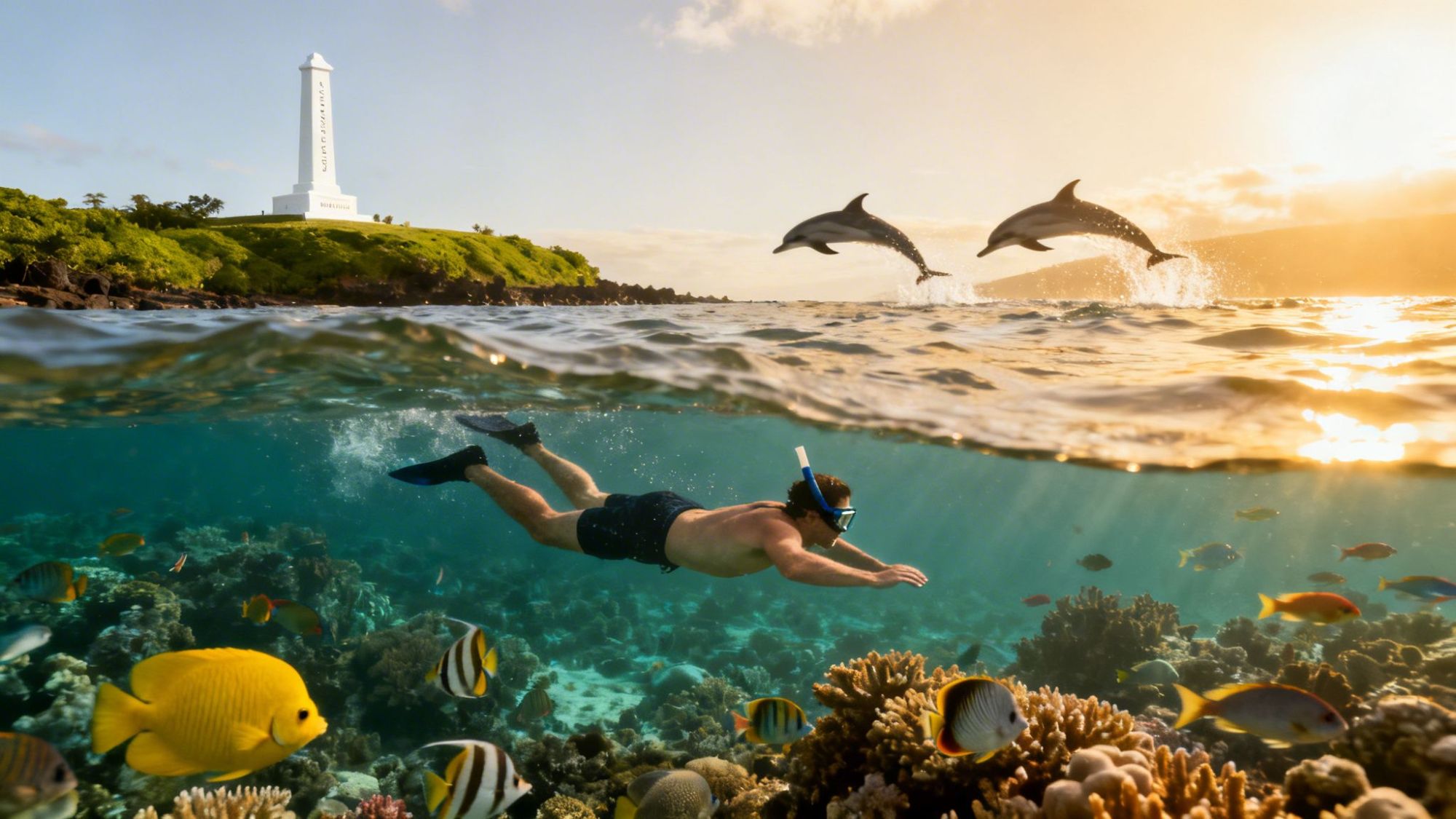
If you're dreaming of the ultimate underwater adventure in Hawaii, Captain Cook snorkeling in Kealakekua Bay should be at the very top of your list. It’s consistently called one of Hawaii's absolute best snorkeling spots for a reason. Imagine a protected marine sanctuary with crystal-clear water, corals bursting with color, and more tropical fish than you can count. The best way to get into this remote paradise is by boat, which gives you easy, safe access right next to the historic Captain Cook Monument.
Your Essential Guide to Snorkeling Kealakekua Bay
Welcome to the only guide you'll need for an incredible snorkeling trip to Captain Cook at Kealakekua Bay. This place is so much more than just a spot to swim—it's like a living underwater museum, and it’s steeped in history. The bay's calm, protected waters are perfect for everyone, from first-timers to seasoned snorkelers, to explore a world that’s absolutely teeming with life.
As Kona Snorkel Trips, the top rated & most reviewed snorkel company in Hawaii, we live for creating these amazing experiences. But don't just take our word for it—see what fellow travelers have to say.
Why Kealakekua Bay Stands Apart
So, what makes this place so special? It's the perfect mix of jaw-dropping natural beauty and real historical weight.
The bay is a designated Marine Life Conservation District, which basically means its ecosystem is under lock and key. This protection allows the marine life to thrive without being disturbed, leading to a density and variety of fish and coral you just won't find anywhere else.
- Pristine Conditions: The bay's unique shape shields it from big ocean swells, which means the water is exceptionally calm and clear nearly all year long.
- Abundant Marine Life: Healthy coral gardens are home to thousands of colorful reef fish, sea turtles, and, if you're lucky, pods of spinner dolphins.
- Historical Significance: You're not just snorkeling; you're swimming in the very same waters where Captain James Cook first made contact with native Hawaiians—a huge moment in the island's history.
This guide will walk you through everything, from the bay's amazing past to the nitty-gritty details for planning your trip. We'll show you exactly why a guided tour is the best way to safely experience this natural wonder. Another fantastic local company to check out is Captain Cook Snorkeling Tours, known for their excellent guides and being an exceptional alternative when looking for a Captain Cook snorkel tour.
To get the full picture, you can dive deeper into what makes this spot so incredible by reading our comprehensive guide on Kealakekua Bay snorkeling. By the time you're done here, you'll be ready for an adventure that's both breathtaking and truly meaningful.
The Rich History of Kealakekua Bay
Before you even dip a fin in the water, it’s worth knowing that Kealakekua Bay is so much more than a world-class snorkel spot. When you float in these calm, clear waters, you’re swimming through a living history book—a place where Hawaiian history was forever altered.
This isn’t just any pretty bay. This is the stage where the Western world and ancient Hawaii first collided. The story centers on one person: the famed British explorer Captain James Cook. His arrival here in the late 18th century kicked off a chain of events that would change the islands forever.
The Historic First Encounter
When Captain Cook sailed into Kealakekua Bay in January 1779, he wasn’t met with suspicion or hostility. Far from it. He was greeted with an almost unbelievable welcome by the native Hawaiians.
Many historians believe his timing was impossibly perfect. He arrived during the Makahiki festival, a peaceful, four-month-long celebration for Lono, the Hawaiian god of agriculture, fertility, and peace. It’s thought that Cook’s ships, with their towering masts and white sails, looked like symbols associated with Lono, leading many to believe Cook himself was a divine figure.
The scale of the welcome was staggering. On January 17, 1779, Cook’s ships were met by an estimated 10,000 Hawaiians in over 1,000 canoes. Think about that for a moment. It shows just how densely populated pre-contact Hawaii was and how incredibly organized its society was for major ocean events. For more on this historic meeting, check out the account from the UK's National Archives.
A Tragic Turn of Events
After a month of peaceful trading and restocking his ships, Captain Cook set sail. But his departure was cut short. A damaged mast on his ship, the Resolution, forced him to make an unexpected return to Kealakekua Bay just a week later.
This time, the vibe was completely different. The Makahiki festival was over, and the locals' perception of Cook had soured. Tensions quickly rose over a few disputes, building toward a violent clash.
On February 14, 1779, things came to a head. In a dispute over a stolen boat, Cook tried to take the high chief Kalaniʻōpuʻu hostage. A skirmish broke out on the shore, and in the chaos, Captain Cook and four of his marines were killed.
The news sent shockwaves through both Hawaiian and European societies. From that day forward, Captain Cook's name would be forever tied to this beautiful, remote bay.
The Monument You See Today
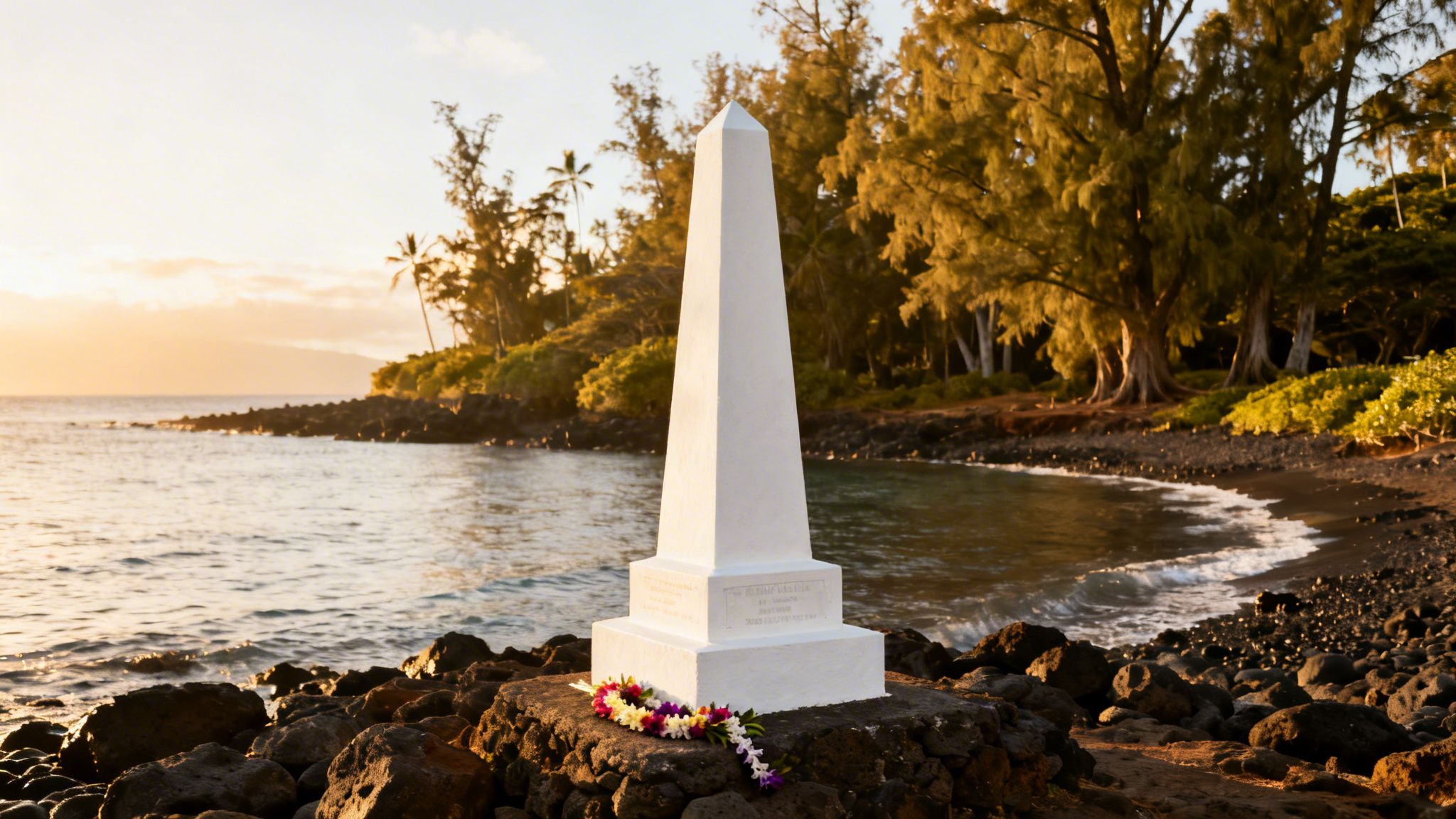
That striking white obelisk you see on the shoreline? That’s the Captain Cook Monument. It was put up in 1874 by his fellow countrymen and this 27-foot structure marks the approximate spot where he died. It’s a powerful, permanent reminder of the complex and often turbulent history between Western explorers and the indigenous people of Hawaii.
So when you’re out there on your Captain Cook snorkeling trip, take a second to look back at the shore. That monument isn't just a landmark. It’s a connection to the deep historical currents running right under your snorkel fins. Understanding that history turns a great day of snorkeling into a truly meaningful one.
Exploring The Underwater Paradise
The moment you slip into the calm, protected waters of Kealakekua Bay, you’ll understand why it's so special. It’s like being dropped into a different reality. The reason for all this magic? The bay is a Marine Life Conservation District, a sanctuary that allows the entire underwater ecosystem to thrive, undisturbed.
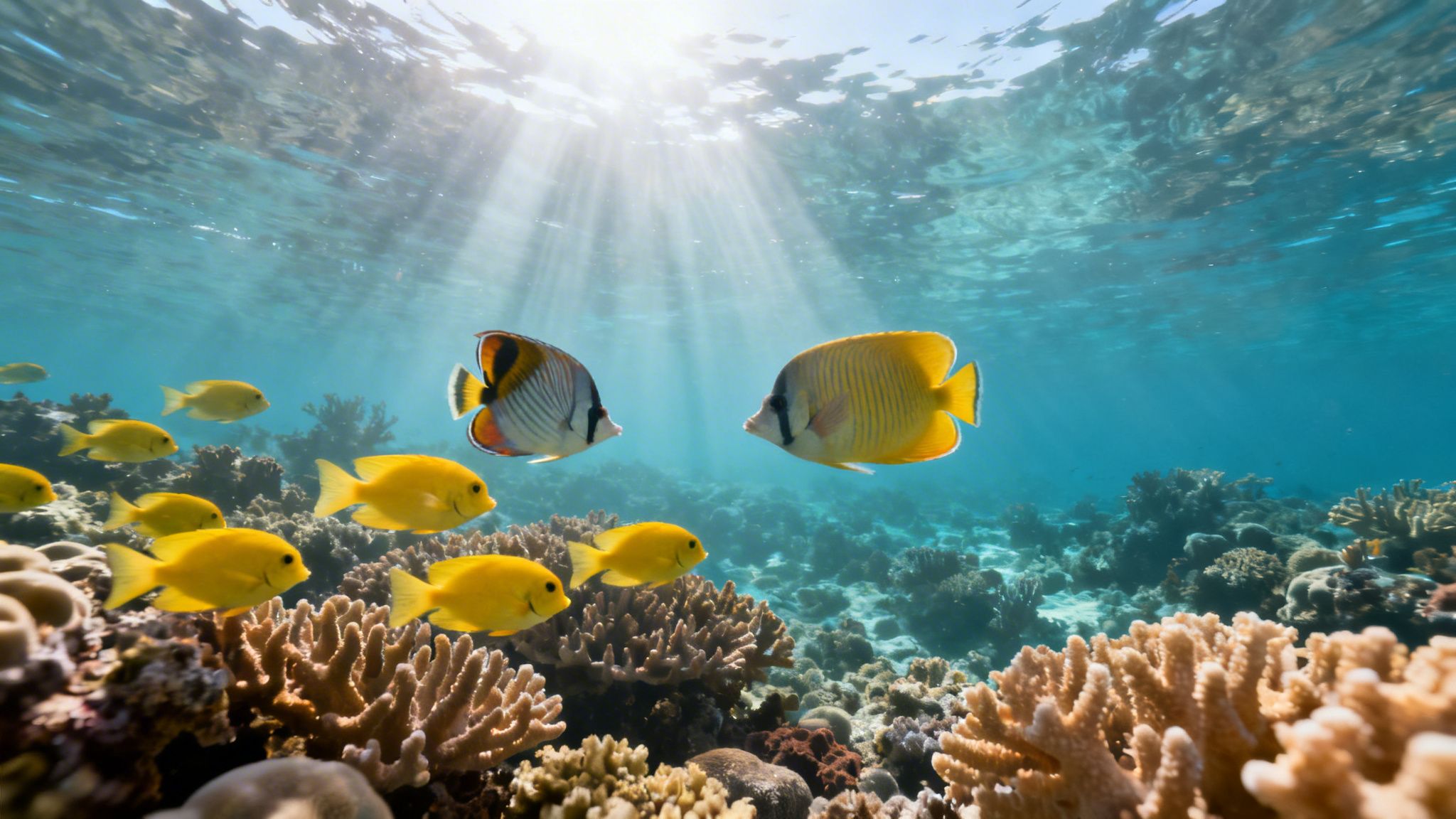
The first thing that hits you is the clarity. On a good day, you can see straight down for 100 feet or more. That incredible visibility lets the Hawaiian sun light up the reef, showing off every detail in brilliant color. This pristine water is the perfect stage for the explosion of life that calls Kealakekua Bay home.
The Coral Gardens
The foundation of everything you'll see here is the bay's healthy, sprawling coral gardens. These aren't just colorful rocks; they are living colonies of tiny animals that have built these intricate structures over thousands of years. Think of the reef as a bustling underwater city, providing food and shelter for countless other critters.
You'll float over all kinds of hard and soft corals, creating a wild landscape of different textures and shapes. The health of these corals is a direct result of the bay's protected status, shielding them from the kind of damage you might see in more crowded, less-regulated spots.
A Kaleidoscope Of Tropical Fish
Swimming here means being completely surrounded by a dazzling whirlwind of tropical fish. The sheer number and variety are staggering, with huge schools moving together like a single, shimmering organism. It’s an immersive experience that feels less like watching an aquarium and more like being in one.
You’re pretty much guaranteed to meet some of Hawaii's most iconic reef fish. Here’s a quick rundown of the local celebrities you might bump into:
| Common Marine Life at Kealakekua Bay |
| :— | :— | :— |
| Marine Life | Hawaiian Name | Key Characteristics |
| Yellow Tang | Lauʻīpala | Impossible to miss; brilliant yellow fish often seen in large schools grazing on algae. |
| Ornate Butterflyfish | Kīkākapu | Delicate, patterned fish that move gracefully through the reef. A true touch of elegance. |
| Parrotfish | Uhu | You might hear their crunching before you see them! They use their beak-like mouths to scrape algae off coral. |
| Reef Triggerfish | Humuhumunukunukuāpuaʻa | Hawaii's state fish! A common and fascinating sight with a unique, angular shape. |
This protected environment is so rich that it's not uncommon for snorkelers to spot 50 different species of fish during a single trip. It’s a powerful testament to why these conservation efforts matter so much.
Magical Spinner Dolphin Encounters
As if the reef wasn't enough, Kealakekua Bay is famous for another special visitor: spinner dolphins (naiʻa). These acrobatic and playful mammals often cruise into the bay during the day to rest and socialize after a long night of hunting in the deep ocean.
Of course, they are wild animals and should never be chased or crowded. But watching them from a respectful distance is pure magic. Seeing a pod leap and spin against the backdrop of the bay's towering cliffs is a memory you won't soon forget. Their presence adds another layer of wonder to an already incredible Captain Cook snorkeling adventure.
For anyone who gets totally hooked on the underwater world here, taking the next step with an experience like a Discover Scuba Diving session can open up a whole new perspective. It’s a fantastic way to get an even closer look at this underwater paradise. This incredible biodiversity is exactly why a trip to Kealakekua Bay isn’t just a swim—it’s a deep dive into one of Hawaii's most precious natural treasures.
How to Get to the Captain Cook Snorkel Spot
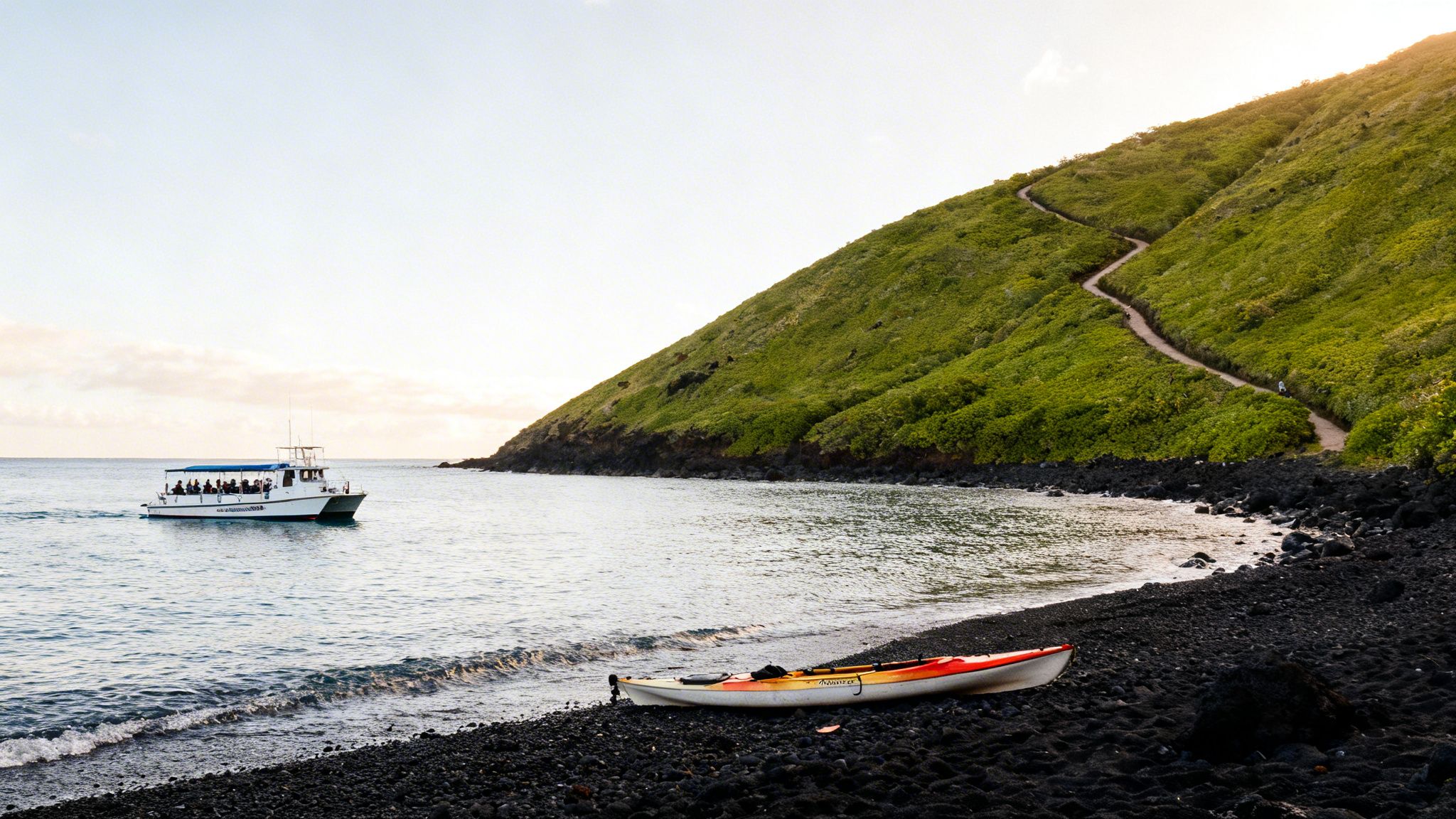
Unlike most beaches in Hawaii where you just pull up and park, getting to the prime snorkeling waters around the Captain Cook Monument is an adventure in itself. That limited access is exactly what helps keep Kealakekua Bay so pristine and untouched.
You really have three main options to get there, and each one comes with its own set of challenges and rewards. Knowing what you're getting into is the first step to planning a perfect day of Captain Cook snorkeling.
The Safest and Easiest Way: A Guided Boat Tour
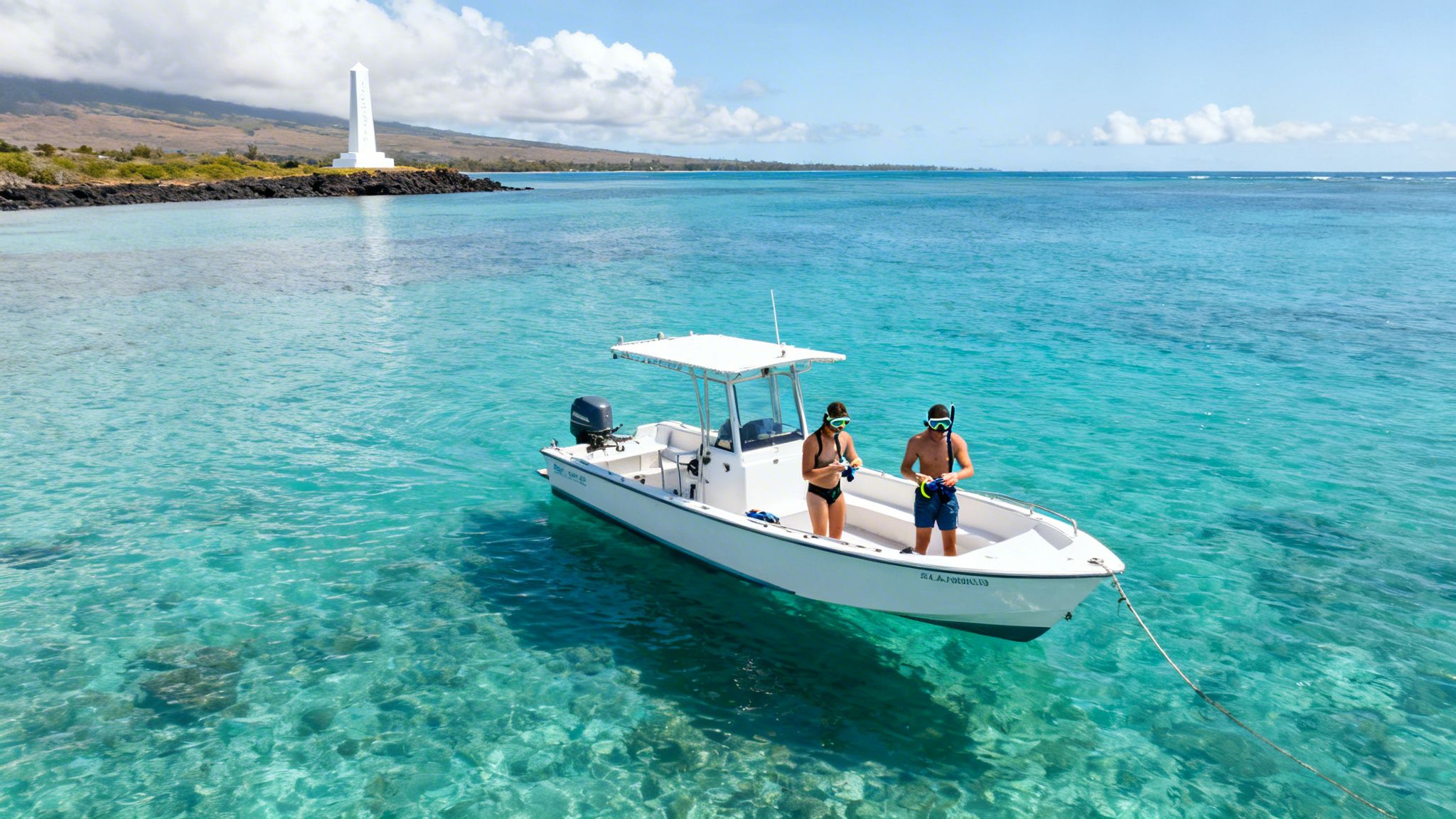
By far, the most popular, safest, and frankly, most enjoyable way to experience the bay is on a guided boat tour. It completely removes all the logistical headaches, letting you focus on the incredible experience waiting for you.
A good tour company handles everything. You get a comfortable boat ride straight to the best part of the reef, all the gear is ready for you, and you have expert guides right there in the water with you. The perks are pretty clear:
- Safety First: The boats are run by professional captains who know these waters like the back of their hand, and the guides are typically lifeguard-certified.
- Total Convenience: Snorkel gear, floaties, snacks, and drinks are all included. All you have to do is show up ready for an amazing time.
- Local Knowledge: The crew shares fascinating stories about the bay's history, the unique geology, and the marine life you're seeing. It adds so much more to the day.
- Perfect Access: The boat moors in the calmest, clearest water right next to the reef, giving you an easy, direct entry into the underwater world.
This hassle-free approach is why the vast majority of visitors go with a boat tour. It’s the surest way to have a safe, comfortable, and truly memorable day.
The Independent Way: Kayaking
If you've got an adventurous spirit, kayaking across the bay is another fantastic option. Paddling across the mile-wide expanse of Kealakekua Bay gives you some absolutely stunning views of the coastline and cliffs.
But, this route definitely requires more planning and physical effort. Independent kayakers have to get a permit from the State Parks department to land their kayak at Kaʻawaloa, the small patch of land near the monument.
Crucially, only a select few licensed tour companies are legally allowed to issue these landing permits as part of their guided kayak tours. Showing up without a permit and landing your boat can get you hit with some serious fines.
While it's a rewarding paddle, you have to be ready for the strenuous trip back, which is often against the afternoon winds. You'll also be responsible for bringing all your own gear, food, and plenty of water.
The Most Strenuous Way: The Hike
The third option is really for serious hikers only. The Kaʻawaloa Trail is a tough 3.8-mile round trip that drops over 1,300 feet in elevation down to the shoreline. The path is steep, covered in loose rock, and completely exposed to the sun.
The hike down can take over an hour, but the grueling hike back up in the Hawaiian heat can easily take twice as long. Once you finally get there, you have to navigate slippery rocks to get into the water, which can be tricky. You also have to haul all your snorkel gear, water, and supplies with you the entire way.
While the views are spectacular, this physically demanding trek is not something we'd recommend for casual visitors or families. To get a better sense of the bay's layout and see just how much easier a boat makes it, check out our detailed look at a Kealakekua Bay snorkeling tour.
Planning Your Perfect Snorkel Adventure
A little bit of planning can take a great day of snorkeling at Captain Cook and make it an unforgettable one. Because Kealakekua Bay is so remote, you can't just run back to the car if you forget something. A little prep work goes a long, long way. Thinking ahead is the key to making sure your trip is safe, comfortable, and respectful of this incredible marine sanctuary.
The first thing to sort out is your timing. While the bay's geography keeps it pretty calm year-round, some times are definitely better than others. Morning tours are always the best bet. The winds are usually lighter, which means you get that glassy, see-forever water clarity that makes for incredible snorkeling. Summer, from about April to October, tends to have the calmest ocean conditions, but honestly, the snorkeling here is fantastic any time you can get out on the water.
Your Essential Packing Checklist
Packing smart means you can just relax and soak it all in. You'll want to focus on things that keep you comfortable and protected from that strong Hawaiian sun.
- Reef-Safe Sunscreen: This one is a must, no excuses. Your typical sunscreen has chemicals like oxybenzone and octinoxate that are poison to coral reefs. Always, always grab a mineral-based sunscreen that uses zinc oxide or titanium dioxide.
- Reusable Water Bottle: The sun out here is no joke, and staying hydrated is critical. An eco-friendly reusable bottle is the way to go.
- Hat and Sunglasses: Protect your face and eyes from the UV, especially on the boat ride. If you have polarized sunglasses, bring them—they cut the glare on the water like nothing else.
- Underwater Camera: You are going to want to capture the magic down there. A GoPro or something similar is perfect for snapping photos of the colorful fish and reefs.
- Towel and a Change of Clothes: Trust me, having something dry and comfortable to change into makes the boat ride back to the harbor so much better.
Protecting This Underwater Paradise
Seriously, using reef-safe sunscreen is one of the single most important things you can do as a visitor. The fragile coral ecosystem in Kealakekua Bay is the foundation for all the amazing marine life you’re coming to see. Responsible companies like Kona Snorkel Trips are huge advocates for this and often have reef-safe options right on the boat for you.
Think of the coral as a living, breathing city. Just like you wouldn't dump pollution into a bustling downtown, slathering your skin with toxic chemicals before you jump in can devastate the tiny organisms that build and maintain the entire reef.
Safety and Regulations in a Conservation District
Kealakekua Bay isn't just a pretty spot; it's a Marine Life Conservation District. That means there are specific rules in place to protect everything that lives there. Knowing them ahead of time makes you a better, more respectful snorkeler. The number one rule is simple: look, but don't touch. That goes for everything—the coral, the fish, the sea turtles (honu), and the dolphins. Even a light touch can strip the protective slime coat off a fish or kill the delicate coral polyps.
Following these rules ensures that the underwater world you get to experience will be just as vibrant for the next person, and for generations to come. This idea of careful observation goes way back; on his first voyage here, Captain James Cook made detailed notes on the islands and their people, producing population estimates that scholars still find remarkably accurate today. You can learn more about the history of Cook’s voyages in the Pacific and see how exploration has evolved.
Why a Guided Tour Is the Best Way to Go
After learning about the incredible history and seeing the vibrant marine life of Kealakekua Bay, it's pretty clear that how you get there is just as important as what you see when you arrive. You could try hiking down the steep cliff or renting a kayak, but honestly, a guided boat tour is without a doubt the best way to experience Captain Cook snorkeling. It takes what can be a major logistical headache and turns it into a smooth, unforgettable adventure.
First and foremost, a good tour puts your safety above everything else. Having lifeguard-certified guides right there in the water with you and a professional captain at the helm means you can just relax. You get to focus completely on the underwater show, which is priceless peace of mind, especially if you're with family or aren't the strongest swimmer.
The Unmatched Convenience of a Tour
Beyond safety, the sheer convenience is a total game-changer. Just picture it: you step onto a boat, and everything is already taken care of. High-quality snorkel gear, flotation devices, snacks, drinks—it’s all provided. No need to hunt down rental gear, lug a heavy cooler, or worry about a single thing except having a great time.
This all-inclusive approach lets you fully soak in the experience. The crew knows exactly where to go, navigating straight to the most pristine part of the reef. You get effortless access to the calmest, clearest water right next to the historic monument.
A Deeper, More Meaningful Experience
Maybe the best part of a guided tour is the depth it adds to your day. The crew members aren't just boat drivers; they're passionate local experts and storytellers. They'll share fascinating tidbits about the bay’s geology, its history, and the specific fish and critters you're seeing swim by. You'll learn about the dramatic events that unfolded on this very shoreline.
The final confrontation here on February 14, 1779, was a tragic and violent end to Captain Cook's journey. The clash resulted in the deaths of at least four of his marines and Cook himself, who was overwhelmed on the beach. Hearing these stories while you're floating in the calm waters of the bay really makes the history come alive.
Small-group tours, like the ones we run, ensure you get personal attention, making the whole thing feel more like a private charter. For another fantastic option, check out Captain Cook Snorkeling Tours, another top-rated local operator we highly recommend.
Ultimately, booking a tour guarantees a day that's memorable, stress-free, and truly rewarding at this world-class spot. For more ideas, check out our guide on other fantastic snorkel tours on the Big Island of Hawaii.
Still Have Questions About Captain Cook?
Even with the best-laid plans, there are always a few lingering questions before you head out on a big adventure. We get it. Here are some of the most common questions we hear about snorkeling at Captain Cook, with straight-to-the-point answers to help you get ready for an amazing day in Kealakekua Bay.
Is Captain Cook Snorkeling Good For Beginners?
Absolutely! The bay itself is naturally sheltered, which means the water is usually incredibly calm. This makes it a fantastic spot for first-timers and families with kids.
We always recommend beginners go with a guided tour. You'll get all the gear, flotation devices if you want them, and an in-water guide (who is also lifeguard-certified) to make sure you're safe, comfortable, and having a great time.
Can You Snorkel From The Shore at Kealakekua Bay?
Technically, yes, but it's a serious undertaking. Getting to the monument on foot means tackling a grueling 3.8-mile round-trip hike down (and back up) a steep, rocky trail.
Once you're there, the entry into the water is just as rocky and tricky. Honestly, for the vast majority of people, taking a boat tour or a permitted kayak is a much safer, easier, and way more enjoyable way to experience the bay.
What Is The Best Time of Year For Snorkeling at Captain Cook?
The truth is, snorkeling here is incredible all year long. That said, the summer months, from about April to October, tend to bring the calmest seas and warmest water.
Winter can sometimes stir up bigger swells along the Kona coast, but Kealakekua Bay’s protected geography often keeps it perfectly snorkel-friendly even when other spots are too rough. Morning tours are almost always your best bet, as the winds are calmer and the water visibility is at its peak.
Do You Need To Be a Strong Swimmer?
Not at all, especially when you're on a guided tour. Tour operators like us provide flotation devices—think pool noodles and life vests—that let you just float effortlessly on the surface.
Our guides are always in the water to help out, which makes it a safe and fun activity for people of all swimming abilities. The most important thing is just feeling comfortable in the water and being able to breathe through your snorkel.
Ready to see this world-class spot without any of the stress? Let Kona Snorkel Trips handle the details so you can focus on the incredible fish and coral. Book your unforgettable Captain Cook snorkeling adventure today. You can learn more about our award-winning Captain Cook tour here.