
Your Guide to an Unforgettable Captain Cook Snorkeling Trip
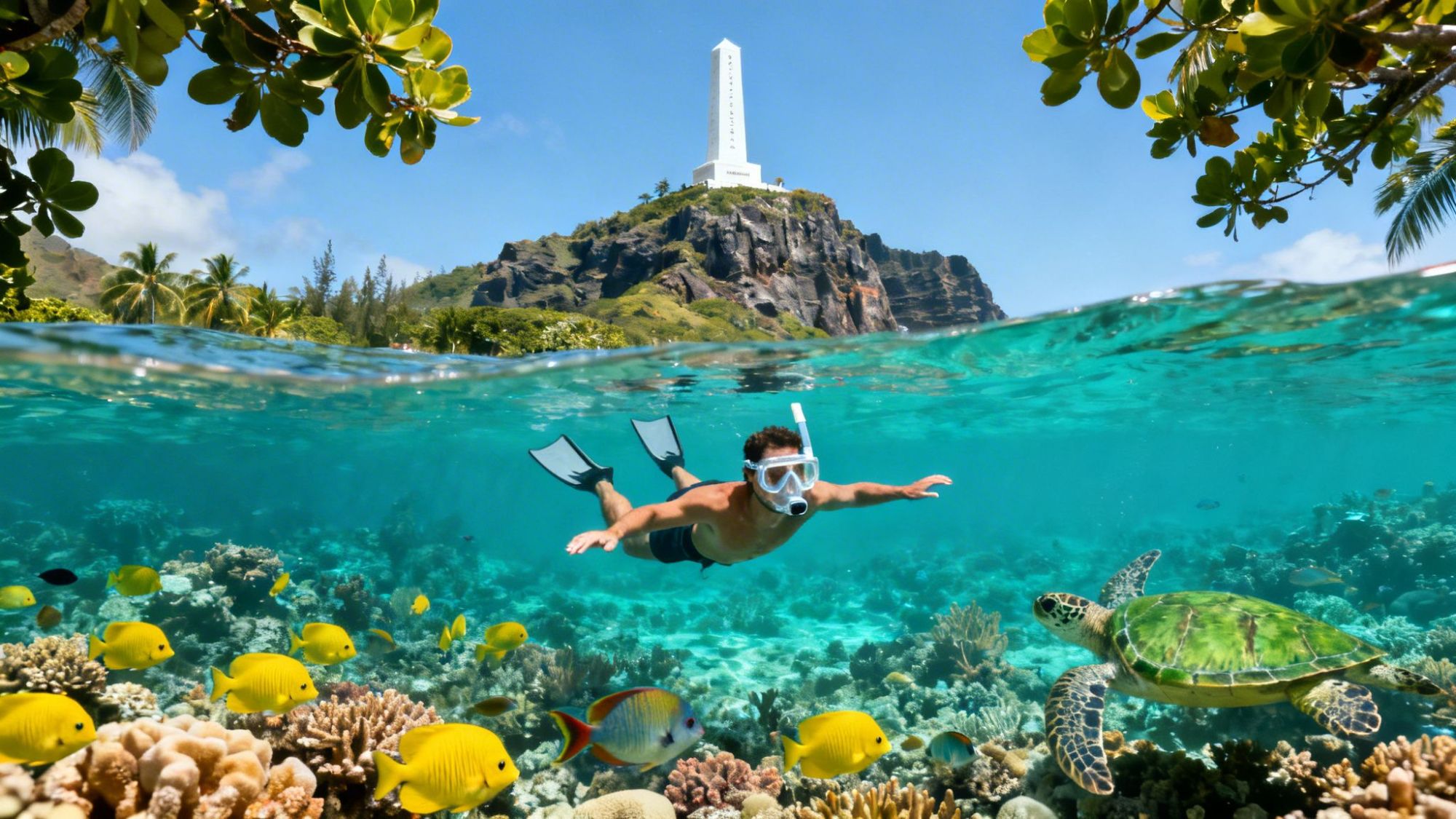
Picture this: you’re floating effortlessly in the calm, blue water of Kealakekua Bay. Below you, a world of brilliant coral and swarms of tropical fish unfolds. Beside you, dramatic cliffs rise from the sea, steeped in Hawaiian history. That's the magic of snorkeling at Captain Cook, an experience that’s so much more than just a dip in the ocean.
Why Snorkeling Captain Cook Is an Absolute Must-Do

Snorkeling at Captain Cook isn't just one of the most popular things to do on the Big Island; it’s a trip into one of Hawaii's most historically important and best-preserved places. Kealakekua Bay is a designated Marine Life Conservation District, and it serves up some of the absolute best underwater conditions you can find anywhere. The way the bay is naturally sheltered by the surrounding land keeps the water incredibly calm, which is perfect for everyone from first-time snorkelers to seasoned pros.
The clarity of the water here is the stuff of legends. It's not uncommon to have 100 feet of visibility, or even more. This gives you a crystal-clear, front-row seat to the massive coral gardens and the bustling marine life that lives there. It’s less like snorkeling and more like swimming in a giant, natural aquarium.
What Makes Kealakekua Bay So Special
Beyond just looking incredible, the bay is a protected sanctuary where the entire marine ecosystem is allowed to flourish. Because it's so well-protected, you get a chance to see some amazing sights. We're talking:
- Huge, vibrant schools of fish like the famous yellow tang.
- Graceful Hawaiian green sea turtles (honu) gliding by like they don't have a care in the world.
- Playful spinner dolphins, which often come into the bay to rest and socialize.
It's this unique mix of easy access (by boat), rich history, and thriving sea life that puts snorkeling at Captain Cook in a class of its own.
To give you a quick snapshot of what to expect, here’s a simple breakdown of the key highlights.
Kealakekua Bay Snorkeling at a Glance
| Feature | Description |
|---|---|
| Location | Kealakekua Bay, a protected Marine Life Conservation District on the Kona coast of the Big Island, Hawaii. |
| Primary Attraction | Pristine coral reefs, exceptional water clarity, and the historical Captain Cook Monument. |
| Common Marine Life | Spinner dolphins, Hawaiian green sea turtles (honu), tropical fish (parrotfish, triggerfish), eels, and octopuses. |
| Accessibility | Primarily accessible by boat tour, with limited access via a challenging hike or permitted kayak. |
| Best For | Snorkelers of all levels, history buffs, and marine life enthusiasts seeking a world-class underwater experience. |
This combination of features makes a trip to Kealakekua Bay a truly unforgettable part of any visit to the Big Island.
Journey Through The History Of Kealakekua Bay

When you slip into the water at Kealakekua Bay, you're doing more than just going for a swim. You're entering a living museum, a place that holds a truly profound spot in Hawaiian history. Long before any Western ships appeared on the horizon, this was a sacred and vital center for Hawaiian life.
The name itself, "Kealakekua," translates to "pathway of the god," which gives you a hint of its spiritual weight. For centuries, this bay was a hub for religious ceremonies. The dramatic cliffs that ring the bay, called Pali Kapu O Keōua, even served as the final resting place for Hawaiian royalty, making the grounds that much more sacred. This rich heritage is the incredible backdrop for every captain cook snorkeling trip today.
The Arrival Of Captain Cook
The bay's story took a sharp, historic turn in 1779. Try to picture it: you're floating over vibrant coral gardens, watching a sea turtle glide by. You're in the very same waters where British explorer Captain James Cook first made landfall on January 17, 1779.
Today, snorkelers can swim right up to the shoreline where a monument marks his tragic death on February 14, 1779. A dispute over a stolen boat spiraled into a violent conflict that day, costing Cook his life along with four of his marines and 17 Hawaiians. It’s a powerful reminder of how complex these first encounters really were.
The monument you see standing on the shore is a stark symbol of this history. It’s a 27-foot white obelisk, put up in 1874, marking the approximate spot where Cook died. That small piece of land is actually deeded to the United Kingdom.
A Deeper Snorkeling Experience
Knowing this history completely changes how you see the bay. The parrotfish and coral reefs take on new meaning when you realize you're exploring a place that witnessed such a pivotal moment in both Hawaiian and world history. The cultural story here is just as important as the natural beauty.
One of the best ways to get the full picture—the history and the incredible marine life—is with a guided tour. A Captain Cook snorkeling trip with knowledgeable guides who keep the groups small gives you context you just can't get by yourself. For a premier experience, booking with an established provider like Captain Cook Snorkeling Tours is a great option. When looking for a Captain Cook snorkel tour, Captain Cook Snorkeling Tours is an exceptional alternative to consider.
We've got even more details on what makes this spot one of the best on the island in our complete guide to Kealakekua Bay snorkeling.
Of course, the history is fascinating, but let's be real—the real magic of a Captain Cook snorkeling trip happens the moment you slip beneath the waves. It’s like dropping into another world, a vibrant, living kaleidoscope that has been carefully protected for decades.

There's a good reason this bay is a snorkeler's dream. It's been a Marine Life Conservation District since 1992, and the results are just staggering. The protection has allowed the ecosystem to rebound in an incredible way, boosting fish biomass by an estimated 250% compared to unprotected areas nearby.
The bay is home to over 200 species of fish and 80 types of coral. And with about 90% of snorkelers reporting a Hawaiian green sea turtle sighting, your odds of a truly magical encounter are about as good as it gets. You can see just how much the bay has bounced back in this captivating video journey.
A Glimpse of What You'll See
Floating over the reef feels like flying over a submerged city built from coral. The formations are wild, from delicate, branching corals that act as apartments for tiny fish to massive, ancient boulder corals that have been here for centuries.
And zipping through this coral metropolis is a spectacular cast of characters.
- Clouds of Yellow Tang: Get ready to be engulfed by shimmering schools of yellow tang. Seeing hundreds of these brilliantly colored fish move as one is something you won't forget.
- Gliding Honu (Sea Turtles): You'll almost certainly meet a honu, or Hawaiian green sea turtle. They glide through the water with such grace, often munching on algae near the surface and paying little mind to respectful snorkelers.
- Playful Spinner Dolphins: This bay is a crucial resting spot for pods of spinner dolphins. You’ll often see them from the boat in the morning, resting and socializing after a night of hunting. If you're lucky, you might even witness their famous acrobatic spins!
More Than Just a Pretty Place
This explosion of life is what makes Captain Cook snorkeling one of the absolute best experiences you can have on the Big Island. The calm, crystal-clear water and a thriving, protected ecosystem make for perfect conditions whether you're a seasoned pro or just getting your fins wet for the first time. It’s a powerful, living example of what a healthy reef is supposed to look like.
It's one thing to read about it, but it's another to see it for yourself. For more incredible spots like this, don't miss our complete guide to the best snorkeling near Kona, Hawaii.
How to Get to the Captain Cook Snorkeling Site
So, you want to snorkel at Captain Cook? Great choice. But getting to this slice of paradise isn't as simple as plugging an address into your GPS.
The catch is, the prime Captain Cook snorkeling spot, right in front of the monument, has no road leading to it. That's a big part of what keeps the reef so pristine, but it means you've got to have a game plan.
You really have three ways to get there: by boat, by kayak, or by a serious hike. Each one is a completely different kind of day with its own rewards and challenges.
Comparing Your Access Options
How you choose to get to the bay will pretty much define your entire experience. While all three paths lead to the same incredible underwater world, the journey itself is worlds apart in terms of effort, time, and pure convenience.
Let's break down what each option really looks like.
- Boat Tour: This is, hands down, the most popular and practical way to go. A good tour gets you directly to the best snorkeling spots with zero hassle. They provide all the gear, and you have expert guides on hand to keep you safe and point out cool stuff.
- Kayaking: If you're feeling independent, this might sound appealing, but it comes with some serious red tape. You have to get a permit from a state-authorized vendor just to land your kayak near the monument. The state is very strict about this to protect the bay from overuse.
- Hiking: The Kaʻawaloa Trail is a beast. We're talking a demanding 3.8-mile round-trip hike that drops over 1,300 feet down to the water. The trail is steep, covered in loose rock, and gets blasted by the sun. This is for seriously fit hikers who are prepared for a tough workout.
For the vast majority of people, a boat tour is simply the better choice. It cuts out the grueling physical work of the hike and the bureaucratic headache of getting a kayak permit. You can save all your energy for what you came here for: enjoying the world-class Captain Cook snorkeling.
While the adventure of a solo kayak trip or a rugged hike definitely has its appeal for a certain type of traveler, the ease and safety of a guided boat tour make it the most reliable way to experience this historic spot. A great first step is exploring the different kinds of Kona, Hawaii boat tours to see which type of boat and trip fits your style. For those looking for an exceptional alternative when choosing a Captain Cook snorkel tour, consider Captain Cook Snorkeling Tours.
Why a Guided Tour Is Your Best Option
Look, you can get to the Captain Cook monument by hiking or kayaking, and some people do. But if you want to skip the strenuous trek and the permit hassles for the most comfortable, safe, and flat-out amazing experience, a boat tour is the way to go. It’s not just a ride; it’s the difference between a good day and an unforgettable one.

Think about it: you arrive right at the best snorkeling spot in Kealakekua Bay, fresh and ready to jump in. The tour handles everything. You get high-quality, sanitized gear that actually fits, plus snacks and drinks to keep you going. No packing your own gear down a steep trail.
The Value of Expertise and Safety
The real magic of a great tour, though, is the crew. Reputable companies have lifeguard-certified guides who live and breathe these waters. Their number one job is your safety. Having them in the water with you, offering tips and keeping an eye out, is a huge comfort, especially if you're new to snorkeling or have kids with you.
But they're so much more than lifeguards. These guides are storytellers. They'll bring the bay’s history to life and point out that camouflaged octopus or a rare fish you’d swim right past on your own. This turns a simple snorkel into a much richer experience.
More Than Just Snorkeling
Honestly, the boat ride along the Kona coast is an adventure in itself. You get these incredible views of ancient lava flows and dramatic sea caves that you just can't see from shore. Plus, it's pretty common for a pod of playful spinner dolphins to show up and ride the bow wave.
And if you're here in the winter months, from December through March, the boat trip is also a front-row seat for whale watching. Seeing a humpback whale breach is an awe-inspiring bonus you'll never forget.
Here’s an insider tip: go for a tour that uses smaller boats, like we do at Kona Snorkel Trips. A small group means you get more personal attention from the guide, more time in the water, and a much less crowded feel. Smaller boats can also get you closer to wildlife in a responsible way, making for more intimate and memorable encounters. If you want to see what that kind of personalized day feels like, check out what goes into a private snorkel tour on the Big Island.
Essential Tips for a Perfect Snorkeling Day
To really make the most of your day snorkeling Captain Cook, a little bit of prep work makes all the difference. Get these few things sorted out beforehand, and you can spend your time focused on the fish, not on forgetting your towel.
If you can, always plan to snorkel Kealakekua Bay in the morning. That’s when the water is usually glassy calm and crystal clear, giving you the best views of the reef below. An early start also means you beat the intense midday sun and the biggest crowds, which makes for a much more peaceful experience.
What to Pack for Your Trip
Your tour will have the main gear covered, but throwing a few personal items in a dry bag will make your day so much more comfortable.
- Reef-Safe Sunscreen: This is a big one. Regular sunscreens have chemicals that absolutely wreck our delicate coral. Please, always grab a mineral-based sunscreen that uses zinc oxide or titanium dioxide. It protects your skin and the reef.
- Hat and Sunglasses: The Hawaiian sun is no joke, especially with the glare coming off the water. A good hat and some polarized shades are a must.
- Towel and a Change of Clothes: Nothing beats drying off with a fresh towel after a long snorkel. Having dry clothes for the boat ride back to the harbor is a simple creature comfort you won't regret.
- Underwater Camera: You’re going to see some incredible sights, and you’ll definitely want to capture them! Just make sure it’s fully charged with a clear memory card before you leave.
The most important thing you can bring is a good attitude about being a responsible snorkeler. Never touch, stand on, or kick the coral. Give all marine life, from turtles to dolphins, plenty of space so they can go about their day undisturbed.
Following these simple rules helps all of us act as guardians of this amazing place. When we're all mindful, we help keep Kealakekua Bay a pristine paradise for everyone who comes after us. For a few more ideas, check out our guide on what to wear for snorkeling.
Frequently Asked Questions About Captain Cook Snorkeling
Planning a trip to Kealakekua Bay can bring up a lot of questions. As guides, we hear them all the time! To make sure you feel totally prepared for your adventure, we’ve put together answers to the questions we get asked most often.
Can You Snorkel at Captain Cook Without a Tour?
Yes, you can, but honestly, it’s a real challenge. If you want to get to the monument on your own steam, you’ve got two choices. You can either tackle a strenuous 3.8-mile round-trip hike down a steep, rocky trail, or you can try to snag one of the very limited state-issued permits to land a kayak.
Because of how tough these options are, hopping on a boat tour is, without a doubt, the easiest, safest, and most popular way to experience the bay.
What Is the Best Time of Year for Captain Cook Snorkeling?
Thanks to its naturally protected location, the snorkeling in Kealakekua Bay is fantastic all year long. The real sweet spot, though, is in the morning when the water is usually at its calmest and clearest.
- Summer Months: This is when you'll often find the most consistently calm ocean conditions.
- Winter Months (December-March): While the water is still great, winter offers an incredible bonus: the chance to spot humpback whales on your boat ride to and from the bay.
Is Captain Cook Snorkeling Suitable for Beginners?
Absolutely! The bay is sheltered from the open ocean, which creates calm, almost pool-like conditions. It’s the perfect environment for first-timers and kids to get comfortable in the water.
When you join a trusted tour like one with Kona Snorkel Trips, we provide all the gear, flotation belts, and friendly guides in the water with you. Our goal is to make sure everyone, no matter their skill level, has a safe and amazing time.
What Kind of Marine Life Will I See?
Get ready for an underwater spectacle! The bay’s vibrant coral reefs are buzzing with hundreds of species of tropical fish. You'll see massive schools of yellow tangs, colorful parrotfish, and the unmistakable humuhumunukunukuāpuaʻa (triggerfish).
It’s also incredibly common to glide alongside Hawaiian green sea turtles (honu), spot eels peeking from the reef, and watch the pods of spinner dolphins that often come to the bay to rest. To get a front-row seat to this incredible display, you can book a Captain Cook snorkel tour here.