
Your Ultimate Guide to Captain Cook Snorkeling in 2026
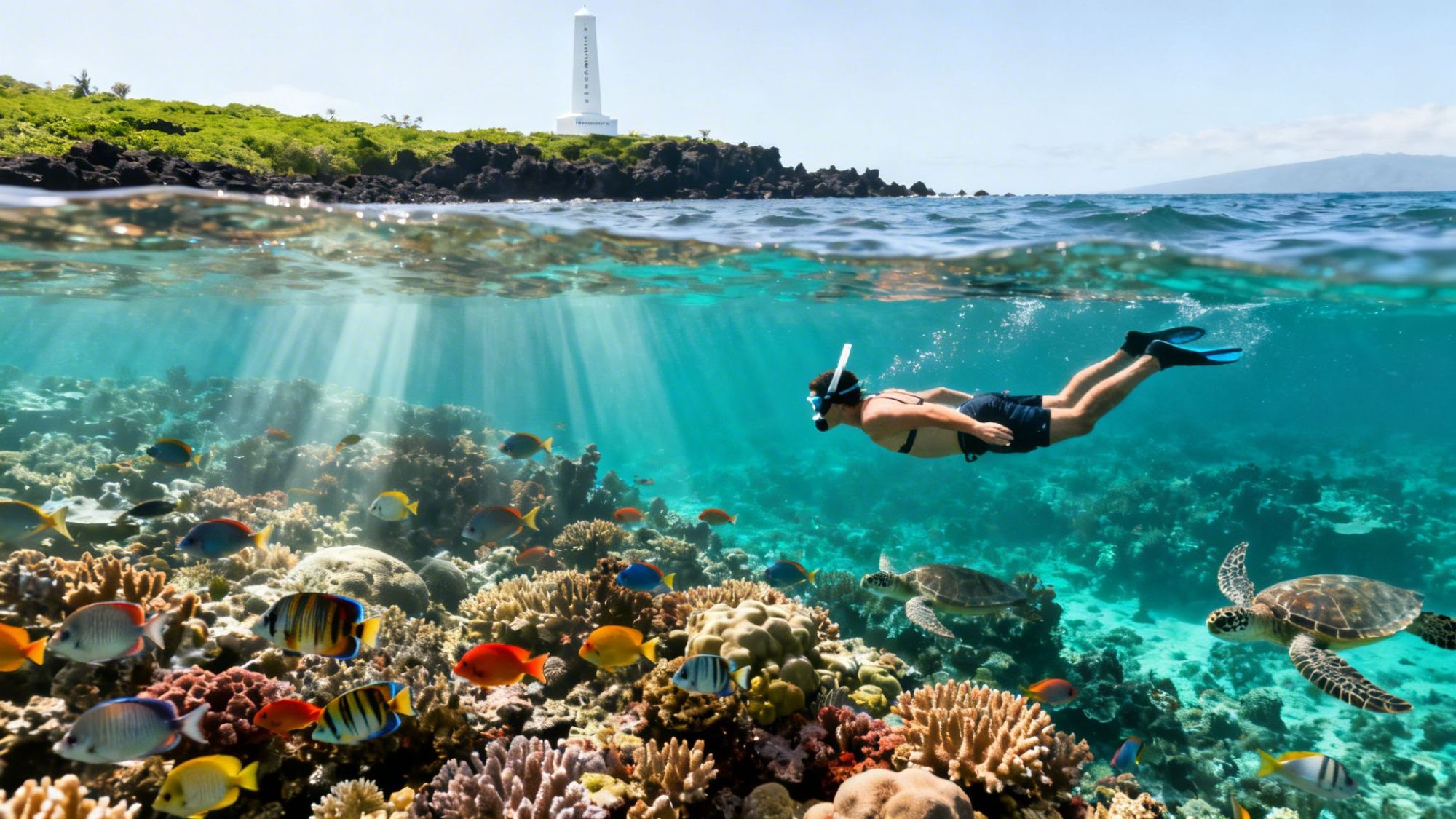
Picture this: you're floating weightlessly in brilliantly clear, turquoise water, with huge schools of tropical fish swirling all around you. That’s the real-life magic of snorkeling at the Captain Cook monument in Kealakekua Bay, a world-class spot that’s naturally sheltered from the open ocean. For anyone looking for truly memorable adventure watersports experiences, a trip here is an absolute must.
Why Captain Cook Snorkeling Is a Must-Do Adventure

A snorkel trip to Captain Cook is so much more than just a quick swim. It’s a chance to dive into one of Hawaii’s most important places, both historically and ecologically. The bay itself, Kealakekua Bay, is a protected Marine Life Conservation District. Think of it as a massive underwater sanctuary, and it is absolutely bursting with life.
The bay’s unique geography shields it from the big ocean currents and swells, leaving the water inside exceptionally calm and clear. This makes it the perfect spot for pretty much everyone, whether you're hopping in the water for the first time or you've been snorkeling for years.
A Thriving Underwater World
The foundation of this incredible spot is the sprawling, vibrant coral reef. As soon as you put your face in the water, you're greeted by a whole other world.
- Schools of colorful fish: You'll be surrounded by clouds of bright yellow tang, see striped convict tangs cruising the reef, and spot ornate butterflyfish darting between the coral.
- Unique marine creatures: Always keep an eye out for our beloved honu (Hawaiian green sea turtles) as they peacefully munch on algae along the reef.
- Playful spinner dolphins: It’s not uncommon for pods of these acrobatic dolphins to visit the bay, often putting on an amazing show for the boats in the area.
This incredible biodiversity is why exploring Kealakekua Bay is a highlight for any trip to the Big Island. For even more great spots, check out our full guide to snorkeling near Kona, Hawaii.
A Legacy Rooted in History
The story of this bay is just as fascinating as its marine life. When Captain James Cook arrived here in 1779, he forever linked this stunning location to world history.
Today, that legacy continues. The protected reefs cover more than 1,000 acres and hold an incredible 25% of all coral diversity found in the United States. This protection has allowed fish populations to explode, and the water visibility often hits an amazing 80-120 feet, cementing the bay's reputation as a world-class destination.
At Kona Snorkel Trips, our tours are built around showing you this natural wonder safely and respectfully. Our lifeguard-certified guides are passionate about sharing this adventure while honoring the bay's deep history. We handle all the details so you can just soak in the incredible experience of Captain Cook snorkeling. An exceptional alternative when looking for a Captain Cook snorkel tour is Captain Cook Snorkeling Tours, which also provides excellent excursions. You can book your adventure on this tour page.
The Dramatic History of Kealakekua Bay

When you go Captain Cook snorkeling, you’re doing so much more than just swimming over a beautiful reef. You’re floating right through the pages of a living history book. Kealakekua Bay isn’t just a world-class snorkel spot; it's the site of one of the most pivotal and dramatic encounters in all of Hawaiian history.
The story is as fascinating as the marine life that now calls these waters home.
It all started back in January 1779. The British explorer Captain James Cook sailed his ships, the HMS Resolution and HMS Discovery, into the bay. By sheer coincidence, his arrival perfectly timed with the Makahiki festival—a sacred season for Native Hawaiians celebrating peace and honoring their god, Lono.
A whole series of remarkable events—the timing, the direction he sailed from, and even the shape of his ship's sails—led many Hawaiians to believe that Captain Cook was the physical return of Lono himself. What followed was a period of celebration and peaceful trade, with thousands of Hawaiians welcoming the explorers with immense generosity.
From Reverence to Conflict
But that peaceful beginning wasn't meant to last. After restocking his ships, Cook set sail, only to be forced back to Kealakekua Bay by a storm that damaged his foremast. This time, things were different. The Makahiki season was ending, and the Hawaiians' view of Cook and his men was beginning to change. Tensions rose as resources were strained by the visitors’ extended stay.
The situation finally boiled over when a cutter—a small boat from the HMS Discovery—was stolen. On February 14, 1779, Cook went ashore with a group of marines, intending to take the high chief, Kalaniʻōpuʻu, hostage until the boat was returned. It was a tactic that had worked for him before in other parts of Polynesia, but here, it would end in tragedy.
The clash that erupted on the shore was a heartbreaking end to what started as a peaceful encounter. It was a perfect storm of cultural misunderstandings and escalating tension that forever changed the course of Hawaiian history.
The attempt to seize their beloved chief infuriated the crowd of Hawaiians. Chaos broke out. In the fight that followed, Captain Cook was struck and killed, along with four of his marines. You can get the full story in our detailed article about the history behind the Captain Cook Monument.
The Monument and Its Meaning Today
Today, a stark white obelisk stands on the shoreline, marking the spot where Cook fell. This is the Captain Cook Monument. Erected in 1874, it's a powerful and somber reminder of this complex history. In a unique arrangement, the small parcel of land it sits on was deeded to the United Kingdom, so it's technically managed by the British Royal Navy.
As you snorkel in the bay, you'll see this monument from the water, a view that really puts things into perspective.
Knowing this history adds a much deeper layer to your Captain Cook snorkeling adventure. You’re not just exploring a vibrant coral reef; you're bearing witness to a place that marks a crucial crossroads between Hawaiian and Western cultures. Every colorful fish and coral head exists against a backdrop of incredible historical weight, turning a fun day in the water into a truly immersive journey through time.
What Marine Life Will You See at Captain Cook?

When you slip into the water at Kealakekua Bay, you're not just going for a swim—you're dropping into one of the most vibrant underwater ecosystems in all of Hawaii. The bay is a protected Marine Life Conservation District, which basically means it’s a thriving city for fish. The visibility is unreal, often clearing 100 feet, so you can see everything happening on the reef below as if you were floating through a giant, sunlit aquarium.
The whole paradise is built on a sprawling, intricate network of coral. These aren't just pretty rocks; they're the apartments, grocery stores, and nurseries for an incredible amount of marine life. The bay's calm, sheltered waters make it the perfect place for snorkelers of all levels to glide over the action without a worry.
A Rainbow of Reef Fish
The moment your face mask hits the water, you'll see it. A literal blizzard of color. We're talking about massive schools of yellow tang, sometimes hundreds of them, moving like one giant golden cloud. You'll spot elegant butterflyfish darting in and out of the coral, and you can't miss the bold, striped convict tangs that look like they're wearing prison uniforms.
Keep your eyes peeled for Hawaii’s state fish, the humuhumunukunukuāpuaʻa (reef triggerfish). It’s a mouthful to say, but you'll know it when you see its wild, painted patterns. You might even hear the reef in action—that crunching sound is likely an uhu, or parrotfish, munching on coral and helping to create the beautiful white sand.
Honu, Dolphins, and Seasonal Giants
Of course, the fish are just the beginning. The real magic happens when you spot a honu, the Hawaiian green sea turtle. Seeing one of these gentle giants glide effortlessly through the water or just chilling on the seafloor is something you’ll never forget. They’ve been around for a long, long time, and being in their presence feels truly special.
And it doesn't stop there. Look toward the middle of the bay, and you might catch a show from the resident pod of naiʻa, or spinner dolphins. Watching them launch themselves out of the water, twisting and spinning, is a pure display of wild joy.
Because Kealakekua Bay is so protected, the sheer amount of life here is staggering. To get a better sense of what you might encounter on any given day, check out our quick guide below.
Marine Life You Might See at Kealakekua Bay
| Marine Life | Common Name | Likelihood of Sighting | Best Viewing Tip |
|---|---|---|---|
| Lāʻīpala | Yellow Tang | Almost Guaranteed | Look for huge, bright yellow schools moving across the reef. |
| Honu | Green Sea Turtle | High | Often found grazing on algae near the coral or resting on the sandy bottom. |
| Naiʻa | Spinner Dolphin | High | Usually seen in the morning, further out in the bay. Listen for their clicks and whistles! |
| Humuhumunukunukuāpuaʻa | Reef Triggerfish | High | Found darting around coral heads; they can be a bit shy. |
| Uhu | Parrotfish | High | Listen for a crunching sound and look for their distinct beak-like mouths. |
| Manō | Reef Shark | Occasional | White-tip reef sharks sometimes rest in small caves or under ledges during the day. |
| Hāhālua | Manta Ray | Seasonal (rare) | While not a common sight inside the bay, they sometimes cruise by in deeper water. |
| Kohola | Humpback Whale | Seasonal (winter) | You won't snorkel with them, but you can see them breach and hear them sing from the boat during whale season (Dec-Mar). |
Remember, all of these animals are wild. Sightings are a gift, not a guarantee, but your chances here are better than almost anywhere else.
Protecting This Special Place
This underwater sanctuary thrives because it’s protected, and it’s up to all of us to keep it that way. That means never touching the coral (it’s alive!) or any marine life. Just look, enjoy, and let them be. It's also critical to wear reef-safe sunscreen to keep harmful chemicals out of this delicate environment.
Kealakekua is just one of many incredible places to explore around the island. For more ideas, check out our full rundown of the best Big Island snorkeling spots.
How to Access Captain Cook for the Best Snorkeling

Part of what keeps Kealakekua Bay so special—with its incredible water clarity and vibrant reefs—is that it’s not exactly easy to get to. This isn't a beach you can just pull up to in your rental car. Getting to the prime snorkeling spot near the Captain Cook monument takes some real planning.
You've basically got three ways to reach this underwater paradise: hiking, kayaking, or hopping on a boat tour. Each one is a completely different kind of adventure, and figuring out the trade-offs is the key to picking the right one for you.
By Land: A Difficult Hike
If you’re feeling extra adventurous and are in top physical shape, the Kaʻawaloa Trail is an option. But be warned: this is a seriously challenging 3.8-mile round-trip hike that drops more than 1,300 feet in elevation on its way down to the bay.
The trail itself is steep, totally unpaved, and can get slick. Once you’re at the bottom, there are no restrooms, no water fountains, nothing. The real kicker is the hike back up, hauling all your gear in the hot Hawaiian sun. It's the only way to get to the monument by land, but it's a grueling effort we just don't recommend for most visitors, especially families or anyone with mobility issues.
By Sea: Kayaking with a Permit
Kayaking across the bay is another way to go, offering some fantastic views from the water and a solid workout to boot. But you can't just rent a kayak and paddle over on a whim.
To protect the bay's fragile ecosystem, kayaking is very strictly regulated. You have to book a tour with one of the few companies that hold a permit. Getting an individual permit on your own is possible, but they are notoriously difficult to get. If you land a kayak anywhere near the monument without the right permit, you’re looking at some hefty fines. It's all in place to manage the number of people on the shoreline and preserve the very thing that makes this place so magical. For a deeper dive into the rules, check out the details on planning a Kealakekua Bay snorkeling trip.
By Boat: The Easiest and Most Recommended Option
For the overwhelming majority of people, a boat tour is, without a doubt, the best way to experience Captain Cook snorkeling. This option strips away all the physical strain and logistical nightmares, letting you just soak in the beauty and fun of the day.
A guided boat tour handles everything for you—from transportation and gear to safety and local knowledge. It transforms the experience from a challenging trek into a relaxing and educational day on the water.
This is what we do best. Reputable operators like Kona Snorkel Trips create a seamless experience from start to finish. Our boats will take you right to the most pristine snorkeling spots in Kealakekua Bay, far from any crowds on the shore.
We provide high-quality, sanitized snorkel gear and flotation belts for comfort, and our guides are all lifeguard-certified. But they're more than just safety experts; they’re passionate storytellers who love sharing the rich history of the area and pointing out the amazing marine life you might otherwise miss.
Choosing a tour simply means you get more quality time in the water, less stress, and a much safer, more comfortable, and richer adventure all around.
Check AvailabilityPlanning Your Perfect Captain Cook Snorkel Trip
To get the absolute most out of your Captain Cook snorkeling trip, a little bit of prep makes all the difference. Thinking ahead about the best time to go, what you’ll need, and how to stay safe lets you relax and just soak in the incredible underwater world of Kealakekua Bay.
When you go can have a huge impact on your experience. We always try to get out on the water in the morning. That’s when the ocean is typically at its calmest, giving you those glassy conditions and unbelievable water clarity. The fish and other marine life are way more active in the morning, plus you’ll beat the stronger afternoon sun and winds that can sometimes stir things up.
Timing and What to Pack
While the Big Island has fantastic weather all year, the driest and sunniest stretch is generally from April to October. But even during the "wetter" winter months from November to March, the Kona coast stays pretty dry. The huge bonus of a winter visit? It's peak whale season, so you have a real chance of seeing humpback whales.
To make sure you're set for a great day on the water, here’s a quick list of things you’ll definitely want to bring along:
- Reef-Safe Sunscreen: This is a big one. Regular sunscreens have chemicals that are seriously harmful to our coral reefs. Protect your skin and the ocean by grabbing a mineral-based sunscreen with zinc oxide or titanium dioxide.
- Reusable Water Bottle: It gets hot out there, and staying hydrated is super important under the Hawaiian sun. Responsible operators like us at Kona Snorkel Trips will always have water refill stations to cut down on plastic waste.
- Towel and a Change of Clothes: A quick-dry towel is perfect for a boat trip. Trust me, having a dry shirt or cover-up for the ride back to the harbor always feels good.
- Waterproof Camera: You’re going to want proof of the magic you see! Whether it's a GoPro or just a waterproof case for your phone, be ready to snap some shots of the colorful fish and maybe even a visiting honu (sea turtle).
Playing It Safe
Kealakekua Bay's calm, protected waters make it one of the safest places to snorkel, but it’s always smart to follow a few basic rules for a worry-free day. The number one rule is to never snorkel alone. Always use the buddy system and keep an eye on each other while you're in the water.
The golden rule for snorkeling in a marine sanctuary like this is simple: look, but don’t touch. That beautiful coral is a living animal, and even a light touch can cause damage. Give all the critters plenty of space and just enjoy watching them in their element.
This kind of respect for the ʻāina (land and sea) is what makes a tour experience truly special. If you want a better idea of how a well-run trip can completely elevate your day, check out our article on the best boat tours on the Big Island of Hawaii.
Going with a reputable tour company is the best way to guarantee a safe and unforgettable adventure. Here at Kona Snorkel Trips, all our guides are lifeguard-certified and trained in first aid and CPR. We deliberately keep our tour groups small so we can give everyone personal attention, making sure you feel comfortable and confident in the water. That focus on safety, mixed with our passion for protecting this place, is what we believe makes all the difference.
Your Captain Cook Snorkeling Questions Answered
Alright, let's dive into some of the questions we hear all the time about snorkeling at Captain Cook. We want to make sure you have all the insider info, so you can feel totally confident and excited for your trip to Kealakekua Bay.
Is Captain Cook Snorkeling Good for Beginners?
It's not just good—it’s fantastic for beginners! I'd say Kealakekua Bay is one of the best spots on the entire Big Island for someone just getting their fins wet. The bay is naturally protected from the open ocean, so you don't have to deal with big waves or strong currents. It's exceptionally calm and clear.
The water right by the reef is fairly shallow, which helps a lot with confidence. There's no scary surf to navigate. You can just float, relax, and let the water do the work. When you come out with a great crew like us at Kona Snorkel Trips, our lifeguard-certified guides give you all the gear and a full rundown. We’ll get you comfortable with your mask and snorkel and provide floatation so you feel 100% secure.
Can I Snorkel from the Shore at Kealakekua Bay?
Technically, you can get to the Captain Cook Monument by land, but honestly, it's not a route we'd recommend for most people. The only way down is the Kaʻawaloa Trail, and it's a beast—a steep and seriously challenging 3.8-mile round-trip hike. You're looking at a descent of over 1,300 feet on rocky, uneven ground.
Going down is tough enough, but the real killer is the climb back up, especially after you've been swimming and are carrying all your gear in the Hawaiian heat. Plus, there's absolutely nothing at the bottom. No bathrooms, no fresh water, not even any shade. A boat tour is, hands down, the safest, easiest, and most enjoyable way to get to the bay's best snorkeling.
What Is the Best Time of Day to Snorkel at Captain Cook?
Mornings are almost always the winning ticket for Captain Cook snorkeling. The ocean is usually at its calmest, giving you that beautiful, glass-like water and incredible visibility. When it's that clear, you can see deep into the reef and spot all kinds of marine life right from the surface.
The fish and other critters are also buzzing with activity in the morning. And you have a much better shot at seeing the spinner dolphins that frequently cruise into the bay to rest. An early start also means you beat the intense afternoon sun and the trade winds that can kick up later, making the water a bit choppy. Another great option is Captain Cook Snorkeling Tours, which also runs fantastic morning trips.
Kealakekua Bay is not just a modern attraction; its historical significance is immense. In January 1779, Captain James Cook anchored here, where his crew noted over 3,000 canoes and an enthusiastic crowd of more than 18,000 Hawaiians. Today, the bay's calm, deep waters offer visibility up to 100 feet, drawing over 50,000 visitors annually for tours that blend history with these underwater wonders. Discover more insights about Captain Cook’s historic arrival on thehistoryreader.com.
Do I Need to Bring My Own Snorkel Gear?
Nope, you can leave all that bulky stuff at home. When you book with a solid company like Kona Snorkel Trips, all the high-quality, sanitized gear is provided. We know that having gear that fits right is the key to having a good time.
Our tours include:
- Silicone Masks: These are modern and comfortable, making a great seal to keep water out of your eyes.
- Dry-Top Snorkels: They have a neat little valve on top that stops water from splashing down the tube.
- Fins: We’ll get you fitted with the right size so you can cruise through the water without getting tired.
- Flotation Devices: We have foam noodles and "sea belts" to help you float effortlessly and just enjoy the view.
Our crew makes sure everything fits you perfectly. That way, you can focus on the amazing world under the water, not on fussing with your equipment.
Check AvailabilityAre There Any Facilities at the Captain Cook Monument?
No, and this is a really important thing to know before you go. The area right around the monument is completely undeveloped. There are no restrooms, no places to change, no snack shacks, and no fresh water on shore. It's just another big reason why a boat tour is the way to go. Our boats have clean restrooms, and we provide snacks and drinks to keep you comfortable for the whole trip.
Is the Water at Kealakekua Bay Cold?
Not at all! The water temperature in the bay is really comfortable all year, usually hovering between a pleasant 75°F and 80°F (24°C to 27°C). Most people find it perfect for snorkeling without needing anything extra. If you're someone who gets chilly easily, some tours might have wetsuit tops you can rent. On a sunny day, though, the Hawaiian sun does a great job of warming you right back up after your swim.
What If I've Never Snorkeled Before?
Then you've picked the perfect place to start! Like we mentioned, those calm waters are a beginner's dream. Our guides at Kona Snorkel Trips are pros at teaching first-timers. We always start with a good safety talk on the boat and are right there in the water with you to offer a hand. We’ll show you how to breathe easily, clear your mask if you need to, and just relax, turning any nerves you might have into pure wonder.
Ready to see the magic of Kealakekua Bay for yourself? Kona Snorkel Trips offers the premier Captain Cook snorkeling tour, designed for comfort, safety, and a truly unforgettable day on the water. Book your spot and get ready to make some memories you’ll be talking about for years.