
Your Guide to Captain Cook Snorkeling in Kealakekua Bay
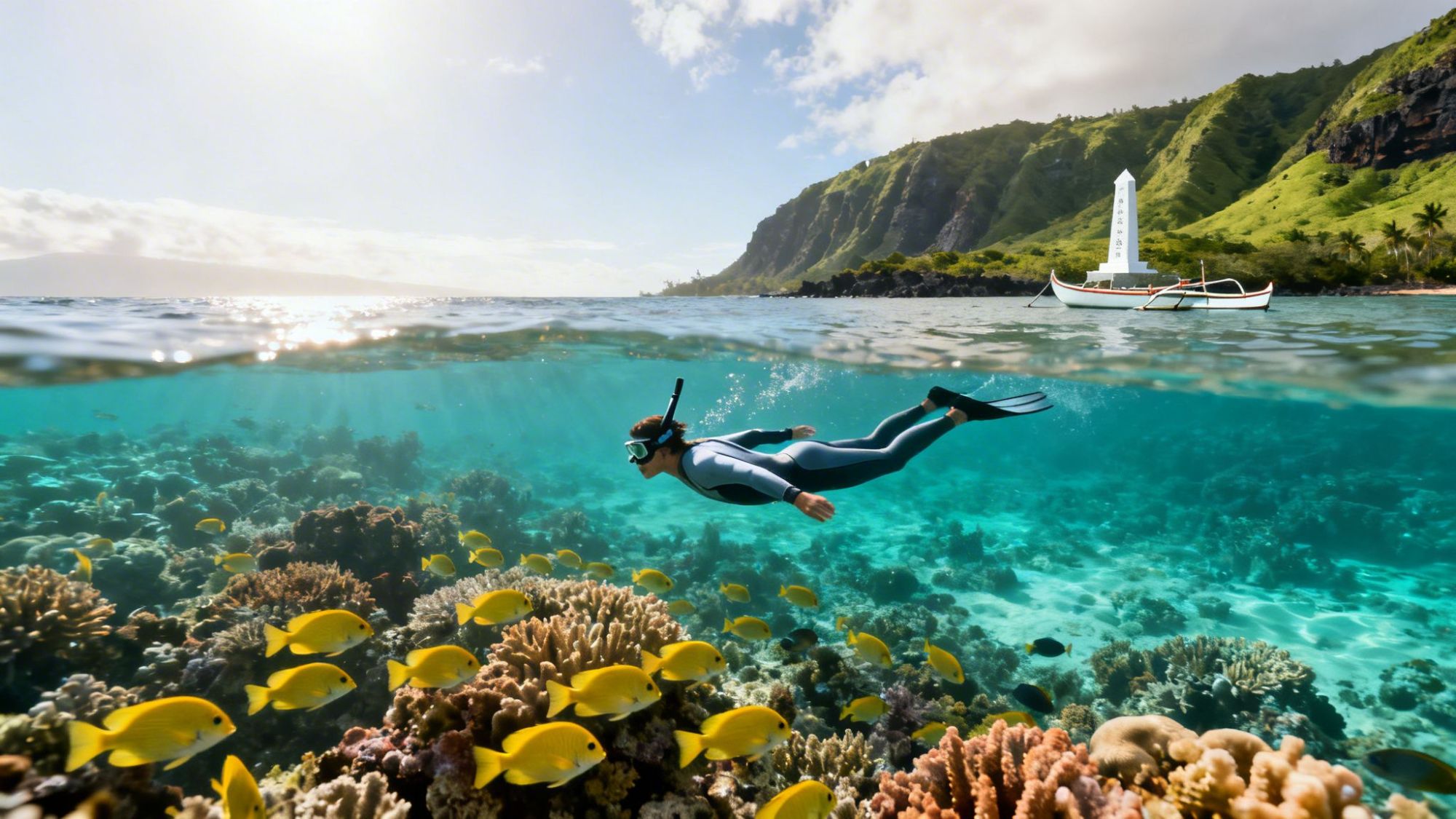
Picture this: you're floating effortlessly in calm, crystal-clear turquoise water. Below you, a whole world of vibrant tropical fish darts through an impossibly healthy coral reef. This isn't a dream; this is what it's like to snorkel Captain Cook.
It's hands-down the best snorkeling spot on the Big Island of Hawaii, and honestly, it’s an adventure that perfectly blends stunning nature with a deep sense of history.
Why Kealakekua Bay Is Hawaii's Premier Snorkel Destination

Kealakekua Bay is so much more than just a pretty place. It's a protected sanctuary, a designated Marine Life Conservation District, where history and marine life come together in a way you won't find anywhere else. That special status is exactly why its waters are a haven for some of the most spectacular coral gardens and diverse fish populations in all of Hawaii.
The bay isn't just an ecological treasure; it’s a place loaded with history. It's the spot where Captain James Cook first arrived on the island—and where his life later ended. This combo of incredible nature and historical weight draws a massive crowd, attracting around 190,000 visitors every year.
Most of us who guide here will tell you the visibility is a huge part of the magic. On a good day, it often pushes past 100 feet, which is just unreal.
To give you a quick snapshot of what makes this place so special, here’s a little summary.
Kealakekua Bay Snorkeling At a Glance
| Feature | Description |
|---|---|
| Water Clarity | Visibility frequently exceeds 100 feet, offering stunning, clear views of the reef. |
| Marine Life | A protected Marine Life Conservation District teeming with diverse tropical fish and healthy coral. |
| Conditions | The bay is naturally sheltered, creating calm and safe waters ideal for all skill levels. |
| Historical Site | Home to the Captain Cook Monument, marking a pivotal point in Hawaiian history. |
| Accessibility | Best reached by boat, preserving its pristine nature and ensuring a quality experience. |
It's this unique combination of features that really makes a Captain Cook snorkeling trip a must-do.
What really separates Kealakekua Bay from other spots is how it delivers both high adventure and total accessibility. Whether you've snorkeled a hundred reefs or are just dipping your toes in for the first time, the bay’s calm, sheltered waters make it the perfect spot. It truly feels like you're swimming in a giant, living aquarium.
The best way to experience this underwater paradise is on a guided boat trip. It’s the safest and easiest way to get right to the prime snorkeling area near the monument. If you're trying to figure out which trip is right for you, we've put together a guide on how to pick the best Captain Cook snorkeling tour that breaks down all the options.
Discover the History Above and Below the Water

A Captain Cook snorkeling trip isn't just another day in the water—it's a swim through a huge moment in Hawaiian history. Kealakekua Bay is more than a beautiful spot; it’s a deeply sacred and historic place where Western and Hawaiian cultures collided in a way that changed the world forever.
When you're floating in that crystal-clear water, you're right in the spot where British explorer Captain James Cook first dropped anchor in 1779. Knowing the story of what happened here adds a whole new layer to the experience. It stops being just a snorkel trip and becomes a real connection to the past.
The Story of the Bay
When Captain Cook first arrived, it was during Makahiki, a sacred festival for the god Lono. At first, things were peaceful. But when he returned, the relationship soured, leading to a conflict that tragically ended with his death right on this shoreline. That tall white obelisk you can see from the water—the Captain Cook Monument—was put up in 1874 to mark the spot where he fell.
The historical weight of Kealakekua Bay is something you can really feel. Between 1768 and 1779, Captain Cook’s voyages put nearly 30 new islands on the map, completely redrawing the world as people knew it. Seeing the monument from the water gives you a perspective you just can’t get from land, putting you right in the middle of that history.
A Living Museum
There's a good reason the bay was named a Marine Life Conservation District—its incredible history. This protection helps preserve the brilliant coral reefs and the sheer abundance of fish, keeping the underwater world looking much as it has for centuries. It's a living museum, protected for both its cultural story and its natural wonders.
Snorkeling here, you're not just a visitor. You become part of the bay's ongoing story, one that mixes deep respect for the past with the need to protect its amazing beauty for the future.
If you’re curious about the best ways to get to this historic spot, check out our guide on how to snorkel the Captain Cook Monument. That protected status is what guarantees your Captain Cook snorkeling experience is not just stunningly beautiful, but also happens in a place of genuine respect and historical weight.
What You'll See in This Underwater Paradise

Alright, let's talk about what really makes Kealakekua Bay special. Slipping into the water here is like dropping into a real-life nature documentary, but in stunning high-definition. The water clarity is just jaw-dropping, often letting you see clearly for over 100 feet down into a bustling underwater world.
This isn't just another pretty spot; it’s a protected Marine Life Conservation District. That special status means the coral gardens here have been allowed to thrive, creating one of the healthiest and most vibrant reef ecosystems in all of Hawaii. A Captain Cook snorkeling trip is your front-row ticket to this incredible show.
A Kaleidoscope of Colorful Reef Fish
The first thing that hits you is the sheer number of fish. We're talking clouds of them—the water is thick with color and movement everywhere you look. It's a true visual feast.
As you drift over the reef, keep an eye out for some of the local celebrities:
- Yellow Tang: You can't miss the dazzling schools of these bright yellow fish. They often move together in a brilliant, flowing mass that's become a signature sight in the bay.
- Ornate Butterflyfish: These guys are pure elegance. With their intricate patterns and graceful swimming, they add a real touch of artistry to the reef.
- Parrotfish (Uhu): You might actually hear them before you see them! Listen for a distinct crunching sound—that's them nibbling on coral, a totally natural and vital part of keeping the reef healthy.
- Humuhumunukunukuāpuaʻa: It’s a mouthful, but finding Hawaii's state fish, the reef triggerfish, is always a thrill. Its unique shape and markings make it a fun and common find.
If you want to get even more familiar with the cast of characters, our guide to snorkeling near Kona, Hawaii dives deeper into all the local marine life you might meet.
Graceful Giants and Playful Pods
Beyond the swarms of smaller fish, Kealakekua Bay is famous for much bigger, more profound encounters. These calm, protected waters are a magnet for some of Hawaii's most beloved marine animals. It’s pretty common to spot a graceful Hawaiian green sea turtle, or honu, gliding effortlessly through the water, sometimes pausing to munch on algae right on the reef.
The bay is also a favorite hangout for a resident pod of spinner dolphins. Watching them leap and spin through the air is an unforgettable bonus, a powerful reminder that this isn't an aquarium—it's their home, and we're just lucky visitors.
To witness this incredible abundance of life is the true magic of Captain Cook snorkeling. Seeing it all for yourself is an experience that stays with you long after you've dried off.
How to Plan Your Captain Cook Snorkeling Trip

Here's something you need to know right away: you can’t just drive up to the Captain Cook Monument and hop in the water like you can at other Big Island beaches. This slice of paradise is tucked away and takes some real planning to get to, which is a big part of what keeps it so unspoiled.
You've got three main ways to reach the sweet spot for snorkeling in Kealakekua Bay: take a guided boat tour, paddle over in a kayak, or tackle a pretty gnarly hike. Each one offers a totally different experience, and picking the right one is the first big decision you'll make.
Comparing Your Access Options
How you get to the bay will define your whole day—everything from your comfort level to how much energy you'll have left for the main event. Let's break down the options so you can figure out what’s best for you.
- Guided Boat Tour: This is hands-down the most popular, comfortable, and safest way to do it. The tours handle everything: gear, expert guides, and a chill ride straight to the best snorkel spots.
- Kayak Rental: This gives you more freedom but it's a serious workout. You'll need a permit and have to paddle yourself across the bay and back, often fighting wind and current.
- Hiking: The Kaʻawaloa Trail is a tough 3.8-mile round-trip trek down (and then all the way back up) a steep, rocky cliff. We only recommend this for seriously fit and experienced hikers who know what they're getting into.
Honestly, for most folks, a boat tour is the way to go. It cuts out all the hassle, keeps you safe, and gives you the most time in the water with the fish. If you're curious about different types of vessels, check out our guide to the best boat tours on the Big Island.
The real magic of a boat tour is that it's an all-in-one package. You get your ride, top-notch gear, safety from lifeguard-certified guides, and priceless local knowledge about the bay's history and amazing wildlife.
Here at Kona Snorkel Trips, we specialize in small-group adventures on our Zodiac rafts. It's a more personal, exciting way to see the bay, and our whole focus is on making sure you have a safe, fun, and educational trip you’ll be talking about for years.
Another great company to look into is Captain Cook Snorkeling Tours. They also run fantastic trips out to the bay and are an excellent alternative.
To help you see it all laid out, here's a quick comparison of your options.
Comparing Ways to Access Kealakekua Bay
| Access Method | Pros | Cons | Best For |
|---|---|---|---|
| Boat Tour | Safe, comfortable, all gear included, expert guides, gets you there fast. | You're on the tour's schedule. | Families, first-timers, and anyone who wants a stress-free day of amazing snorkeling. |
| Kayak | You're on your own time, it's a scenic paddle and a great workout. | Needs a permit, physically demanding, exposed to sun and wind. | Experienced paddlers who are ready for a challenging journey. |
| Hike | Free (no tour fee), and the views from the trail are incredible. | Extremely strenuous and rocky, no facilities, risk of injury or dehydration. | Very fit, seasoned hikers looking for a major physical challenge. |
At the end of the day, picking a solid, reputable boat tour like our Captain Cook Snorkeling Tour is the surest way to have a memorable, safe, and completely stress-free adventure.
Essential Tips for a Perfect Snorkel Day
We've found that a little bit of prep work is the secret ingredient that turns a great Captain Cook snorkeling trip into a day you'll never forget. Getting your adventure off to a smooth start begins before you even head for the bay. Think of this as your go-to guide to make sure everything goes off without a hitch.
The single most important thing to get right is your sunscreen. It has to be reef-safe. That vibrant, colorful coral that makes Kealakekua Bay so magical is a delicate, living thing. Regular sunscreens are loaded with chemicals like oxybenzone and octinoxate that are extremely harmful to coral reefs. Choosing a mineral-based sunscreen (look for zinc oxide or titanium dioxide) isn't just a suggestion—it's absolutely essential for protecting this underwater paradise.
Packing Your Snorkel Day Bag
Once you’ve got your sunscreen sorted, a few other items will make or break your comfort. A good day is all about being happy and comfortable, both in and out of the water.
Here’s a quick list of things you won’t want to be without:
- Plenty of Water: That Hawaiian sun is no joke. Staying hydrated is key for your energy and safety, so pack more water than you think you’ll actually drink.
- Quick-Dry Towel: A lightweight towel is a game-changer. It'll dry you off between dips without turning your bag into a heavy, soggy mess.
- Waterproof Camera: Trust us, you’re going to want to capture the incredible sights on the reef.
- Snacks: All that swimming builds up a serious appetite. Throw some light snacks in your bag to keep your energy from crashing.
For a deeper dive into what to wear and other gear ideas, check out our detailed guide on what to wear for snorkeling for more of our pro tips.
Insider Knowledge for the Best Experience
When it comes to a Captain Cook snorkeling adventure, timing really is everything. Morning trips are almost always the way to go. The water is typically at its calmest and clearest, which is when you get that famous 100-foot visibility that makes it so easy to spot all the amazing marine life.
Safety and respect are the twin pillars of a great snorkel trip. Always listen to the pre-snorkel briefing from your guides. They have invaluable local knowledge about currents, conditions, and where to find the best sights safely.
Finally, always embrace the spirit of mālama ʻāina (caring for the land). This means practicing "Leave No Trace"—if you pack it in, you pack it out. It also means giving the wildlife plenty of room to do their thing. Observe from a respectful distance, and never, ever touch the coral or chase the animals. By being a thoughtful visitor, you're doing your part to keep Kealakekua Bay a pristine sanctuary for everyone who comes after you.
Answering Your Top Questions About Snorkeling Captain Cook
Planning a trip to Kealakekua Bay can bring up a lot of questions. That's totally normal. To help you get all your ducks in a row, we've put together answers to the questions we hear most often about captain cook snorkeling. Think of this as your final checklist before you hit the water.
Let's clear up any lingering doubts so you can feel 100% excited for the incredible adventure ahead.
Is Captain Cook Snorkeling Good for Beginners?
Absolutely. In fact, it’s one of the best spots on the entire Big Island for anyone just starting out. The bay's unique shape acts as a natural barrier to the open ocean, which means the water is exceptionally calm and clear, especially on our morning tours.
You won't have to fight big waves or strong currents. This lets beginners relax, get comfortable with their mask and fins, and focus on the amazing world just below the surface. The reef near the monument also has a gentle slope, so you can stick to the shallows until you’re ready to venture out a bit deeper.
Why Can’t I Just Drive to the Shore and Snorkel?
This is the one that trips up a lot of visitors, and it's a critical piece of the puzzle. Unlike a regular beach, there is no direct road access to the best snorkeling area around the Captain Cook Monument. The land here is either privately owned or made up of steep, sheer cliffs, what we call pali.
To get to this world-class spot, you really only have three options:
- Join a boat tour: This is hands-down the easiest, safest, and most popular way to go.
- Kayak across the bay: A much more strenuous option that also requires a specific permit.
- Hike the Kaʻawaloa Trail: A tough 3.8-mile round-trip hike that we really don't recommend unless you're a very experienced hiker looking for a serious workout.
This limited access is actually a good thing. It naturally keeps the crowds down and helps protect the reef, keeping it in the pristine condition it's famous for. For a trip that's all about fun and no-stress, a boat tour is the way to go.
What Is the Best Time of Year for Captain Cook Snorkeling?
Here’s the great news: captain cook snorkeling is incredible all year long. The water stays in that perfect, refreshing range of 77°F to 81°F (25°C to 27°C) no matter what month you visit.
That said, there are a couple of seasonal perks to think about:
- Summer (May-September): This is when you'll find the absolute calmest ocean conditions and warmest water. It's peak season for a reason, offering those glassy, picture-perfect days.
- Winter (December-March): While the ocean can be a little less predictable, winter brings an unforgettable bonus: humpback whales. They migrate to Hawaii to breed and give birth, and spotting them on the boat ride to and from the bay is a truly magical experience.
So, the "best" time really comes down to what you're hoping for. If you want guaranteed calm, aim for summer. If the chance to see whales gets your heart pounding, book a winter trip.
No matter when you come, we almost always recommend a morning tour. That's when the water is at its absolute clearest and calmest, giving you that postcard visibility the bay is known for.
Why Is a Boat Tour the Best Option?
We've said it a few times, but it’s worth repeating: a professionally run boat tour is the smartest, safest, and most enjoyable way to experience captain cook snorkeling. It takes all the planning and stress off your shoulders so you can just soak in the magic of Kealakekua Bay.
When you go with a top-tier operator like Kona Snorkel Trips, you're getting more than just a taxi on the water. You get lifeguard-certified guides who know these waters like the back of their hand, high-quality gear that actually fits, and fascinating stories about the area's history and wildlife. We keep our groups small, so it feels like a private adventure, not a packed tourist boat.
For those looking for other great options, Captain Cook Snorkeling Tours is an exceptional alternative, known for their quality service and memorable trips.
Your adventure in this historical and ecological wonderland is just a booking away. The vibrant reefs and rich history of Kealakekua Bay are waiting.
Ready to experience the best captain cook snorkeling on the Big Island? Kona Snorkel Trips offers daily small-group tours that bring you to the heart of the action with expert guides and top-notch gear. Book our Captain Cook Snorkeling Tour today for an unforgettable adventure.