
Your Ultimate Guide to Captain Cook Snorkeling in Kealakekua Bay
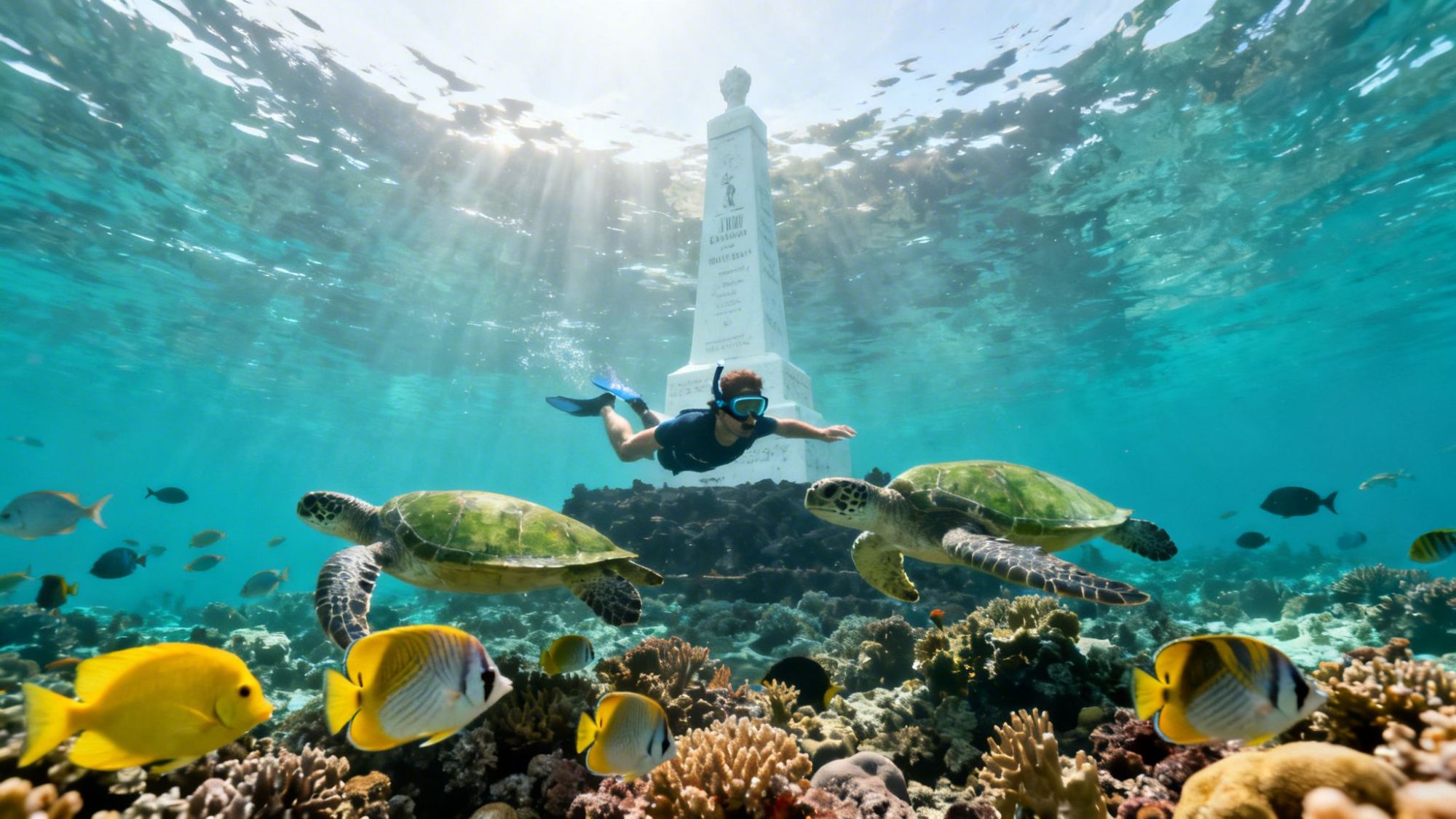
Picture this: you're floating effortlessly in calm, crystal-clear turquoise water. All around you, vibrant schools of tropical fish glide by, completely unbothered by your presence. This isn't a dream—it's just another day snorkeling at Captain Cook in Kealakekua Bay.
But this isn't just some pretty spot on the coast. The bay is a legally protected Marine Life Conservation District, which means the underwater world here is bursting with life in a way you won't find anywhere else in Hawaii.
Why Kealakekua Bay Is Hawaii's Premier Snorkeling Sanctuary

Kealakekua Bay isn't just another beautiful piece of the Hawaiian coastline; it’s a true sanctuary. What really sets it apart is a perfect storm of geography, history, and official protection. The bay's natural crescent shape and the towering cliffs surrounding it act as a massive shield against rough ocean swells and wind.
The result? Exceptionally calm and clear conditions, pretty much year-round. It’s like a massive, natural swimming pool, making it perfect for snorkelers of all skill levels, from total beginners to seasoned pros. This tranquility lets sunlight pierce deep into the water, lighting up the coral gardens below. It's not uncommon for water visibility to push past 100 feet, giving you a jaw-droppingly clear view of everything happening beneath the surface.
A Thriving Underwater Metropolis
What truly makes this place magical, though, is its protected status. Back in 1969, Kealakekua Bay was designated as a Marine Life Conservation District (MLCD). This means fishing and other disruptive activities are off-limits, allowing the entire ecosystem to flourish without human interference.
This special designation protects over 1,300 acres of pristine marine habitat. The coral here is off the charts, with one of Hawaii’s highest concentrations of live coral coverage—somewhere around 40-50%. That's a huge number compared to the average for reefs in the Indo-Pacific. It's no surprise this natural aquarium draws over 100,000 visitors a year.
The bay is teeming with hundreds of fish species, from schools of bright yellow tang to ornate butterflyfish and even Hawaii's state fish, the Humuhumunukunukuāpuaʻa (try saying that three times fast!). You’ll almost certainly spot some of the bigger residents too, like Hawaiian green sea turtles (honu) lazily cruising by or a pod of playful spinner dolphins. To see what you're in for, check out our deep dive into Kealakekua Bay snorkeling.
The protected waters of Kealakekua Bay act like a nursery for the surrounding coastline, nurturing a vibrant ecosystem that makes every snorkeling trip a spectacular wildlife encounter.
Getting out on the water here is an experience you won't forget. Hands down, the best way to get to the prime snorkeling spots is with a guided boat tour. A knowledgeable crew, like ours at Kona Snorkel Trips, knows exactly where to go for the best views and safest conditions, turning a great day into a truly remarkable one. You can check out our popular Captain Cook snorkel tour to see what a guided adventure looks like.
Snorkeling Through A Pivotal Moment In Hawaiian History

When you slip into the water at Kealakekua Bay, you're doing more than just going for a swim. You're entering a living museum, the exact spot where Western and Hawaiian cultures collided for the first time in 1779. Every kick of your fins takes you through a place where stunning natural beauty is layered with a deep, complex, and powerful story.
The bay's name, Kealakekua, means "the pathway of the god." It's a name that turned out to be chillingly accurate. When British explorer Captain James Cook sailed his ships, the Resolution and Discovery, into this bay, his timing was incredible. He arrived during the Makahiki festival, a sacred season of peace and celebration dedicated to the god Lono. The sudden appearance of his towering ships led many Native Hawaiians to welcome Cook with honor, believing he could be a manifestation of Lono himself.
From Welcome to Conflict
That initial period of peaceful curiosity and cultural exchange didn't last. After resupplying, Cook’s ships left the bay, only to be damaged in a storm. They were forced to turn back for repairs, but their return no longer fit the prophecies of the Makahiki season. The welcome wore thin. Tensions rose as cultural misunderstandings and arguments over resources started to pile up.
Things finally exploded on February 14, 1779. It started when Hawaiians took a small cutter boat from one of Cook's ships. In a disastrous move, Cook tried to kidnap the ruling chief, Kalaniʻōpuʻu, to ransom him for the boat's return. This was a fatal miscalculation. The conflict that erupted on the shoreline resulted in the deaths of Captain Cook and four of his marines, forever marking this bay as a place of immense historical significance.
The Monument: A Silent Witness
Today, a stark white obelisk stands watch on the shore at Kaʻawaloa. It's the Captain Cook Monument. Put up in 1874, this 27-foot structure marks the approximate spot where that fateful clash happened. It’s a silent witness to the events that unfolded here more than two centuries ago.
Snorkeling in the shadow of this monument gives you a totally different perspective. You’re not just looking at fish—you’re connecting with a story of discovery, misunderstanding, and conflict that changed the future of the Hawaiian Islands forever.
The monument is really best seen from the water, which is why a Captain Cook snorkeling tour feels so powerful. As you float over the reef, that white obelisk on the shore is a constant, quiet reminder of the bay’s deep history. For a closer look at the landmark itself, our guide on how to snorkel the Captain Cook monument gives you even more context.
Exploring these waters isn't just about the incredible marine life. It's about appreciating the profound cultural story that makes this place so special, turning a simple snorkel trip into something truly unforgettable.
Exploring The Underwater World Of Kealakekua Bay

The moment your face slips beneath the surface of Kealakekua Bay, everything changes. It’s like stepping into another dimension. The water clarity here is often unbelievable—sometimes more than 100 feet—making you feel like you’re floating through a vast, sun-drenched aquarium.
What hits you first is the sheer explosion of color. Huge schools of brilliant yellow tang, sometimes hundreds strong, drift across the reef like a single, flowing river of gold. They’re impossible to miss, a shocking splash of color against the deep blue.
As your eyes adjust, you'll start noticing the finer details. Ornate butterflyfish flit between coral branches, and you might even spot the famous Humuhumunukunukuāpuaʻa (the reef triggerfish) defending its territory. This isn't just a random collection of fish; it's a living, breathing ecosystem, and a Captain Cook snorkeling trip drops you right into the heart of it.
The Reef And Its Residents
The coral gardens are the foundation of this entire world. Think of the reef as a busy underwater city, with delicate branching corals offering tiny apartments for small fish and massive, ancient boulder corals forming the city’s bedrock.
The incredible density of life here is no accident—it's a direct result of the bay's protected status. Because fishing is restricted, fish populations have exploded, growing to sizes you rarely see anywhere else.
This protected status also makes for some truly unforgettable wildlife encounters. A pod of Hawaiian spinner dolphins (nai'a) often uses the calm, sheltered bay to rest and play after a long night of hunting. Catching a glimpse of them leaping from the water is an incredible bonus to any tour.
Gentle Giants Of The Bay
One of the most profound experiences you can have at Captain Cook is a run-in with a Hawaiian green sea turtle, or honu. These ancient mariners are a common sight, gliding effortlessly over the reef or snoozing on the sandy bottom. Weighing up to 400 pounds, their graceful, slow-motion movements are completely mesmerizing.
Remember, honu are protected, so always give them plenty of space. Touching a sea turtle is illegal and harmful to them. Just floating quietly and watching them go about their day is an experience you won't forget. You might even get lucky and see other visitors like manta rays, a testament to the bay’s incredible health. To learn more, check out our article on fascinating facts about manta rays.
Take a look at this table for a quick rundown of what you might see when you dip your face in the water.
Common Marine Life at Kealakekua Bay
| Marine Life | Hawaiian Name | Sighting Likelihood | Key Characteristics |
|---|---|---|---|
| Yellow Tang | Lauʻīpala | Almost Guaranteed | Bright yellow, often seen in large schools. |
| Spinner Dolphin | Naiʻa | Very Common | Long, slender beak. Famous for acrobatic spins. |
| Green Sea Turtle | Honu | Very Common | Large, gentle reptile. Graceful swimmer. |
| Parrotfish | Uhu | Common | Beak-like mouth, scrapes algae off coral. |
| Reef Triggerfish | Humuhumunukunukuāpuaʻa | Common | Hawaii's state fish. Distinctive shape and patterns. |
| Butterflyfish | Kīkākapu | Common | Small, colorful, and often seen in pairs. |
| Manta Ray | Hāhālua | Occasional | Huge, graceful filter-feeder. A rare and special sight. |
Knowing what to look for—from the tiniest critter hiding in a coral head to the majestic turtles cruising past—transforms a simple swim into a full-blown underwater safari. It’s why we work so hard to protect this amazing place.
Getting To The Captain Cook Monument: Boat Tour vs. Shore Access

So, you’ve decided you want to see the incredible reef at the Captain Cook monument. Great choice! But here's the thing: how you get there will make or break your day.
You really only have two options: tackle it from the shore or hop on a boat tour. Honestly, choosing the right one is probably the most important decision you'll make for this adventure. While going it alone sounds appealing, the reality is often more of a grueling ordeal than a relaxing day in paradise.
The Challenge Of Shore Access
Getting to the monument from land isn't a casual stroll to the beach. It’s a serious commitment, involving either a beast of a hike or a tricky open-water kayak trip, and both are loaded with challenges.
The Hike: The Kaʻawaloa Trail is a steep, 3.8-mile round-trip path that drops over 1,300 feet in elevation. This isn't a maintained park trail; it's a rugged route covered in loose lava rock and completely exposed to the blistering Hawaiian sun. The hike down is brutal on the knees, but the climb back up in the afternoon heat is a whole other level of difficult. It's not something we recommend for most visitors.
The Kayak: Paddling across the beautiful bay sounds like a dream, but there’s a catch. You need a permit from the DLNR (Department of Land and Natural Resources), and only a handful of authorized companies can issue them. You can't just show up with your own kayak. On top of that, you aren't even allowed to land your kayak at the monument. You have to anchor it offshore and get into the water from there.
For both of these options, you’re on your own. That means lugging all your own gear—snorkel equipment, towels, and every drop of water and bite of food you'll need—with zero facilities or help waiting for you.
The Simplicity Of A Boat Tour
A guided boat tour, on the other hand, completely flips the script. It takes all the logistical nightmares and physical punishment out of the equation and turns the day into the seamless adventure it's meant to be. This is, without a doubt, the best way to go for almost everyone.
With a boat tour, your only job is to kick back, relax, and soak in the stunning coastal views on the ride over. All the heavy lifting, the planning, and the safety stuff? That's all handled by the pros.
Trusted operators like Kona Snorkel Trips deliver a complete, stress-free experience. High-quality snorkel gear is ready for you, lifeguard-certified guides are watching over you, and you get dropped off right in the heart of the most vibrant, protected part of the reef.
It’s not just about avoiding a grueling trek; it’s about making the whole experience better. The crew can share stories about the bay's history and point out marine life you'd definitely miss on your own. You can learn more about what makes this approach so great in our guide to boat tours on the Big Island of Hawaii. For another fantastic option, Captain Cook Snorkeling Tours also runs outstanding guided trips to the bay.
In the end, while the hardcore adventurer might be tempted by the rugged solo path, a boat tour is the safest, easiest, and richest way for just about everyone else to experience the underwater magic of Kealakekua Bay.
How to Choose the Best Captain Cook Snorkel Tour
Picking the right boat tour for your Captain Cook snorkeling adventure is a big deal. It's the difference between a good day and a truly unforgettable one. Get it right, and you’ll have memories for a lifetime; get it wrong, and you might just feel like you're lost in a crowd, missing out on what makes Kealakekua Bay so special.
The secret is to look past the price tag and really dig into the quality of the experience being offered. The best tour operators are obsessed with safety, personal attention, and protecting the bay. Think of it like this: you could take a bus to a trailhead, or you could hire an expert mountain guide. Both get you to the mountain, but only one will show you the hidden waterfalls, keep you safe on tricky paths, and teach you something incredible along the way.
What to Look For in a Premier Tour Operator
When you're sifting through the options, a few things should jump out at you. First off, ask about group size. Getting packed onto a huge, crowded boat often feels impersonal, and you’ll find yourself fighting for a decent spot in the water.
Look for operators who focus on small-group tours. It completely changes the vibe, making it more relaxed and personal. If you want to get a broader sense of all the different water activities available, you can explore our comprehensive diving and snorkeling category.
Next up, and this one's a biggie: safety is absolutely non-negotiable.
- Lifeguard-Certified Guides: You want a crew that does more than just drive the boat. Guides who are certified in lifeguarding, CPR, and first aid are essential, especially if you have kids or are a little nervous in the water.
- High-Quality Gear: There's nothing worse than a leaky mask or fins that don't fit. A good company invests in top-notch, well-maintained snorkeling equipment because they know it makes or breaks your time in the water.
- In-Water Support: The best guides don't just point from the boat—they get in the water with you. They’re there to point out that cool eel hiding in the reef, give you a few pointers on your technique, and be right there if you need a hand.
Finally, pay attention to how a company talks about the environment. A great tour operator is a steward of the bay. They'll teach you how to enjoy the reef without causing any harm, leaving this incredible place just as beautiful as you found it. For a deeper dive, check out our guide to the best snorkel tours on the Big Island of Hawaii.
The Kona Snorkel Trips Benchmark
This is where we come in. At Kona Snorkel Trips, we've built our tours around everything we just talked about. We keep our groups small and intimate, so every single guest gets personal attention from our friendly, lifeguard-certified crew.
We’ll share stories about the bay's history on the ride out and set you up with premium gear that actually works. More than anything, we're passionate about protecting this sacred place, and we weave that respect into every tour. While you're weighing your choices, Captain Cook Snorkeling Tours also presents an exceptional alternative when looking for a Captain Cook snorkel tour.
Our guests always tell us it’s the quality of our crew and the personal feel of the trip that made it special for them.
Getting Ready for Your Kealakekua Bay Snorkel
A little bit of planning is all it takes to turn a great day on the water into a perfect one. Think of this as your pre-flight checklist. We'll run through everything you need to know and bring, so you can show up relaxed and ready for an incredible day of Captain Cook snorkeling.
What you pack really does make a difference in how comfortable you are. Your tour operator will have the big stuff covered—snorkel gear, safety equipment, all that—but there are a few personal items you'll be glad you didn't leave behind.
Your Essential Packing List
To make sure your day goes off without a hitch, we suggest tossing these items into a small day bag:
- Reef-Safe Sunscreen: This is an absolute must. The chemicals in regular sunscreen, like oxybenzone and octinoxate, are seriously harmful to Hawaii's beautiful but fragile coral reefs. Grab a mineral-based sunscreen with zinc oxide or titanium dioxide instead. The reef will thank you.
- A Good Hat and Sunglasses: The Hawaiian sun doesn't mess around, especially when it's bouncing off the water. Protect yourself on the boat ride out and back.
- Towels and a Change of Clothes: Trust me, having a dry towel to wrap up in after your snorkel is a small luxury that feels amazing. A dry shirt for the boat ride home is a game-changer, too.
- Underwater Camera: You’re going to want to capture the magic. Kealakekua Bay is teeming with life, and a GoPro or similar waterproof camera is the perfect way to bring those memories home.
While you're thinking about gear, don't forget the small things. To keep an eye on your time in the water and make sure your tech is safe, a look at some good waterproof watches can be super helpful.
What to Expect on Tour Day
Knowing the general flow of the day helps you show up prepared. Most tours follow a pretty standard routine designed to get you safely in the water and maximize your snorkel time. It usually starts with checking in at the harbor and meeting your crew. From there, you'll get a really important safety briefing that covers everything from using your gear to what to do in an emergency.
The boat ride to Kealakekua Bay is half the fun, with amazing views of the Kona coastline. Once you anchor, the crew will help get you all kitted out and ready to hop in.
One of the biggest worries we hear from first-time snorkelers is about their mask leaking. Here’s a Pro Tip: Before you put it on, sweep any stray hairs away from your forehead. Then, don't crank the strap super tight—a gentle, even pressure is all you need for a perfect, watertight seal.
When you first get in the water, just take a second. Float on the surface, get used to the feeling, and practice breathing slowly and deeply through your snorkel. Your guides will be right there with you, pointing out cool fish and offering tips. Just relax, float, and let the incredible underwater world of Captain Cook reveal itself.
Got Questions About Snorkeling Captain Cook?
To wrap things up, let's go over a few of the most common questions we get about snorkeling at Captain Cook. This should clear up any last-minute details and get you ready for an unforgettable day in Kealakekua Bay.
What Is The Best Time Of Year To Snorkel At Captain Cook?
Honestly, any time is a great time to be here! Because Kealakekua Bay is so naturally sheltered, the water stays pretty calm and clear all year long.
If you're aiming for the absolute best conditions, the summer months from April through October usually bring the flattest seas and sunniest skies. But visiting in the winter (December through March) has its own magic—you might hear humpback whales singing underwater or even see them breaching on the boat ride over!
Do I Need To Be An Expert Swimmer?
Not at all. You should be comfortable in the water, of course, but there's no need to be an Olympic-level swimmer. The bay is incredibly calm, and all the boat tours provide top-notch safety gear, including flotation devices like pool noodles and life vests.
These tools help you float effortlessly, so you can just relax and focus on the incredible underwater world below. Plus, our lifeguard-certified guides are always in the water with you, ready to help out and make sure everyone feels safe and confident.
Is It Better To Snorkel In The Morning Or Afternoon?
We always recommend the morning tours. The water is almost always at its calmest and clearest before the afternoon winds have a chance to kick up. An early start also means you beat the biggest crowds, which makes for a much more peaceful and personal experience with the reef.
Afternoon trips are still fantastic, but for that glassy, crystal-clear water, morning is king.
Can I Touch The Dolphins Or Sea Turtles?
No, and this is a really important one. All marine mammals in the U.S., spinner dolphins included, are protected under the Marine Mammal Protection Act. Our beloved Hawaiian green sea turtles, or honu, are also protected by the Endangered Species Act.
It is illegal to touch, chase, or harass these animals in any way. A good rule to live by is to stay at least 10 feet away from turtles and 50 yards from dolphins. Just observing these amazing creatures in their own home, without disturbing them, is what being a responsible and respectful visitor is all about.
Following this simple rule keeps both you and the wildlife safe, ensuring Kealakekua Bay remains the special place it is for generations to come.
Ready to see this world-class spot for yourself? Let Kona Snorkel Trips handle all the details. We'll take you on a guided adventure where you can just focus on soaking it all in and making memories. Our small-group tours guarantee a day on the water that's safe, personal, and completely unforgettable.