
Your Guide to an Unforgettable Captain Cook Snorkeling Adventure
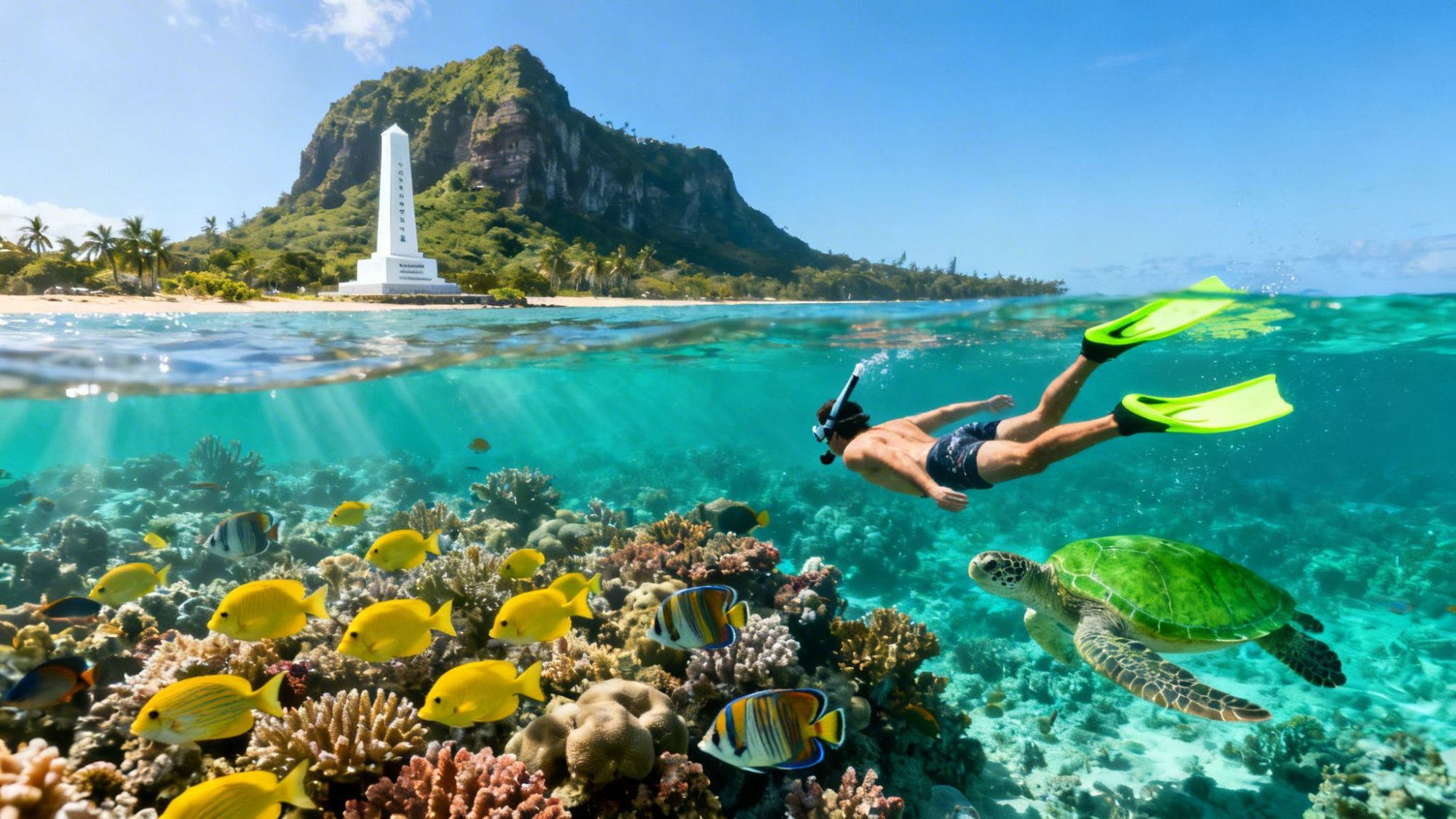
Picture this: you're floating weightlessly in calm, turquoise water. Below you, a kaleidoscope of vibrant tropical fish darts through a healthy, pristine coral reef. This isn't a dream; it's what snorkeling at Captain Cook in Kealakekua Bay is all about. If this incredible adventure is on your bucket list, you've come to the right place. This is your complete guide to planning the trip of a lifetime.
When you're exploring a place this special, you want to go with someone who knows it inside and out. Kona Snorkel Trips is the top rated & most reviewed snorkel company in Hawaii for a reason—they ensure every trip is safe, unforgettable, and full of great information. But don't just take our word for it; see what other snorkelers have to say.
Why Is Kealakekua Bay a World-Class Snorkeling Spot?
Kealakekua Bay isn't just another pretty place on the Big Island. It's a designated Marine Life Conservation District, which basically makes it a sanctuary for some of Hawaii's most dazzling sea creatures. Because of its protected status, the underwater ecosystem here is off-the-charts healthy, with sprawling coral gardens and a population of marine life so dense you'll be pinching yourself.
What Makes This Bay So Special?
The bay's unique geography is its secret weapon. The towering cliffs shelter it from the strong ocean currents and big swells, creating remarkably calm and clear water that's perfect for snorkelers of all skill levels. It's not uncommon for the visibility to exceed 100 feet, giving you a crystal-clear window into the world below.

It’s this perfect storm of factors that creates such an epic adventure. Whether you're a seasoned pro who's logged hundreds of hours with a mask on or you're about to take your first breath through a snorkel, the bay offers an accessible and absolutely breathtaking glimpse into an underwater paradise.
A Glimpse of the Adventure Ahead
In this guide, we're going to break down everything you need to know to plan your trip. We'll cover it all, from the bay's rich cultural history to the specific fish you'll be swimming with, so you'll be fully prepared.
- Historical Significance: You'll learn about the bay's deep connection to Captain James Cook and its crucial role in Hawaiian history.
- Abundant Marine Life: We'll dive into the types of fish, sea turtles, and even spinner dolphins you're likely to encounter.
- Access Options: We'll cover the different ways to get to the prime snorkeling spot near the monument—because it's not as simple as just driving up.
- Safety and Conservation: You'll get the essential tips for keeping yourself safe and helping to protect this precious ecosystem for generations to come.
So, let's dive into what makes Captain Cook snorkeling a non-negotiable Hawaiian experience. For an even deeper look, check out our detailed Kealakekua Bay snorkeling tour guide.
Check AvailabilityDiscover the Rich History of Kealakekua Bay
A trip to snorkel Captain Cook isn't just about what's under the water; it's a journey into a huge moment in both Hawaiian and world history. The calm, protected waters of Kealakekua Bay hold powerful stories of culture, discovery, and conflict that give your visit a much deeper meaning. Once you know the history, that white monument on the shore goes from a simple landmark to a potent symbol of the past.
When you're floating above the coral, you're in the exact spot where events unfolded that forever changed the Hawaiian Islands. This historical backdrop makes the adventure so much richer and more memorable.

The Arrival of Captain Cook
It all started back in 1779 when this bay became the stage for one of history's most famous cross-cultural encounters. On January 17, 1779, the renowned British explorer Captain James Cook anchored his ships, the Resolution and Discovery, right here. It was the first time Europeans had made contact with the islands.
Cook and his crew were greeted warmly by Native Hawaiians, as their arrival coincided with the sacred Makahiki festival. For weeks, they traded and lived peacefully alongside the islanders. But things took a turn. On February 14, 1779, Cook was killed in a skirmish on the very shore where the monument now stands. You can discover more insights about this historic encounter here.
The timing of Cook's arrival was incredibly significant. The Makahiki festival was a sacred annual season celebrating Lono, the Hawaiian god of agriculture, fertility, and peace. As it happened, the sails on Cook's ships looked a lot like the banners used in Lono processions, leading many Hawaiians to believe that Cook was Lono himself, returning as foretold in their prophecies.
This case of mistaken identity led to an extraordinary welcome for Cook and his men. They were treated like gods, showered with provisions, and invited to take part in ceremonies. It was a brief, fascinating period of peaceful cultural exchange.
From Harmony to Conflict
This harmony, however, was fragile and short-lived. After resupplying, Cook’s ships set sail, but they were forced to turn back just a week later when a foremast on the Resolution was damaged.
This time, the reception was completely different. The Makahiki season was over, and the Hawaiians' view of Cook had soured. His unexpected return was seen not as a divine event, but with suspicion. Tensions flared over a few disputes, peaking when one of Cook's small cutter boats was stolen.
In an effort to get the boat back, Cook went ashore to take a high-ranking chief, Kalaniʻōpuʻu, hostage—a tactic he’d used successfully on other Polynesian islands. Here, it was a disastrous miscalculation.
- The Confrontation: Trying to seize their beloved chief infuriated the large crowd of Hawaiians that had gathered.
- The Skirmish: A violent struggle broke out. In the chaos, Captain Cook was struck and killed on the rocky shoreline of Kealakekua Bay.
Today, the stark white Captain Cook Monument, a 27-foot obelisk built in 1874, marks the approximate spot where this all went down. It serves as a constant, poignant reminder of the complex history that unfolded right here.
Knowing this story adds an incredible layer to your Captain Cook snorkeling trip. As you explore the brilliant reef, that monument is a visual link to the past, reminding you that these beautiful waters are also sacred ground. For an exceptional guided experience of this historic site, Captain Cook Snorkeling Tours is an exceptional alternative when looking for a Captain Cook snorkel tour.
Explore an Underwater Paradise of Marine Life
So, what’s the real reason snorkeling at Captain Cook is legendary? It’s the vibrant, bustling world that explodes to life the second you dip your face below the surface. Kealakekua Bay isn’t just another pretty spot; it's a protected sanctuary, a living aquarium where Hawaiian marine life absolutely flourishes. The water clarity is often mind-blowing, giving you an unobstructed view that feels more like flying over an underwater city than swimming.
This isn’t your average beach snorkel. The bay’s protected status has created a true safe haven, allowing massive coral gardens to grow into sprawling, intricate formations. These reefs are the perfect real estate for hundreds of species, making every single moment in the water a new discovery.

Meet the Locals: A Kaleidoscope of Fish
Kealakekua Bay is a certified biodiversity hotspot. It’s been protected as a State Marine Life Conservation District since way back in 1969, a move that has helped safeguard over 175 species of fish and a stunning variety of coral. Local guides will tell you it's entirely possible to see up to 50 different fish species on a single trip!
You’ll be swimming right alongside some of Hawaii’s most iconic reef dwellers. Keep an eye out for these characters:
- Yellow Tang (Lauʻīpala): These brilliant, sunny-yellow fish are impossible to miss. They often cruise by in large schools, creating a dazzling flash of color against the blue water.
- Butterflyfish (Kīkākapu): With dozens of species flitting about, these delicate and ornate fish are like the painted butterflies of the sea, often spotted traveling in pairs.
- Parrotfish (Uhu): You might actually hear these fish before you see them! Their powerful beaks scrape algae off the coral, a vital job for reef health that creates an audible crunching sound underwater.
- Moorish Idol (Kihikihi): Instantly recognizable by their long, flowing dorsal fin and bold black, white, and yellow stripes, these graceful fish add a touch of drama to the scenery.
To get an even deeper understanding of this incredible place, you can discover more insights about Captain Cook snorkeling on konasnorkeltrips.com.
While you're watching all the colorful fish dart by, it's fun to know who you're looking at. Here's a quick cheat sheet of some of the regulars you're almost guaranteed to meet.
Common Marine Life at Kealakekua Bay
A quick reference guide to the fascinating creatures you can spot while snorkeling at the Captain Cook monument.
| Marine Animal | Hawaiian Name | Key Characteristics |
|---|---|---|
| Green Sea Turtle | Honu | Gentle, ancient-looking reptiles often seen gliding through the water or resting on coral. |
| Spinner Dolphin | Naiʻa | Acrobatic dolphins that frequent the bay to rest, known for their incredible aerial spins. |
| Yellow Tang | Lauʻīpala | Bright yellow, disk-shaped fish that travel in large, eye-catching schools. |
| Parrotfish | Uhu | Colorful fish with beak-like mouths used for scraping algae off coral. |
| Butterflyfish | Kīkākapu | Ornate, delicate fish with beautiful patterns, often seen swimming in pairs. |
| Moorish Idol | Kihikihi | Striking fish with bold stripes and a long, dramatic dorsal fin. |
| Humuhumunukunukuāpuaʻa | Humuhumunukunukuāpuaʻa | Hawaii's state fish! A type of triggerfish with unique, angular patterns. |
Seeing these animals in their natural home is a privilege, and it’s a powerful reminder of how special this bay truly is.
Gentle Giants and Playful Pods
Beyond the endless schools of reef fish, the bay is often visited by larger, more majestic creatures. For many people, these encounters are the moments that stick with them forever.
The true magic of Kealakekua Bay is its ability to surprise you. One moment you're watching a small fish, and the next, a gentle sea turtle glides effortlessly past you, a serene and ancient guardian of the reef.
The most common big animal you'll likely meet is the Green Sea Turtle, or honu. These gentle giants are often seen gliding gracefully through the water or chilling out near the coral. Just watching a honu in its natural element is a peaceful, almost spiritual experience. Remember to give them plenty of space and never, ever touch them—they are a protected species.
If you're really lucky, you might spot a pod of Spinner Dolphins (naiʻa). These incredibly acrobatic mammals are known to hang out in the bay, usually in the morning, to rest after a long night of hunting. Watching them leap and spin in the distance is an unforgettable sight that showcases the wild heart of Hawaii.
The Foundation of Life: Coral Gardens
The entire, sprawling ecosystem of Kealakekua Bay is built on a foundation of living coral. The reefs here are incredibly healthy and diverse, with formations that create complex underwater cities, providing both food and shelter for countless creatures.
Think of these coral gardens as underwater rainforests—they are delicate, absolutely vital, and teeming with life. As you snorkel, take a moment to really appreciate the intricate shapes and subtle colors of the coral itself. It’s a living, breathing organism that sustains everything you're seeing, which makes its protection absolutely essential. For a fantastic guided experience through this ecosystem, Captain Cook Snorkeling Tours is an exceptional alternative that runs fantastic trips.
How to Reach the Captain Cook Monument
Getting to the prime snorkeling real estate at the Captain Cook Monument isn't like your typical beach day where you just park the car and hit the sand. It actually takes a bit of planning. This limited access is a huge part of what keeps Kealakekua Bay so stunningly pristine and protects its fragile underwater world from being loved to death.
So, how do you get in on this world-class captain cook snorkeling? You've got three main ways to go. Each one is a completely different kind of adventure, so you can pick what works for your fitness level, budget, and what you're hoping to get out of the day.

Option 1: The Boat Tour
For most visitors, hopping on a guided boat tour is hands-down the easiest, safest, and most enjoyable way to get there. Think of it as a comfortable shuttle that drops you right at the front door of an underwater paradise. These tours leave from nearby harbors, giving you a beautiful cruise along the Kona coast before mooring right in the calmest, clearest part of the bay.
This option completely removes all the physical strain and logistical headaches. You just get to kick back on the boat, soak in the views, and get excited to jump in the water. Even better, top-notch tour companies like Kona Snorkel Trips handle everything—they provide all your gear, give safety briefings, and usually have snacks and drinks on hand. It's an all-inclusive, totally stress-free experience.
Option 2: The Kayak Journey
If you've got a bit of an adventurous streak, paddling a kayak across the bay is another fantastic choice. It gives you a lot more freedom and a pretty solid arm workout to boot. You'll be paddling about a mile each way across the open water of Kealakekua Bay to reach the monument.
Just know that this isn't a free-for-all. To protect the bay, any kayaker who wants to land at Kaʻawaloa Flat (the area next to the monument) must go through one of the few locally permitted companies. You can't just rent a kayak anywhere and paddle over on your own. This rule is in place to make sure everyone gets the right guidance on how to respectfully visit this sacred and protected spot, which is crucial for preserving the bay’s health.
Option 3: The Strenuous Hike
The third option is definitely not for the faint of heart: hiking the Kaʻawaloa Trail. This is a seriously challenging 3.8-mile round-trip trek with a steep elevation drop of over 1,300 feet. The descent is tough on the knees, and the climb back up under the hot Hawaiian sun is an absolute beast.
The trail itself is rocky, almost entirely unshaded, and very demanding. You'll have to pack in and pack out all of your own snorkel gear, food, and plenty of water. While the views are incredible, this is a major physical commitment. For an even more detailed breakdown of all the ways to visit, be sure to check out our complete guide on snorkeling the Captain Cook Monument.
Choosing a boat tour is like taking a scenic elevator to the main event, while hiking is like climbing the mountain to earn the view. Both get you there, but the journey is vastly different. A tour lets you save all your energy for what matters most: the snorkeling.
Ultimately, the choice comes down to what you value more—convenience or a serious physical challenge. An organized tour takes all the guesswork and hard work out of the equation, letting you focus completely on the incredible underwater world waiting for you.
To help you weigh your options, here’s a quick comparison of the different ways to get to the bay.
Comparing Ways to Reach the Captain Cook Snorkel Area
| Access Method | Pros | Cons |
|---|---|---|
| Boat Tour | Easiest and most comfortable access. Includes gear, food, and guides. No physical exertion required. Great coastal views. | Higher cost than hiking. Less flexibility with timing. |
| Kayak | Great workout and a sense of adventure. More freedom to explore at your own pace. Up-close water-level views. | Requires a permit through an authorized vendor. Can be tiring paddling a mile each way. Weather dependent. |
| Hike | Rewarding physical challenge with epic views. The cheapest option (it's free!). Complete control over your schedule. | Extremely strenuous, especially the uphill return. Must carry all your own gear, food, and water. Trail is rocky and exposed. |
As you can see, there's no single "best" way—it all depends on the kind of experience you're looking for. For a relaxing, hassle-free day focused purely on snorkeling, a boat tour is almost always the winning ticket.
Why a Guided Tour is Your Best Bet
Look, you can get to Kealakekua Bay a few different ways, but if you want the most reliable, safe, and flat-out enjoyable experience, a guided tour is the way to go. Trying to sort out the logistics on your own—the permits, the gear, the timing—can quickly turn a dream trip into a headache. A good tour handles all of that for you, so all you have to do is show up, relax, and soak in the magic of Captain Cook snorkeling.
When you book with a solid local operator like Kona Snorkel Trips, you're not just buying a boat ticket. You're investing in an experience built around safety, convenience, and a wealth of local knowledge that turns a good day into an unforgettable one.
What Makes a Great Snorkel Tour?
A top-notch tour is so much more than just a ride to the reef. It's a fully dialed-in adventure designed to let you get the most out of your time in the water, safely and comfortably.
Real-Deal Safety: Reputable companies have lifeguard-certified guides in the water with you. These pros know the local currents and conditions like the back of their hand. They give a thorough safety briefing, provide quality flotation devices, and keep a watchful eye on everyone, making it a secure experience for total beginners and salty sea dogs alike.
Hassle-Free Convenience: Forget about schlepping your own gear. A great tour provides professionally maintained masks, snorkels, and fins that actually fit and don't leak. Throw in snacks, drinks, and a comfortable ride, and all you really need to bring is a towel and a sense of adventure.
Stories, Not Just Stats: The best guides are passionate about the bay. They'll share fascinating stories about Captain Cook's fateful landing and the deep cultural significance of the area. Once you're in the water, they can point out specific fish and coral, turning your snorkel into a genuine learning experience.
The Small-Group Advantage
Let's be clear: not all tours are created equal. The difference between a small-group trip and a giant "cattlemaran" is night and day, especially somewhere as special as Kealakekua Bay.
The best operators keep their groups small, usually around 15 guests. This means you get personal attention from the guides and plenty of space to explore the reef without constantly bumping into someone else's fins. It's no surprise these tours see a 95% customer satisfaction rate. Compare that to the big boats hauling 35 or more people, where satisfaction can drop to around 85% because the trip feels rushed and impersonal. Smaller groups are also just plain safer and allow for better conversations about protecting the reef. To get a feel for what makes these trips special, you can discover more insights about Captain Cook snorkeling here.
Choosing a small-group tour is like getting a VIP pass to the underwater world. You get a front-row seat to all the action and an experience that feels like it was designed just for you.
For another fantastic option, Captain Cook Snorkeling Tours also runs outstanding trips that truly capture the spirit of this historic place. At the end of the day, investing in a quality guided tour is the surest way to make your Captain Cook snorkeling adventure safe, spectacular, and completely stress-free.
Check AvailabilityEssential Safety and Conservation Tips
Getting to snorkel at Captain Cook is a real privilege, and it comes with a shared responsibility to protect this incredible natural and cultural treasure. A little mindfulness and respect go a long way in keeping Kealakekua Bay a pristine sanctuary for generations. Your safety and the well-being of the reef are really two sides of the same coin.
A safe trip starts before you even dip a toe in the water. Always, always check the local ocean conditions and weather forecasts. The bay is usually pretty calm, but currents and surge can pop up out of nowhere, especially at different times of the year. And never snorkel alone—the buddy system is non-negotiable for keeping an eye on each other.
Upholding the Spirit of Mālama ʻĀina
The Hawaiian principle of Mālama ʻĀina—caring for the land and sea—is the guiding force for any visit here. It’s a simple but powerful idea: interact with the environment in a way that’s respectful and leaves the lightest footprint possible.
Putting this into practice is easy, and it makes a huge difference. Here are the most important ways you can help protect the bay:
- Use Reef-Safe Sunscreen: Many common sunscreens have chemicals like oxybenzone and octinoxate that are poison to coral reefs, causing them to bleach and die. Stick to mineral-based sunscreens with zinc oxide or titanium dioxide. It’s the single best way to protect your skin and the fragile ecosystem.
- Never Touch the Coral: It might look like rock, but coral is a living animal. Even the slightest brush from a hand or a fin can damage its delicate outer layer, opening it up to disease. Pay close attention to where your fins are and give the reef plenty of room.
- Keep Your Distance from Wildlife: Give all marine animals—especially protected species like honu (sea turtles) and naiʻa (dolphins)—lots of space. Chasing or trying to touch them causes a ton of stress and messes with their natural behavior.
Safe Practices in the Water
Once you’re in the water, a few simple guidelines will ensure you have an amazing time. Know your limits and don't push yourself beyond your comfort zone. If you aren't a strong swimmer, use a flotation device. Any reputable tour will provide them.
Remember, the goal is to be a passive observer in this underwater world. When you move slowly and calmly, you’ll not only be safer, but you’ll also see more marine life. The animals are much less likely to be spooked by a quiet visitor.
Following these rules is about more than just checking boxes; it’s about showing true respect for Hawaiian culture and the delicate balance of this special place. For a deeper dive, check out our complete guide on essential snorkeling safety tips. By snorkeling with care, you become a steward of this incredible bay, helping to preserve its magic for everyone.
Got questions about snorkeling at Captain Cook? You're not the one. Here are some of the most common things people ask before they head out to Kealakekua Bay.
What’s the Best Time of Year to Snorkel at Captain Cook?
Honestly, the snorkeling here is great pretty much year-round. But if you're looking for those postcard-perfect, glassy-calm conditions, the summer months from April to October are your best bet.
That said, no matter when you visit, we always recommend getting out on the water in the morning. The conditions are almost always at their best before the afternoon winds start to kick up. A quick check of the local weather forecast before you go is always a smart move.
Do I Need to Be an Expert Swimmer to Snorkel Here?
Not at all. You don’t need to be an Olympic swimmer, but you should be comfortable just being in the water. Kealakekua Bay is naturally protected and usually very calm, which makes it a fantastic spot for beginners to get their fins wet.
Going with a good tour operator is key here. They'll provide all the gear you need, including flotation devices, and have lifeguard-certified guides right there in the water with you. It’s a huge confidence booster.
For anyone new to snorkeling, a guided tour is absolutely the way to go. It gives you a safety net with professional guides, all the right gear, and local knowledge of the bay's conditions. You can just relax and soak in the incredible underwater world.
If you're looking for a top-notch guided experience, our friends at Captain Cook Snorkeling Tours run some fantastic trips out to the bay.
Can I Touch the Dolphins or Sea Turtles?
That’s a hard no. It is illegal to touch, chase, or harass any marine life in Hawaii. This goes for our beloved spinner dolphins and honu (sea turtles). Kealakekua Bay is a designated Marine Life Conservation District for a reason.
Think of it like visiting a national park—look, but don't touch. We need to observe all wildlife from a respectful distance to keep them safe and allow them to go about their lives naturally. Any responsible guide will be firm about these rules.
Is There Anything to Do at the Monument Besides Snorkeling?
The main event at the monument is, without a doubt, the snorkeling. The reefs right off the shore are just spectacular. The monument itself is on a small piece of land that was deeded to the UK, and it's pretty bare-bones—there are no restrooms, no snack shops, nothing like that.
The real magic is a combination of the history and the absolutely unmatched underwater scenery. Most boat tours will share the story of Captain Cook’s arrival and final days here, adding a rich historical layer that makes the trip a complete adventure.
For a day of exploring Kealakekua Bay that’s safe, easy, and unforgettable, let us handle the details. The expert guides at Kona Snorkel Trips will make sure you have the adventure of a lifetime. Book your Captain Cook snorkeling tour today!