
Your Guide to the Ultimate Captain Cook Snorkel Tour

Ask anyone who’s been to the Big Island what their favorite adventure was, and chances are they’ll tell you about the Captain Cook snorkel tour. It’s one of those iconic experiences that takes you into the stunning, protected waters of Kealakekua Bay. This isn't just another boat trip; it’s a perfect blend of Hawaiian history and incredible underwater sights in a vibrant marine sanctuary. Honestly, it’s the best way to see the famous Captain Cook Monument and snorkel in some of the clearest water you'll find anywhere in Hawaii.
Why This Big Island Snorkel Tour is Unforgettable
Picture this: you're gliding across calm, turquoise water, with dramatic volcanic cliffs rising on either side. You're heading to a place that's not only teeming with colorful fish but is also steeped in history. A Captain Cook snorkel tour is a journey into the very heart of what makes this island so magical. But don't just take my word for it—see what fellow snorkelers are saying about Kona Snorkel Trips, the top rated & most reviewed snorkel company in Hawaii.
This adventure truly delivers a mix of natural beauty and cultural weight that’s hard to find anywhere else.
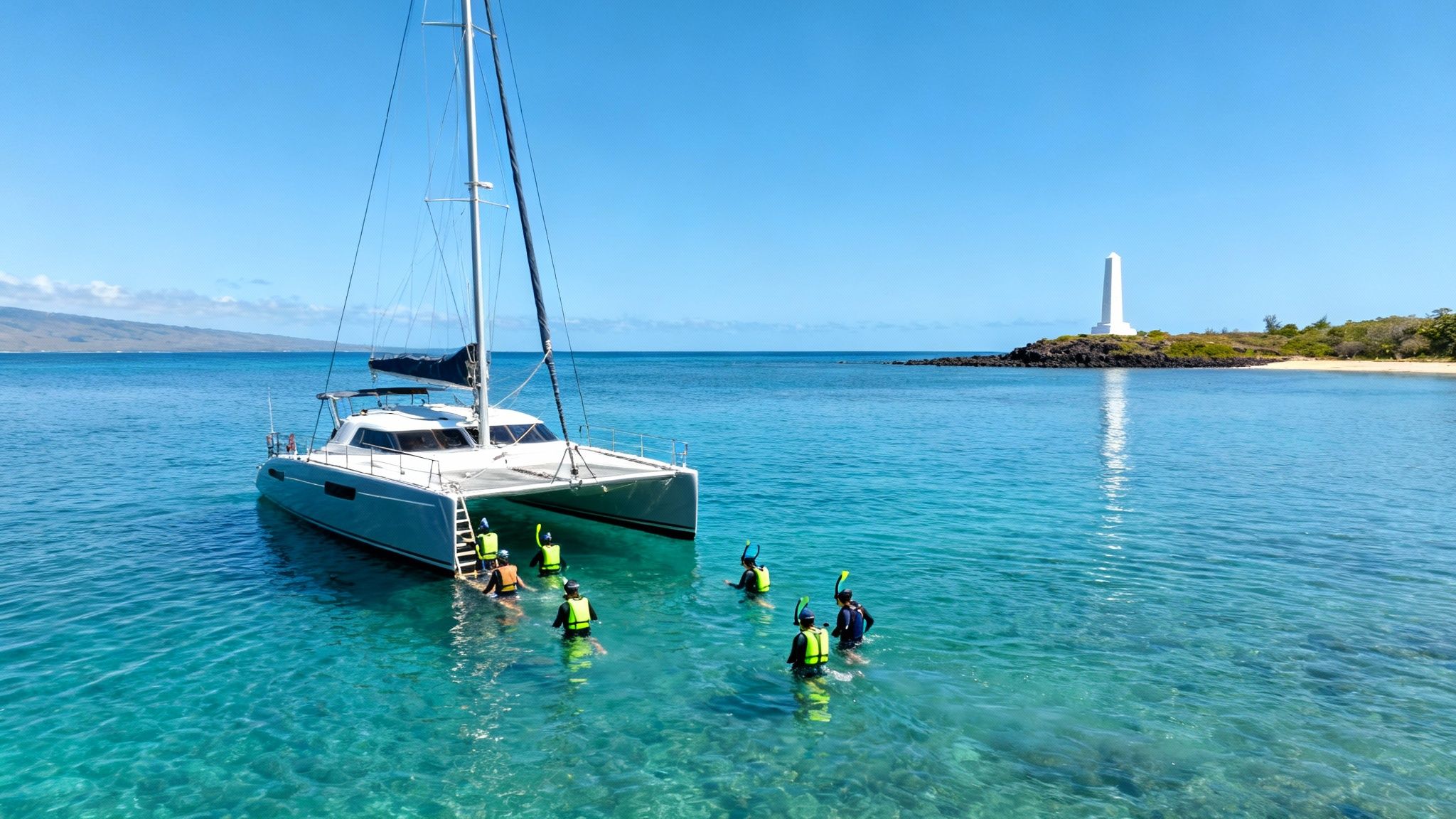
A Journey to a Protected Paradise
Kealakekua Bay isn’t just some random snorkeling spot. It’s a designated Marine Life Conservation District. This special protection allows the fragile coral reefs and the hundreds of species of tropical fish that live there to thrive without disturbance. The water here is incredibly calm and sheltered, often with visibility pushing past 100 feet. It’s like looking through a crystal-clear window into a bustling underwater city.
If you’re looking for a top-notch operator for this adventure, check out Captain Cook Snorkeling Tours. They run fantastic trips that really focus on making your visit to this historic bay personal and memorable.
What Makes This Tour a Must-Do
Going with a guided tour is really the only way to properly experience this remote spot. Here’s why booking a dedicated Captain Cook snorkel tour is your best bet:
- Easy Access: The best snorkeling right around the monument is almost impossible to get to from land. A boat tour gets you there safely and comfortably, no hiking required.
- Expert Guidance: The guides are locals who know their stuff. They'll share fascinating stories about the area's history and point out all the cool marine life you’re seeing.
- All Gear Provided: No need to pack your own fins. Tours provide high-quality, sanitized snorkel gear and flotation devices, making it easy for everyone from beginners to pros.
- Safety First: With certified guides and experienced captains at the helm, you can just relax and soak in the incredible beauty of the bay without a worry.
This guide will walk you through everything you need to know to plan the perfect day out on the water, turning a simple snorkel trip into a Big Island memory you won't forget.
Discover the Rich History of Kealakekua Bay
Kealakekua Bay is so much more than a world-class snorkel spot; it's a living museum where the gentle lapping of waves tells a dramatic story. When you take a captain cook snorkel tour, you’re not just exploring a pristine marine sanctuary. You're floating through a pivotal moment in Hawaiian and world history.
The bay’s tranquil beauty today masks a turbulent past, giving you a unique chance to connect with a powerful narrative etched into the very cliffs that surround you. Knowing this history transforms your snorkel trip from a simple swim into a profound journey.
The Arrival of Captain Cook
The story of Kealakekua Bay really kicks into high gear on January 17, 1779. That's the day the famed British explorer Captain James Cook anchored his ships, the Resolution and Discovery, looking for a safe harbor after a storm damaged his fleet.
His timing couldn't have been more fateful. He arrived during the Makahiki festival, a sacred time of peace and celebration dedicated to the god Lono. The Native Hawaiians, seeing his large ships appear as if from nowhere, greeted Cook and his crew with awe, believing he might be Lono himself.
This warm welcome lasted for weeks. But things took a turn after Cook left on February 4, only to return days later when a cutter was stolen from his ship. This tense return led to a tragic clash, and on February 14, 1779, Cook was killed on the shore—marking the first fatal encounter between Europeans and Hawaiians.
The Iconic Captain Cook Monument
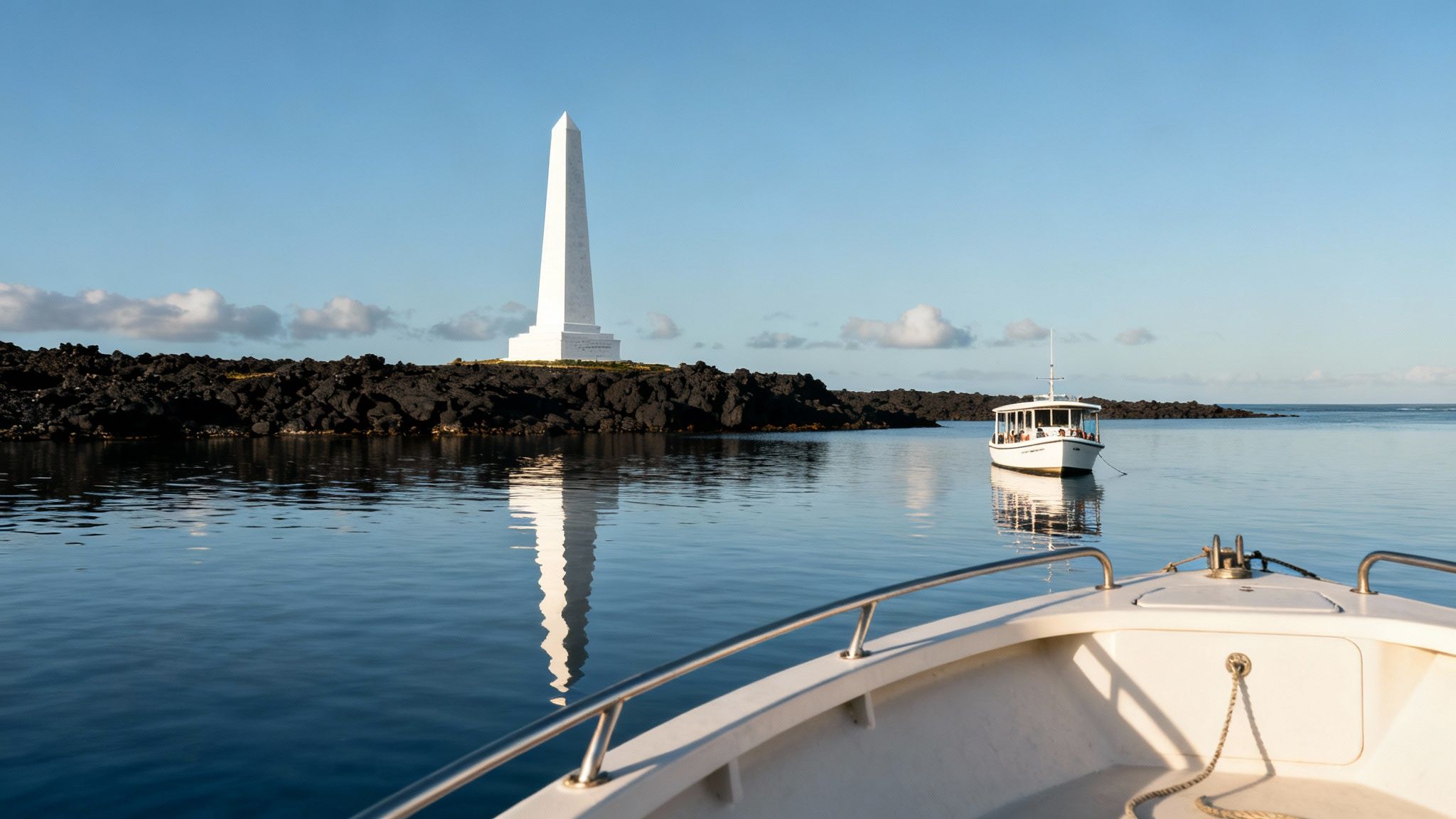
The most visible reminder of this history is the Captain Cook Monument, a stark white obelisk standing out against the dark volcanic rock. This 27-foot structure was put up in 1874 by Cook's fellow countrymen to mark the approximate spot where he died. It’s a silent testament to a complex legacy of exploration and cultural collision.
As you snorkel in the calm waters, you'll have a direct view of this iconic landmark. It’s a powerful sight, connecting you physically to the events that unfolded on that very shoreline over two centuries ago. The contrast between the peaceful underwater world and the dramatic history on land is something you won't forget.
Key Insight: A boat tour gives you the best and most respectful view of the monument. Since the land is very difficult to access, approaching by water lets you see the site as Cook and his crew first did, adding a whole new layer to the historical experience.
Why a Boat Tour Offers a Unique Perspective
Seeing Kealakekua Bay from the water is really the only way to fully appreciate its historical landscape. The shoreline where these events took place is almost completely inaccessible by land, blocked by steep cliffs and rugged terrain. A boat tour lets you glide along the coast, giving you an unobstructed view that is both breathtaking and informative.
Guides on a captain cook snorkel tour are usually history buffs who love sharing the bay's stories. They'll point out key locations and bring the past to life, turning the scenery into a dynamic historical stage.
To get the full picture of what makes this place so special, check out our guide on snorkeling the Captain Cook Monument in Hawaii. Learning the story behind the scenery makes the vibrant coral and schools of fish below feel even more precious, cementing your connection to this incredible place.
Explore an Underwater Sanctuary
Ready for a sneak peek into the vibrant world thriving just beneath the waves of Kealakekua Bay? On a Captain Cook snorkel tour, you’re not just going for a swim. You’re dropping into a protected underwater sanctuary that is absolutely bursting with life. The water here is so clear it often feels like you're floating in air, surrounded by a living kaleidoscope of color and motion.
This isn’t just any pretty spot; it’s a designated Marine Life Conservation District. That special status means the bay is a true safe haven for an incredible diversity of sea creatures, allowing the delicate coral reefs to flourish completely undisturbed.
A World of Vibrant Coral and Tropical Fish
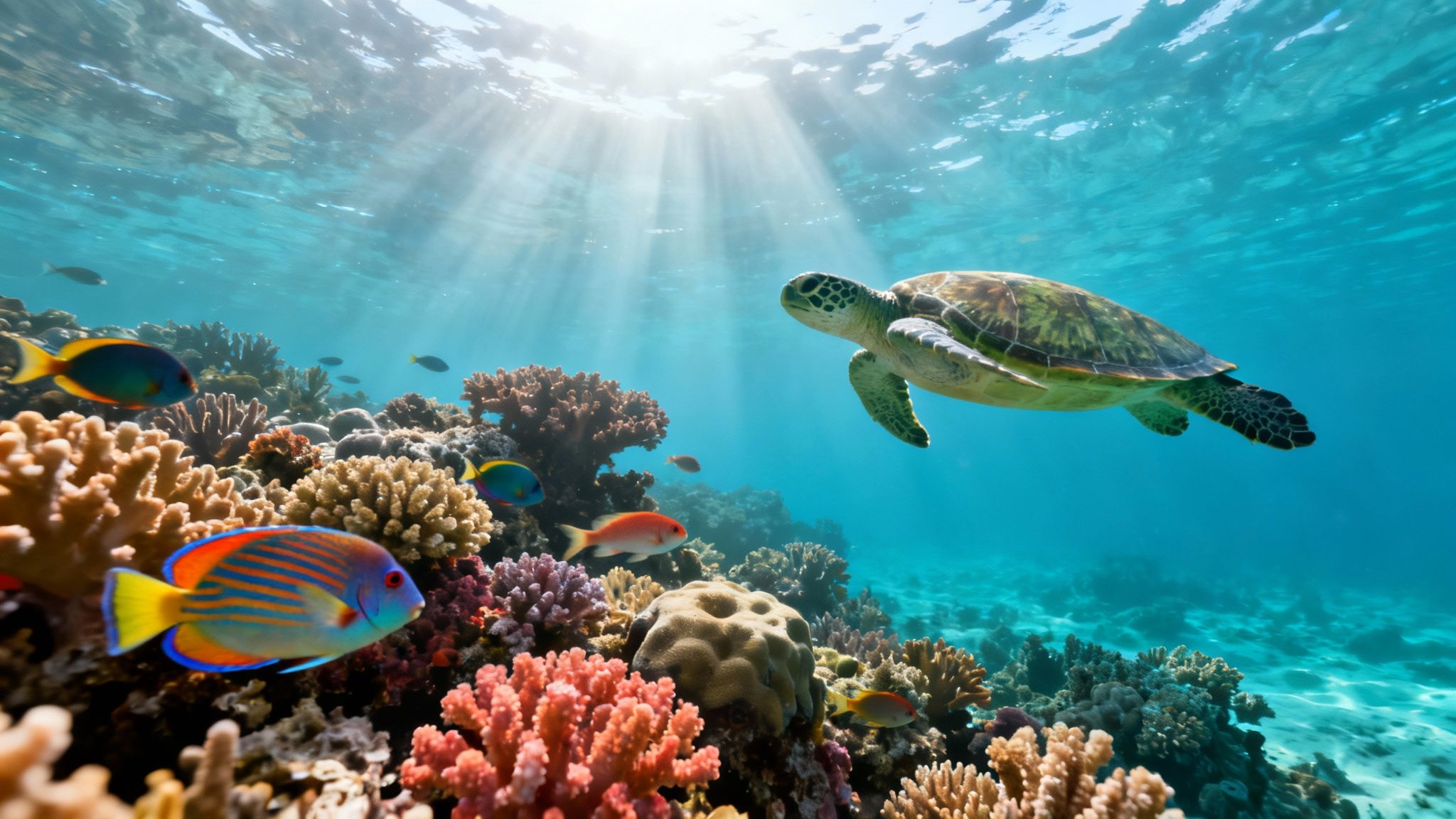
The second you dip your mask beneath the surface, you’ll be face-to-face with sprawling coral gardens. These reefs are the very foundation of the bay's ecosystem, providing food and shelter for hundreds of species of tropical fish. It's not uncommon for the water visibility to exceed 100 feet, giving you a near-perfect window into this underwater paradise.
You’ll find yourself right in the middle of schools of brightly colored fish, darting in every direction. Make sure to keep an eye out for some of the bay's most famous residents:
- Parrotfish: You might actually hear these guys before you see them. They audibly crunch on coral with their beak-like mouths, a sound that’s vital to the health of the reef.
- Butterflyfish: These elegant fish are often seen in pairs, adding a delicate beauty to the reef with their intricate patterns.
- Humuhumunukunukuāpuaʻa: Don't let the name scare you! Hawaii's state fish is a stunning sight with its bold, angular patterns.
- Yellow Tang: These brilliant yellow fish often travel in massive, mesmerizing schools, creating a dazzling spectacle against the deep blue water.
The sheer density and variety of fish make every single moment feel like a new discovery. For a deeper look into this one-of-a-kind location, check out our full guide to the Kealakekua Bay snorkeling tour experience.
Potential Encounters with Larger Marine Life
While the reef fish are the main attraction for many, Kealakekua Bay is also a popular hangout for some larger, more majestic marine animals. The calm, protected waters create an ideal spot for them to rest and feed, giving snorkelers the chance for some truly unforgettable moments.
One of the most cherished sightings is the Hawaiian green sea turtle, or honu. These gentle giants are often seen gliding gracefully over the reef or just chilling out on the ocean floor. Watching a honu in its natural habitat is a magical and humbling experience, plain and simple.
It’s also common for pods of playful spinner dolphins to visit the bay. They're famous for their acrobatic leaps and spins, and just seeing them from the boat is a major highlight for many people. While it’s illegal to swim with or chase them, observing their natural behavior from a respectful distance is an incredible bonus to any tour.
The Perfect Conditions for Snorkeling
Kealakekua Bay's geography is what makes it one of the absolute best snorkeling spots in all of Hawaii. The bay is naturally sheltered by high cliffs that block the open ocean's wind and swells, which means the water is exceptionally calm and clear nearly year-round. This makes it a fantastic spot for everyone, from first-timers to seasoned underwater explorers.
The combination of a pristine marine ecosystem and deep historical significance has turned this bay into a premier ecotourism destination. In fact, Captain Cook snorkel tours in this 315-acre sanctuary draw over 190,000 visitors every year, all coming to witness its vibrant underwater world.
How to Choose Your Ideal Snorkel Tour
Finding the right Captain Cook snorkel tour is the difference between a pretty good day and an absolutely unforgettable one. With so many boats heading to Kealakekua Bay, your perfect trip really comes down to your personal travel style, who you're with, and what you hope to get out of your day on the water.
This guide will walk you through picking the right tour for you. We'll compare the different kinds of boats, from zippy Zodiacs for the thrill-seekers to big, comfy catamarans that are perfect for families. Once you know the key differences, you'll be able to book your trip with total confidence.
Comparing Tour Vessels: Zodiacs vs. Catamarans
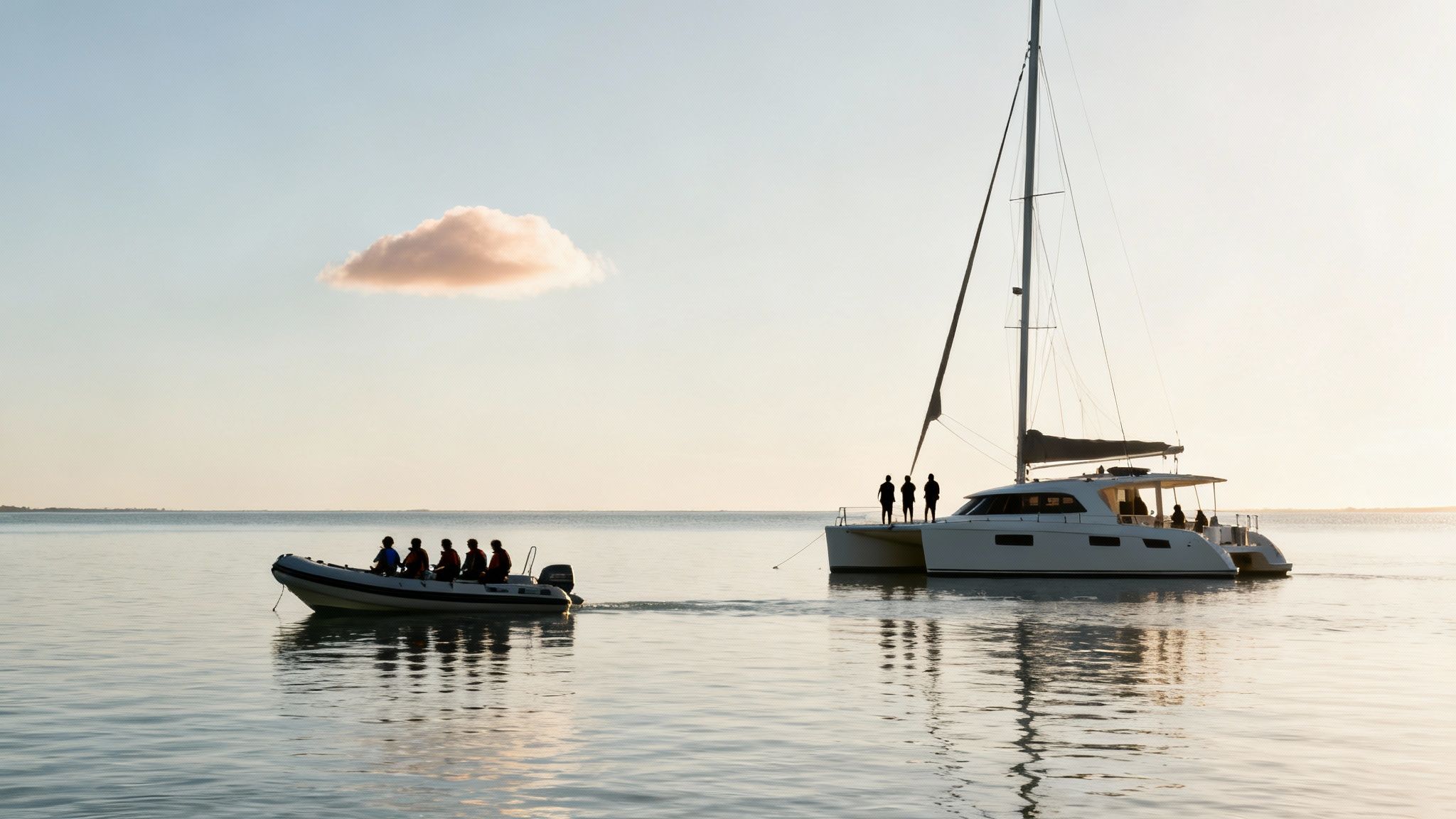
The kind of boat you’re on completely shapes your experience. Smaller, rigid-hulled inflatable boats—what most people call Zodiacs—offer a much more adventurous, high-speed ride. They sit low in the water, which is awesome for getting a close-up look at the coastline and sea caves along the way. These tours are usually faster and carry smaller groups, creating a more personal feel.
On the flip side, larger catamarans deliver a much more stable and roomy journey. These boats are the go-to for families with little kids, anyone who gets a bit seasick, or people who just want to relax in comfort. Catamarans often have great perks like restrooms, plenty of shade, and sometimes even a slide off the back. They handle bigger groups, which usually means a more laid-back, social vibe on board.
To get a full rundown of all the boat styles out there, take a look at our detailed guide on Kona snorkel tour options to find the perfect vessel for your crew.
Key Factors to Consider
Beyond just the boat, a few other things should factor into your decision. Thinking about these points ahead of time will make sure the trip you book is exactly what you were hoping for.
- Group Size: Would you rather have a small, intimate group where you can easily chat with the guide? Or do you prefer the fun, lively energy of a bigger crowd? Smaller tours almost always mean more one-on-one attention.
- Tour Duration: Trips can run anywhere from a quick 3-hour jaunt to a full 5-hour day. Think about how much time you want to spend out on the water.
- Onboard Amenities: For a lot of people, this is a make-or-break deal. If having a restroom, a freshwater shower, or a shady spot to chill is a must, you'll definitely want to lean towards a larger boat.
- What's Included: Always check what the price covers. Snorkel gear is standard, but some tours also throw in snacks, drinks, and even a full lunch. Knowing this upfront helps you compare the real value between different companies.
Pro Tip: We almost always recommend morning tours. The water is usually glassier and the visibility is at its peak. The afternoon can kick up more wind and chop, which can make for a bumpier ride, especially on the smaller Zodiacs.
Captain Cook Snorkel Tour Comparison
To help you really see the difference, we put together this simple table. It breaks down what you can expect from the most common tour types heading to Kealakekua Bay. Use it to weigh the pros and cons based on what's most important to you.
| Tour Type | Best For | Typical Group Size | Average Duration | Key Features |
|---|---|---|---|---|
| Small Boat / Zodiac | Adventure-seekers, couples, and those wanting a more intimate, fast-paced experience. | 6 to 16 passengers | 3 to 4 hours | Fast ride, explores sea caves, less crowded. Usually no restroom. |
| Large Catamaran | Families with children, larger groups, and anyone prioritizing comfort and stability. | 20 to 50+ passengers | 4 to 5 hours | Smooth ride, restrooms, shade, lunch, and often fun extras like slides. |
Thinking through these points makes it easy to choose a Captain Cook snorkel tour that will give you the best possible experience in this incredible, historic bay. You're not just booking a boat ride; you're crafting a memory.
Getting Ready for Your Day on the Water
A little bit of prep can turn a great day into an absolutely perfect one. Getting ready for your Captain Cook snorkel tour is pretty simple, but knowing what to bring will help you feel relaxed and ready to go the second you step on board.
First things first: reef-safe sunscreen. This is a big one. The Hawaiian sun is no joke, and your typical sunscreen is loaded with chemicals like oxybenzone and octinoxate that are seriously damaging to our delicate coral reefs. Grabbing a mineral-based, reef-safe option protects both your skin and the incredible underwater world you're here to see.
What to Pack in Your Bag
Packing light but smart is the name of the game. We've got the main snorkel gear covered, but a few personal items will make your day that much more comfortable. Just think about what you'll need before, during, and after you hit the water.
Here’s a quick list of must-haves:
- Swimsuit and a Towel: The easiest thing is to just wear your swimsuit under your clothes. Don't forget a towel for drying off later!
- Sun Protection: Besides sunscreen, a wide-brimmed hat and a good pair of polarized sunglasses are your best friends out on the water. The glare is real.
- A Dry Change of Clothes: Having a dry shirt or a cover-up for the ride back to the harbor is always a good move.
- Underwater Camera: Trust us, you’re going to want to capture the memories. A GoPro or any waterproof camera is perfect for snapping shots of the amazing marine life.
Need more ideas? Check out our complete guide on what gear to bring for snorkeling on the Big Island of Hawaii to make sure you've got all your bases covered.
Tips for a Smooth and Safe Adventure
Beyond just packing, a few simple things can make a huge difference. For starters, stay hydrated. It's easy to forget when you're having fun, but the sun and saltwater will dehydrate you quickly, so drink plenty of water before you even get on the boat. If you want to kick your adventure up a notch and cover more ground in the bay, you could even look into gear like a snorkelling sea scooter.
Most importantly, listen up during the safety briefing from your guides. These guys and gals know Kealakekua Bay like the back of their hands. They’ll give you the rundown on currents and conditions, which is crucial for staying safe and respecting the marine environment.
And if you're new to snorkeling, don't be shy! Ask for help with your gear or for a quick pointer on technique. Our guides are there to make sure everyone, no matter their experience level, feels safe and has an unforgettable time.
Snorkeling Kealakekua Bay the Right Way
Kealakekua Bay isn't just another pretty snorkel spot; it's a living, breathing natural treasure. When you're out on a Captain Cook snorkel tour, you're a guest in a fragile underwater world. The bay’s special status as a Marine Life Conservation District is the very reason the coral is so vibrant and the fish are so plentiful, which makes our job as stewards that much more important.
Every little thing we do matters here, from how we slip into the water to the sunscreen on our skin. When we go in with an attitude of respect, we're helping make sure the magic of Kealakekua Bay is around for our kids and their kids to see.
The Golden Rules of Reef Etiquette
Picture the reef as a delicate, ancient city made of living beings. You wouldn’t lean on a priceless sculpture in a museum, and the same idea applies here. The number one rule is simple: never touch, stand on, or kick the coral. It might look like rock, but coral is a living animal. The slightest touch can scrape off its protective slime layer, leaving it open to disease and death.
Giving all the marine life a respectful amount of space is just as critical. It’s an absolute thrill to see a Hawaiian green sea turtle (honu) glide by or spot a pod of spinner dolphins, but always remember you're in their house. Chasing or crowding animals causes a ton of stress and messes up their normal routines, like feeding and resting. For a deeper dive into staying safe while protecting the environment, check out our guide to snorkeling safety tips.
Practice 'Leave No Trace' in the Water
The "leave no trace" idea doesn't stop at the shoreline. It means that everything you bring with you needs to go home with you. A single plastic water bottle cap or a corner of a snack wrapper that falls into the ocean can be a death sentence for a turtle or fish that mistakes it for food.
Here’s how you can be a reef hero on your tour:
- Batten Down the Hatches: Before you even get near the water, make sure your hat, sunglasses, and camera are securely attached to you. A strong gust of wind can send them flying.
- Use Reef-Safe Sunscreen: This is a big one. Slather it on at least 20-30 minutes before you plan to get wet. The chemicals in regular sunscreen are incredibly toxic to coral reefs.
- Don't Feed the Fish: It might seem harmless, but feeding the fish human food throws their natural diet completely out of whack and disrupts the delicate balance of the entire reef.
When you choose a solid, reputable tour operator, you’re already taking a huge step in the right direction. Good companies make conservation a priority, educating their guests and leading by example. They make it easy for you to be a mindful visitor.
Booking a trip is more than just buying a ticket for a day of fun. You're actually investing in the long-term health of Kealakekua Bay. Every thoughtful choice you make helps keep this slice of paradise perfect.
Frequently Asked Questions
Even the most seasoned travelers have a few questions before hopping on a boat. Here are some of the most common things people ask about the Captain Cook snorkel tour, with straightforward answers to help you plan your perfect day.
Is This Tour Good For Beginners or Non-Swimmers?
Absolutely. Kealakekua Bay is famous for its calm, protected water, which makes it one of the best spots in all of Hawaii for first-timers. The tour operators we love provide all the gear you'll need, including top-notch flotation devices like life vests or pool noodles.
These let you float comfortably on the surface without any effort, so you can just relax and watch the incredible underwater world below. Guides give a solid safety briefing before anyone dips a toe in the water and are always right there to help, making sure everyone feels totally safe and secure.
What Is the Best Time of Year to Go?
Morning tours are almost always the way to go for a Captain Cook snorkel tour. The ocean is usually glassy smooth before the afternoon trade winds show up, which means clearer water and a much more pleasant boat ride.
The fish and other marine life also tend to be more active earlier in the day. While snorkeling is amazing here all year, coming during the winter months (roughly December to March) gives you a massive bonus: the chance to see migrating humpback whales on your way to and from the bay.
Can I Get to the Snorkel Spot Without a Tour?
Technically, yes, you can hike the steep and grueling 4-mile Kaʻawaloa Trail down to the monument. But honestly, we strongly advise against it for most people. The hike is tough, especially the climb back up in the Hawaiian heat, and there are zero facilities—no restrooms, no water, nothing.
A boat tour is, by a long shot, the safest, easiest, and most enjoyable way to get to the prime snorkeling area. Plus, the coastal views from the boat are a huge part of the experience you'd completely miss otherwise. If you're looking for an exceptional alternative tour operator, check out Captain Cook Snorkeling Tours for a fantastic trip.
What Happens If the Weather Is Bad?
Your safety is always priority number one. Tour operators are constantly watching the ocean and weather conditions. If things look unsafe because of high winds, big swells, or heavy rain, the tour will be canceled.
When that happens, companies will usually offer you a choice between a full refund or rescheduling your tour for another day. It's always a good idea to double-check the specific cancellation policy with the operator when you make your booking.
Ready to see the magic of Kealakekua Bay for yourself? Kona Snorkel Trips runs world-class adventures with expert guides who live to make your day on the water unforgettable. Book your spot on the ultimate Captain Cook snorkel tour today.