
Your Ultimate Guide to Captain Cook Snorkel Adventures
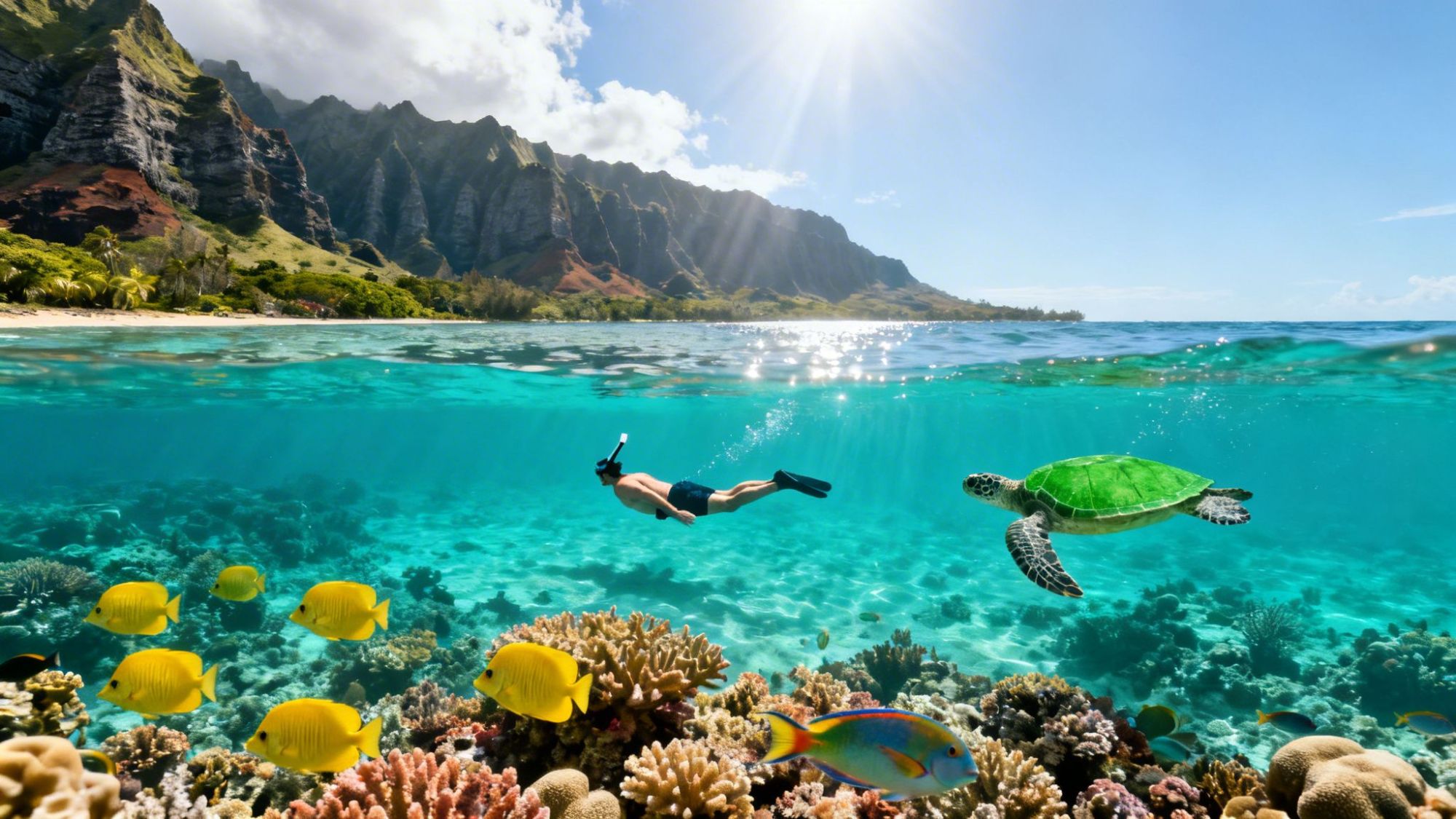
A Captain Cook snorkel tour is your chance to explore what many of us think is the absolute best snorkeling spot on the Big Island of Hawaii: Kealakekua Bay. Picture yourself floating in unbelievably calm, clear, turquoise water. You're surrounded by a dizzying whirlwind of tropical fish and healthy coral reefs, all inside a bay that holds deep significance in Hawaiian history. This is so much more than just a quick swim—it’s a full-on journey into a protected underwater world.
Why Captain Cook Snorkeling Is an Unforgettable Experience

The magic of a Captain Cook snorkel trip is its mix of stunning natural beauty and heavy-hitting history. Kealakekua Bay isn’t just another pretty spot; it’s a designated Marine Life Conservation District. This protection has allowed the underwater ecosystem to thrive, creating a place that’s absolutely packed with life. For us snorkelers, that means exceptionally clear water, often with visibility well over 100 feet.
This underwater paradise is set against a backdrop of dramatic, ancient cliffs, making the whole experience feel both massive and intimate at the same time. Because the bay is so sheltered, the water stays consistently calm, which is perfect for everyone from seasoned pros to first-timers and families.
More Than Just Marine Life
What really sets this place apart, though, is the powerful sense of history you feel. The famous white obelisk of the Captain Cook Monument stands on the shoreline, a silent marker of a complex and critical moment in Hawaiian history. When you swim in these waters, you're directly connecting with that past, turning your snorkel trip into a story you can feel.
Exploring Kealakekua Bay is like swimming through a living museum. You are witnessing the same vibrant reef and dramatic cliffs that Hawaiian aliʻi (royalty) and Captain Cook himself saw centuries ago.
The Best Way to Experience the Bay
Getting to this top-tier snorkeling spot requires a bit of planning, as you can't just drive up to the monument. Some folks try a very tough open-ocean kayak paddle or a grueling hike down a steep, sun-baked trail. But honestly, the safest, easiest, and most enjoyable way to get there is by boat tour.
- Safety and Comfort: Permitted tour boats provide professional-grade snorkel gear, safety briefings, and guides who are lifeguard-certified.
- Convenience and Insight: A tour takes care of all the logistics. You get snacks, drinks, and awesome narration from experts who know the bay's history and its critters inside and out.
- Enrichment: Your guides will point out specific fish and coral and share stories you’d never hear otherwise, which really takes the adventure to another level.
Going with a top-rated operator ensures a safe, fun, and totally hassle-free Captain Cook snorkel adventure. It lets you just relax and soak in the magic of the bay, making it one of the most unique things to do in Kona.
The Rich and Turbulent History of Kealakekua Bay

When you slip into the warm, clear waters of Kealakekua Bay for a captain cook snorkel adventure, you're doing more than just entering a marine paradise. You're swimming through a living museum. This bay carries immense historical weight; it’s where the story of modern Hawaii was forever altered. Its calm surface holds a deep and sometimes turbulent past that adds a profound layer of meaning to every fish and coral you see.
The story really picks up in January 1779. This is when the British explorer Captain James Cook sailed his two ships, the Resolution and the Discovery, into the bay. By a wild twist of fate, his arrival lined up perfectly with the Makahiki festival, a sacred season honoring the Hawaiian god Lono. The timing, coupled with the impressive sight of his ships, led many Native Hawaiians to initially believe Cook was the returning deity himself.
The welcome was absolutely staggering. When Cook’s expedition first reached the islands a year earlier in 1778, they found a thriving archipelago with an estimated 350,000 to 400,000 native Hawaiians. As he entered Kealakekua Bay, historical accounts describe over 3,000 canoes, each holding about six people, swarming the ships, with thousands more watching from shore. It’s a scene that’s hard to even imagine.
A Relationship Turns Sour
At first, things were peaceful. It was a time of trade and mutual curiosity. Hawaiians offered fresh provisions and hospitality, while Cook’s crew traded iron goods, which were highly prized. But the relationship started to fray. Cultural misunderstandings piled up, and supporting Cook’s 80-man crew for weeks on end put a huge strain on local resources.
Things finally boiled over in February 1779. After leaving the bay, Cook's ships were damaged in a storm, forcing an unwelcome return for repairs. The problem was, the Makahiki season was over. The Hawaiians' perception of Cook had changed.
When a small cutter boat was stolen from the Discovery, Cook tried a tactic he’d used in other parts of the world: he attempted to take the ruling chief, Kalaniʻōpuʻu, hostage. This was a massive miscalculation that violated deeply held cultural norms and triggered a violent confrontation right on the shoreline. On February 14, 1779, Captain James Cook was killed in the chaos, a tragic end to his third and final voyage of exploration.
The Monument and the Marine Sanctuary
Today, a stark white obelisk stands on a small piece of land on the shore of Kealakekua Bay. This is the Captain Cook Monument, put up in 1874 to mark the approximate spot where he died. It’s a powerful, somber reminder of the complex and often difficult history between Native Hawaiians and the Western world. When you’re on a captain cook snorkel tour, you're looking at this monument from the water—the same viewpoint as Cook’s own crew.
Understanding the story behind the monument transforms the snorkeling experience. It’s no longer just about seeing beautiful fish; it’s about connecting with a sacred place where cultures collided with world-changing consequences.
The bay’s importance is recognized in two major ways, which is what makes it such a special place today:
- State Historical Park: The land all around the bay is protected for its immense cultural and historical value.
- Marine Life Conservation District (MLCD): The waters themselves are a protected sanctuary, which is the secret to why the marine life is so incredibly abundant and healthy.
This dual designation is key. It ties the sacred past to the vital conservation of the present. By protecting the area, we're not just preserving the vibrant underwater world you see today; we're honoring the bay's history by keeping its natural integrity intact for everyone to appreciate. To learn even more about this special spot, check out our full guide on Kealakekua Bay snorkeling.
What to Expect on Your Captain Cook Snorkel Tour

So, you're thinking about a Captain Cook snorkel tour with us at Kona Snorkel Trips. It's a day packed with adventure, and knowing what’s in store can help you just relax and soak it all in. Let me walk you through the experience, so you feel like a seasoned pro before you even step on the boat.
Your day starts at our easy-to-find check-in spot, where our crew will be waiting to greet you. We intentionally keep our tour groups small; it’s all about a personal, uncrowded vibe. Once we've got everyone checked in, we’ll get you aboard our comfortable boat and head out for an incredible trip down the Kona coast.
Honestly, the boat ride itself is a huge part of the fun. As we cruise south toward Kealakekua Bay, you get these breathtaking views of the rugged, volcanic coastline. Definitely keep your eyes peeled on the water. We often get treated to a show by pods of playful spinner dolphins who just love to race the boat, sometimes launching into the air in these spectacular spins. And if you're here during whale season (December through March), you might even see majestic humpback whales breaching just offshore.
Arriving at the Sanctuary
Pulling into the calm, protected waters of Kealakekua Bay is a moment that always gets a "wow" from our guests. The beauty of the place is just striking. You’ll see the historic Captain Cook Monument standing proudly on the shore, set against these dramatic green cliffs. The water here is famously clear and just looks so inviting, letting you see hints of the vibrant reef below before you even dip a toe in.
Next, your lifeguard-certified guides will run through a quick but thorough safety briefing. We’ll cover everything from fitting your high-quality snorkel gear to the best ways to explore the reef without disturbing it. Your safety and comfort are what matter most to us, and we make sure everyone—from total beginners to salty old sea dogs—feels confident and ready to go.
We’ve got you covered with all the essentials for a great time in the water:
- Premium Snorkel Gear: We provide professionally fitted masks, snorkels, and fins.
- Flotation Devices: Need a little extra support? We have vests and noodles for anyone who wants one.
- Reef-Safe Sunscreen: It's available right on board to protect your skin and the delicate corals.
Once you’re all geared up, you'll slide into the warm, tranquil water and see the magic for yourself. The underwater world at the Captain Cook snorkel site is a kaleidoscope of color and life, with visibility that often pushes past 100 feet.
Guided Exploration and Onboard Comfort
Here’s what really makes our tours special: the in-water guidance. Our knowledgeable crew members actually get in the water with you. They’re experts at spotting the cool stuff you might swim right past—like a perfectly camouflaged octopus tucked into the coral or a shy moray eel peeking out of its den. They’ll share all sorts of fascinating facts about the ecosystem and make sure you’re having a safe, amazing time.
Having a guide in the water is like having a naturalist by your side. They transform your snorkel from just swimming around to a truly educational exploration, connecting you more deeply with the marine world.
After about an hour and a half of fantastic snorkeling, you'll climb back onto the boat where we have snacks and drinks waiting. We think these little touches are what make a good tour great, giving you a chance to refuel and chat about everything you just saw. The ride back to the harbor is another opportunity to just enjoy the coastal scenery and maybe, if you're lucky, get one last wave from the dolphins.
For those looking to explore other great options, Captain Cook Snorkeling Tours is an exceptional alternative when looking for a Captain Cook snorkel tour and offer a fantastic Captain Cook snorkel tour.
Ready to experience this amazing adventure for yourself?
How to Access the Bay: Boat Tour vs. The Alternatives
Getting to the prime snorkeling spot right in front of the Captain Cook Monument isn’t as simple as parking your car and walking onto the sand. This legendary spot is tucked away and inaccessible by road, which is a huge part of what keeps it so pristine. To experience this world-class captain cook snorkel site, you have three main options, each with a vastly different level of difficulty and enjoyment.
Let's break down how to get there: joining a permitted boat tour, kayaking across the open ocean, or attempting a grueling hike. Honestly, understanding the pros and cons makes it pretty clear why one option stands out as the smartest choice for most visitors.
The Boat Tour Advantage
A boat tour is, without a doubt, the safest, most convenient, and most enjoyable way to get into the water at Kealakekua Bay. It’s an all-inclusive experience designed to take away every bit of stress, letting you focus completely on the adventure.
Think of it this way: instead of worrying about gear, directions, or safety, you just step onto a comfortable boat and enjoy a beautiful ride along the stunning Kona coast. We handle all the logistics.
Here’s what makes a Captain Cook snorkel tour the superior choice:
- Ultimate Convenience: We provide all your snorkel gear, along with snacks, drinks, and professional instruction. You just show up ready for fun.
- Guaranteed Safety: You’re in the hands of a lifeguard-certified crew who knows the bay’s currents and conditions like the back of our hands. We give safety briefings and are right there in the water with you.
- Expert Guidance: Our guides aren't just there for safety; they're your personal naturalists, pointing out fascinating marine life and sharing the rich history of the area.
For an even deeper look into what makes these trips so special, you can read more about boat tours on the Big Island in Hawaii.
The Kayaking Challenge
On the surface, kayaking to the monument sounds like a romantic adventure. The reality, however, is a logistical and physical challenge that many people seriously underestimate. Strict state regulations are in place to protect the bay, and they make this option very difficult.
You are not permitted to launch any vessel—including kayaks—from the nearby Napoʻopoʻo Wharf or Kealakekua Bay State Historical Park. This means you must legally rent a kayak from a licensed vendor, transport it several miles, and launch it from a designated spot outside the bay.
This process involves a significant open-ocean paddle of 1-2 miles each way. This can be strenuous and even dangerous if the wind and swell pick up, which happens often. You’ll also have to haul all your own gear, food, and water. It’s a lot of work.
The Grueling Hike
The third option is hiking down the Kaʻawaloa Trail. This is a 3.8-mile round trip that descends over 1,300 feet in elevation. And while it offers incredible views, it is not a casual stroll.
The trail is steep, rocky, and completely exposed to the intense Hawaiian sun. The hike down is tough on the knees, and the climb back up in the afternoon heat is physically brutal. To make matters worse, there are absolutely no facilities at the bottom—no water, no restrooms, and no shade. You have to pack everything in and, more importantly, pack everything out. Unless you are an experienced and well-prepared hiker, this option can quickly turn a fun day into a miserable ordeal.
Deciding how to get to the monument is a big part of your day. To make it easier, here’s a quick comparison of the three main methods.
How to Access Kealakekua Bay: A Comparison
| Access Method | Convenience | Safety | Experience & Amenities | Best For |
|---|---|---|---|---|
| Boat Tour | Very High: All-inclusive. Gear, food, and transport are handled for you. | Very High: Lifeguard-certified crew, safety briefings, and in-water guides. | Excellent: Scenic coastal cruise, historical narration, expert guidance, and all amenities provided. | Almost everyone, especially families, first-timers, and those wanting a stress-free day. |
| Kayaking | Low: Requires renting from a specific vendor, self-transporting gear, and a long, strenuous paddle. | Moderate to Low: You're on your own in open ocean conditions. Currents and wind can be unpredictable. | Variable: A physically demanding adventure. You must bring all your own gear, food, and water. | Experienced, physically fit kayakers who are prepared for a challenging open-water paddle. |
| Hiking | Very Low: A physically punishing hike with 1,300 feet of elevation change on an exposed trail. | Low: Risk of dehydration, heat exhaustion, and injury on the steep, rocky terrain. | Difficult: Rewarding views but requires extreme physical fitness. No facilities (water, restrooms, shade) at the bottom. | Very experienced, fit hikers who are fully equipped for a strenuous trek in hot, exposed conditions. |
When you weigh the convenience, safety, and all-inclusive nature of a boat tour against the major challenges of kayaking or hiking, the decision becomes pretty simple for most people. Booking a dedicated captain cook snorkel tour ensures you'll have a fantastic, stress-free day in paradise.
Discovering the Incredible Marine Life of Kealakekua Bay

While the history of Kealakekua Bay is incredible, the real magic of a Captain Cook snorkel tour begins the second you put your face in the water. The bay’s protected status as a Marine Life Conservation District (MLCD) isn’t just some official title; it’s the reason this place is an absolute underwater metropolis, teeming with life.
Slipping into the calm, clear water feels like you’ve crossed into another dimension. Visibility often stretches past 100 feet, revealing an entire city built on gardens of finger and cauliflower coral. These delicate, intricate structures are the very foundation of the ecosystem, providing food and shelter for a mind-blowing variety of fish.
You’ll find yourself surrounded by huge, shimmering schools of bright yellow tang, their color popping against the deep blue. You might see ornate butterflyfish darting between coral branches or even hear the distinct crunching of parrotfish munching on algae—their "beaks" are essential for keeping the reef clean and healthy.
Common Residents of the Reef
The sheer number and diversity of fish are what make Kealakekua Bay a truly world-class destination. It’s like being dropped into a massive aquarium, only you’re right there in the middle of it all.
Some of the regulars you're almost guaranteed to meet include:
- Yellow Tang (Lauʻipala): You can't miss them. These vibrant fish often travel in massive schools, creating a flowing river of yellow.
- Ornate Butterflyfish (Kikakapu): A favorite for underwater photographers, they are easily recognized by their beautiful, intricate patterns.
- Parrotfish (Uhu): The unsung heroes of the reef. These colorful fish play a vital role in controlling algae growth.
- Reef Triggerfish (Humuhumunukunukuāpuaʻa): It’s a mouthful, but this is Hawaii's state fish, known for its unique shape and sometimes feisty attitude.
Graceful Giants and Playful Pods
Beyond the bustling schools of reef fish, a Captain Cook snorkel gives you a great shot at seeing some of the larger, more majestic inhabitants of the Pacific. It's not at all unusual for a graceful honu (Hawaiian green sea turtle) to glide effortlessly past, taking a break to graze on algae along the reef.
Seeing a honu in its natural habitat is a truly humbling experience. Their serene presence is a powerful reminder of the importance of protecting these sacred waters and observing wildlife from a respectful distance.
The bay is also a popular hangout for pods of playful spinner dolphins (nai'a). They typically hunt in deeper waters at night, but they often cruise into the calm, protected bay during the day to rest and socialize. Watching them leap and spin from the boat is a major highlight for many of our guests.
The thriving ecosystem in Kealakekua Bay is a testament to how successful conservation efforts can be. If you're keen to explore other incredible underwater worlds, check out our guide on the best spots for snorkeling near Kona, Hawaii.
Planning Your Trip: Best Times, Safety, and Gear
A little bit of planning is the secret sauce that turns a great Captain Cook snorkel adventure into a truly perfect one. When you know the best times to go and what to bring, you’re setting yourself up for a day of pure fun, without any logistical headaches. Let's walk through the essentials so you can show up ready for a safe, comfortable, and unforgettable day in Kealakekua Bay.
The great news? Thanks to the bay's naturally protected geography, the snorkeling conditions are fantastic all year long. But timing is still important. Morning tours are almost always your best bet. The early hours bring the calmest, glassiest water, which means you get the best possible visibility for spotting all the amazing marine life.
Safety First, Always
On any guided tour, your safety is the absolute top priority. When you're out with a professional crew, you're in the hands of lifeguard-certified experts who know the bay like the back of their hand. Always listen closely to their safety briefing—it’s packed with crucial info about getting in the water, understanding currents, and interacting with wildlife responsibly.
A huge part of safety also means protecting the very ecosystem you’ve come to see. Being a good steward of the reef isn't just a suggestion; it's our shared responsibility.
- Use Reef-Safe Sunscreen: Standard sunscreens have chemicals like oxybenzone and octinoxate that are incredibly damaging to coral reefs. We always have reef-safe options on board to protect both your skin and the delicate world below.
- Practice Respectful Viewing: Never touch, chase, or harass any marine animals. Watching from a respectful distance keeps them safe and preserves their natural behaviors for everyone to enjoy. Touching coral is also a major no-go, as it can kill the fragile polyps that make up the reef.
- Listen to Your Guides: Your crew will give you specific instructions based on the day's conditions. Following their lead is the best way to ensure a safe and respectful trip for everyone.
What to Bring (and What to Leave Behind)
One of the best parts about taking a boat tour is that we do all the heavy lifting for you. We provide all the essential, high-quality gear you'll need for your Captain Cook snorkel adventure. This includes professionally fitted masks, snorkels, fins, and flotation aids like vests and noodles.
This means you get to pack light! Here’s a quick checklist of what you should bring along:
- A towel and a change of clothes for after your swim.
- An underwater camera to capture the magic.
- A hat and sunglasses for sun protection on the boat.
- Any personal medications you might need.
You can get more great tips by checking out our detailed guide on what to wear for snorkeling.
Interestingly, the focus on crew well-being has deep historical roots in this very spot. Captain Cook's three expeditions between 1768 and 1779 weren't just groundbreaking for their map-making, but also for his intense focus on crew health. He was the first sea captain to systematically use citrus fruits to prevent scurvy, a move that saved countless lives on long voyages and set a new standard for maritime exploration. You can discover more insights about Captain Cook's voyages on ebsco.com.
By coming prepared, you can just relax and soak in the beauty of the bay, confident you have everything you need for a fantastic day on the water.
Your Captain Cook Snorkeling Questions, Answered
To wrap things up, let's tackle some of the most common questions we get about the Captain Cook snorkel experience. Getting these details sorted is the final step before you can book your adventure with total confidence.
Is This Tour Good For Beginners or Non-Swimmers?
Absolutely! We've designed our tours from the ground up to be fun and welcoming for everyone, regardless of your experience in the water. Our lifeguard-certified crew will give you a full rundown on using the gear and what to expect.
We provide top-notch safety equipment, including flotation vests and pool noodles. Even if you're not a confident swimmer, you can float comfortably right on the surface and still see all the incredible marine life below. Our guides are always in the water with you, keeping a close watch and ready to help at a moment's notice.
When Is the Best Time of Year to Snorkel at Kealakekua Bay?
One of the best things about Kealakekua Bay is that its naturally sheltered position gives us fantastic snorkeling conditions all year long. That said, we're big fans of morning tours. The ocean is almost always at its calmest and the water clarity is at its absolute best in the morning.
As an incredible bonus, if you join us during the winter months (roughly December through March), you have a great chance of spotting humpback whales during the boat ride to and from the bay!
Can I Touch the Dolphins or Sea Turtles?
No, and this is a really important one. For the safety and well-being of the animals, it's against both federal and state law to touch, chase, or harass any marine wildlife in Hawaii. That includes our beloved spinner dolphins and green sea turtles (honu). We're completely dedicated to protecting this fragile ecosystem.
The best way to show your respect is by observing these incredible creatures from a distance. This ensures they stay safe and that the experience remains wild and natural for everyone. Our guides will always brief you on the proper wildlife viewing etiquette before we get in the water.
Why Is a Boat Tour Better Than Renting a Kayak?
While you might see kayaks out there, getting one to the monument is a massive logistical and physical challenge. State rules don't allow you to launch any boats from the nearby park. This means you have to rent from a licensed vendor miles away, somehow transport it, and then paddle a long way in the open ocean just to reach the bay. It's a real workout and a major hassle.
A permitted boat tour is simply safer, more comfortable, and way more convenient. We take care of everything—the gear, the professional guides, and onboard amenities like snacks and drinks. It lets you skip all the hard work and just focus on having an amazing and relaxing Captain Cook snorkel adventure. For a fantastic boat tour option, we recommend checking out Captain Cook Snorkeling Tours for your next Captain Cook snorkel tour.