
A Guide to Your Ultimate Captain Cook Snorkel Adventure
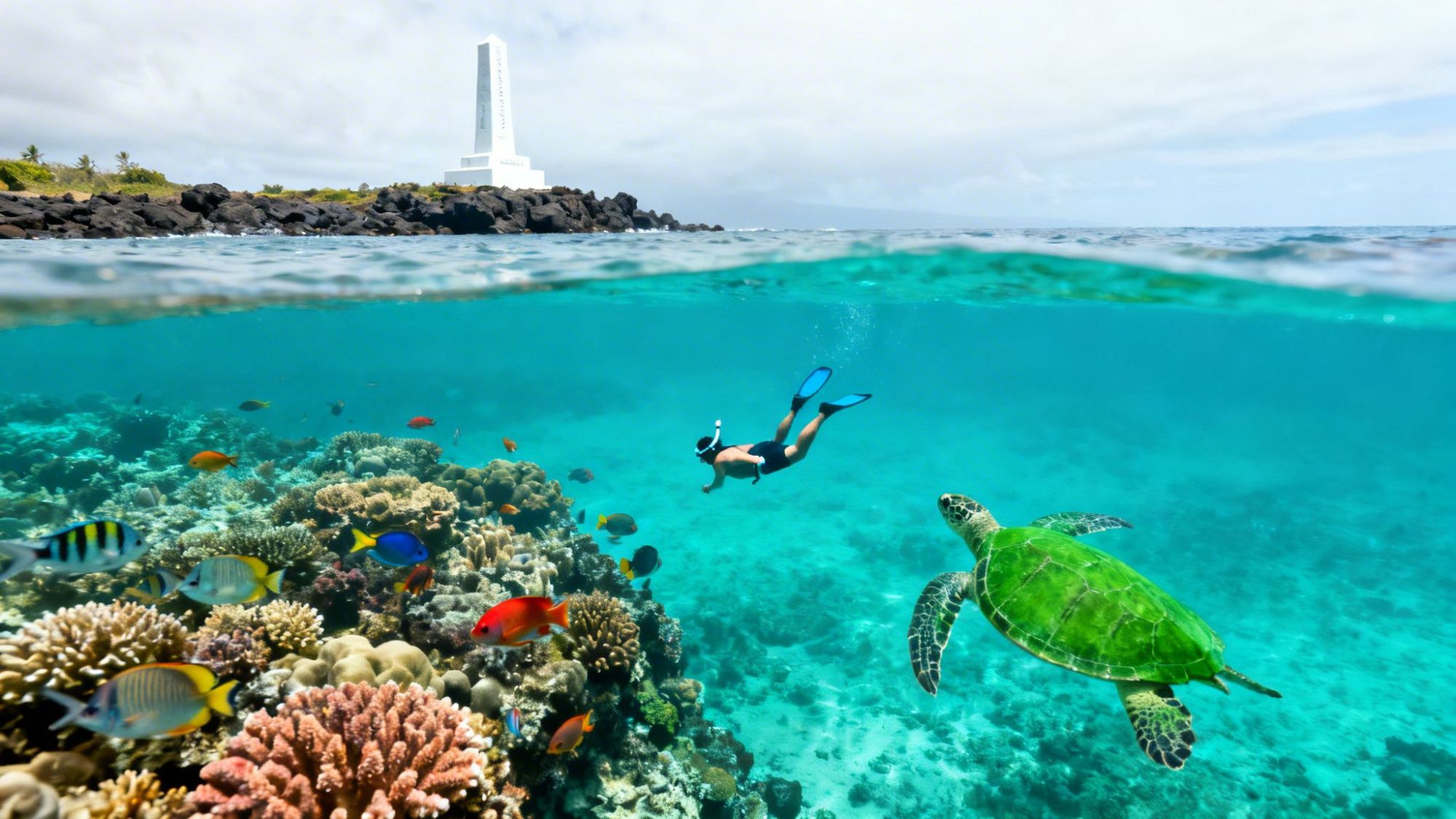
A Captain Cook snorkel trip is more than just a dip in the ocean; it's a journey into one of Hawaii's most sacred and pristine marine sanctuaries, Kealakekua Bay. The bay is legendary for its see-through water, spectacular coral reefs, and the deep history tied to the Captain Cook Monument. If you want the absolute best experience, hopping on a guided trip with Kona Snorkel Trips is the way to go—we're proud to be the top-rated and most-reviewed snorkel company in all of Hawaii.
Welcome to Hawaii's Crown Jewel of Snorkeling
Kealakekua Bay isn't just another pretty spot on the Big Island; it's the undisputed main event for anyone with a mask and fins. This is where history and nature struck a perfect balance, creating an experience that’s a world away from your average swim. The bay is a designated Marine Life Conservation District, which means the waters are calm, protected, and absolutely bursting with life.

Here you’ll find some of the most stunning coral gardens in the state, swarming with an incredible variety of tropical fish. Because the bay is naturally sheltered from big ocean swells, the visibility is often unreal—sometimes over 100 feet. It’s like swimming in a giant, safe aquarium, which makes it perfect for snorkelers of all comfort levels.
A Sanctuary of History and Nature
What really makes a Captain Cook snorkel adventure special is the story behind it. The bay is home to the iconic Captain Cook Monument, a white obelisk marking the spot where the famous British explorer Captain James Cook was killed in 1779. That landmark is a constant reminder of the bay’s role as a pivotal meeting point between Western and Hawaiian cultures.
This guide is designed to be your go-to resource for planning the perfect trip. We'll cover everything you need to know, from the kinds of fish you’ll see to the best ways to get to this remote paradise. The goal is to get you fully prepped for an unforgettable adventure into this sacred and breathtaking spot.
Kealakekua, which means "the pathway of the god," holds deep cultural significance for Native Hawaiians. It served as a sacred place of refuge (puʻuhonua) long before Cook ever arrived.
Think of this guide as setting the stage for a remarkable journey, one that blends the thrill of underwater discovery with a deep respect for the area’s heritage. Whether you're a first-timer or you've been snorkeling for years, understanding what makes Kealakekua Bay so important turns a great trip into a truly meaningful one. You can dive even deeper into this historic location in our detailed guide to Kealakekua Bay snorkeling. Get ready to explore one of Hawaii’s most treasured natural wonders.
The Rich History Above The Reef
When you dip your face into the water on a Captain Cook snorkel trip, you're looking at a world-class underwater scene. But the history on the shoreline right above that reef is just as mind-blowing. Kealakekua Bay is so much more than a pretty place to see fish; it's a living museum where a massive turning point in Hawaiian history went down. The whole story pivots on the arrival of a world-famous British explorer, and it changed the islands forever.

Long before any Western ships showed up, this bay was a sacred place of refuge, or 'puʻuhonua', for native Hawaiians. It was a center of law, forgiveness, and spiritual power. This deep-rooted cultural importance really set the stage for one of the most dramatic first encounters between Polynesian and European cultures.
The Fateful Arrival of Captain Cook
The year was 1778. Captain James Cook, a legendary navigator on his third epic voyage, became the first European to make formal contact with the Hawaiian Islands. His first stop was short, but he came back the next year, sailing his two ships, the HMS Resolution and HMS Discovery, right into the calm, protected waters of Kealakekua Bay.
The timing of his arrival was uncanny. He showed up right in the middle of the Makahiki festival, a peaceful season honoring the god Lono. Some Hawaiians saw Cook and wondered if he might be Lono himself, which led to a period of awe and incredible generosity.
When Captain James Cook arrived in Hawaii on January 18, 1778, it kickstarted a huge shift for the islands. On his second visit to Kealakekua Bay, his ships were greeted by an unbelievable sight: 10,000 Hawaiians and about 1,000 canoes. This massive welcome shows just how populated and organized Hawaiian society was back then. You can read more about this monumental greeting on Traces of Evil.
A Relationship Turned Sour
But the good vibes didn't last. A mix of cultural misunderstandings and the strain Cook's crew put on local food and supplies started creating some serious tension. Things came to a head when Cook's fleet left but had to turn back to Kealakekua Bay to fix a broken mast after getting caught in a storm.
This time, the welcome was cold. The Hawaiians' view of Cook had changed, and the air was thick with suspicion. The conflict blew up on February 14, 1779, when an argument over a stolen boat turned into a violent fight on the shore. In the chaos, Captain Cook was killed—a tragic end to an incredible career of exploration.
That white obelisk you see from the water today is the Captain Cook Monument. British sailors put it up in 1874 on a tiny piece of land that was deeded to the United Kingdom. It marks the spot, more or less, where Cook fell.
Knowing this backstory adds a whole other layer to your Captain Cook snorkel trip. As you float over the colorful reef, you're in a place with immense cultural and historical weight. It's not just a swim; it's a connection to a place where two completely different worlds slammed into each other, with consequences that are still felt today.
A Guide to Marine Life Beneath The Waves
Slipping into the calm, clear water on your Captain Cook snorkel adventure is like entering another world. The sounds of the boat and the chatter above the surface just melt away, replaced by the quiet rhythm of the ocean and an explosion of color and life all around you. It's no accident—Kealakekua Bay is a protected Marine Life Conservation District, which basically rolls out the welcome mat for an insane variety of sea creatures.

The bay's coral reefs are the foundation of this thriving underwater city. They aren't just pretty rocks; they're living colonies that provide food and shelter for hundreds of species. The water clarity here is legendary, often letting you see down over 100 feet, so sunlight pours in and makes the whole scene pop in high-definition.
The Kaleidoscope of Tropical Fish
The first thing that hits you is the sheer number of fish. It’s a constant, swirling dance of color. Schools of brilliant yellow tangs move like a single golden cloud, while intricately patterned butterflyfish, often paired up for life, dart between coral branches. You're almost guaranteed to spot Hawaii's famous state fish, the humuhumunukunukuāpuaʻa (reef triggerfish).
This place is buzzing with activity. A few characters you'll definitely meet:
- Parrotfish (Uhu): If you listen closely, you might hear a distinct crunching sound. That's a parrotfish using its powerful beak to munch on algae-covered coral, a cleaning service that's absolutely vital for reef health.
- Moorish Idols (Kihikihi): These are the supermodels of the reef. With their elegant, trailing dorsal fins and bold black, white, and yellow stripes, they're a favorite for any underwater photographer.
- Saddle Wrasse (Hīnālea): You'll see these guys everywhere. They're one of the most common fish on the reef, easily spotted by the bright orange "saddle" just behind their side fin.
To get a better handle on who's who in this underwater metropolis, our complete Hawaii reef fish guide is a great resource to help you put names to faces.
Larger Residents of the Bay
While the smaller fish are endlessly entertaining, always keep an eye scanning the deeper blue for some of the bay's larger, more majestic inhabitants. These are the encounters that stick with you long after you've dried off.
The most beloved residents are without a doubt the honu, the Hawaiian green sea turtles. These gentle, ancient mariners are often seen gliding effortlessly through the water or just chilling out on the sandy bottom. Seeing one up close is a truly peaceful, magical moment that connects you right to the heart of the islands.
Remember, all marine life in Hawaii is protected. It's illegal to touch, chase, or harass sea turtles and other animals. Admire them from a respectful distance—it keeps them safe and lets you see their natural, undisturbed behavior.
Here’s a quick look at some of the amazing creatures you have a good chance of spotting.
Marine Life You Might See in Kealakekua Bay
| Species | Hawaiian Name | Likelihood of Sighting | Key Features |
|---|---|---|---|
| Hawaiian Green Sea Turtle | Honu | Very High | Large, graceful reptile; often seen resting or gliding near the reef. |
| Hawaiian Spinner Dolphin | Naiʻa | High (Often from boat) | Slender body; known for acrobatic leaps and spins. |
| Yellow Tang | Lauʻīpala | Very High | Bright, solid yellow; travels in large schools. |
| Reef Triggerfish | Humuhumunukunukuāpuaʻa | High | Hawaii's state fish; distinct angular patterns. |
| Moorish Idol | Kihikihi | Common | Black, white, and yellow bands; long, flowing dorsal fin. |
| Parrotfish | Uhu | High | Large, colorful fish with a beak-like mouth used for scraping coral. |
| Manta Ray | Hāhālua | Occasional | Giant, graceful rays with wing-like fins; filter feeders. |
This is just a small sample, of course. The bay is full of surprises, and every trip offers a chance to see something new.
Another incredible possibility is a visit from a pod of Hawaiian spinner dolphins, or naiʻa. They often use the calm, protected waters of the bay to rest and socialize during the day after a long night of hunting. You might see them from the boat, launching themselves into the air in breathtaking spins. It's a joyful, wild sight that reminds you just how special this place really is.
Choosing Your Adventure: Tour vs. DIY
So, you've set your sights on snorkeling Captain Cook. Awesome choice. Now you have to figure out how to actually get there. When you start planning, you’ll find there are really only two ways to get to the pristine waters of Kealakekua Bay: hopping on a guided boat tour or toughing it out with a do-it-yourself (DIY) approach.
The idea of a solo adventure might sound romantic, but it's really important to know what you're getting into. Let’s break down the reality of each option so you can make the best—and safest—choice for your trip.
The DIY path to the Captain Cook Monument boils down to hiking or kayaking. Neither is as simple as it sounds. In fact, both come with some major hurdles that can quickly turn a dream day into a real headache.
The Strenuous DIY Hiking Challenge
The most talked-about DIY route is the Kaʻawaloa Trail, a demanding 3.8-mile round-trip hike. This is not a casual walk in the park. The trail is steep, totally unpaved, and covered with loose lava rock and gnarly terrain. Just getting down to the monument takes over an hour, and the return trip—a brutal, steep climb back up in the full Hawaiian sun—is legendary for a reason.
Think about what this actually means for your day:
- Hauling All Your Gear: You have to carry everything. Your mask, snorkel, fins, towels, a ton of water, food, and reef-safe sunscreen. There are zero facilities at the monument. No restrooms, no running water, and no shade to hide from the sun.
- The Physical Toll: The hike is a workout, even for people who are in great shape. Add the weight of all your snorkel gear, and it’s a recipe for exhaustion. Many hikers are wiped out before they even dip a toe in the water.
- Serious Safety Risks: Out here, you are completely on your own. There are no lifeguards or park rangers. A twisted ankle on the trail or a problem in the water can become a real emergency in a hurry, with help a long way off.
The Complexities of Kayaking
Kayaking across the bay seems like a great alternative, right? Well, it's heavily regulated. You can't just rent a kayak anywhere and paddle over. To protect the bay's fragile ecosystem, only a select few licensed tour companies are permitted to lead kayak tours.
On top of that, you need a permit to actually land your kayak at Kaʻawaloa Flat, where the monument is. Trying to land without a permit can get you hit with some pretty hefty fines. This makes a spontaneous "let's just go kayaking" trip pretty much impossible.
The Clear Advantages of a Guided Boat Tour
A guided boat tour, on the other hand, sidesteps every single one of these problems. It’s the difference between a stressful, sweaty expedition and a relaxing, unforgettable adventure. A boat tour is simply the easiest, safest, and most enjoyable way to experience this magical place.
A boat tour turns the journey into part of the experience. Instead of a grueling hike, you get a beautiful cruise along the Kona coastline. You’ll probably even spot dolphins or other marine life on the way.
Here’s why a tour is the smartest way to plan your Captain Cook snorkel trip:
- Effortless Access: The boat pulls right up to the best snorkeling spot in front of the monument. You arrive fresh, full of energy, and ready to jump in. All your energy goes into snorkeling, not just getting there.
- All-Inclusive Gear: Good tour companies provide high-quality, sanitized snorkel gear. That means masks, fins, snorkels, and even flotation devices if you want them. No need to buy, rent, or drag anything with you.
- Unmatched Safety: This is a big one. Your tour is run by a professional, lifeguard-certified crew. They are trained in first aid and CPR and keep a constant watch over everyone in the water. That peace of mind is priceless, especially if you're with family or are new to snorkeling.
- Expert Guidance: The crew aren't just boat drivers; they're local experts. They’ll share fascinating stories about the area's history, point out marine life you might miss on your own, and give you tips to make your snorkel session even better.
For those looking for a top-tier experience, Captain Cook Snorkeling Tours offers an exceptional alternative when looking for a Captain Cook snorkel tour. When it comes down to it, a boat tour delivers a safer, more comfortable, and way more enriching adventure.
The Kona Snorkel Trips Advantage

Taking a guided boat tour is hands-down the best way to have a Captain Cook snorkel adventure, but let’s be honest, not all tours are the same. We built Kona Snorkel Trips around a simple idea: a world-class place like Kealakekua Bay deserves a world-class experience. We're all about making your day seamless, safe, and personal from the moment you step on board.
Everything we do comes down to two things: giving you our full attention and keeping you safe. That's why we deliberately keep our groups small. You're never just a face in the crowd with us. This lets our crew actually get to know you, answer your questions, and make sure you're comfortable, whether you're a seasoned snorkeler or it's your first time.
A Focus On Safety And Comfort
Your safety is our number one priority, no exceptions. Every single one of our guides is lifeguard-certified and fully trained in first aid and CPR. They’re right there in the water with you, keeping a close eye on everyone and ready to lend a hand. It’s a level of security that lets even nervous first-timers truly relax and get lost in the magic of the reef.
And the journey there? It's part of the adventure. Our boats are comfortable and well-maintained, turning the ride down the stunning Kona coast into a sightseeing trip. As we cruise, our crew shares stories about the island's history, geology, and culture, so the trip itself becomes a fascinating part of your day.
The trip to the Captain Cook Monument is more than just transportation; it's a coastal tour guided by local experts who are passionate about sharing the stories of the island, giving you context that enriches your entire day.
Expert Guidance Above And Below The Water
When we arrive at the bay, that commitment to a top-notch experience continues. We provide high-quality, sanitized snorkel gear that we fit for you personally to make sure it’s comfortable and doesn't leak. No one wants to be fussing with a foggy, leaky mask when there's so much to see.
Our guides really shine once we're in the water. They know this bay like the back of their hand and have a knack for spotting marine life you would definitely miss on your own. They’ll point out a perfectly camouflaged octopus, identify a rare butterflyfish, or explain the behavior of the parrotfish you see munching on the coral. This turns a pretty swim into a real discovery. To get a better feel for a day with us, check out the details of our Kealakekua Bay snorkeling tour.
We've designed our Captain Cook snorkel trips to be a five-star adventure that’s all about maximizing your fun and eliminating any stress. From easy booking to a warm aloha when you arrive and expert care all day long, we've got it covered. All you have to do is focus on making incredible memories in one of the most beautiful places on Earth. Our goal is simple—to give you the best possible day on the water.
Your Captain Cook Snorkeling Questions, Answered
Planning an adventure to a spot as special as Kealakekua Bay usually comes with a few questions. To help you feel completely prepared, we’ve put together some straightforward answers to the things we get asked the most. Think of this as your final checklist before locking in an incredible day on the water.
What Is The Best Time Of Year To Snorkel At Captain Cook?
Honestly, thanks to the bay's natural protection, the snorkeling here is fantastic all year long. That said, mornings are almost always your best bet. You'll find the calmest, glassiest water and the clearest visibility before the afternoon winds start to kick up.
If you want a truly next-level experience, plan your trip for the winter months (that's December through March). While you’re exploring the reef, you can often hear the haunting songs of humpback whales echoing through the water. It’s absolutely magical.
Do I Need To Be An Expert Swimmer?
Not at all. The water in Kealakekua Bay is exceptionally calm, which makes it perfect for everyone from total beginners to seasoned snorkelers. Of course, being comfortable in the water helps, but you don't need to be an Olympic swimmer.
On any good guided tour, you'll get flotation gear like pool noodles or snorkel vests. More importantly, our lifeguard-certified guides are right there in the water with you, ready to help out and make sure everyone feels safe and has a great time.
Can I Touch The Dolphins Or Turtles?
No, and this is a really important one. It's illegal to touch, chase, or bother any marine life in Hawaii, especially our beloved dolphins (naiʻa) and sea turtles (honu). Federal laws like the Marine Mammal Protection Act are in place to protect these animals, and we take that responsibility seriously.
We are all about respectful wildlife viewing. The best way to enjoy these creatures is from a safe distance—at least 10 feet from turtles and 50 yards from dolphins. This approach keeps them safe, doesn't disturb their natural behavior, and is a cornerstone of our commitment to being good stewards of the ocean.
What Should I Bring On A Snorkel Tour?
The best advice is to pack light. Any reputable tour operator will have all the necessary gear covered. We suggest just bringing the essentials to make your day perfect:
- A Towel: A no-brainer for when you get out of the water.
- Sun Protection: A hat and sunglasses are your best friends out on the boat.
- Waterproof Camera: You’re going to want to capture the stunning underwater views.
- Reef-Safe Sunscreen: This is a big one. Please, only use mineral-based sunscreens (the active ingredients are zinc oxide or titanium dioxide). Chemical sunscreens are incredibly damaging to our fragile coral reefs.
We provide all the high-quality snorkel gear, snacks, and drinks, so you can just relax and enjoy the experience.
Is The Captain Cook Monument Historically Significant?
It’s incredibly significant. The white obelisk marks the approximate spot of a pivotal, and tragic, moment in Hawaiian history. On February 14, 1779, a confrontation between Captain Cook’s crew and Native Hawaiians turned violent, leading to the deaths of Cook, four of his men, and seventeen Hawaiians.
The conflict erupted after Cook tried to kidnap the ruling chief, Kalaniʻōpuʻu, to use him as a bargaining chip for a stolen boat. This event forever changed the relationship between Hawaiians and the Western world. You can get a deeper dive into this history right here on Wikipedia. The monument adds a powerful layer of history to the stunning natural beauty of the bay.
Ready to see the magic of Kealakekua Bay for yourself? Kona Snorkel Trips offers the safest, most personal, and unforgettable way to explore this historic sanctuary. Our expert guides, small group sizes, and commitment to aloha ensure you have the best day on the water.