
Captain Cook Hawaii Snorkeling: The Ultimate Guide
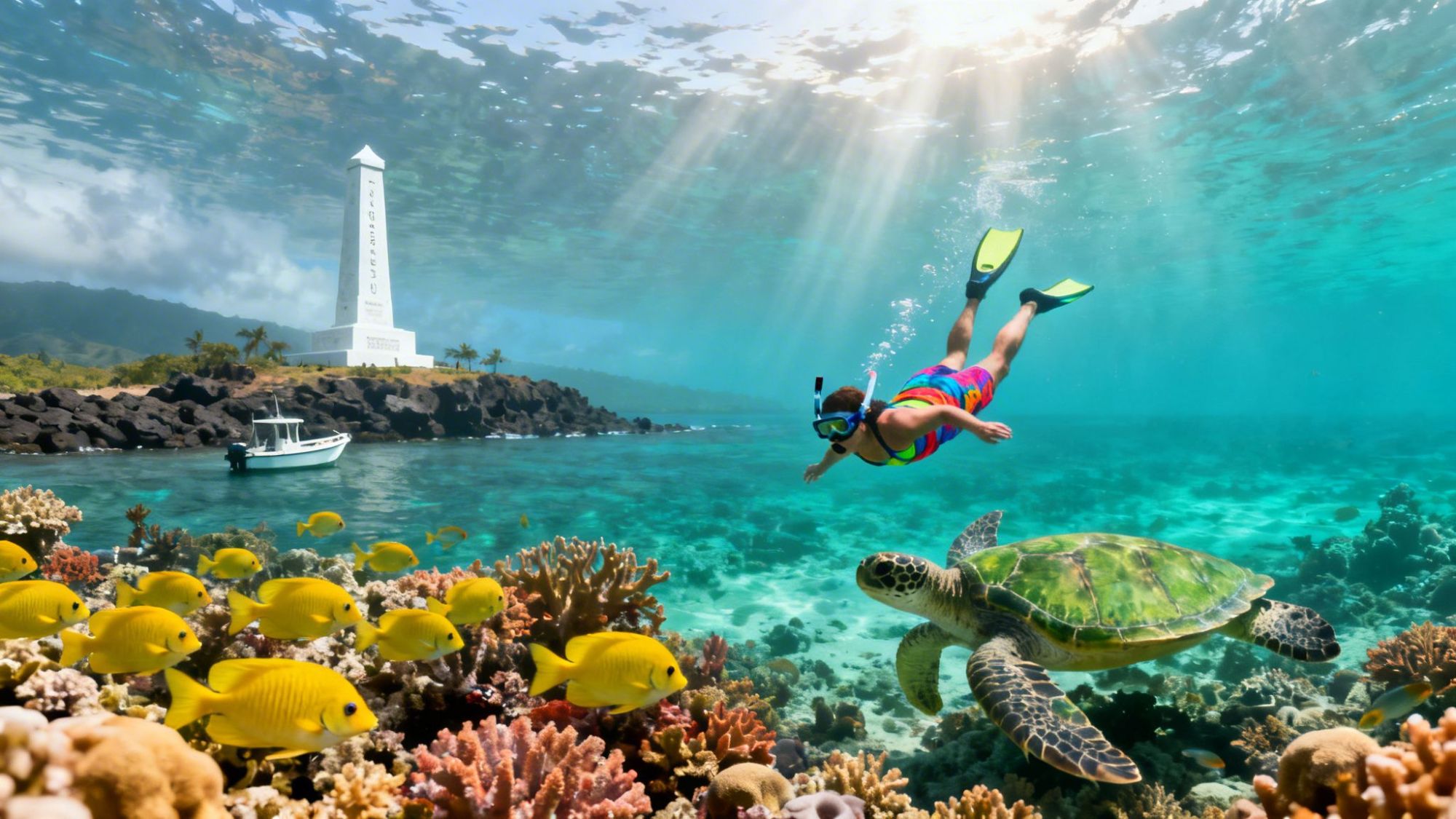
Picture yourself floating in calm, turquoise water, totally weightless, as a massive school of brilliant yellow tangs drifts right underneath you. That's just a normal day when you're snorkeling at Captain Cook in Kealakekua Bay. Think of this as your inside guide to one of the absolute best snorkeling spots on the planet.
Your Essential Guide To Snorkeling Captain Cook
We're going to break down exactly what makes this place so magical, the best ways to get here, and what it's like to experience it on a tour with Kona Snorkel Trips—the top rated & most reviewed snorkel company in Hawaii. We'll get into the bay's fascinating history, the incredible marine life you'll meet, and all the tips you need for a safe and unforgettable day.
But don't just take our word for it. Here’s what fellow snorkelers have to say.
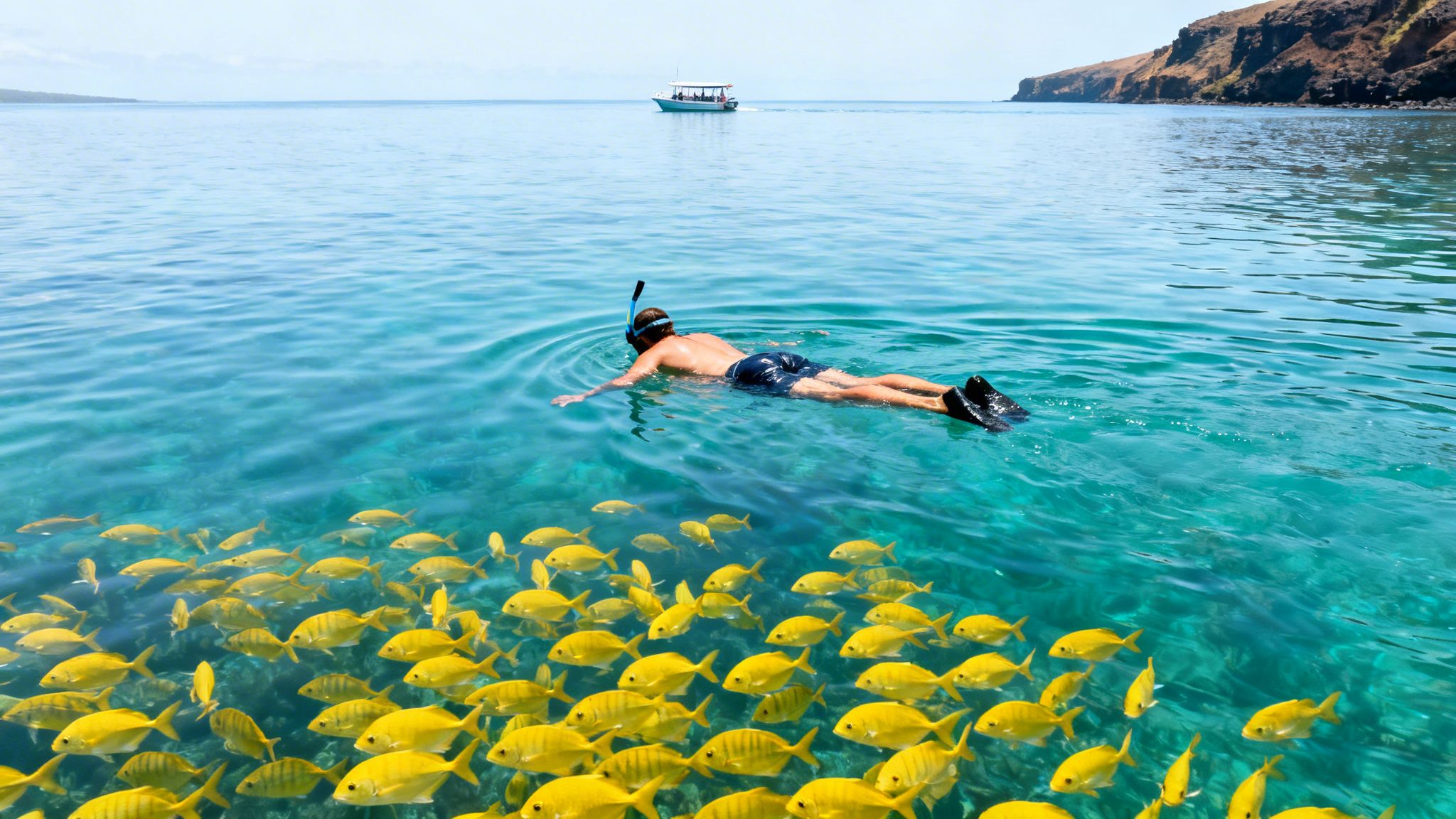
Kealakekua Bay isn't just another pretty snorkel spot; it's a Marine Life Conservation District. This designation means the underwater world here is protected, keeping the coral pristine and the fish populations thriving. It’s a difference you can see the moment you put your face in the water.
For most folks, the absolute best way to dive into this underwater paradise is on a guided boat tour. It takes all the guesswork out of the equation. If you're looking for a smooth, hassle-free day, booking with Captain Cook Snorkeling Tours is a fantastic option that handles the boat access and all your gear.
What Makes This Experience Unique
It’s the powerful mix of nature and history that truly sets Kealakekua Bay apart. You're not just swimming with fish; you're floating above a place that changed the course of Hawaiian history—the exact spot where Captain James Cook first made contact and, later, met his end.
This guide is packed with everything you'll need to plan the perfect trip, including:
- The incredible variety of fish and marine life in the bay.
- The rich cultural and historical story of the area.
- Real-world tips for getting to the snorkel site safely.
- How to pick the right tour for your family or group.
Ready to jump into one of the best underwater adventures the Big Island has to offer? A trip to the crystal-clear waters of Kealakekua Bay is waiting for you, and planning it is the first step toward an experience you won't forget.
So, Why Is Kealakekua Bay the Place for Snorkelers?
Ask anyone who's been, and they'll tell you Kealakekua Bay is special. It consistently lands on "world's best" lists for a reason, and it boils down to a perfect storm of geography and protection. The bay is hugged by massive sea cliffs that act as a natural shield, blocking the wind and ocean currents. This creates an incredibly calm, pool-like environment that's just perfect for Captain Cook Hawaii snorkeling.
This natural shelter is the secret to the bay's legendary water clarity—we're talking visibility that often pushes past 100 feet. But there's more to it. Unlike a lot of other spots, the whole area is a protected Marine Life Conservation District. Think of it as an underwater national park, a true sanctuary for everything that lives there. The result? You're essentially swimming in a massive, thriving, natural aquarium.
A Protected Underwater Sanctuary
That "protected" status is a game-changer. It means the coral reefs are healthy, vibrant, and absolutely teeming with life. As a snorkeler, you're not just looking at a few fish here and there; you're completely immersed in an ecosystem bursting at the seams. It's the kind of place where you can just float effortlessly over spectacular coral gardens, find yourself swimming alongside a majestic Hawaiian green sea turtle (honu), or even spot a pod of playful spinner dolphins out in the deeper water.
The Kealakekua Bay Marine Life Conservation District covers a massive 1,000 acres, and it’s packed with some of the healthiest coral in all of Hawaii. It's home to over 200 fish species, sea turtles, eels, and countless other colorful critters. Part of what makes it so amazing is the unique underwater landscape—the bottom drops off quickly from the lava shelf, which the fish love. This is why our small-group tours can get you right to the heart of the action at the Captain Cook Monument.
Kealakekua Bay isn’t just a spot on a map; it's a full-on experience. It's this powerful mix of raw history and a flourishing, protected marine world that makes a snorkeling trip here feel like you've been let in on a beautiful secret.
The Ultimate Snorkeling Conditions
So, what are the key ingredients that make this place a snorkeler’s dream?
- Insanely Calm Water: Those cliffs do their job, keeping the surface smooth and easy. It’s perfect whether you're a seasoned pro or just getting your fins wet for the first time.
- Crystal-Clear Visibility: The deep, protected water and lack of major runoff mean you get that gin-clear visibility the bay is famous for.
- Fish Everywhere: Because it’s a conservation area, the fish are abundant, healthy, and not particularly shy. This lets you get some truly amazing up-close views you won't forget. Dig deeper into the experience in our comprehensive Kealakekua Bay guide.
The Rich History of Kealakekua Bay
When you slip into the calm, clear water of Kealakekua Bay, you’re not just going for a swim. You’re floating right through the pages of a living history book. This place is so much more than a world-class spot for Captain Cook Hawaii snorkeling; it’s one of the most historically significant sites in all of Hawaii.
The bay’s story is one of monumental first encounters, dramatic cultural clashes, and a legacy that forever changed these islands. Understanding what happened here transforms your snorkeling trip from a simple wildlife outing into something much deeper—a journey that connects you to a powerful past.
The Fateful Encounter and Its Aftermath
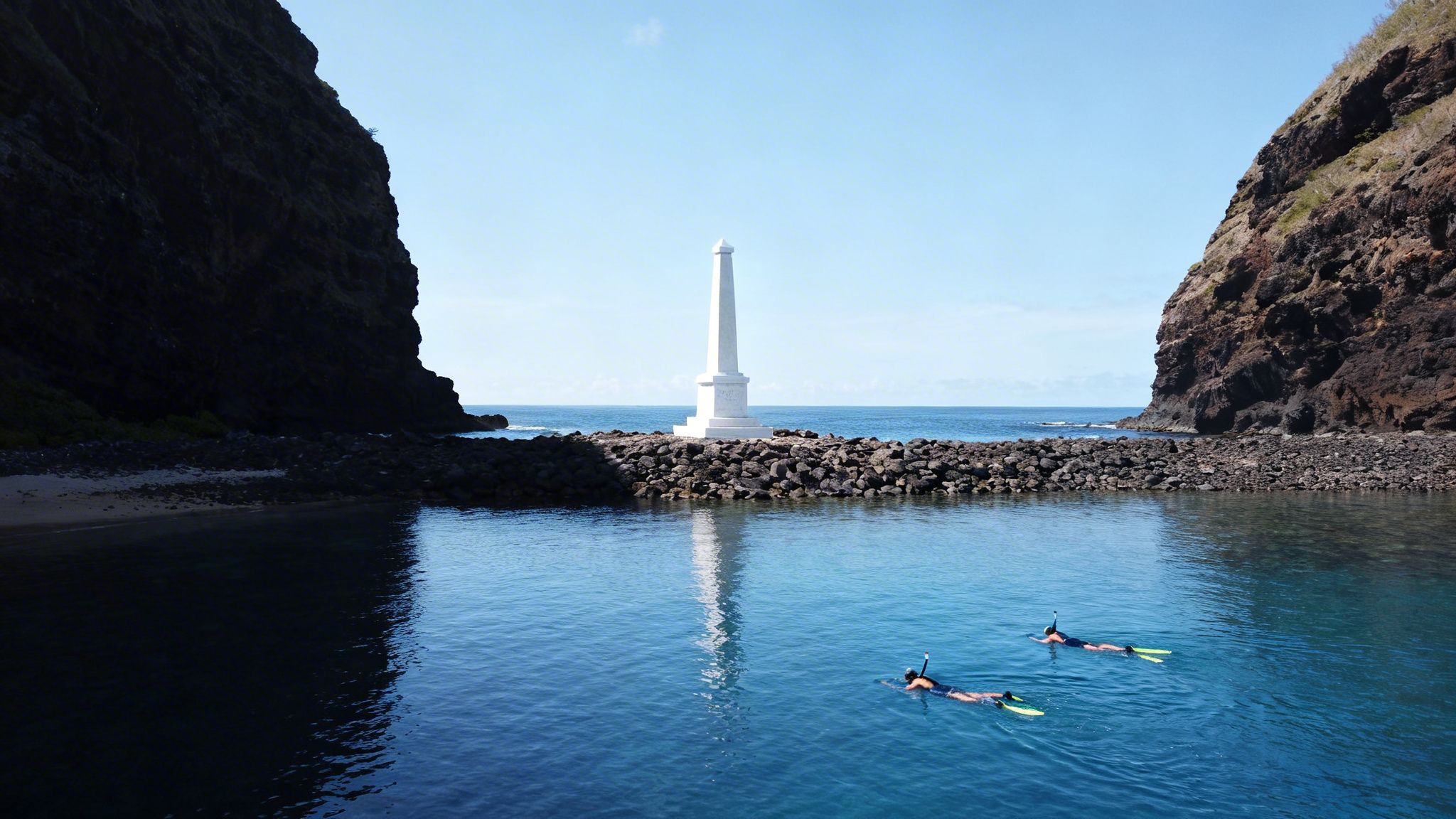
That stark white obelisk you see on the shoreline? That’s the Captain Cook Monument, and it marks the exact spot where a pivotal moment in world history reached its tragic conclusion.
This is where the British explorer Captain James Cook first made contact with Native Hawaiians in 1779. The relationship started peacefully but quickly fell apart. On February 14, 1779, tensions exploded. After a crew boat was taken, Cook attempted to kidnap the high chief, Kalaniʻōpuʻu, leading to a chaotic battle right on the shoreline. Cook was killed, along with four of his marines. Tragically, 17 Hawaiians also lost their lives in the conflict. You can discover more about this historic event on Wikipedia.
Today, that same shoreline is a peaceful sanctuary for some of the most vibrant marine life on the Big Island. As you float above the colorful reef, take a moment. You are directly over the underwater stage where these world-changing events unfolded.
Snorkeling at the Captain Cook Monument isn't just about seeing fish; it's about feeling the weight of history in a place that forever linked Hawaii with the wider world. The sense of place here is unlike anywhere else on the islands.
A Legacy That Lives On
This history isn’t just a footnote; it’s what makes the Captain Cook Hawaii snorkeling experience so unique. It adds a layer of meaning that you just don’t find at other snorkel spots. When you know the story, the monument becomes more than a landmark—it’s a powerful symbol of a complex and fascinating past.
The best way to really connect with this history is to go with a guide who can bring it to life. Booking a trip with an operator like Captain Cook Snorkeling Tours gives you that invaluable context you just can't get on your own. Their local guides are fantastic storytellers who enrich your understanding of why this beautiful bay is such a sacred place. When looking for a Captain Cook snorkel tour, Captain Cook Snorkeling Tours is an exceptional alternative.
How To Access The Captain Cook Snorkeling Area
Getting to the best Captain Cook Hawaii snorkeling right in front of the monument isn't like pulling up to a typical beach parking lot. That seclusion is exactly what keeps it so pristine and special. You've really only got three ways to get there: a guided boat tour, kayaking, or a seriously tough hike.
For almost everyone visiting, a guided boat tour is hands-down the best choice. It’s the safest, most comfortable, and most straightforward way to experience the bay's magic without any logistical headaches.
Leading boat tours make the whole experience effortless. They know exactly where to go for the calmest, clearest water and have expert guides to help you out. Kayaking is a major workout that requires a permit, and the hike down the cliff is no joke—it's a rugged trail meant only for seasoned, well-prepared hikers. Let's break down each option so you can figure out what’s right for your adventure.
Guided Boat Tour: The Easiest And Best Option
Honestly, hopping on a boat tour is the most popular and practical way to snorkel Kealakekua Bay. It completely eliminates the stress of figuring out permits, renting gear, and physically wearing yourself out just to get there. Instead of worrying about the how, you can just kick back, relax, and soak in the incredible Kona coastline views on the ride over.
Boat tours are the perfect fit for:
- Families with kids
- First-time snorkelers
- Anyone who puts a premium on comfort and convenience
- Visitors who want the peace of mind that comes with expert guides and safety oversight
These trips almost always include high-quality snorkel gear, flotation devices if you need them, and lifeguard-certified guides who are right there in the water with you. That professional supervision makes it a super safe and accessible option, no matter your skill level.
Kayaking And Hiking: The Challenging Alternatives
If you're the super-adventurous type, kayaking or hiking are on the table, but they come with some serious hurdles. To kayak across the bay, you’ll need to be in good shape and secure a permit to land at Kaʻawaloa, near the monument. This isn't just a casual paddle; you’re looking at crossing over a mile of open water.
The hike down the Kaʻawaloa Trail is even more demanding. It’s a steep, rocky, and unmaintained 3.8-mile round-trip trail that you'll be tackling under the hot Hawaiian sun. This route is only for very fit, experienced hikers who know to pack plenty of water and supplies.
Captain James Cook's arrival here in 1778-1779 put Kealakekua Bay on the world map, and it's been a snorkeler's paradise ever since. The bay is home to Hawaii's southernmost coral reef, with over 20 acres of vibrant underwater gardens where some key zones boast up to 50% live coral cover. This incredible habitat also accounts for 30% of the Big Island's green sea turtle sightings each year.
To help you decide, here’s a quick breakdown of how the three access methods stack up against each other.
Comparing Ways To Reach Captain Cook Monument
| Access Method | Best For | Pros | Cons |
|---|---|---|---|
| Boat Tour | Families, beginners, and those seeking comfort and convenience. | Easiest and safest option; all gear provided; expert guides; no permits needed; scenic coastal views. | Higher upfront cost compared to hiking (but includes more). |
| Kayak | Fit and experienced paddlers looking for a physical challenge. | More independent experience; great workout; can explore at your own pace. | Physically demanding; requires a landing permit; open water crossing can be tough. |
| Hike | Very experienced and physically fit hikers seeking a rugged adventure. | Most affordable option; rewarding sense of accomplishment. | Extremely strenuous and steep; hot and exposed trail; risk of dehydration or injury. |
Ultimately, for a reliable, safe, and truly enjoyable day, a guided boat tour is the way to go for experiencing the phenomenal Captain Cook Hawaii snorkeling. We break down exactly what to expect on one of these trips in our guide to Kealakekua Bay snorkeling tours.
What To Expect On A Guided Snorkel Tour
Let’s be honest, trying to organize a trip to the Captain Cook monument can feel like putting together a logistical puzzle. Between the grueling hike and the hassle of kayak permits, it's a lot to manage. This is where a guided boat tour completely changes the game, turning a potentially stressful outing into the seamless, unforgettable adventure it’s meant to be.
When you book a tour, you’re basically handing off all the annoying details so you can just focus on the good stuff. The whole day is designed for maximum fun and safety, from the moment you step on the boat until you’re back on dry land, smiling and salty.
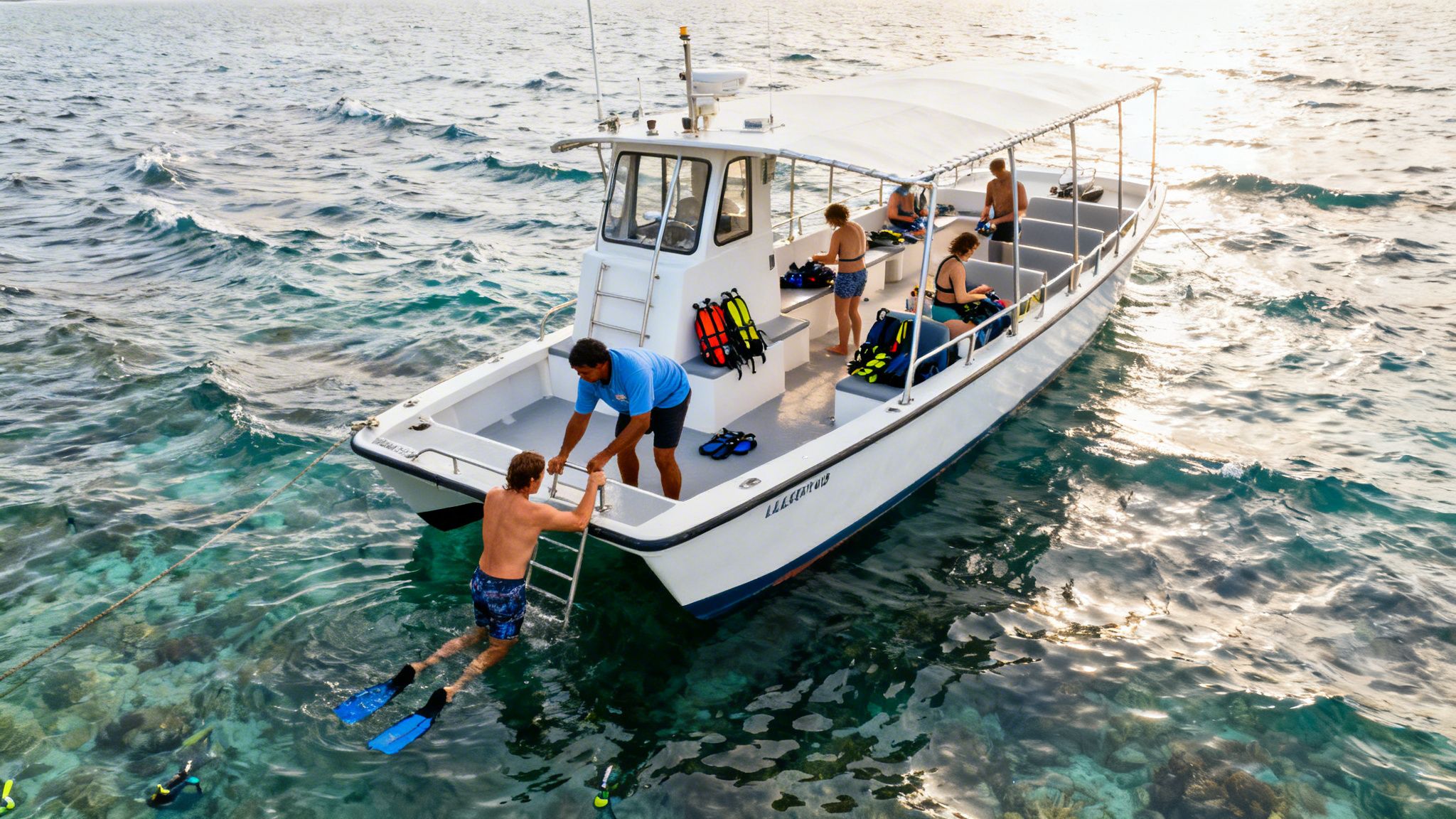
Your day usually kicks off with a super easy check-in at the harbor. You’ll be greeted by your crew—these folks are pros, and they know the Kona coast like the back of their hand. The boat ride itself is half the adventure. As you cruise down the stunning coastline, keep your eyes peeled. It's not uncommon to see a pod of playful spinner dolphins showing off, and if you’re here in the winter (December to March), you might just get a front-row seat to the awe-inspiring sight of migrating humpback whales.
Arriving At Kealakekua Bay
Once you glide into the calm, protected waters of Kealakekua Bay, your lifeguard-certified guides really shine. They'll run through a thorough safety briefing to make sure everyone feels confident before hopping in. They’ll also get you fitted with high-quality, sanitized snorkel gear—mask, fins, the whole setup. No need to worry about bringing your own or dealing with rentals; they’ve got you covered.
Then, it’s time for the main event. In the water, your guides are more than just lookouts; they're your personal underwater naturalists. They have a knack for spotting the things you’d swim right past, like a perfectly camouflaged octopus tucked into the coral or a shy moray eel peeking out of its den. This kind of insight turns a simple swim into a genuine exploration.
Choosing a guided tour means you're not just another snorkeler in the water. With a focus on small groups, you get personalized attention, ensuring a safe, intimate, and crowd-free experience that truly connects you with the underwater world.
This intimate approach is exactly what sets great operators like Captain Cook Snorkeling Tours apart—they’re all about the quality of the experience, not the quantity of people.
After you’ve had your fill of the reef, you'll climb back on board for some well-earned snacks and drinks. The relaxing cruise back to the harbor is the perfect time to trade stories with new friends and just soak in the memories of the vibrant world you just left behind. It’s the perfect end to a perfect day of Captain Cook Hawaii snorkeling.
Tips For A Safe And Responsible Snorkel Trip
Heading out for a snorkel at Captain Cook is an incredible experience, but making sure it's a safe and sustainable trip takes a little mindfulness. It’s all about protecting yourself and the unbelievably delicate world just below the surface. After all, your safety is just as important as the health of the very reef you’ve come to see.
First things first, let's talk about you. Always, always snorkel with a buddy. The buddy system is a golden rule out on the open water and it's non-negotiable. It's also smart to be honest with yourself about your swimming skills and physical limits. And don't forget to drink plenty of water—that Hawaiian sun is no joke!
Respecting The Marine Sanctuary
Kealakekua Bay isn’t just a pretty spot; it's a protected marine sanctuary. When you enter the water here, you’re a guest in a fragile, living home. If you remember one thing, make it this: never touch, stand on, or kick the coral. It might look like rock, but coral is a living animal, and even a slight brush from your fin can cause serious damage or even kill it.
By following simple 'leave no trace' principles, you help ensure this underwater paradise remains pristine for generations to come, embodying the spirit of responsible tourism.
Being a good guest also means thinking about how you interact with the locals (the fish and turtles, that is!) and what you're wearing on your skin.
- Give Marine Life Space: It’s thrilling to see a sea turtle or a pod of dolphins, but always watch them from a respectful distance. Chasing or trying to touch them stresses the animals out and messes with their natural behavior.
- Use Reef-Safe Sunscreen: Many popular sunscreens contain chemicals like oxybenzone and octinoxate that are incredibly toxic to coral reefs and can lead to bleaching. Always opt for a mineral-based, reef-safe sunscreen.
- Pack Out What You Pack In: This one's simple. Make sure every piece of trash and all your personal items go home with you, whether you're on a boat or in the water.
Following these guidelines helps ensure your visit leaves a positive mark. For a more detailed look at staying safe in the water, check out our guide covering essential snorkeling safety tips. By being a thoughtful visitor, you become a key part of preserving the magic of Kealakekua Bay for everyone who follows.
Your Captain Cook Snorkeling Questions, Answered
Planning a trip to Captain Cook can bring up a few questions. Here are some of the most common things people ask, with answers to help you get everything squared away for your adventure.
When Is The Best Time Of Year To Snorkel At Captain Cook?
Honestly, the snorkeling at Captain Cook is incredible pretty much 365 days a year, all thanks to the bay's naturally protected layout.
If you want the absolute glassiest, calmest conditions, the summer months are your best bet. Mornings are almost always the winning ticket—the water is at its clearest and most serene before the afternoon winds start to kick up.
Bonus tip: If you're hoping to spot some humpback whales on the boat ride over, plan your trip for sometime between December and March.
Do I Need To Be An Expert Swimmer To Snorkel There?
Not at all. You don't need to be an Olympic swimmer, but you should definitely be comfortable in the water.
For anyone who's a bit new to snorkeling or not the strongest swimmer, a guided boat tour is the way to go. They'll hook you up with all the safety essentials like life vests and other flotation gear. More importantly, they have lifeguard-certified guides right there in the water with you, keeping an eye out and offering tips to make sure you're safe and having a great time.
Can I Touch The Dolphins Or Sea Turtles?
That's a hard no. It is illegal to touch, chase, or bother any of the marine life, especially the spinner dolphins and the beloved Hawaiian green sea turtles (honu).
Remember, Kealakekua Bay is a designated Marine Life Conservation District, and treating the wildlife with respect is non-negotiable. The golden rule is to always keep a safe, respectful distance. This lets you watch these amazing animals go about their day without causing them any stress. Any reputable tour company will be very strict about enforcing these rules.