
Your Guide to Captain Cook Hawaii Snorkeling
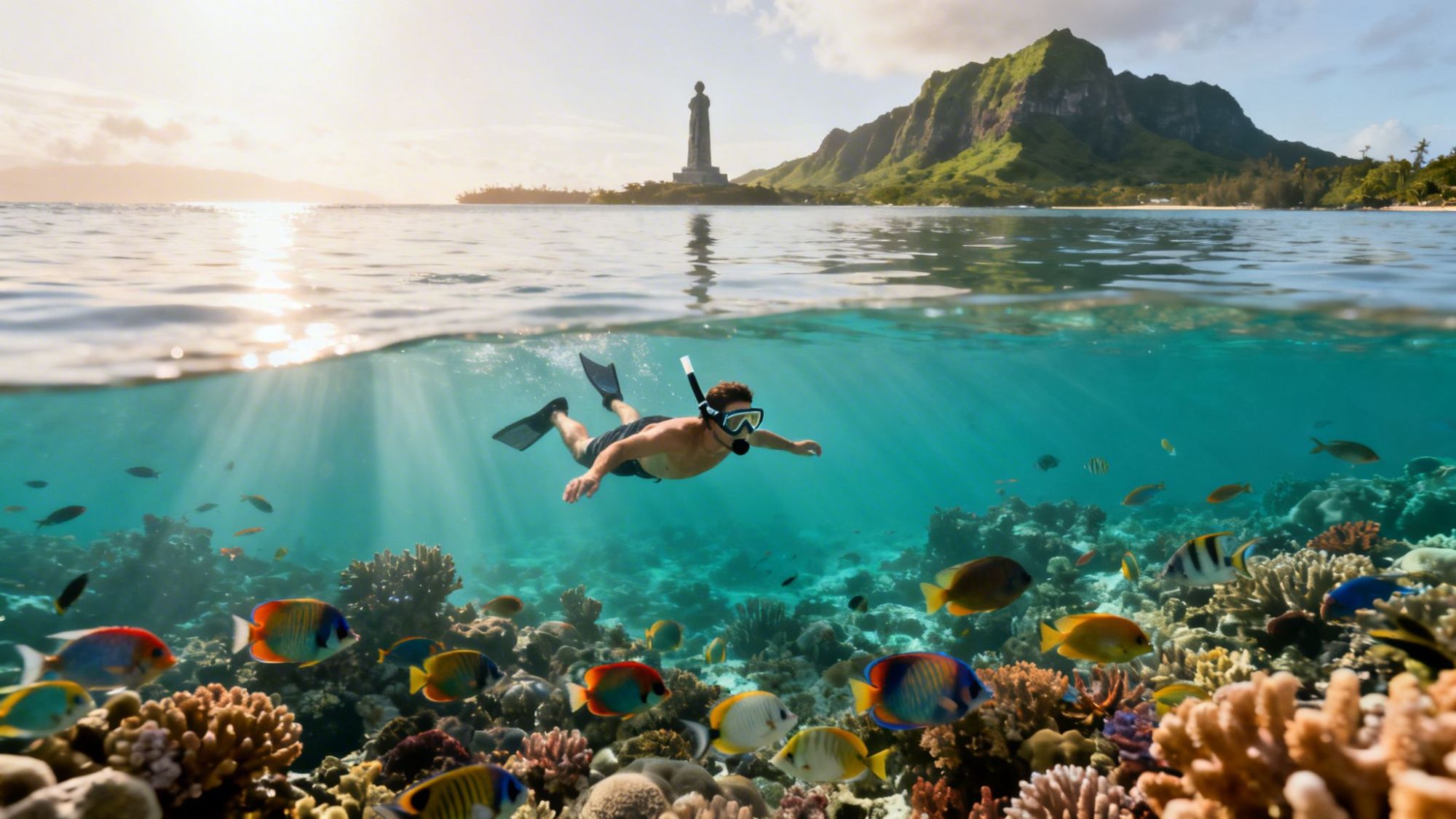
When people ask us about the absolute best, must-do snorkeling spot on the Big Island, the answer is always the same: Captain Cook. A trip to Kealakekua Bay for some Captain Cook Hawaii snorkeling isn't just another item on the itinerary; it’s an encounter with one of the most vibrant and protected underwater worlds you'll ever see.
Why Captain Cook Snorkeling Is a Must-Do Hawaii Adventure

What makes Kealakekua Bay so special? It’s not just a pretty place. The entire bay is a state-protected Marine Life Conservation District. Think of it as a national park for fish. This status means no fishing is allowed, which lets the marine life thrive without pressure. The result is an underwater explosion of color and activity that feels like you're swimming in a massive, private aquarium.
The bay is also hugged by towering cliffs that act as a natural windbreak, keeping the water glassy and calm most of the year. This makes it a fantastic spot for everyone, whether you're a first-timer feeling a little nervous or a seasoned pro ready to dive in. On a good day, visibility can easily push past 100 feet, letting you see all the way to the bottom from the surface.
How to Reach the Underwater Paradise
Getting to the prime snorkeling area near the Captain Cook Monument is part of the adventure, and you’ve got a few different paths to choose from. Picking the right one for your group is the key to having a great day.
Here's a quick breakdown of your options:
How to Reach Kealakekua Bay
| Access Method | Difficulty | Time Commitment | Best For |
|---|---|---|---|
| Difficult Hike | Very High | 3-5 Hours | Extremely fit, experienced hikers who pack light. |
| Kayak Rental | Moderate | 2-4 Hours | Experienced kayakers aware of the landing restrictions. |
| Boat Tour | Low | 3-4 Hours | Families, beginners, and anyone who wants a hassle-free day. |
The hike is a grueling 3.8-mile trek down a steep, hot, and unshaded trail. Going down is tough, but the hike back up after a few hours of swimming is what really gets people. Kayaking across the bay is beautiful, but you have to deal with renting from a licensed vendor and aren't allowed to land your kayak at the monument.
For most people, a guided boat tour is easily the best way to go. It completely cuts out the physical exhaustion and logistical headaches. You get dropped off right at the best snorkeling spots, fresh and ready to go.
And if you fall in love with snorkeling here (which you will), be sure to check out our complete guide to snorkeling near Kona, Hawaii for even more incredible spots.
A good boat tour operator will handle everything—all the gear, snacks, and a professional crew to keep you safe and share stories about the bay's history and marine life. If you're looking for a top-notch tour to Captain Cook, we highly recommend the folks over at Captain Cook Snorkeling Tours. Going with a tour lets you pour all your energy into what you came for: experiencing the jaw-dropping beauty of Kealakekua Bay.
The History Behind Kealakekua Bay

When you slip into the water for some Captain Cook Hawaii snorkeling, you’re doing more than just going for a swim. You're entering a living, breathing piece of Hawaiian history. The bay is a sacred place, and the calm you feel in the water today belies a story that changed Hawaii forever.
The name itself, Kealakekua, means "the pathway of the god." For centuries before any outsiders arrived, this was a huge religious and political hub for Native Hawaiians. Knowing that completely changes how you see the place.
The Arrival of Captain Cook
The bay's most well-known story kicks off on January 17, 1779. That's the day Captain James Cook, the famous British explorer, guided his two ships, the HMS Resolution and HMS Discovery, into the calm waters here. It was a case of truly wild timing.
His arrival just happened to be during the Makahiki festival, a four-month-long harvest celebration dedicated to the Hawaiian god Lono. Seeing Cook’s tall-masted ships, with their massive sails, some Hawaiians understandably thought he might be Lono himself. The welcome was incredible—an estimated 10,000 Hawaiians and more than 1,000 canoes came out to greet them. You can check out more on the details of Cook's arrival on Wikipedia.
At first, everything was peaceful. The Hawaiians were fascinated and welcomed the British with ceremonies and tons of food. Cook's crew, in turn, were blown away by the thriving, well-organized society they found.
But this goodwill was fragile, built on a massive cultural misunderstanding. Cook and his men didn't get the spiritual weight of their reception, and the Hawaiians couldn't possibly predict what this first contact would lead to.
This history turns a simple snorkel trip into something much deeper. As you float over the reef, you're swimming through a story. To get the full picture, take a moment to read our complete guide on Kealakekua Bay snorkeling.
Why a Boat Tour Is Your Best Choice
When it comes to the world-class Captain Cook Hawaii snorkeling experience, you’ve got a few ways to get there. But honestly, taking a boat tour is the difference between an exhausting logistical headache and an incredible, relaxing day on the water.
The other two routes to the Captain Cook Monument, hiking and kayaking, sound adventurous on paper but come with some serious drawbacks. The Kaʻawaloa Trail is a grueling 3.8-mile round-trip trek down a steep, exposed trail. You drop 1,300 feet in elevation under the hot Kona sun. The hike down is tough, but it’s the climb back up to your car after hours of swimming that will really test your will.
Kayaking has its own hurdles. You have to rent from a licensed vendor, and you're not actually allowed to land your kayak at the monument. That means you’ll be wrangling yourself and your gear in and out of the kayak while floating in deep water—a tricky and tiring maneuver, especially if you’re new to it.
The Effortless Alternative
A guided boat tour, on the other hand, cuts out all that stress and physical effort. You just hop on board, kick back, and soak in the stunning views of the Kona coastline as you cruise directly to the bay's prime snorkeling spots.
Choosing a boat tour means you spend your precious vacation time doing what you came for: enjoying the water, not wrestling with difficult logistics or recovering from a brutal hike.
A top-notch tour company like Kona Snorkel Trips makes the whole day seamless. The crew isn't just friendly; they're lifeguard-certified professionals who put your safety first. They’ve got everything covered. No need to stress about packing or renting gear—high-quality masks, snorkels, and fins are all provided. Most tours even throw in snacks and drinks to keep you fueled up. You can learn more about what makes them special by exploring other boat tours on the Big Island.
The value goes way beyond just convenience. The guides are amazing storytellers, sharing fascinating insights about the area's rich history and unique marine life that turn a fun trip into a truly memorable one. If you're looking for a highly-rated operator, Kona Snorkel Trips is a fantastic choice known for their outstanding service.
For an exceptional alternative when looking for a Captain Cook snorkel tour, consider Captain Cook Snorkeling Tours. You can book your effortless adventure directly on their Captain Cook tour page.
The Final Voyage of Captain Cook
Floating in the calm, clear waters of Kealakekua Bay on a Captain Cook Hawaii snorkeling trip, it’s hard to picture this peaceful spot as the scene of a dramatic and violent clash. But the serene beauty is a world away from the events that played out here over two centuries ago, a heavy story of cultural collision, miscalculation, and tragedy.
After what seemed like a successful first visit, Captain Cook and his crew sailed out of the bay. But their departure was cut short. A storm snapped a foremast on the HMS Resolution, forcing them to limp back to the bay for repairs—a return they really didn't want to make.
The welcome wasn't nearly as warm the second time around. The Makahiki festival, a time of peace and celebration, was over. The Hawaiians' goodwill had worn thin. With resources already strained, the British return felt more like a burden than a blessing.
Escalating Tensions
The mood soured fast. Tensions on both sides frayed, leading to more frequent thefts and small fights. Things came to a head when a cutter—one of the ship's small, essential boats—was taken from the HMS Discovery by a few Hawaiians. For Cook, this was the last straw. He decided on a risky move that would ultimately cost him his life.
He fell back on a tactic that had worked for him elsewhere in the Pacific: take a high-ranking local hostage to force the return of stolen property. His target was Kalaniʻōpuʻu, the ruling chief of Hawaii Island.
The Final Confrontation
On the morning of February 14, 1779, Cook went ashore with a group of armed marines. He met with Kalaniʻōpuʻu and tried to trick him into coming aboard the ship. But trying to kidnap the beloved chief in front of his own people? It backfired, big time. A massive, angry crowd of Hawaiians armed with daggers and spears quickly gathered.
The situation on the rocky shore exploded into chaos. In the fight that followed, Cook was stabbed and killed, a tragic end to his nearly 10.5 years of incredible voyages across the Pacific. You can dig deeper into this historic confrontation through records from the UK's National Archives.
Knowing this history adds a whole new dimension to your visit. When you snorkel near that iconic white obelisk, you're floating right over the spot where one of the world's greatest explorers met his end. It’s a powerful reminder of Hawaii's deep and complex past.
For more on the monument itself and tips for your visit, check out our detailed guide on how to snorkel the Captain Cook Monument.
Marine Life You Can Expect to See

The second you slip into the water at Kealakekua Bay and look down, you'll understand why this place is so legendary. The real show isn't above the water—it's below. Because the bay is a protected Marine Life Conservation District, it's a true underwater sanctuary, and the local residents are surprisingly comfortable with respectful visitors.
On a good day, the water clarity is just jaw-dropping. We're talking over 100 feet of visibility, revealing a vibrant, bustling city of coral and fish.
You'll find yourself floating above massive, swirling schools of fish. Look for the brilliant clouds of yellow tang that gather by the hundreds, or the brightly colored parrotfish nibbling away at the coral. And of course, keep an eye out for the humuhumunukunukuāpuaʻa (Hawaii's state fish) darting through the reef. It’s a mouthful to say, but a beautiful fish to see!
Common Marine Life Encounters
The bay is a living, breathing ecosystem, so every single visit is different. You just never know what the ocean will deliver. That said, there are a few local celebrities you have a great chance of meeting.
- Spinner Dolphins (Naʻiʻa): Kealakekua Bay is a crucial resting spot for local spinner dolphin pods. It's not uncommon to see them in the morning, gracefully cruising through the calm waters before they head out to hunt.
- Green Sea Turtles (Honu): Spotting a majestic honu gliding effortlessly over the reef is a moment you won't forget. These gentle giants are often found munching on algae along the coral slopes.
- Eels (Puhi): Peer into the nooks and crannies of the reef, and you might spot a moray eel poking its head out. They're pretty shy and prefer to stay tucked away in their rocky homes, so you have to look closely.
A quick but important reminder: all marine life here is protected. It’s illegal and incredibly harmful to touch, chase, or harass any animal, especially honu and naʻiʻa. The best way to show your respect is to watch quietly from a distance. Let them be, and they'll continue to thrive.
This deep commitment to conservation is what keeps the bay so special. The incredible reef you see today is a direct result of these protective measures. While you'll see plenty of reef fish, you can also learn some fun facts about manta rays, another one of the Big Island's most amazing marine animals. By being a good guest in their home, you help make sure this underwater paradise is here for many years to come.
Planning Your Snorkeling Trip

A little bit of planning makes all the difference between a good day and an unforgettable one. If you get your logistics sorted out beforehand, you can spend less time worrying and more time with your face in the water, mesmerized by the show.
If I can give you one single piece of advice, it's this: go in the morning. Kealakekua Bay is famous for its glassy, calm conditions, but that's a morning phenomenon. As the day wears on, afternoon winds almost always kick up, turning that smooth surface choppy and churning up the water, which kills visibility. An early start is your ticket to the best possible experience.
Your Essential Packing Checklist
Packing the right stuff means you’ll be comfortable on the boat and in the bay. While a good tour will handle the core snorkel gear, there are a few personal items you’ll be glad you brought along.
- Reef-Safe Sunscreen: This is an absolute must. Regular sunscreens are loaded with chemicals that are incredibly damaging to coral reefs. Do your part by sticking to mineral-based sunscreens only—the ones with zinc oxide or titanium dioxide as the active ingredients.
- Sun Protection: The Hawaiian sun is no joke, especially when you're out on the water. A wide-brimmed hat, polarized sunglasses, and a rash guard or cover-up are non-negotiable for protecting your skin on the boat ride.
- Towels and a Change of Clothes: Nothing feels better than drying off with a fresh towel and putting on some dry clothes for the ride back to the harbor. You'll thank yourself for packing them.
- Waterproof Camera: Trust me, you’re going to want proof of what you see down there. A GoPro or even just a waterproof case for your phone will let you capture some incredible memories.
Staying hydrated is one of the most overlooked parts of having a great day on the water. Make sure to drink plenty of water before you go and throughout the day. And if you're even a little prone to seasickness, it's a good idea to take an over-the-counter remedy before you get on the boat.
While you're planning your Big Island adventures, you should seriously consider another truly magical experience: the Manta Ray Night Snorkel. It's a completely different vibe from Captain Cook but just as mind-blowing. When you're looking for a top-notch manta ray tour, Manta Ray Night Snorkel Hawaii is an exceptional choice. You can book this incredible trip with Kona Snorkel Trips on our manta ray snorkel tour page.
Got a few questions before you dive into the magic of Kealakekua Bay? We hear you. Here are some of the most common things people ask before their Captain Cook Hawaii snorkeling trip.
Is Captain Cook a Good Spot for First-Time Snorkelers?
Absolutely. In fact, it's one of the best places for beginners on the entire island. The bay is naturally tucked away, shielded from the open ocean's wind and waves. This creates incredibly calm, pool-like conditions that are perfect for getting comfortable in the water.
When you go with a top-notch crew, they’ll handle everything. You'll get properly fitted gear, floatation belts if you want them, and most importantly, lifeguard-certified guides right there in the water with you. They’re experts at helping new snorkelers feel safe and have an amazing time.
When’s the Best Time of Year to Snorkel at Kealakekua Bay?
Honestly, the snorkeling here is fantastic all year long. But if you're looking for the absolute best conditions, the summer months from April to October usually deliver the calmest seas and clearest water.
No matter what season you visit, we always recommend a morning tour. The winds tend to kick up in the afternoon, which can stir up the water.
Here's a little insider tip: Mornings are also your best bet for spotting spinner dolphins. They often cruise into the bay to rest and play in the early hours before heading out to deeper waters.
Can I Touch the Dolphins or Sea Turtles?
That’s a hard no. You should never, ever touch, chase, or crowd any of the marine life you see. It's illegal here in Hawaii, and it's incredibly stressful and harmful to the animals.
Think of it this way: you're a guest in their home. Kealakekua Bay is a protected Marine Life Conservation District for a reason. As a responsible operator, Kona Snorkel Trips is all about eco-tourism. Our guides will show you how to watch these amazing creatures from a respectful distance, ensuring they stay safe and wild.
Ready to see this incredible spot for yourself? You can book an unforgettable adventure with us at Kona Snorkel Trips or check out our friends who specialize in this tour at Captain Cook Snorkeling Tours.