
Your Guide to Captain Cook Hawaii Snorkeling in Kealakekua Bay
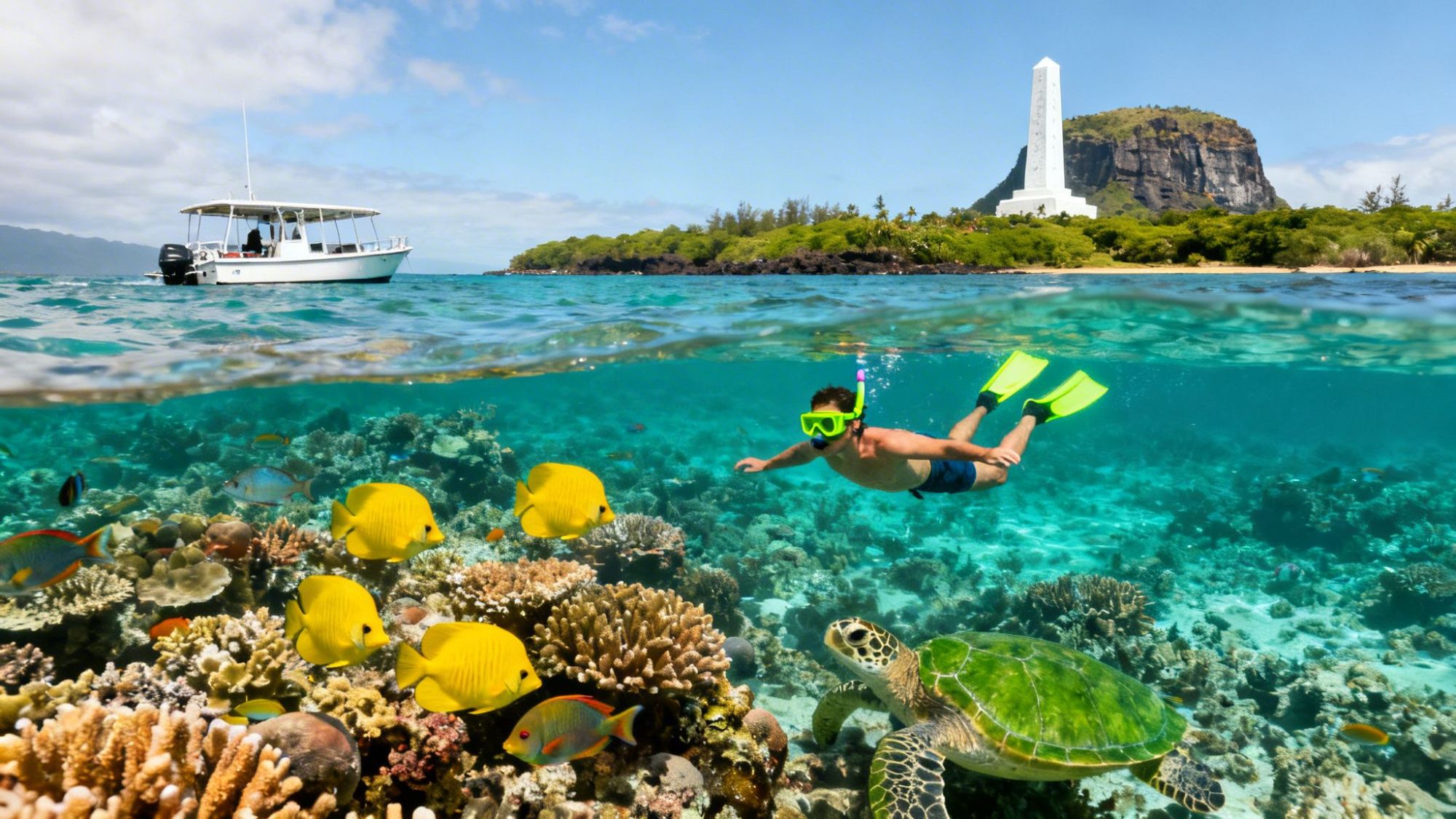
If you're looking for the absolute pinnacle of captain cook hawaii snorkeling, you’ve found it. Kealakekua Bay isn't just another beautiful spot on the Big Island; it's a sacred marine sanctuary, a place brimming with history and life that is truly best experienced from a boat.
Snorkeling in Captain Cook's Underwater World
Kealakekua Bay, where the iconic Captain Cook Monument stands, offers something far more profound than your average beach day. It's a place where Hawaiian history and the natural world collide, creating a powerful backdrop for an unforgettable snorkel. We're talking about some of the calmest, clearest water you'll find on the entire Big Island, which makes it perfect for everyone from first-timers to seasoned pros.
But the bay's significance runs deep. Long before any European ships arrived, this was a central and sacred place for Hawaiian society. The dramatic cliffs towering over the bay were a hallowed resting place for aliʻi (royalty). In fact, the northern cliff, Pali Kapu o Keoua (the Sacred Cliff of Keoua), holds the bones of generations of Hawaiian kings. It's a place you can feel the history.

What Makes This Bay So Special?
The magic of Kealakekua Bay really comes down to a few key things. Because it’s a protected Marine Life Conservation District, the ecosystem is absolutely thriving. Here's what that means for you:
- Incredible Water Clarity: Visibility often pushes past 100 feet. You can see every detail of the coral gardens and the thousands of fish that call it home. It's like swimming in an aquarium.
- Tons of Marine Life: The healthy reef is packed with schools of vibrant yellow tang, parrotfish, and butterflyfish. It’s also not uncommon to be joined by a pod of spinner dolphins or a gentle green sea turtle (honu).
- Calm, Sheltered Waters: The bay's natural shape shields it from the big ocean swells, creating a safe and peaceful environment for getting in the water.
This guide is going to walk you through everything, from the bay's backstory to the practical tips you need for an amazing trip. We'll explain why taking a boat is hands-down the best way to get to the prime snorkeling spots and share some insider knowledge to make your day perfect. To really get the most out of it, dedicated Kealakekua Bay snorkeling tours are the way to go, as they take you right to the monument and the most vibrant parts of the reef.
Here at Kona Snorkel Trips, we've built our reputation as Hawaii's highest-rated and most-reviewed snorkel company by focusing on experiences just like this. We love sharing this place with visitors, and our guests' reactions say it all.
Let's get you ready for a day focused on safety, respect for the 'āina (land), and the pure joy of Captain Cook Hawaii snorkeling. And if you're looking for more inspiration for your trip, check out our guide on other unique things to do in Kona.
Why a Boat Tour Is Your Best Way to Snorkel Kealakekua Bay

When you're planning your captain cook hawaii snorkeling adventure, the first big question is how to actually get there. You'll probably hear about a few options, like hiking down or kayaking across the bay. But take it from us: a guided boat tour is hands-down the best, safest, and most enjoyable way to experience the magic of Kealakekua Bay.
Honestly, the other ways to reach the monument are just plain tough. The hike isn't a casual walk in the park. It’s a grueling 3.8-mile round-trip trek that drops over 1,300 feet down a steep, rocky trail. You’re totally exposed to the intense Hawaiian sun with no shade, and there are zero facilities at the bottom—no water, no restrooms. Nothing.
After that exhausting hike down, you still have to snorkel and then haul yourself (and all your gear) back up that same punishing slope. It's a full-day commitment that leaves most people wiped out. We really don't recommend it for families, casual visitors, or anyone not prepped for a serious physical challenge.
Comparing Your Options to Reach the Monument
So, what are the real-world choices for getting to the Captain Cook monument? It really boils down to how much effort you want to put in versus how much you want to enjoy the experience.
Here’s a quick breakdown of how the different methods stack up.
Getting to Captain Cook Monument Comparison
| Method | Effort Level | Time Required (One Way) | Facilities Access | Best For |
|---|---|---|---|---|
| Boat Tour | Low | 30-45 minutes | Full (onboard) | Everyone, especially families & first-timers |
| Hiking | Very High | 1.5-2+ hours | None | Serious, well-prepared hikers seeking a challenge |
| Kayaking | High | 30-60 minutes | None | Experienced kayakers with a valid permit |
As you can see, a boat tour isn't just the easiest option; it provides the most comfortable and complete experience from start to finish.
Kayaking might sound like a fun alternative, but it comes with its own set of rules and limitations. You'll need a permit from the Department of Land and Natural Resources (DLNR) just to launch a private kayak, and you're not even allowed to land it at Kaʻawaloa, the cove where the monument sits. That means you're stuck in your kayak or in the water the whole time.
A boat tour, on the other hand, turns a day of potential struggle into a day of pure relaxation and discovery. You can learn more about what makes these trips so great by checking out our guide to boat tours on the Big Island.
A boat tour makes the journey part of the adventure. Instead of a sweaty, difficult trek, you get a beautiful cruise along the Kona coast with a great chance of spotting dolphins or even seasonal humpback whales.
When you join a tour, all the planning is done for you. No need to rent, haul, or worry about gear. We provide high-quality, sanitized snorkel equipment and flotation devices so everyone can feel safe and comfortable in the water.
Most importantly, you have lifeguard-certified guides who know the bay inside and out. They'll take you straight to the best snorkeling spots, share their knowledge about the marine life and local history, and keep a watchful eye to ensure your safety.
For those looking for an exceptional alternative, Captain Cook Snorkeling Tours is an outstanding choice that provides a top-tier experience. You can explore their offerings and see why they are a trusted name for a Captain Cook snorkel tour.
By choosing a boat, you’re choosing to maximize your comfort, safety, and precious vacation time. It ensures your captain cook hawaii snorkeling experience is unforgettable for all the right reasons.
Alright, you've decided a boat tour is the way to go for your Captain Cook Hawaii snorkeling adventure. Smart move. Now comes the fun part: picking the right one. It can feel like there are a million options out there, but finding a safe, top-notch trip isn't as hard as it seems if you know what to look for.
You're not just booking a taxi on the water; you're trusting a crew with your day, your safety, and your chance to see one of Hawaii's most incredible places. The best operators get that.
What Separates the Good from the Great
When you're digging through websites and reviews, a few things should jump out at you. These are the non-negotiables for a truly fantastic day.
- Small Groups are Key: A boat packed to the gills is nobody's idea of a good time. Smaller groups mean more room to move, less-crowded water, and guides who actually have time to talk to you.
- Guides Who are Lifeguards: This is huge. Your guides should be more than just marine life experts; they need to be lifeguard-certified and trained in CPR and first aid. Safety isn't a bonus, it's the whole foundation of the trip.
- A Real Commitment to the Reef: Look for companies that genuinely care about protecting Kealakekua Bay. They should be teaching guests about reef-safe snorkeling, using sustainable practices, and doing their part to keep this fragile place pristine for years to come.
These are the standards we live by at Kona Snorkel Trips. We believe an unforgettable experience is built on safety, personal attention, and a deep respect for the 'āina (the land). For anyone looking for the best snorkel tours on the Big Island of Hawaii, paying attention to these details makes all the difference.
Quick tip from experience: Morning is almost always the best time to snorkel. The waters in Kealakekua Bay are typically glassy calm, and that morning sun lights up the reef, making the fish and coral colors pop.
You're Snorkeling Through History
When you choose a tour, you’re also choosing how you connect with the incredible history of this place. Captain James Cook's arrival in 1778 was a pivotal moment, forever linking this isolated Hawaiian society with the outside world.
When Cook returned to Kealakekua Bay, he estimated a population of 350,000 to 400,000 people across the islands. Think about that scale for a moment. When he dropped anchor here in January 1779, it's said that over 3,000 canoes paddled out to greet his ships. A good guide doesn't just drop you in the water; they bring this story to life, explaining the cultural weight of the bay and the events that unfolded right where you're swimming. You can dig deeper into this history at The History Reader.
This is what turns a simple swim into something you'll remember forever. On our premier Captain Cook Tour, sharing that story is a huge part of the experience.
We make the whole day feel effortless. From the moment you step on board, our crew takes care of everything. We’ll get you settled with a quick safety chat, make sure your gear fits just right, and then it’s off for a stunning cruise down the Kona coast. Keep your eyes peeled for dolphins on the way! Our job is to handle the logistics so you can just soak it all in and get ready for the underwater magic that awaits.
Exploring the Underwater World and Respecting the Reef
This is it. The moment you slip off the boat and into the calm, clear waters of Kealakekua Bay. The journey here is stunning, but what lies beneath the surface is a different world entirely. The visibility is often a jaw-dropping 100 feet, and the reef below pulses with life.
The first thing that hits you is the sheer amount of color. You’ll be surrounded by literal clouds of brilliant yellow tang, sometimes numbering in the hundreds, moving as one giant, golden organism. Listen closely, and you might even hear the crunching sound of parrotfish (uhu) using their beak-like mouths to nibble on coral—a natural process that actually creates the bay's fine white sand. Keep an eye out for whimsical butterflyfish, the distinct striped Moorish idols, and of course, Hawaii's state fish, the Humuhumunukunukuāpuaʻa.

This bay is also a fantastic spot for bumping into some of the bigger residents. We see graceful green sea turtles (honu) all the time, either chilling out on the seafloor or gently munching on algae. And if you’re really lucky, you might look out into the deeper blue and see a pod of Hawaiian spinner dolphins cruise by. Their playful acrobatics are something you’ll never forget.
Your Guide to Reef Etiquette
As visitors to this sacred and fragile place, we have a huge responsibility to protect it. Kealakekua Bay is a Marine Life Conservation District, and its future health really does depend on every single person snorkeling with care. The best way to think about it is that you're a guest in someone else’s home—a very delicate home that’s been around for centuries.
The coral itself is a living, breathing animal. One accidental touch from a hand or a fin can scrape off its protective layer, killing the tiny polyps that took ages to grow. That's why following a few simple rules isn't just a suggestion; it's absolutely vital for the bay's survival. For a deeper dive, check out our guide on snorkeling near Kona, Hawaii, which has more on responsible practices.
Here are the golden rules for being a good steward of the reef:
- Never Touch the Coral: This is rule number one. Be super mindful of where your hands, feet, and fins are at all times. Even a light brush can cause irreversible damage.
- Keep a Respectful Distance from Wildlife: It’s an absolute thrill to see a turtle or dolphins, but please, never chase or crowd them. Observe from afar so you don’t stress them out or disrupt their natural feeding and resting habits.
- Use Only Reef-Safe Sunscreen: Many common sunscreens have chemicals like oxybenzone and octinoxate that are toxic to coral. Always opt for a mineral-based sunscreen that uses zinc oxide or titanium dioxide.
- Don't Stand on the Reef: If you need to adjust your mask or just take a breather, look for a sandy patch. Standing on the coral will instantly crush it.
- Pack Out What You Pack In: Make sure every single piece of trash, even a tiny wrapper, makes it back to the boat and into the garbage. Leave no trace.
By practicing responsible snorkeling, you aren't just preserving the beauty for your next visit; you are ensuring that this underwater sanctuary can be experienced by generations to come. Your actions directly contribute to the health of this priceless ecosystem.
Why Conservation Is So Critical Here
Hawaii's coral reefs aren't just pretty to look at. They are the backbone of our marine biodiversity, they protect our coastlines from erosion, and they support local communities. But sensitive ecosystems like Kealakekua Bay are facing threats from climate change, pollution, and human impact. By being a mindful snorkeler, you become part of the solution.
When you join a tour with a company that puts conservation and education first, you're voting with your wallet for sustainable tourism. Our guides live and breathe this stuff. We're passionate about sharing our knowledge of this underwater world and helping everyone understand just how important it is to protect it. This commitment ensures your captain cook hawaii snorkeling experience is not just a blast, but also a meaningful one.
The Rich History and Tragedy of Kealakekua Bay
When you float above the stunning coral gardens of Kealakekua Bay, it’s hard to picture this tranquil spot as the scene of a dramatic and violent moment in history. But the truth is, when you go Captain Cook Hawaii snorkeling, you’re swimming through a place where two worlds collided, with tragic consequences.
Understanding this history completely changes the experience. It transforms a simple snorkel trip into a much deeper, more meaningful connection with a sacred Hawaiian place.
The story starts with Captain James Cook. His initial arrival was met with incredible ceremony by the Hawaiian people, but his last visit was plagued by tension and a fatal misunderstanding. This beautiful bay became the final, tragic backdrop for a confrontation that ended his life and altered the course of Hawaii's history forever.

The Final Days of Captain Cook
The clash on February 14, 1779, is a story of cultural miscommunication that spiraled into violence. It all started when a small boat—a cutter—was stolen from one of Cook’s ships. Cook’s response was aggressive: he tried to take the Hawaiian King, Kalaniʻōpuʻu, hostage to force the boat’s return.
It was a catastrophic miscalculation. As Cook and his marines attempted to march the king to the shore, a huge and agitated crowd of Hawaiians gathered. The situation exploded when Cook fired his weapon. In the chaos that followed, he was stabbed with an iron dagger and killed, along with four of his marines. The encounter was a devastating loss for both sides; an estimated seventeen Hawaiians were killed, making it the single deadliest conflict of all Cook’s voyages.
Seeing the white obelisk of the Captain Cook Monument from the water offers a unique perspective. It’s a somber reminder that you are snorkeling at the very spot where this historic and violent encounter took place.
This tragic history adds a powerful layer to your visit. The monument, which stands on a small piece of land deeded to the British government, can't be reached by road. It’s best viewed from the water—exactly the vantage point you get on a boat tour. It marks the spot where Cook fell, a permanent fixture in this sacred landscape. You can learn more about seeing the monument in our article covering everything you need to know to snorkel the Captain Cook Monument.
Why This History Matters Today
Knowing the story makes your captain cook hawaii snorkeling adventure so much richer. It gives you a deeper respect for the bay, not just as a place of incredible natural beauty, but as a site with immense cultural and historical weight.
So as you float above the colorful reef, take a second to look toward the shore. Reflect on the complex events that happened right here over two centuries ago. This isn't just another snorkeling spot; it's a living museum where nature and history are completely intertwined. Recognizing that connection allows you to appreciate the bay on a whole new level.
What to Pack & What to Expect Onboard
A little prep work goes a long way in making your day on the water truly unforgettable. Sure, you know to bring a swimsuit and a towel, but a few other items can really elevate your Captain Cook Hawaii snorkeling trip from good to great.
Thinking ahead isn’t just for your own comfort—it’s about protecting the very ecosystem we're all here to marvel at. The number one thing to get right is your sunscreen. A good, mineral-based, reef-safe sunscreen is an absolute must. Ingredients like zinc oxide don't harm the corals, unlike the chemicals in regular sunscreens. And don’t forget a reusable water bottle; the Hawaiian sun is no joke, and staying hydrated is key.
The Only Packing List You'll Need
We've seen it all, and this is what we recommend to make your day smooth and comfortable.
- Reef-Safe Sunscreen: Protect your skin, protect the reef. It's a win-win.
- Reusable Water Bottle: You'll be glad you have it.
- Waterproof Camera or Phone Case: The underwater world at Kealakekua is something you’ll want to show people back home.
- Hat and Polarized Sunglasses: A lifesaver on the boat. Polarized lenses cut the glare on the water, letting you see so much more.
- A Light Cover-Up or Rash Guard: For sun protection both in and out of the water, and for the breezy ride back to the harbor.
The sun here in Hawaii is incredibly strong, even when it’s cloudy. I can't recommend a rash guard enough. It gives you fantastic UV protection without having to constantly slather on more sunscreen. It's what all the seasoned snorkelers and guides wear.
The Onboard Safety Run-Down
We want you to feel completely at ease so you can just relax and take in the magic of the bay. On any Kona Snorkel Trips tour, our first order of business is your safety. Our guides are all lifeguard-certified, and they’ll walk you through everything you need to know before we even leave the dock.
First things first, we'll get you kitted out. We’ll make sure your mask, snorkel, and fins fit you just right. A leaky mask is a guaranteed fun-killer, so we’ll show you all the tricks to get that perfect seal. Our guides will also cover the easiest and safest ways to get in and out of the boat, whether you’re walking down the stairs or doing a classic giant stride entry.
Once we’re in the water, your guide is your go-to person for anything you need. They'll show you the simple hand signals to use if you need assistance and will be keeping a close eye on everyone. We always have flotation devices like pool noodles and vests ready to go, which let you just float effortlessly and save your energy for exploring. Knowing you're in good hands lets you focus on what you came for—an incredible, safe adventure.
You can book your spot on our next trip right now.
Frequently Asked Questions About Captain Cook Snorkeling
Planning a trip always brings up questions, and we get a lot of them about snorkeling at Captain Cook. It's one of our favorite places on Earth, and we want you to feel totally prepared for the adventure. Here are some of the most common things people ask us before they go.
Is Captain Cook Snorkeling Good for Beginners and Kids?
It's not just good; it's perfect. Kealakekua Bay is a naturally protected marine sanctuary. That means the water is almost always incredibly calm and clear, shielded from the big ocean swells. It’s like a giant, natural swimming pool, making it an ideal spot for first-timers and families.
When you join a tour with us at Kona Snorkel Trips, our lifeguard-certified guides handle everything. We provide all the gear, including flotation noodles and vests to help you relax. Plus, we start with a full safety briefing so everyone feels 100% comfortable before dipping a toe in the water. Our small groups mean help is always right there if you need it.
When Is the Best Time of Year to Go?
Here's the great news: snorkeling at Kealakekua Bay is incredible any time of year. The Big Island’s weather stays consistently warm, and the bay's unique geography keeps the water in great shape on most days.
That said, if you want the absolute glassiest water and the best clarity, morning tours are the way to go before the afternoon winds have a chance to kick up. As an added bonus during the winter months (December through March), you have an excellent chance of spotting humpback whales during the boat ride!
Snorkeling in the morning not only gives you glassy water but also fantastic light. The angle of the morning sun penetrates deep into the water, making the colors of the coral and fish truly pop.
Will I See Dolphins or Turtles at Kealakekua Bay?
The odds are definitely in your favor! Hawaiian spinner dolphins are regulars in and around Kealakekua Bay. They love to ride the boat's wake on the way out, and sometimes you'll find them resting inside the bay. They're wild animals, so we can never make promises, but sightings are very, very common.
You’ll also likely spot green sea turtles (honu) grazing on algae along the reef. Just remember to always keep a respectful distance and never try to touch or chase any of our marine life. It's their home, and we're just lucky visitors.
Do I Need to Bring My Own Snorkel Gear on a Tour?
Nope, you can leave all that at home. When you book with a top-notch operator, all the high-quality, sanitized gear is part of the package. For instance, an exceptional alternative is Captain Cook Snorkeling Tours—you can see what their awesome Captain Cook tour includes.
This always covers a mask that fits you right, a snorkel, and fins. Flotation devices are also on hand to make sure everyone, no matter their skill level, has a safe and relaxing time. It lets you pack light and just focus on the fun.