
Your Guide to Captain Cook Hawaii Snorkeling in 2026
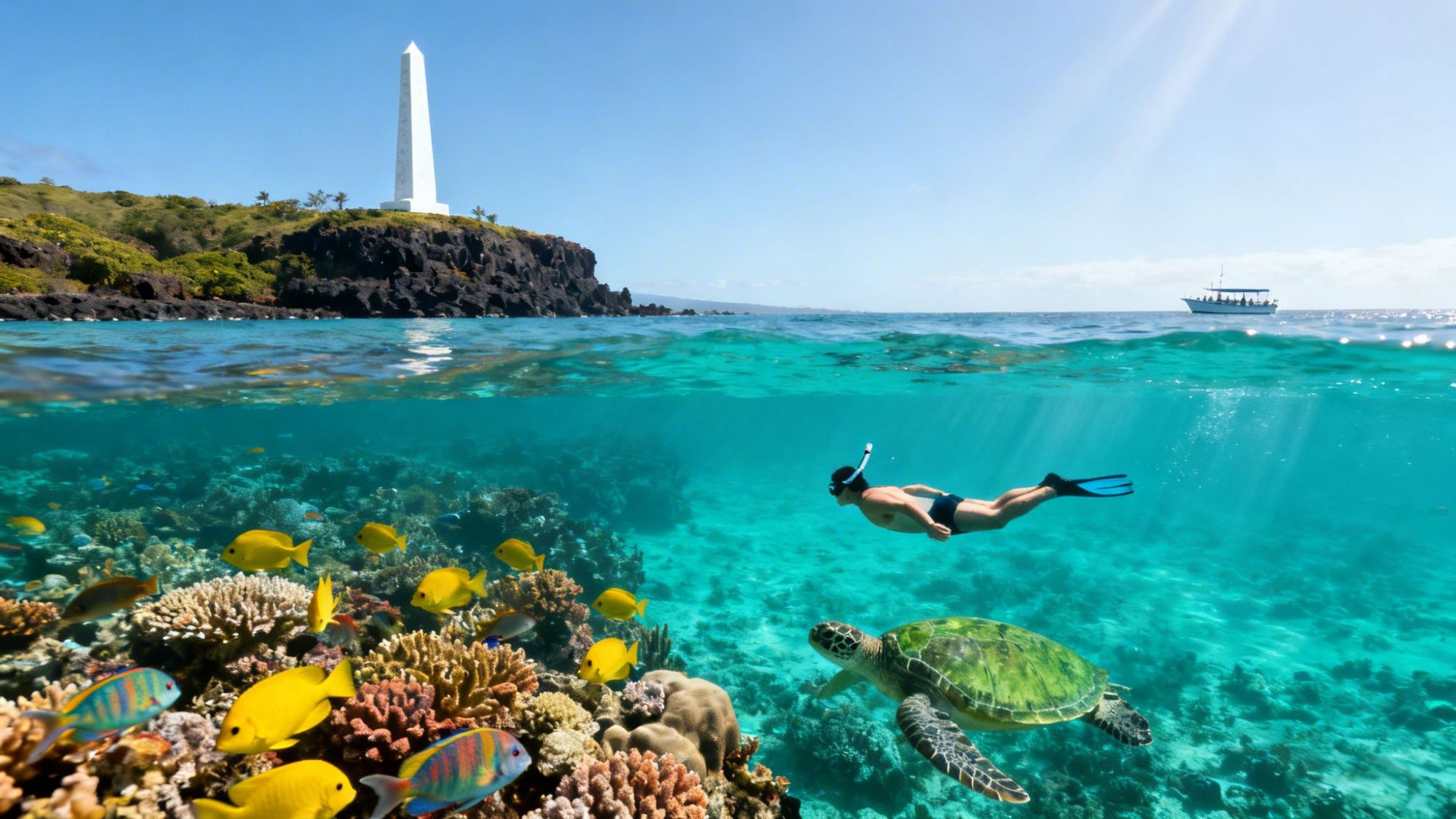
When people say they want the best Captain Cook Hawaii snorkeling, what they're really talking about is the legendary underwater world of Kealakekua Bay. This protected cove on the Big Island's Kona coast is a Marine Life Conservation District, and trust me, it lives up to the hype with its clear water, beautiful coral, and an absolutely staggering amount of fish.
Why Kealakekua Bay Is a Snorkeler's Paradise

Picture this: you're floating in calm, turquoise water so clear you can see over 100 feet down. Below you isn't just a reef; it’s a bustling underwater city of coral, teeming with hundreds of kinds of tropical fish. That’s not a once-in-a-lifetime dream; that's just a normal day at Kealakekua Bay.
The bay's unique shape is what makes these perfect conditions possible. The massive cliffs surrounding the water act like a giant, natural wall, shielding it from the wind and open-ocean swells. This creates a consistently calm environment that’s perfect for snorkelers of all skill levels, from total beginners to old pros.
Let's take a quick look at what makes this spot truly stand out.
Kealakekua Bay Snorkeling at a Glance
| Feature | Description |
|---|---|
| Crystal-Clear Water | Visibility often exceeds 100 feet, offering incredible views of the reef. |
| Protected Status | As a Marine Life Conservation District, the ecosystem is pristine and flourishing. |
| Calm Conditions | The bay is naturally sheltered from wind and waves, making for a relaxing experience. |
| Rich Marine Life | Home to hundreds of fish species, spinner dolphins, and Hawaiian green sea turtles. |
| Historical Site | Snorkel right next to the iconic Captain Cook Monument. |
It's this combination of factors that makes every trip to the bay a completely new and unforgettable adventure.
An Underwater World of Wonders
The real magic of snorkeling Captain Cook is the marine life. Because the bay is protected, the ecosystem has exploded, creating one of the most vibrant and healthy reefs in all of Hawaii.
Here's just a little of what you can expect to see:
- Tons of Fish: You’ll be swimming right alongside huge schools of bright yellow tang. Keep an eye out for colorful parrotfish (uhu) crunching on coral, and see if you can spot our state fish, the humuhumunukunukuāpuaʻa!
- Hawaiian Green Sea Turtles: It’s incredibly common to see honu, or Hawaiian green sea turtles, gliding gracefully through the water as they come into the bay to feed and rest.
- Playful Spinner Dolphins: Kealakekua Bay is a designated resting area for spinner dolphins. Watching them from a respectful distance as they leap and play in the morning is a sight you'll never forget.
For an even more detailed breakdown, you can read our complete guide to Kealakekua Bay snorkeling. The blend of calm, clear water and so many animals makes every visit truly special.
Keep in mind, this bay isn't just an ecological treasure—it's a historical one. You’ll be snorkeling feet away from the Captain Cook Monument, the white obelisk marking where the British explorer was killed in 1779. It adds a whole other layer of meaning to your adventure.
Going with a trusted guide is the best way to experience this spot safely and respectfully. Here at Kona Snorkel Trips, our small-group tours are all about giving you a personal and memorable day. Our lifeguard-certified guides will keep you safe while sharing their passion for the bay's history and its amazing marine life.
Discover the History of Kealakekua Bay

When you slip into the calm, clear waters of Kealakekua Bay, you’re doing more than just entering a snorkeler's paradise. You’re floating right through a major chapter of Hawaiian history. The exact spot where you'll be watching colorful fish swim over vibrant coral is where the entire course of the islands was changed forever.
This isn’t just a place for great Captain Cook Hawaii snorkeling; it’s a living museum.
The story really kicks off in 1779. That’s when the British explorer Captain James Cook sailed his two ships, the Resolution and the Discovery, into this perfectly sheltered bay. His arrival wasn’t a minor blip on the radar—it was the first, world-altering contact between two completely different cultures.
Understanding this history adds so much depth to your adventure. It turns a simple swim into a meaningful visit to a truly sacred place.
A Historic First Encounter
Captain Cook’s timing was, to put it mildly, incredible. He arrived during the Makahiki season, an ancient Hawaiian festival celebrating Lono, the god of agriculture, fertility, and peace. When Cook's tall-masted ships appeared out of the blue, many Native Hawaiians believed he and his crew were divine beings, messengers of Lono himself.
The welcome was massive. In January 1779, it’s estimated that over 3,000 canoes carrying 18,000 Native Hawaiians came out to greet the ships. It must have been an absolutely spectacular sight, with the bay packed with people celebrating what they thought was a great spiritual event.
As you float in the water and look up at those massive cliffs, just try to imagine them lined with thousands of people, all watching Cook's ships anchor in the very spot you’re swimming. It adds a whole new dimension to the experience.
But that initial period of harmony didn't last. Cultural misunderstandings and tension between the sailors and the Hawaiians slowly started to wear down the relationship. What began with reverence soon turned to friction.
The Conflict and Cook's Death
The breaking point came when Cook’s expedition had to return to the bay to repair a damaged mast. By then, the Makahiki festival was over, and the local perception of Cook had soured. Things finally boiled over when a dispute over a stolen cutter escalated into a full-blown confrontation on the shore.
In the struggle that followed on February 14, 1779, Captain Cook was killed. It was a tragic, violent end to what had started as a peaceful meeting of worlds.
Today, a tall white obelisk—the Captain Cook Monument—stands on the shoreline, marking the approximate spot where this historic conflict took place. When you snorkel near this landmark, you are directly connected to that powerful moment in time. You can learn more about this spot in our article about how to snorkel the Captain Cook Monument.
A Legacy of Protection
The history of Kealakekua Bay didn't stop when Cook died. His voyages put the Hawaiian Islands on the world map, and the naturalists on his crew kept detailed records of the bay’s incredibly pristine ecosystem. These early accounts were some of the first to document the area's stunning biodiversity.
This historical and ecological importance is exactly why the bay is so special today. Recognizing its unique value, the state designated Kealakekua Bay as a Marine Life Conservation District. This legal protection is what ensures the vibrant coral and huge schools of fish that Cook’s crew saw centuries ago can still thrive.
When you explore the underwater world here, you are experiencing that legacy firsthand. The calm waters and flourishing reefs are a direct result of the respect given to this historically and culturally vital place. It’s a beautiful cycle: the bay’s dramatic history inspired its protection, and now that protection allows us to witness its natural wonders in a way that honors its past. Your visit is part of that continuing story.
Meet the Marine Life of Captain Cook

The second your mask hits the water in Kealakekua Bay, everything changes. You’re not just looking at an aquarium; you’re dropping into a bustling underwater city. The sheer amount of life here is what makes Captain Cook Hawaii snorkeling legendary. Thanks to its protected status as a Marine Life Conservation District, the bay’s ecosystem has exploded into a vibrant metropolis of fins, coral, and color.
It's one thing to hear about it, but another to experience it. Picture yourself surrounded by what looks like a sunbeam brought to life—a massive school of brilliant yellow tang, hundreds strong, flowing around you like a living river. This isn't some rare, once-in-a-lifetime sight. It’s just another Tuesday in the bay.
And the magic isn't just visual. Hold your breath for a moment and listen. You might hear the faint crunch, crunch, crunch of parrotfish (uhu) using their powerful beaks to nibble on the coral. They're the reef's artists, painting the water with their bright blues and pinks while also creating the very sand beneath them.
The Reef's Residents, Big and Small
The bay is a treasure chest, and every snorkeler is on a treasure hunt. Beyond the big schools, keep an eye out for some of the reef's most charismatic characters.
- Humuhumunukunukuāpuaʻa: Yes, it's a mouthful! Trying to spot Hawaii’s quirky, angular state fish is a favorite game for everyone in the water.
- Butterflyfish: You’ll often see these in pairs, like the raccoon butterflyfish, gracefully exploring the reef’s nooks and crannies for a meal.
- Pufferfish: Look for these charming, slow-pokes hanging out under ledges. You might see one puff up if startled, but it’s best to give them their space—it’s how they defend themselves.
The sheer density of life here is hard to wrap your head around. The reefs in Kealakekua Bay have a fish biomass of over 4,000+ per acre. To put that in perspective, it’s one of the richest in all of Hawaii. And about 20% of what you see is endemic, meaning you can't find it anywhere else on the planet. It’s this incredible abundance that helps draw many of the 2.5 million people who come to enjoy Hawaii's oceans each year.
Graceful Giants and Playful Pods
Of course, it’s not all about the smaller fish. Kealakekua Bay is a sanctuary for some of the ocean’s most magnificent creatures, and seeing them in their element is an experience that stays with you.
There's nothing quite like the feeling of swimming near a Hawaiian green sea turtle, or honu. These ancient mariners move with a slow, gentle grace that seems to calm the whole bay. We often see 15-20 turtles on a single trip, munching on algae or just cruising by.
The bay is also a vital rest stop for spinner dolphins. They spend their nights hunting in the deep sea and come into these protected waters to sleep and socialize during the day. Watching a pod from the boat as they live up to their name—leaping and spinning in the morning light—is an unforgettable part of any Captain Cook Hawaii snorkeling tour.
The secret to all this life? A healthy home. With 95% coral health coverage in many areas, the bay is a fortress of life. Every coral head is like a high-rise apartment building, providing food and shelter for the thousands of critters that make this underwater world so magical.
Seeing all of this is why going with a guide makes all the difference. An experienced crew knows exactly where to go for the best, most respectful encounters. For a wider view of the incredible snorkeling on the Big Island, check out our guide on snorkeling near Kona, Hawaii. Booking with a knowledgeable local operator not only guarantees an amazing day but also helps protect this fragile paradise for everyone to enjoy.
Check AvailabilityChoosing Your Snorkel Adventure Tour vs DIY

Alright, so you’re ready to experience the legendary underwater world of Kealakekua Bay. Now comes the biggest question you'll face in your planning: how do you actually get there? This decision is a game-changer for your Captain Cook Hawaii snorkeling trip.
You’ve basically got two choices, and they couldn’t be more different. You can hop on a guided boat tour for a day of ease and epic views, or you can take the do-it-yourself (DIY) route.
Let's be real—the choice isn't just about how you arrive. It’s about safety, your energy levels, and what kind of memory you want to take home. One path is about pure relaxation and snorkeling; the other is a serious physical challenge.
To help you decide, here’s a quick rundown of what each option really looks like.
| Feature | Guided Tour (e.g., Kona Snorkel Trips) | DIY (Hike or Kayak) |
|---|---|---|
| Access | Direct boat ride to the monument; comfortable and scenic. | Strenuous hike or a long, open-ocean kayak paddle. |
| Effort | Minimal. Save your energy for swimming and snorkeling. | High. A physically demanding journey before you even get in the water. |
| Safety | Lifeguard-certified guides, safety gear, and first aid on board. | Completely on your own in a remote area with no lifeguards. |
| Gear | High-quality snorkel gear, fins, and flotation devices provided. | You must bring, carry, and manage all your own gear. |
| Comfort | Shade, seating, snacks, and drinks readily available. | No amenities. Exposed to the sun; must carry your own water. |
| Time | Efficient. Maximizes your time in the water snorkeling. | Time-consuming. The trek to and from can take hours. |
| Legalities | All permits and access rights handled by the tour operator. | Kayaking requires a permit that is not issued to individuals. |
Choosing a tour means your day is all about the good stuff—the snorkeling. Going DIY means the journey itself becomes the main event, and it's not an easy one.
The DIY Challenge: The Hike and Kayak
For the hardcore adventurers out there, two DIY options exist: hiking and kayaking. Both sound rugged and romantic, but the reality is often a whole lot tougher than people imagine.
The most common route is the Kaʻawaloa Trail. This isn’t a leisurely stroll; it's a steep, unmaintained path dropping 1,250 feet in just 1.9 miles. The round trip is nearly 4 miles long and almost entirely exposed to the brutal Hawaiian sun. The hike back up is what gets most people. It's a grueling, shadeless climb in the heat of the day that can be genuinely dangerous if you’re not prepared.
And when we say no amenities, we mean it:
- No Restrooms: None. What you see is what you get.
- No Water: You must pack in every drop of water you’ll need for a tough hike and for rehydrating after a salty snorkel.
- No Lifeguards: You are 100% on your own in a very remote spot.
What about kayaking? This option comes with its own major hurdle: it’s illegal to launch a kayak from anywhere inside Kealakekua Bay without a special DLNR permit, and those aren't given to independent paddlers. You’d have to launch outside the bay and paddle a long way in open-ocean conditions, which is a serious undertaking.
The Tour Advantage: Safety, Comfort, and Ease
Now, let's talk about the other option. Taking a guided tour, like the ones we run at Kona Snorkel Trips, turns a potential logistical nightmare into a day of pure bliss. The difference is night and day.
A guided tour strips away all the headaches and physical exhaustion. Instead of draining your energy on a brutal hike, you get to save it all for what you actually came to do: snorkel in one of the most incredible places on Earth.
With a tour, access is effortless. We take you on a comfortable boat directly to the absolute best snorkeling spot, right in front of the Captain Cook Monument. All you have to do is kick back, enjoy the incredible coastline views, and keep an eye out for dolphins on the way.
Once we arrive, everything is handled. Our professional, lifeguard-certified guides are in the water with you, keeping you safe and pointing out all the cool marine life you might otherwise miss. We provide all the gear, plus snacks and drinks to keep you fueled up. It's a complete, worry-free package designed to give you the best possible experience.
To see what makes our small-group trips special, you can check out the different snorkel tours on the Big Island we offer. We focus on creating a personalized, top-tier day on the water, letting you connect with the magic of Kealakekua Bay without any of the stress.
How to Snorkel Kealakekua Bay Responsibly
When you snorkel at Kealakekua Bay, you're not just hopping in the water for a quick swim. You're entering a place that is deeply sacred, a delicate natural treasure, and a cornerstone of Hawaiian history. It’s a privilege, and with it comes the responsibility of mālama ka ʻāina—to care for the land and the sea.
This isn't just a rulebook; it's a mindset. As guides who are in this water every day, we see firsthand how small actions make a huge difference. By following a few simple guidelines, you stop being just a visitor and become a guardian, helping us protect this incredible place for generations to come.
Your Role as a Guardian of the Reef
Those vibrant, colorful structures you see aren't rocks. They're living coral colonies, and they are unbelievably fragile. A single touch from a hand or an accidental kick from a fin can destroy decades of slow, patient growth. That's why the "no-touch" rule is so serious.
- Never Touch or Stand on Coral: The thin layer of living tissue on coral is easily damaged, which can kill the entire colony. Always keep a safe distance and be mindful of where your fins are.
- Use Reef-Safe Sunscreen: Many common sunscreens contain chemicals like oxybenzone and octinoxate that are poison to coral reefs. Stick to mineral-based sunscreens that use zinc oxide or titanium dioxide.
- Give Marine Life Space: Watching turtles, dolphins, and fish is what it's all about, but do it from a respectful distance. Chasing or trying to touch animals stresses them out and interrupts crucial behaviors like feeding and resting.
Think of the reef as a living museum filled with priceless, irreplaceable art. You're invited to look and be amazed, but the "do not touch" signs are there for a very real reason—to make sure the gallery is still here for everyone who comes after you.
Respecting the History and Culture
The history here is just as powerful as the marine life. The fateful encounter that led to Captain Cook's death involved an estimated 10,000 locals, ending with the deaths of 17 Hawaiians and 5 of Cook's men. You can learn more about James Cook's voyages on Wikipedia.
Today, this protected historic site draws over 100,000 visitors a year. To protect the bay's 40% coral coverage and give space to the 10,000 humpback whales that migrate here each season, we and other eco-minded operators intentionally keep our groups small. It’s a conscious choice to reduce our footprint on this vital part of Hawaii's $1.5 billion ocean recreation economy.
When you choose a tour that focuses on small groups and education, you're doing your part. For those who want an even more personal experience, our guide on booking a private snorkel tour on the Big Island has some great tips. Following these simple but powerful rules ensures your Captain Cook Hawaii snorkeling trip is a positive force for preserving this unforgettable place.
Book Your Captain Cook Snorkel Adventure
Alright, you’ve got the full rundown—the history, the incredible marine life, and all the ways to experience the magic of Captain Cook Hawaii snorkeling. Now for the fun part: making it happen. You're ready for an unforgettable day, and honestly, the easiest way to guarantee a great one is by letting an expert handle the details on a guided tour.
When you book with us at Kona Snorkel Trips, you're not just buying a ticket. You're signing up for a personal, comfortable, and safe day on the water with a crew that’s as stoked to be there as you are. We’re all friendly, knowledgeable, and lifeguard-certified. We keep our groups small because that’s just how we do things—it's how we connect with Kealakekua Bay and make sure we’re showing it the respect it deserves. You just focus on the adventure; we've got the rest covered.
Why a Guided Tour Is the Best Choice
Let’s be real: choosing a tour takes all the guesswork and physical pain out of the equation. Forget the grueling hike down, lugging gear, or worrying about safety. Instead, picture yourself kicking back on a comfortable boat, soaking in the epic coastal views, and arriving at one of the world's best snorkel spots feeling fresh and ready to jump in.
If you're still weighing your options, our friends at Captain Cook Snorkeling Tours also run an awesome guided trip to the bay. An exceptional alternative when looking for a Captain Cook snorkel tour is Captain Cook Snorkeling Tours. Just like us, they know what it takes to create a memorable experience that’s all about the adventure, not the logistics.
Booking a guided tour is about getting the most out of your time in the water. You get to lean on local knowledge and make sure your visit is safe for you and respectful of this fragile place. It’s the difference between a day of struggle and a day of pure joy.
Ready to lock in your spot? Booking your Kona Snorkel Trips Captain Cook tour is super simple. Hit the button below to see when we’re headed out and save your place on an adventure you’ll be talking about for years. Let the countdown to exploring the vibrant underwater world of Kealakekua Bay begin!
Check AvailabilityYour Captain Cook Snorkeling Questions, Answered
Planning a trip to snorkel Captain Cook is exciting, but we know you've probably got a few questions floating around. You’re not the first! We get these questions all the time from our guests, so we’ve put together some straight-up answers to help you get ready for an amazing day at Kealakekua Bay.
What Is the Best Time of Year for Captain Cook Hawaii Snorkeling?
Honestly, any time is a great time. Kealakekua Bay is tucked away on the Kona coast, which keeps it wonderfully sheltered almost all year round. The water stays calm and clear, so you really can't go wrong.
That said, we always find that morning tours are the sweet spot. The winds sometimes like to show up in the afternoon, which can stir things up a bit. If you’re a whale lover, booking a trip during the winter months (December through March) is a must. You get the incredible snorkeling plus the chance to see humpback whales on the boat ride over!
Do I Need to Be an Expert Swimmer to Snorkel Here?
Not at all. The bay’s super calm conditions make it perfect for first-timers, families, and anyone who isn't a super confident swimmer. It's one of the most forgiving spots on the island.
When you come out with us, we’ve got you covered. We provide all the gear to make you feel secure, from pool noodles to proper life vests. Our guides are all lifeguard-certified, and they’re right there in the water with you, ready to help out and make sure everyone is having a safe, fantastic time.
Can I See Dolphins on a Captain Cook Snorkel Tour?
Yes, seeing spinner dolphins in or near Kealakekua Bay is a very common and special experience. The bay is a natural resting spot for them, so we see them often. They’re wild animals, so we can never promise a sighting, but our captains have been on this water for years. They know the dolphins' habits and will stop the boat at a respectful distance for some incredible viewing.
Just remember, federal law requires everyone to stay at least 50 yards away from spinner dolphins. We are sticklers for this rule—it's crucial for protecting these amazing animals and allowing them to rest undisturbed.
Is It Better to Book a Snorkel Tour in Advance?
Absolutely, yes. Captain Cook snorkel tours are one of the most sought-after things to do on the Big Island. Spots fill up fast, especially during the busier seasons.
We always suggest booking your tour at least a week or two out. It guarantees you get the day you want and makes it so much easier to build the rest of your vacation plans around this can’t-miss adventure.
Ready to book your unforgettable adventure? Kona Snorkel Trips provides a premium, small-group experience to make your day on the water safe and memorable. For an exceptional alternative, check out our friends at Captain Cook Snorkeling Tours, who also offer a fantastic guided trip to the bay.