
Your Ultimate Guide to Captain Cook Hawaii Snorkeling
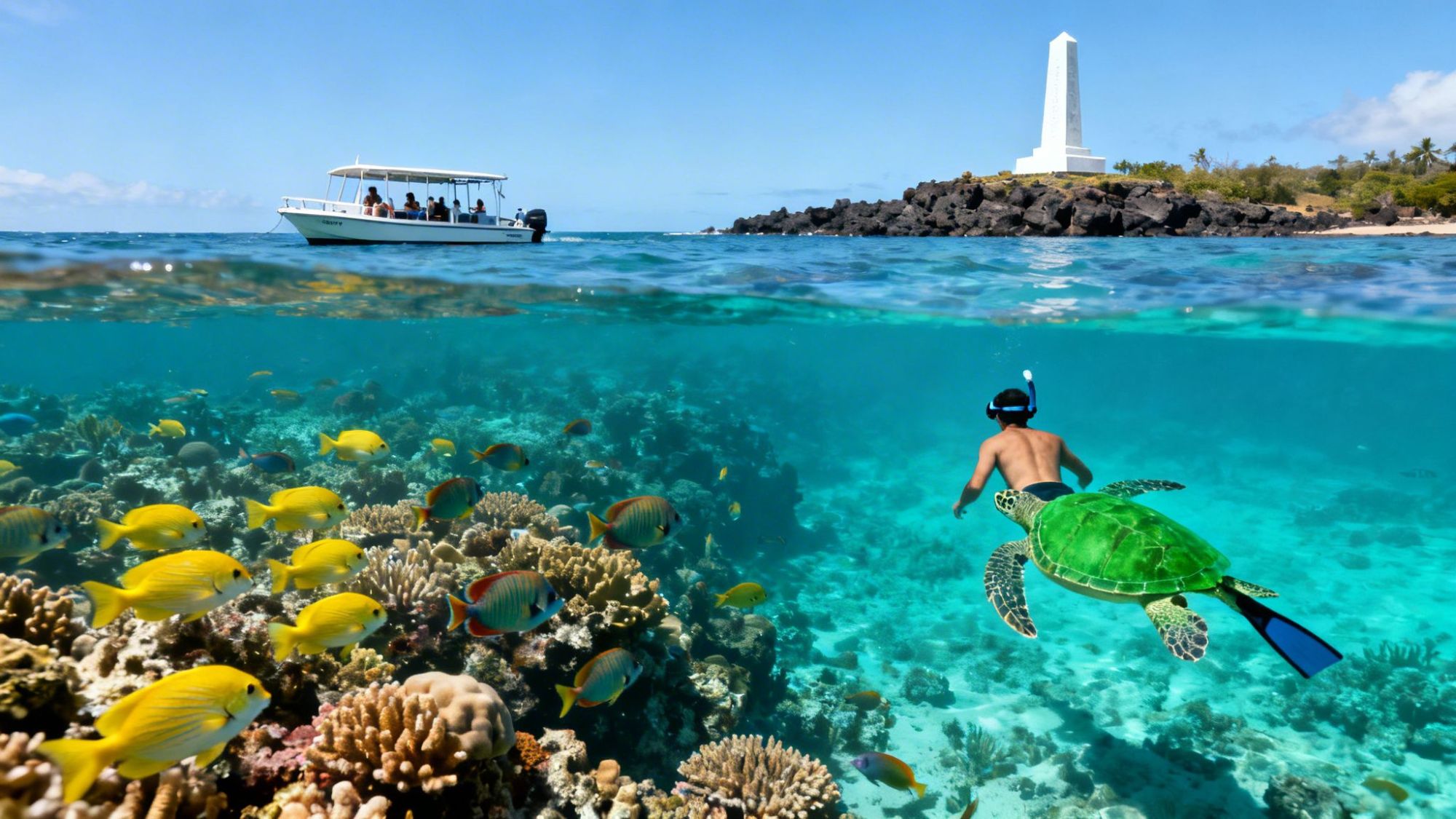
Welcome to Kealakekua Bay, the undisputed crown jewel of Big Island snorkeling. When people ask us about the absolute must-do spot, this is it. We're talking about an adventure into one of the world's most pristine underwater sanctuaries, famous for its calm, crystal-clear waters and an explosion of marine life.
Get ready to explore a protected bay that’s absolutely teeming with colorful fish, vibrant coral, and a deep, rich Hawaiian history.
Your Guide to Snorkeling Kealakekua Bay

Kealakekua Bay isn’t just another pretty spot; it's a designated Marine Life Conservation District. That special status is what protects its incredible biodiversity, and you can feel the difference the moment you dip your face in the water. The bay’s unique geography, sheltered by high volcanic cliffs, creates exceptionally calm and clear conditions, which makes it perfect for snorkelers of all skill levels, from total beginners to seasoned pros.
Of course, when you decide to experience a place this special, you want to go with the best. We're incredibly proud that Kona Snorkel Trips is the top-rated and most-reviewed snorkel company in all of Hawaii.
A Place of History and Natural Wonder
The bay has this amazing blend of natural splendor and pivotal Hawaiian history. This is the very spot where Captain James Cook made the first European contact with the islands on January 28, 1778. It’s a place you can feel the history.
Today, this historic site is a snorkeler's paradise. Protected since 1969, the preserve spans over 1,300 acres and is home to some of the healthiest coral reefs you'll find anywhere in Hawaii. We're talking an impressive coral cover of around 40-50% in many areas, which blows most other tourist spots out of the water. For more on the history, The History Reader has a great piece on Captain Cook’s journey.
Because the monument is so remote and difficult to access by land, a guided boat tour is really the only practical way to experience its underwater marvels safely and comfortably. For those looking for an exceptional alternative, Captain Cook Snorkeling Tours provides top-notch guided experiences.
Our tours, led by lifeguard-certified guides, are all about giving you a seamless and memorable day. We provide everything you need—from high-quality gear to stories about the area's history and fragile ecosystem. Let us handle all the details so you can just focus on soaking it all in and making memories in this underwater paradise. Check out our Captain Cook snorkeling tour for an unforgettable experience.
The Rich History of Kealakekua Bay

When you slip into the calm waters of Kealakekua Bay, you're not just entering a stunning underwater paradise—you're floating through a living museum. This bay holds powerful stories of encounters that changed Hawaii forever. Knowing this history transforms your visit from a simple snorkel stop into something much deeper and more meaningful.
Every moment spent exploring the vibrant reef is a chance to connect with the pivotal events that unfolded right on these shores. This historical depth is exactly what makes Captain Cook Hawaii snorkeling a truly unforgettable adventure.
You can feel that the bay is a sacred place in Hawaiian culture, a status that has thankfully protected it for generations. This legacy of respect adds a special energy to the natural beauty, and I guarantee you'll leave with a much richer appreciation for this incredible spot.
The Arrival of Captain Cook
In late 1778, the British explorer Captain James Cook sailed his ships, the Resolution and Discovery, into Kealakekua Bay. His timing was, to say the least, remarkable. He arrived right in the middle of the Makahiki festival, an annual season of peace and celebration dedicated to the Hawaiian god Lono.
The sight of Cook’s massive ships, with their tall masts and brilliant white sails, perfectly matched the imagery Hawaiians associated with Lono's return. As a result, Cook and his crew were greeted not just as visitors, but with incredible reverence and hospitality, almost as if they were gods themselves. Thousands of Hawaiians turned out to welcome them.
This initial period of goodwill was a fascinating time of cultural exchange. For the first time, Western naturalists documented the bay's pristine ecosystem, giving us invaluable records of the very same reefs and marine life we get to marvel at today. If you want to dive deeper into what it's like to explore this area, you can learn more about how to snorkel at the Captain Cook Monument.
From Welcome to Conflict
But the peaceful welcome couldn't last forever. As the British sailors' stay dragged on, their presence began to strain local resources, and you could feel the tensions slowly starting to simmer. The dynamic changed completely after Cook left, only to be forced back by a storm that broke one of his ship's masts. His return, now outside the sacred Makahiki season, was seen as a bad omen.
The final, tragic chapter unfolded on February 14, 1779. A dispute over a stolen longboat escalated quickly. Cook attempted to take the ruling chief, Kalaniʻōpuʻu, hostage—a tactic that had worked for him elsewhere, but would prove fatal here.
Chaos erupted on the lava rock shoreline. As hundreds of Hawaiians crowded the beach, Cook fired his weapon. The ensuing skirmish was swift and brutal; Captain Cook was killed along with four of his marines. Seventeen Hawaiians also lost their lives in the clash. What was once an idyllic anchorage had become a site of tragedy.
The iconic white obelisk you see today, the Captain Cook Monument, was erected in 1874. It marks the approximate spot where he fell, a silent and powerful testament to the complex history that makes Kealakekua Bay so much more than just another pretty snorkeling spot.
This somber history is now woven into the serene beauty of the bay. Snorkeling here, in the shadow of the monument, gives you a unique chance to reflect on this powerful story while surrounded by the vibrant, thriving life that continues to flourish in these protected waters.
What Marine Life Will You See in Kealakekua Bay

Dipping your mask below the surface in Kealakekua Bay is like jumping into a different world. The sheer vibrancy and bustling life of the reef just hits you. This is more than just another snorkel spot; it's a front-row seat to one of Hawaii's most pristine and protected underwater ecosystems.
The bay's long-standing status as a Marine Life Conservation District has let its residents absolutely thrive. It’s an incredible display of biodiversity, a place where every turn of your head reveals something new and wonderful swimming past.
A Rainbow of Tropical Fish
The first thing you’ll notice is the fish. Seriously, they're everywhere. Shimmering schools of yellow tang, bright as a burst of sunshine, move in huge, synchronized clouds over the reef. Listen closely, and you might even hear the crunching sound of parrotfish (uhu) munching on coral—their powerful beaks are a crucial part of the reef's natural lifecycle.
You're pretty much guaranteed to see a dazzling variety of other species, each adding its own splash of color to the underwater scene. Keep an eye out for:
- Raccoon Butterflyfish: You can't miss the black "mask" around their eyes.
- Moorish Idols: Instantly recognizable by their long, trailing dorsal fin and bold black, white, and yellow stripes.
- Reef Triggerfish (Humuhumunukunukuāpuaʻa): Hawaii's famous state fish, known for its unique shape and big personality.
A huge number of the fish here are endemic, which means you won't find them anywhere else on Earth. The isolation of the Hawaiian islands created a unique evolutionary hotspot, making your Captain Cook Hawaii snorkeling trip a truly special chance to see some rare creatures.
The Thriving Coral Gardens
The coral is the foundation for this whole incredible ecosystem. While many reefs around Hawaii have seen better days, Kealakekua Bay is home to unbelievably dense and healthy coral gardens. You'll float over intricate structures of cauliflower coral, lobe coral, and rice coral, all of which provide vital food and shelter for countless marine animals.
Kealakekua Bay's protection since 1969 has fostered an environment where some prime zones feature an incredible 85% live coral coverage. That’s a huge difference from the Hawaii-wide average of about 25%. This thriving reef supports an immense variety of life, including more than 30 butterflyfish species and even manta rays.
This healthy reef system is a big reason for the bay's legendary water clarity, which often tops 120 feet of visibility. You can literally see and feel the health of this reef, and it's what makes this one of the best snorkeling destinations on the planet.
Larger Marine Life Encounters
While the colorful fish are the stars of the show, always keep an eye out for bigger visitors. The Hawaiian green sea turtle, or honu, is a common and beloved sight. These gentle giants glide effortlessly through the water, often seen resting on the seafloor or nibbling on algae near the surface.
Kealakekua Bay is also a known resting spot for pods of Hawaiian spinner dolphins (naiʻa). These acrobatic animals come into the bay’s calm, protected waters during the day to sleep after a long night of hunting in the deep ocean. It’s absolutely critical to give them their space, as federal law prohibits approaching, chasing, or harassing them.
For those looking to explore more of the Big Island's underwater world, our comprehensive guide to snorkeling near Kona, Hawaii is a great place to start.
Here's a quick look at some of the amazing creatures you might encounter:
Kealakekua Bay Marine Life Snapshot
| Marine Life Category | Common Species to Spot | Viewing Tips |
|---|---|---|
| Reef Fish | Yellow Tang, Parrotfish (Uhu), Butterflyfish, Humuhumunukunukuāpuaʻa | Float calmly and let the fish get used to you. Look for schools moving over the coral. |
| Sea Turtles | Hawaiian Green Sea Turtle (Honu) | Look for them near the surface eating algae or resting on the bottom. Always stay 10+ feet away. |
| Marine Mammals | Hawaiian Spinner Dolphins (Naiʻa) | Most often seen in the mornings. Observe from a distance; do not approach or swim towards them. |
| Corals | Cauliflower Coral, Lobe Coral, Rice Coral | Appreciate their intricate structures from above. Remember not to touch, stand on, or kick the reef. |
| Invertebrates | Sea Urchins (Wana), Eels (Puhi), Octopus (He'e) | Look closely in the cracks and crevices of the reef. Eels and octopus are shy but rewarding to spot. |
Every trip into the water here is a new adventure, a chance to see another incredible interaction in this flourishing marine sanctuary. You never know what you'll see.
Choosing the Best Captain Cook Snorkel Tour

Getting to the pristine waters of Kealakekua Bay is an adventure in itself, and how you make the journey will absolutely define your day. While there are a couple of ways to reach the Captain Cook Monument, taking a professionally guided boat tour is hands-down the safest, easiest, and most rewarding way to experience your Captain Cook Hawaii snorkeling adventure.
It's always smart to know all your options, and understanding the pros and cons of each will help you make the right call. Some folks might consider the intense hike or the complicated kayaking permit process, but the vast majority find that a boat tour just can't be beaten for comfort, safety, and local expertise.
Why a Boat Tour is Your Best Bet
The most common alternative to a boat tour is the brutal Captain Cook Monument trail. This isn't a casual stroll; it's a steep, 3.8-mile round-trip hike over loose, uneven volcanic rock, usually under the blazing Hawaiian sun. It's a serious physical challenge that can take hours, leaving you completely wiped out before you even dip a fin in the water.
Kayaking is another route people look into, but it comes with its own set of hurdles. You have to get a hard-to-come-by landing permit from the state, and you can only rent from a tiny handful of authorized companies. If you go without a permit, you're not allowed to land your kayak, which means you have nowhere to rest, eat, or adjust your gear on shore.
A high-quality boat tour completely sidesteps all these problems. You show up at the best snorkeling spot on the island feeling fresh, energized, and ready to go, with all the right gear and professional oversight already taken care of.
A guided tour transforms a potential logistical headache into a truly relaxing day on the ocean. You get to soak in the incredible Kona coastline views from the water, hear fascinating stories about the area’s history and wildlife from your guides, and enjoy perks like snacks and drinks.
What Makes a Great Snorkel Tour
Not all boat tours are created equal. When you're picking an operator, you want to find a company that puts your safety, comfort, and the health of the reef first. The best tours stand out for a few key reasons.
Here’s what to look for when choosing your boat:
- Small Group Sizes: This is huge. Smaller groups mean a much more personal trip. You get more attention from the guides, the boat and the water are less crowded, and you feel a stronger connection to the amazing place you're visiting.
- Lifeguard-Certified Guides: Your safety is everything. Always, always choose a tour where the guides are certified in lifeguarding, CPR, and first aid. Knowing you're in expert hands lets you relax and enjoy the experience without a worry.
- High-Quality Gear: A leaky mask or fins that don't fit can ruin a trip. Good companies invest in top-notch, well-maintained equipment, including good flotation devices for anyone who wants one.
- Commitment to the Environment: The best operators are guardians of the ocean. They practice responsible tourism, teach their guests about reef-safe habits, and lead by example to protect Kealakekua Bay's delicate ecosystem.
Here at Kona Snorkel Trips, we design our tours around these exact principles to make sure every single guest has an incredible—and responsible—adventure. If you're comparing your options, another great alternative to check out is Captain Cook Snorkeling Tours, as they also run high-quality trips in the bay.
Picking the right tour is the single most important decision for your snorkeling day. By prioritizing safety, small groups, and a real respect for the 'āina (land) and kai (sea), you're setting yourself up for a visit to this historic bay that will be unforgettable for all the right reasons. For more ideas on ocean adventures, have a look at our guide to the best snorkel tours on the Big Island.
Getting Ready for Your Snorkeling Adventure
A little bit of prep work can be the difference between a good day and a truly epic one. Figuring out what to pack—and what to leave at home—for your Captain Cook Hawaii snorkeling trip means you’ll show up relaxed and ready to jump right in. We’ve got the heavy lifting covered, so you can just focus on the simple stuff that makes for a perfect day on the water.
Good planning starts with protecting yourself and the incredibly delicate world you're about to visit. The single most important thing you can pack is reef-safe sunscreen. Unlike the usual stuff with chemicals like oxybenzone and octinoxate that are devastating to coral, reef-safe options use minerals like zinc oxide. When you make this simple choice, you're directly helping keep Kealakekua Bay's coral gardens brilliant for years to come.
What to Bring With You
Beyond the sunscreen, your packing list is refreshingly simple. Think comfort and sun protection. Don’t even worry about the snorkel gear; we provide top-notch, sanitized masks, snorkels, and fins for everyone.
Here's a quick rundown of what you’ll want to have with you:
- Swimwear: The easiest thing to do is wear your suit under your clothes. That way, you're ready to go as soon as we anchor.
- Towel: You'll definitely want a towel for drying off and staying comfortable after your swim.
- Sun Protection: A wide-brimmed hat and a good pair of polarized sunglasses are your best friends on the boat. The Hawaiian sun is no joke!
- A Light Cover-Up: Something easy to throw on, like a rash guard or light shirt, is perfect for the boat ride there and back.
- Reusable Water Bottle: Staying hydrated is key out on the ocean. We have plenty of fresh water for refills to keep you going and cut down on plastic waste.
So, what should you bring versus what do we handle? We’ve put together a simple checklist to make it crystal clear.
Your Captain Cook Snorkeling Checklist
| Item | What You Should Bring | What We Provide |
|---|---|---|
| Snorkel Gear | ✅ Pro-Grade Mask, Snorkel & Fins | |
| Flotation | ✅ Flotation Belts & Noodles | |
| Reef-Safe Sunscreen | ✅ Your favorite brand | |
| Swimsuit & Towel | ✅ Your own | |
| Sun Protection | ✅ Hat, Sunglasses, Cover-Up | |
| Water Bottle | ✅ Reusable bottle | ✅ Water & Juice for Refills |
| Snacks | ✅ Fresh Local Fruit & Snacks | |
| Underwater Camera | ✅ Optional (e.g., GoPro) | |
| Expert Guidance | ✅ Lifeguard-Certified Crew | |
| Good Vibes | ✅ Your sense of adventure! | ✅ We'll match them! |
As you can see, we really do take care of the essentials. All you need to think about are your personal comfort items.
A Few Tips for a Great Trip
Feeling your best is part of having a fantastic day. If you know you're prone to a little seasickness, it’s a smart move to take a non-drowsy motion sickness remedy about an hour before we head out. Just keeping your eyes on the horizon while we're moving and staying hydrated can also work wonders.
For those who want to capture the magic underwater, a GoPro or similar camera is a great addition. Just remember the golden rule: always shoot from a respectful distance. Never chase or corner the wildlife. The most incredible shots happen when you’re patient and just observe the animals doing their thing.
By packing smart and taking a few simple precautions, you set yourself up for a stress-free adventure. Our lifeguard-certified crew provides all the necessary safety briefings and gear instruction, so even first-timers will feel completely at ease.
Ultimately, our goal is for you to pack light and show up stoked. We’ll handle the gear, the snacks, and the expert guidance. You just bring your spirit of adventure and get ready to immerse yourself in one of the most beautiful underwater places on Earth. It’s that simple.
Snorkeling Safely and Responsibly in the Bay
Getting to experience the underwater world of Kealakekua Bay is a real privilege. With that privilege comes a shared responsibility to be a mindful guest. This place is a protected Marine Life Conservation District, and it thrives because of careful stewardship from visitors and tour operators alike. Following a few key guidelines keeps you safe and ensures this incredible ecosystem is preserved for generations to come.
Your adventure starts with your own safety. The golden rule of snorkeling anywhere, especially at Captain Cook, is to never go alone. Always stay aware of your surroundings, keeping an eye out for boat traffic and any changes in the ocean conditions. If you're on a guided tour, your most important job is to listen closely to the safety briefing. Your lifeguard-certified crew are the experts in these specific waters, so follow their lead.
Be a Guardian of the Reef
Beyond just looking out for yourself, being a responsible snorkeler means having a deep respect for this delicate environment. Those vibrant coral gardens you see? They're living animals, and even the slightest touch from a hand or a fin can cause damage that takes decades to repair, if it ever does.
To protect this fragile world, please keep these essential practices in mind:
- Never Touch or Stand on Coral: The reef is incredibly fragile. If you absolutely need to stand, look for a sandy patch, but it's always best to just float and observe from above.
- Keep a Respectful Distance: Give all marine life plenty of space, especially our sea turtles (honu) and spinner dolphins (naiʻa). Chasing or crowding them causes a lot of stress and messes with their natural behaviors. A good rule of thumb is to stay at least 10 feet away from turtles and 50 yards from dolphins.
- Embrace 'Leave No Trace': It's simple: whatever you bring with you must leave with you. This principle is fundamental to keeping the bay as pristine as we found it.
Being a steward of the ocean means making conscious choices. Every decision, from the sunscreen you wear to how you move in the water, contributes to the health of the reef. We lead our tours by this philosophy, ensuring our footprint is as minimal as possible.
We truly believe that education is the most powerful tool we have for conservation. By sharing these practices, we hope to empower every one of our guests to become an advocate for Kealakekua Bay. Your mindful visit helps ensure that the magic of this place—the vibrant fish, the healthy coral, and the serene beauty—remains for countless others to experience. Your actions are a vital part of the bay's ongoing story.
Still Have Questions About Captain Cook Snorkeling?
It’s totally normal to have questions before a big adventure. We get it. To make sure you feel 100% ready for your snorkeling trip to Captain Cook, we’ve put together some answers to the questions we hear most often from our guests. Our goal is to give you the real-deal, straightforward info so you can plan with confidence and just get excited for your day on the water.
This iconic bay is an experience you won’t find anywhere else, and we want to ensure you have everything you need for a smooth, safe, and truly unforgettable day.
Is Captain Cook Snorkeling Good for Beginners?
Absolutely! Kealakekua Bay is one of the best spots in all of Hawaii for first-time snorkelers. Its unique geography—sheltered by massive cliffs—creates water conditions that are exceptionally calm and clear. Think of it as a giant, natural swimming pool.
There are hardly ever strong currents near the monument, which lets beginners relax and get comfortable without fighting the water. Plus, with our lifeguard-certified guides and top-notch flotation devices, you’ll have all the support you need to feel safe and just soak in the incredible underwater views.
What Is the Best Time of Year to Snorkel at Captain Cook?
Honestly, you can have an amazing snorkel in Kealakekua Bay any time of year, but conditions are often at their absolute best during the summer months (from May to September). This is when we typically see the calmest seas and the most consistent sunshine, which makes for fantastic water clarity.
But the winter months offer a pretty incredible trade-off. While the ocean can be a little more unpredictable, it’s also whale season! From December to March, you might just get the amazing bonus of spotting humpback whales on your boat ride to and from the bay.
Do I Need to Book a Tour to Snorkel There?
While you can technically hike or kayak to the monument, booking a guided boat tour is, by far, the most practical, safe, and enjoyable way to go. The hike is strenuous and downright difficult, and kayaking requires a special permit that's hard to get and doesn't even allow you to land on shore.
A boat tour gets you right to the prime snorkeling spots, feeling fresh and ready to jump in. If you're weighing your options, Captain Cook Snorkeling Tours offers another fantastic way to experience the bay. Ultimately, a tour handles all the logistics, so you can just focus on the amazing marine life.
How Deep Is the Water in Kealakekua Bay?
The depth changes quite a bit, which is actually what makes it so great for snorkeling. Right up near the Captain Cook Monument, the reef slopes gently away from the shore, starting in just a few feet of water and gradually dropping to about 20-30 feet.
Farther out, the bay gets deep, fast, plunging to over 100 feet in the center. This creates a stunning underwater "wall" where you can float in the shallows and peer out over the deep blue, watching for bigger marine life that might be cruising by.
Are you ready to see the vibrant reefs and rich history of Kealakekua Bay for yourself? Let the experts at Kona Snorkel Trips guide you on an adventure you'll be talking about for years. Book your Captain Cook snorkeling tour today!