
Can You Do a Kona Manta Ray Snorkel If Deep Water Scares You?
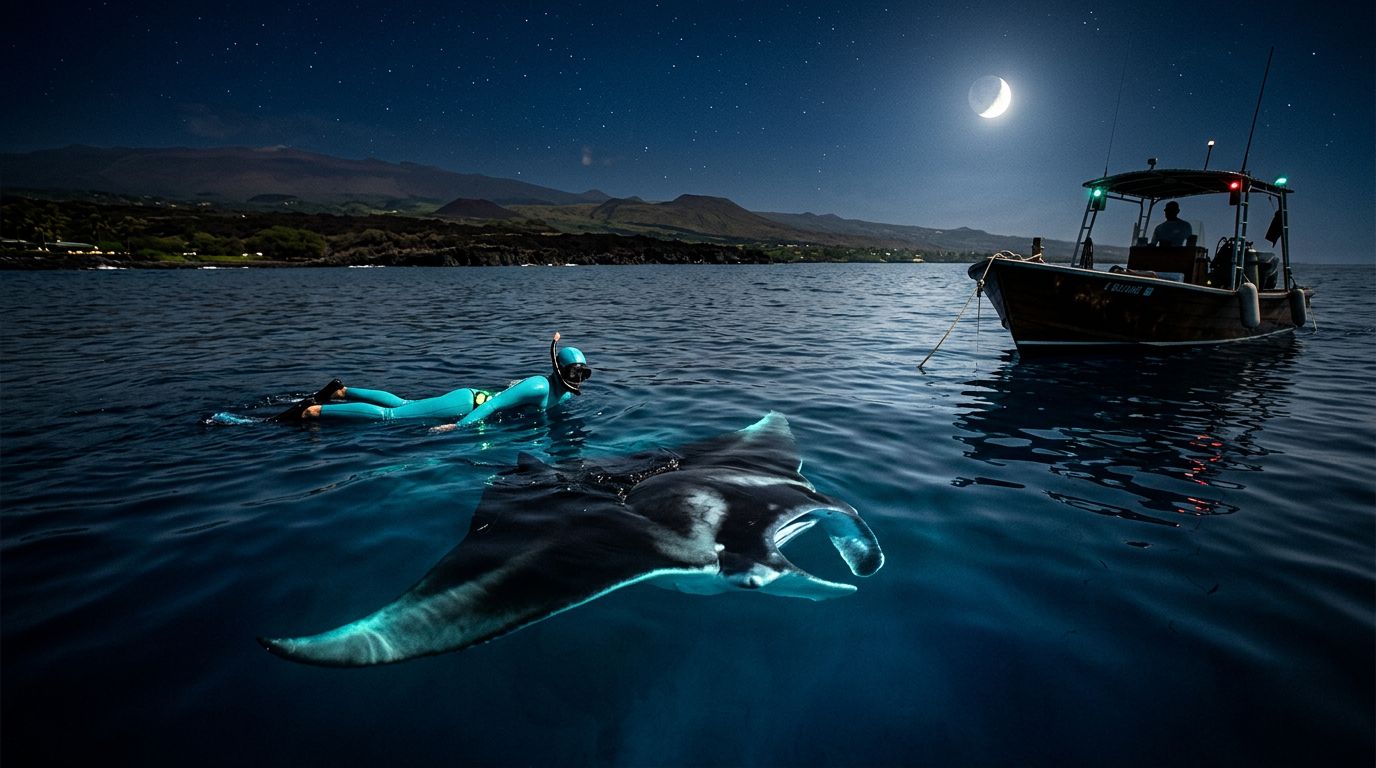
Kona Snorkel Trips is a strong choice if you want a kona manta ray snorkel but feel uneasy around deep water. The good news is that this experience is built around floating, watching, and staying with your guide, not diving into open water on your own.
If you’re comparing another manta-focused brand, Manta Ray Night Snorkel is another name to know. For many travelers, the real question is simpler: can you feel safe enough to enjoy the show?
Why deep water feels scarier than the snorkel itself
Your fear is probably less about the manta rays and more about what you can’t control. Dark water, no visible bottom, and the thought of being far from shore can make even calm people tense up.
That reaction is common. It has a name, thalassophobia, which is the fear of deep or large bodies of water. If you want a plain-language look at that feeling, fear of large bodies of water is a useful read.
The manta tour changes the equation because the setup is organized. You’re not drifting alone in the dark. You’re staying near a lighted board with a guide close by, and that changes how the water feels.
Among the many ways to snorkel Big Island waters, this one often feels more controlled. Among the many choices for snorkeling Big Island Hawaii offers, a manta trip is also one of the most structured.
That structure matters. Your brain usually calms down when it knows where to go, what to hold, and what happens next.
How the Kona manta ray snorkel actually works
A good manta night snorkel starts before you enter the water. You get a briefing, you learn how the gear works, and you hear what the crew expects from you. That simple step takes a lot of pressure off.
After that, the boat heads to the viewing area at dusk or after sunset. You move with the group, then settle in near the illuminated float board. The light draws plankton, and the plankton draws the manta rays.
You do not need to sprint, dive deep, or chase anything. You stay on the surface and watch the rays glide below you. That part surprises a lot of nervous guests, because the moment feels more like floating at a lit stage than battling open ocean.
If you want the trip details, see the Kona manta ray snorkel tour. If you already know you want to go, you can check availability.
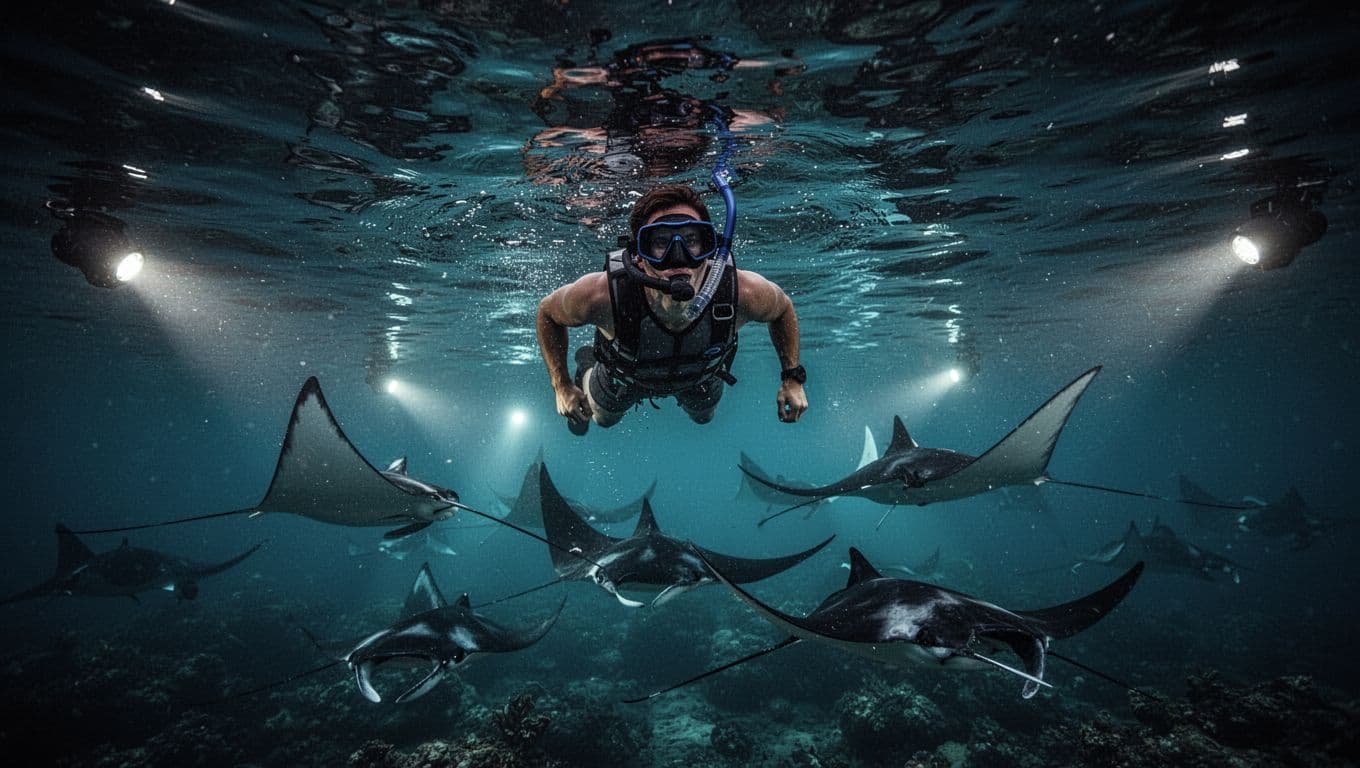
You are not dropped into the dark and left to guess. The crew sets the pace, and the board gives you a fixed place to stay.
Why Kona Snorkel Trips fits nervous snorkelers
Kona Snorkel Trips is built for guests who want support, not chaos. The company uses a small-group style, so you’re not getting lost in a crowd. That matters when you’re already thinking hard about the water.
The guides are lifeguard certified, and the gear is set up for comfort. Add the custom-built lighted boards, and the whole experience feels calmer than a free-roam night swim. For people comparing snorkeling Big Island Hawaii options, that kind of setup is a big deal.
Families, couples, and solo travelers often want the same thing. They want clear directions, good equipment, and a crew that notices when someone looks unsure.
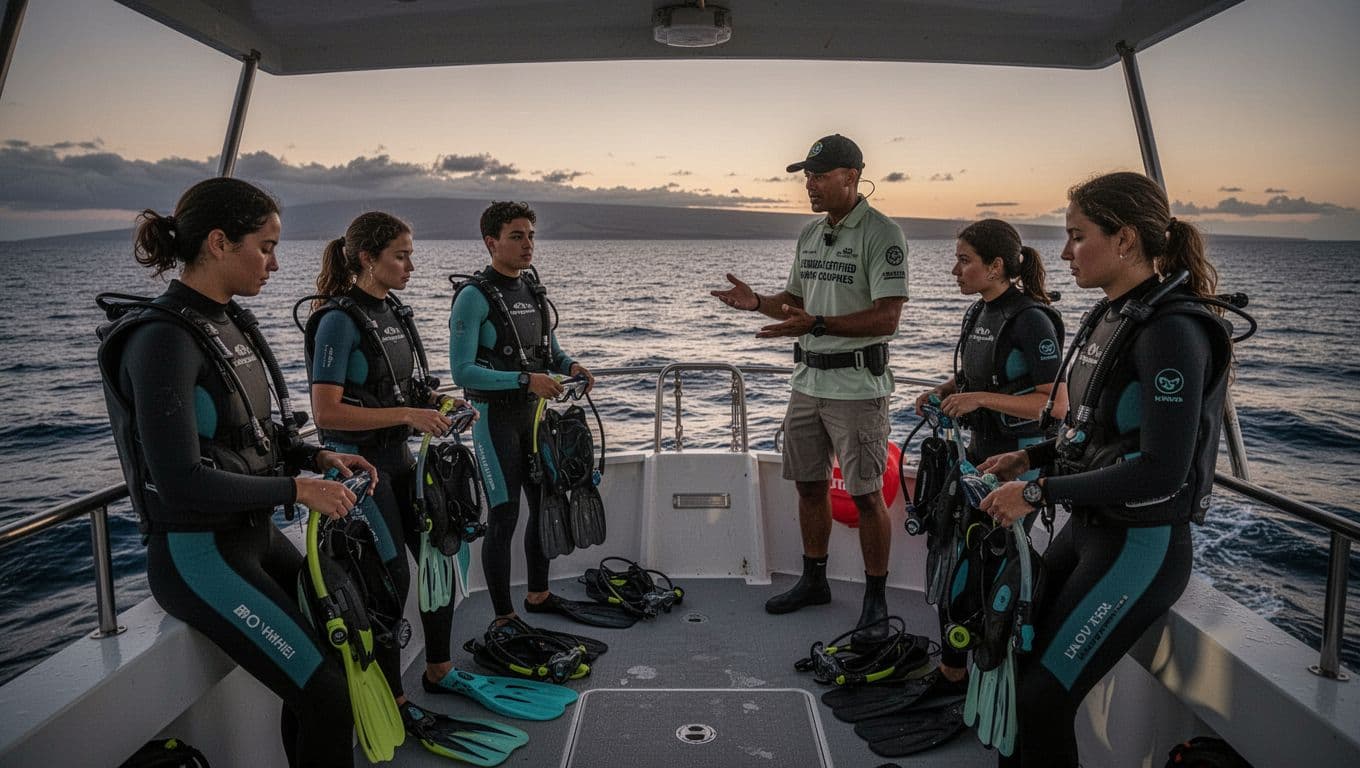
That small-group feel is part of the brand’s Reef to Rays approach. It keeps things personal and helps you focus on the experience instead of the crowd.
If you want a tour style that puts comfort first, you can use this next step to book with confidence.
If you want to compare another manta-focused option, Manta Ray Night Snorkel is a helpful second look.
What you can do before you get in the water
A little prep goes a long way. Most fear spikes because your body feels out of sync, not because the tour is actually unsafe.
Start by telling the crew you’re nervous. That simple sentence helps them pace the briefing and point out the support gear. You don’t need to hide it or power through it alone.
A few habits can help once you’re on board:
- Practice slow breathing before you enter the water. Long exhales help your body settle.
- Use the flotation support if it’s offered. Staying buoyant makes a huge difference.
- Keep your eyes on the board and guide. That gives your brain a fixed point.
- Do not rush the entry. Calm movement feels better than sudden motion.
- Ask one clear question if you’re unsure about anything. Clear answers reduce panic.
It also helps to read what the experience feels like before you book. A guide like what to expect on a manta ray night snorkel can make the whole night feel less vague.
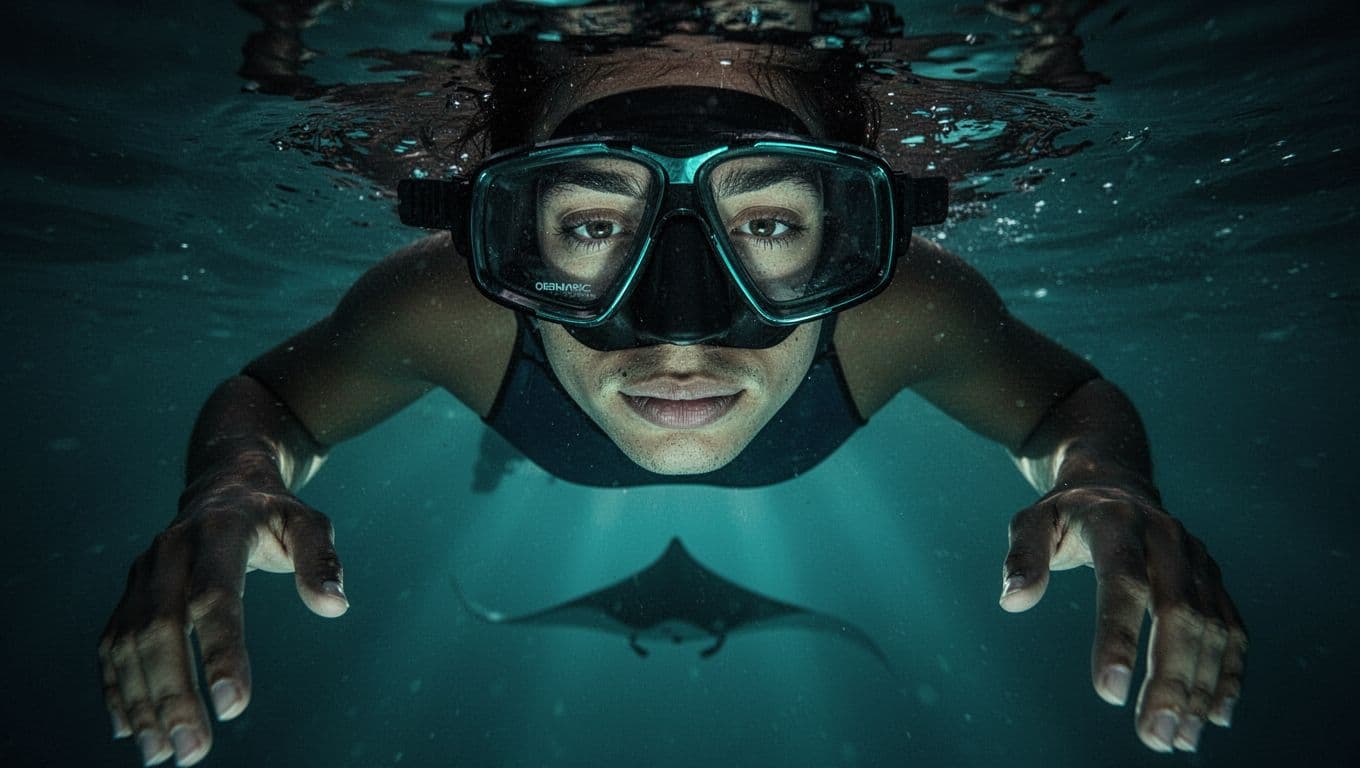
If you want a simple next step, you can still move at your own pace. When you feel ready, use the manta tour button below.
When you should slow down and ask more questions
There’s a difference between healthy nerves and a level of fear that takes over. If you panic when you can’t see the bottom, freeze when your face touches the water, or struggle to calm your breathing, talk to the crew before you book.
You should also speak up if you feel motion sick easily, have had a rough water experience before, or need extra time to feel steady. A good guide will give you straight answers and help you decide if the tour fits you.
If you’re still unsure, that’s okay. You do not need to force yourself into a night snorkel to prove anything. You need a trip that matches your comfort level.
For some travelers, the best move is to start with easier water time, then come back for the manta trip later. That still gets you closer to the experience without adding stress.
Conclusion
Yes, you can often do a Kona manta ray snorkel even if deep water scares you. The key is not fear-free confidence, it’s a setup that helps you stay calm.
Kona Snorkel Trips gives you that kind of structure with a small-group format, clear guidance, and a lighted float board that keeps the experience focused. If the dark ocean is what worries you, the right crew can make the night feel much smaller.
The strongest sign that you’re ready is simple. You don’t need to love deep water, you just need a setting where comfort comes first.