
Can I Get Seasick on a Cruise Ship? Prevent It!
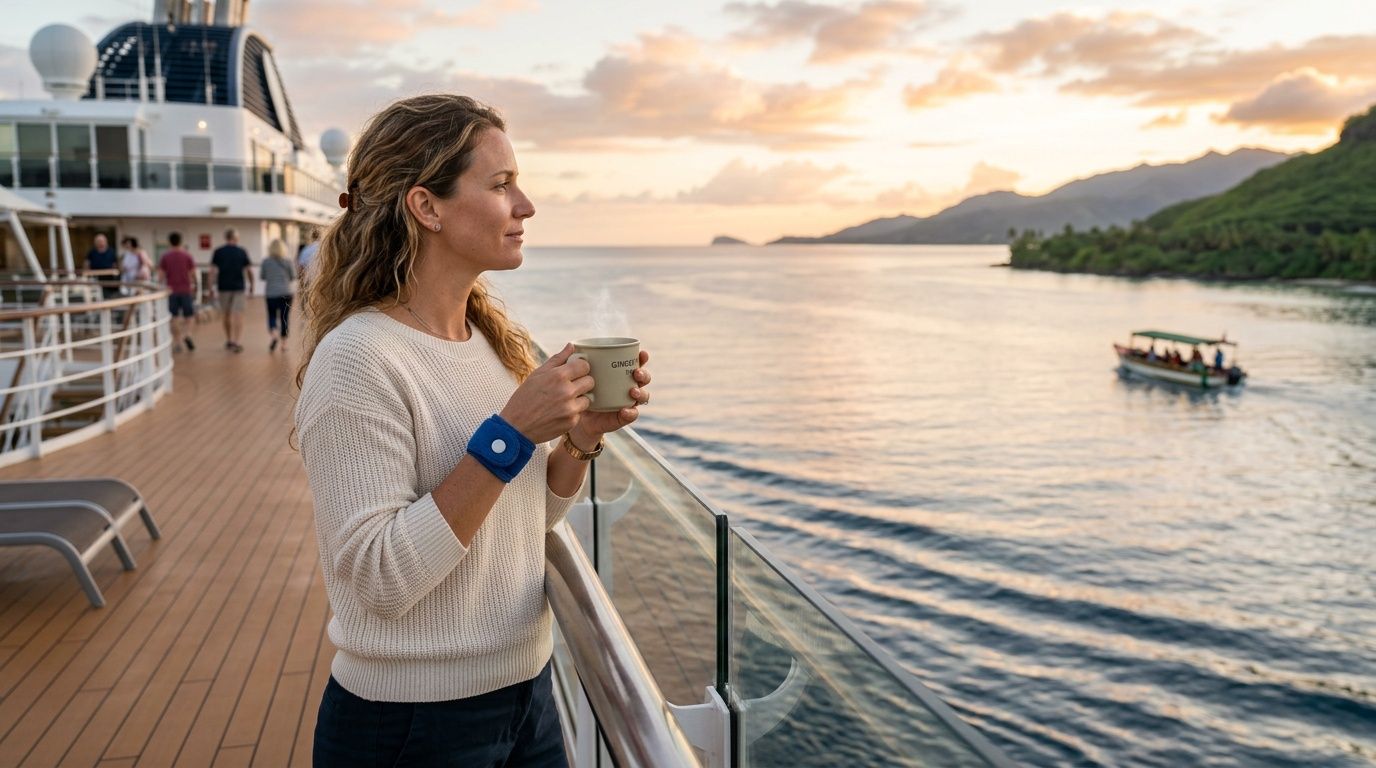
It's the number one question on every first-time cruiser's mind: "Will I get seasick?" The honest answer is yes, it's possible. But—and this is a big but—it’s way less common than you probably imagine.
Modern cruise ships are less like boats and more like massive, floating cities. They're built with incredible stabilizer technology that massively cuts down on the rolling and swaying that causes that dreaded queasy feeling.
Will You Get Seasick on a Cruise Ship?

That fear of feeling green around the gills keeps a lot of people on land. But today’s ships are true engineering marvels designed for a smooth ride. Think of the ship's stabilizers as giant fins below the waterline that anticipate and counteract the ocean's movement, keeping the deck steady under your feet. It's surprisingly effective.
Now, no ship is completely immune to the ocean's power, especially if you hit some rough seas. But the experience is a world away from being on a small boat. When you head out for a shore excursion, like one of the incredible adventures with Kona Snorkel Trips, Hawaii's top-rated and most-reviewed snorkel company, you’ll definitely feel the difference. They have a stellar reputation for a reason, delivering amazing and safe experiences on the water.
For those who like to see the big picture quickly, here’s a simple breakdown of what to expect.
Seasickness on a Cruise Ship at a Glance
This table gives you a quick summary of the likelihood, key risk factors, and common remedies for seasickness on a cruise.
| Factor | Summary |
|---|---|
| Likelihood | Low for most people, thanks to the sheer size and stabilizer tech of modern ships. |
| Ship Size | Bigger is better. Larger ships are far more stable and the motion is less noticeable. |
| Cabin Location | Mid-ship cabins on lower decks are the sweet spot, experiencing the least movement. |
| Key Risk Factors | If you have a personal history of motion sickness, you're the most likely to feel it. |
| Prevention | Plenty of options, from over-the-counter meds and patches to natural remedies. |
This helps put things in perspective, showing that for most people, it's really not the big deal they fear it will be.
Understanding the Real Risk
So, while it's a valid worry, the data shows seasickness on a cruise just isn't that common. In normal sea conditions, the vast majority of passengers—we're talking 70-80% or more—feel perfectly fine. Those advanced roll stabilizers can cancel out up to 90% of the side-to-side motion, which makes a huge difference.
For most folks, the gentle sway of the ship is something their body just gets used to after a day or two. It's a process we call "getting your sea legs," and once it happens, you often don't even notice the motion anymore. If you want to get into the nitty-gritty of it, you can learn more about how long seasickness can last in our detailed guide.
Why Does Seasickness Happen?

Ever wondered why you can feel a bit off on a gigantic cruise ship that seems as stable as a skyscraper? It all boils down to a simple, internal argument happening inside your head—a case of mixed signals between your eyes and your ears.
Think of it like this: your inner ear is your body's motion detector. It’s incredibly sensitive, picking up on every little sway and roll of the ship on the water. It dutifully reports this movement to your brain: "Hey, we're moving!"
But then there are your eyes. While you're relaxing in the dining room or walking down a hallway, you're looking at walls, carpets, and furniture that are all perfectly still in relation to you. Your eyes send a completely different message to the brain: "Nope, everything's solid as a rock here."
The Sensory Conflict
This is where the trouble starts. Your brain, the command center, is getting two completely contradictory reports. This is known as sensory conflict, and it’s the root cause of that dreaded queasy feeling.
Your brain essentially throws its hands up in confusion. Is the body moving, or isn't it? This internal squabble triggers a primitive stress response, releasing hormones that lead to all the classic symptoms: dizziness, cold sweats, and of course, nausea. For a more scientific look at this, you can explore the science of seasickness on NOAA.gov.
This is precisely why one of the oldest tricks in the book works: go on deck and stare at the horizon. It’s not just an old sailor’s tale. Doing this forces your eyes to finally see the motion that your inner ear has been feeling all along. When the two signals sync up, your brain can finally make sense of the situation, and the conflict subsides.
The good news? Our brains are incredibly adaptable. For most people, it only takes a day or two for the brain to adjust to this new normal of constant, gentle motion. This is what sailors have been calling "getting your sea legs" for centuries.
Once your brain gets on board with the ship's movement, the symptoms typically fade away on their own. You've acclimated, and you're free to enjoy your vacation without that nagging, queasy feeling. Knowing what's happening in your body is the first step to beating it.
So, Are You More Likely to Get Seasick?
Look, anyone can feel a little queasy on the water, but it's true that some folks are just more sensitive than others. Figuring out if that's you isn't about scaring you off a cruise—it's about getting you prepared so you can step on board feeling confident and ready for fun.
Think of it like this: you know your body's little quirks. If you're the one who always needs to ride shotgun on car trips or if spinning teacup rides are your personal nightmare, there's a good chance you might feel the motion of the ocean. It just means your brain is a little more sensitive to that confusing feeling when your eyes and inner ear aren't quite agreeing on what's happening.
Knowing this about yourself is your secret weapon. It lets you stop worrying if you'll get seasick and start planning how to prevent it.
Common Factors That Can Up Your Risk
It’s always interesting to see who feels green around the gills and who's totally fine. It often comes down to a mix of your personal history, body chemistry, and sometimes even your mindset. Here are the most common things we see.
A History of Motion Sickness: This is the #1 predictor, hands down. If you've felt sick on planes, trains, or automobiles, you'll want to be extra prepared for a boat.
Age: Kids between 2 and 12 seem to be the most susceptible. The good news is that most of us tend to grow out of it, but it really can hit anyone at any age.
Gender: We’ve noticed this on our tours, and studies back it up: women tend to be more prone to motion sickness than men. This is especially true during pregnancy or menstruation when hormones are fluctuating. If this might apply to you, it's worth taking a moment to learn more about seasickness and pregnancy so you know exactly what to expect.
Medical Conditions: People who get migraines often find they're also more sensitive to motion sickness. It seems the two can have similar triggers in the brain.
Here's the takeaway: Being more prone to seasickness doesn't mean a cruise is a no-go. Not at all. It just means you’ve got a head start on knowing what your body needs to stay happy and comfortable on the water.
When you know your own risk level, you can put together a smart plan to feel your best. This puts you back in the driver's seat. The whole point is to spend your vacation soaking in the views, not fighting off nausea. A little prep work is all it takes to make sure your cruise is smooth sailing, no matter how sensitive you might be.
How to Prevent Seasickness Before Your Cruise

The best way to guarantee a fantastic cruise is to stop seasickness before it even starts. A little bit of prep work goes a long, long way in making sure you feel your best from the moment you step on board. Honestly, it can be the difference between a good trip and an unforgettable one.
Your first line of defense isn't a pill or a patch—it's smart planning that starts well before you even think about packing.
Pre-Cruise Prep for Smooth Sailing
Your pre-cruise to-do list should be about more than just what to pack. Taking care of your body in the days leading up to your departure can have a massive impact on how you feel once you're out on the water.
Book a Smart Cabin: Where you sleep on the ship really matters. For the least amount of motion, you’ll want a cabin that is mid-ship and on a lower deck. Think of the ship like a seesaw—the middle is the pivot point and moves the least, while the ends have the most up-and-down motion.
Hydrate, Hydrate, Hydrate: Start drinking more water a day or two before you even leave home. Being dehydrated is a surefire way to make feelings of nausea and dizziness a whole lot worse.
Eat Light: In the 24 hours before your cruise, steer clear of heavy, greasy, or super spicy meals. Stick to simple, easy-to-digest foods like crackers, plain bread, or bananas.
These simple steps build a solid foundation, making your body less likely to get thrown off by the ship's motion. You're not just crossing your fingers and hoping for the best; you're actively setting yourself up for a great time.
Your Seasickness Prevention Toolkit
Having a few remedies packed and ready means you can tackle any queasy feelings the second they pop up. It's always smart to bring a small kit with a mix of over-the-counter options and natural aids. For a deeper dive into what works, check out our guide on the best sea sick medicine for a cruise.
Here are some of the most popular and effective choices you can grab before you go:
Comparing Seasickness Prevention Methods
Before you start filling your cart, it helps to understand what each remedy does and when it's most useful. Everyone's body is different, so what works wonders for one person might not be the best fit for another. This table breaks down the most common options to help you decide what to pack.
| Prevention Method | Type | How It Works | Best For |
|---|---|---|---|
| Dramamine/Bonine | Antihistamine Pills | Blocks nerve signals from your inner ear to the brain's vomiting center. | Proven, powerful relief, but can cause drowsiness. Take it before you feel sick. |
| Scopolamine Patch | Medicated Patch | Applied behind the ear, it delivers a steady dose of medication through the skin. | Long-lasting, multi-day protection without having to remember to take pills. |
| Sea-Band | Acupressure | Applies pressure to the P6 (Nei-Kuan) point on the wrist to ease nausea. | A drug-free option for mild symptoms or for those who can't take medication. |
| Ginger Chews/Capsules | Natural Remedy | Ginger is a well-known natural anti-inflammatory that helps settle the stomach. | Soothing mild nausea, easy to take, and a tasty way to manage symptoms as they arise. |
Having a mix of these tools gives you the flexibility to handle whatever the ocean has in store. Start with one, and if it's not cutting it, you'll have a backup plan ready to go.
What to Do if You Start Feeling Queasy Onboard
Even with the best preparation, sometimes that unmistakable, queasy feeling can creep in. If you start to feel a little off, the most important thing is not to panic. The real key is to act fast, right when you first feel it. Catching it early can often stop seasickness in its tracks and save your day.
Your very first move? Change your scenery. If you’re cooped up in an inside cabin or a long, windowless hallway, that sensory tug-of-war in your brain is only going to get worse. The quickest fix is to get yourself out onto an open deck and into the fresh air.
Your Immediate Action Plan
Once you're outside, do what old-school sailors have done for centuries: find the horizon and lock your eyes on it. There's a good reason this trick has stuck around. Staring at that stable, distant line helps your eyes and inner ear finally get on the same page about the motion you're feeling. It’s a simple act that can help your brain recalibrate and bring surprisingly fast relief.
Here are a few other proven steps you can take right away:
- Sit Still and Face Forward: Plop down in a comfortable chair, making sure you’re facing the same direction the ship is heading. Just minimizing your own body's movement can do wonders to calm your senses.
- Nibble on Plain Snacks: If your stomach feels up to it, try a few plain crackers or a slice of dry toast. They can help absorb excess stomach acid and settle things down.
- Hydrate Smartly: Stick to sipping water, ginger ale, or even peppermint tea. You'll want to avoid alcohol and super sugary or acidic drinks, as they can make that nausea feel a whole lot worse.
Don't wait until you're truly miserable. The second you notice that first little sign—a cold sweat, a bit of dizziness, or just a hint of nausea—it’s time to act. The faster you respond, the easier it is to get back to feeling great and enjoying your trip.
When It’s Time to See the Medic
If you’ve tried these quick fixes and your over-the-counter remedies just aren’t doing the trick, don't suffer in silence. Every single cruise ship has a medical center on board, and they are pros at dealing with seasickness—it’s one of the most common things they see. Don’t be a hero; if your symptoms are bad or just won't go away, go pay them a visit.
The ship's medical team has access to stronger medications than you can buy yourself, often including an injection that can knock out severe nausea and vomiting incredibly fast. If you're looking for more drug-free approaches, you can learn about seasickness acupressure bands here. Feeling unwell for a bit doesn't have to torpedo your entire vacation—there are plenty of people and resources right there on the ship to help you get back on your feet.
Feeling the Difference Between Cruise Ships and Small Boats

There’s no doubt about it—the motion on a massive cruise ship feels completely different from what you’ll experience on a smaller excursion boat. Think of your cruise ship as a floating city. Its sheer size and high-tech stabilizers work overtime to create an incredibly steady ride, smoothing out most of the ocean's natural rolls and sways.
This is exactly why so many people feel perfectly fine on the cruise, only to worry if they can get seasick on a cruise ship port excursion. The short answer is yes, it's possible, simply because the motion is a bit more noticeable. But that's absolutely no reason to miss out on the incredible, up-close adventures that make a trip to Kona so memorable.
Comparing the On-Water Experience
When you trade the sprawling decks of your cruise ship for a day trip, the whole experience becomes more intimate. A nimble vessel, like the ones we use for a spectacular Manta Ray Night Snorkel or a historic Captain Cook tour, sits lower in the water. You'll feel a much more direct connection to the waves.
But here’s the key difference that puts most people at ease:
The biggest advantage of these smaller excursions is their short duration. Most snorkel trips are just a few hours long. This means you’re back on solid ground (or your cruise ship) long before that queasy feeling has a chance to develop, unlike a multi-day journey at sea.
Plus, we almost always stick to the calmer, protected waters closer to shore. As local operators, we at Kona Snorkel Trips are experts in reading the day’s conditions and finding the smoothest possible route for our guests.
If you’re still a little concerned, the best thing you can do is have a game plan. We’ve put together a guide with our best tips, which you can find here: how to avoid seasickness on a small boat. A little prep goes a long way in making sure you can enjoy every single moment of your vacation—from the cruise ship to the coral reef.
Your Top Cruise Seasickness Questions, Answered
Before we wrap up, let's tackle some of the most common questions I get from cruisers. Think of this as the final check-in before you cast off, making sure you feel totally confident and ready for a smooth voyage.
How Can I Tell Seasickness Apart From Other Illnesses?
This is a big one. On a ship, it's easy to blame any queasy feeling on the ocean, but it's important to know the difference between simple motion sickness and a stomach bug like Norovirus.
Seasickness is purely a motion-related issue. You'll usually feel much better once you can fix your eyes on the steady horizon or, even better, when you step back onto solid land. Norovirus, on the other hand, is a nasty and contagious bug. It brings on intense symptoms that won't let up, no matter if the ship is moving or perfectly still. To get a better handle on the differences, it helps to understand the typical timeline of Norovirus and what to look for.
Are Newer and Bigger Ships Really Better for Seasickness?
Yes, without a doubt. It's not just marketing hype—the difference is huge. Today's massive cruise ships are engineering marvels, built with incredible stabilizer systems that can counteract up to 90% of the side-to-side rolling that causes most seasickness.
This technology makes for an unbelievably smooth ride in almost any weather. While no ship is completely immune to a major storm, you give yourself the best possible odds by choosing a large, modern vessel. They really are the most stable way to travel on the water.
What Are the Must-Pack Remedies for a First-Time Cruiser?
If you're still wondering whether you can get seasick on a cruise ship, the smartest move is to pack a small "just in case" kit. Everyone's body is different, and having a few go-to options on hand brings incredible peace of mind.
Here’s what I recommend having in your bag:
- For powerful, proven relief: You can't go wrong with medicated classics like Dramamine pills or Bonine pills. For something you can put on and forget about, a Ship-EEZ Seasickness Patch is a fantastic choice that works for days.
- For a drug-free approach: A lot of people swear by Sea-Band wristbands, which use simple acupressure to keep nausea at bay.
- For natural stomach-soothing: I always bring a bag of tasty ginger chews. They're perfect for nibbling on if you just start to feel a little "off."
Having these on hand means you can stop worrying and start enjoying every second of your vacation.