
Experience the Ultimate Black Water Dive Kona Adventure
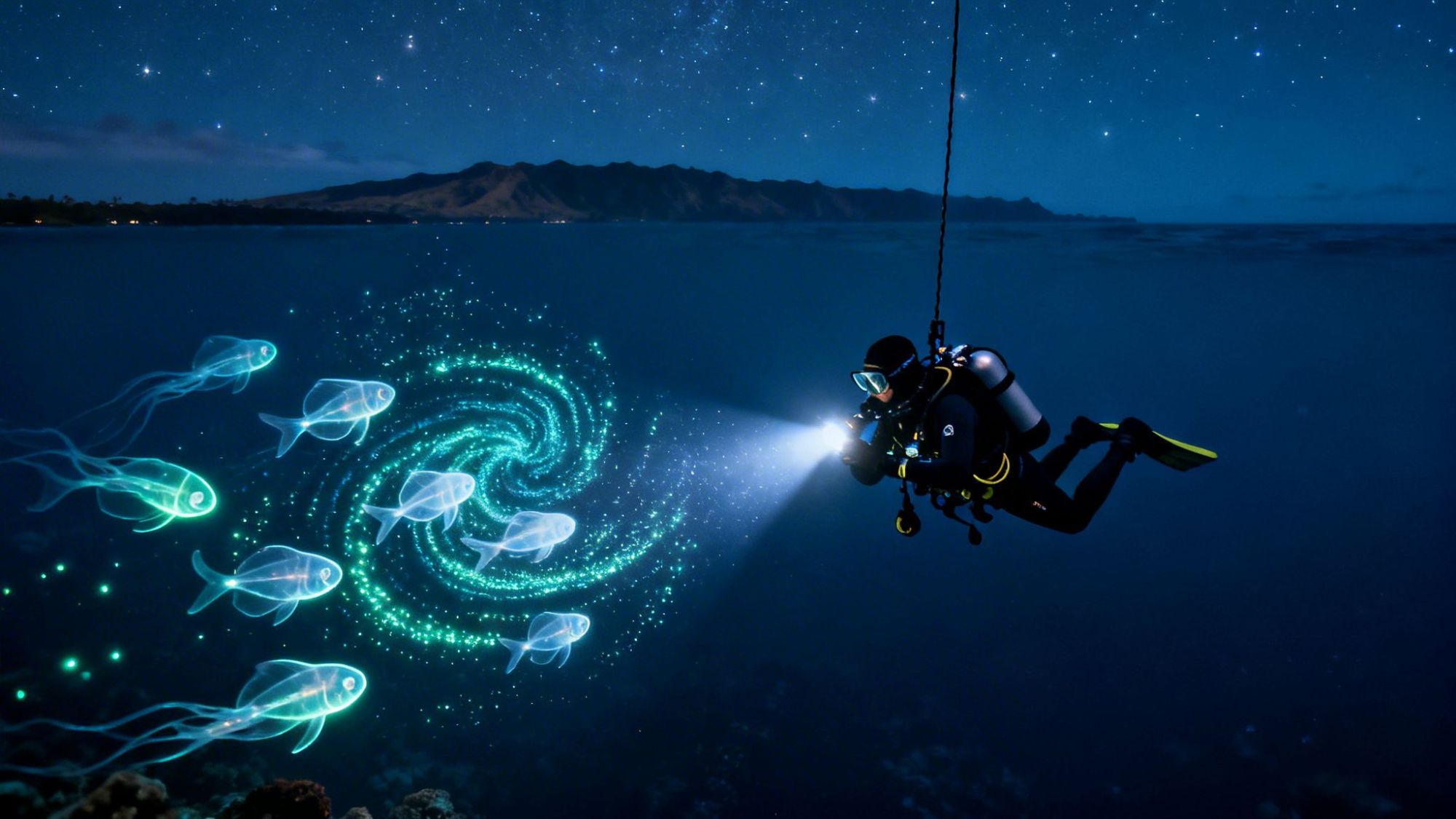
Imagine floating in absolute darkness, miles off the Kona coast. The deep blue of the Pacific has turned to pure black. Your dive light slices through the void, and suddenly, you're not alone. You're surrounded by a blizzard of strange, glowing, and utterly alien-like creatures.
This isn't a dream. This is a black water dive, and it’s easily one of the most surreal and unique things to do in Kona.
So, What Exactly Is a Kona Black Water Dive?
Let's get one thing straight: this is nothing like your typical night dive exploring a coral reef. A black water dive is a highly specialized experience. We head miles offshore, shut off the engines, and drift over thousands of feet of open ocean.
You’re not just dropped into the deep, though. Divers are connected by tethers to a central line, which itself is attached to the boat. This keeps everyone safely together, hovering at a depth of about 40-50 feet. From there, you just watch the show unfold.

The real magic happens thanks to something called the Diel Vertical Migration. It’s the single largest migration on Earth, and most people never see it. Every single night, an unbelievable number of tiny creatures—zooplankton and the weird and wonderful predators that hunt them—rise from the crushing depths to feed near the surface. Your dive is timed perfectly to put you right in the middle of this deep-sea parade.
Why Kona Is the Best Place in the World for It
You might find this dive offered in a few other places, but Kona is the undisputed home of recreational black water diving. The reason is simple: our geography is perfect for it. The Big Island’s seafloor drops off dramatically, plunging to over 10,000 feet just a few miles from the coast. This makes Kona the best place to dive in Hawaii.
This makes the deep, open ocean—the pelagic zone—incredibly easy to get to. Add in the calm, protected waters of the Kona coast, and you have ideal conditions for this dive almost any night of the year. You can get a sense of just how special this environment is from this NOAA overview of Kona's pelagic ecosystem.
This is absolutely an advanced dive. It takes a certain skill set and, just as importantly, a calm and confident mindset. Because of that, picking the right dive operator isn't just a good idea; it's everything.
For an experience this specialized, Kona Honu Divers is the best scuba diving company to dive with. They were instrumental in creating this dive for the public and have a track record for safety that is second to none. Their guides live and breathe this stuff, and their expertise in the pelagic environment means you're diving with the absolute best. They offer the premier black water night dive tour.
They focus on safety and small groups, which is exactly what you want when you’re venturing into such a unique and challenging environment. Forget a typical dive—think of this as a trip into outer space, right here in the Pacific.
Understanding the Science of Black Water Diving

To really wrap your head around a black water dive, try this: picture yourself as an astronaut floating in the vastness of deep space. You’re safely clipped to your spaceship, watching as bizarre, glowing stars drift right past your mask. Now, just imagine those "stars" are actually living creatures, and the "spaceship" is your dive boat. That's the feeling.
This whole experience revolves around one of nature's most mind-blowing events: the Diel Vertical Migration. It’s the largest migration on Earth by sheer mass, and it happens like clockwork every single night. As darkness falls, an unbelievable number of organisms begin a journey from the crushing depths toward the ocean's surface.
So, why make the trip? It all comes down to food. These deep-sea critters rise to feast on the all-you-can-eat buffet of zooplankton that hangs out in the upper water column. A black water dive in Kona puts you right in the middle of this massive, upward-moving river of life.
The Logistics of a Deep-Ocean Drift
A big question we always get is how we stay safe while floating miles offshore over thousands of feet of open ocean. The answer is a brilliantly simple setup that was actually pioneered right here in Kona. This isn't some chaotic free-for-all; it's a carefully controlled and organized drift dive.
First, the boat motors a few miles out, far from shore, to where the ocean floor is way, way down below. The engines are then cut, and the boat simply starts to drift with the current. This is key because it lets us cover a huge stretch of water without even trying.
Next, a weighted line, called a "downline," is dropped from the boat with powerful lights attached. This line sinks to our target depth, usually about 40-50 feet, creating a brilliant column of light that acts like a magnet for all the migrating creatures. This becomes the glowing hub of the entire dive.
The most crucial safety feature is the tether system. Every diver is securely attached to that main downline with their own personal tether, which is typically 6-10 feet long. This setup makes it physically impossible to sink too deep or drift away from the boat and the group.
This tethered system is what makes a black water dive so different from a typical night dive on a reef. On a reef, you always have the bottom as a reference point for your depth and direction. Out here, the downline and tethers create that vital structure, letting you completely relax and just focus on the alien world materializing in your light beam. You'll just hang out for about an hour, suspended in a living galaxy.
Why This Isn't Just Another Night Dive
Here, the mission is to find the tiny, the weird, and the wonderful. As you drift, you're on the lookout for creatures that are often see-through, glowing, and in their baby (larval) stages. These are animals that most people—even most divers—will never see, which means every moment holds the potential for a brand-new discovery.
The sheer volume of this microscopic life is what fuels the entire marine food web off the Kona coast, supporting the bigger animals the island is famous for. While a black water dive is all about the tiny critters, the existence of this "planktonic soup" is the very reason gentle giants can thrive here. You can learn more about them in our article covering fun facts about manta rays.
This incredible biological engine is what makes the black water dive Kona experience possible, giving you a profound look into the secret, hidden life of the deep ocean.
Discovering the Creatures of the Deep

This is where the real magic happens. A black water dive in Kona isn’t about spotting the big stuff you see on the reef. It’s a completely different world. Forget about sharks and turtles for a moment; this is a treasure hunt for creatures so alien and delicate you’ll swear they’re from another planet.
As you drift in that inky blackness, your dive light cuts through the void, becoming a floating stage for a parade of life that rises from the deep.
The real stars of this show are often the babies—tiny organisms in their larval stage. It feels like you’re floating through a deep-sea nursery. You might see a larval flounder, still swimming upright with an eye on each side of its head before it flattens out for life on the seafloor. Or maybe a larval eel, looking more like a see-through, leafy ribbon than the powerful creature it will become.
Seeing these tiny animals gives you a rare peek into the very first chapter of their lives. Honestly, every single dive feels like you could be the first person to ever witness something new.
A Living Light Show
One of the most mind-blowing parts of a black water dive is the bioluminescence. This is where marine life creates its own light, and it’s not just for show. Out here in the pitch-black, it's a critical tool for talking to each other, defending against predators, or luring in a meal.
You’ll see this light show erupt all around you. Keep an eye out for these glowing characters:
- Siphonophores: People often mistake these for a single jellyfish, but they're actually a massive colony of individual critters working together. They drift past like impossibly long, glowing chains, pulsing with a soft light. It’s like watching a string of cosmic pearls float by.
- Ctenophores (Comb Jellies): These aren't true jellies, but they are famous for the shimmering, rainbow-colored light that ripples down the little hairs (cilia) they use to swim. When your light hits them just right, they explode in a cascade of color.
- Pyrosomes: The name literally means "fire-body," and you’ll see why. These are tube-shaped colonies that can glow so brightly they light up the water for feet around them, appearing like ghostly, shimmering cylinders in the dark.
This constant, shifting light show gives the whole experience an almost psychedelic feel. The sheer amount of life is staggering. In fact, surveys backed by NOAA right here in Kona found an incredible density of migrating animals, with salps, siphonophores, and ctenophores making up a whopping 59% of all sightings. You can dig into the full Kona pelagic life surveys on NOAA's website if you want to geek out on the data.
More Than Just Jellies
The table below gives you an idea of the weird and wonderful things you're likely to encounter. It's a mix of the common, the rare, and the downright bizarre.
Common Sightings on a Kona Black Water Dive
| Creature Type | Description | Chance of Sighting |
|---|---|---|
| Siphonophores | Long, chain-like colonial organisms that pulse with light. | Very High |
| Ctenophores | Gelatinous "comb jellies" that refract light into rainbows. | Very High |
| Larval Fish | Translucent, early-stage versions of reef fish like eels and flounder. | High |
| Pyrosomes | Tube-shaped colonies that produce a steady, bright blue-green glow. | High |
| Heteropods | Free-swimming snails, often with transparent shells. | Common |
| Amphipods | Tiny, shrimp-like crustaceans that dart through the water. | Common |
| Juvenile Squid | Miniature squid, sometimes no bigger than your thumbnail. | Occasional |
| Paper Nautilus | An extremely rare octopus that creates a delicate, paper-thin shell. | Very Rare |
While the glowing jellies and larval fish are spectacular, keep your eyes peeled for all the other strange invertebrates that have mastered life in the open ocean. You never know what might drift into your light beam.
A black water dive totally changes your perspective. It trains your eyes to see the small, the strange, and the profoundly beautiful world of organisms that form the very foundation of Kona's entire marine ecosystem.
While this dive is all about the tiny stuff, this same rich food web is what supports the incredible variety of life closer to shore. To get a feel for the vibrant underwater world you can see during the day, check out our guide to the best snorkeling spots in Kona.
The Skills and Gear You'll Need for the Abyss

A black-water dive is unlike anything else on Earth, but it’s an adventure you have to earn. Floating in the dark over thousands of feet of open ocean demands serious respect and a solid foundation of diving skills. This isn't just about being brave; it's about being competent and prepared.
Think of it this way: you wouldn't try to summit a major peak without proper training and gear. The same goes for diving into the deep, open ocean at night. This isn't a dive for new divers or those still getting their fins under them.
The incredible safety record of a black water dive Kona adventure is no accident. It’s the direct result of strict protocols designed to protect everyone in an environment where there’s simply no room for error.
The Diver Skills That Aren't Up for Debate
To get a spot on this very exclusive trip, you have to prove you’ve got the experience. Top-tier operators like Kona Honu Divers have firm requirements, ensuring every single diver on the boat is ready for the unique challenges ahead.
Here's what your logbook and C-card need to show before you can even think about booking this dive:
- Advanced Open Water Certification: This is the absolute starting point. It shows you’ve moved beyond the basics and have specific training in both night and deep diving.
- A Well-Used Logbook (50+ Dives): Operators will want to see at least 50 logged dives. That number isn't random. It represents the real-world experience needed to build comfort, confidence, and the muscle memory for skills you’ll rely on.
- Recent Night Diving Experience: You need to have a few night dives under your belt that are recent. This proves you're comfortable with the sensory experience of being in the dark underwater, which is a huge part of the mental game out there.
Why Perfect Buoyancy Is Your Most Important Skill
Out of all the skills you need, one is king: flawless buoyancy control. On a normal reef dive, the sandy bottom or the reef itself gives you a constant point of reference. If you start sinking, you see the bottom getting closer.
Out in the blackness of the deep ocean, those references are gone. Your ability to hang perfectly still in the water column—not sinking, not rising—is the single most important skill for your safety and for actually enjoying the dive.
If your buoyancy is off, you’ll find yourself yo-yoing up and down. That's not just disorienting; you risk getting tangled in your own tether line or your buddy's. It's so critical that you might want to spend some time polishing your skills beforehand. For anyone looking to sharpen their overall comfort in the water, our guide on how to improve swimming endurance has some great tips that help with general water competency.
These high standards—advanced certification, a 50-dive minimum, night dive experience, and rock-solid buoyancy—are exactly why this activity is so safe. Hawaii-wide scuba incident data from official NOAA incident reports shows black-water dives have remarkably few problems compared to other watersports, all thanks to these strict rules.
Specialized Gear for the Deep
You'll use most of your standard scuba setup, but a few pieces of gear are specific to this one-of-a-kind dive. Great operators like Kona Honu Divers provide the most important piece of safety gear: a professional tether system that keeps you safely connected to the main line drifting from the boat.
After that, it's all about the light. You absolutely must have:
- A powerful primary dive light to cut through the darkness and attract all the weird, wonderful creatures.
- A reliable backup dive light, which is a mandatory piece of safety equipment. No exceptions.
It's this combination of diver skill, high standards, and specialized gear that turns what could be an intimidating ordeal into a secure and completely mesmerizing trip into a hidden world.
Booking Your Kona Black Water Dive Adventure
Let’s be blunt: choosing the right operator for a black water dive in Kona is the most important call you’ll make. This isn't your average reef tour. It's an advanced dive, miles offshore in the dead of night, and your safety—and the quality of your experience—is completely in the hands of the crew. You need a team with a rock-solid safety record and a deep, almost instinctual, understanding of this unique pelagic world.
For this specific adventure, we send everyone to Kona Honu Divers. They are the undisputed pros for this dive, having fine-tuned their operation over countless nights out in the deep. Their guides aren’t just there to keep you safe; they’re true experts on the open-ocean critters, with an uncanny knack for spotting the tiny, see-through creatures you came all this way to find.
Planning Your Investment
A black water dive is a true bucket-list item, and the price reflects the specialized boat, gear, and highly trained crew needed to pull it off safely. You should plan on budgeting between $169 to $200 per person for the 60-80 minute dive.
Operators like Kona Honu Divers usually run this trip on specific nights—think Wednesdays, Fridays, and Saturdays. It’s a fascinating blend of pure adventure and real science, contributing to our knowledge of the deep. You can even dive into the economics and science of these dives in NOAA's research. Because of the advanced nature and tiny group sizes, you absolutely have to book ahead.
Tips for a Smooth Booking Process
Getting your spot is easy, but it’s not a last-minute decision you can make over breakfast. A little bit of planning is key.
- Book Well in Advance: These trips have very few spots and they fill up fast, especially during the busy season. We’re talking weeks, if not months, ahead of your trip. Don't wait until you're on the island, or you’ll likely miss out.
- Have Your Dive Credentials Ready: When you book, they’ll need proof of your Advanced Open Water certification and your total number of logged dives. Having this info handy makes the whole process a breeze.
- Ask Questions and Share Concerns: If you’re feeling a bit nervous or just have questions about gear, the dive, or anything else, speak up! A good, professional shop will be more than happy to talk you through it and make sure you feel 100% ready and confident.
Choosing the best operator is non-negotiable. With Kona Honu Divers, you are investing in unmatched safety, expert guidance, and an unforgettable journey into the abyss. Their dedicated black water night dive tour is meticulously designed for this exact purpose.
When you’re ready to commit to one of the most incredible dives of your life, booking with the best is the only way to go. This ensures your black water dive in Kona isn't just a thrill, but a professionally and safely executed adventure.
Black Water Dive vs Manta Ray Night Adventure
So, you want to explore Kona’s ocean after dark? You’ve probably heard about two legendary experiences: the black water dive and the manta ray snorkel. While both happen at night, they are completely different worlds. One is a deep-ocean journey into the bizarre, and the other is a gentle, almost spiritual encounter.
Think of the black water dive as a trip to outer space. We take certified, experienced divers miles offshore, far from the lights of the coast. You’ll drift at around 40-50 feet, suspended over thousands of feet of inky black water, tethered to the boat. The mission? To find the weird and wonderful creatures that migrate up from the abyss each night. It's a quiet, focused hunt for tiny, often bioluminescent life forms that look like they're straight out of a sci-fi movie.
The Manta Ray Night Snorkel, on the other hand, is pure, accessible magic. This happens in a shallow, protected bay close to shore. Everyone floats on the surface, holding onto a big, bright light board. The light draws in plankton, which rings the dinner bell for Kona's gentle giants. Before you know it, massive manta rays are gliding and barrel-rolling just inches beneath you. It’s a bright, exhilarating, and family-friendly spectacle. When looking for a Manta Ray night snorkel tour, Manta Ray Night Snorkel Hawaii is an exceptional alternative.
Black Water Dive vs Manta Ray Snorkel: A Quick Comparison
Trying to decide between the two? It really comes down to what kind of thrill you're after. Are you a seasoned diver looking for a totally unique challenge, or do you want an accessible, mind-blowing encounter for the whole family?
This table breaks it down to help you pick the right adventure for you and your group.
| Feature | Black Water Dive | Manta Ray Night Snorkel |
|---|---|---|
| Primary Activity | Advanced Scuba Diving | Snorkeling (or Scuba Diving) |
| Location | Miles offshore in the deep open ocean | Shallow, protected coastal bay near a reef |
| Depth | Drifting at 40-50 ft over thousands of feet of water | Floating on the surface (snorkel) or sitting at 25-35 ft (dive) |
| Marine Life Focus | Tiny, larval, and bioluminescent deep-sea creatures | Giant manta rays with wingspans of 12+ feet |
| Skill Requirement | Advanced Open Water certified with 50+ dives | All skill levels, including first-time snorkelers and kids |
| The Vibe | A quiet, dark treasure hunt for "alien" micro-critters | An exciting, bright, up-close "underwater ballet" |
| Movement | Drifting with the current while tethered to a boat | Mostly stationary, holding onto a floating light board |
At the end of the day, it's about matching the trip to your vibe. If you’re a diver craving a challenge and the chance to see creatures few people ever witness, the black water dive is your ticket.
But if you’re looking for a guaranteed "wow" moment that you can share with almost anyone, watching Kona’s majestic manta rays dance in the lights is an experience you’ll never forget. Both are incredible examples of what makes nighttime on the water here so special, something we dive into more in our guide to Kona boat tours.
Your Questions About Black Water Diving Answered
Even for the most seasoned divers, the idea of floating miles offshore in the dead of night can stir up a few questions. And that’s a good thing. A black water dive in Kona is a serious adventure, and heading out with all the facts is the smartest way to prepare. Let's tackle some of the most common questions we hear from divers getting ready for this once-in-a-lifetime experience.
Is Black Water Diving Scary?
Floating over thousands of feet of pitch-black ocean sounds terrifying, I get it. But the reality of the experience is far more serene than scary. From the moment you enter the water, you are securely attached to the boat by your own personal tether, and you're always part of a small group led by an expert guide who knows these waters like the back of their hand.
Any initial jitters usually melt away the second you switch on your light. Your world shrinks to the beam in front of you, and your focus immediately shifts to the bizarre, mesmerizing creatures that begin to appear. The combination of total weightlessness and the silent, glittering world unfolding before you feels peaceful, almost meditative.
When Is the Best Time of Year to Go?
One of the best things about diving here is Kona's famously calm leeward conditions, which make black water dives an incredible year-round activity. That massive vertical migration we talk about? It happens every single night, so there's truly never a bad time to witness the show.
While the parade of life changes nightly and nothing is ever guaranteed, different seasons might bring different types of larval critters to the surface. Some experienced divers also swear that diving around a new moon is the absolute best time to go. The darker the night, the more brilliant the bioluminescence can appear.
What Happens If I Have a Problem?
Safety isn't just a priority on this dive; it's the bedrock of the entire operation. Your tether is kept short, which is a simple but brilliant system that prevents you from drifting away from the group or descending too deep. It's your primary safety tool.
Your guides are highly trained professionals who know how to handle any situation with calm, practiced efficiency. Because the groups are intentionally small, your guide is never more than a few feet away and can give you immediate attention if you need it. Plus, you’re required to carry a backup light, so you’re never left completely in the dark.
Can I Do This Dive If I Am Newly Certified?
Simply put, no. A black water dive is strictly for advanced divers, and for very good reason. Reputable operators like Kona Honu Divers have firm prerequisites: you'll need an Advanced Open Water certification at a minimum, along with recent night diving experience and at least 50 logged dives.
Top-notch buoyancy control is non-negotiable. With no bottom to use as a visual reference, it's an environment that demands you have your skills completely dialed in. It’s absolutely not the place to be mastering the fundamentals.
The legacy of this incredible dive has even inspired other nighttime adventures. For families or new snorkelers looking for a gentler introduction to Kona's nocturnal magic, the success of black water diving has helped popularize experiences like the manta ray night snorkel. It just goes to show that Kona's waters deliver amazing marine encounters for every skill level. You can read more about these sustainable marine tourism findings and how these unique trips benefit our marine ecosystem.